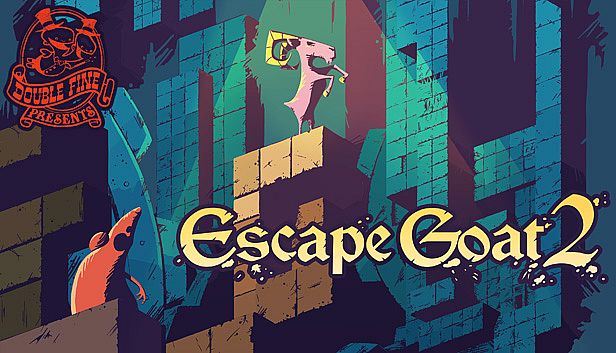











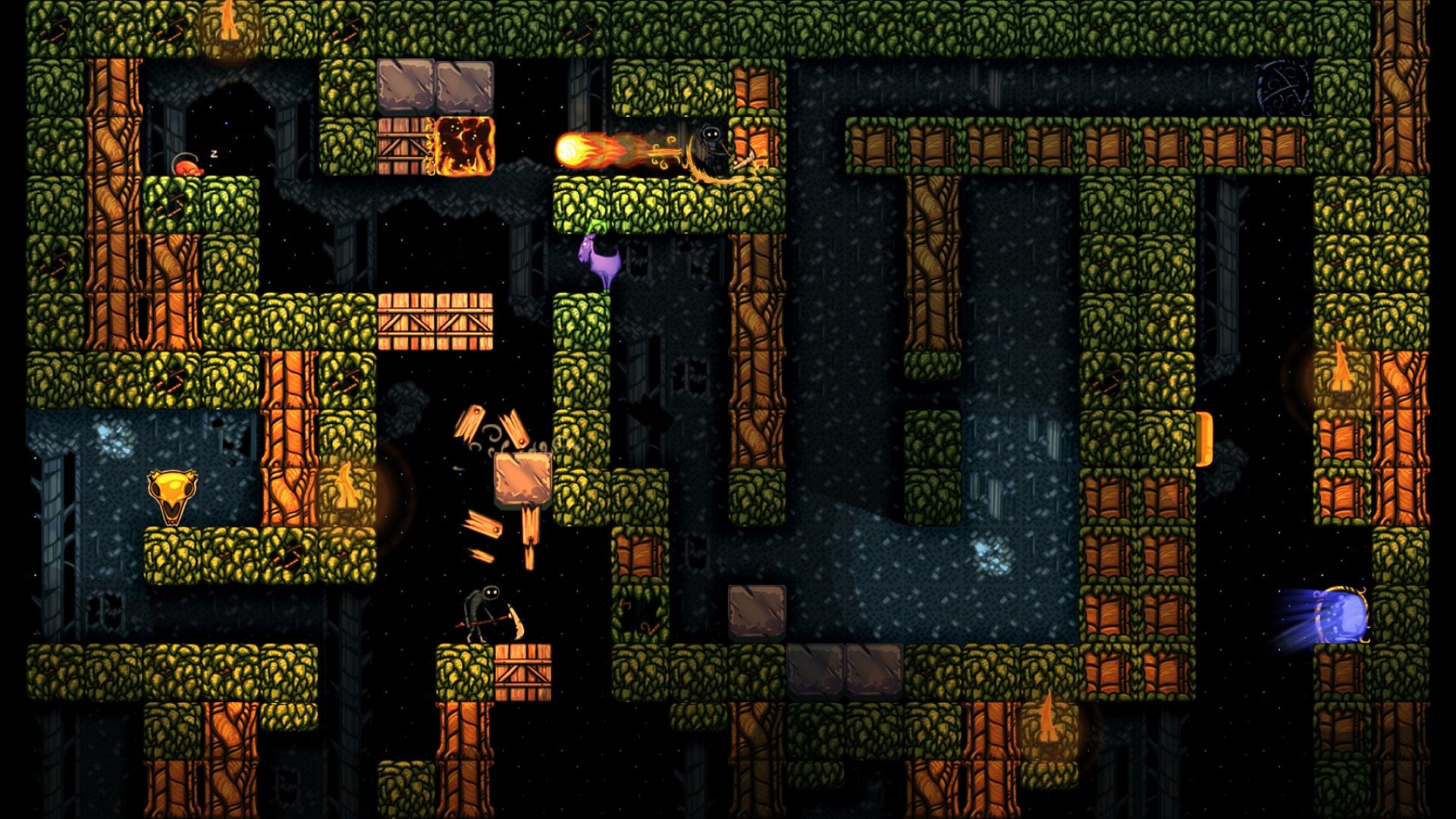
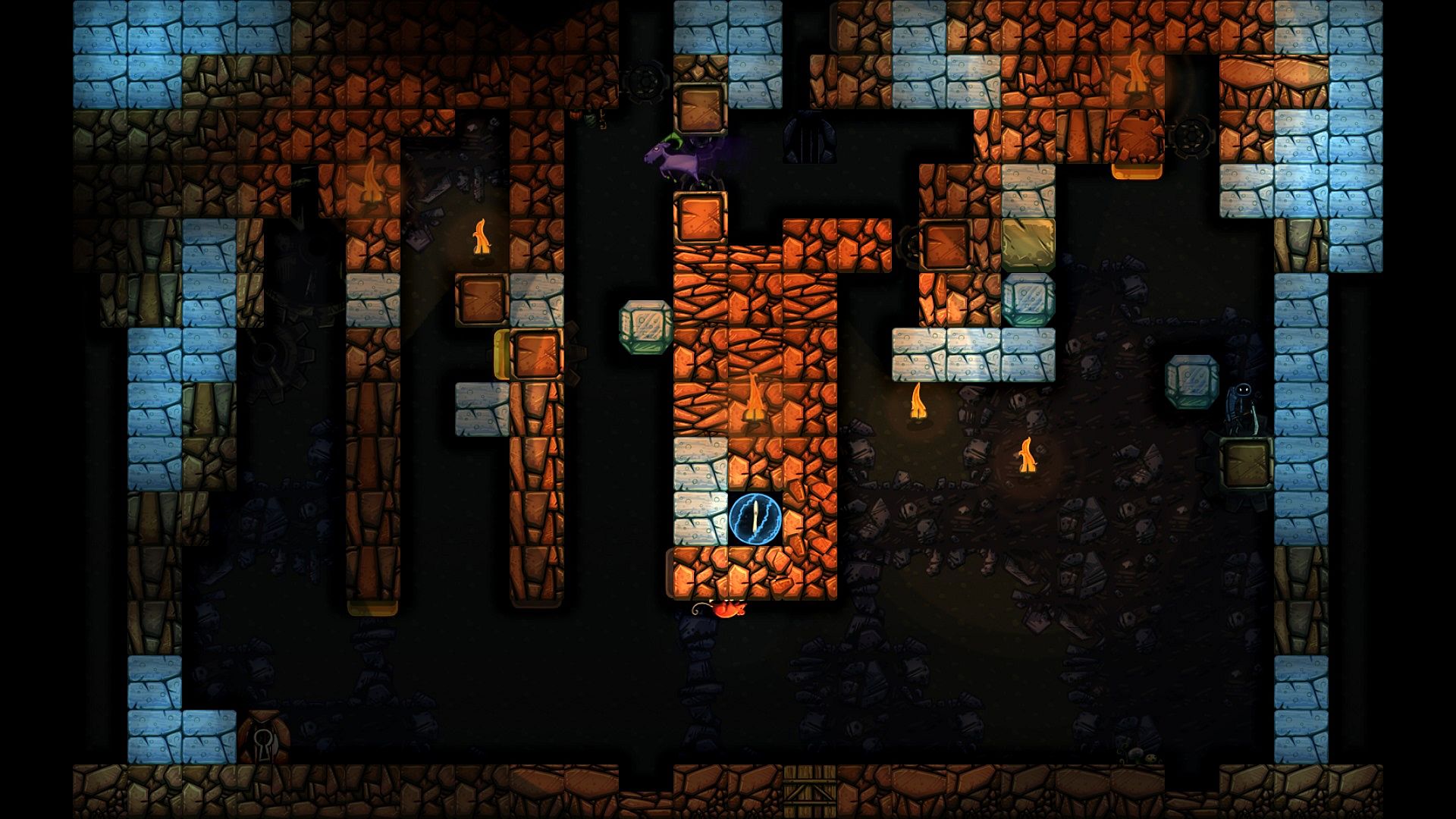
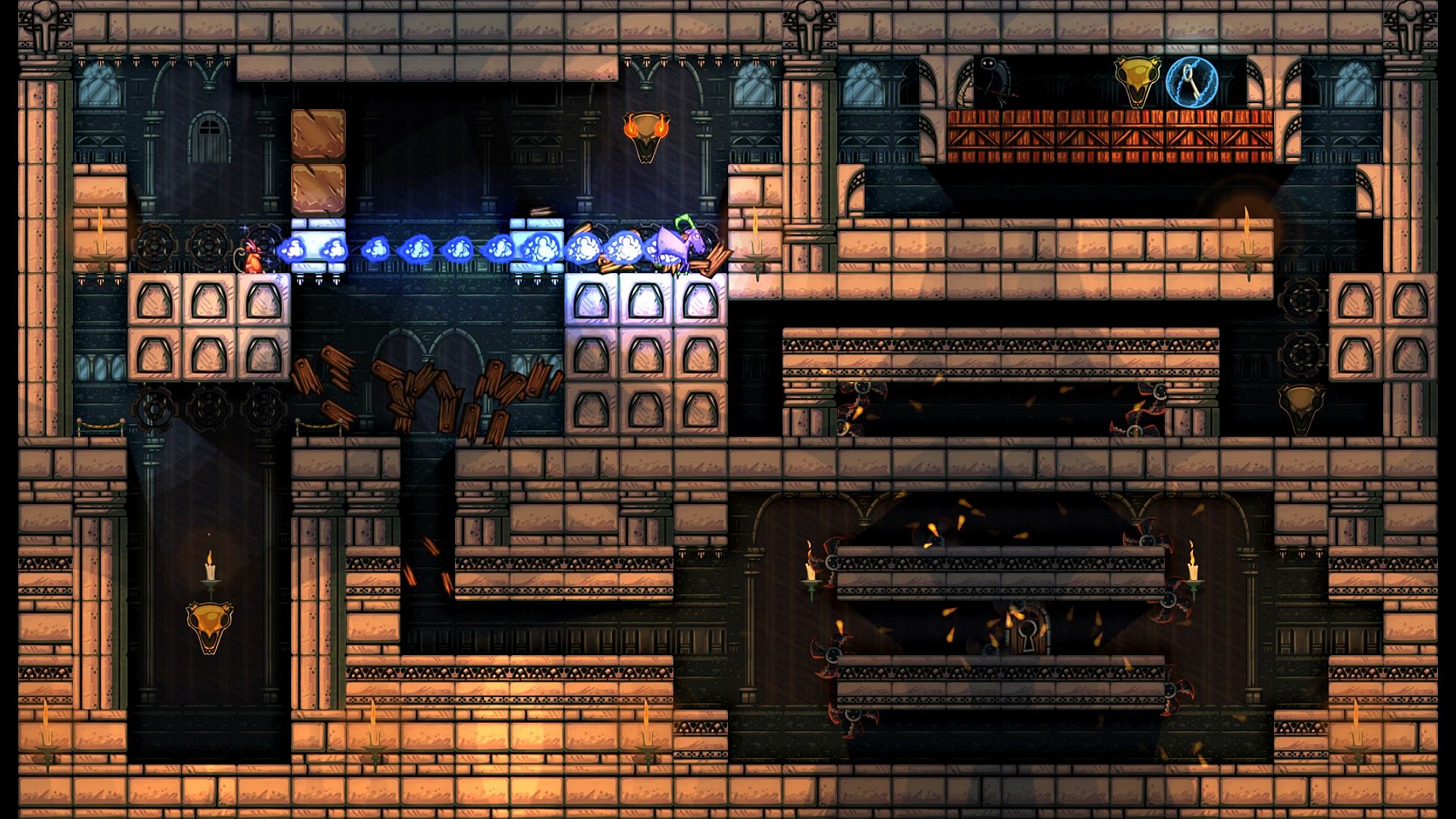
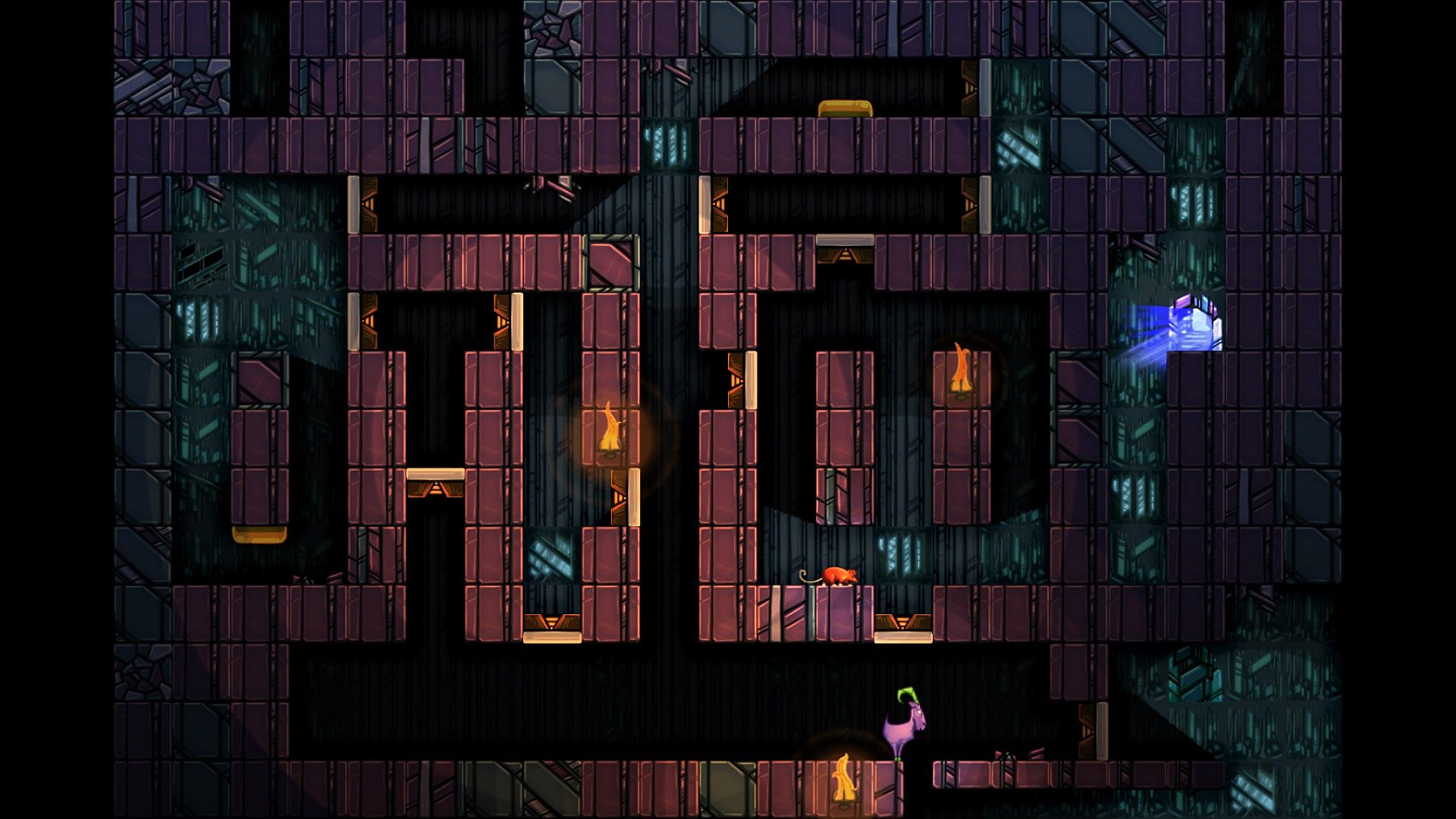
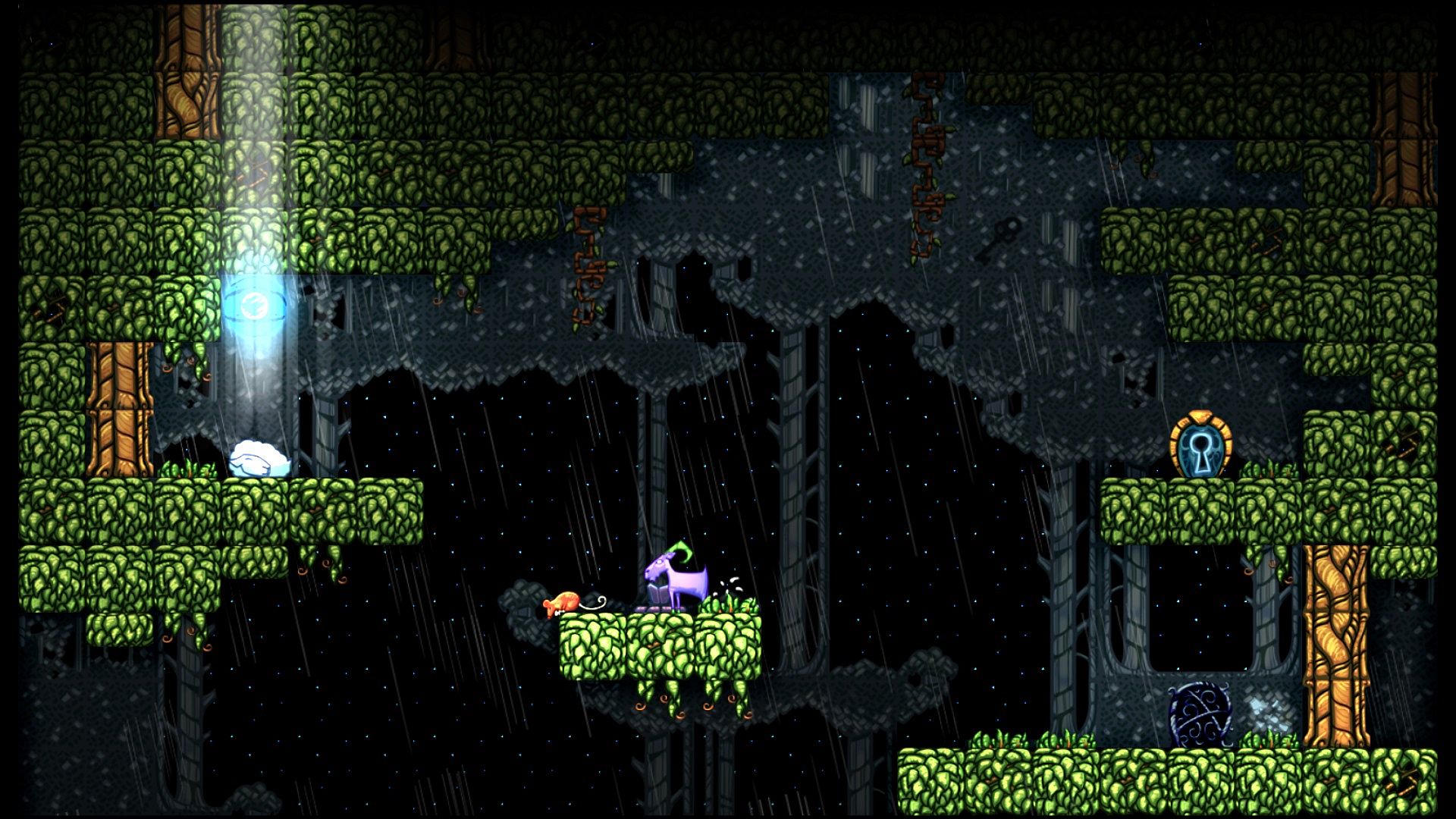
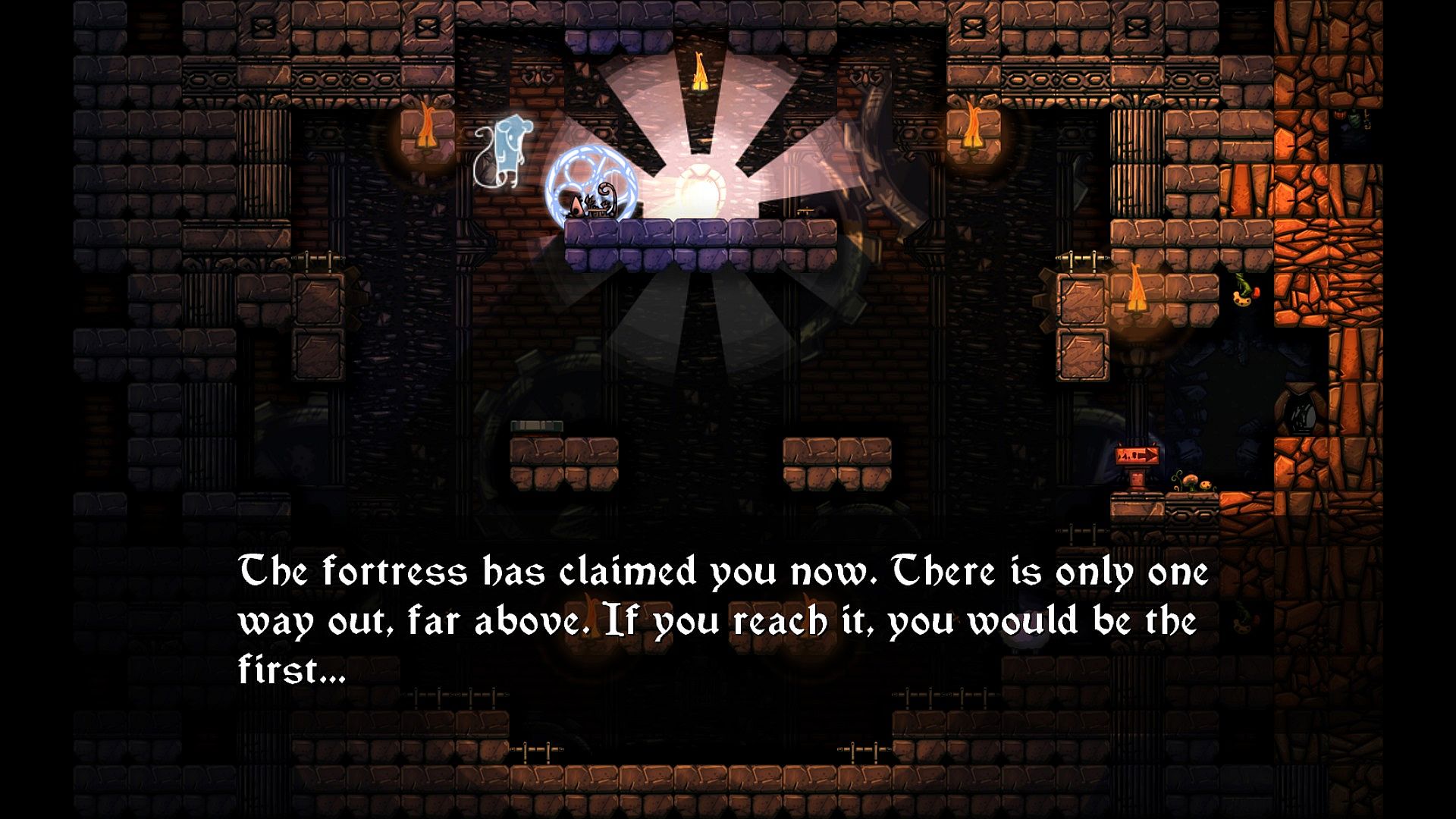
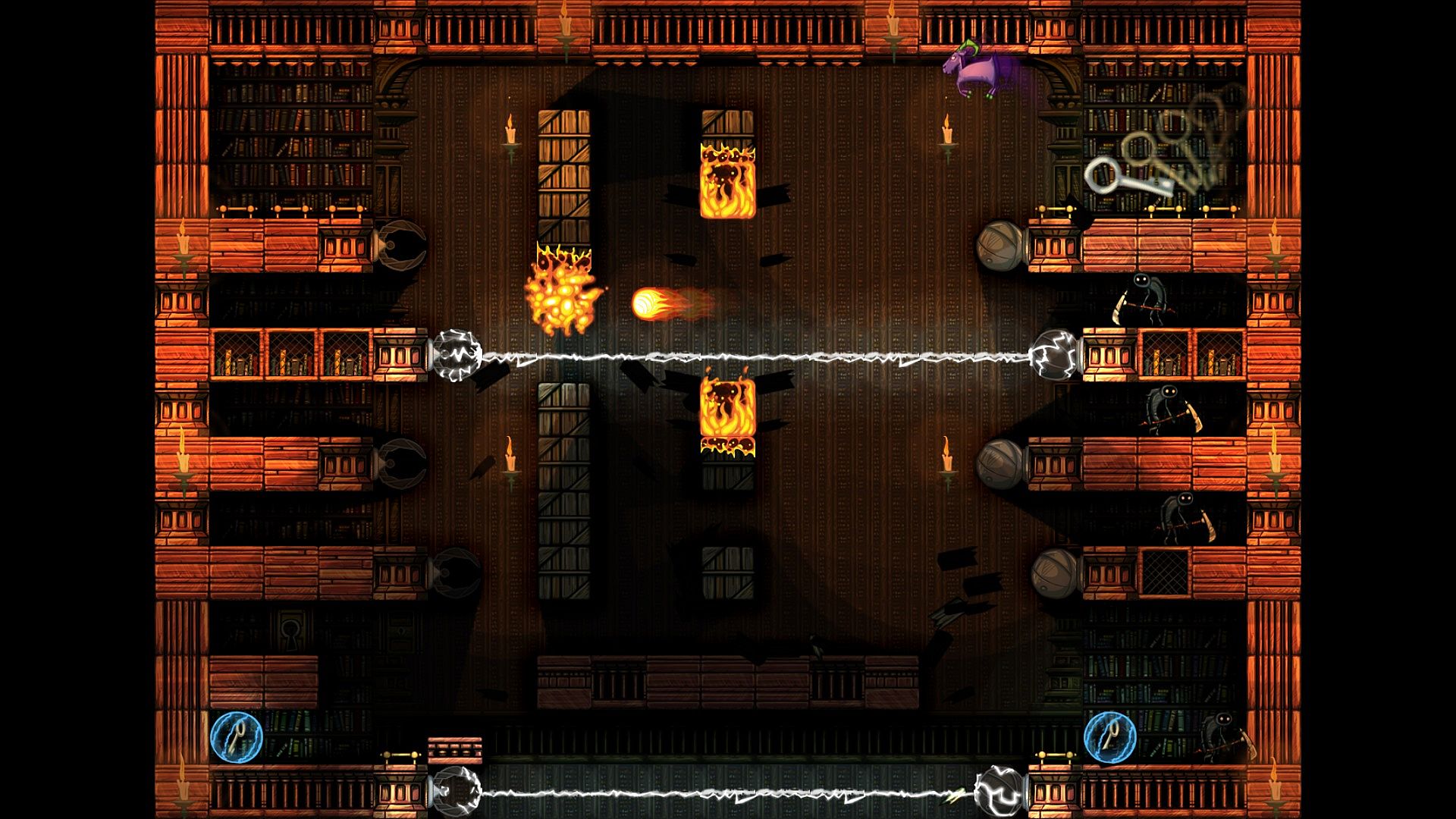
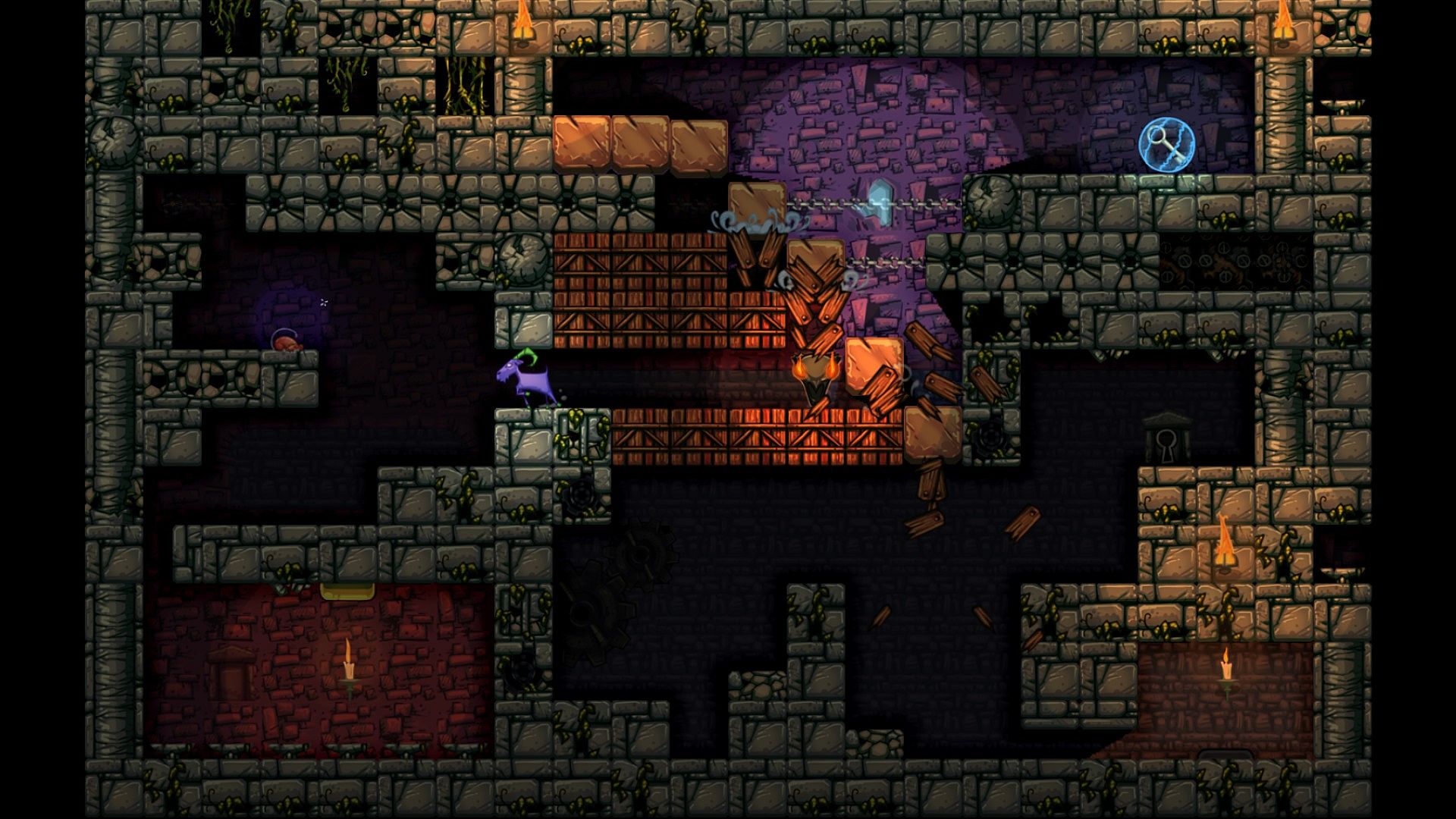
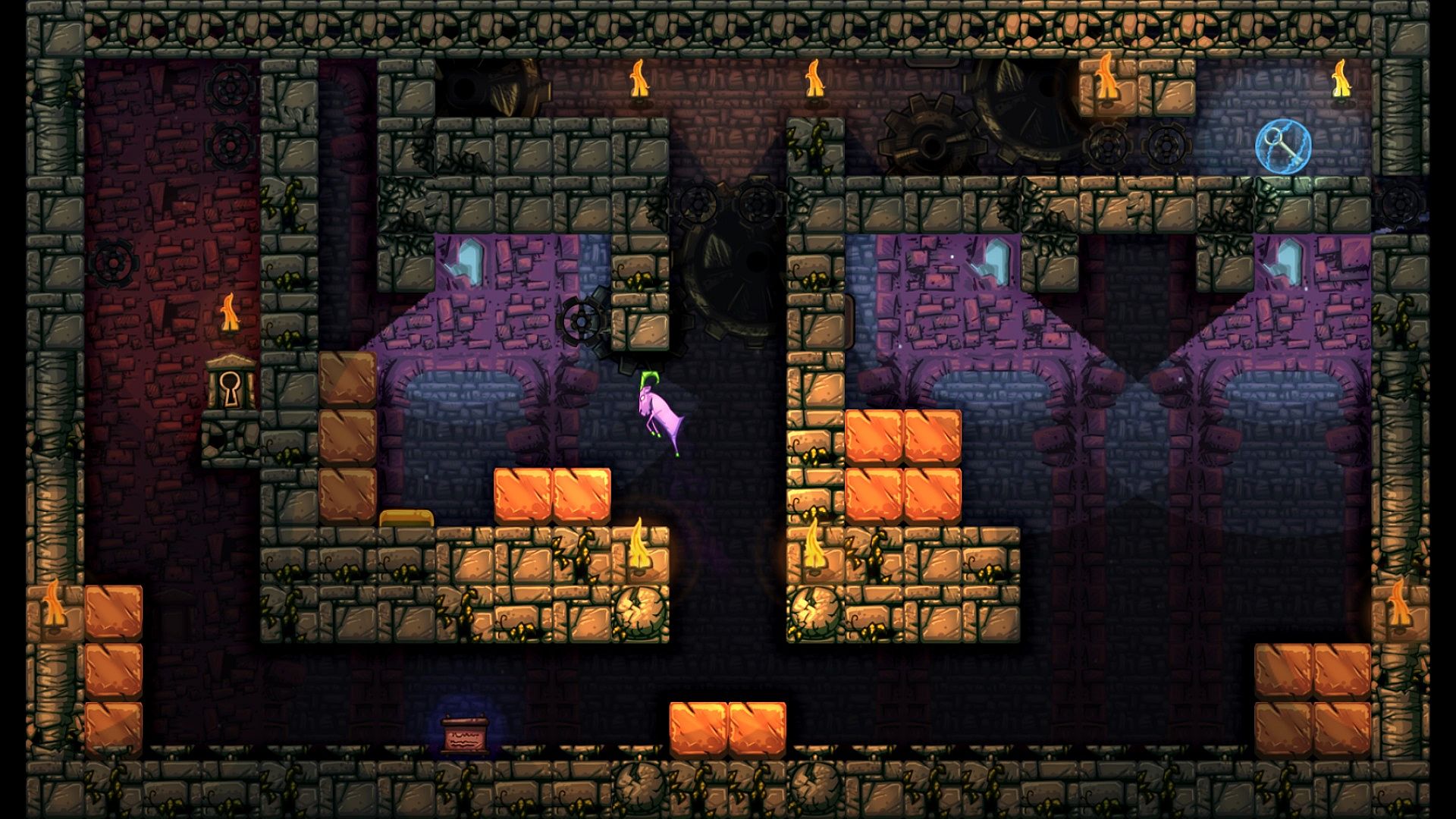
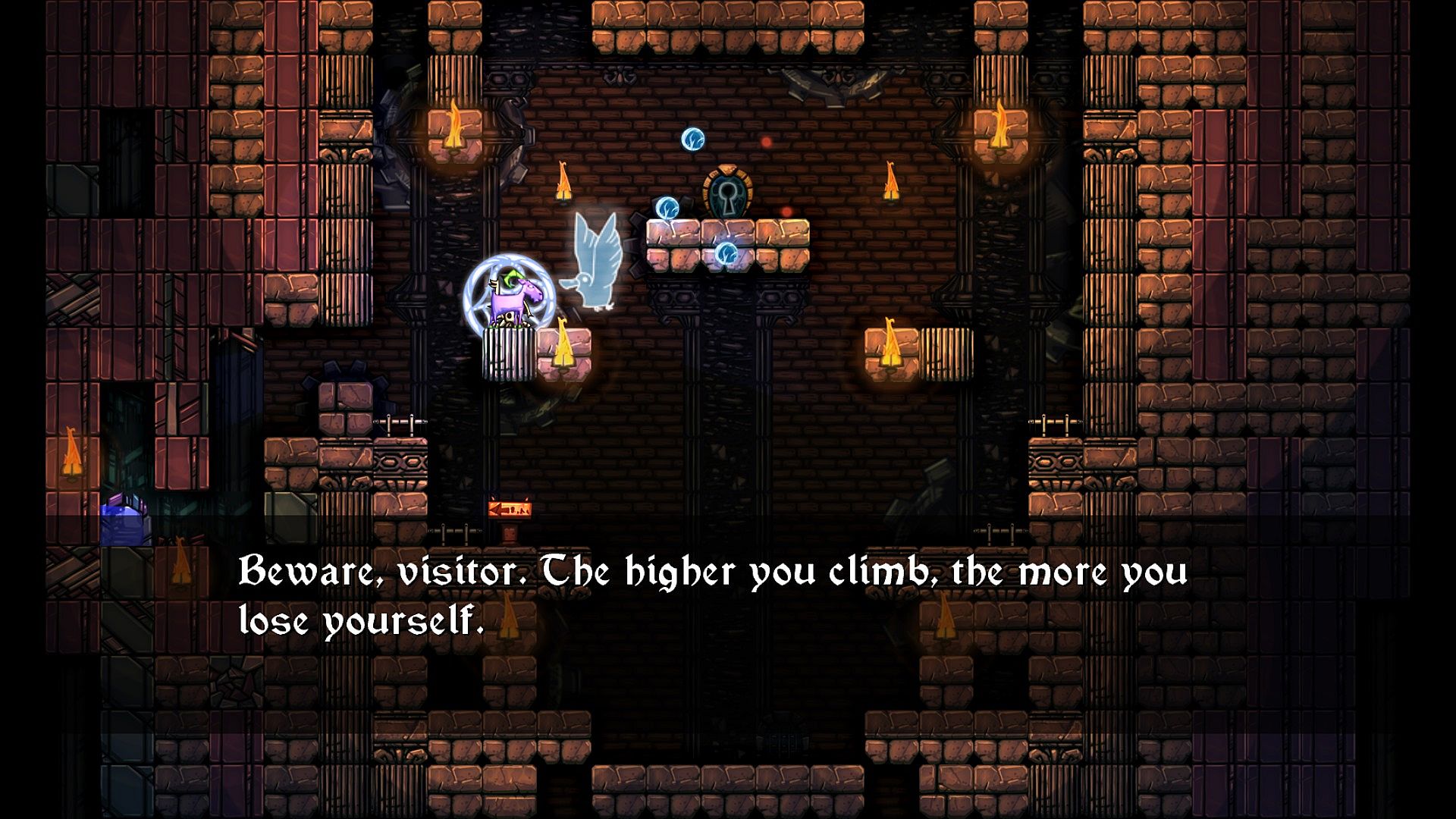
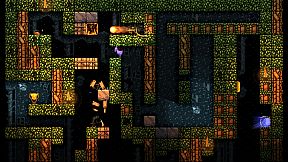
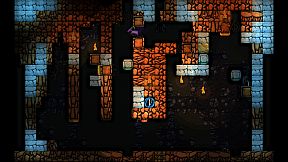
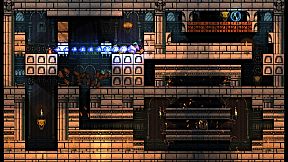
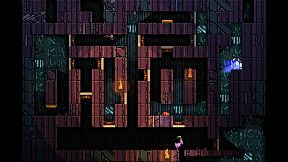
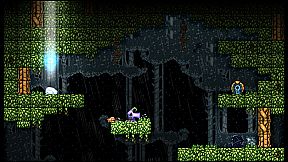
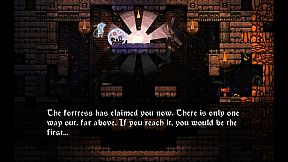
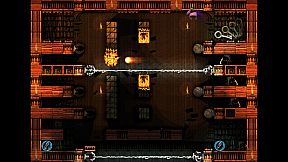
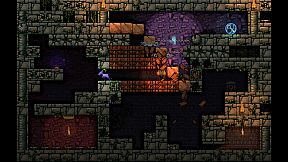
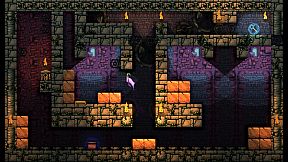
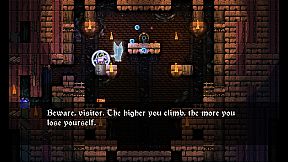
Escape Goat 2 is a puzzle platformer for PC in which players guide a determined goat through a sprawling dungeon known as the Stronghold of Toragos. The core experience centers on navigating rooms packed with traps, switches, and environmental hazards while using a companion mouse to reach otherwise inaccessible areas. Progress depends on careful observation, precise timing, and creative manipulation of the surroundings rather than combat or speed.
Gameplay
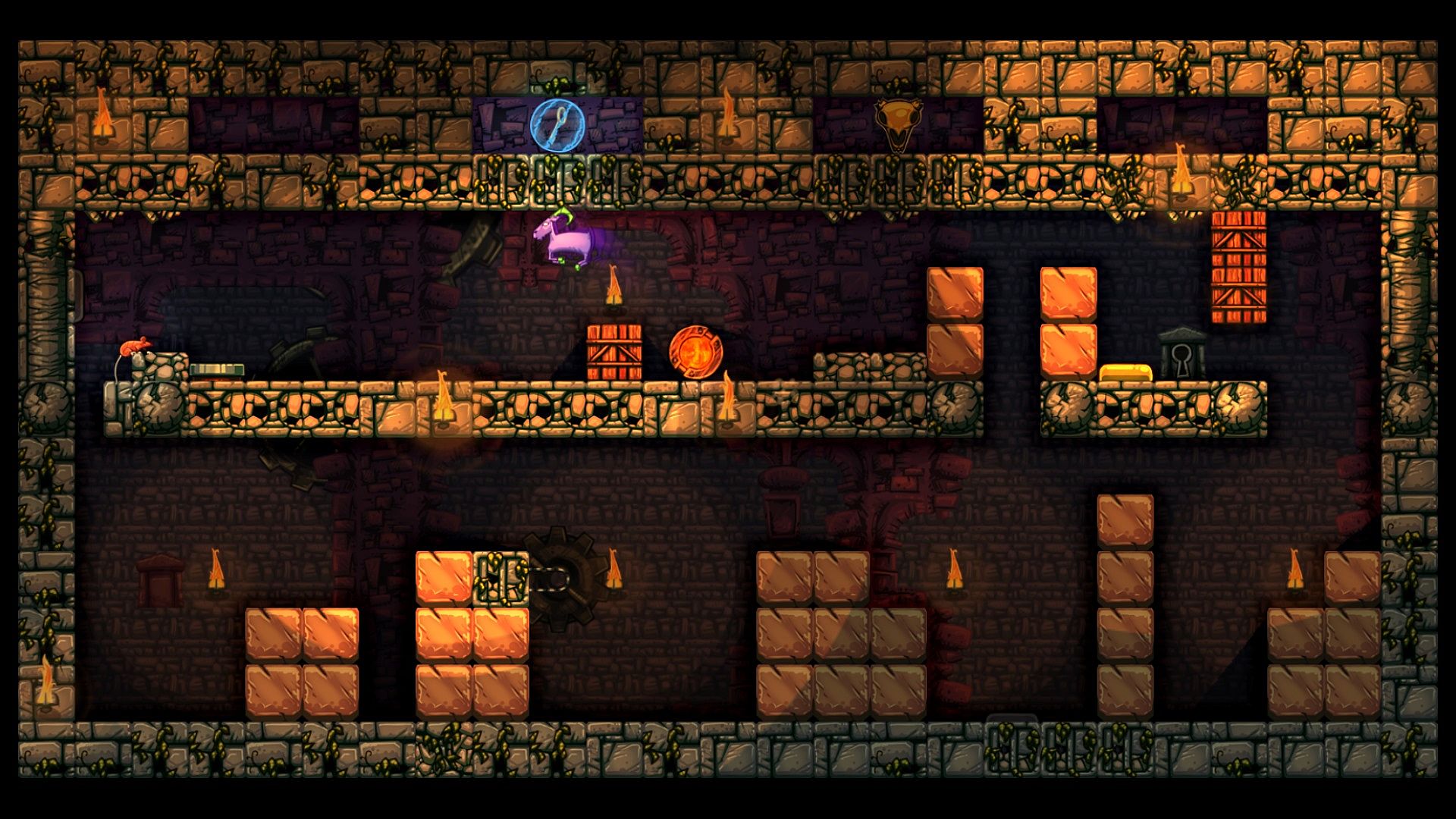
The gameplay loop revolves around clearing individual rooms by reaching the exit. The goat can jump, butt objects, and interact with machinery such as levers, moving platforms, and destructible walls. These elements allow rooms to change shape or reveal new paths as the player experiments. The immortal mouse familiar serves as a key tool, crawling through small gaps to activate switches, distract enemies, or trigger mechanisms from a distance. Rooms grow more intricate across the ten zones, introducing new trap types and combinations that demand both quick reflexes and deliberate planning. Destructible and movable walls add another layer, letting players reshape the environment to create safe routes or block hazards. The hand-drawn art and dynamic lighting highlight interactive elements, making it easier to spot subtle clues in the geometry and machinery.
Game Modes
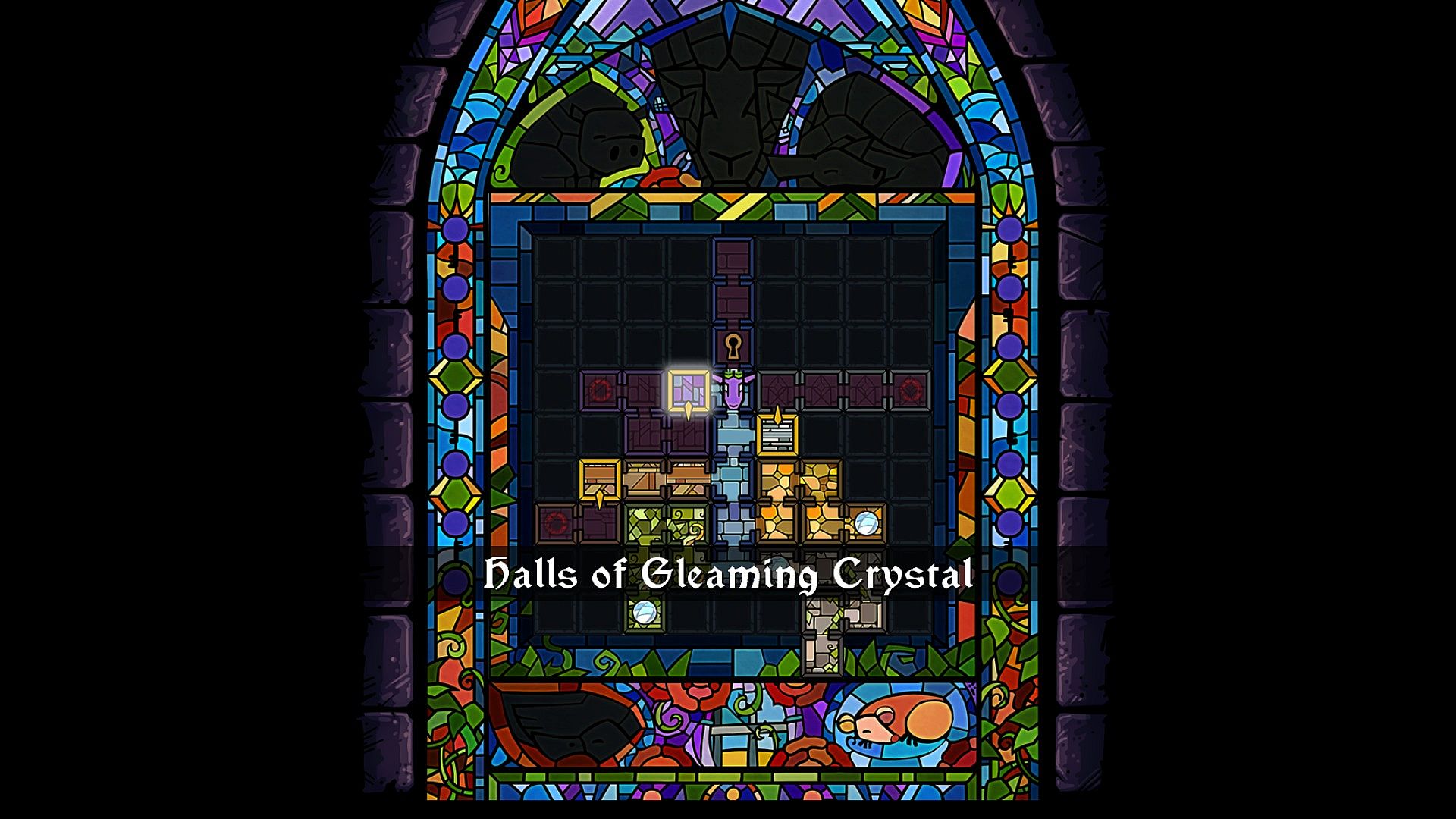
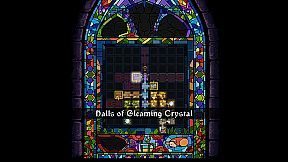
Escape Goat 2 offers a single-player campaign focused on sequential room completion. There are no separate competitive or cooperative modes. Players advance by selecting paths through the ten distinct zones of the Stronghold, with each zone presenting a themed set of challenges. The structure encourages replaying rooms to discover alternate solutions or optimize routes, though the primary goal remains escaping each area and ultimately freeing imprisoned friends. Over one hundred rooms form the complete experience, blending straightforward introductions with increasingly complex puzzles that build on earlier mechanics.
The Stronghold and Its Challenges
The Stronghold divides into ten unique zones, each with its own visual style and trap roster. Early zones teach basic interactions with the mouse and simple machinery, while later ones layer multiple systems together. Movable walls and hidden mechanisms let players alter room layouts mid-attempt, turning dead ends into viable paths. Lore elements appear through scattered sheep-related details that hint at the backstory without interrupting the flow. The emphasis stays on spatial reasoning and experimentation, with failure teaching the exact timing or sequence needed for success.
Visuals, Audio, and Presentation
Hand-drawn high-definition artwork brings the dungeon to life, supported by a custom lighting engine that casts dynamic shadows and highlights interactive objects. The soundtrack draws from 90s Redbook Audio style and includes a guest track by composer Disasterpeace. Sound effects reinforce the physicality of the goat's movements and the mouse's actions, providing clear feedback during puzzle attempts. The overall presentation keeps the focus on clarity so players can concentrate on solving the rooms rather than deciphering the visuals.
Is It Worth Playing?
Escape Goat 2 suits players who enjoy methodical puzzle platformers that reward observation and creative problem solving. The addition of the mouse familiar and environmental manipulation sets it apart from simpler entries in the genre. Reception highlights the satisfying progression through increasingly clever rooms and the sense of accomplishment when a complex sequence clicks into place. Some players note that the controls require practice and that certain puzzles can feel punishing on first attempts. The game remains a complete, self-contained experience with no ongoing updates or seasonal content. Those who appreciate the original Escape Goat or similar indie puzzle titles will find the expanded content and refined presentation worthwhile, particularly if they value single-player challenges over multiplayer features.