


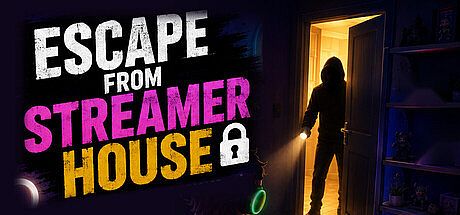


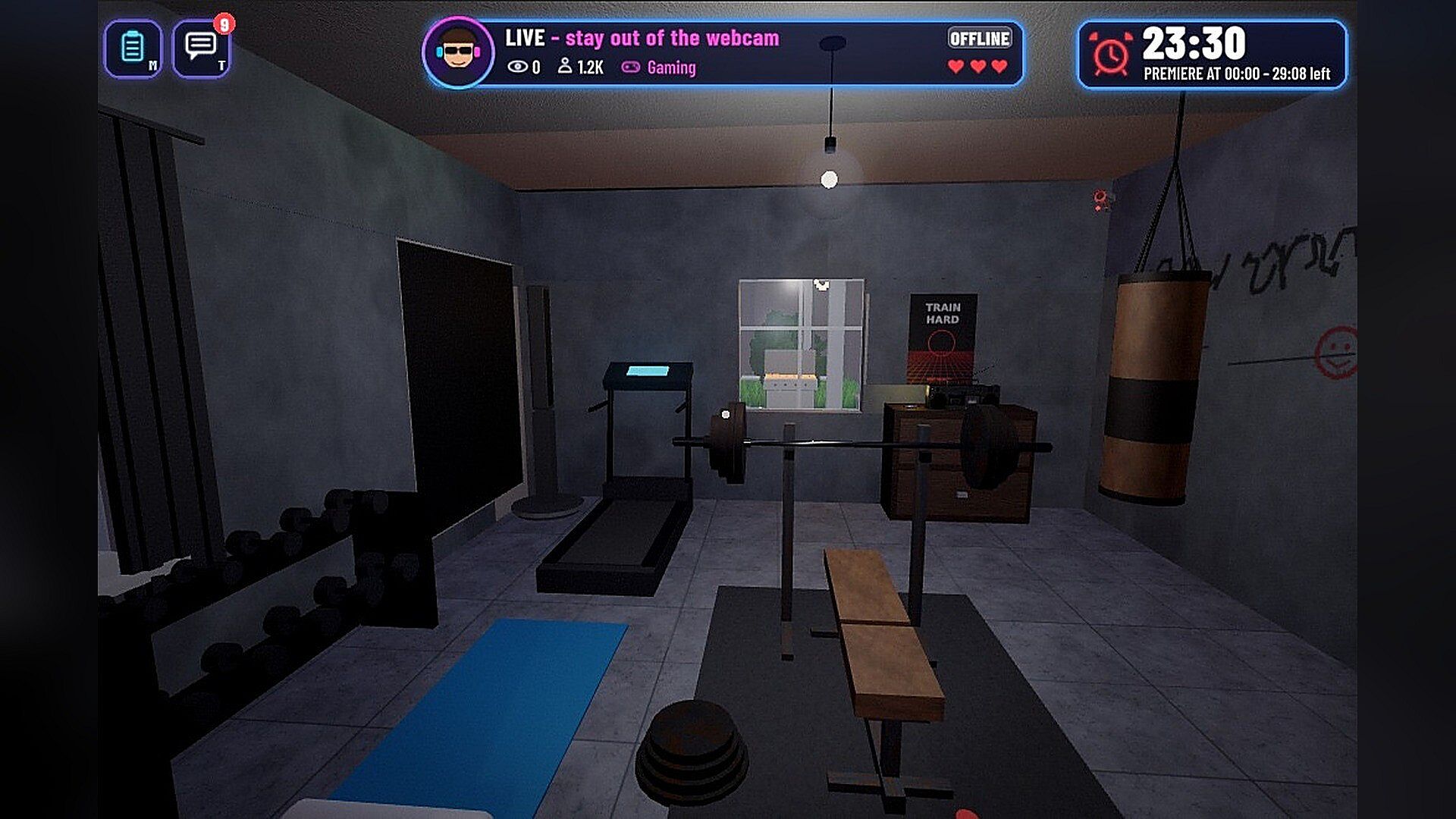
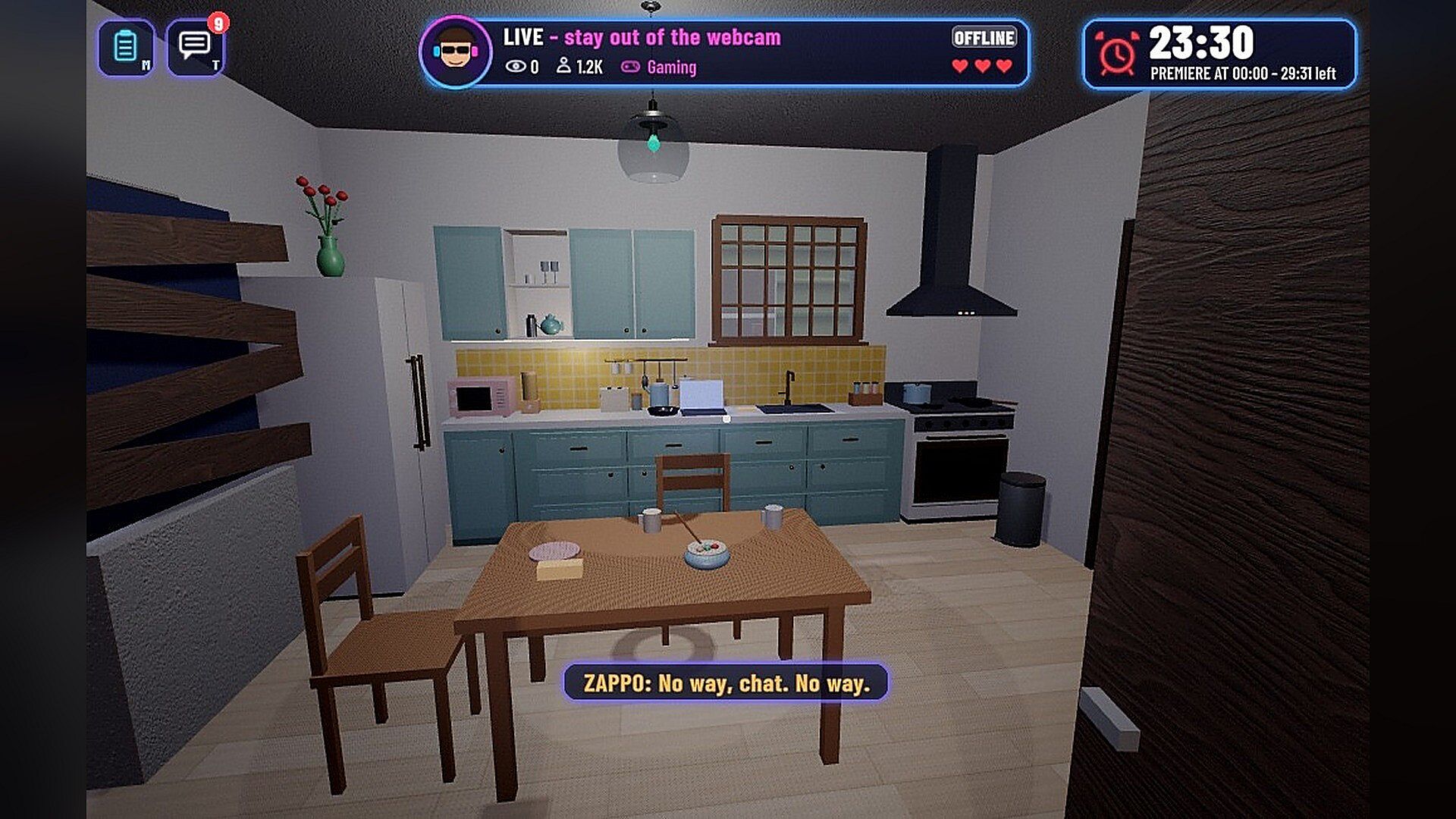
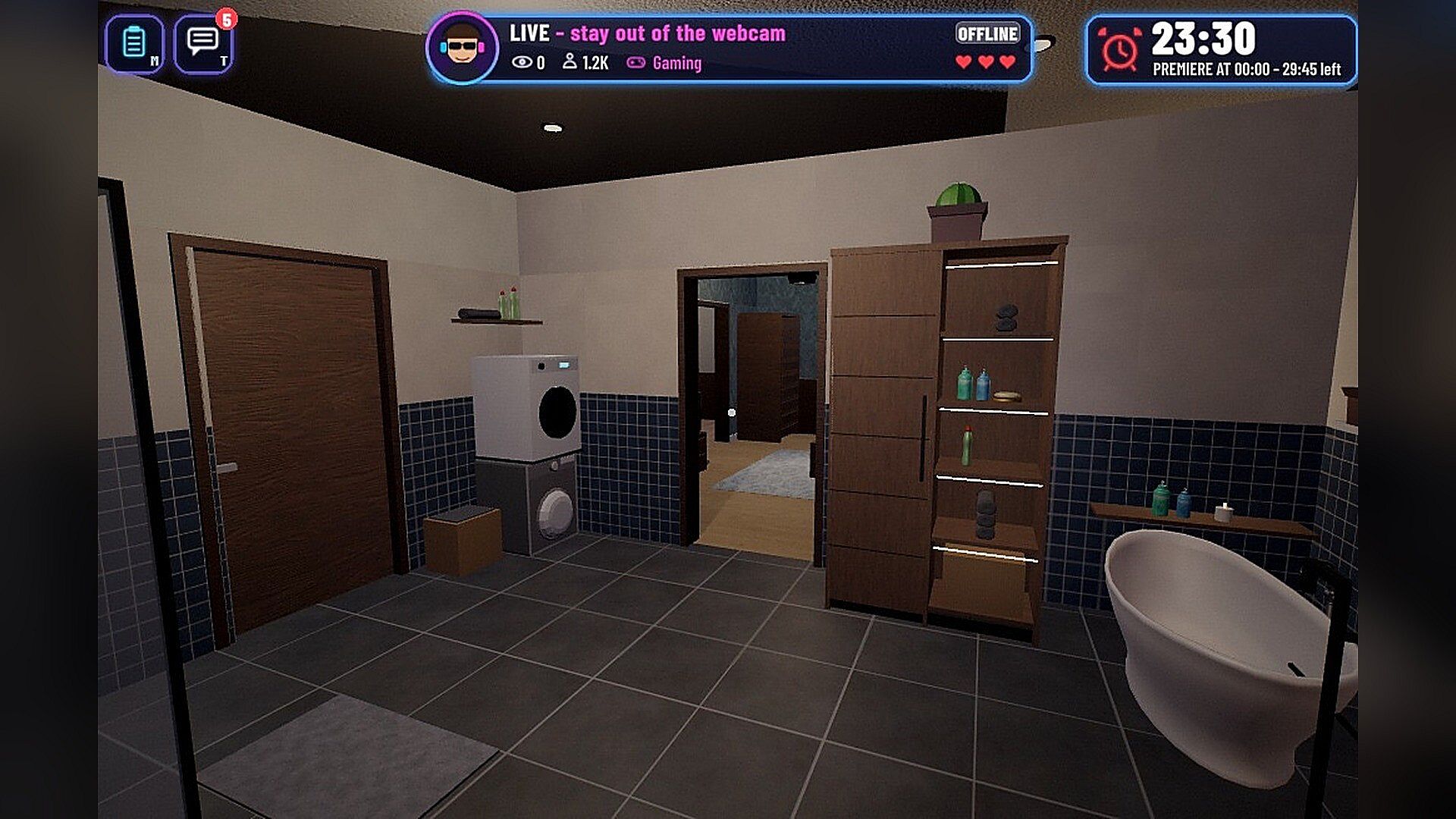
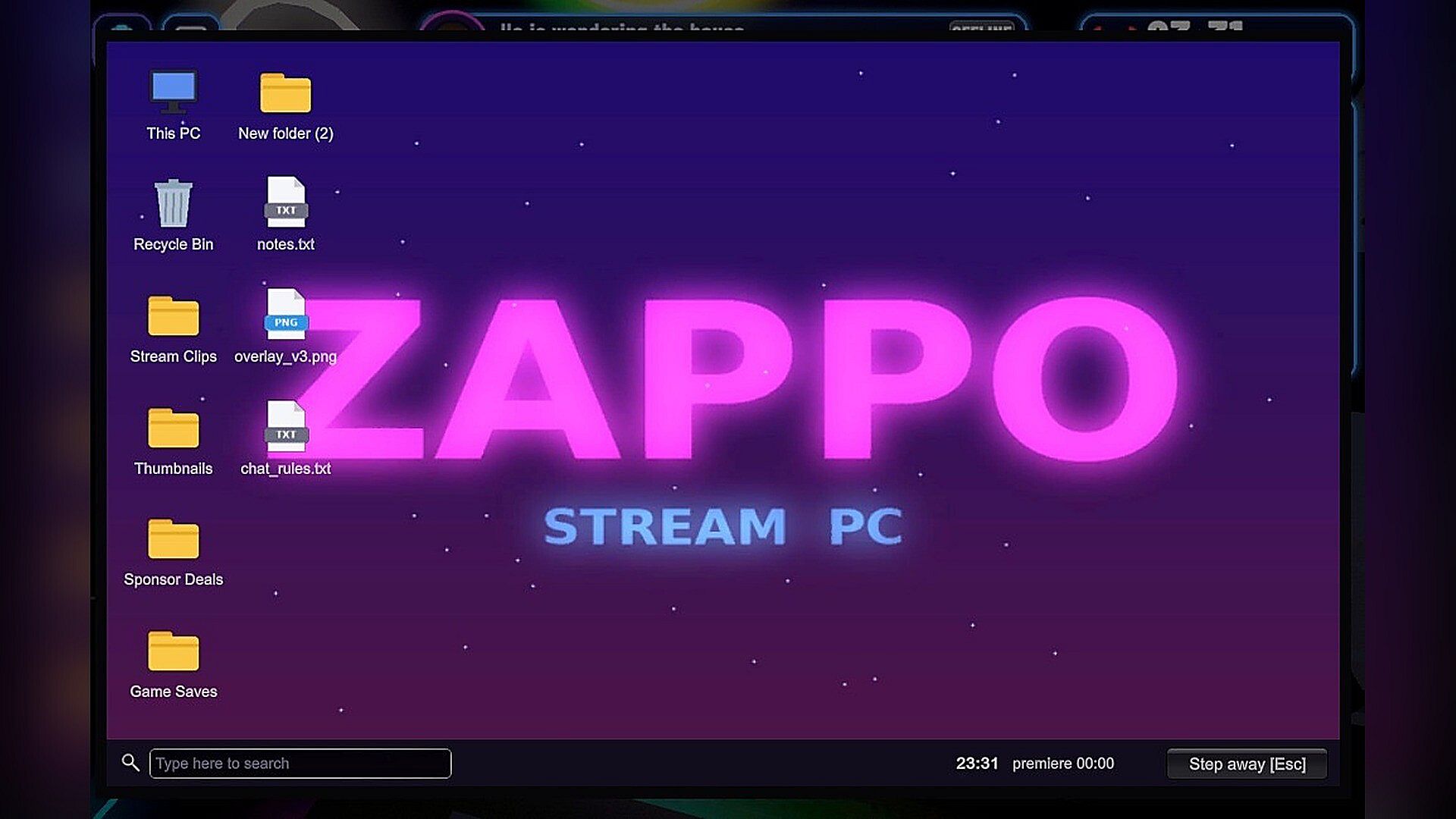
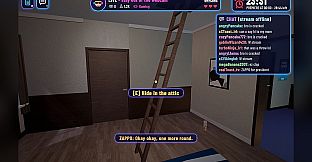
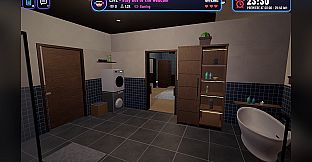

Escape From Streamer House is a single-player stealth adventure game set in a fully explorable two-floor house complete with garage, basement, garden and pool. Players take on the role of an intruder trapped inside the home of streamer ZAPPO at 23:30, with a video premiere scheduled for midnight that must be deleted from his PC before escape is possible. The core loop revolves around sneaking through rooms, avoiding detection by webcams and live viewers, and managing noise while ZAPPO streams activities such as gaming, cooking, gardening or running errands.
Gameplay
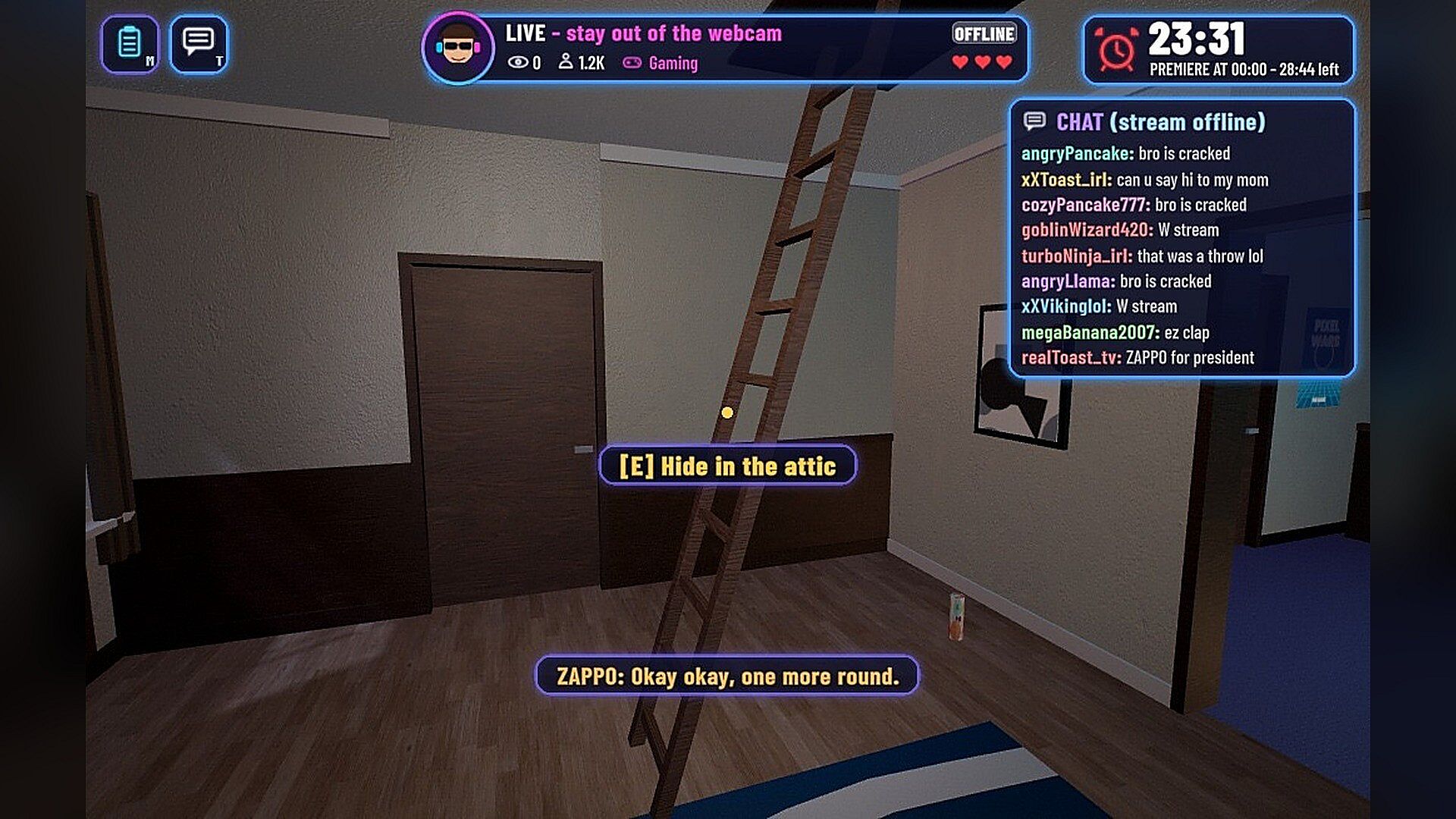
The experience centers on careful movement and timing in a reactive environment. Webcams positioned throughout the studio, kitchen and even held by ZAPPO feed footage directly to thousands of viewers whose typed comments influence his behavior. Staying out of frame and remaining quiet opens brief windows for progress, while any sound risks drawing attention and shifting his plans. Exploration covers multiple connected areas where items appear in randomized locations each attempt, and certain exits may be blocked on a given night. Players can interact with objects like charging a spare garage remote, unscrewing a breaker panel or locating a gate key to create escape opportunities. Donations sent from ZAPPO's old phone serve as a distraction tool, triggering polls or errands that keep him occupied longer.
Sound management forms a central mechanic. Excessive noise triggers a hunt phase in which ZAPPO grabs his phone, activates the flashlight and searches room by room with real-time assistance from chat members calling out potential hiding spots. Hiding locations range from wardrobes and boxes to bushes and even underwater sections of the pool. Once alerted, ZAPPO releases his husky BYTE from its garden chain. The dog can be temporarily distracted with items such as dog food, a ball or a treat, and closed doors block its path while open ones allow free movement. These systems combine to create tense moments of evasion that change based on player actions and the streamer's current activity.
Game Modes
The game structures play around a consistent midnight deadline with procedural variation in item placement and blocked paths. Five difficulty levels adjust the streamer's awareness and reaction speed, ranging from a practice setting where he remains unaware to a nightmare mode that heightens every risk. Each run emphasizes different priorities, such as prioritizing stealth over speed or using distractions more aggressively. Multiple endings exist depending on the chosen exit route, including paths through the garage or the gate, or an alternative outcome tied to the video premiere. Randomization ensures no two nights play identically, encouraging repeated attempts to test different strategies and item combinations.
Key Mechanics and Features
Stealth remains the foundation, supported by reactive AI that responds to visual and audio cues from cameras and chat. The streamer alters his schedule dynamically, opening new opportunities or closing others based on live feedback. BYTE adds a secondary pursuit element once the alert level rises. Environmental interactions allow players to manipulate the house itself, such as using the pool for concealment or managing doors to control the dog's movement. The single-player focus keeps attention on personal decision-making under pressure rather than coordination with others.
Is It Worth Playing?
Escape From Streamer House suits players who enjoy methodical stealth experiences with strong reactive elements and procedural replayability. The combination of a living streamer AI, chat influence and animal pursuit creates a distinct tension that rewards patience and observation. Randomized layouts and multiple difficulty options support extended play sessions for those seeking mastery or varied outcomes. Availability on PC makes it accessible for keyboard-and-mouse or controller setups, though the emphasis on sound cues and timing favors setups that allow precise audio monitoring. Those drawn to simulation-style adventures with adventure and action layers will find the core loop engaging across repeated runs.












