








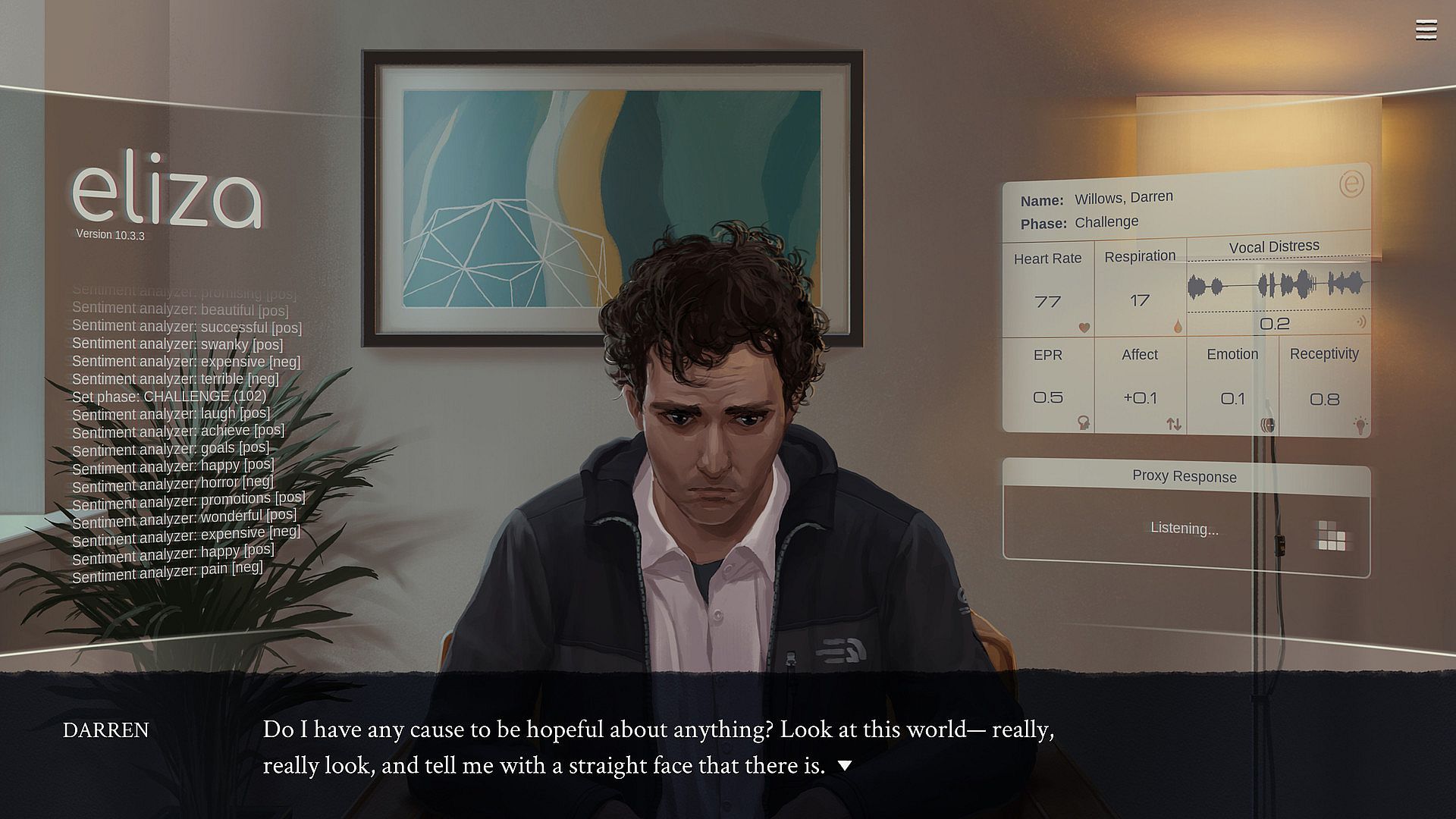

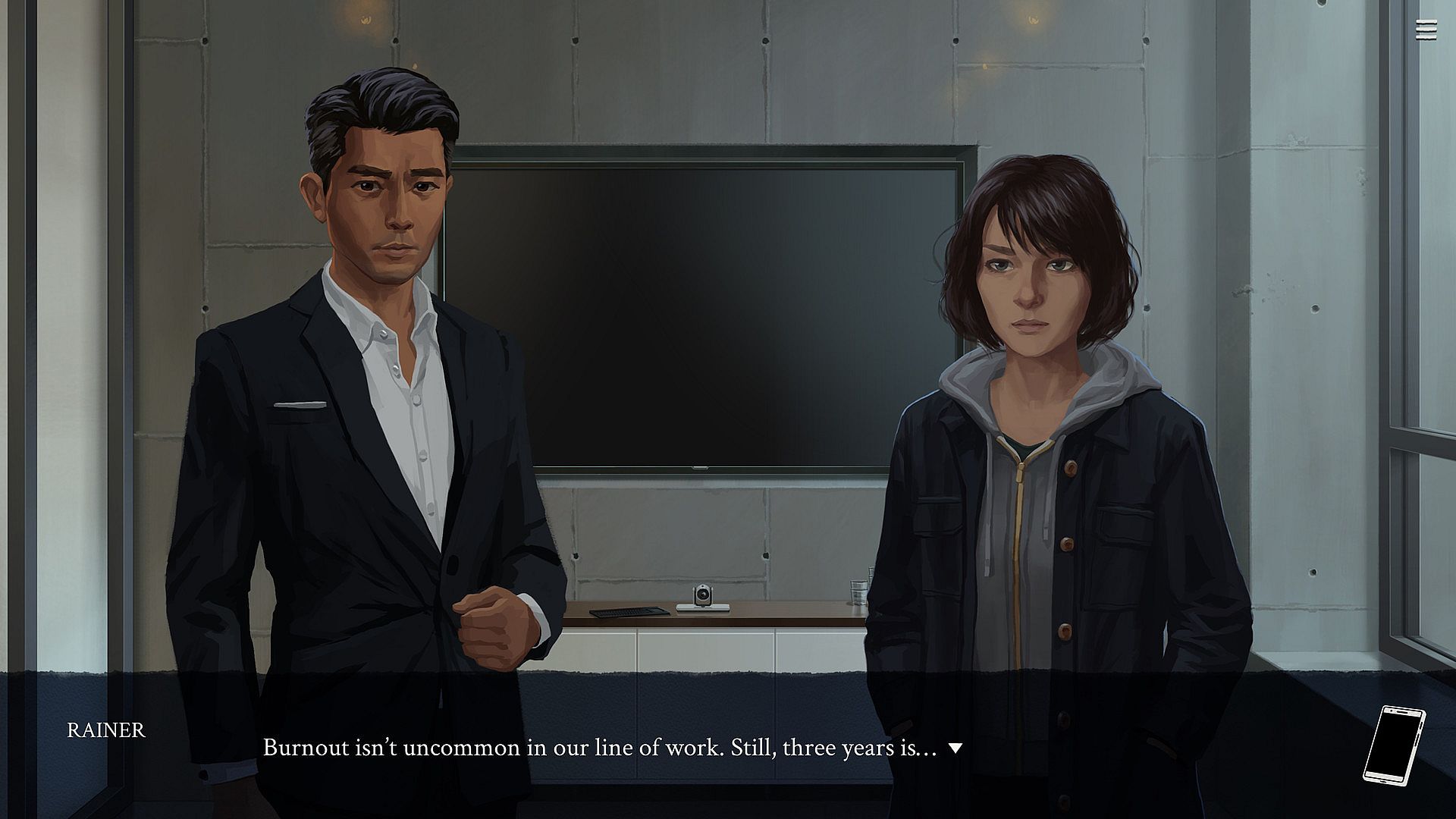
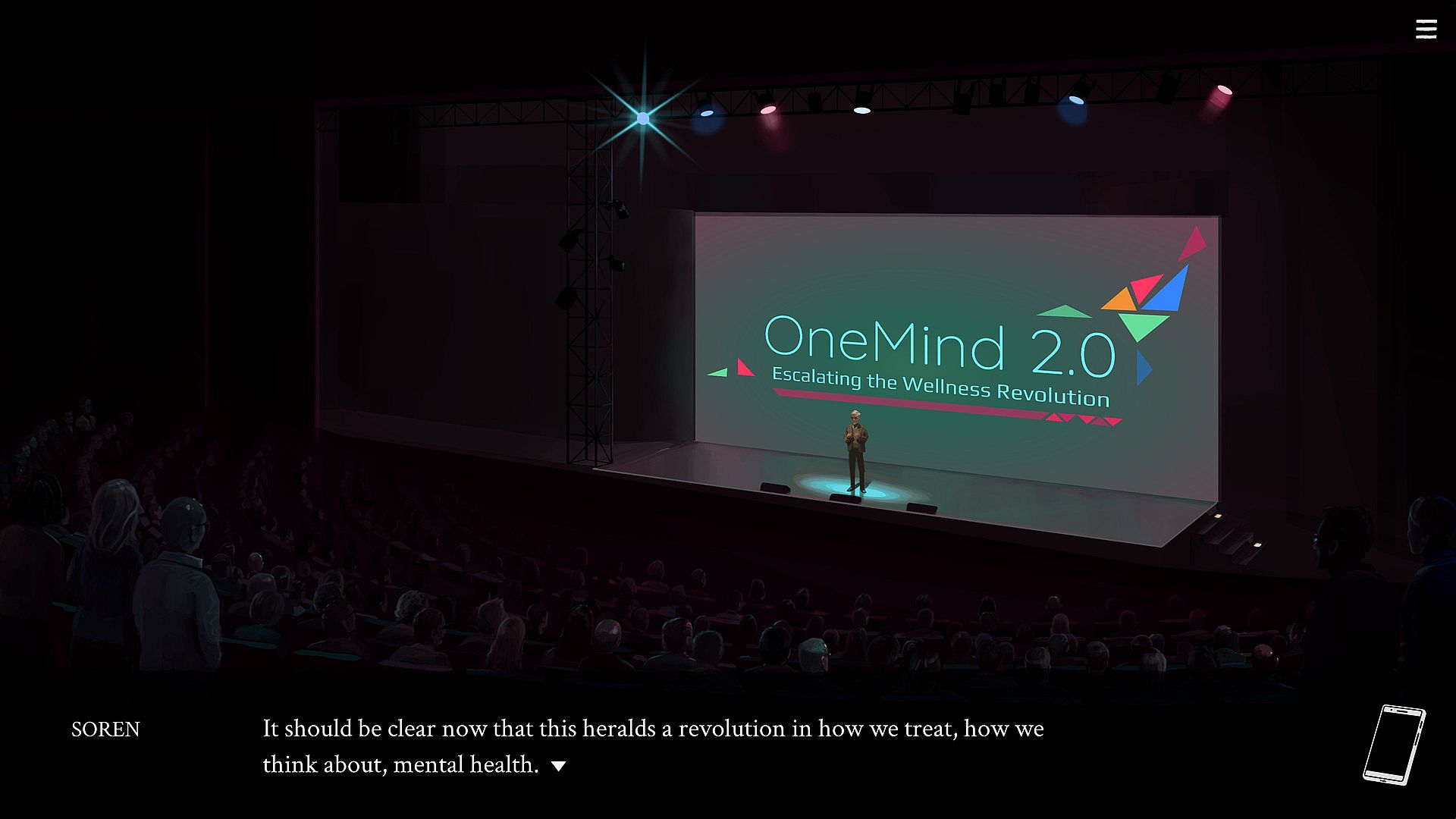




Eliza stands as a thoughtful indie visual novel developed for PC that examines the intersection of artificial intelligence and human counseling. Players follow Evelyn Ishino-Aubrey, who returns to work after a long absence as a proxy operator for the Eliza app. Her role requires reading lines generated in real time by the underlying AI system, with no room for personal input during sessions. The narrative unfolds across present-day Seattle locations rendered in detailed hand-painted artwork, introducing players to clients seeking support and employees at the tech company Skandha that created the program.
Gameplay
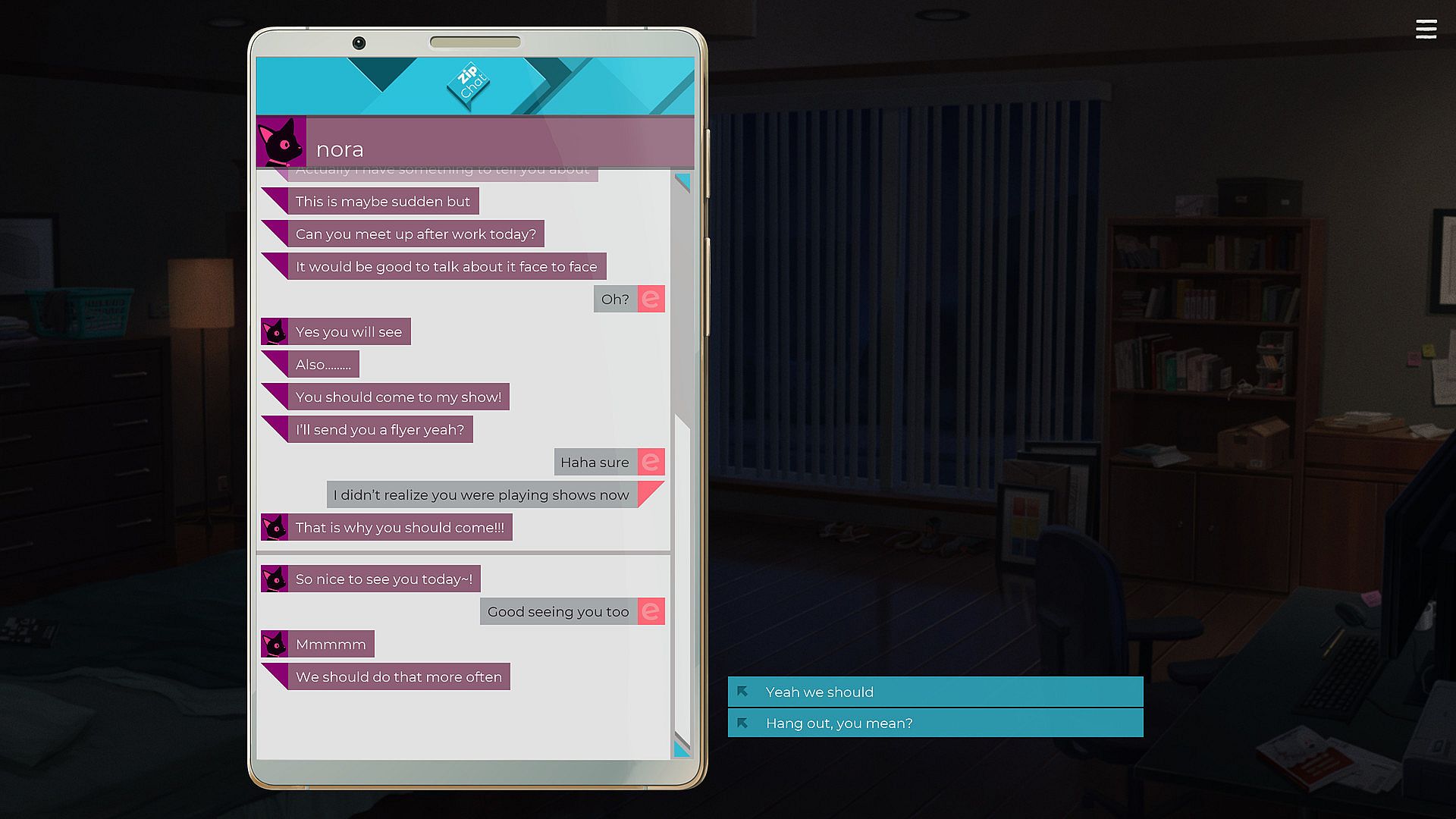
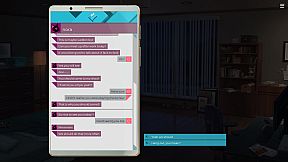
Core gameplay centers on advancing through dialogue-heavy scenes by clicking to progress text and selecting from available response options during conversations. These choices shape immediate interactions and character relationships but lead to a largely linear story path, with only the concluding decision carrying significant weight on the outcome. Players explore Evelyn's reconnection with past acquaintances alongside new encounters with everyday Seattle residents using the counseling service. Internal monologues and phone-based communications provide additional context about her history and the program's development. The experience emphasizes careful reading and reflection over complex controls or resource management.
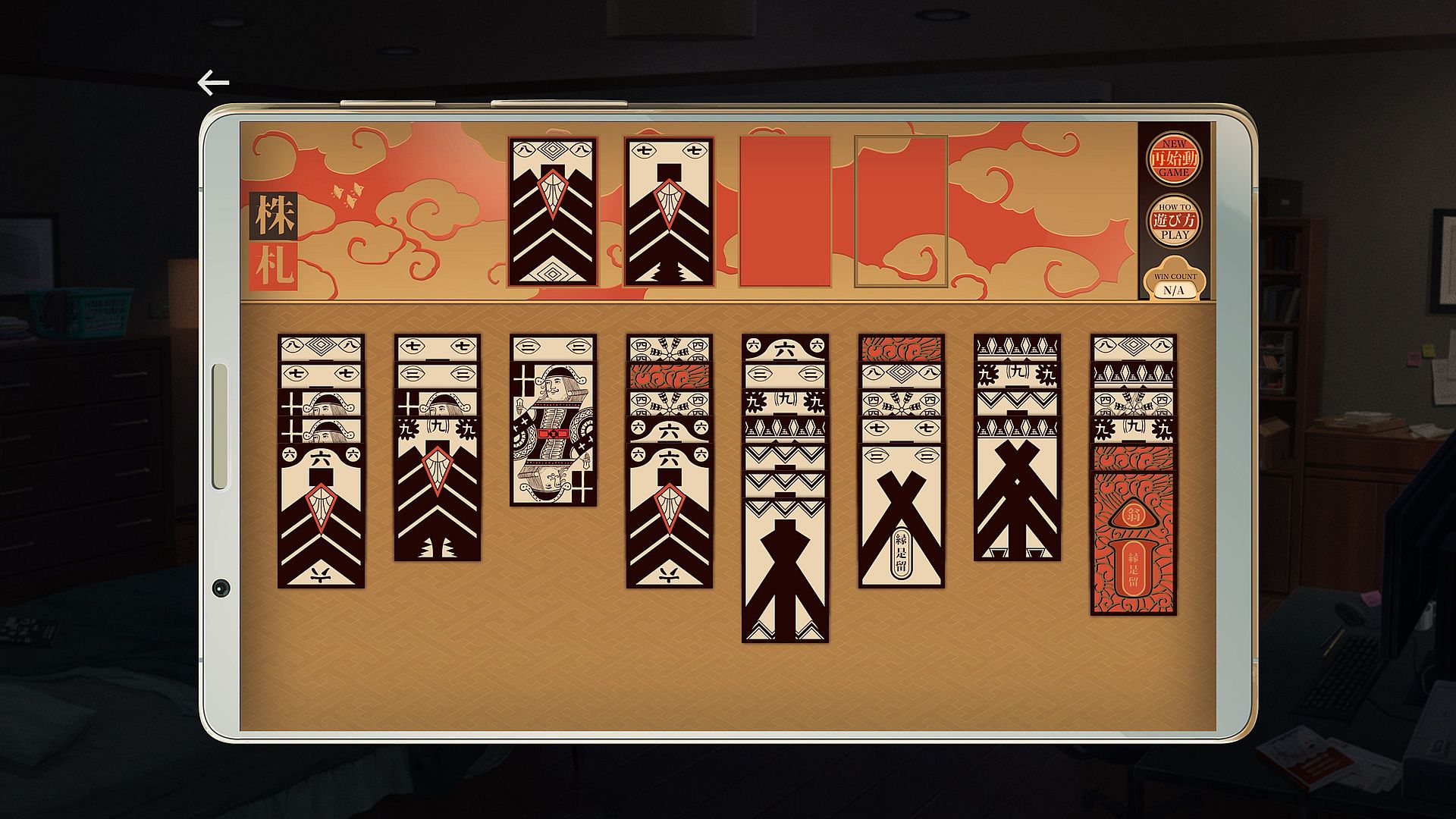
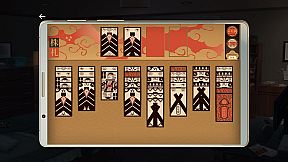
Interspersed sessions allow players to engage with a built-in card game accessible through Evelyn's phone. This activity serves as a break from the main narrative flow while remaining integrated into the character's daily routine. Voice performances bring depth to more than a dozen characters, enhancing the realism of each exchange without requiring player intervention in delivery.
Game Modes
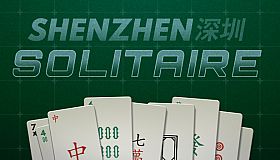
Eliza operates as a single continuous narrative experience without separate modes or branching campaigns. The primary structure follows Evelyn's professional duties and personal reflections in sequence. The only distinct activity is Kabufuda Solitaire, a card-based puzzle drawn from traditional Japanese kabufuda decks. This variant requires matching groups of four cards to seal tableaus under specific movement rules that differ from standard solitaire formats, demanding strategic planning to complete layouts. Sessions of this activity can be accessed at various points to adjust pacing during longer stretches of reading.
Narrative and Themes
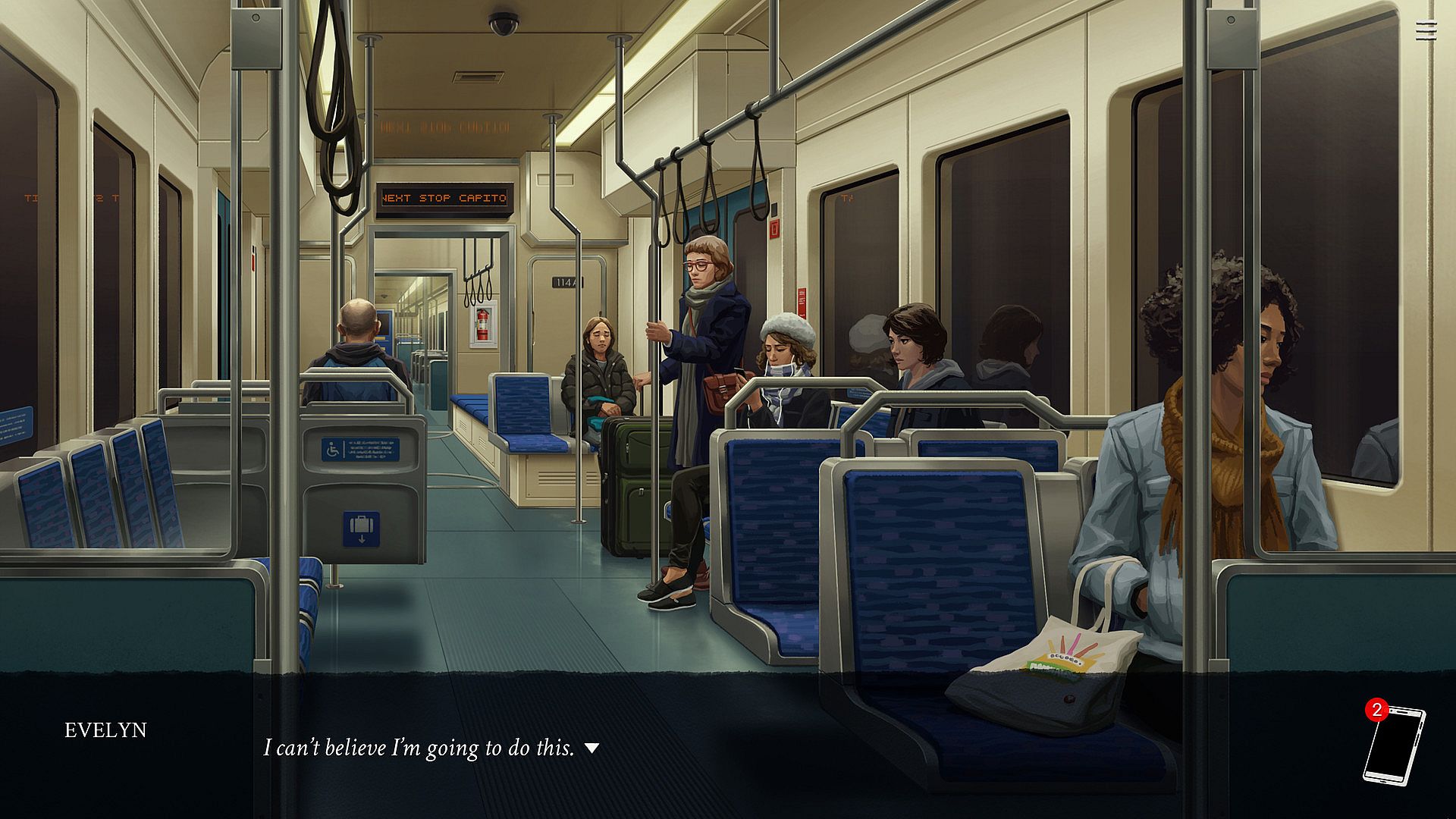
The story probes questions around technology's role in mental health support and the ethical responsibilities of those who build such systems. Evelyn's journey highlights tensions between accessibility benefits and potential drawbacks of automated counseling. Encounters with clients reveal varied personal circumstances, while interactions at Skandha expose internal debates about the program's design and impact. Hand-painted backgrounds capture mundane urban settings like offices, transit, and cafes to ground the philosophical discussions in everyday environments.
Is It Worth Playing?
Eliza suits players interested in narrative-driven experiences that prioritize character development and ethical dilemmas over action or puzzle complexity. Its focused structure delivers a complete story in a single playthrough, supported by strong voice work and consistent visual style. Those who enjoy visual novels centered on contemporary issues will find the themes resonate through direct client sessions and Evelyn's evolving perspective. The solitaire activity offers a light diversion without altering the main progression. Reception among players highlights appreciation for the writing and performances, making it a solid choice for single-player sessions on PC where thoughtful engagement takes precedence.