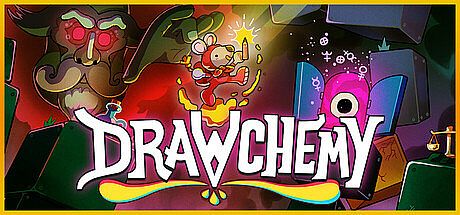


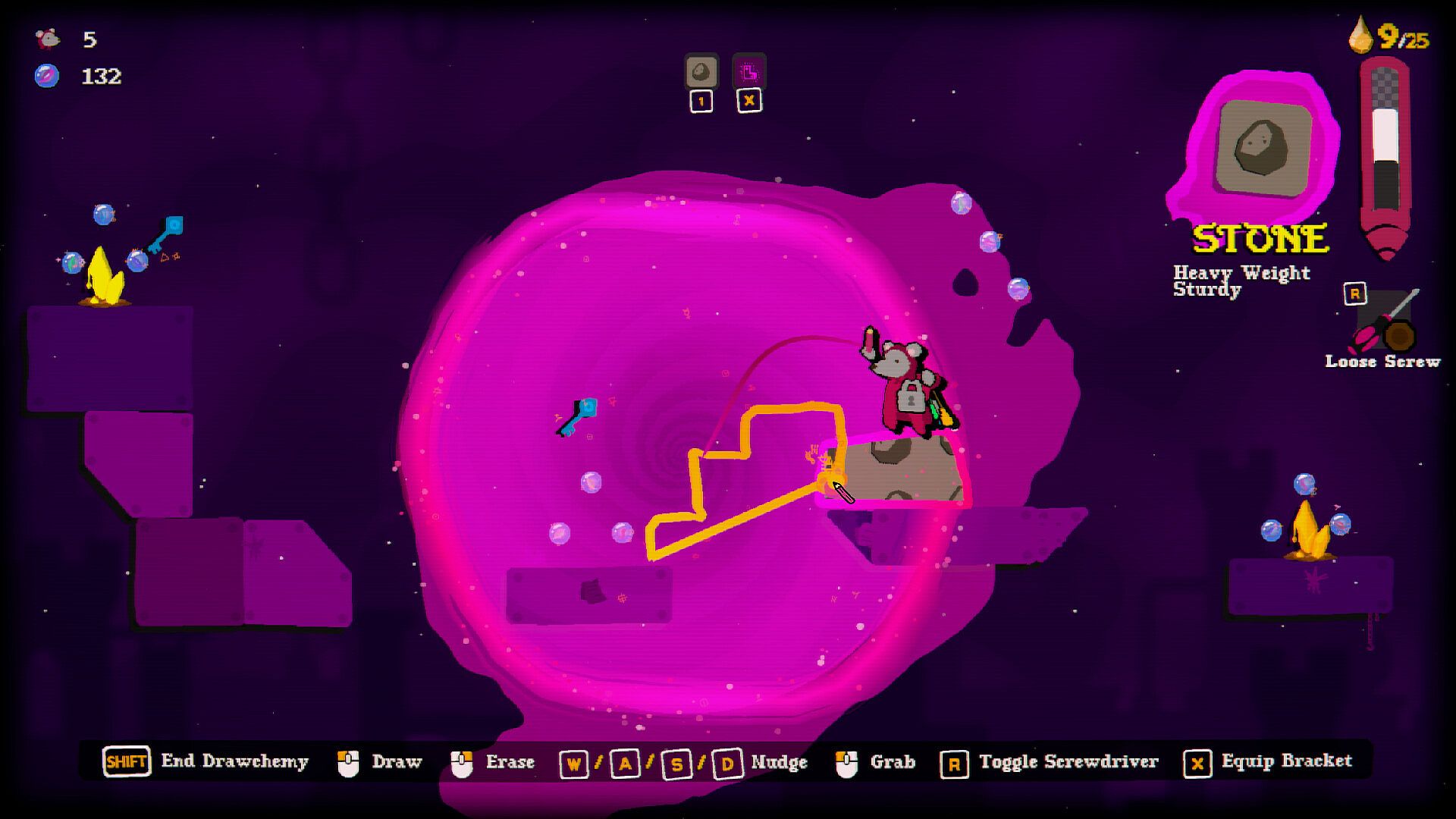
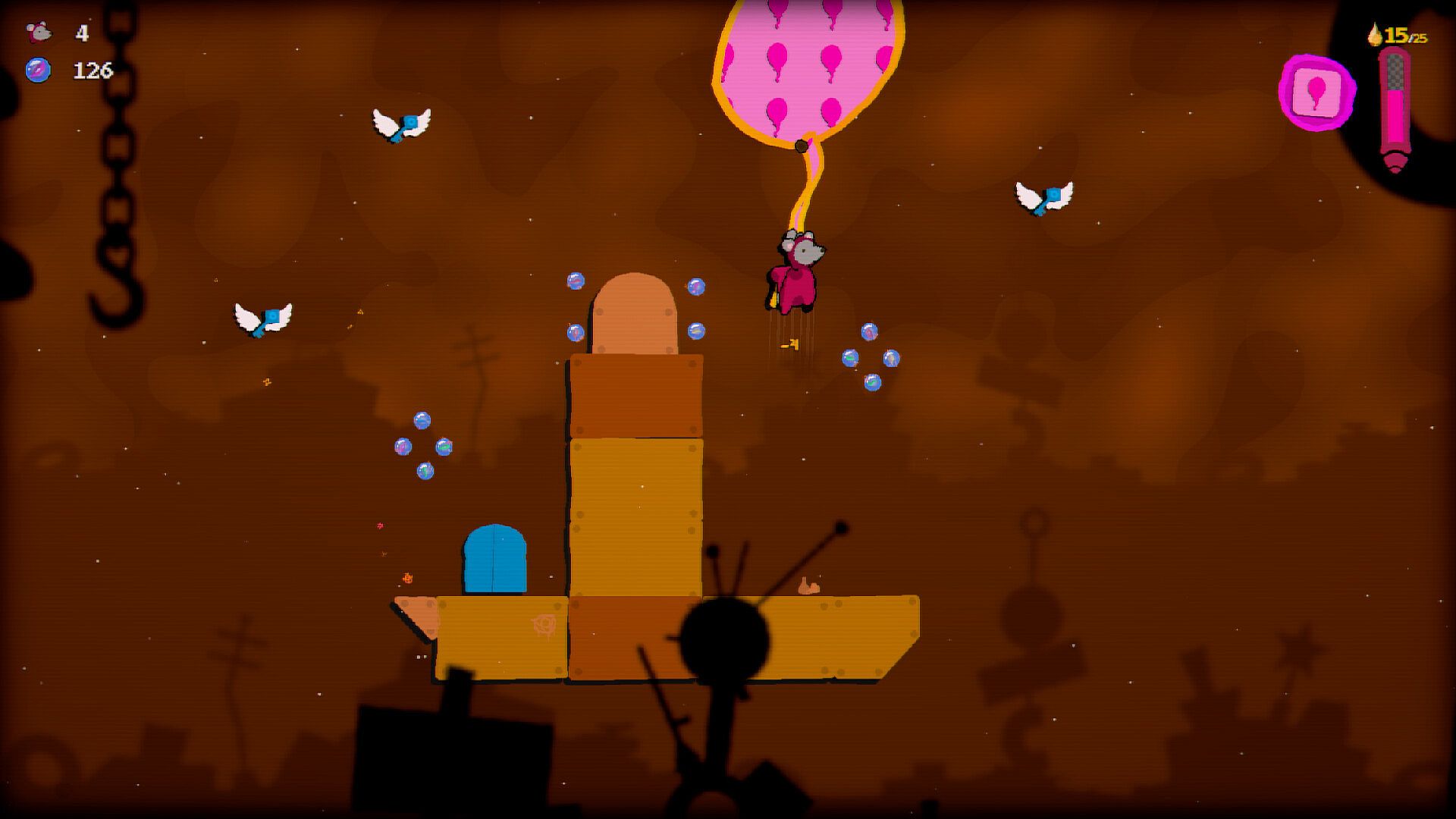
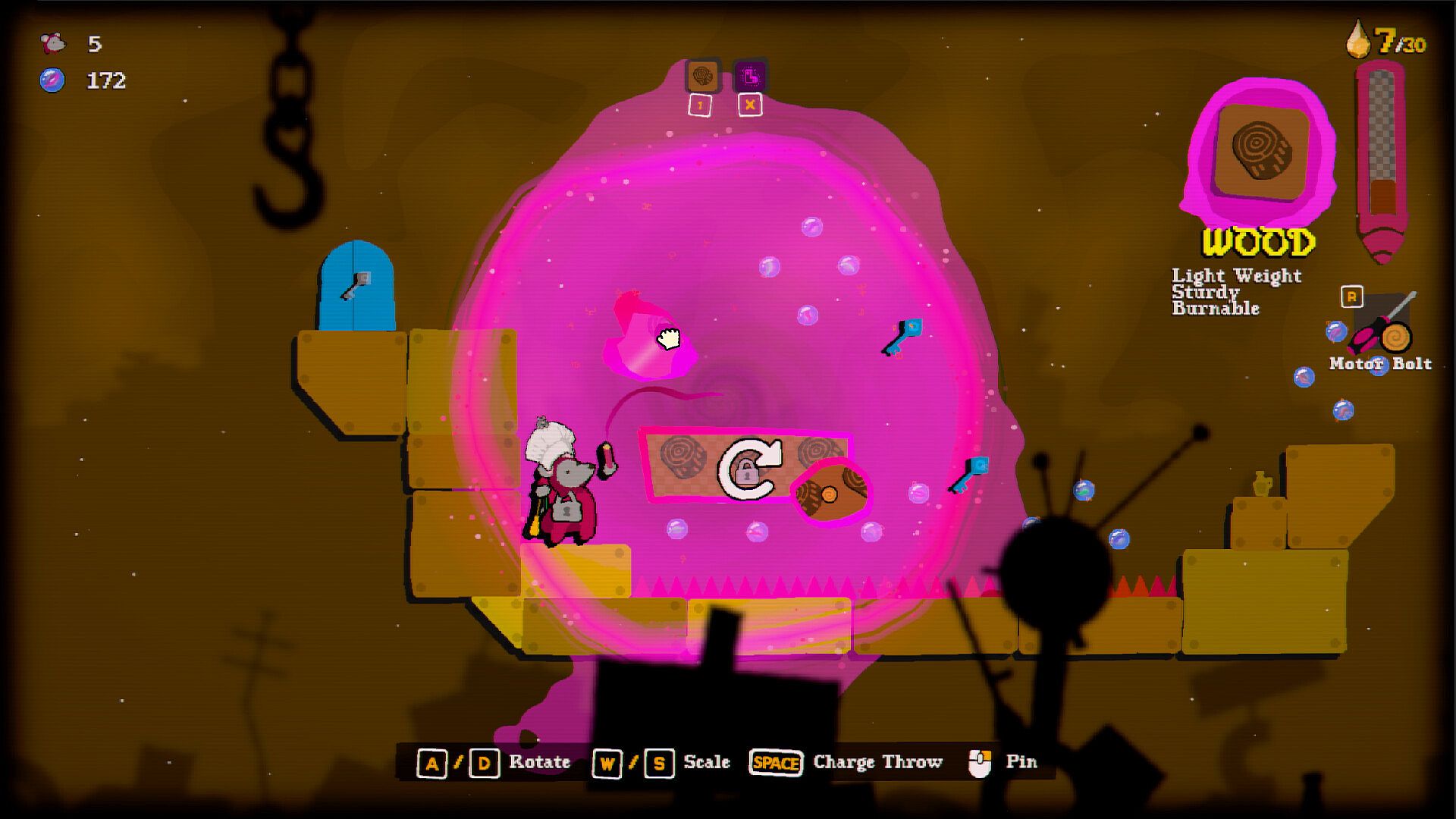
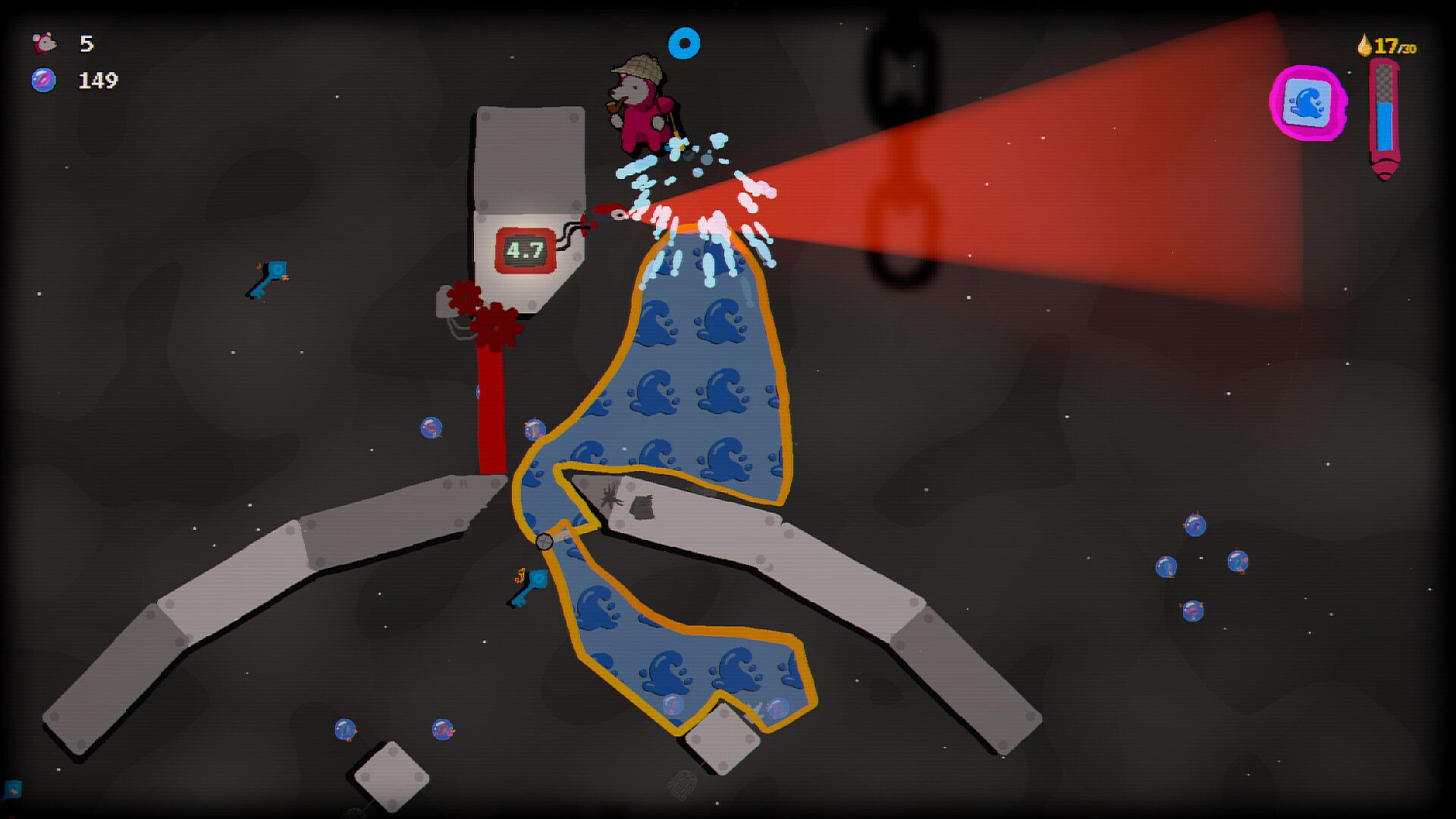
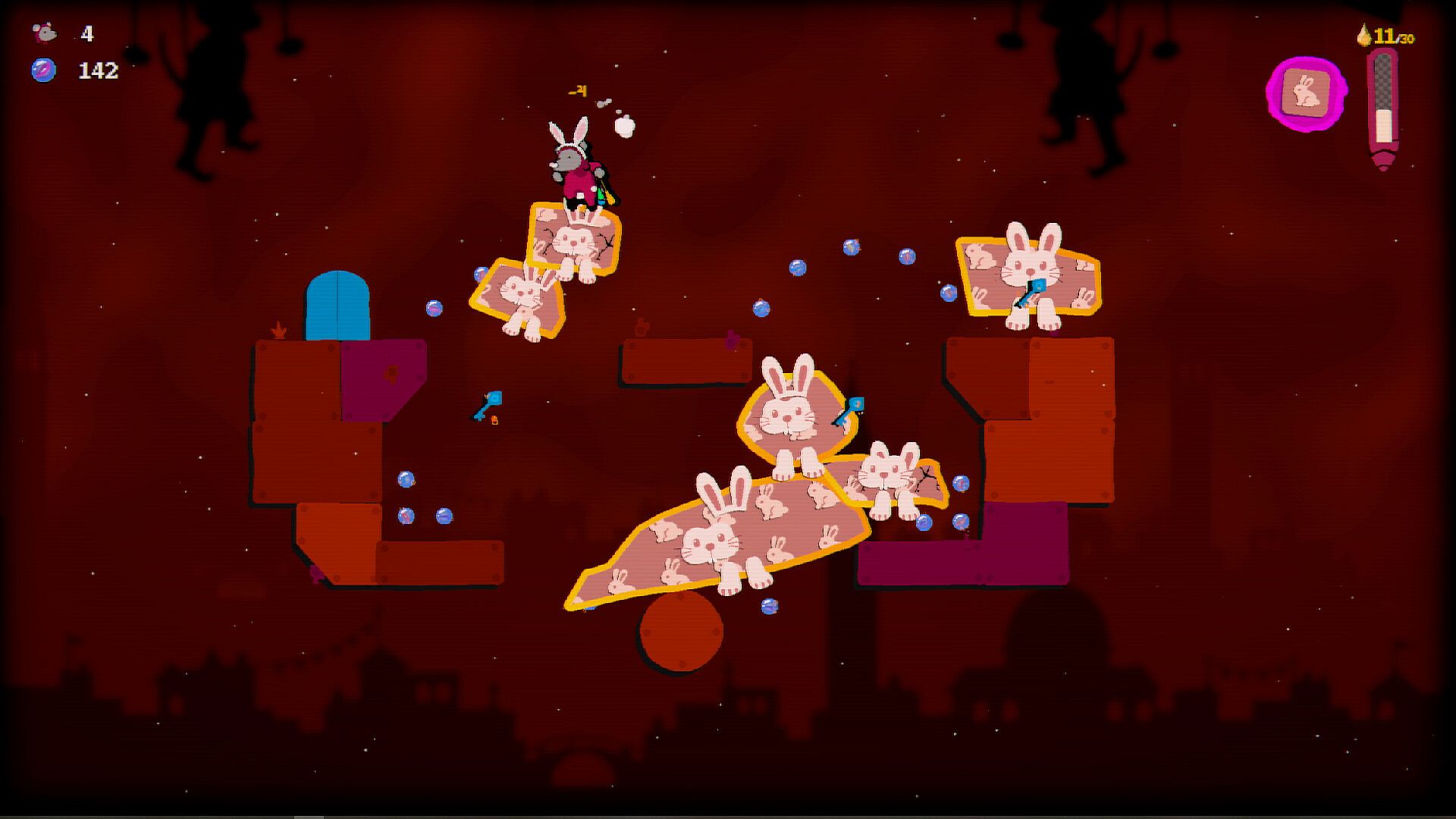


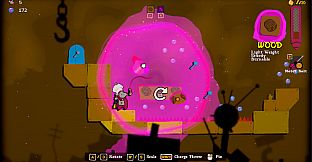
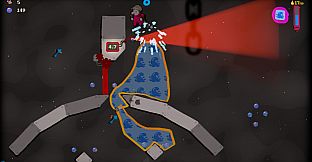

Drawchemy is a physics-based roguelike platformer that puts creativity at the center of every challenge. Players draw directly into the environment using a selection of magical Elements, each transforming sketches into functional objects such as balloons, flames, water flows, portals, or explosives. These creations interact with the physics system to help navigate levels, overcome obstacles, and reach the exit in each handcrafted stage.
Gameplay
The core loop revolves around drawing, connecting, and improvising solutions in real time. An equipped Element dictates the properties of every line placed on screen, allowing the same stroke to become a supportive platform in one moment and a destructive force in the next. Players experiment with combinations to form bridges, vehicles, or machines that respond to gravity, momentum, and collisions.
Progression involves collecting tools, upgrades, and new Elements across runs. Motors, hinges, and joints expand construction options, encouraging players to link multiple drawings into larger contraptions. The roguelike structure means each attempt through a world introduces variations via level modifiers, forcing adaptation and new approaches rather than repetition of prior solutions.
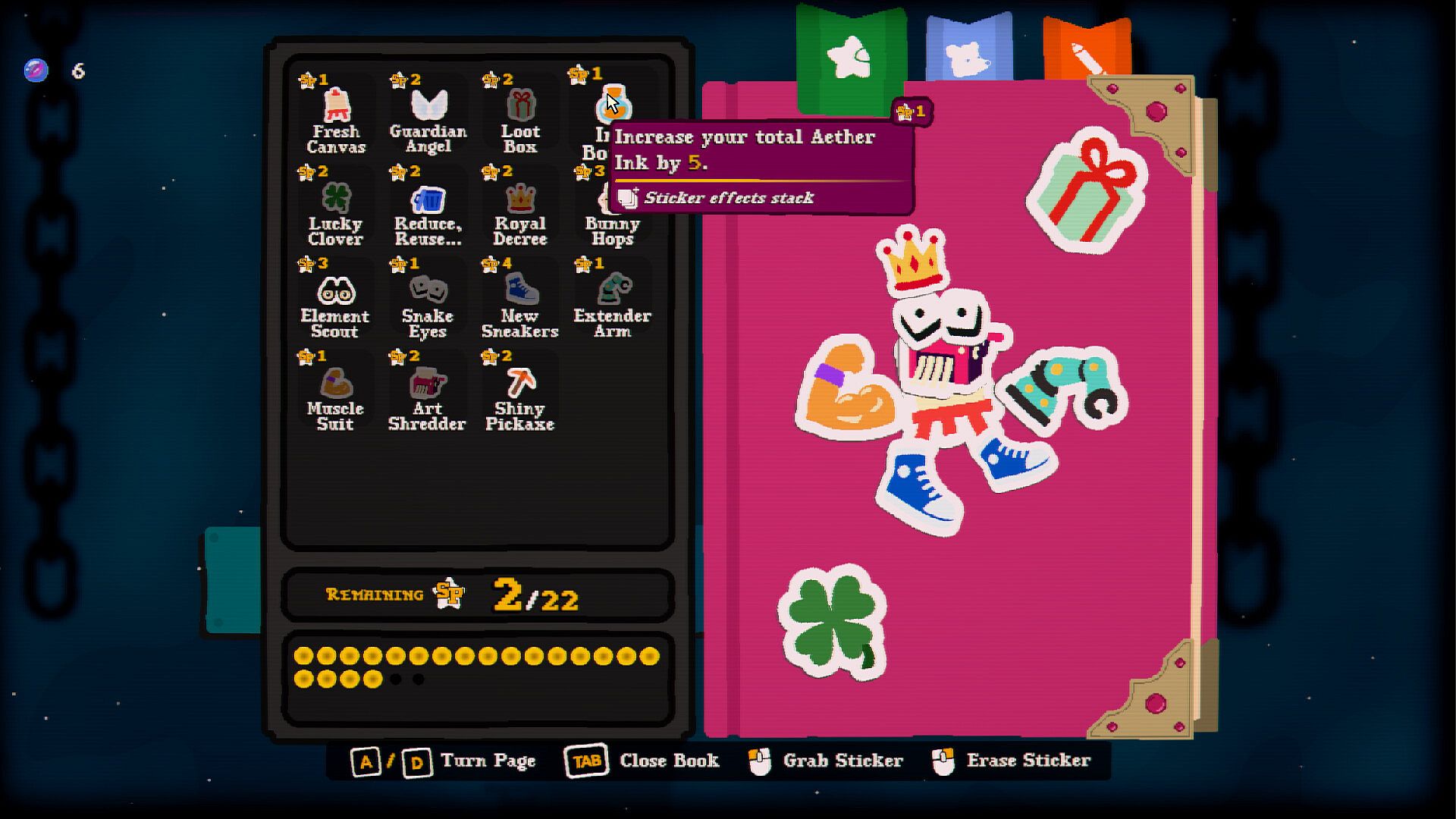
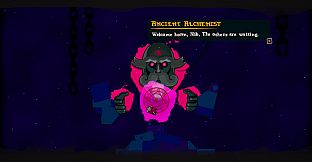
Exploration rewards curiosity. Hidden secrets and optional paths appear throughout the strange worlds, while oddball characters provide context for the journey home. Upgrades called Stickers modify abilities and encourage different playstyles, such as favoring mobility or defensive builds.
Game Modes
Drawchemy operates entirely in single-player. The primary experience is a story campaign that threads together eight replayable worlds containing more than one hundred handcrafted levels. Each world features dozens of modifiers that alter layouts, hazards, and objectives on subsequent visits.
Within these worlds, players tackle open-ended challenges that emphasize experimentation over linear paths. The roguelike elements appear through procedural variations and the need to restart runs with fresh Element selections and upgrades. No competitive or cooperative modes exist; every session focuses on solo problem-solving and creative building.
Key Mechanics and Features
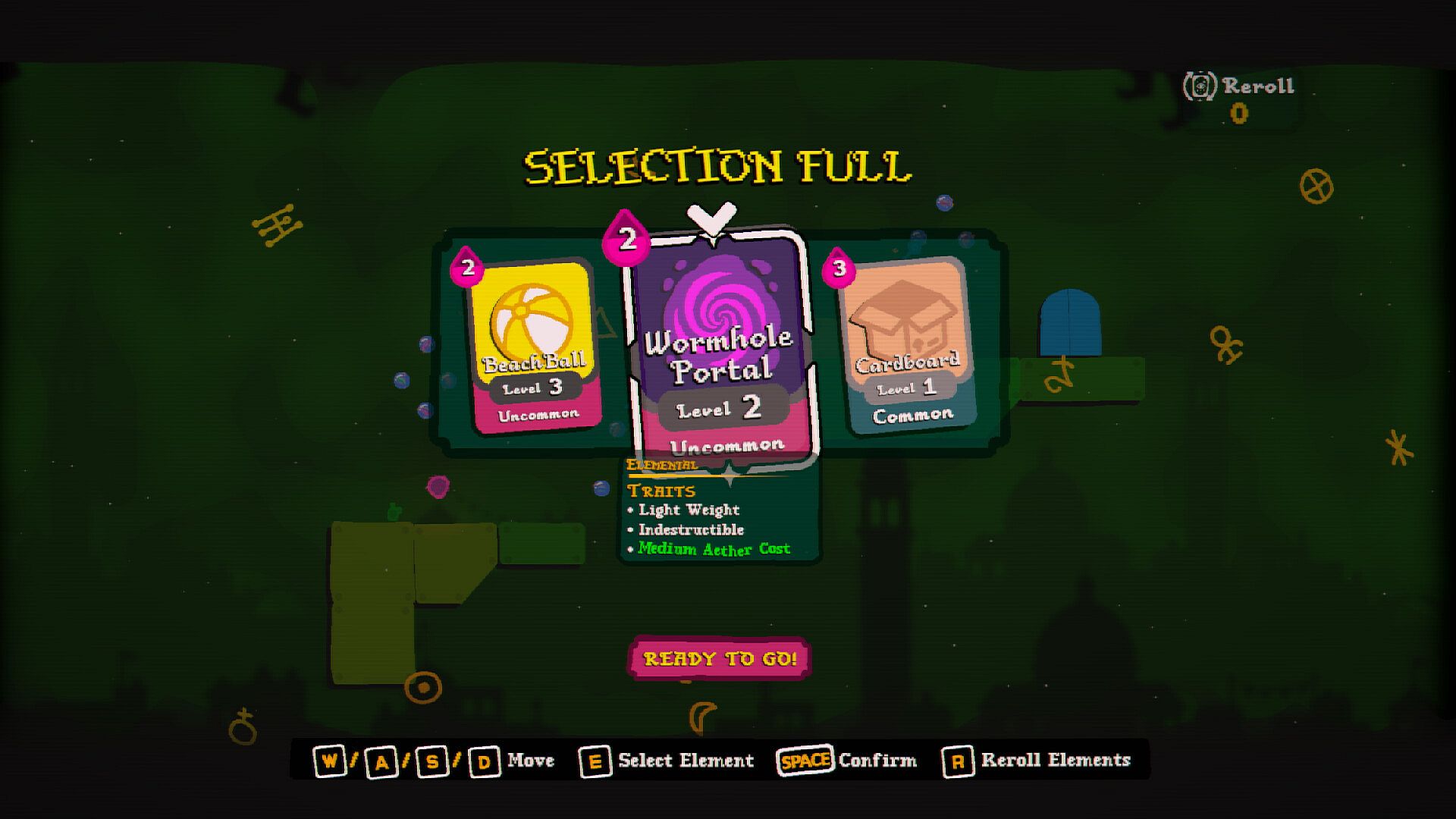
Forty-plus Elements each carry distinct behaviors and upgrade paths. One Element might generate buoyant lifts while another produces chain reactions or teleportation links. These tools combine with a growing set of construction pieces to support increasingly complex builds.
Level design mixes platforming precision with puzzle-like scenarios. Dangerous obstacles require either direct confrontation or clever rerouting using drawn elements. The emphasis remains on player-driven solutions rather than prescribed routes.
Cosmetic discoveries and Sticker upgrades provide long-term incentives across multiple runs. The toolbox expands steadily, supporting more ambitious machines and vehicles as players advance through the campaign.
Is It Worth Playing?
Drawchemy suits players who enjoy creative problem-solving in a physics sandbox. Those drawn to roguelike structure will appreciate the replayability across modified worlds and the freedom to approach each level differently on every attempt.
The game rewards experimentation and accepts unconventional ideas, such as assembling makeshift vehicles or using environmental interactions in unexpected ways. Because it remains single-player with a focus on individual creativity, it appeals most to fans of indie platformers and strategy titles that prioritize personal ingenuity over combat or narrative linearity.
At present the title is listed as coming soon, with no released player data available. Its described systems suggest strong potential for those seeking a fresh take on drawing-based gameplay within a roguelike framework.