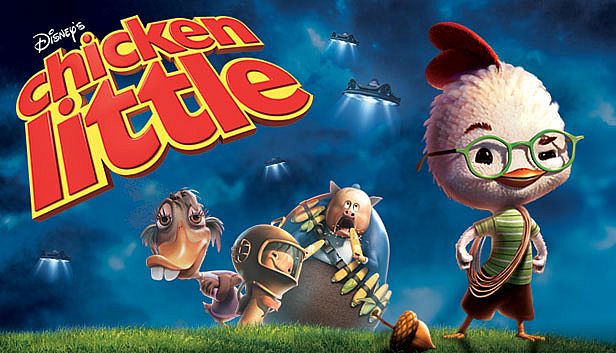












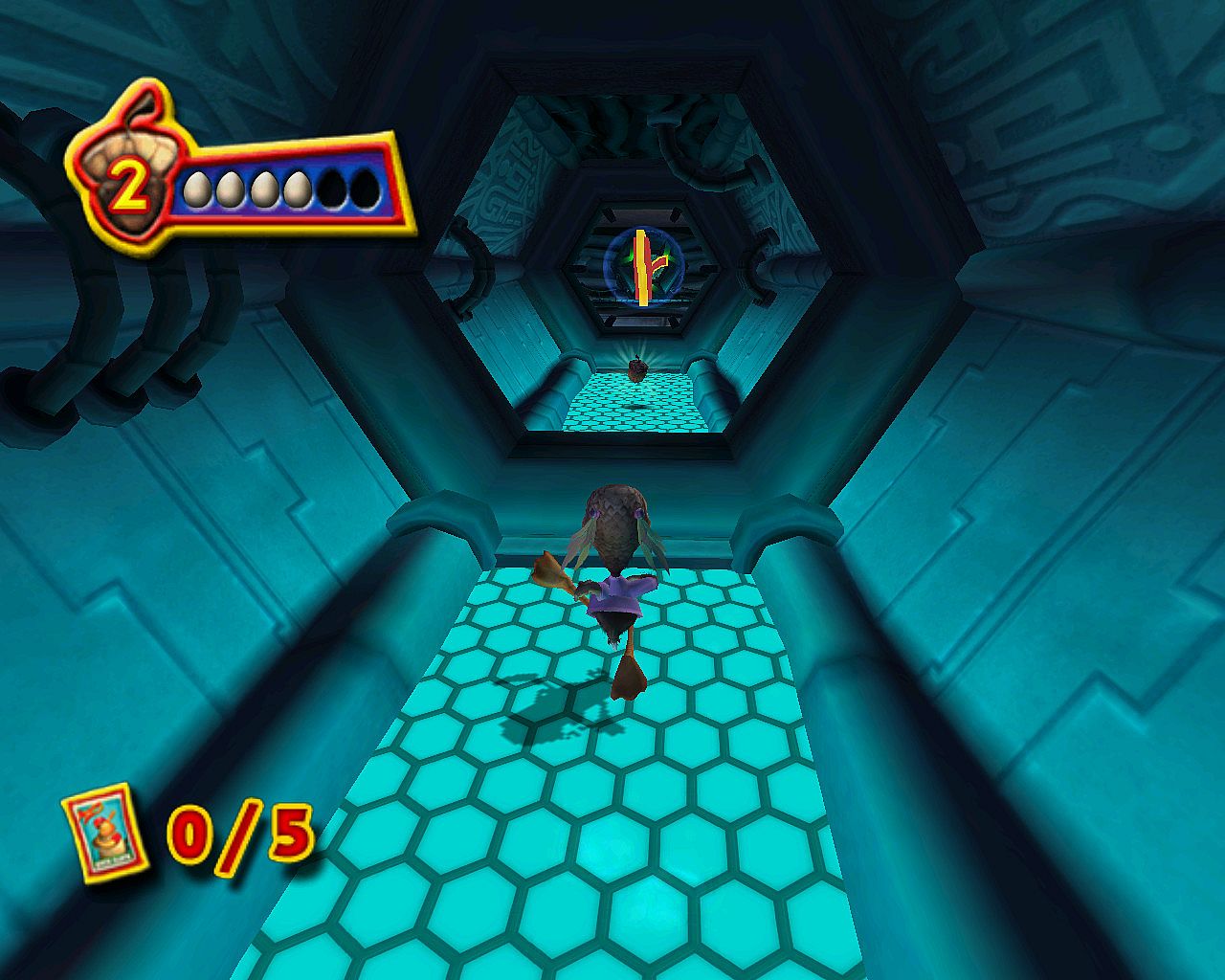
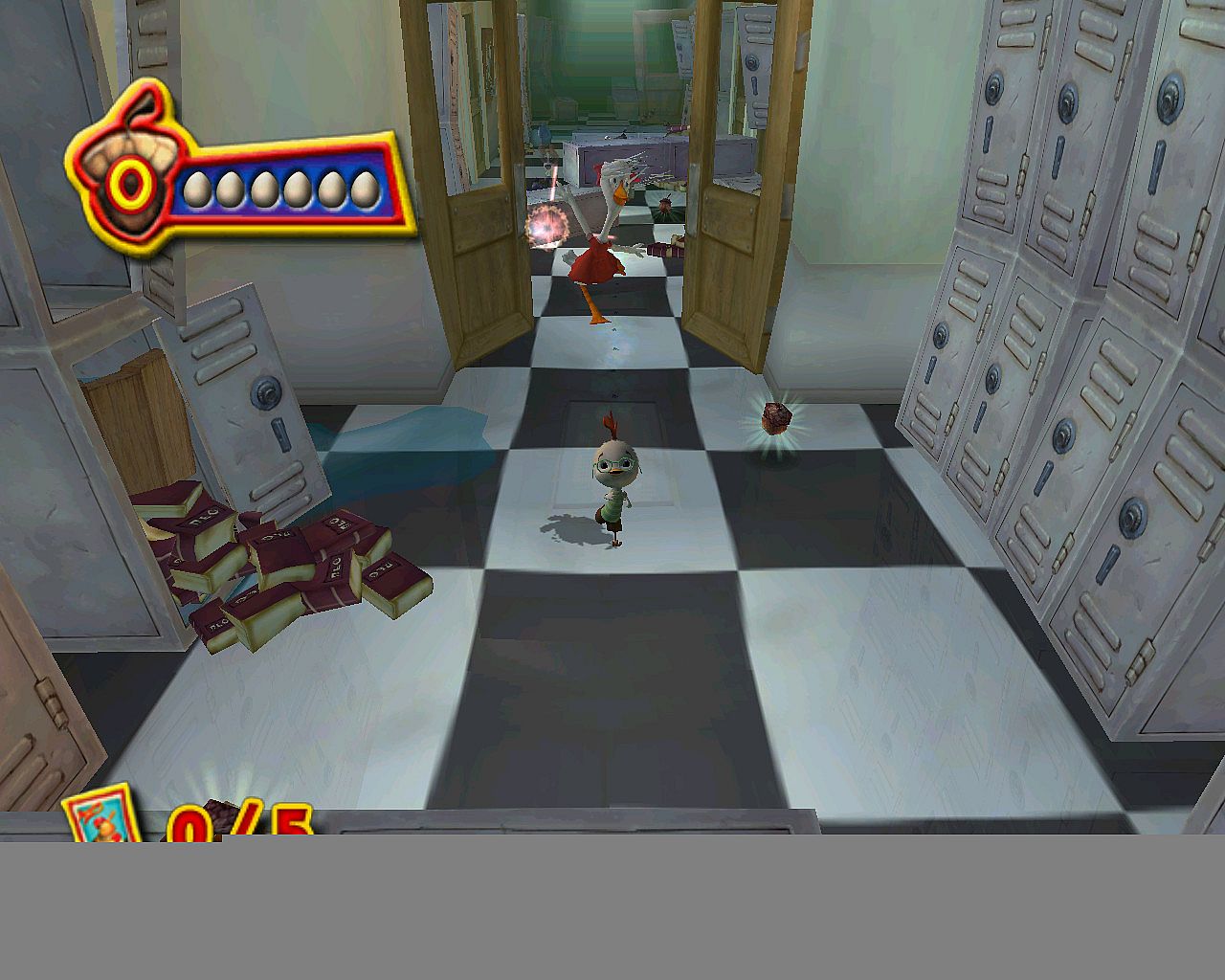
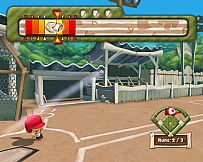
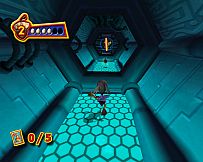
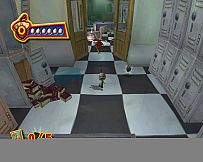
Disney's Chicken Little is an action-adventure game released for PC in 2005 that adapts the story and characters from the Walt Disney animated feature film of the same name. Players step into the role of the title character as he navigates a series of challenges that extend the movie's plot into new scenarios involving alien threats and inventive gadgets. The experience blends platforming sequences with light combat and puzzle elements across multiple stages, allowing control of Chicken Little along with occasional switches to supporting characters such as Abby Mallard, Runt of the Litter, and Fish Out of Water.
Gameplay
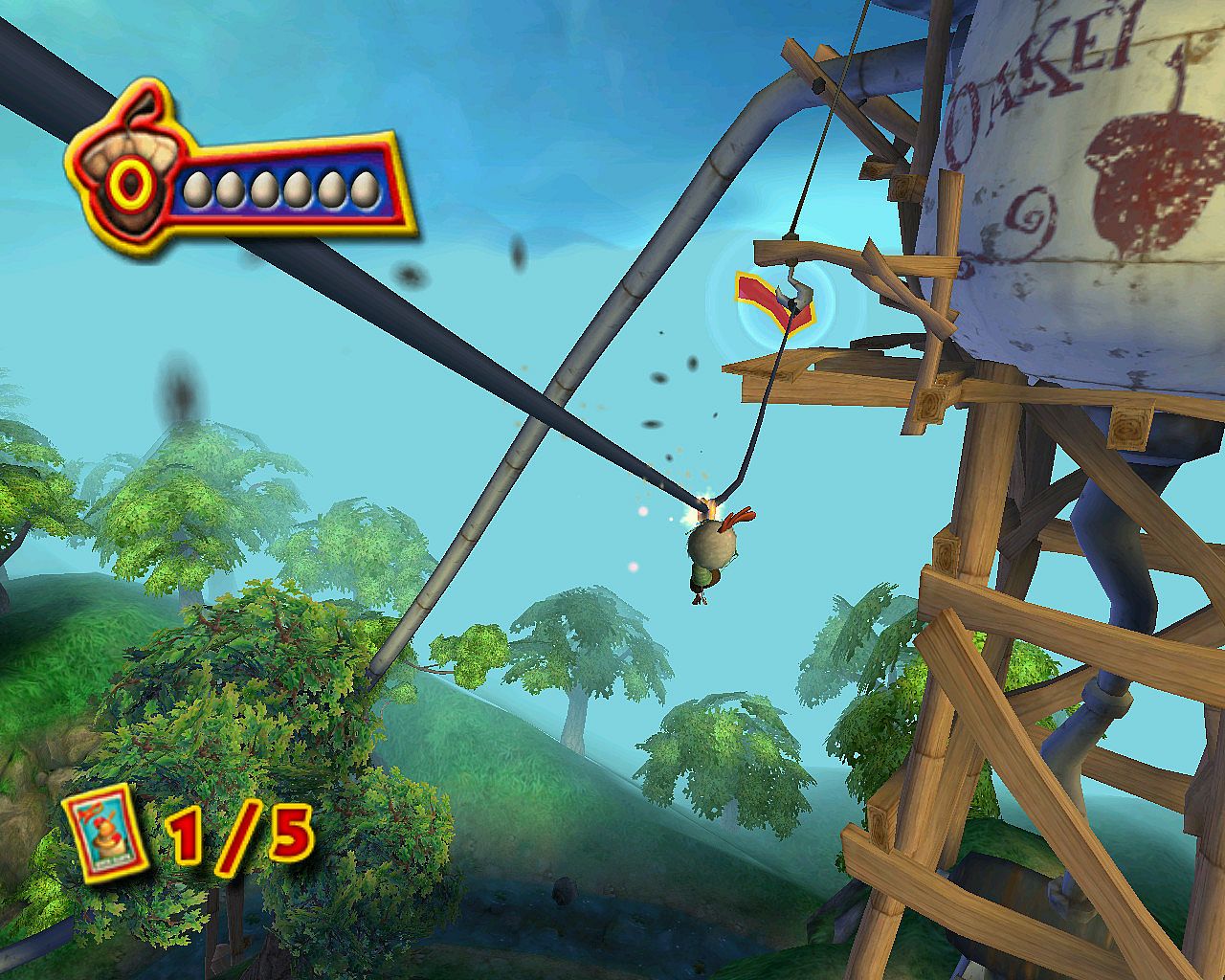
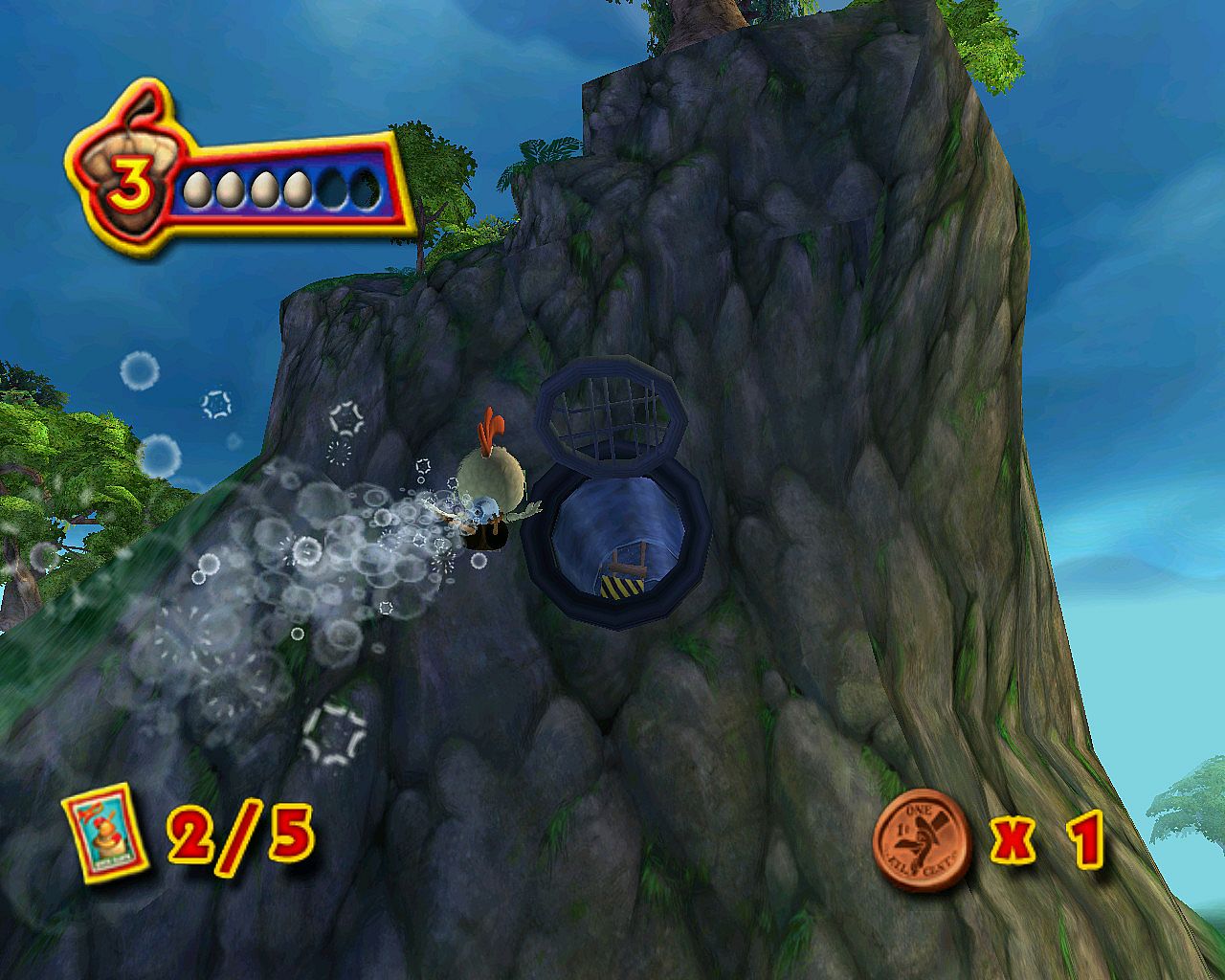
The core loop centers on progressing through linear stages by running, jumping, and using a variety of tools to overcome obstacles and enemies. Chicken Little starts with basic movement including a double jump and pole climbing, then gains access to a yo-yo for close-range attacks and a slingshot that switches to a first-person aiming view for hitting distant targets or switches. Additional gadgets include rocket jet packs for short flights and catapults for launching across gaps, all deployed during sequences that mix exploration with timed challenges such as avoiding alien invaders or piloting through antigravity sections.
Health management relies on collecting acorns to restore points, with the starting pool and healing requirements adjustable through difficulty settings that also influence checkpoint frequency. Stages incorporate collectible baseball cards, five per level, which serve as progression markers while feeding into other features. Occasional level segments shift control to friends with their own movement styles, adding variety without altering the fundamental third-person perspective. The design emphasizes gadget experimentation over complex combat, keeping focus on reaching the end of each area while gathering items along the way.
Game Modes
The primary experience unfolds in a single-player campaign consisting of story-driven stages that follow Chicken Little's adventures and expand on the film's events. Players advance sequentially through platforming and action sequences, with some levels featuring character switches to highlight different abilities during specific sections. One stage allows control of Mayor Turkey Lurkey as a brief variation.
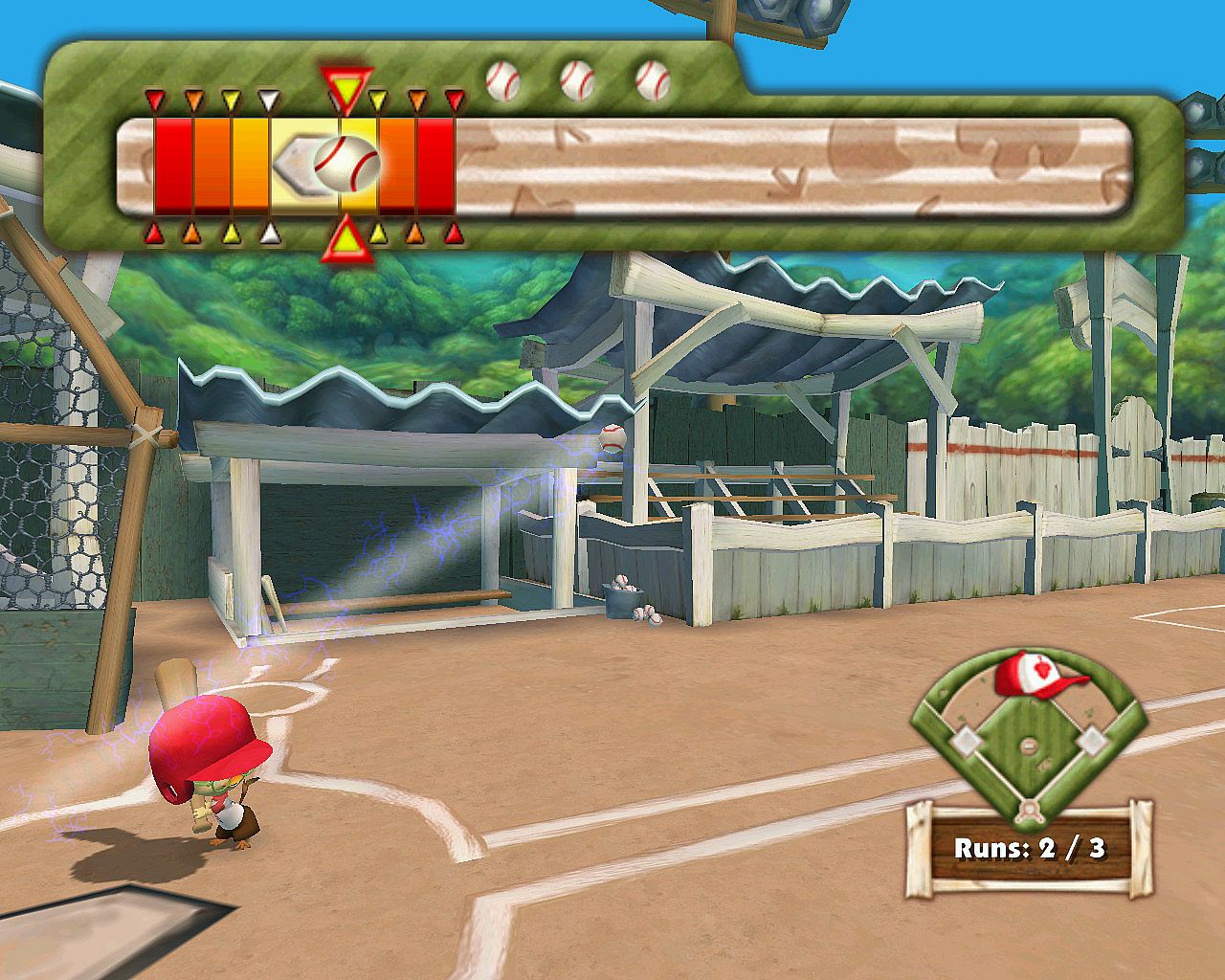
A separate multiplayer component unlocks after collecting baseball cards during the campaign. These cards grant access to bonus minigames that support multiple participants in short, competitive or cooperative challenges separate from the main stages. No persistent online servers or ranked systems exist; the mode functions as local or split-screen style play tied directly to campaign progress.
Story and Characters
The narrative picks up from the movie's premise of Chicken Little proving himself after the sky-is-falling incident, incorporating new threats like spaceship encounters and invasions that require teamwork with his circle of friends. Cutscenes and level objectives reinforce the underdog theme while introducing gadget-based solutions to problems. Character abilities remain consistent with their film personalities, such as Fish Out of Water's aquatic traits influencing certain movement options in dedicated segments.
Is It Worth Playing?
Reception for Disney's Chicken Little on PC has been mixed, with critics noting solid platforming controls and faithful movie tie-ins alongside occasional frustration from checkpoint placement and repetitive sections. The game suits players seeking a straightforward action-adventure title rooted in a family-friendly property, particularly those interested in 2000s licensed platformers that emphasize gadget use and short-to-medium length campaigns. Availability on modern PC systems allows access for nostalgia or completionists, though technical adjustments may be needed for smooth performance on current hardware. Those who enjoy collecting items to unlock extras and switching between a small cast of characters will find the most engagement, while others may prefer more polished modern alternatives in the genre. The title remains a niche option best approached with expectations set for its era rather than contemporary standards.