










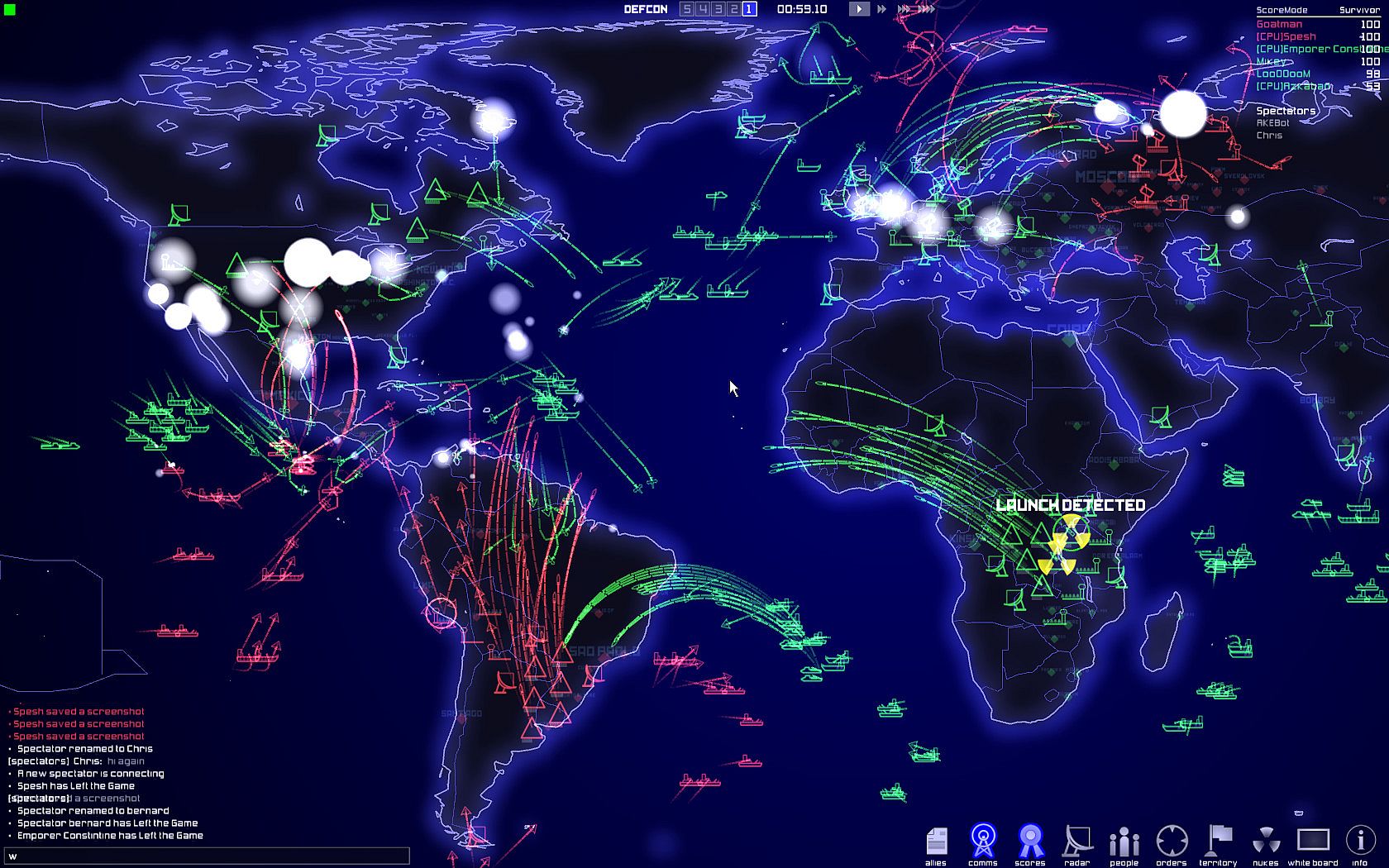
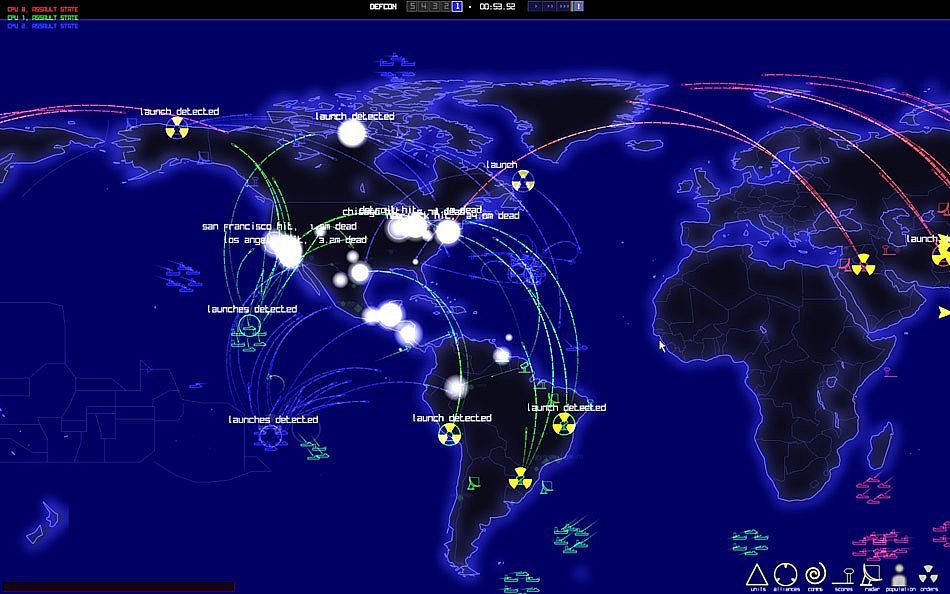
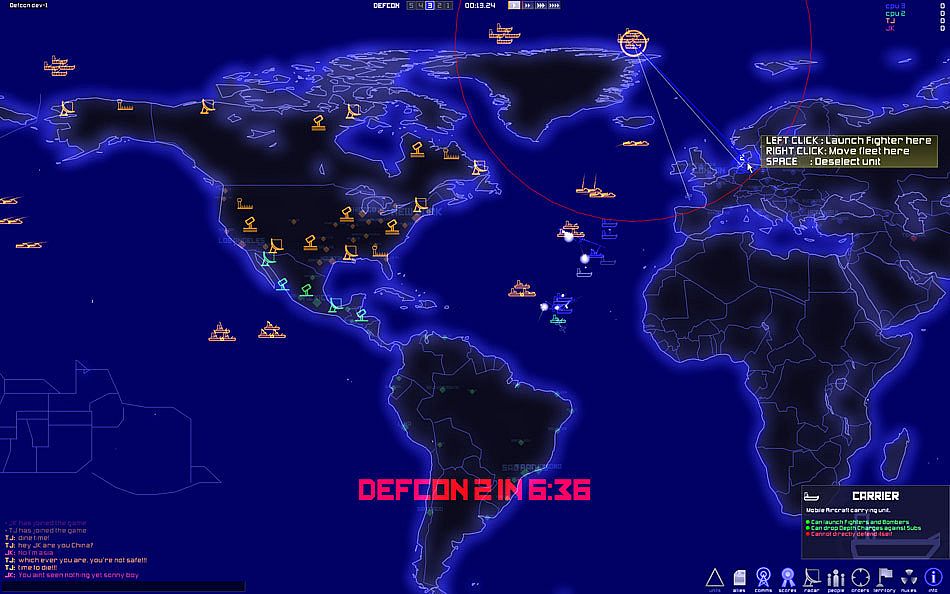
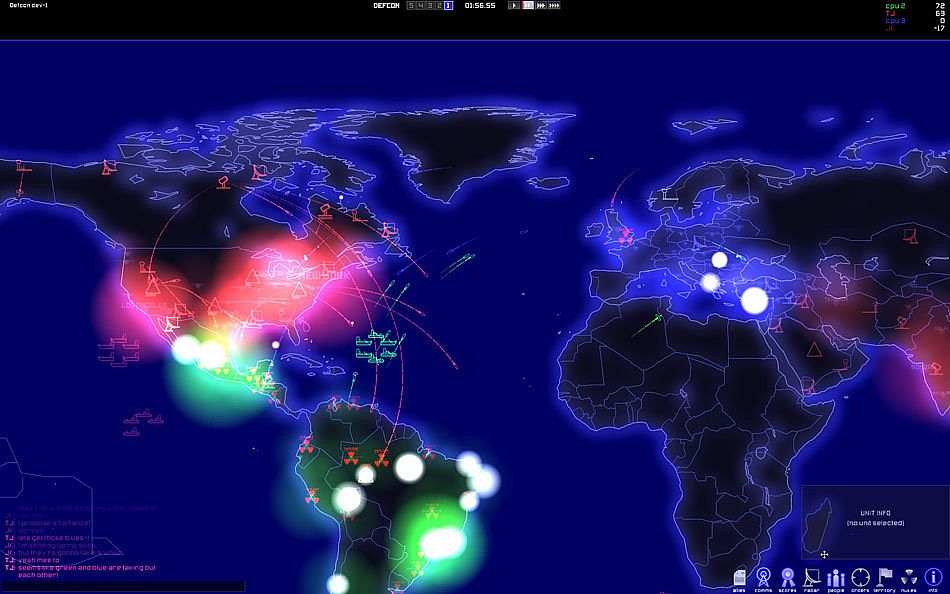
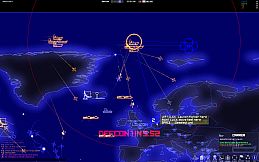
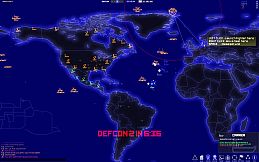
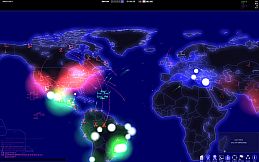
DEFCON is a real-time strategy game set during a simulated global thermonuclear conflict. Players command one of six territories on a minimalist world map and aim to destroy enemy populations while safeguarding their own. The experience draws from Cold War tensions and features a stark, vector-style interface that tracks escalating alerts and mounting casualties in real time.
Gameplay
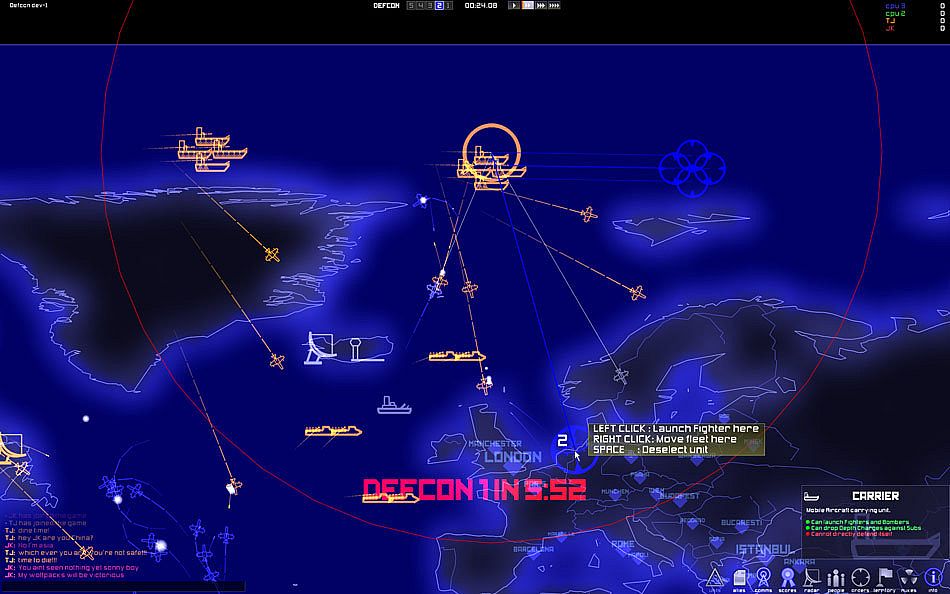
Core play revolves around initial unit placement followed by escalating hostilities. Players position submarines, missile silos, air defenses, and naval fleets within their borders and surrounding waters before the alert level begins its countdown. As the DEFCON status drops from five to one, additional attack options unlock, starting with conventional strikes and culminating in nuclear launches. Fighter squadrons regenerate automatically, but no new units can be built once the game starts. Every offensive action reveals radar signatures and potential vulnerabilities, forcing constant calculations about retaliation risks. The objective remains consistent across sessions: maximize enemy megadeaths while minimizing losses to your own civilian centers. A victory timer activates near the end, allowing final strikes before scores are calculated.
Game Modes
Multiple configurations alter pacing, scoring emphasis, and opponent composition. Singleplayer matches pit the player against AI-controlled territories. Multiplayer sessions support human opponents or mixed groups of humans and AI. Various scoring systems weight population destruction, unit survival, and territorial control differently depending on lobby settings. Games typically last between forty-five minutes and several hours, with speed options that compress time without eliminating the need for deliberate positioning and timing. Alliances form and dissolve rapidly in human matches, as any strike can expose the attacker to counterfire from unexpected directions.
Multiplayer Dynamics
Human opponents introduce layers of bluffing and temporary cooperation that singleplayer matches lack. A player might coordinate a joint strike only to face betrayal once the shared target weakens. The limited information from radar and the irreversible nature of launches heighten paranoia. Matches reward measured aggression over reckless barrages, since overextension often leads to mutual destruction. The interface remains deliberately sparse, displaying only essential icons and a running death toll that underscores the scale of each exchange.
The Human Cost
Real-time casualty counters update as cities fall, shifting focus from abstract strategy to the tangible consequences of nuclear exchanges. The game avoids glorifying conflict by presenting every successful launch alongside immediate population losses on both sides. This emphasis on inevitable widespread devastation distinguishes the title from conventional strategy games that celebrate decisive victories.
Is It Worth Playing?
DEFCON suits players who prefer deliberate, high-stakes decision making over fast-paced action or resource management. Its minimalist design and focus on positioning reward careful observation and psychological awareness, particularly in multiplayer where alliances shift without warning. The game remains available on PC with support for both solo sessions against AI and online matches. Those drawn to tense simulations of global conflict and the strategic weight of limited information will find its mechanics hold up well decades after release. Individuals seeking frequent content updates or large active communities may encounter a quieter player base instead. The title delivers a focused, uncompromising take on its premise without unnecessary complexity.