


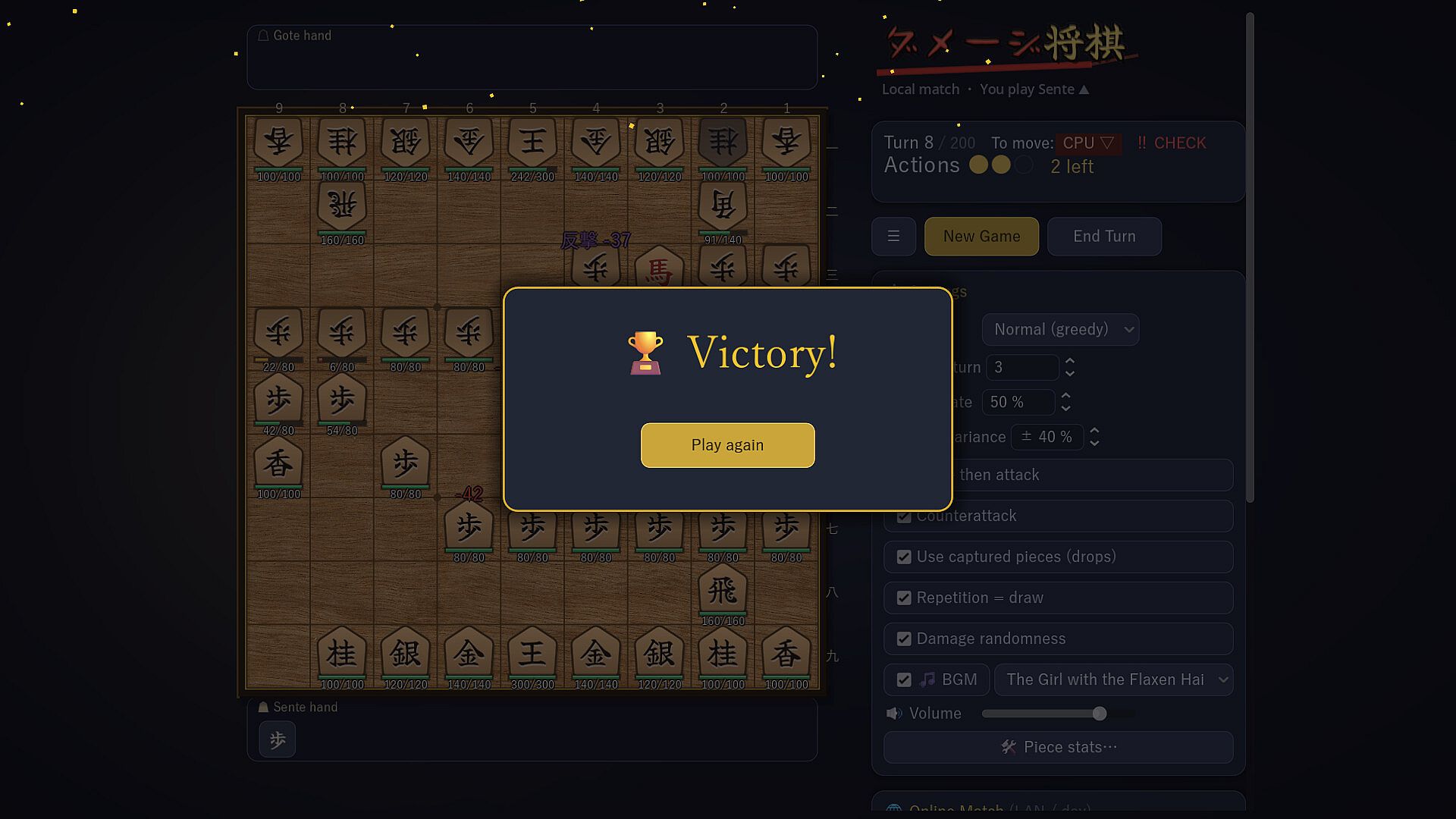
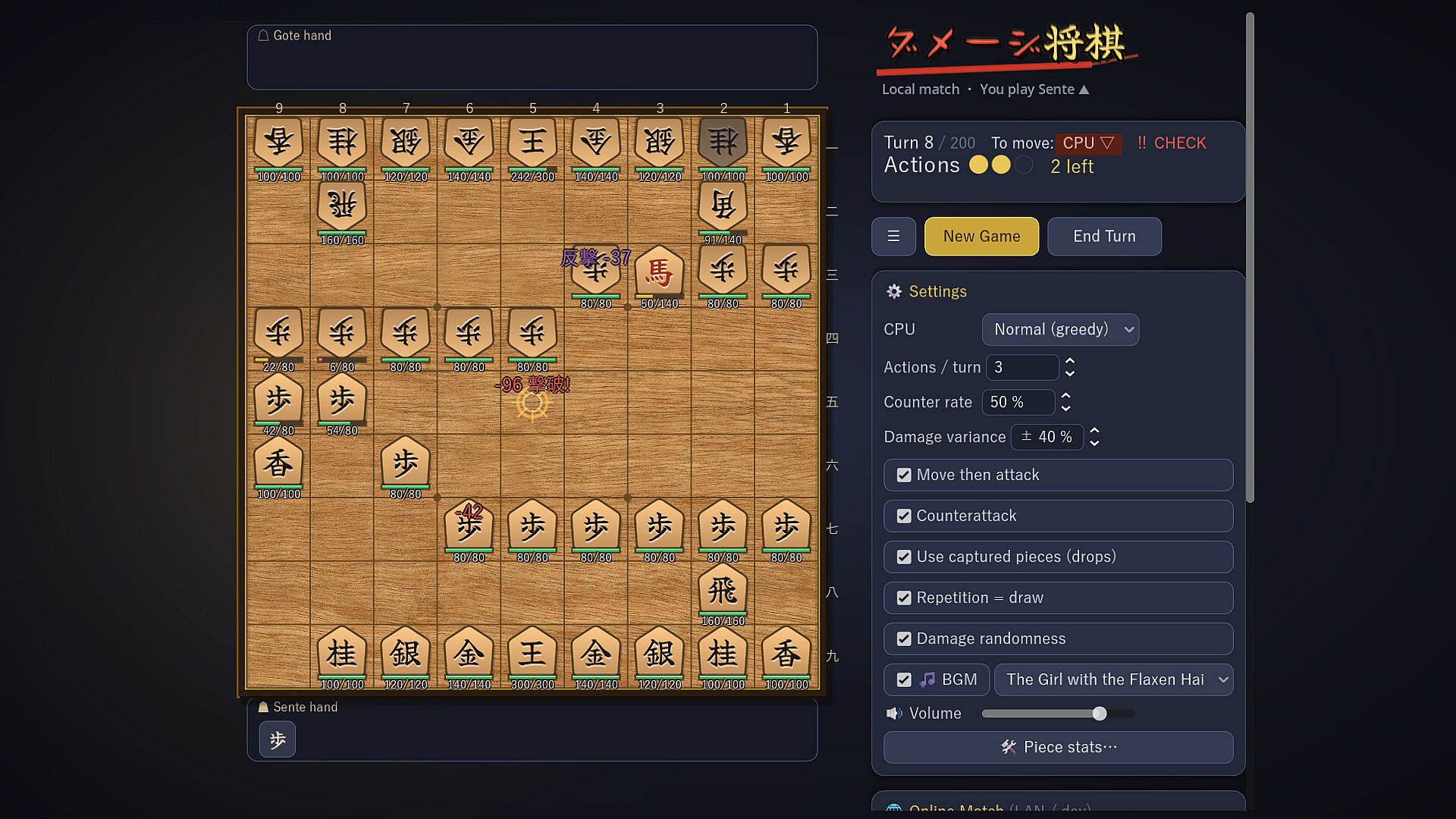
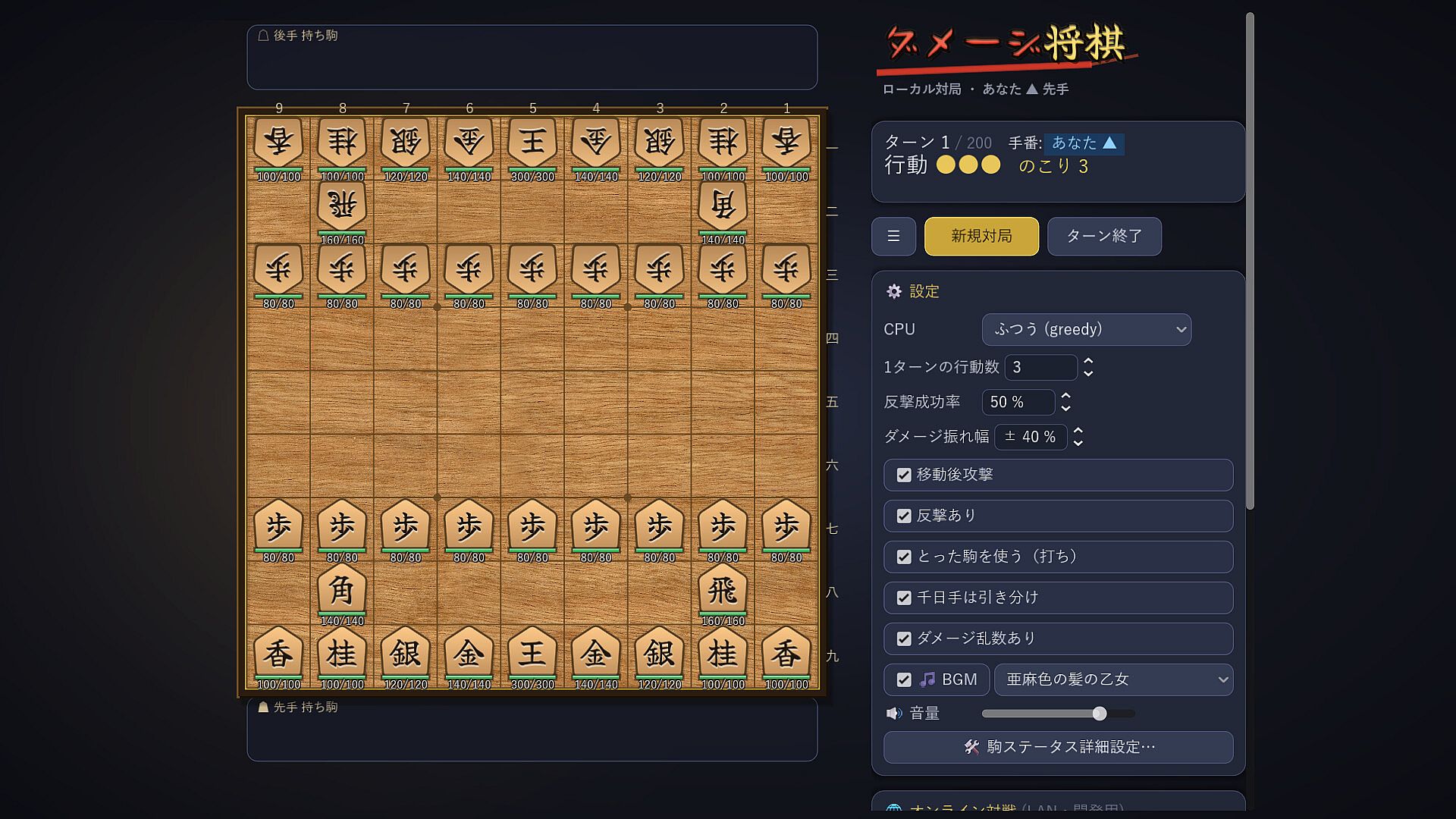
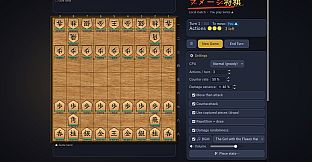

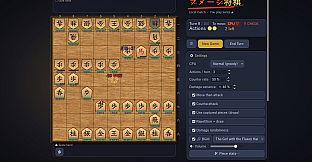
Damage Shogi is a strategy simulation game built on the foundations of traditional shogi but centered on attrition and resource management rather than instant captures. Pieces carry individual hit points, attack values, and defense ratings, so combat becomes a process of wearing down opponents over multiple exchanges instead of removing them in a single strike.
Gameplay
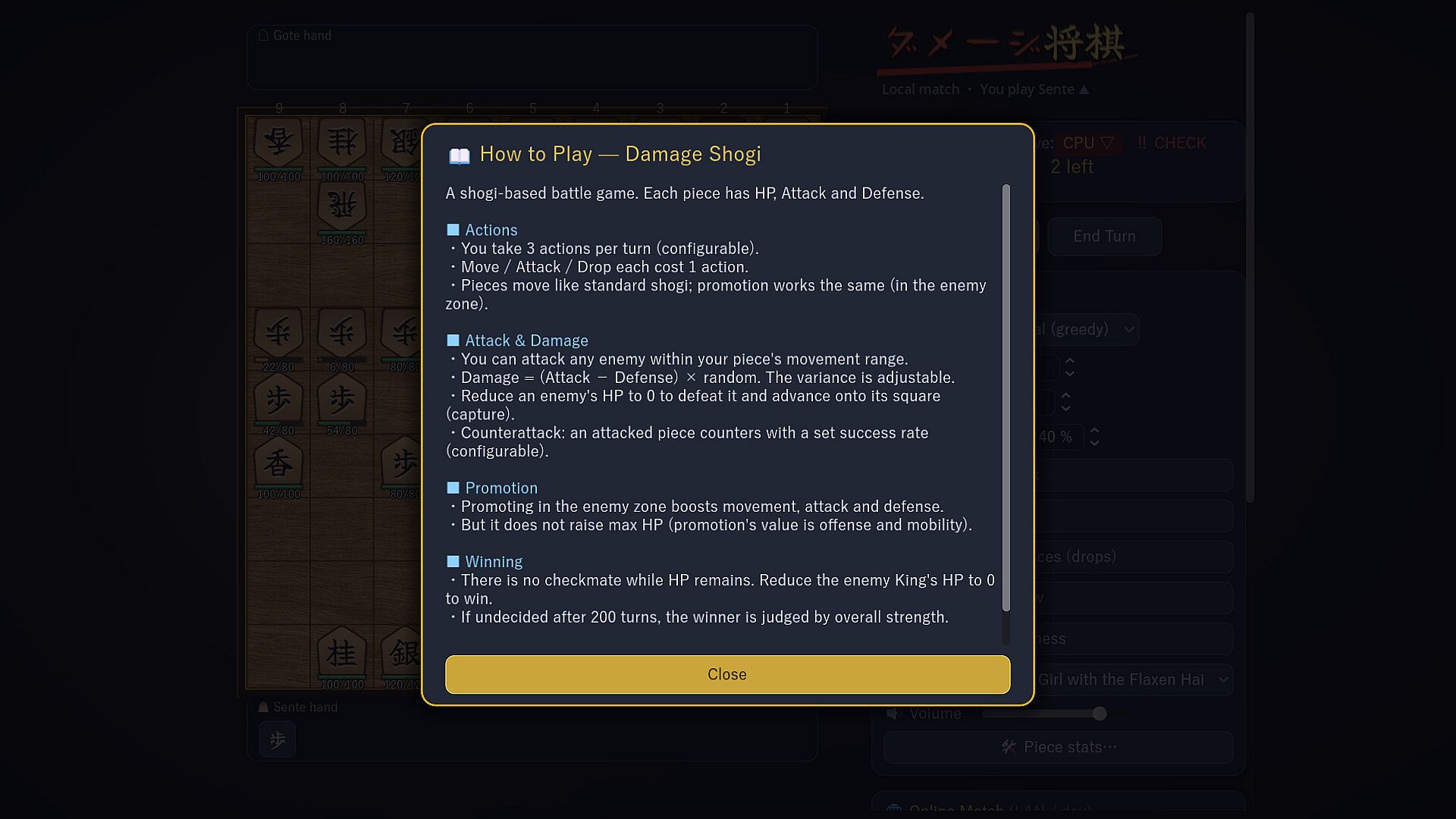
Each piece maintains its own health pool that decreases with every successful hit. Damage values fluctuate within a set range, which introduces variability into every exchange. An attacked piece can also launch a counterattack if conditions allow, turning even defensive positions into potential risks. This system makes every square on the board a calculated gamble where positioning and timing matter more than raw material advantage.
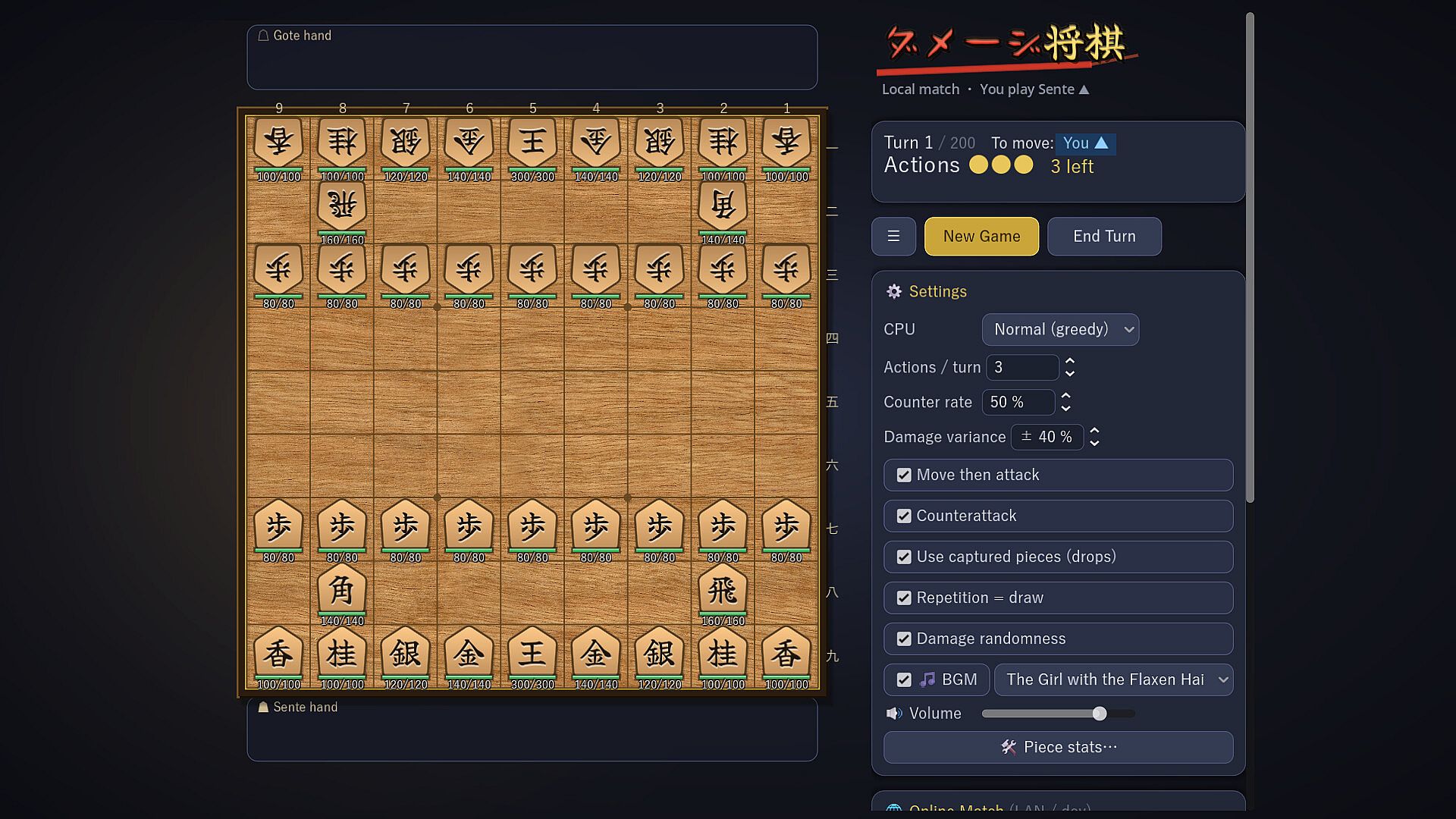
Players receive three actions each turn instead of the single move common in standard shogi. These actions can combine movement, attacks, drops, and defensive repositioning in any order. Sequencing becomes the core skill: advancing a piece into range, following up with an attack, and then reinforcing the position all within one turn creates layered threats that opponents must answer immediately. Promotion still occurs and improves both movement options and combat effectiveness for promoted pieces.
Randomness can be toggled on or off entirely. When active, damage rolls and counter success rates add tension to every engagement. When disabled, outcomes depend strictly on the chosen attack and defense numbers, shifting emphasis toward pure tactical planning and foresight.
Game Modes
The game supports matches against computer opponents across four difficulty levels. The weakest settings provide straightforward practice for learning the new systems. Stronger tiers demand precise sequencing and awareness of counter opportunities. The highest difficulty level features an opponent that waits just outside attack range before committing to multi-action bursts that punish overextension.
Online matches allow two players to connect through friend invites or shared room codes. The connection system includes support for resuming interrupted games, which helps maintain continuity during longer sessions. These matches follow the same three-action structure and customizable rules as single-player encounters.
Customization Options
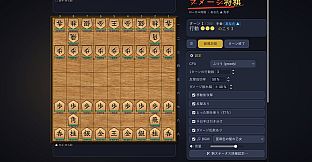
Before each game, players can adjust several core parameters to suit their preferred style. Damage variance can be narrowed or widened. Counterattack success rates can be raised or lowered. The number of actions available per turn can be changed from the default of three. Individual piece statistics for hit points, attack, and defense can be edited one by one, allowing custom balance experiments or simplified variants.
These adjustments affect both single-player and online games equally. Someone seeking a deterministic experience can disable randomness and fine-tune piece values for balanced matchups. Another player might increase variance and counter chances to create swingy, comeback-heavy sessions that reward aggressive play.
Is It Worth Playing?
Damage Shogi appeals most to players who enjoy deliberate, multi-step planning within a familiar shogi framework. The shift from instant captures to health-based combat rewards careful positioning and resource tracking over several turns. Those who like experimenting with rulesets will find the extensive customization tools useful for creating variants that match personal taste.
The four-tier AI provides a clear progression path for solo practice, while the online connection method supports casual matches with known opponents. Because the rules remain fully adjustable, the game can accommodate both players who prefer skill-dominant matches and those who enjoy occasional luck-driven reversals. The overall experience centers on tactical sequencing and attrition management rather than traditional material trades.