





















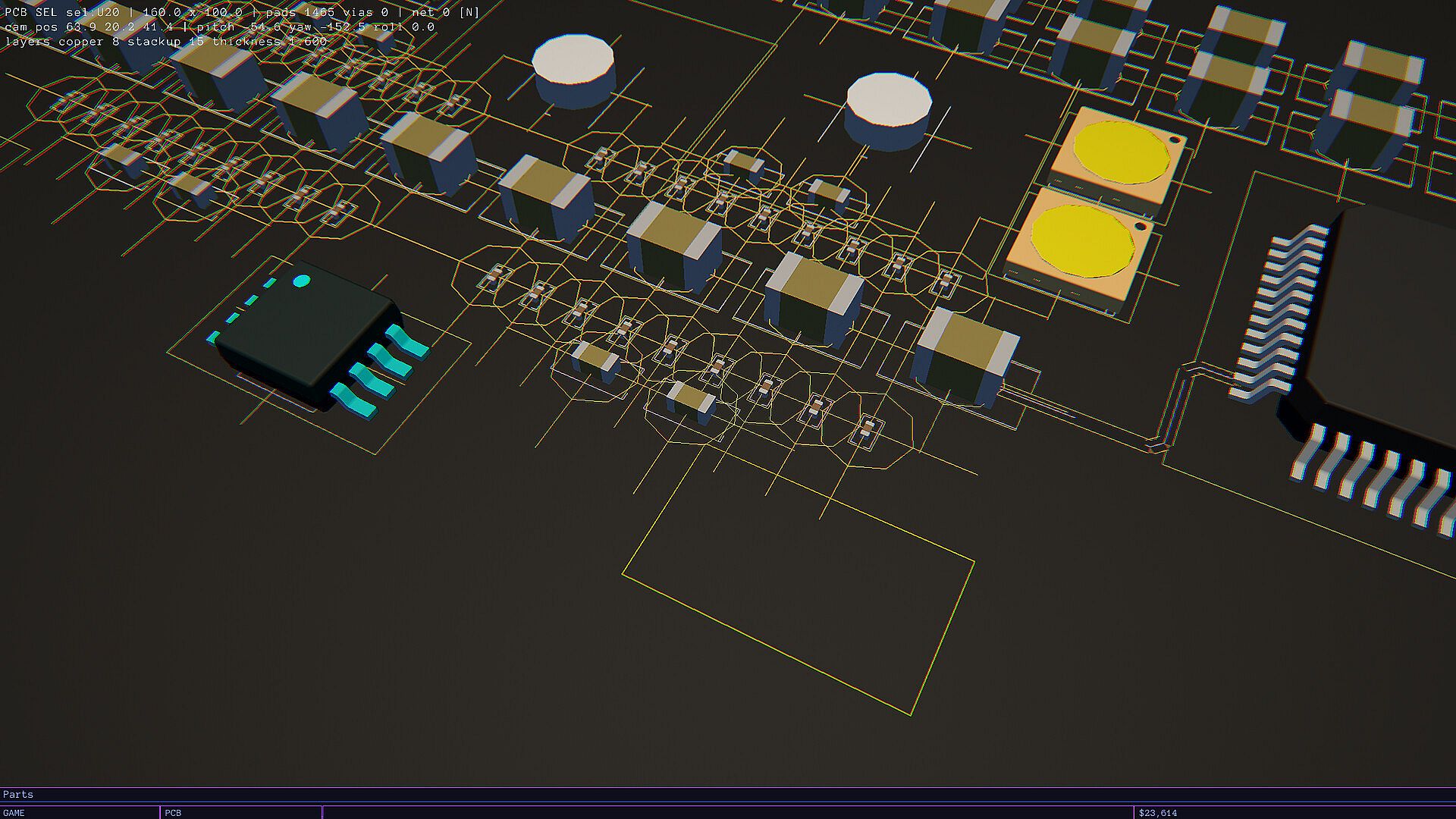
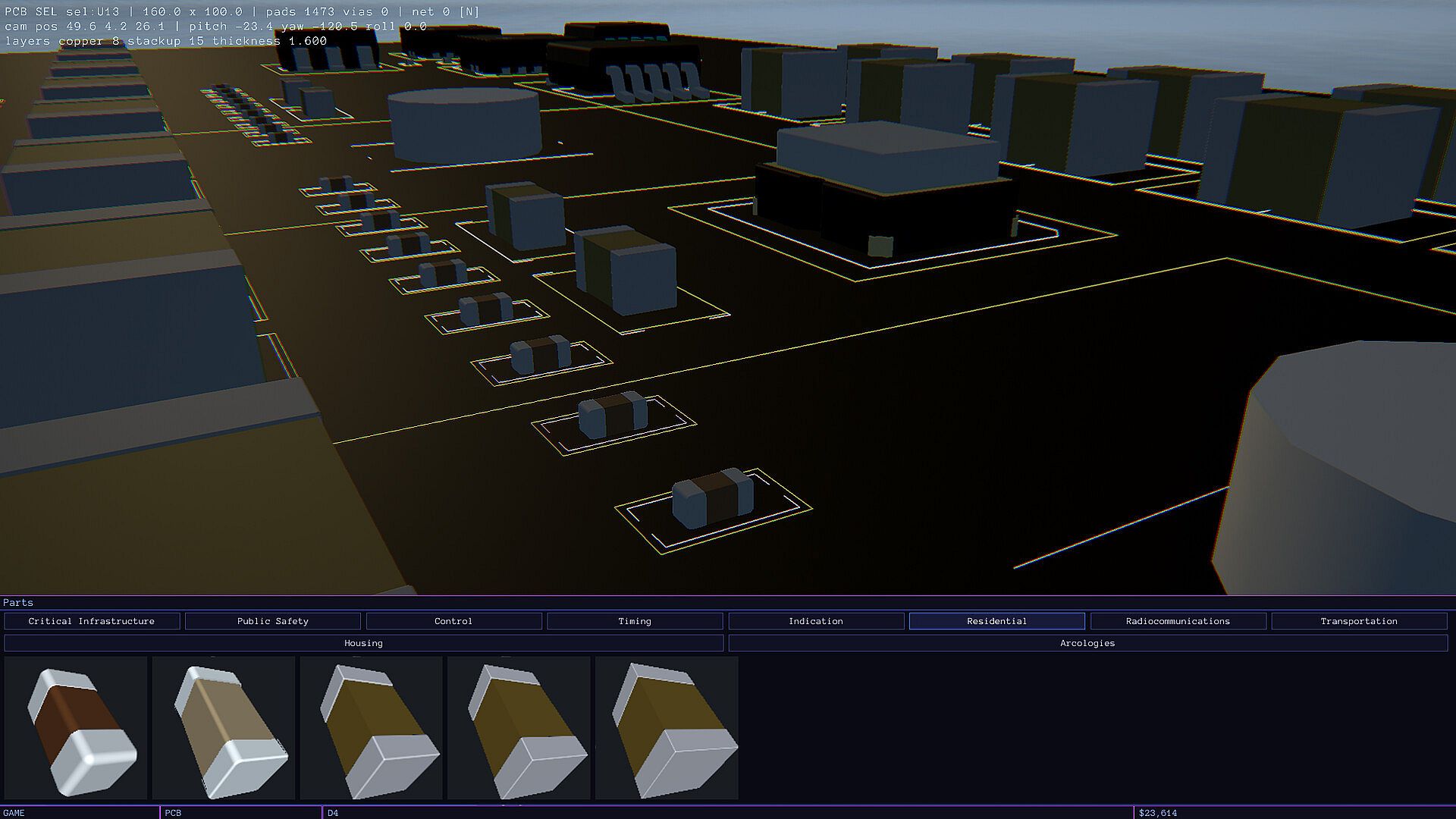
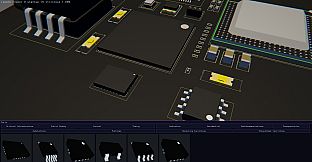
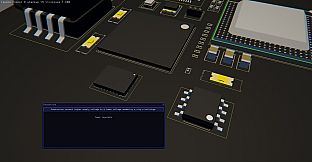
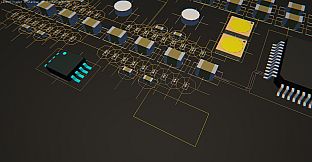
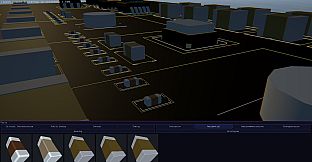
Crosstalk is a strategy indie simulation game on PC that combines city building with printed circuit board design principles. Players construct urban environments using electronic components that obey real electrical physics, requiring constant management of power flows, voltage stability, and operational integrity to keep the city functional.
Gameplay
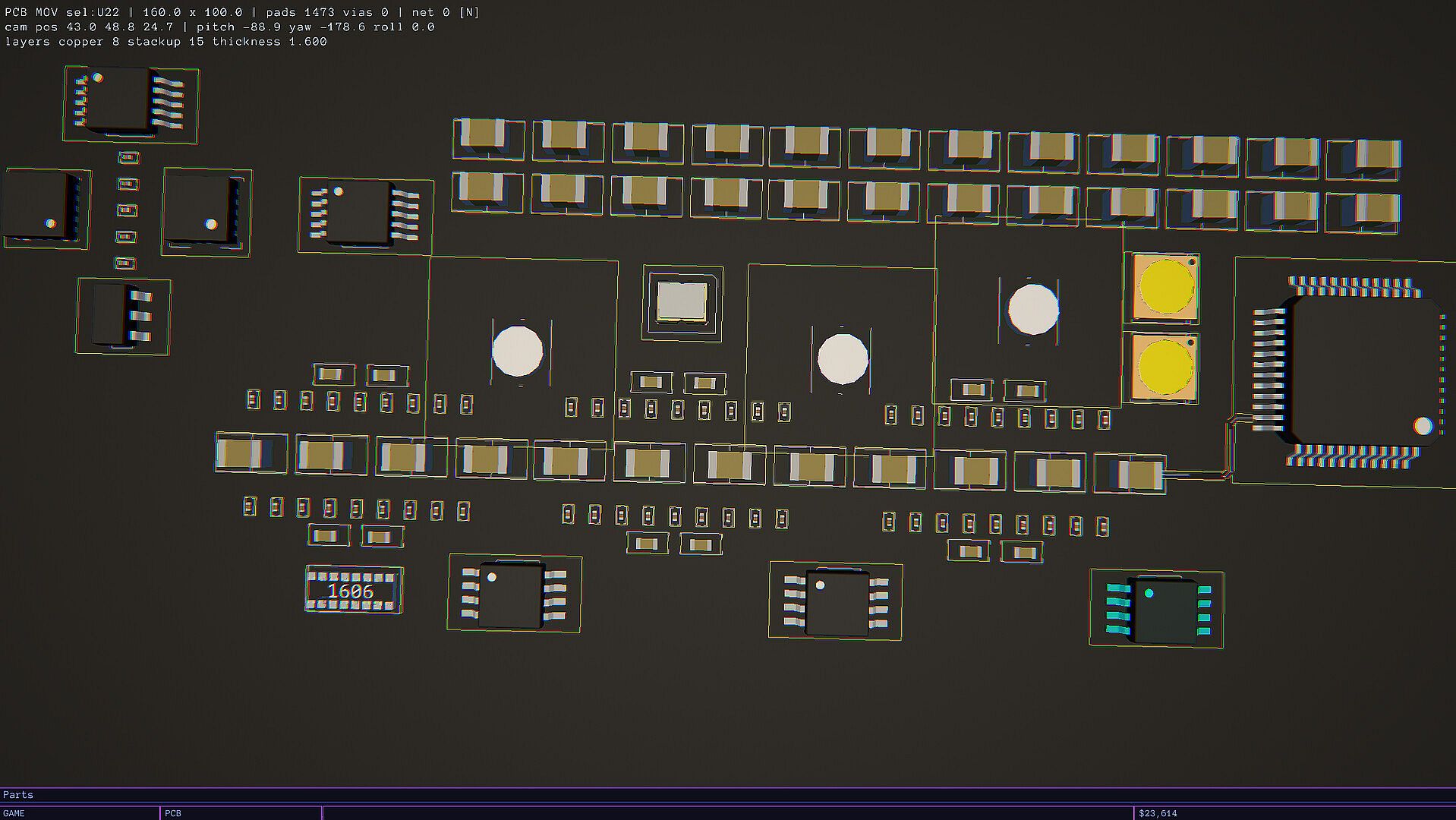
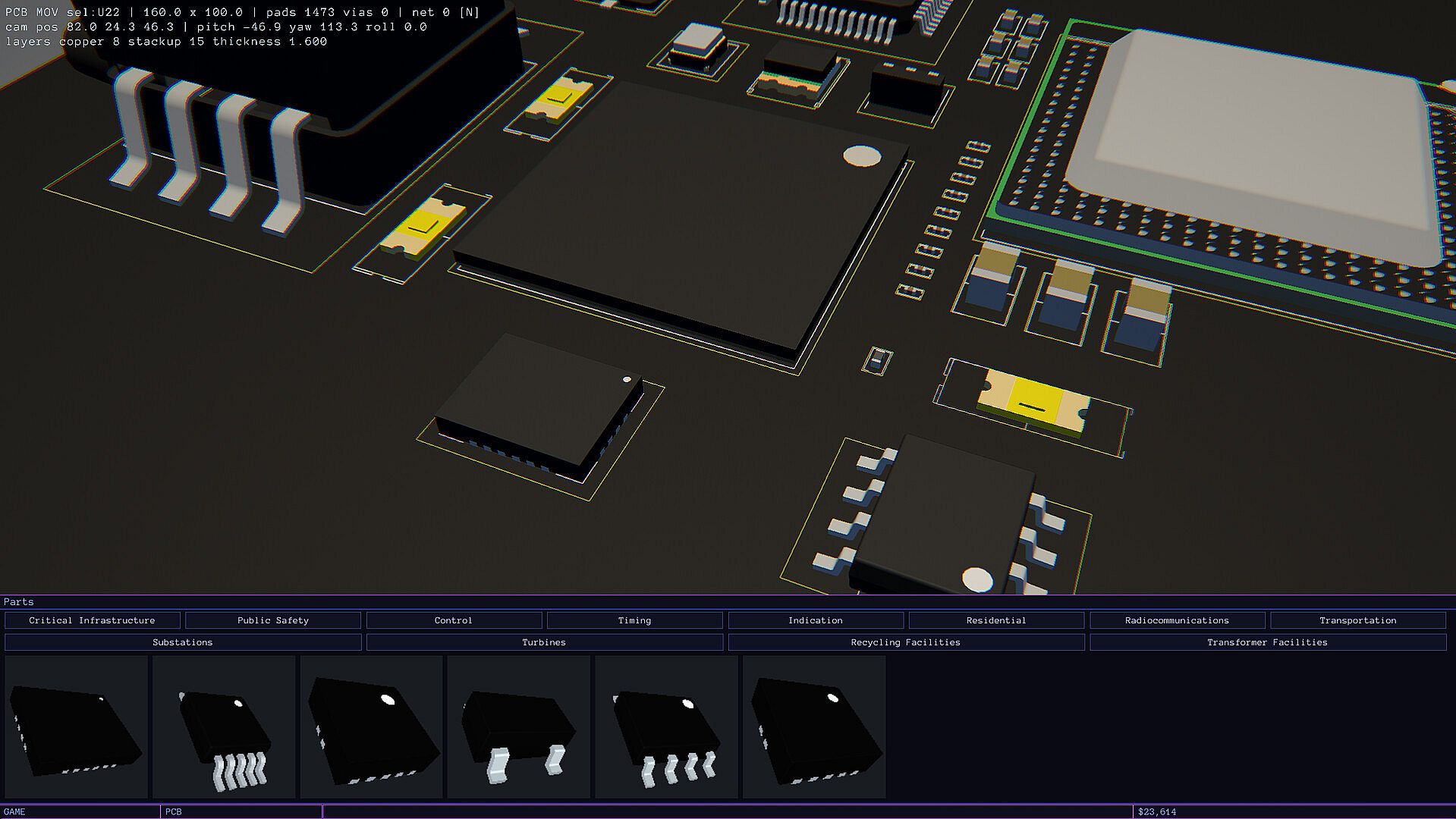
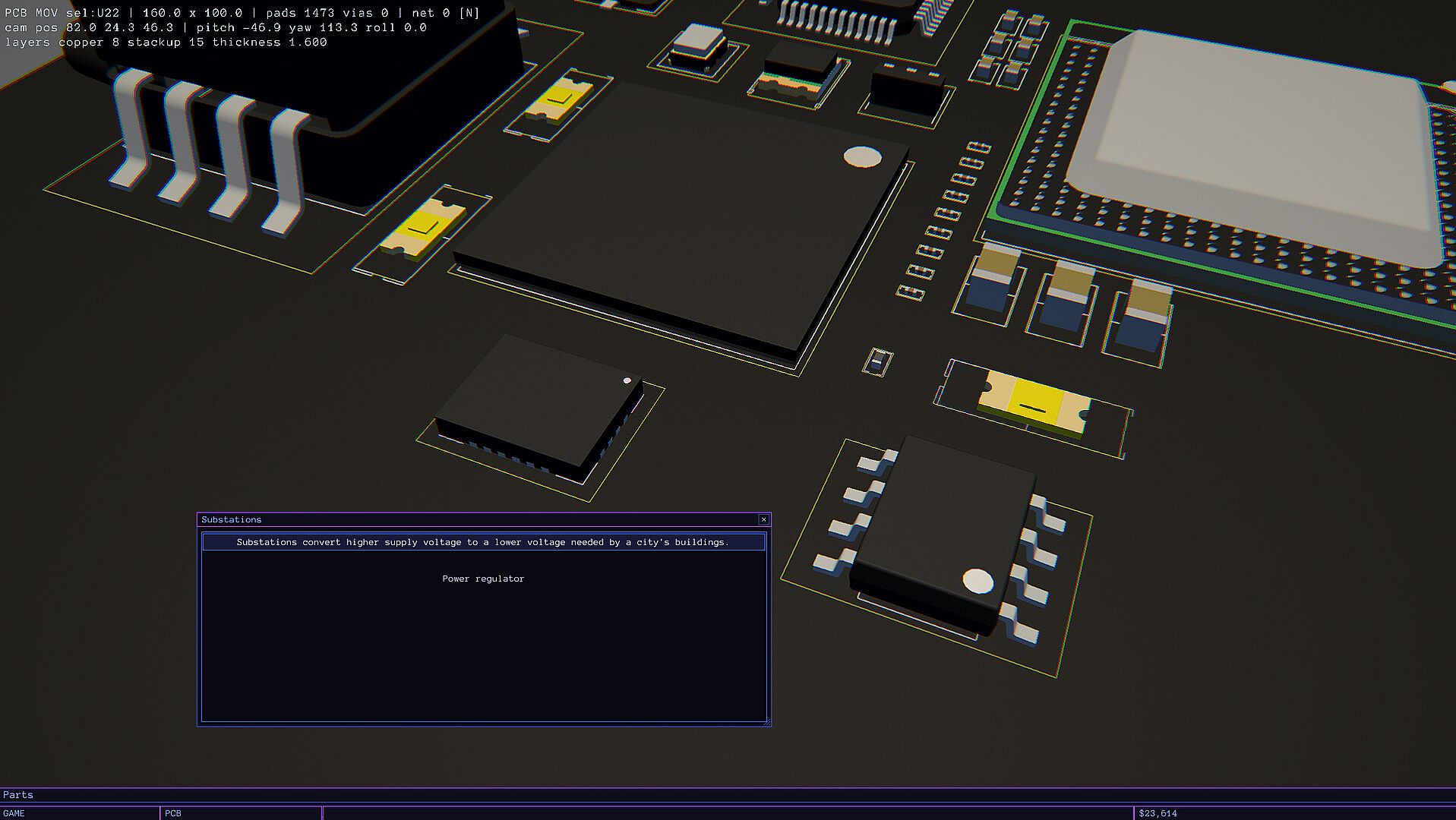
The core loop centers on placing buildings that function as electronic components while connecting them through roads, trains, and metro lines that act as traces and vias. These elements must form structurally valid PCB layouts, and the simulation enforces realistic rules for current, voltage, and electromagnetic effects. Voltage fluctuations outside safe tolerances trigger brownouts or component damage, so players monitor power pins on active parts and adjust layouts to stabilize the system. Housing units placed strategically lower crime rates by addressing petty crime and homelessness, which in turn protects against further disruptions. Difficulty settings influence starting resources and the intensity of external pressures, encouraging careful planning from a small town scale up to expansive megacities while balancing budgets and preventing system failures.
Game Modes
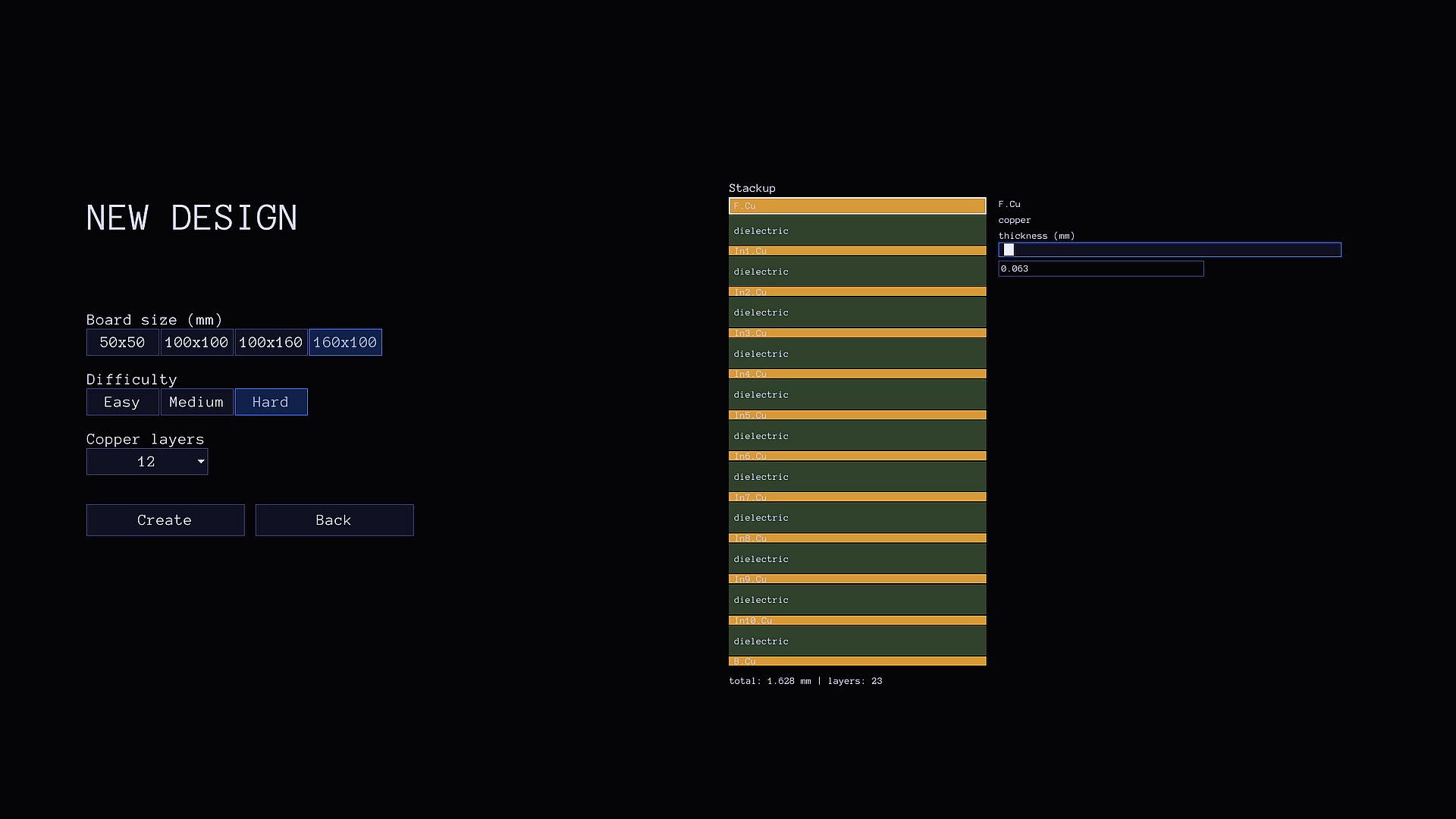
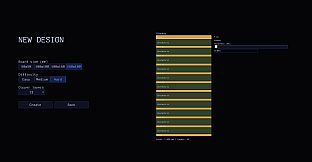
Sandbox mode serves as the primary single player experience. Players select a PCB size and difficulty level before beginning construction, then expand the city while containing emerging issues and maintaining financial solvency. Networked mode expands this foundation through Steam integration for multiplayer sessions. The party submode allows up to three players to collaborate on the same city design, sharing responsibilities for layout, power management, and maintenance. The adversarial submode pits teams against each other, with one group sustaining the city and the opposing side, representing nature, introducing targeted disruptions based on weaknesses like elevated crime rates. Each team supports up to two additional players, enabling matches of three versus three.
Mechanics and Educational Aspects
Every design choice carries direct consequences through the electrical simulation. Roads and rail connections carry signals like traces, while metro placements enable vertical routing similar to vias. Players learn PCB fundamentals by ensuring proper decoupling, trace routing, and component placement to avoid interference and maintain stable operation. Crime management integrates with these systems, as unchecked issues compound electrical problems and lead to physical damage. The result is a hands on process where city growth directly teaches principles of circuit integrity and power distribution without abstract tutorials.
Is It Worth Playing?
Crosstalk suits players interested in simulation games that blend creative construction with precise technical constraints and optional cooperative or competitive multiplayer. The realistic electrical rules and PCB parallels provide depth for those who enjoy methodical planning and problem solving under pressure. Sandbox offers flexible solo sessions focused on long term city development, while networked options add social layers for groups seeking collaboration or direct opposition. The game appeals most to fans of indie strategy titles that reward understanding of interconnected systems rather than fast paced action. Availability on PC makes it accessible for those with an interest in educational mechanics presented through gameplay.











