






Crimson Ocean is an action indie game for PC that places players in control of a high-speed naval destroyer facing automated industrial threats in polluted ocean waters. The premise centers on an extraterrestrial harvesting module that has crashed into the sea and begun processing vast amounts of ocean debris as raw material. Rather than engaging in traditional invasion tactics, the module follows industrial protocols that classify the player vessel as an obstruction to be ground, flattened, towed, and recycled.
Gameplay
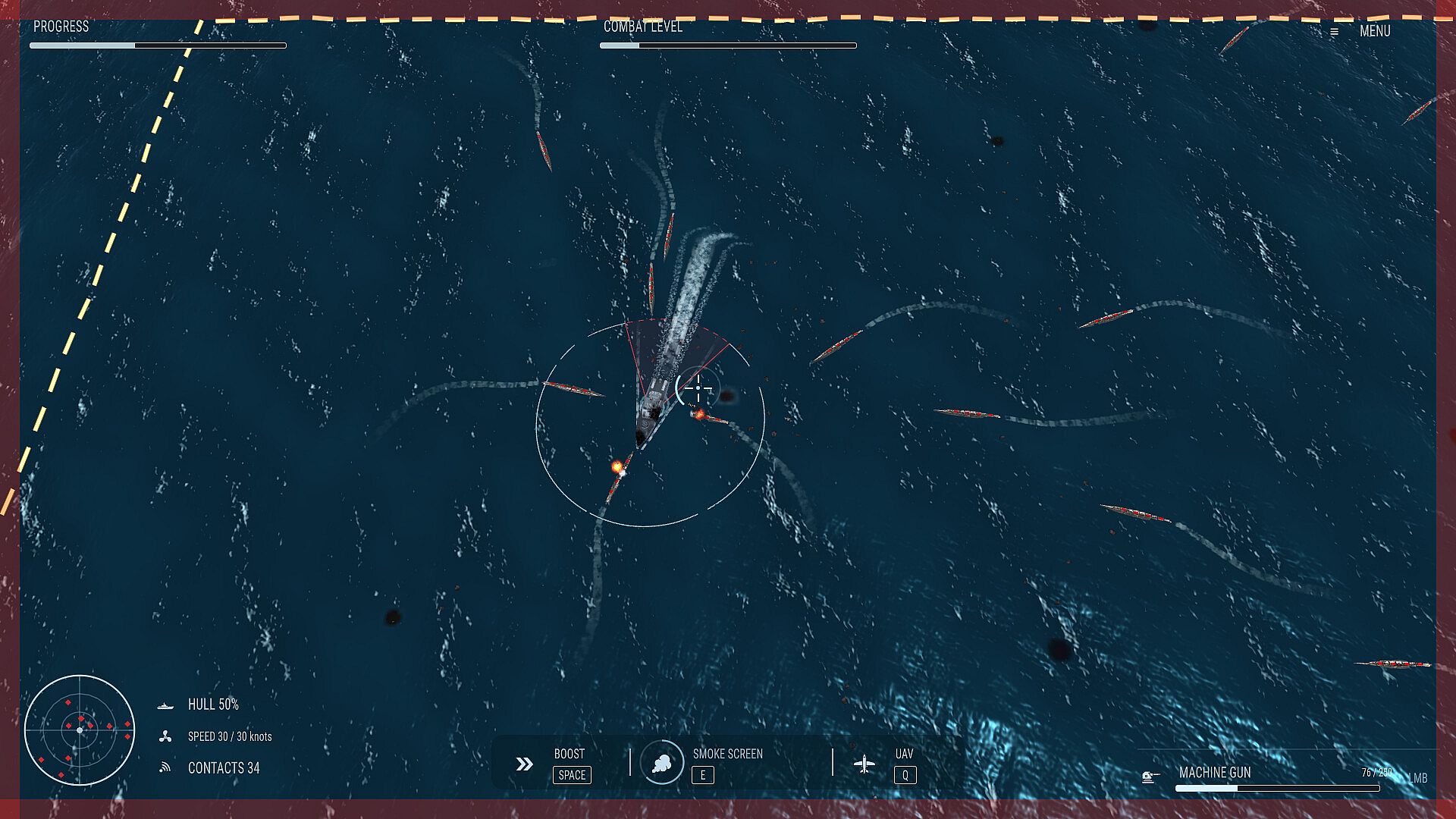
The core loop revolves around high-speed evasion and counterattack against waves of heavy industrial machinery. Players navigate open waters while avoiding dense patterns of scrap shrapnel, sonic ballast bursts, shockwaves, and steam discharges. Maritime hazards such as plastic gyres and sunken structures further complicate movement and force constant repositioning.
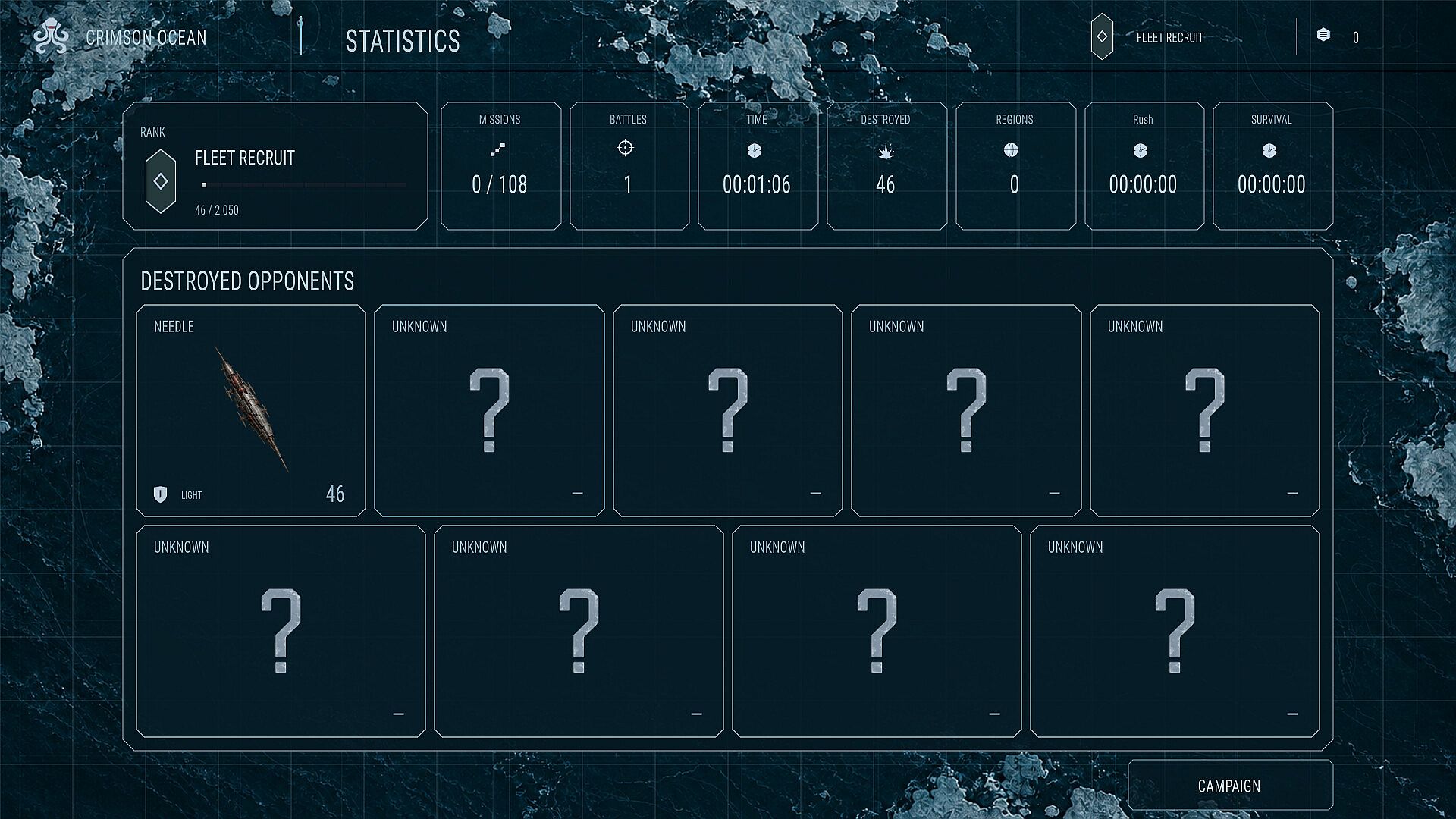
Enemy behavior emphasizes physical aggression over ranged weaponry. Automated tugs, rotary dredge shredders, hydraulic compactors, and magnetic barges close distance rapidly to ram and drag the destroyer toward processing zones. Survival depends on precise maneuvering combined with opportunistic strikes against exposed components.
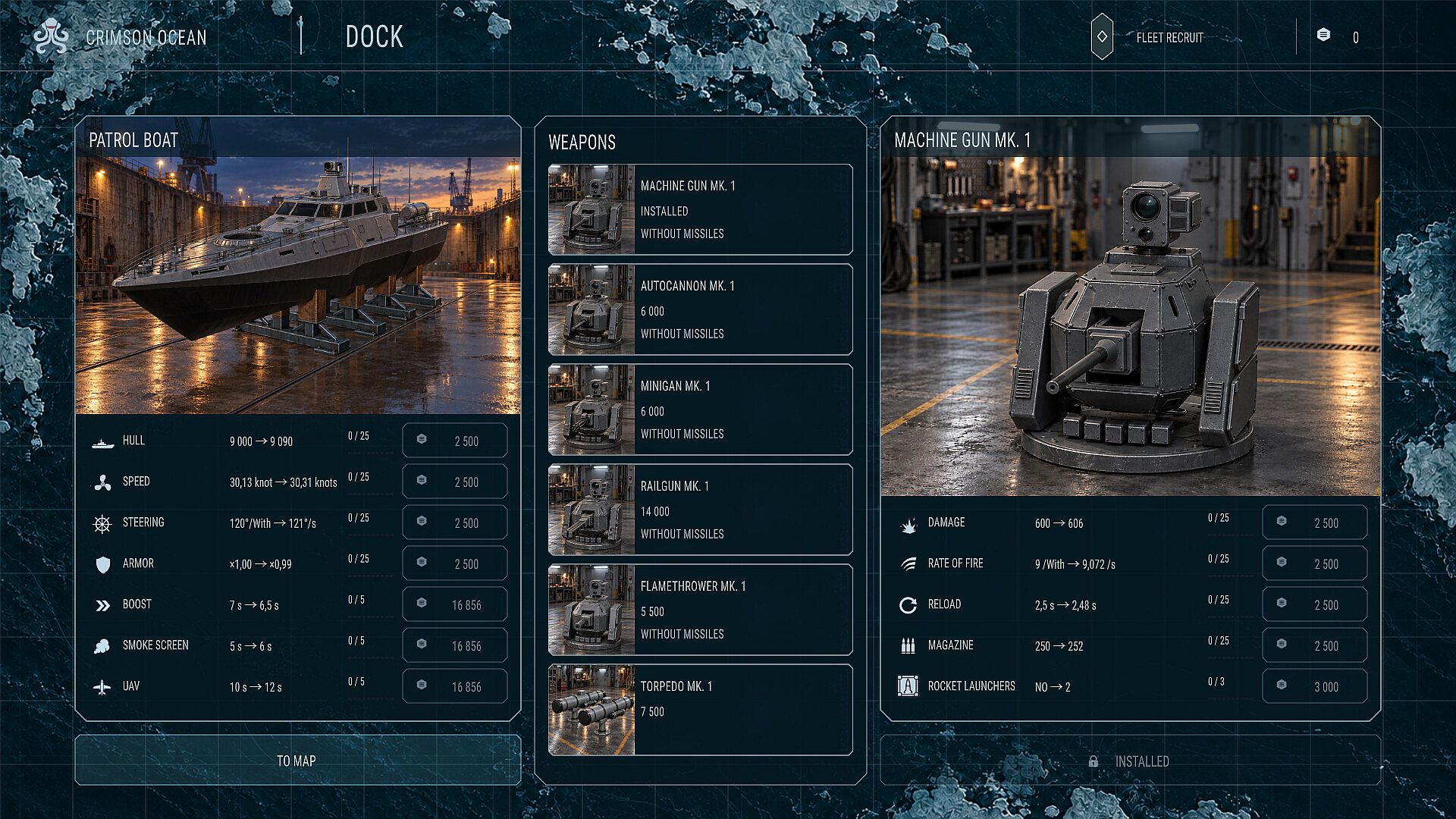
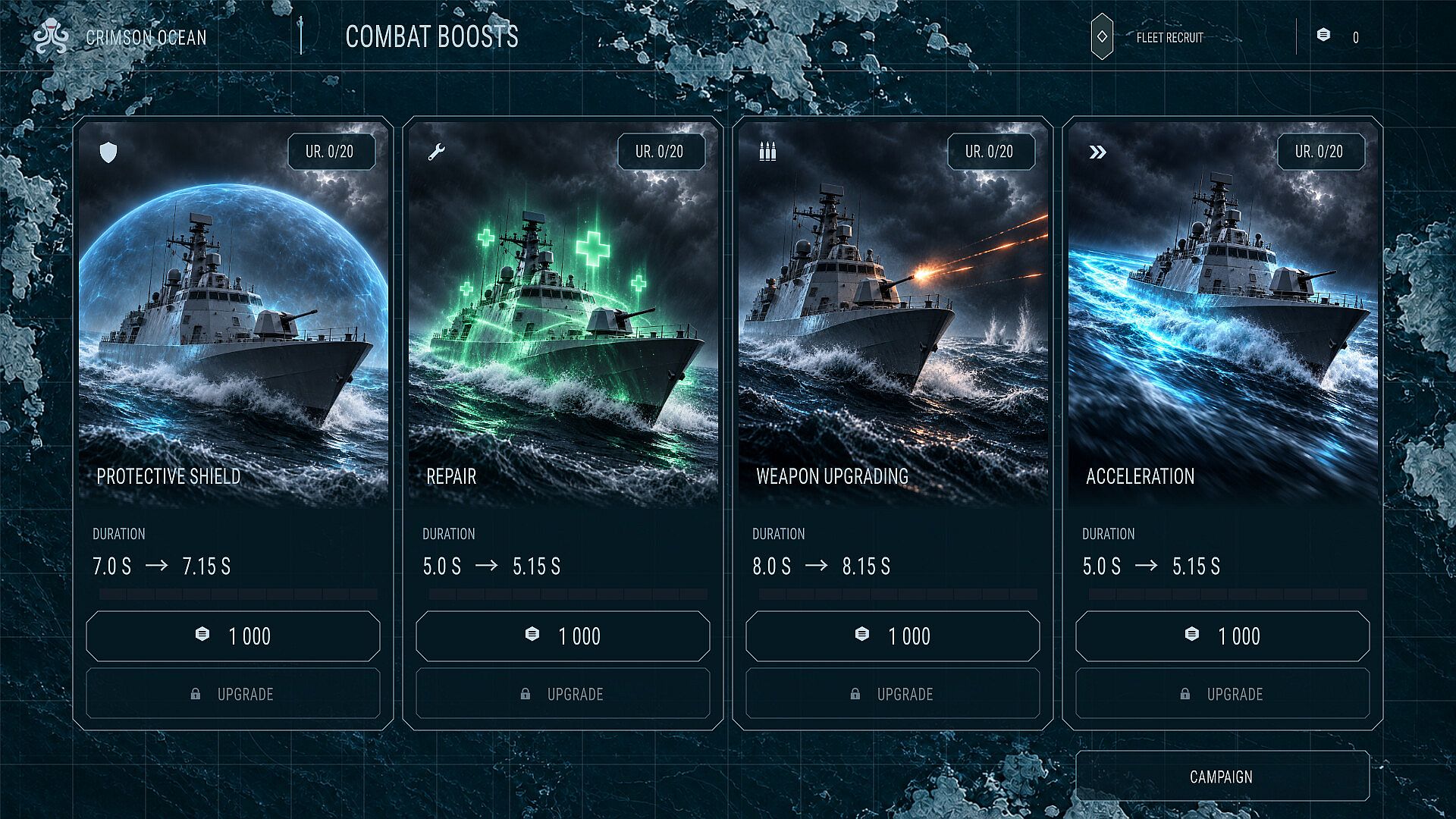
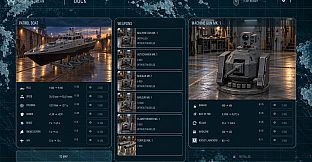
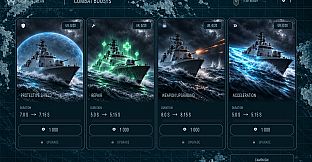
Salvage forms a central progression system. Wrecked harvesters yield high-density alloys and alien processing cores that can be integrated into the destroyer. These upgrades expand offensive options to include heavy naval artillery, proximity flak nets, torpedo volleys, and automated point-defense systems. The result is a ship that grows more capable at both clearing space and surviving direct collisions.
Combat arenas incorporate environmental hazards that serve dual purposes. Toxic plastic fields, collapsing oil platforms, and rusted freighter graveyards limit maneuverability while supplying additional feedstock to the alien processors, increasing the density of threats over time.
Game Modes
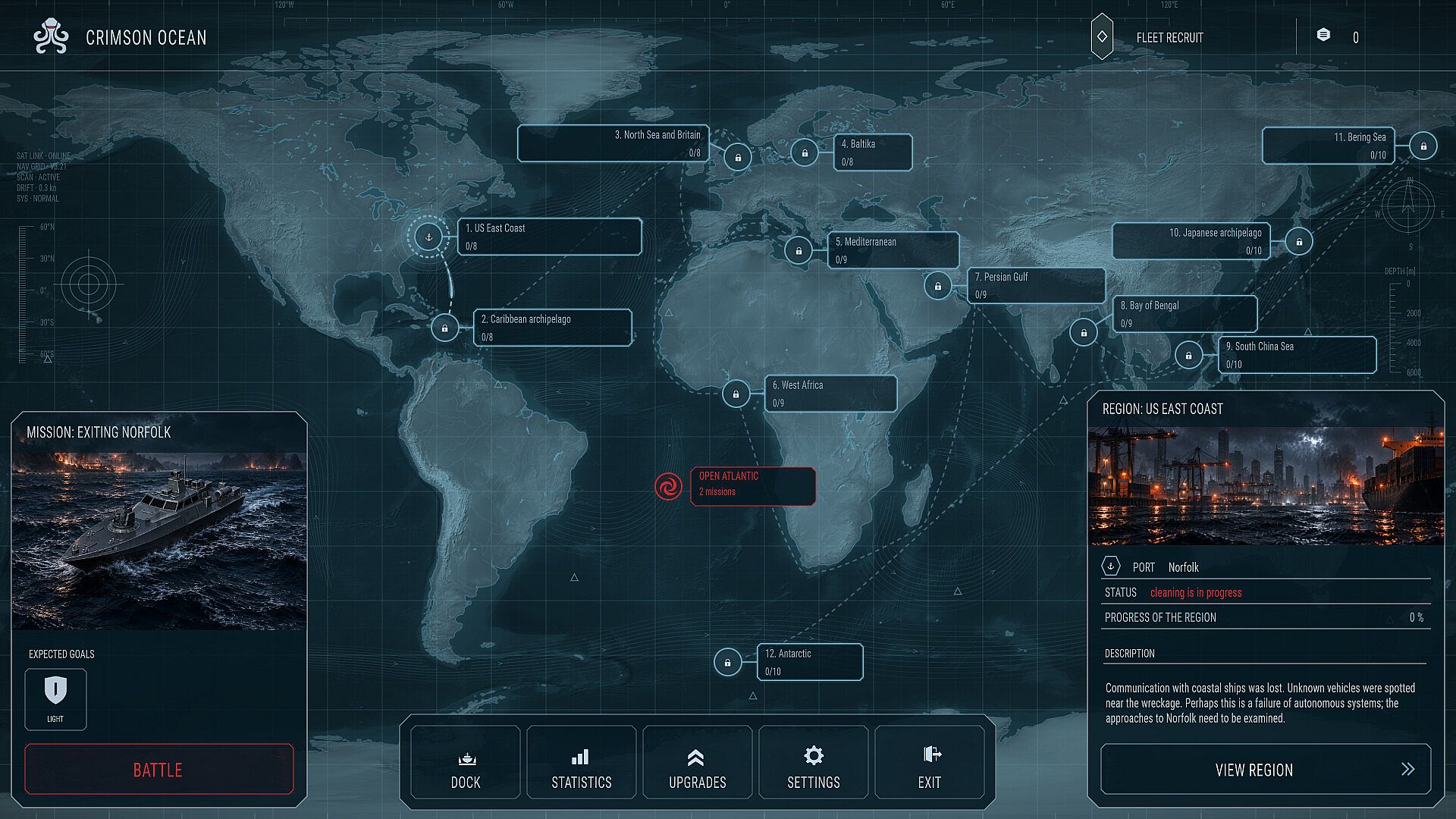
Crimson Ocean presents its experience as a continuous single-player campaign focused on breaching successive industrial perimeters. Encounters scale in complexity as players advance through hazardous zones toward larger fabrication structures. There are no separate multiplayer or competitive modes described in available information, keeping the emphasis on solitary navigation and survival against relentless industrial opposition.
Key Mechanics and Threats
Colossal fabrication titans represent the largest scale threats. These mobile foundries, super-dredges, and refining complexes treat the entire battlefield as an active demolition site. Encounters require sustained pressure on weak points while dodging area-denial attacks that reshape the water surface itself.
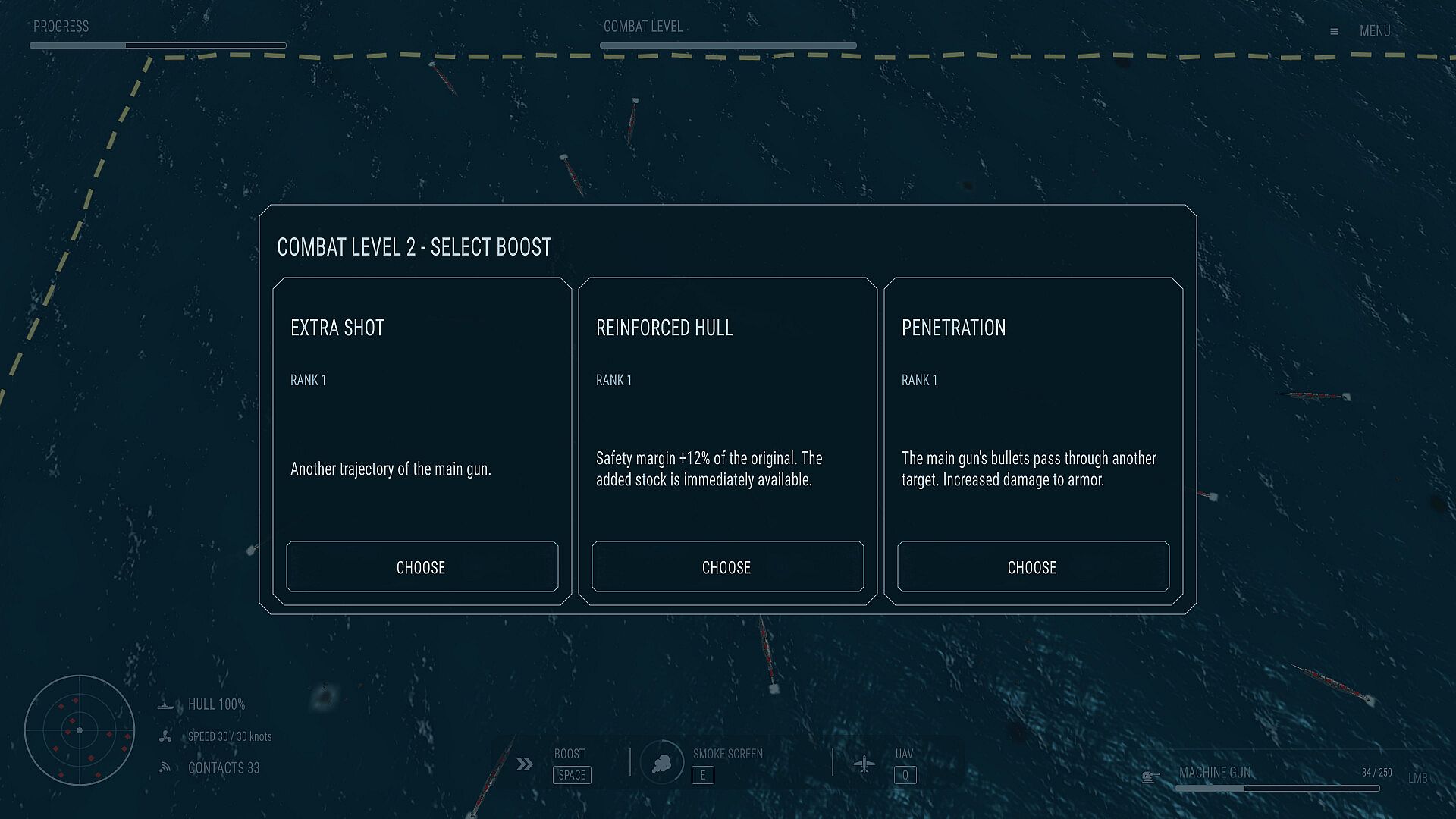
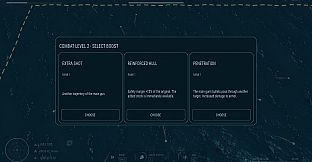
Weaponized salvage encourages adaptive loadouts. Proximity flak nets counter close-range rammers, while experimental torpedoes target distant heavy units. Point-defense barriers provide a final layer against incoming debris fields. Each upgrade path alters how players approach the same hazards, rewarding experimentation within the core bullet-hell framework.
Is It Worth Playing?
Crimson Ocean targets players who enjoy kinetic bullet hell gameplay translated to a maritime setting with strong emphasis on physical ramming threats and environmental hazards. The industrial theme and salvage-driven progression offer a distinct identity compared with traditional space-based shooters. Those who appreciate precise dodging combined with incremental ship customization will find the most direct appeal. Without widespread player data or post-launch updates available at this stage, the game suits individuals seeking a focused indie action experience rather than broad multiplayer or seasonal content. Availability remains limited to the PC platform described in its listing.












