

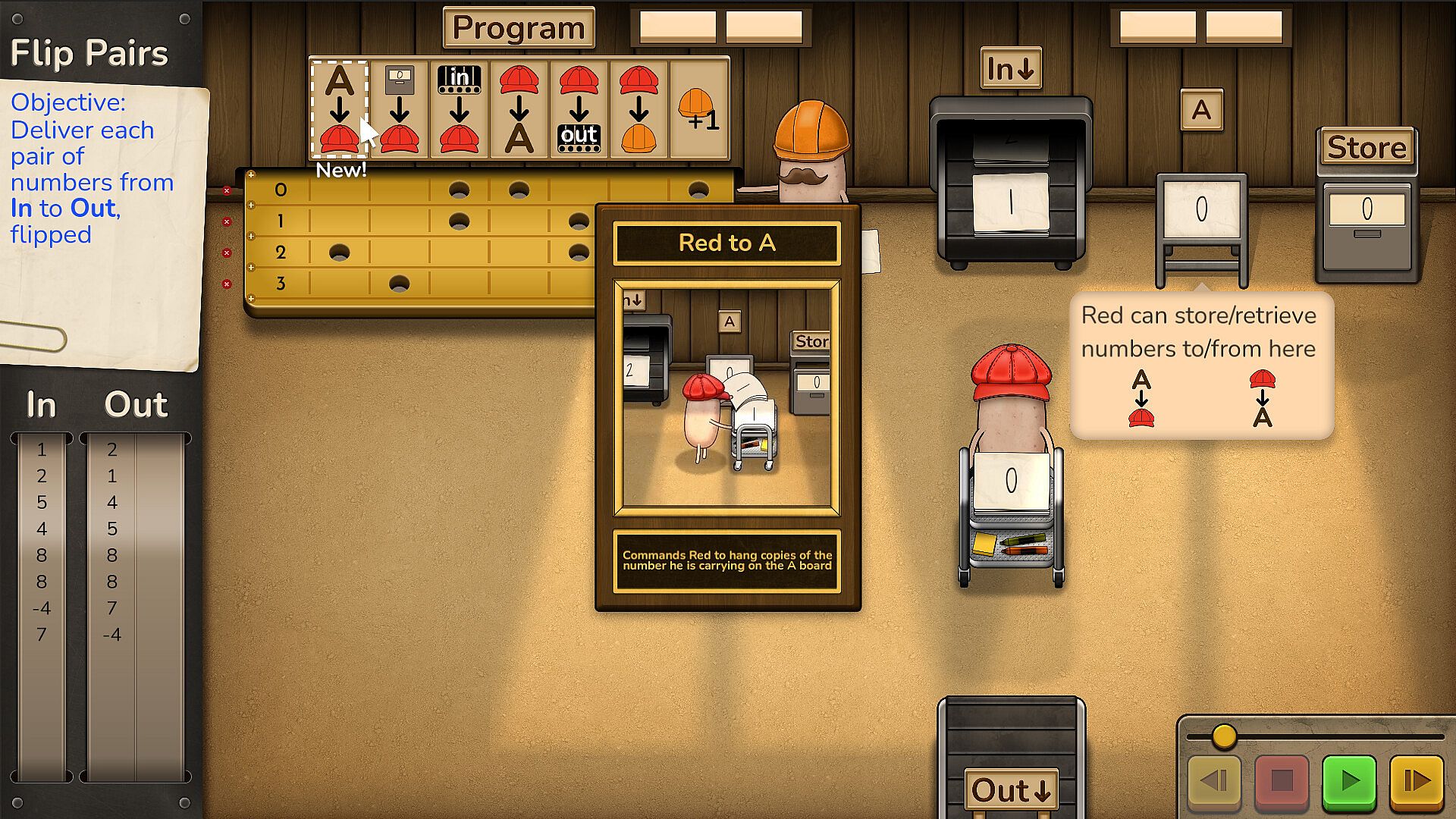
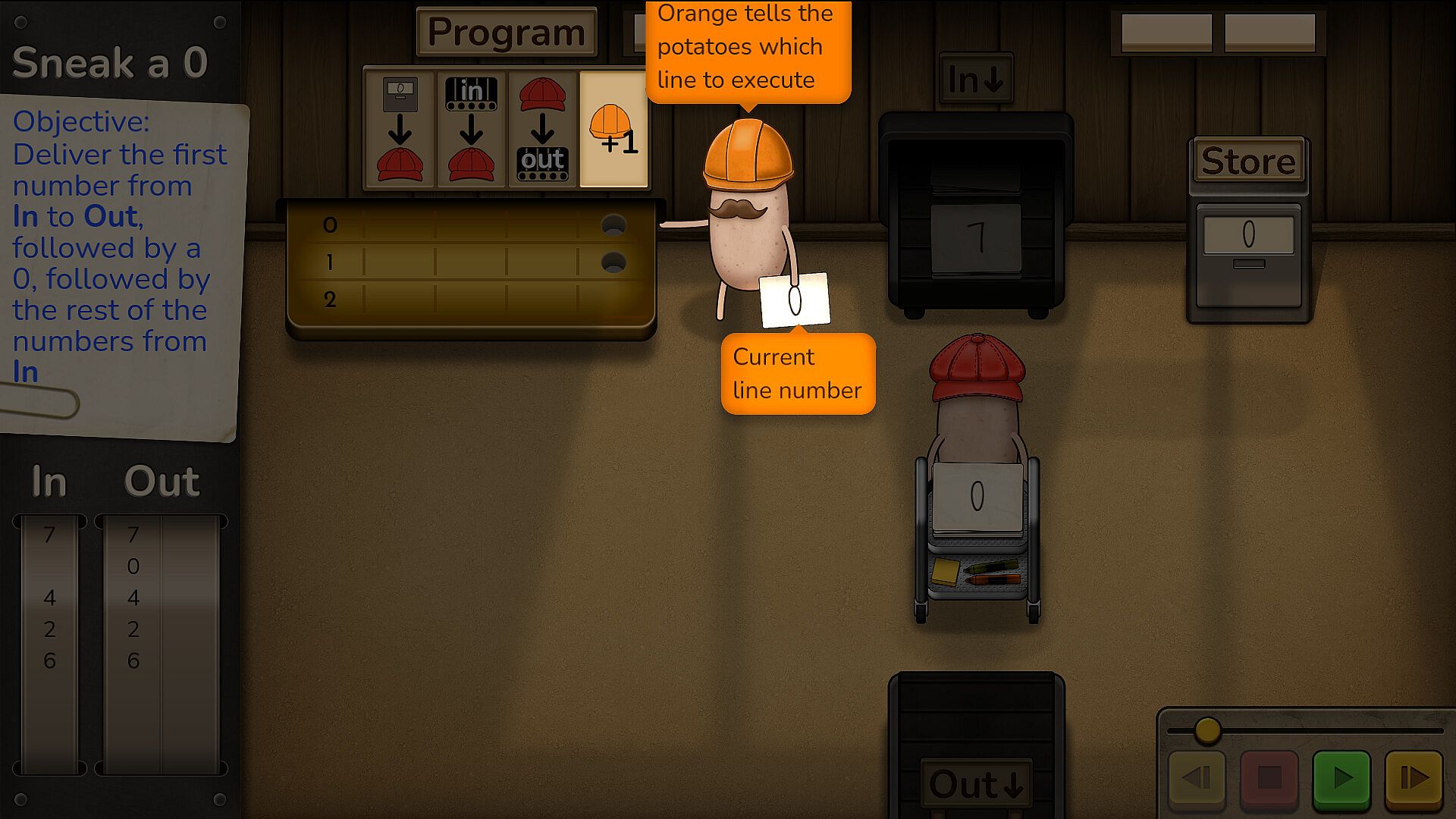
CPU: Computing Potatoes Unlimited is an indie simulation game for PC that challenges players to program potato-based workers in a factory setting designed to mimic computer processor operations. The core experience revolves around creating efficient instruction sequences to handle numerical tasks for various customer scenarios, all without requiring prior coding expertise.
Gameplay
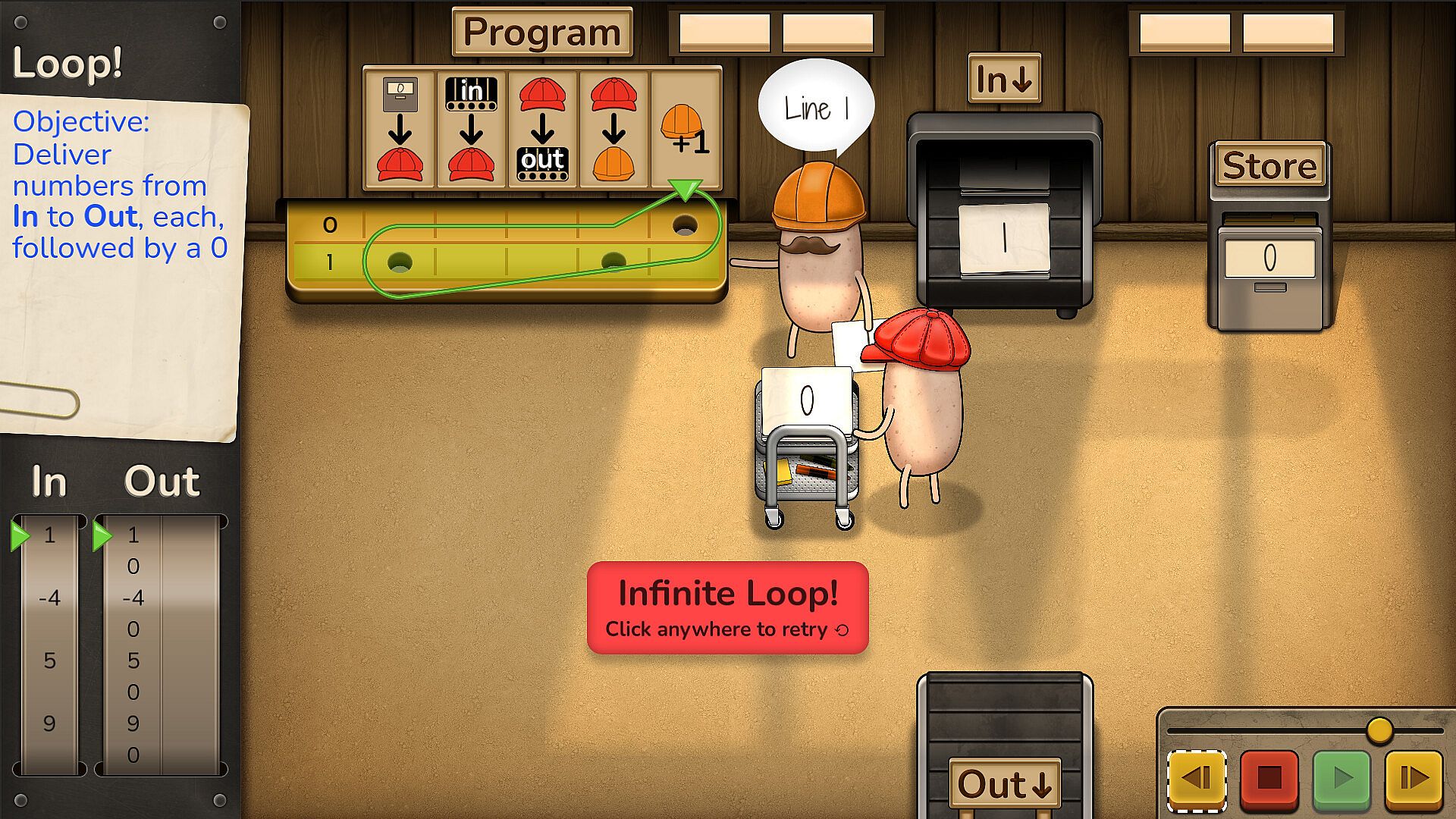
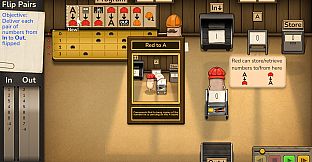
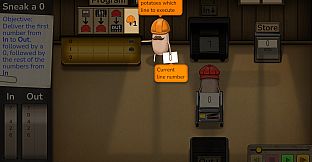
Players take on the role of a programmer at Computing Potatoes Unlimited, where the task is to issue simple punch-in commands to potato workers. These instructions guide the workers through processing numbers in a setup that replicates processor functions. The gameplay emphasizes observation and iteration, as users test their programs, note the outcomes, and refine them to achieve better performance.
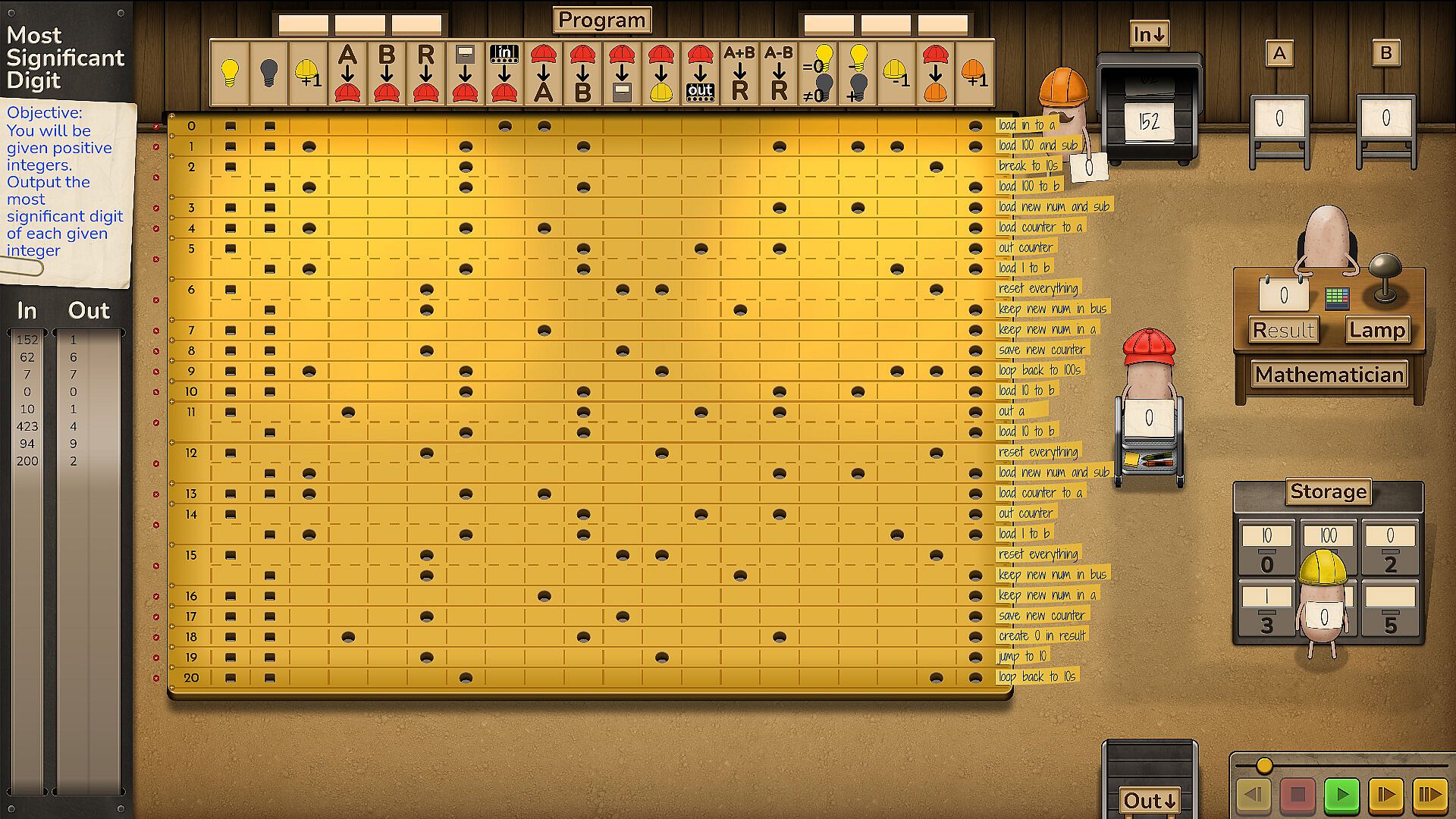
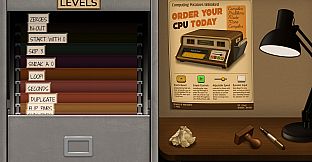
Each level presents an open-ended puzzle tied to a specific customer need, such as building a device for counting sheep or calculating employee compensation. The simulation draws from real CPU design concepts like microprogramming, yet remains accessible through straightforward mechanics. Success depends on optimizing the sequence of actions to handle the required computations accurately.
Feedback comes in the form of performance metrics that track efficiency across multiple runs. This loop of programming, testing, and adjusting forms the central rhythm, encouraging experimentation with different instruction combinations to meet the goals of each scenario.
Game Modes
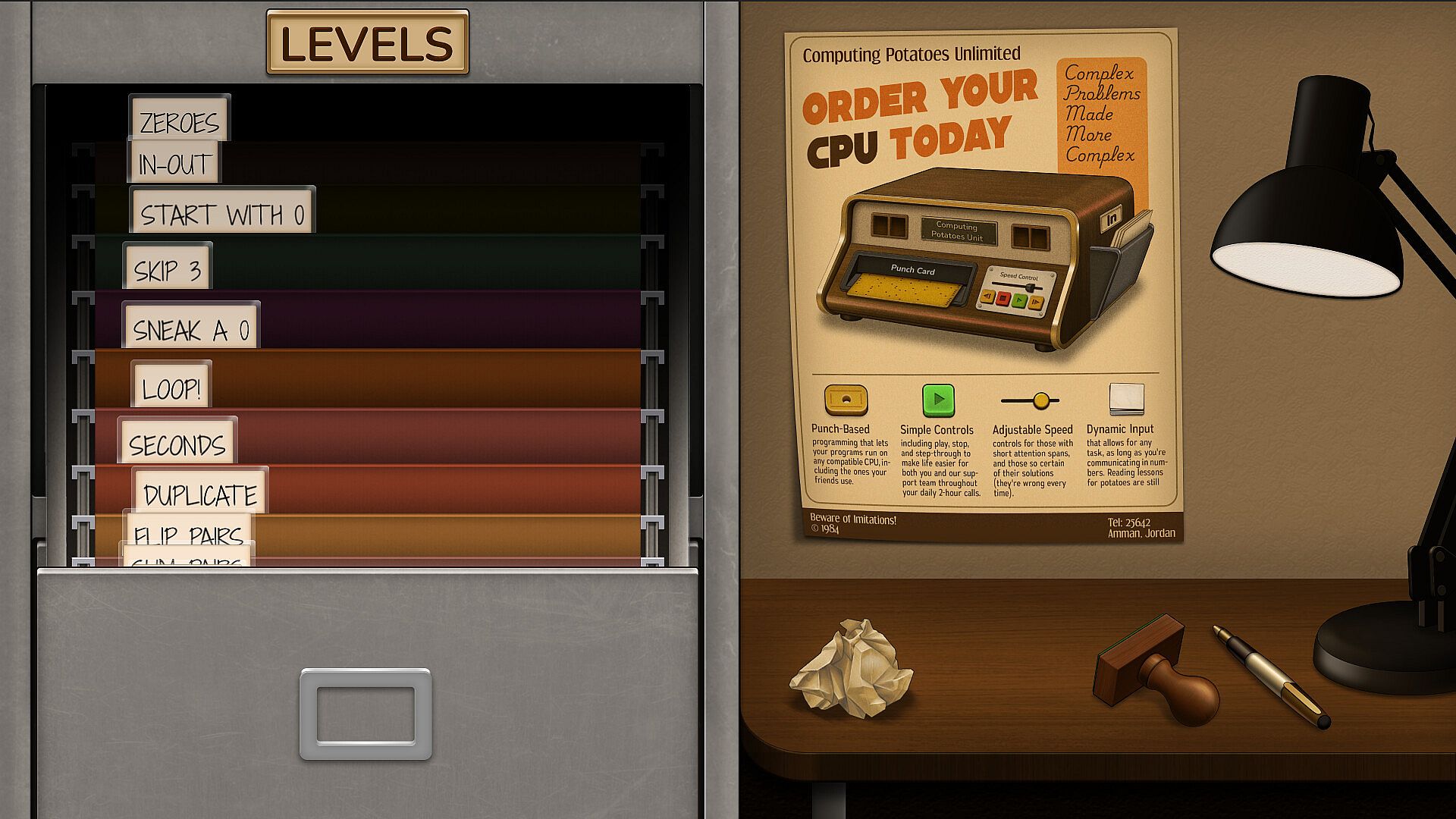
The primary mode consists of more than 40 structured puzzle levels that progress through increasingly complex customer requests. These levels focus on meeting exact requirements while encouraging players to explore multiple valid solutions.
A dedicated playground mode allows for the creation of original challenges. Users can design custom scenarios and share them with others through integrated workshop features, extending the experience beyond the main set of puzzles. This setup supports both solo experimentation and community-driven content.
Optimization elements appear across modes, with tools to compare results against personal bests or broader leaderboards using visual histograms that display cycles, instruction counts, and memory usage.
Core Mechanics and Progression
Instruction input forms the foundation, where each command directs potato workers in basic operations that accumulate into full computational tasks. The factory environment provides visual feedback on how instructions execute in sequence, helping players understand cause and effect without abstract theory.
Progression builds through repeated refinement, as early levels introduce fundamental concepts and later ones layer additional constraints. The absence of any prerequisite knowledge keeps the focus on logical problem-solving and pattern recognition within the simulation.
Soundtrack integration supports the atmosphere during extended sessions of puzzle-solving and custom design work.
Who the Game Appeals To
This title suits individuals interested in puzzle games that blend simulation with logical challenges. Those who enjoy iterative optimization or exploring systems through hands-on trial will find the mechanics engaging, regardless of technical background. The approachable interface makes it suitable for casual players, while the underlying processor simulation offers depth for those curious about computing concepts.
Single-player focus combined with optional sharing elements caters to both independent puzzle solvers and those who like contributing or trying community creations.
Is It Worth Playing?
CPU: Computing Potatoes Unlimited remains in a pre-release state with a planned launch date to be announced. The available details highlight a focused puzzle experience centered on instruction optimization and factory simulation. Players who value methodical problem-solving and creative challenge design may find the core loop rewarding once available.
With no completed user reviews or post-launch updates confirmed at this stage, the decision rests on alignment with the described mechanics of programming potato workers for numerical tasks. The game targets those drawn to indie simulation titles that emphasize efficiency and iteration over narrative or action elements.