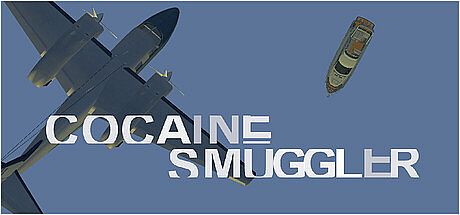


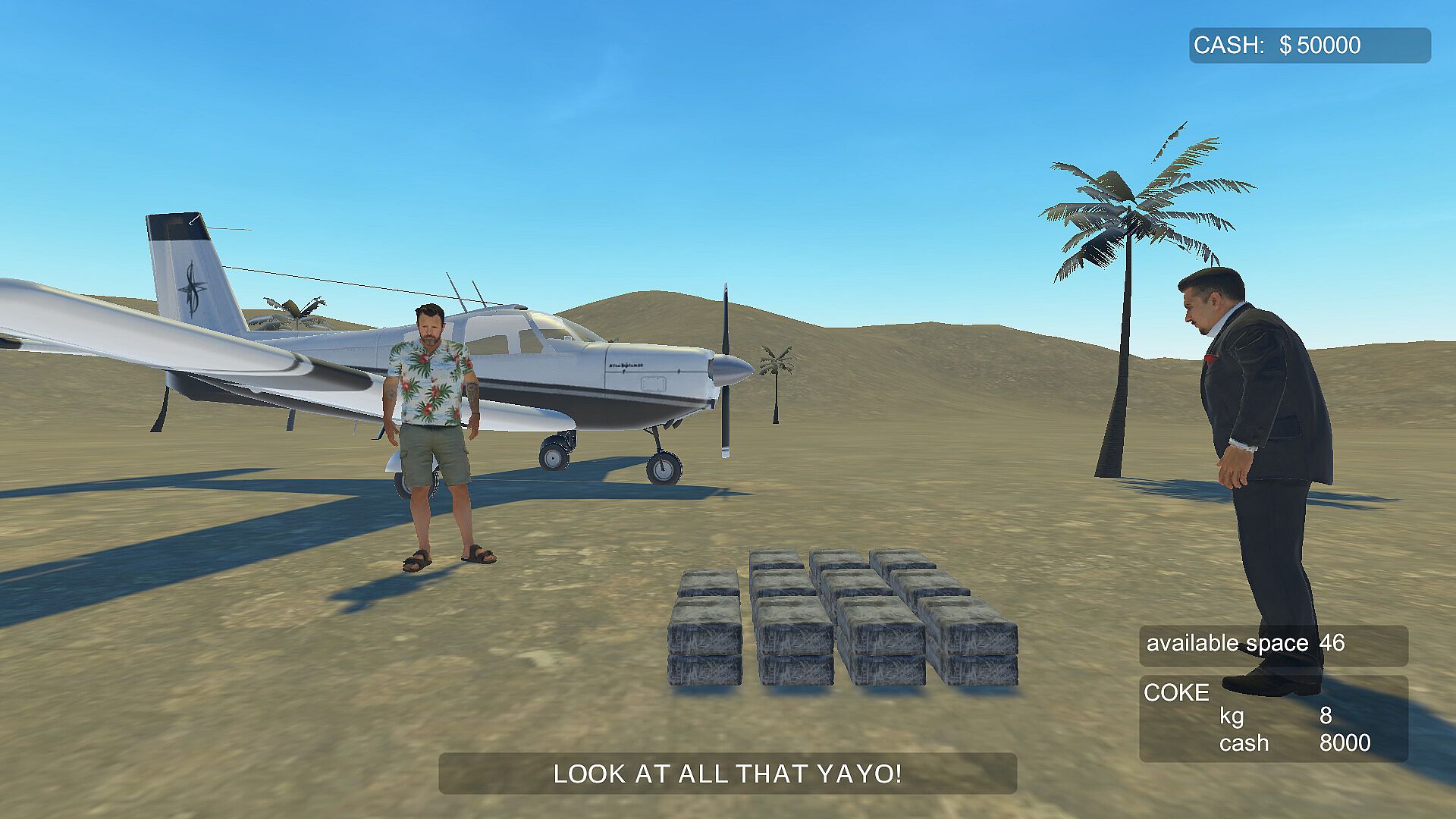
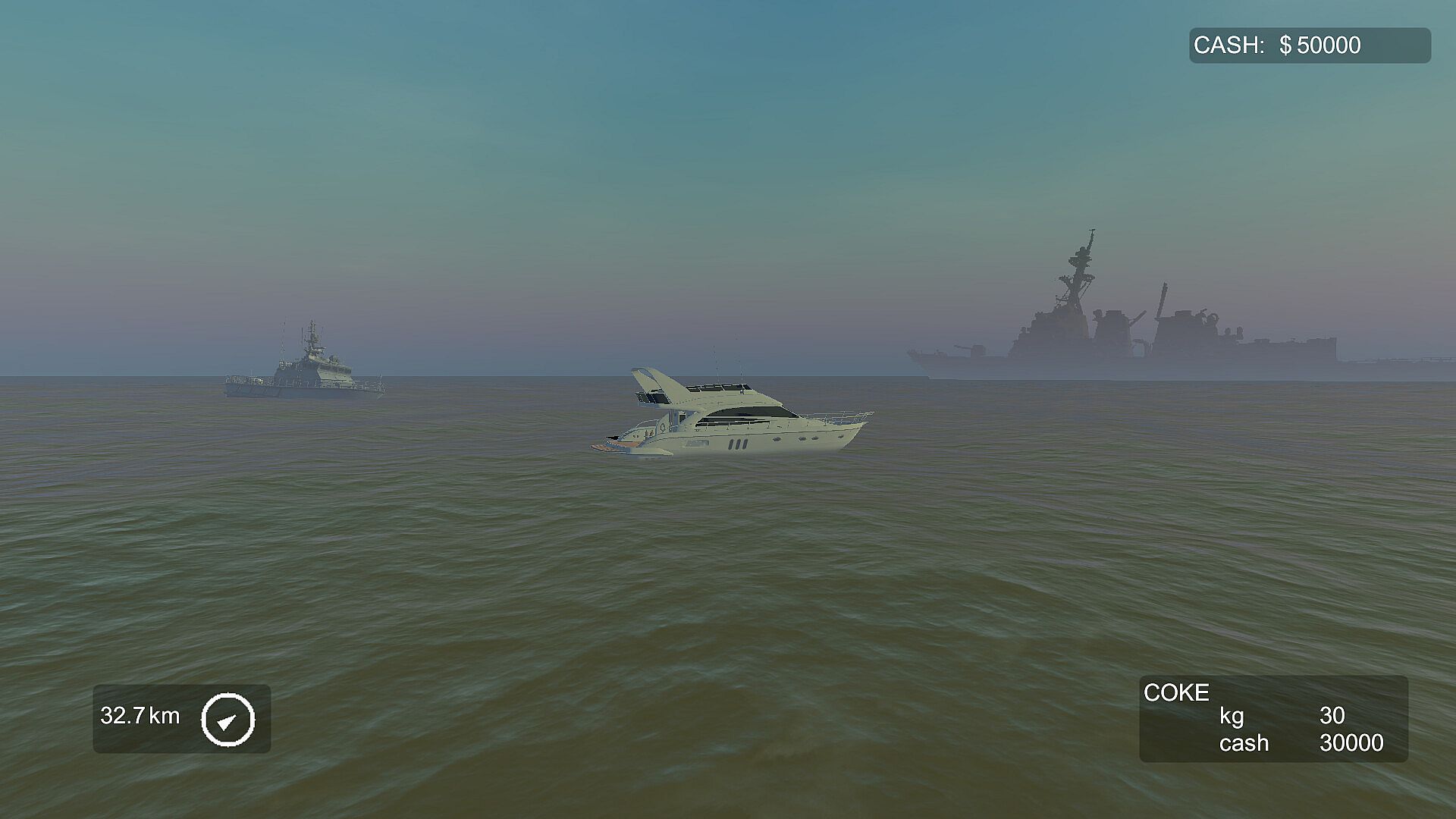
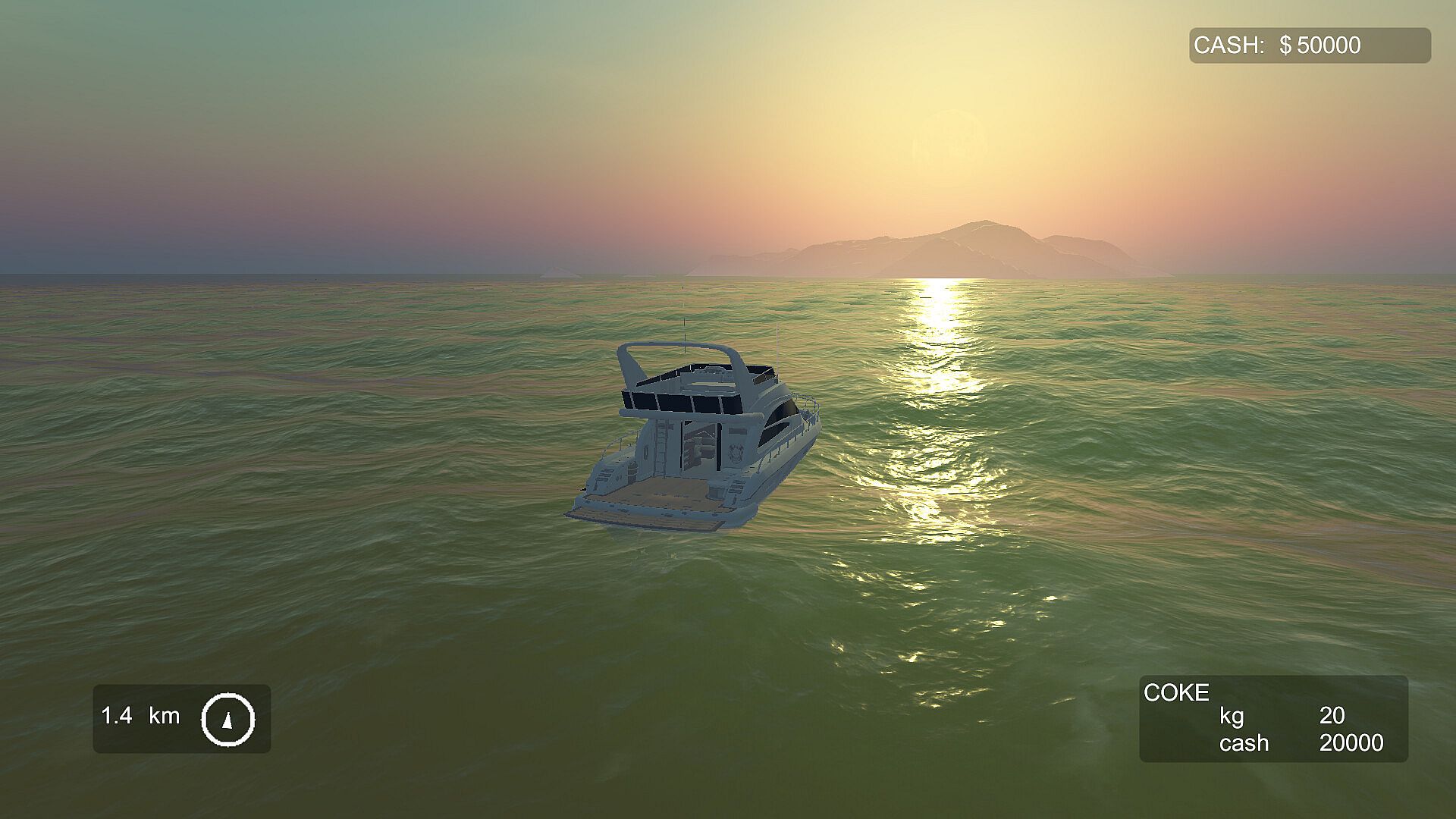
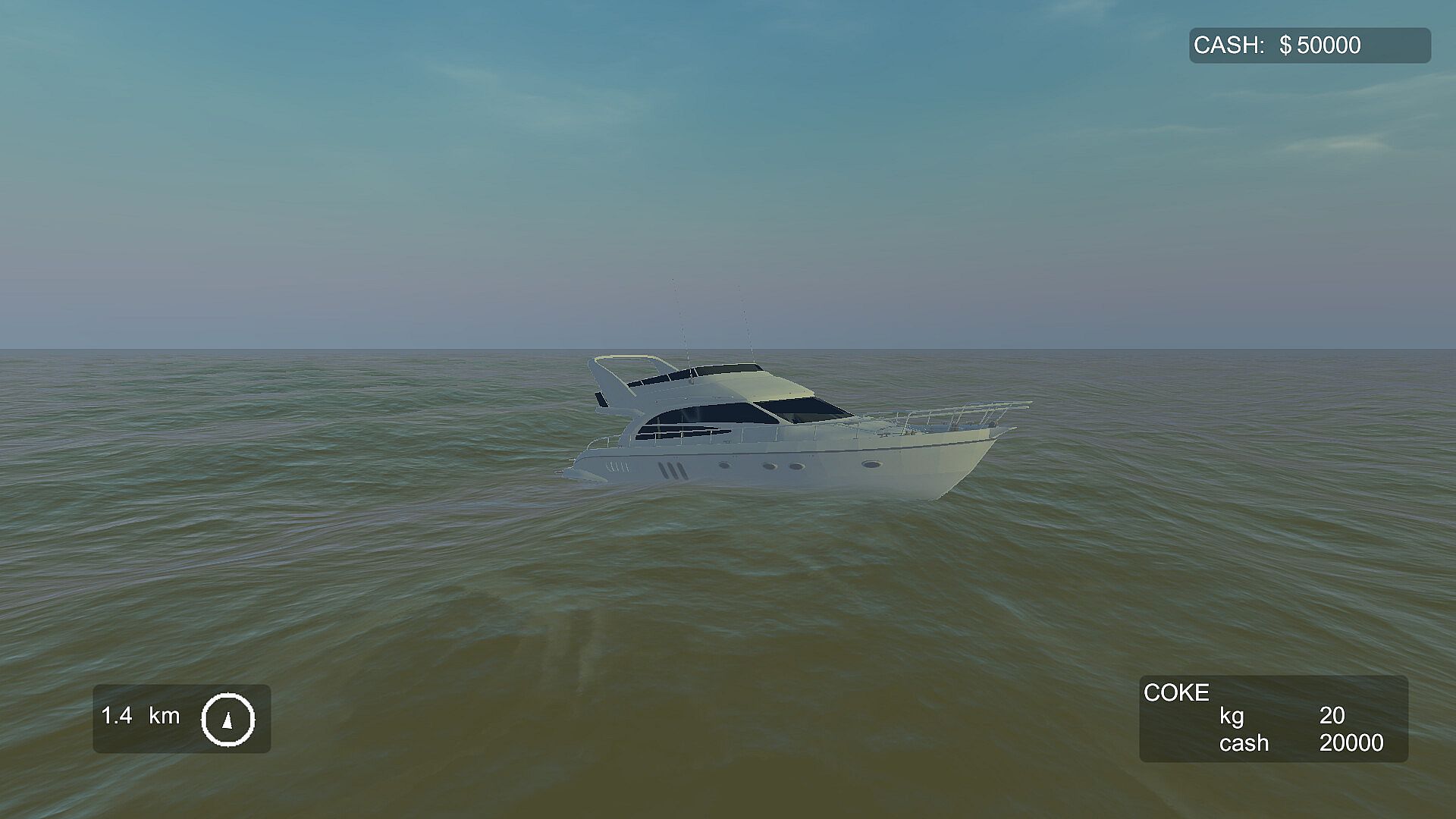
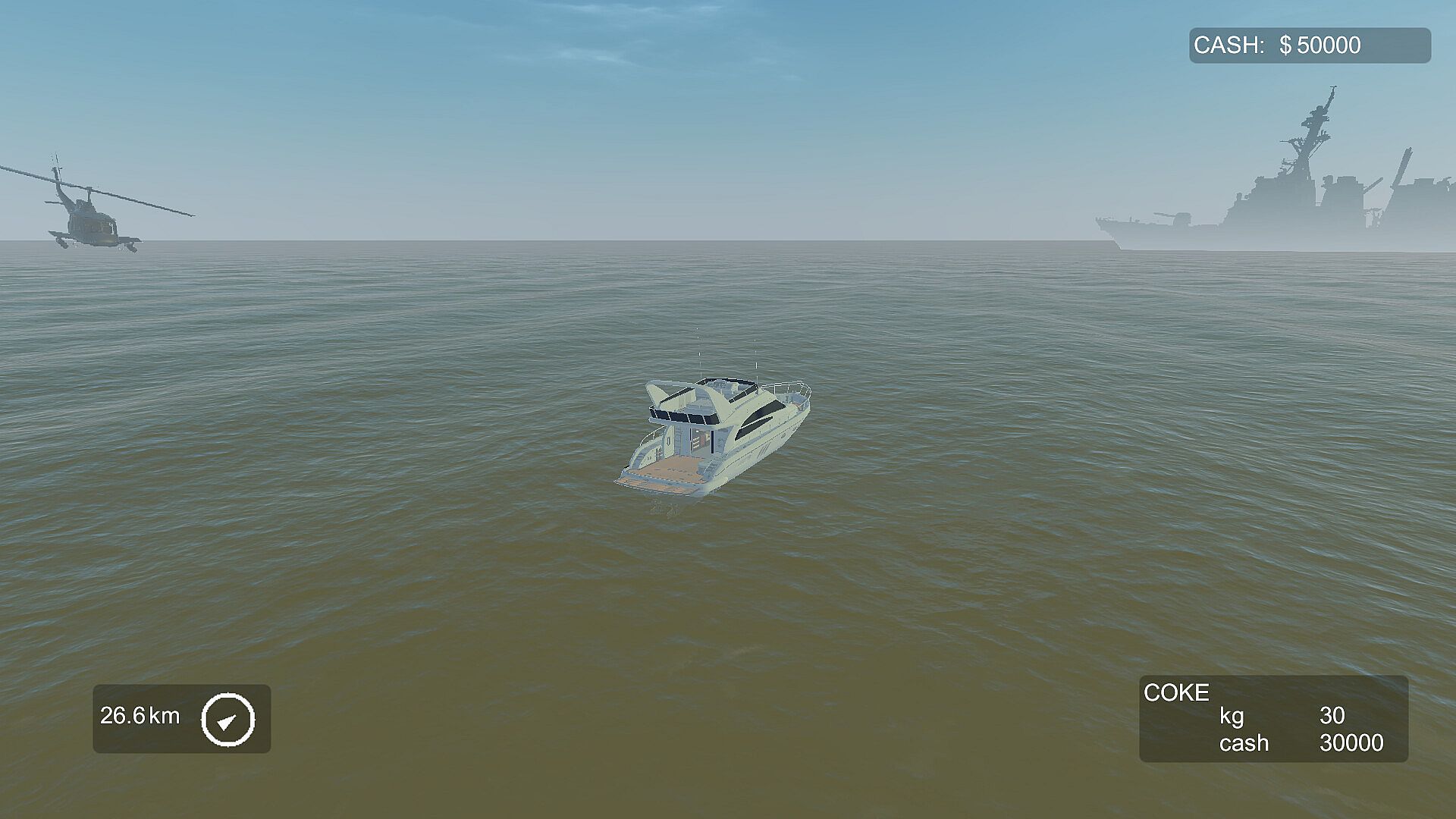
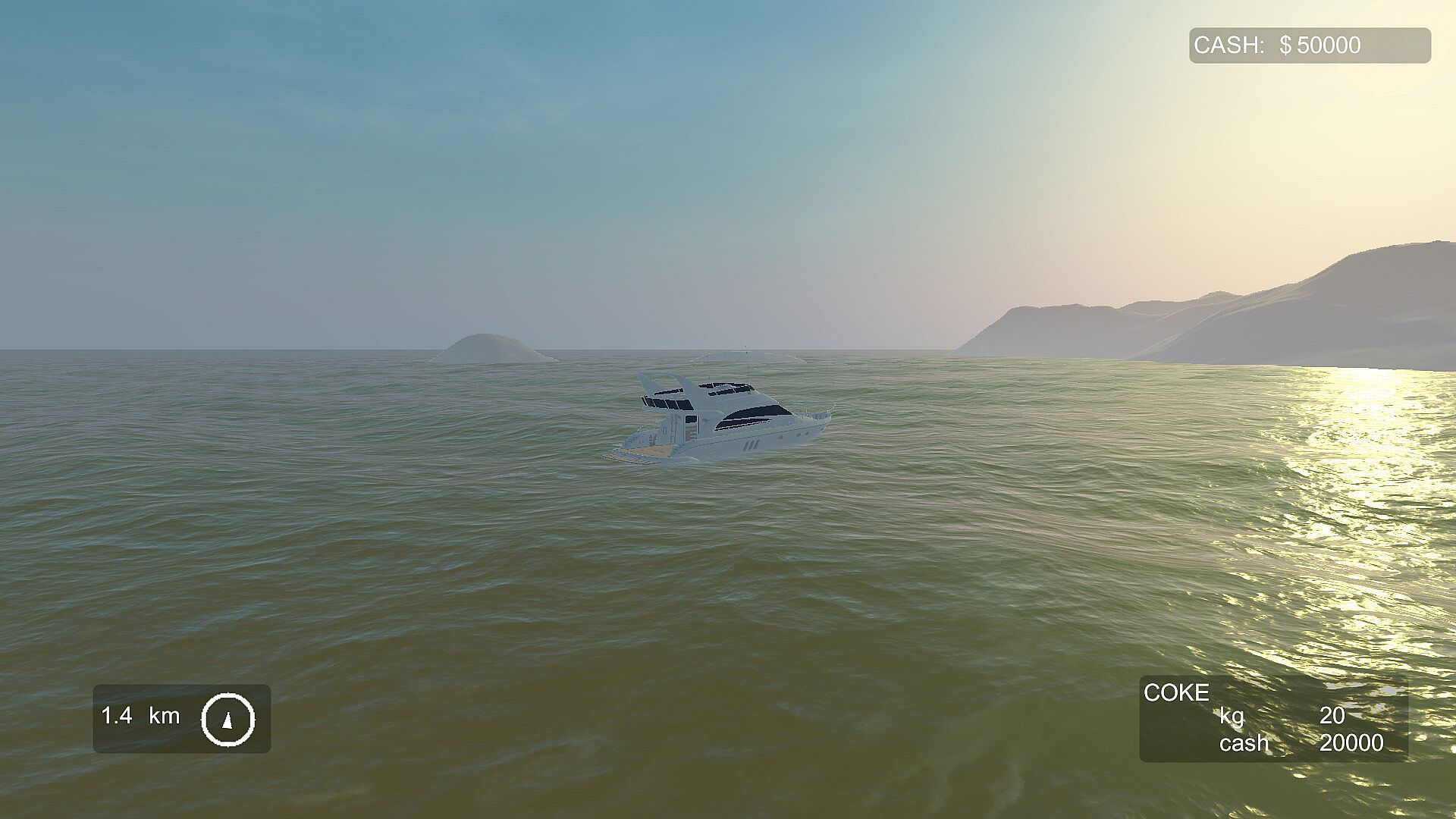
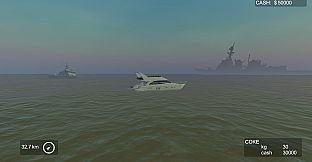
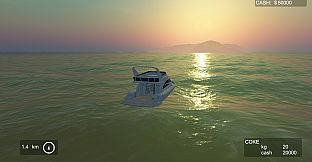
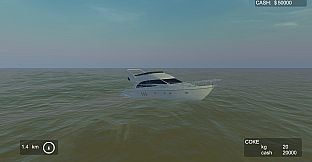
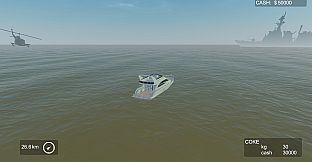
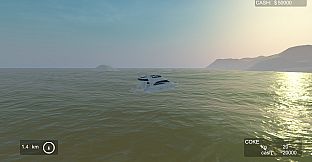
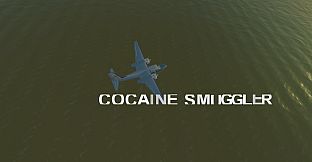
Cocaine Smuggler is an action simulation game built around the high-stakes task of moving illegal cargo by air and sea. Players take on the role of a smuggler who loads product onto planes or boats, navigates hazardous routes, and aims for precise drop-offs or handoffs to waiting contacts. Success brings cash for expansion, while failure risks pursuit by authorities or outright destruction of the vehicle.
Gameplay
The central loop revolves around three phases repeated across missions. First comes cargo pickup at a starting location. Next is the flight or voyage itself, where players manage speed, altitude or heading, and fuel while scanning for threats. The final stage requires accurate delivery to a specific point or vessel, often under time pressure or changing conditions. Controls focus on piloting and navigation rather than combat, leaving evasion as the main defensive option when spotted.
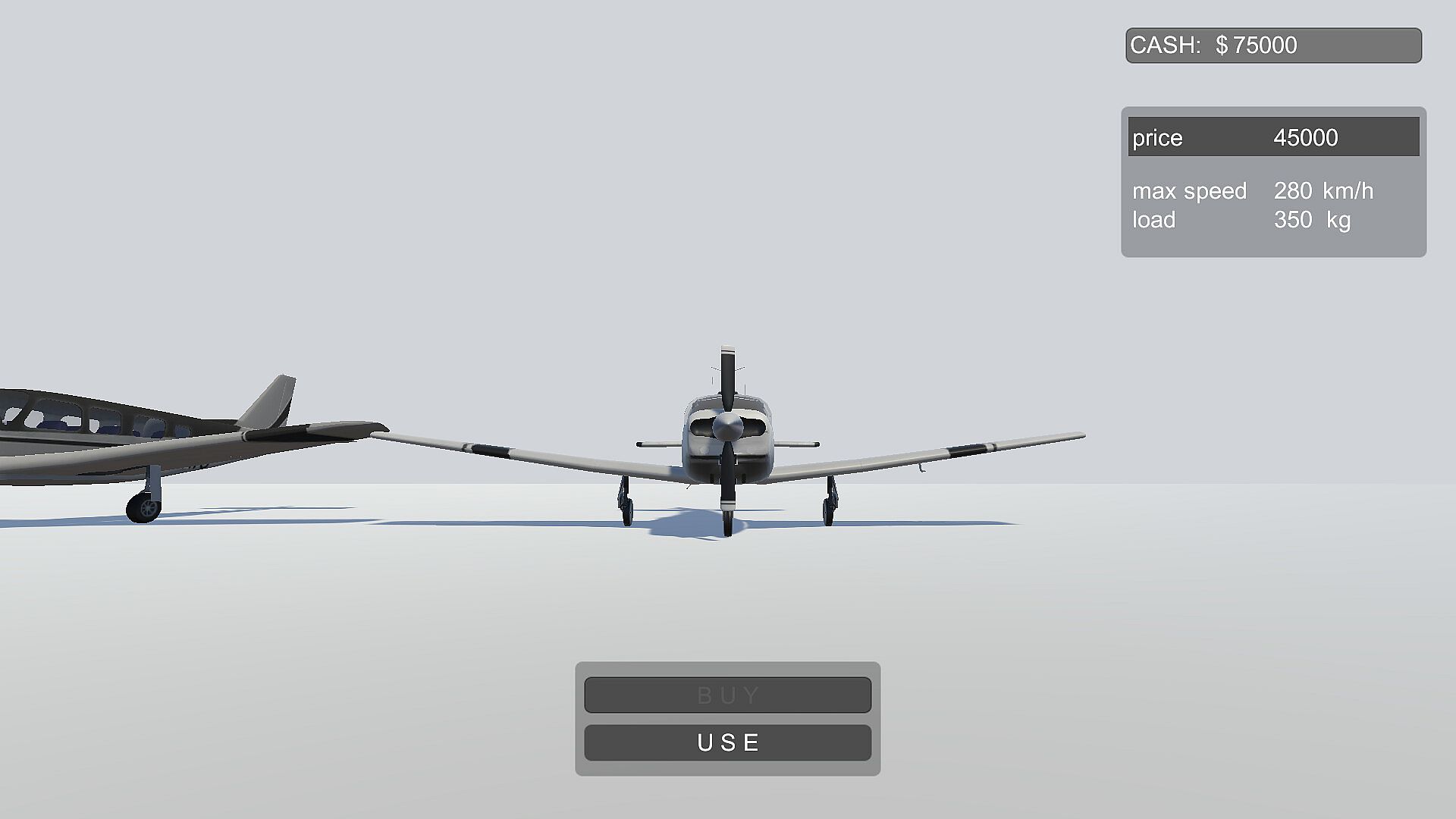
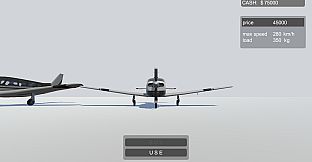
Earnings from completed runs fund upgrades that directly affect performance. Players can purchase faster or more stable aircraft and boats, increase cargo space for bigger payouts per trip, and install basic radar jammers that create brief windows to break line of sight. These improvements scale the operation gradually, turning early short-haul jobs into longer, higher-reward routes. The ocean environment adds constant variables such as weather shifts and limited landing or docking spots that demand careful planning.
Authorities introduce persistent tension. The Coast Guard and DEA patrol the waters and skies. Detection triggers pursuit sequences where players must dodge incoming fire without any offensive weapons of their own. Survival depends on terrain use, speed bursts, and the countermeasures purchased earlier. One mistake can end the run in a crash or seizure, resetting progress for that attempt.
Game Modes
The game operates entirely in single-player. Missions follow a progression structure where each successful delivery unlocks new routes, higher cargo values, and additional upgrade options. There are no separate competitive or cooperative modes; the focus stays on repeated solo runs that build toward a larger smuggling network. Players choose starting vehicles and loadouts before each outing, then adapt on the fly when patrols appear.
Difficulty scales through route length, cargo size, and patrol density. Early assignments keep players close to familiar waters with lighter enforcement. Later jobs push into open ocean stretches that test upgraded equipment and evasion skills. The absence of branching story paths keeps attention on mechanical mastery and efficient money management.
Progression and Upgrades
Cash functions as the sole resource. Every accurate delivery adds to the balance, which then buys permanent improvements rather than temporary power-ups. Plane and boat tiers offer clear trade-offs between speed, capacity, and handling. Radar jammers provide the only active defensive tool, forcing players to time their use during chases. No other systems such as crew management or base building appear in the core design.
The upgrade path encourages repeated play on the same routes to accumulate funds for better gear. Larger cargo holds reduce the number of trips needed for meaningful income, while faster vehicles shorten exposure time to patrols. This creates a steady feedback loop where better equipment opens riskier but more profitable paths.
Is It Worth Playing?
Cocaine Smuggler targets players who enjoy focused simulation experiences centered on risk management and incremental improvement. The single-player structure suits those who prefer methodical runs over multiplayer chaos or narrative depth. Because the game remains unreleased with no public playtests or reviews available, any judgment rests on the described systems alone.
Those drawn to precise piloting, resource allocation, and evasion mechanics will find the core loop intact. The lack of weapons and emphasis on avoidance differentiate it from action titles that reward direct confrontation. Availability is limited to PC at launch, with no confirmed free modes or trials announced. Potential buyers should monitor post-release updates for stability and balance adjustments once the title reaches players.