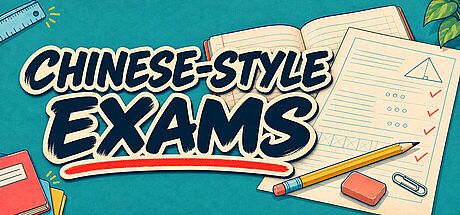




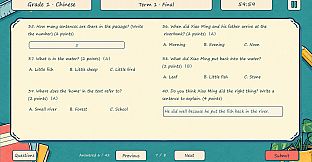
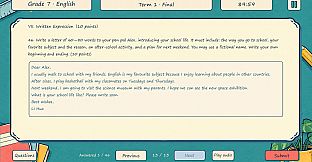
Chinese-Style Exams is a single-player indie simulation game that recreates the experience of taking school exams in China. Players progress through twelve years of education by completing exam papers that cover core subjects, with the goal of advancing through each grade and semester while reviewing performance at the end of every term.
Gameplay
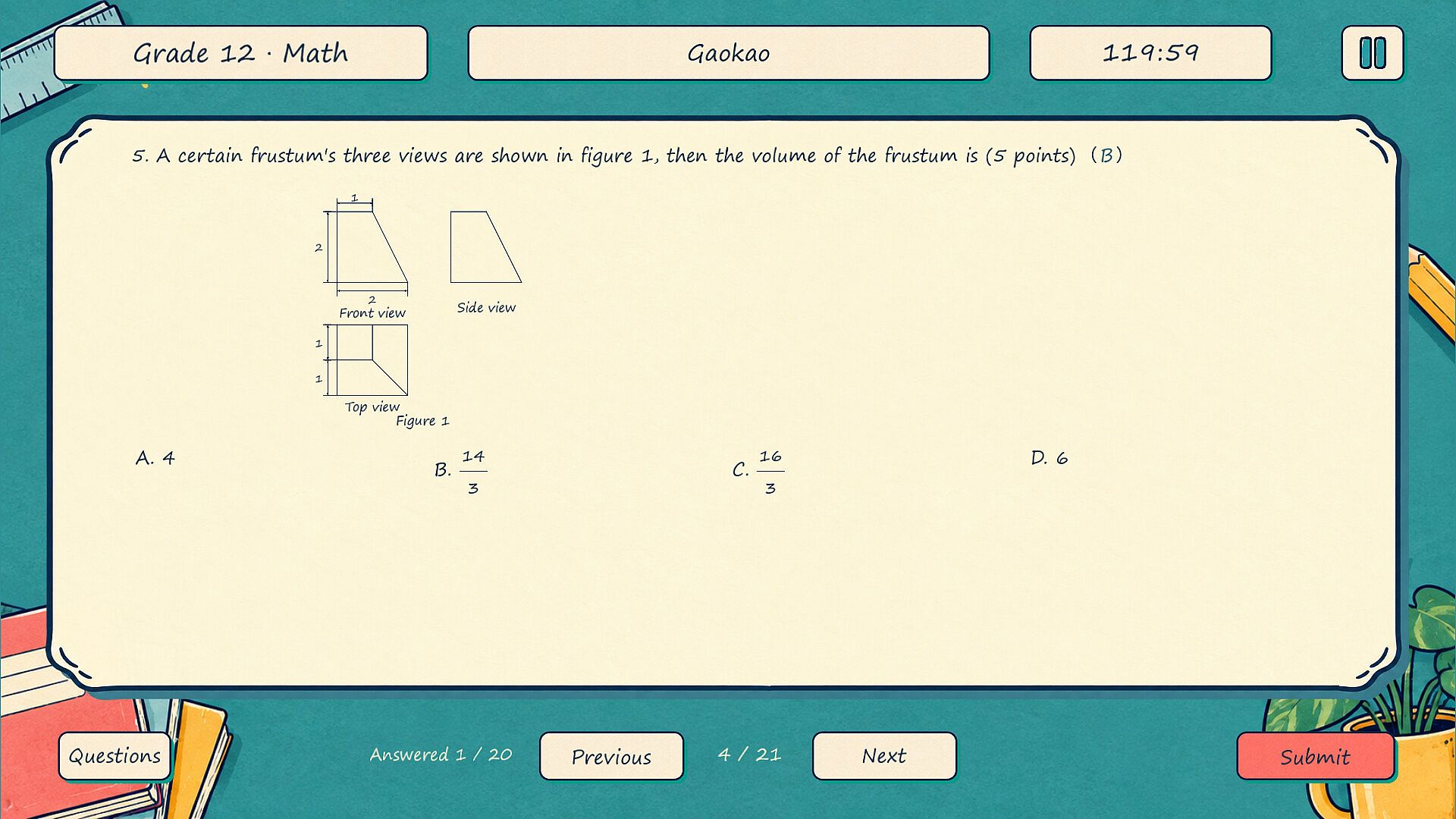
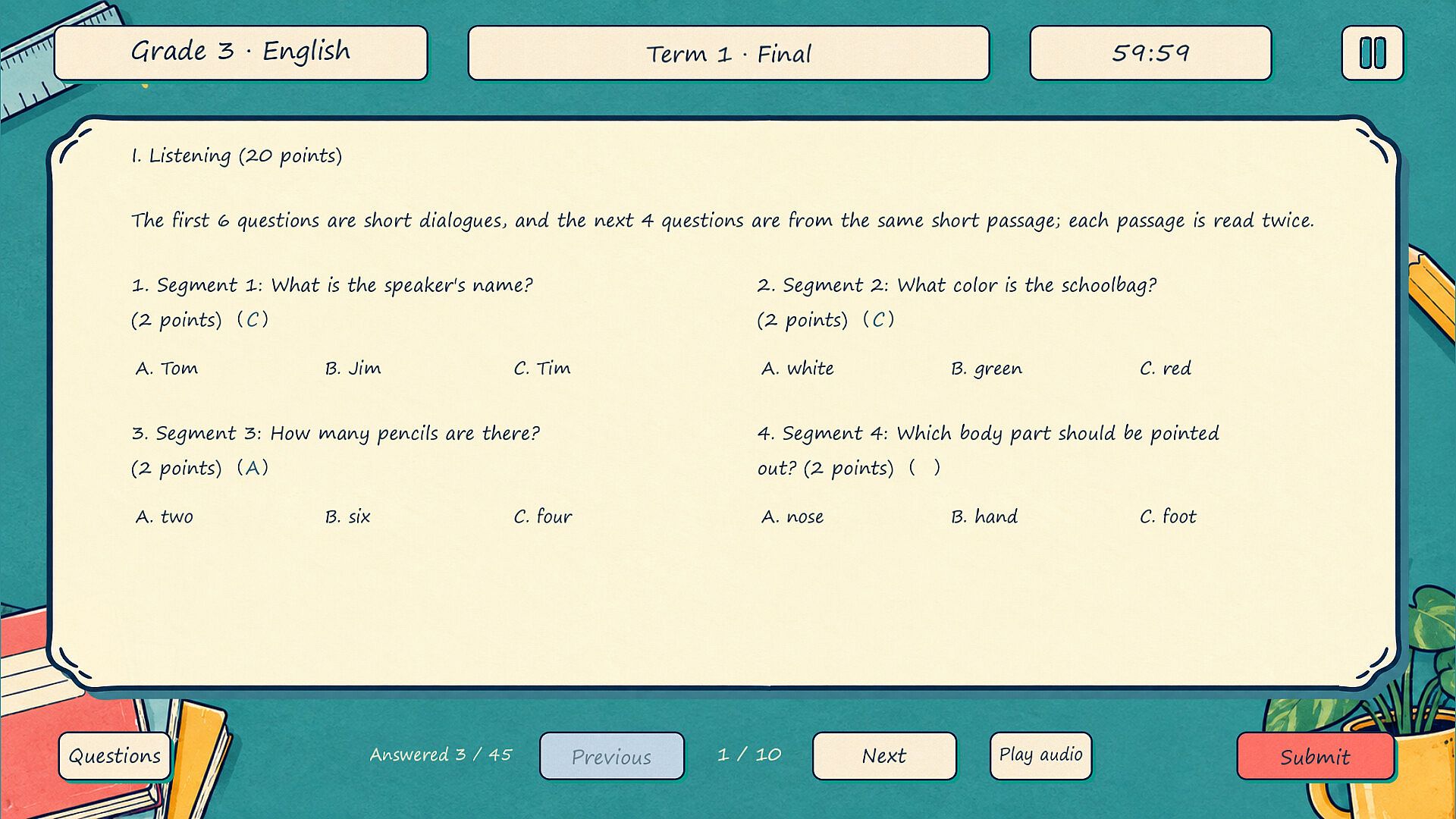
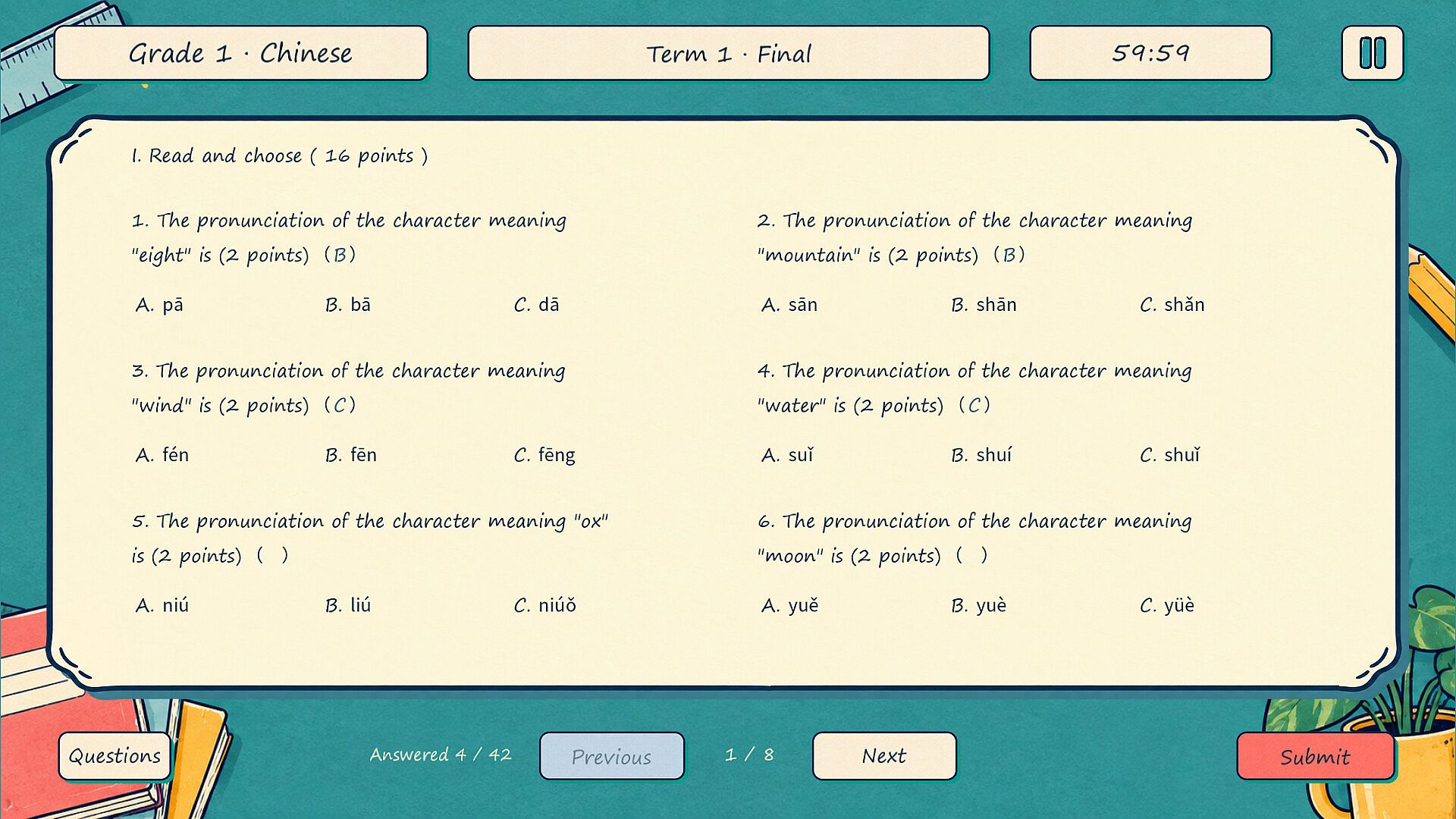
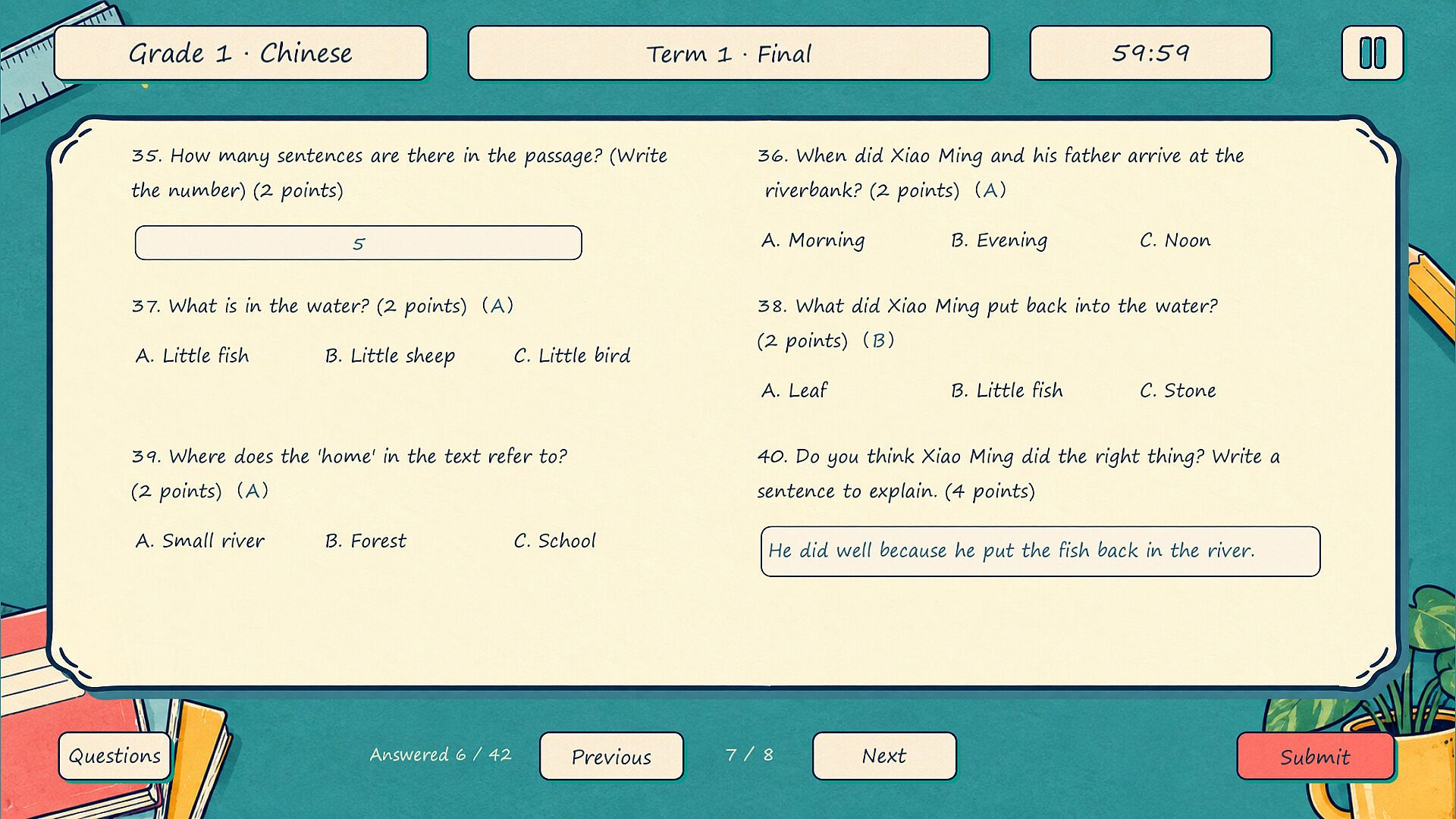
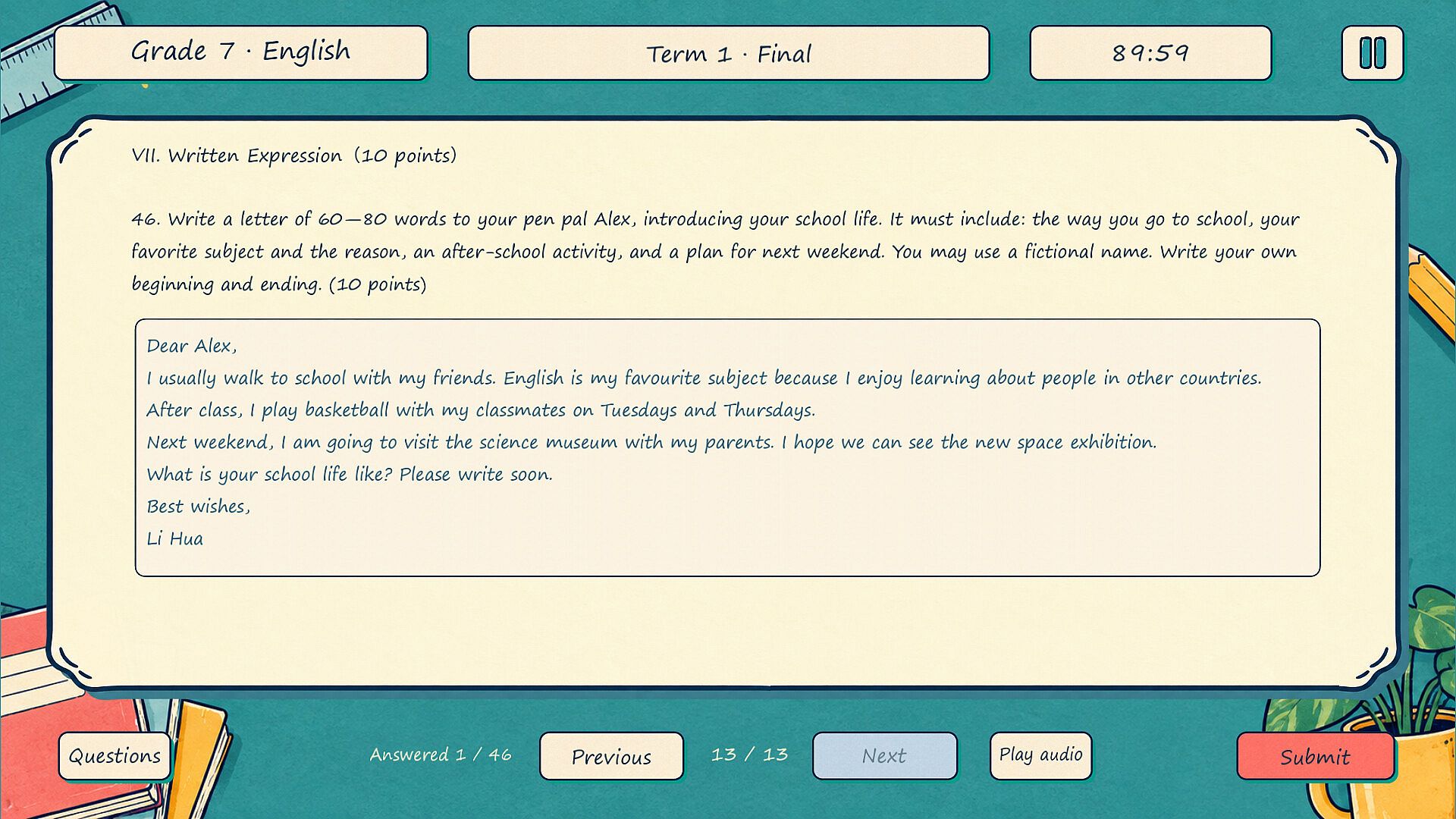
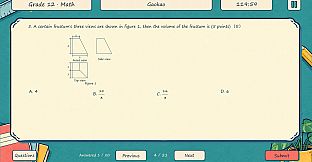
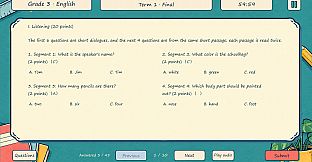
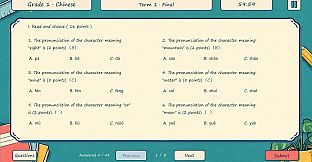
The core loop centers on opening exam papers and responding to a variety of question types. Multiple-choice and true-or-false items require direct selection, while fill-in-the-blank sections and reading comprehension passages demand careful consideration of the provided text. Math problems ask players to work through steps when required, and essay prompts invite written responses that capture ideas on the assigned topic. English exams add listening exercises that test comprehension through audio elements. Chinese and mathematics appear in every grade, with English introduced starting in grade three. The interface uses textured paper backgrounds, Chinese character practice grids, and red correction marks to evoke the feel of traditional schoolwork.
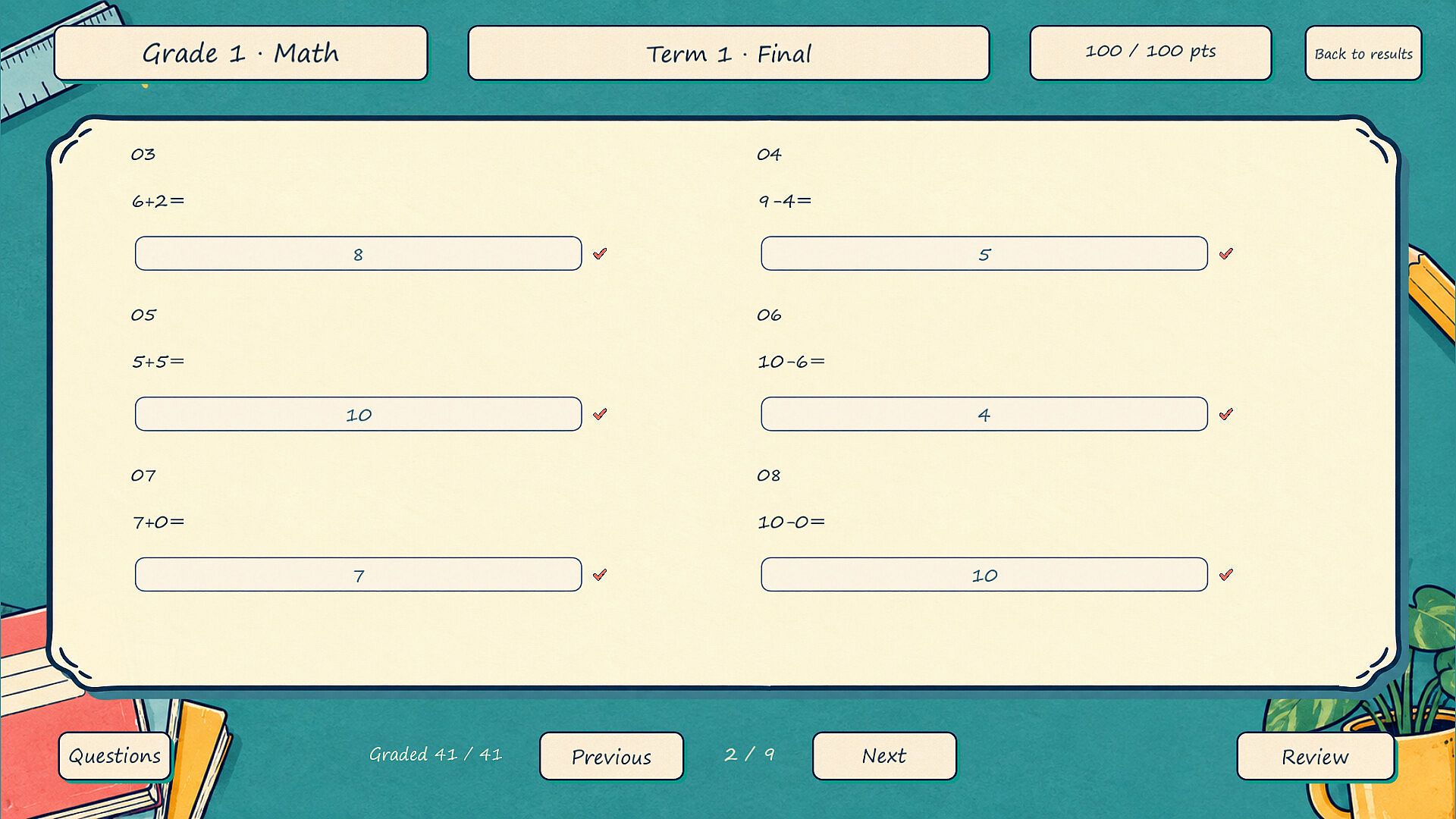
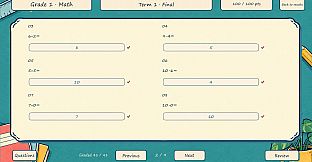
Progression follows the structure of Chinese schooling from grade one through grade twelve. Early semesters focus on foundational skills such as pinyin, basic vocabulary, and arithmetic. Later years introduce more complex reading passages, advanced writing tasks, and challenging mathematics. Each semester ends with a batch of papers that are graded together once submitted. Players then examine detailed feedback on every question, identify lost points, and compare results against previous semesters. Unlocked papers remain available for retakes, allowing repeated attempts to improve scores.
Game Modes
The game operates entirely in single-player mode with no multiplayer components. The primary structure is a linear progression through grades and semesters, where each new term unlocks fresh exam papers. Players advance by completing all papers for the current semester before viewing collective results. There are no separate competitive or cooperative modes; the experience remains focused on personal performance tracking and repeated practice on individual papers.
Beyond the main grade-by-grade path, the simulator emphasizes review and improvement. After results appear, players can browse historical scores or select any previously unlocked exam for another attempt. This creates a self-directed loop of study, testing, and refinement without external opponents or time-limited events.
Progression and Subjects
Advancement spans the full range from elementary through high school levels, culminating in the Zhongkao and Gaokao exams that determine high school and university placement in China. Chinese language and mathematics remain constant across all years, building from basic recognition and calculation to sophisticated analysis and problem-solving. English enters the curriculum in grade three and includes listening sections alongside reading and writing. The system mirrors real academic routines by requiring consistent performance across multiple papers before semester results are finalized.
Feedback arrives only after all papers for a semester are submitted. At that point, players receive per-question breakdowns and can examine fully marked papers to see correct answers alongside their own responses. This delayed grading encourages careful work on each exam without immediate corrections.
Is It Worth Playing?
Chinese-Style Exams suits players who enjoy methodical simulation experiences centered on academic routines and self-assessment. The single-player format rewards careful reading, step-by-step problem solving, and iterative improvement through retakes. Those interested in the structure of Chinese education or who appreciate text-based challenges with authentic visual details will find the progression from early grades to national entrance exams engaging. The absence of multiplayer or additional modes keeps the focus narrow, making it a deliberate choice for short or repeated sessions rather than extended campaigns. If the idea of working through realistic exam formats and reviewing detailed feedback appeals, the simulator delivers a straightforward and consistent experience on PC.