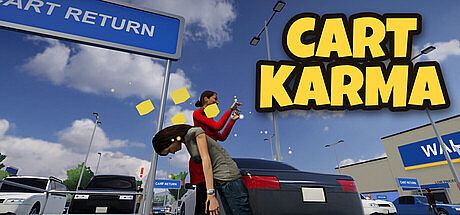


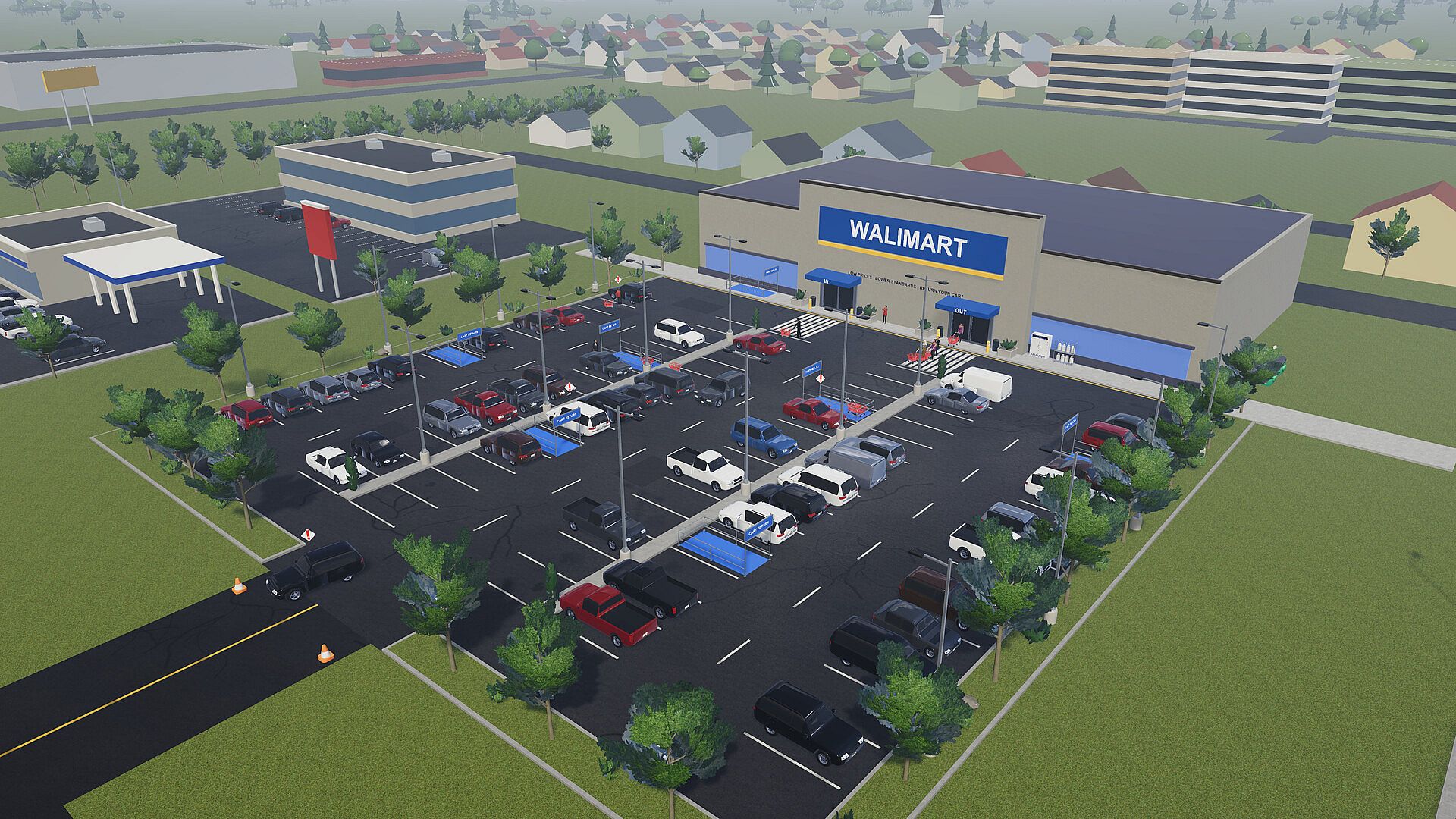
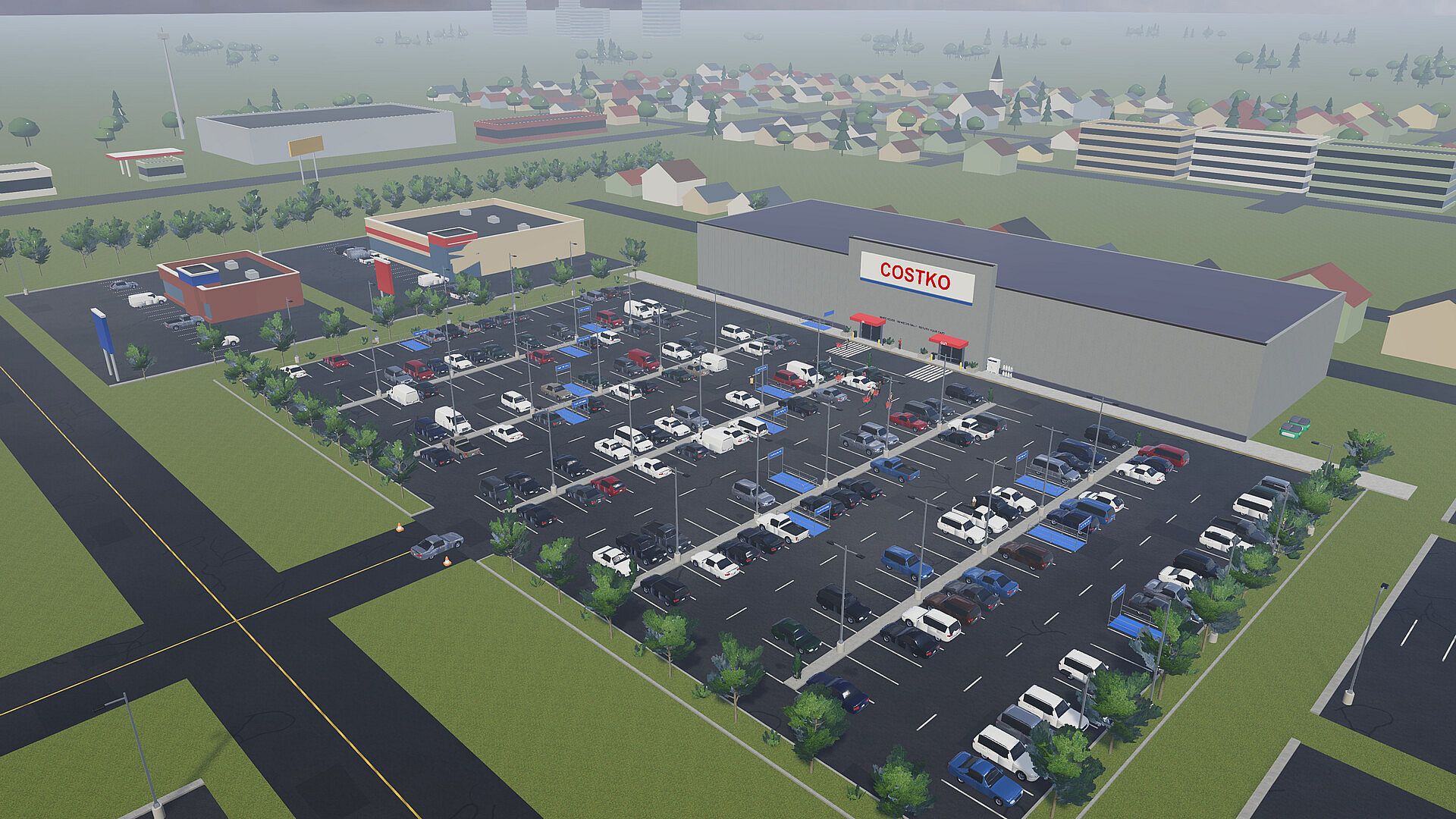
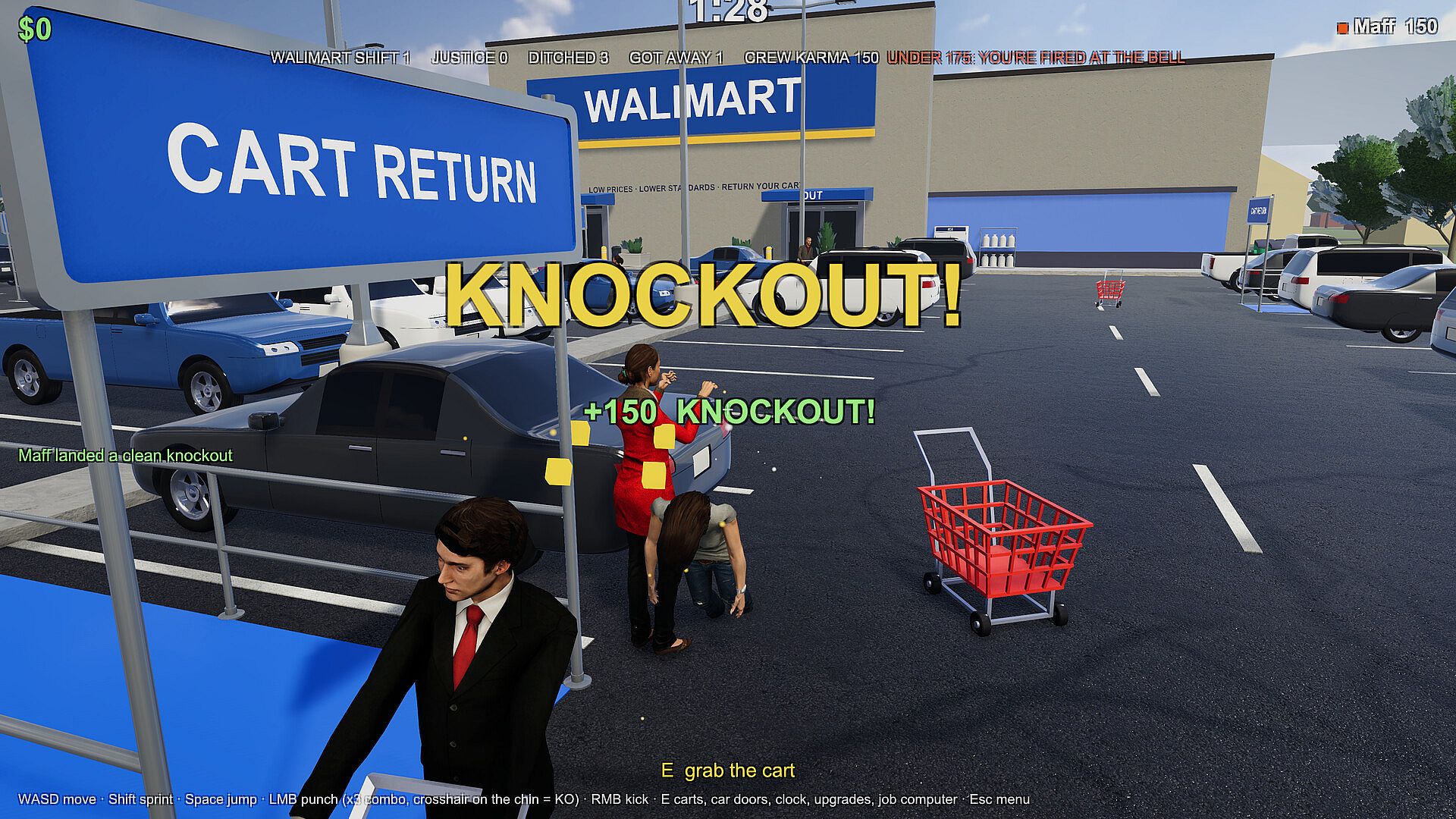
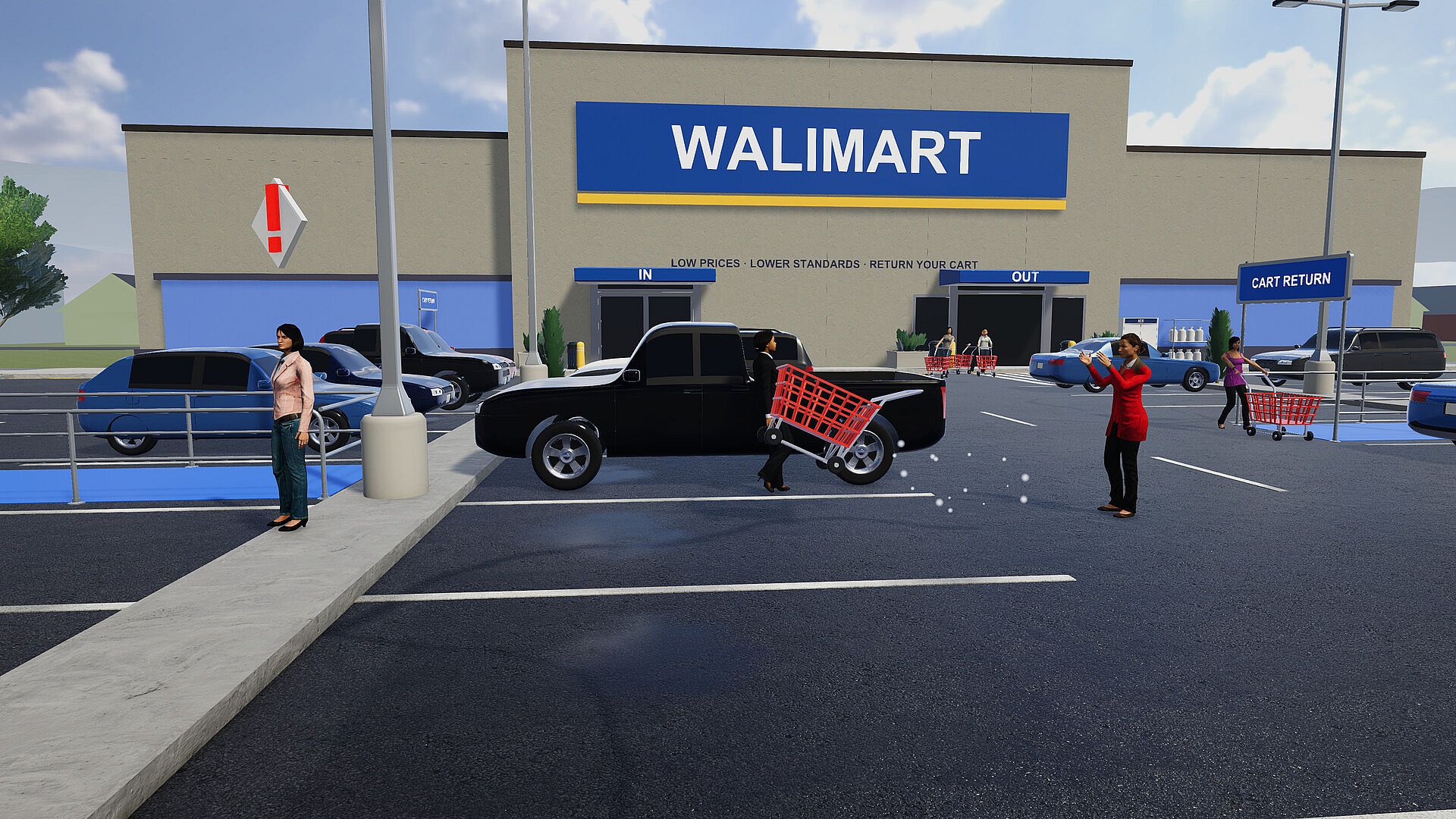
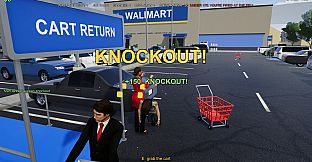
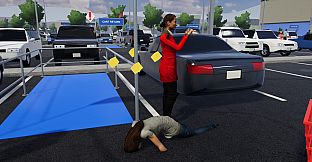
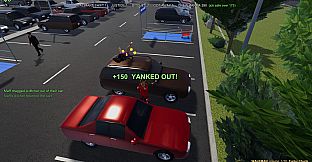
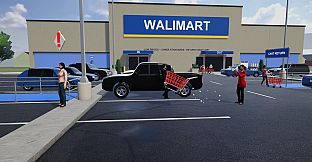
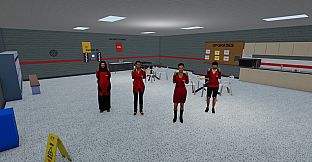
Cart Karma is an action brawler developed for PC that puts players in the role of store parking lot attendants tasked with enforcing cart return rules. Shoppers exit the store, load their vehicles, and decide whether to return their carts properly or abandon them. Once a cart is ditched, the responsible shopper becomes a target until they leave the lot. The game supports solo play or cooperative sessions with up to seven additional players, emphasizing quick reactions and coordinated efforts to handle multiple offenders at once.
Gameplay
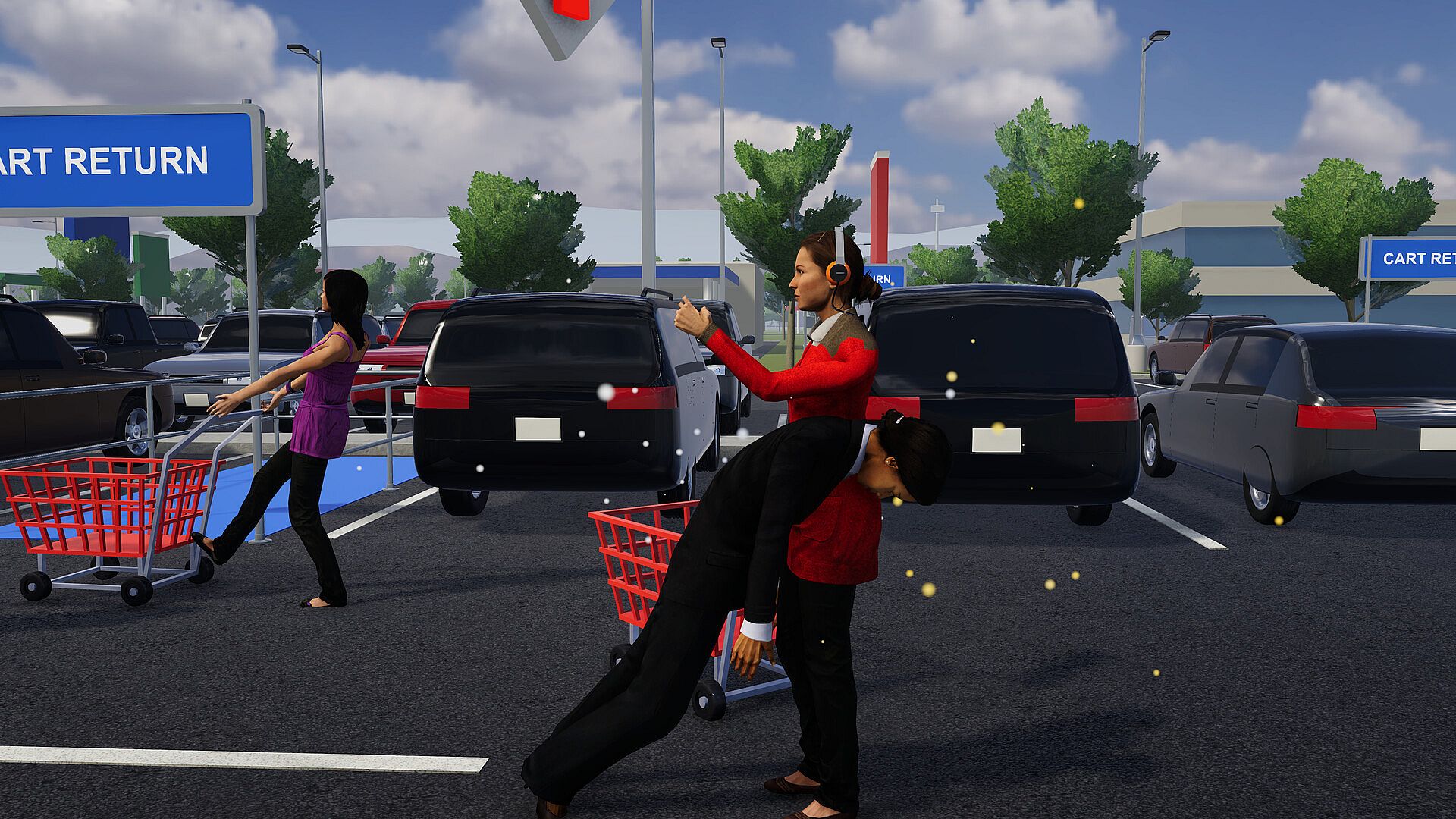
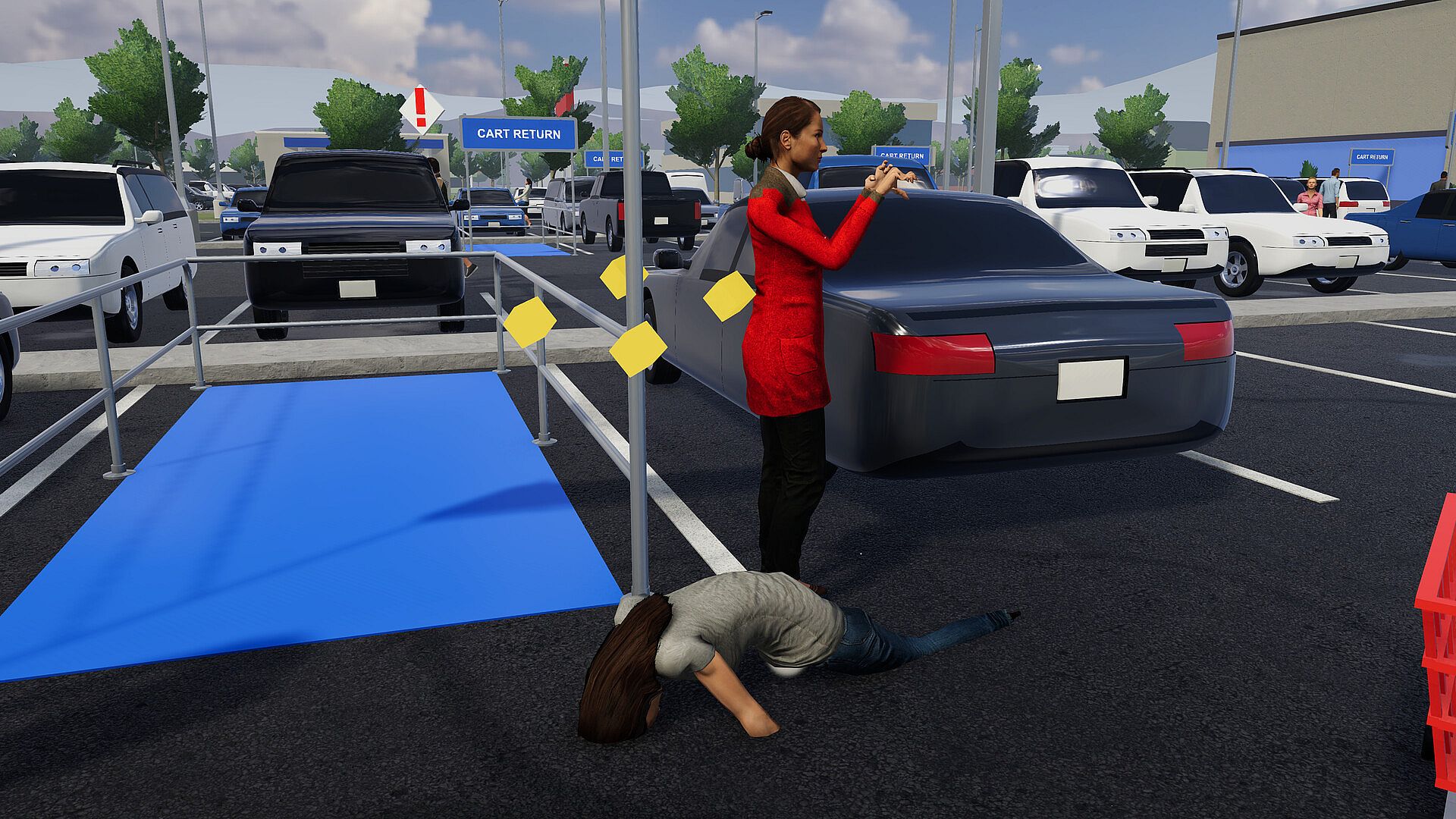
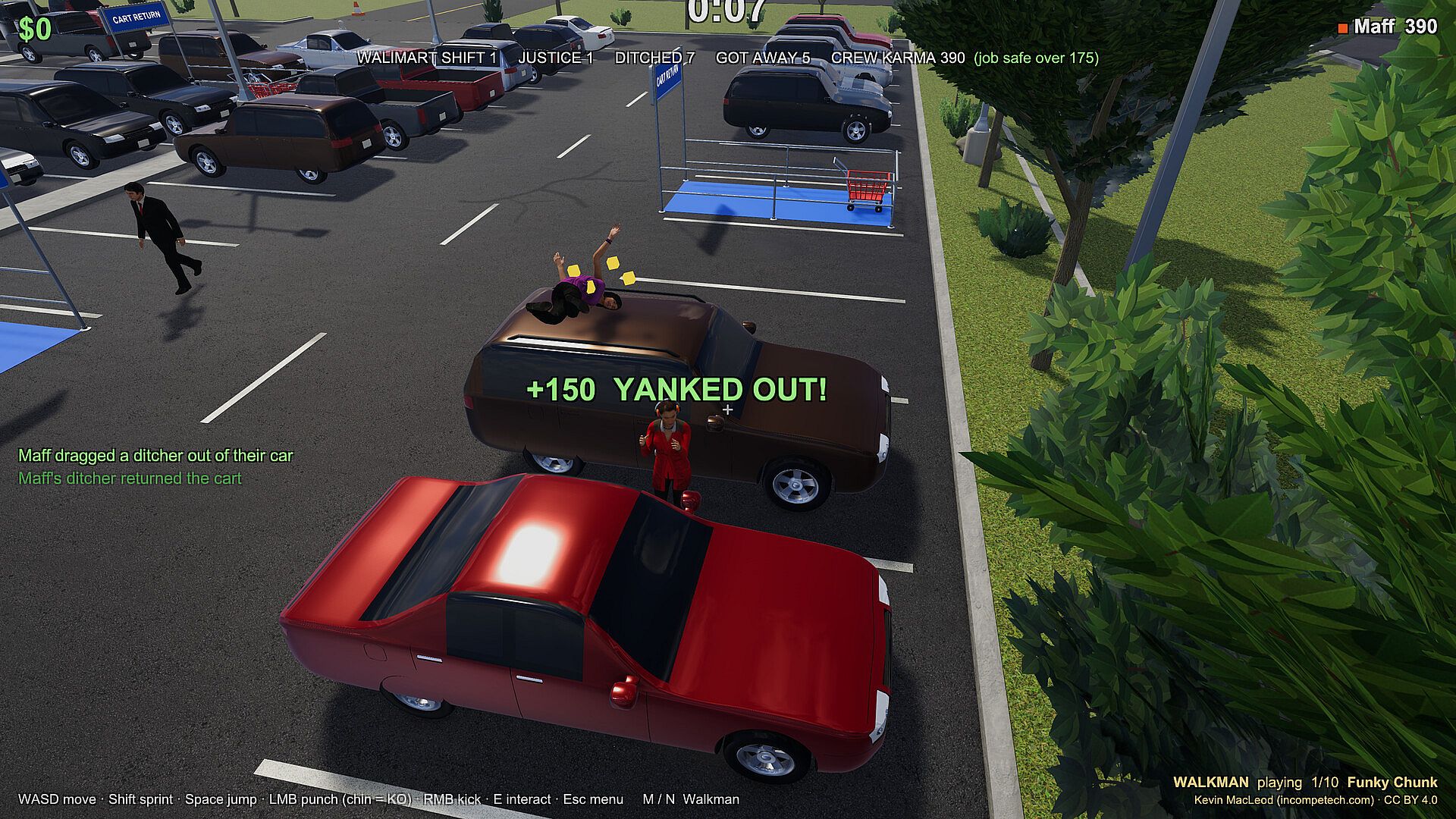
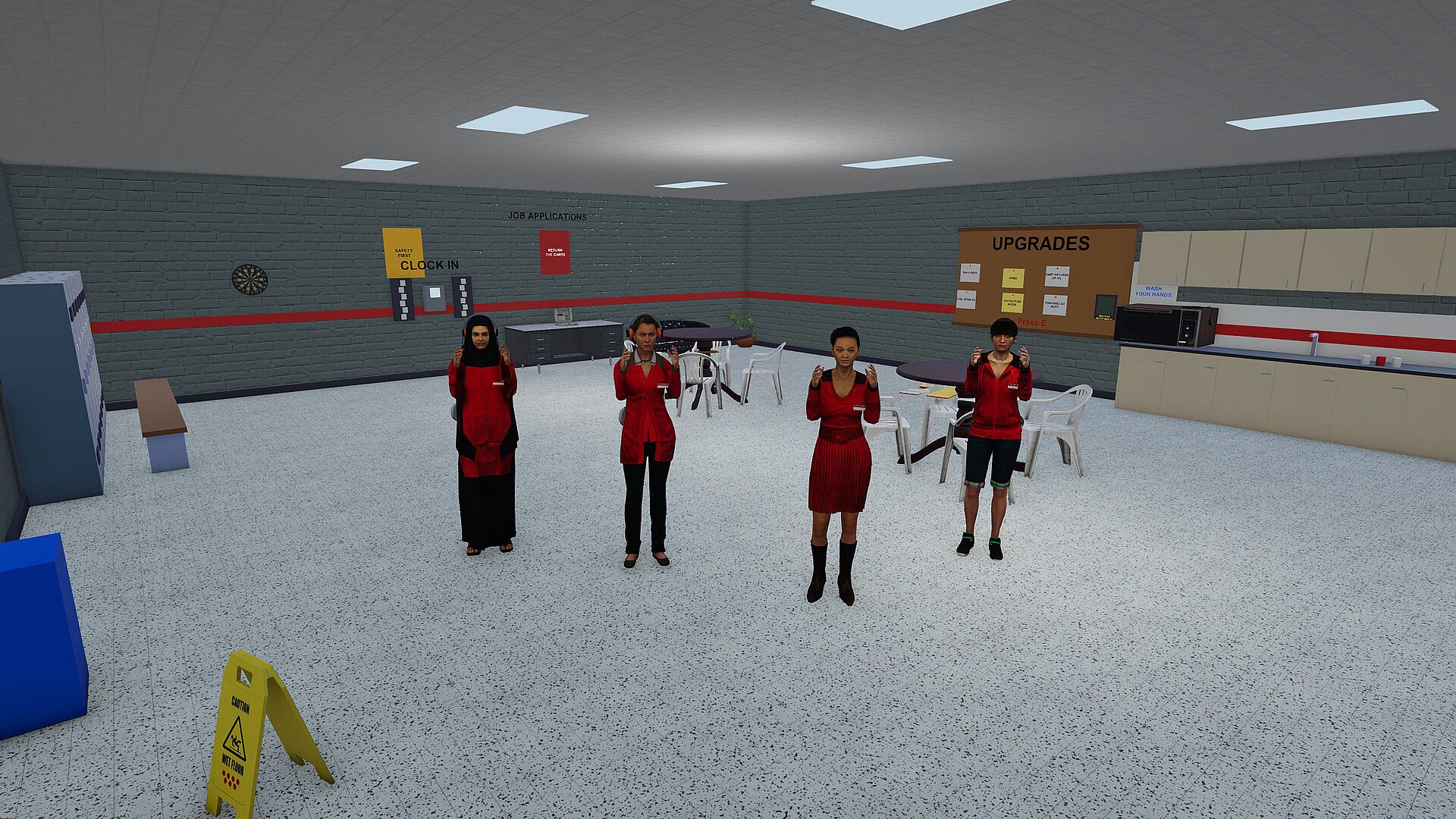
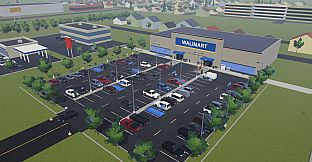
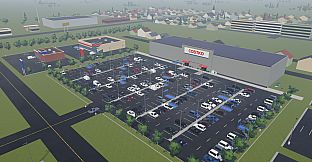
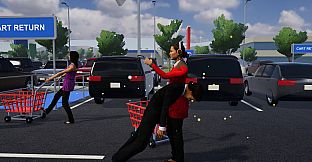
Core action revolves around identifying guilty shoppers and delivering precise strikes. A crosshair targets the chin for a knockout blow that sends the offender down in a dramatic fall before they recover and return the cart. Loose carts can be pushed into corrals for points or hurled across the lot as projectiles. Players can also approach vehicles to pull drivers out before departure. Five distinct shopper behaviors appear, ranging from subtle abandonments to aggressive resistance that requires direct confrontation. Hitting an innocent shopper deducts from the team's performance, adding risk to every engagement. Between shifts, players access a break room to spend earnings on upgrades such as boxing gloves for stronger hits, running shoes for faster movement, steel-toe boots, a cart cannon, a megaphone for freezing targets, a flying tackle ability, overtime pay, lot-wide speed bumps, and a Walkman for background music. Progression begins at a small corner shop with limited space and advances through applications on the break room computer after successful shifts. Six stores total exist, each larger than the last and culminating in a members-only warehouse. Every shift requires the team to clear the store's cart line; falling short results in firing that resets cash, upgrades, and experience back to the starting location. The campaign saves after each completed shift and features a conclusion once all stores are cleared.
Game Modes
Cart Karma centers on cooperative play for one to eight participants in shared parking lot scenarios. Sessions involve managing waves of shoppers across the lot while balancing returns, launches, and direct interventions. A structured career mode forms the primary single-player or group experience, guiding players through the six-store progression with hiring and firing mechanics tied to performance. No separate competitive or versus modes are present; all activity stays within the cooperative framework of clearing lots and advancing the crew. Optional menu settings allow players to disable the slow-motion knockout sequence for faster pacing during group sessions.
Upgrades and Progression Systems
Ten upgrades become available through earnings collected during shifts. These tools directly alter how players approach offenders and manage the lot environment. Examples include equipment that enhances melee impact, improves mobility, or introduces area-control effects like freezing shoppers temporarily. The break room also serves as a hub for viewing progress on the in-game television and preparing for the next store application. Career advancement demands consistent line clearance across shifts, with failure enforcing a full reset that encourages careful teamwork and efficient use of purchased items. The system rewards steady performance while punishing repeated shortfalls by stripping accumulated resources.
Is It Worth Playing?
Cart Karma suits players who enjoy light-hearted cooperative action with a clear objective loop of spotting, engaging, and resolving incidents in a confined setting. The one-to-eight player support allows flexible group sizes, from solo runs focused on personal upgrades to larger crews coordinating strikes and cart launches. The career structure provides a defined path across six escalating locations with meaningful consequences for performance, creating replay value through upgrade experimentation and shift optimization. Since the game has not yet released and carries no player reviews or post-launch updates at this time, any assessment rests on the described mechanics of precise knockouts, environmental interactions, and progression resets. Those drawn to humorous premises built around everyday annoyances and straightforward co-op brawling will find the systems align directly with that interest. Availability remains limited to the planned PC launch on the stated date, after which broader reception can inform further decisions.