

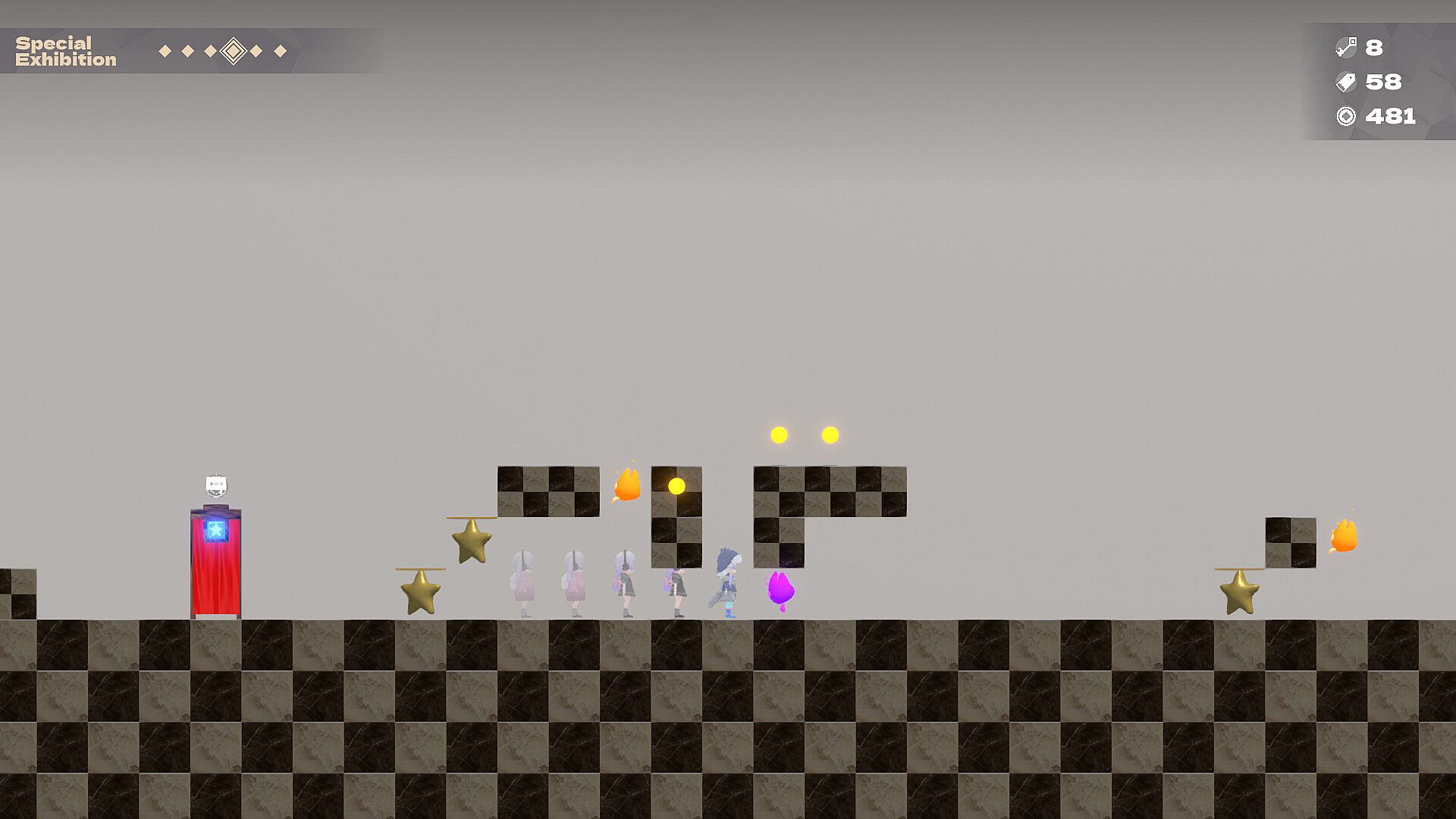
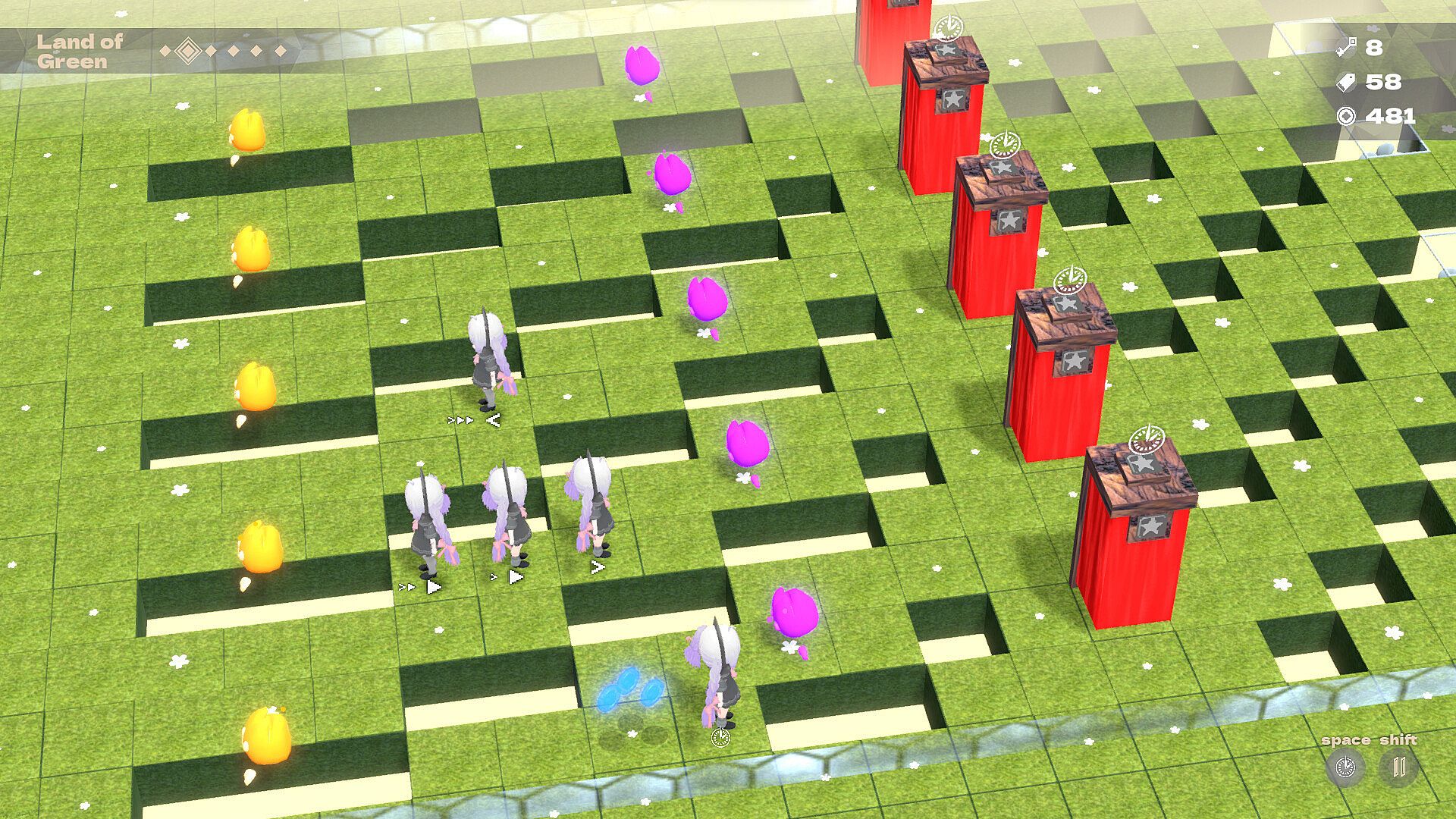
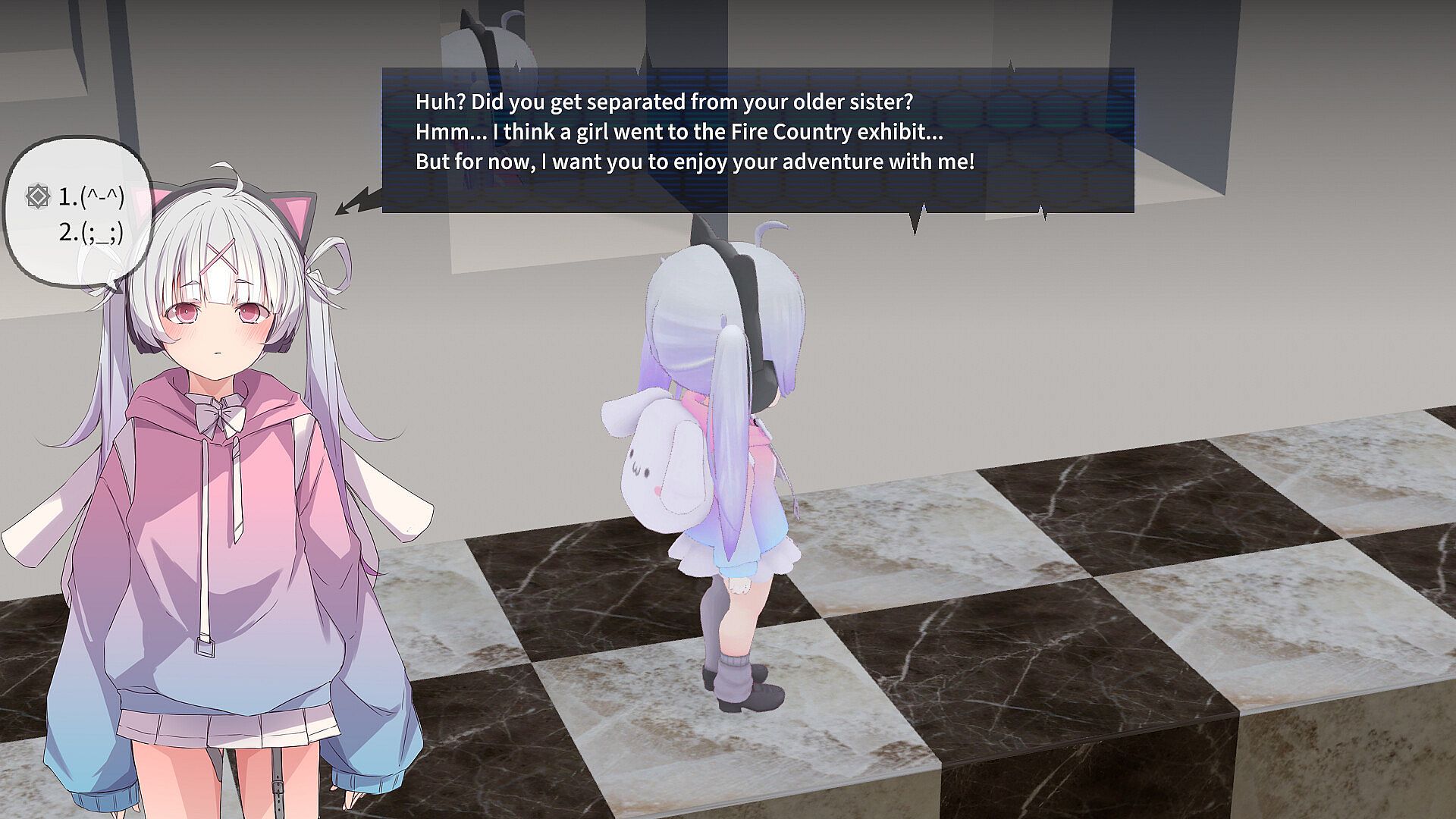
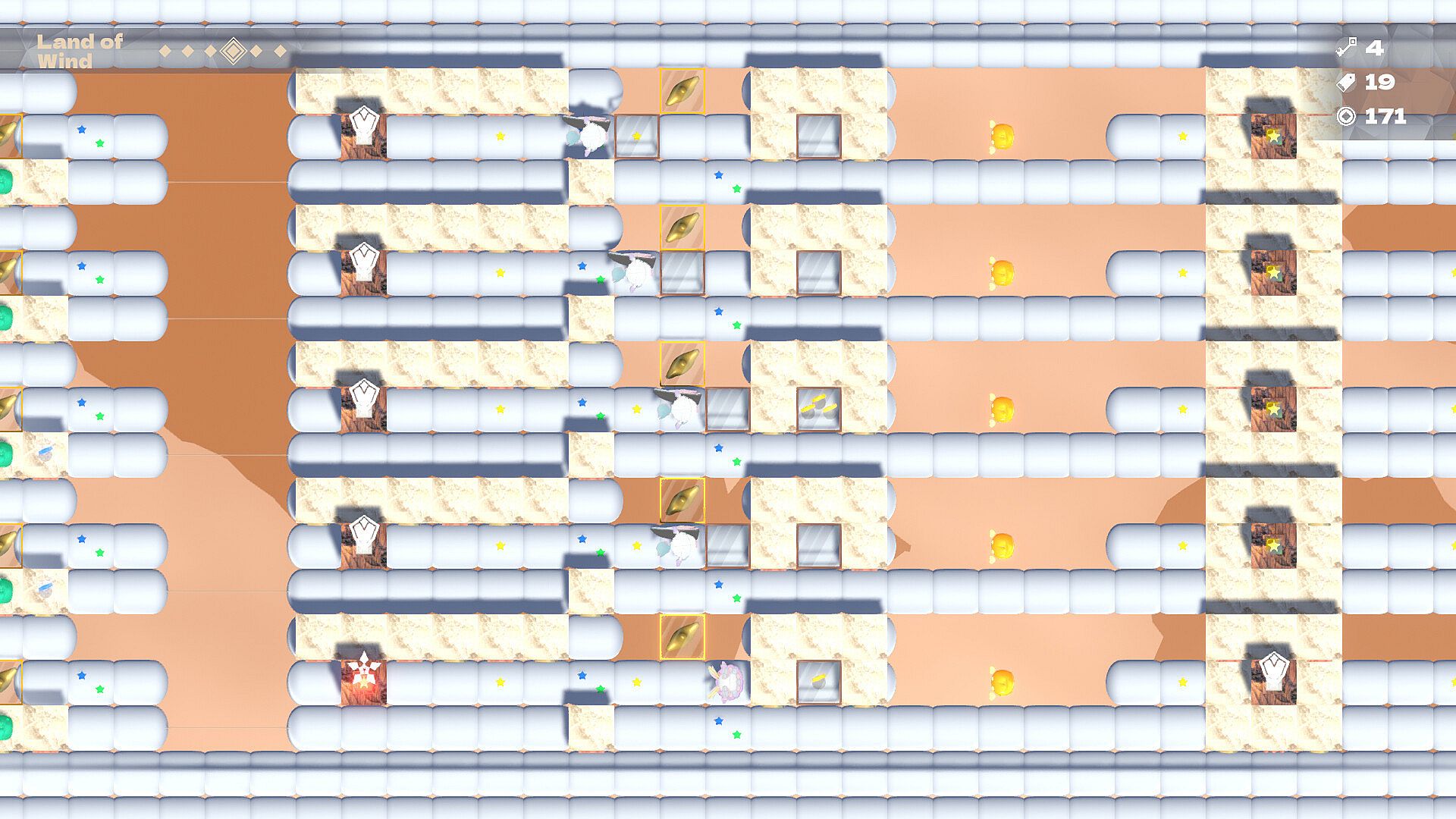
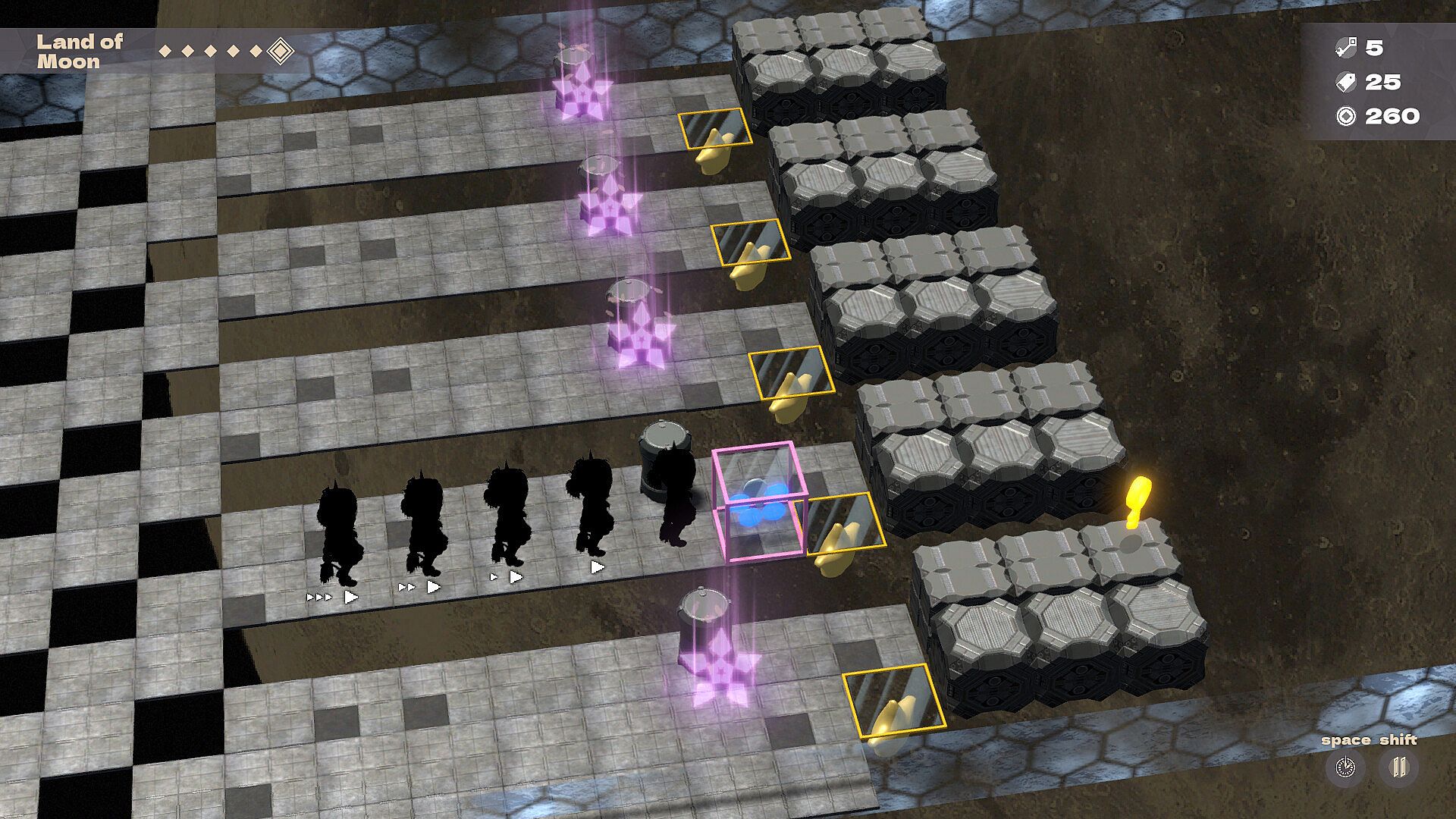
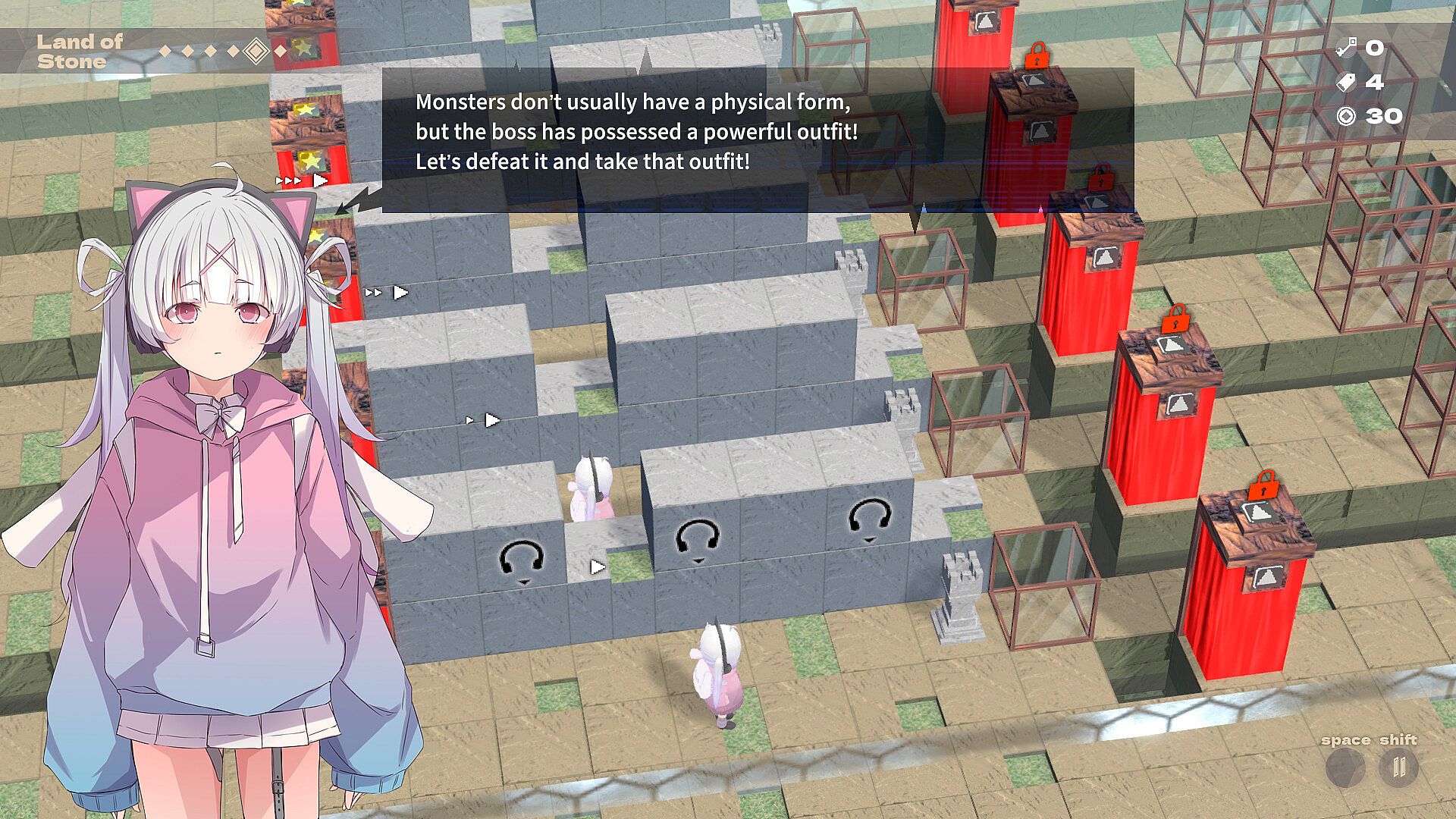
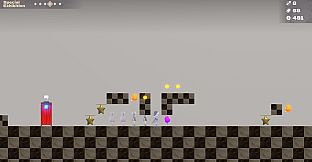
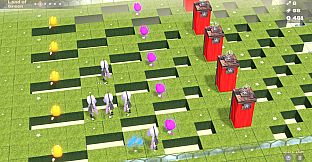
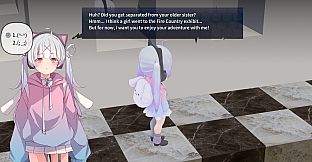
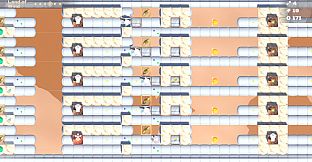
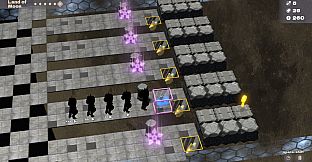
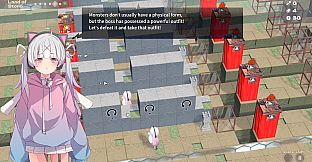
bansoko: Class Crossing is an indie puzzle game for PC that blends RPG-style party mechanics with delayed command execution. Players guide Futami-chan through maps where her instructions reach companions behind her after a short lag, turning straightforward navigation into layered challenges. The game features class changes that alter party members with different costumes and abilities, alongside equipment choices that influence coin and stamp collection. Exploration spans ten distinct worlds filled with handcrafted puzzles, boss encounters, and optional post-story content.
Gameplay
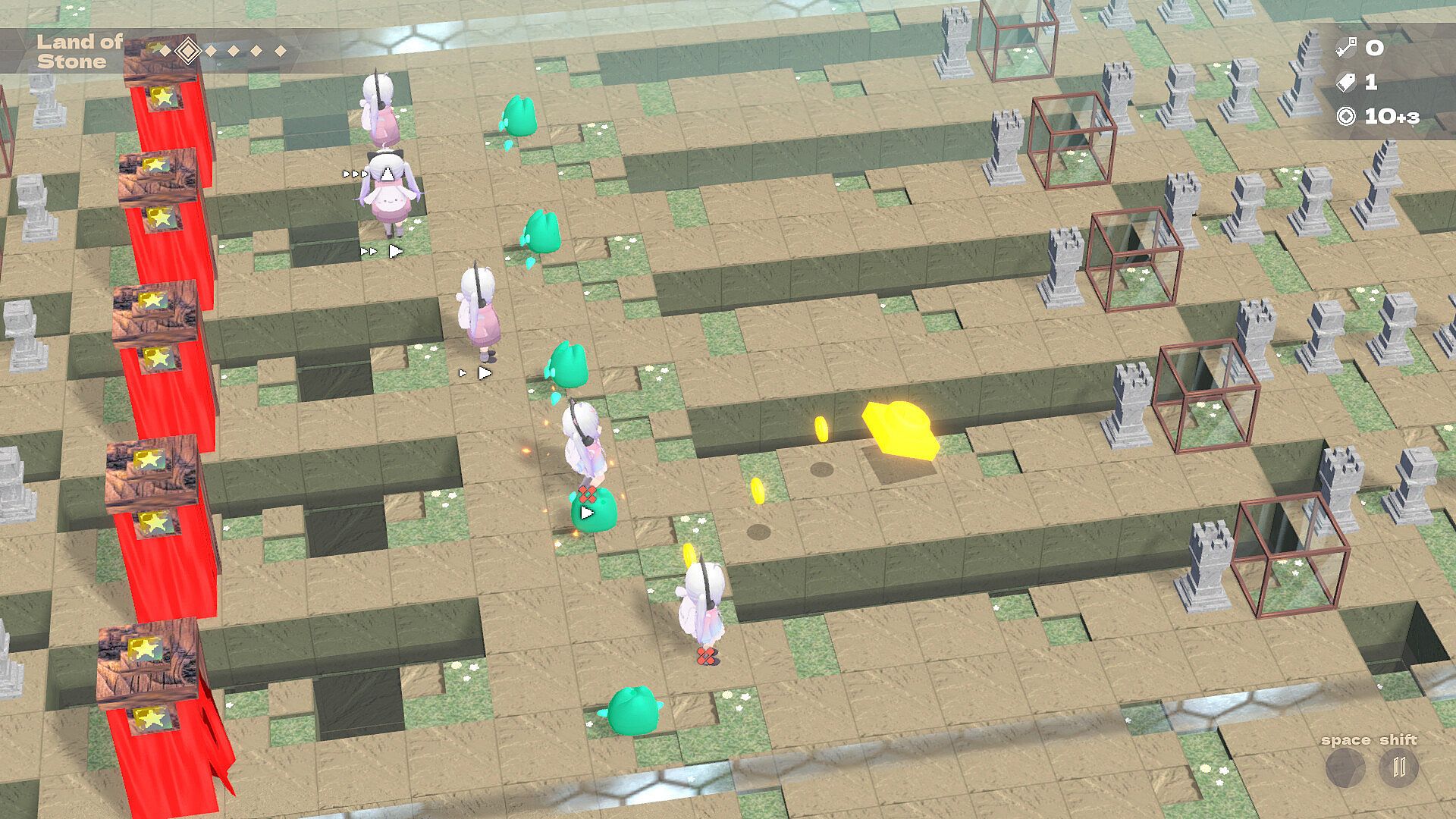
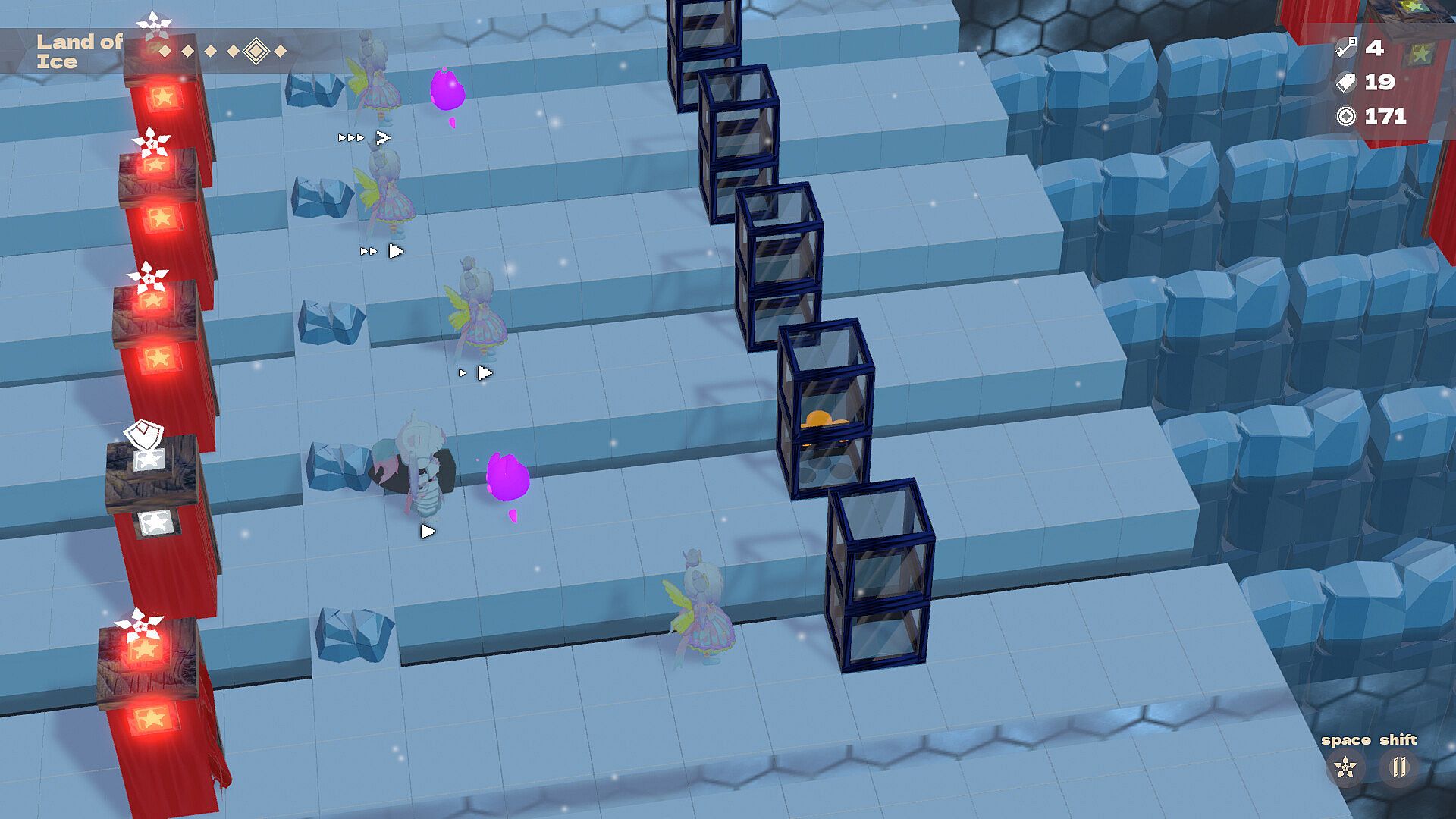
The core loop centers on issuing commands that propagate through the party with built-in delay. This timing element forces players to anticipate movement patterns and plan sequences several steps ahead. RPG-style maps provide the setting for these interactions, where gravity affects positioning and environmental interactions add further constraints. Class changes allow swaps to outfits that modify how each member responds or interacts with objects, encouraging experimentation across different equipment setups.
Collection of coins and stamps drives progression and unlocks. Coins tie into potential party expansion, though new members appear unpredictably rather than on a fixed schedule. Stamps serve as additional markers of completion across the more than 200 puzzles distributed throughout the worlds. Each world contains five maps with roughly four puzzles apiece, plus dedicated boss stages that test accumulated mechanics under pressure. A built-in hint system offers guidance without removing the satisfaction of solving delayed-command sequences independently.
Soundtrack tracks accompany the journey, supporting a steady pace from initial exploration to the main ending. Post-completion challenges extend playtime with repeated runs or refined strategies on existing maps. The overall structure rewards careful observation of party positioning and timing rather than rapid reflexes.
Game Modes
The experience remains single-player throughout, focused on a linear yet replayable adventure across the ten worlds. No separate competitive or cooperative modes exist; instead, the design emphasizes solitary puzzle solving with persistent party management. Players advance through the main campaign to reach the ending, then access endless challenge content that reuses the same maps and mechanics for higher mastery.
Boss stages function as distinct set pieces within the single-player framework, requiring precise command chains to overcome. The absence of multiplayer keeps attention on individual timing and class experimentation. Equipment and class choices carry over between attempts, allowing incremental improvement without altering the fundamental single-player structure.
Exploration and Progression
Worlds unfold as connected puzzle environments rather than open sandboxes. Each map builds on prior lessons about delay timing and class effects, with gravity introducing vertical or directional twists. Party composition shifts through class changes and occasional new recruits, altering how puzzles can be approached. Coin collection serves as both a resource and a soft gate for potential additions, while stamps track thoroughness across the full set of over 200 challenges.
Boss battles punctuate the worlds, demanding integration of all learned systems in one sequence. The relaxing tone of the main path contrasts with the precision required for optimal solutions, and post-ending content invites return visits to refine routes or test alternate class combinations.
Is It Worth Playing?
This title suits players who enjoy deliberate puzzle design over fast action. The delayed-command system creates a distinctive rhythm that differentiates it from standard sokoban or RPG hybrids, and the class-change mechanics add meaningful variety without overwhelming complexity. With a full release scheduled for August 28, 2026, and a demo already available for testing the core loop, interested players can evaluate the timing and collection elements firsthand.
Current information shows no user reviews yet, consistent with the pre-release status. The game targets those seeking a contained single-player experience with over 200 puzzles, boss encounters, and optional extended challenges. Its indie scope keeps the focus tight on the party-following puzzle concept, making it a fit for fans of methodical exploration and costume-based ability shifts rather than broad multiplayer or live-service features.