




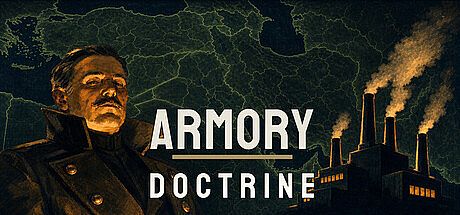





Armory Doctrine is a real-time grand strategy game with strong simulation elements that places players in charge of a private arms manufacturer. Set in a modern world heading toward conflict, the experience centers on managing production, supply chains, and distribution decisions amid shifting geopolitics. The core loop involves building and expanding industrial facilities while navigating a dynamic map where governments interact, trade, and engage in warfare.
Gameplay
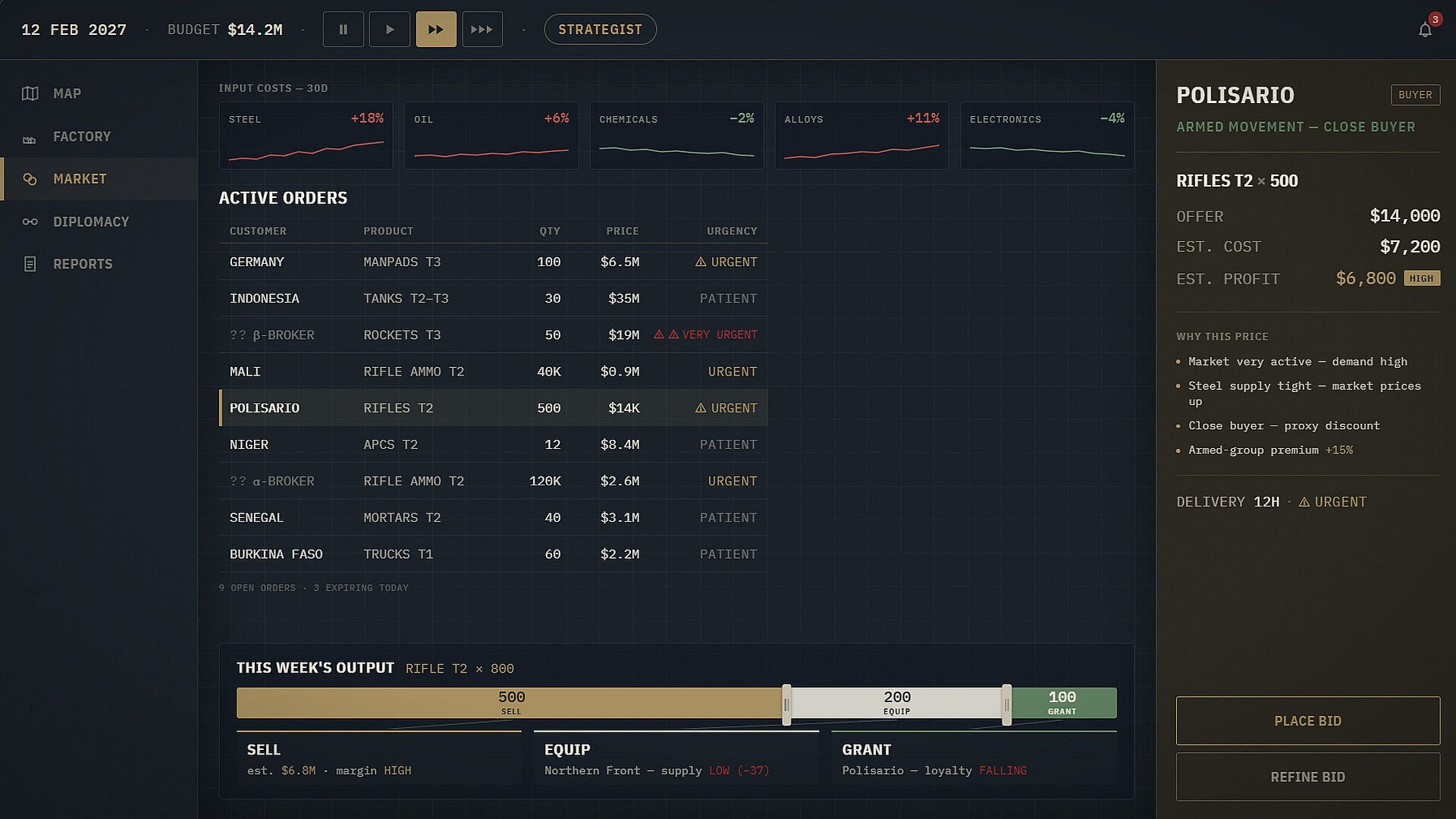
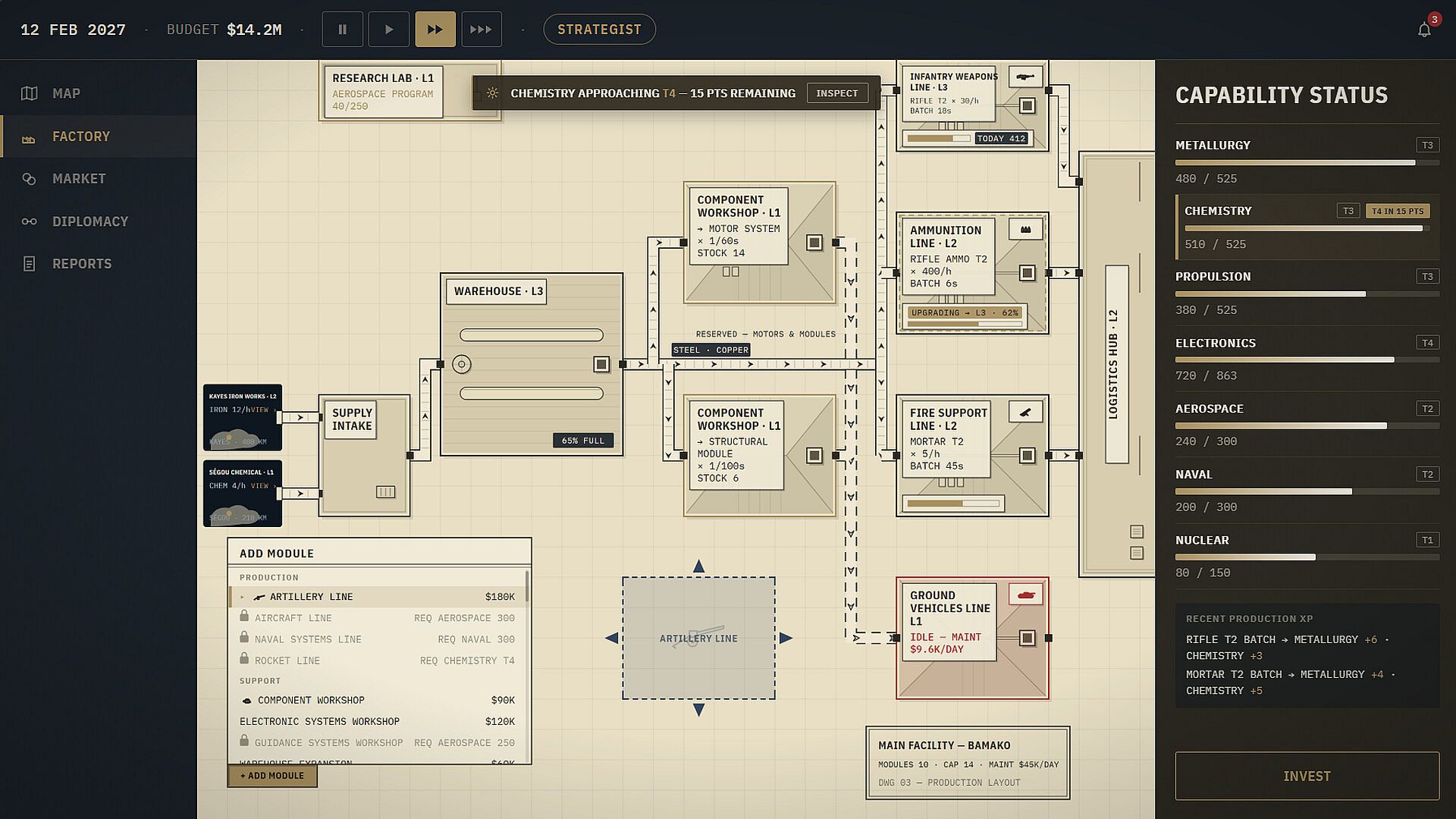
Players begin with basic assembly operations and scale operations by adding production lines and sourcing materials from various locations on the map. Expansion requires balancing costs, availability of resources, and political factors that influence pricing and access. Output from factories can be directed toward different uses, creating ongoing choices about resource allocation that affect both personal growth and broader events.
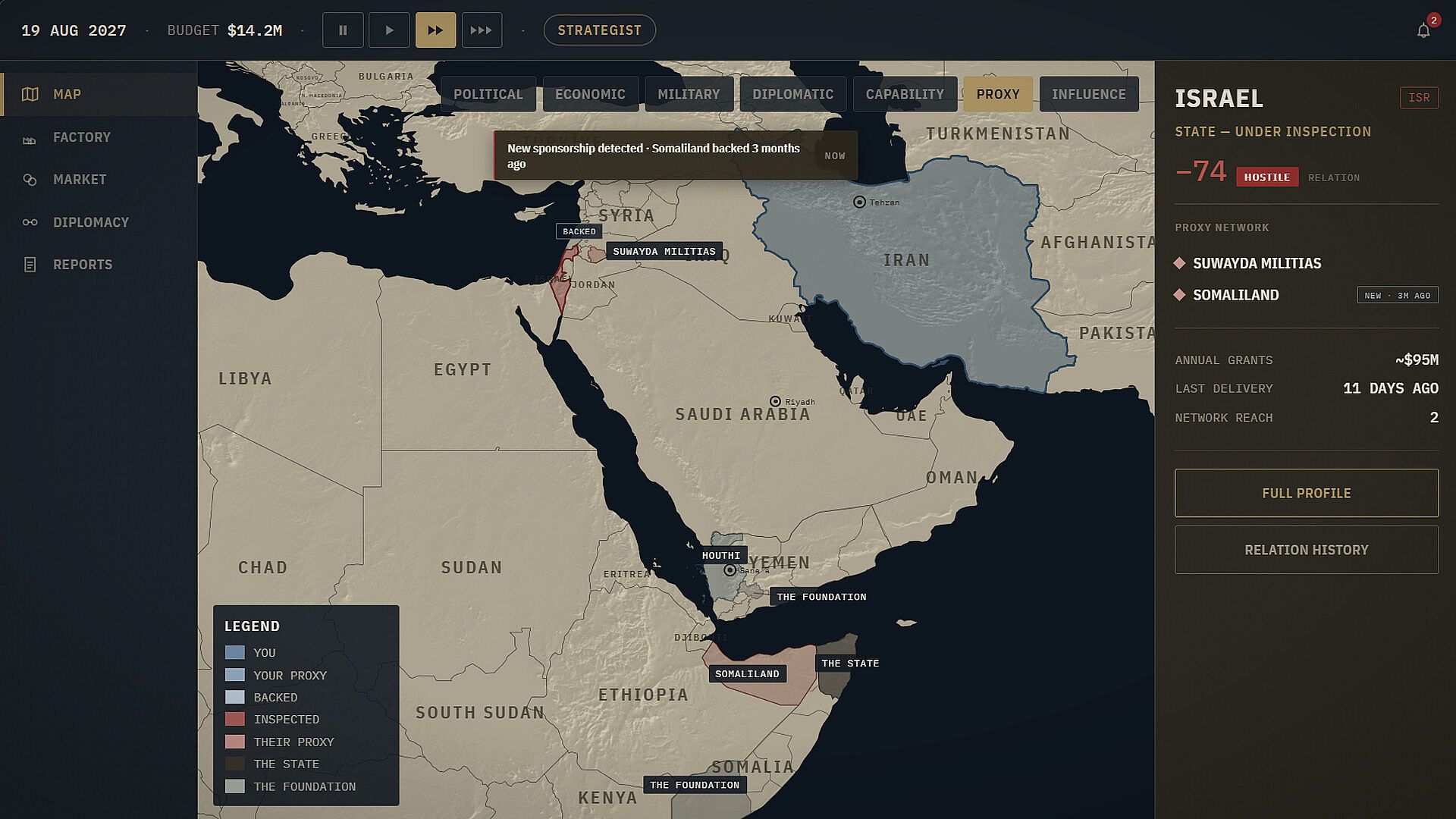
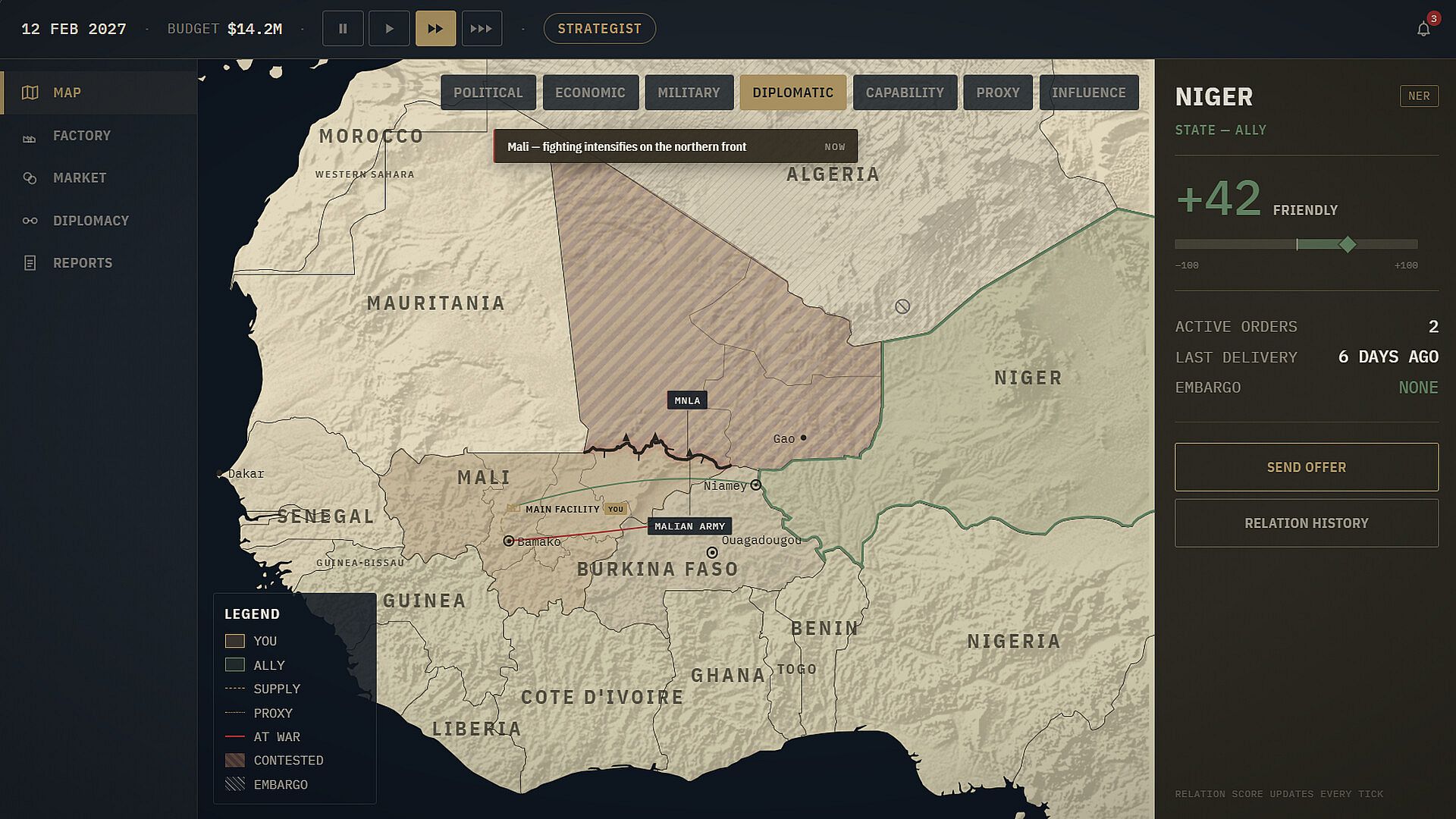
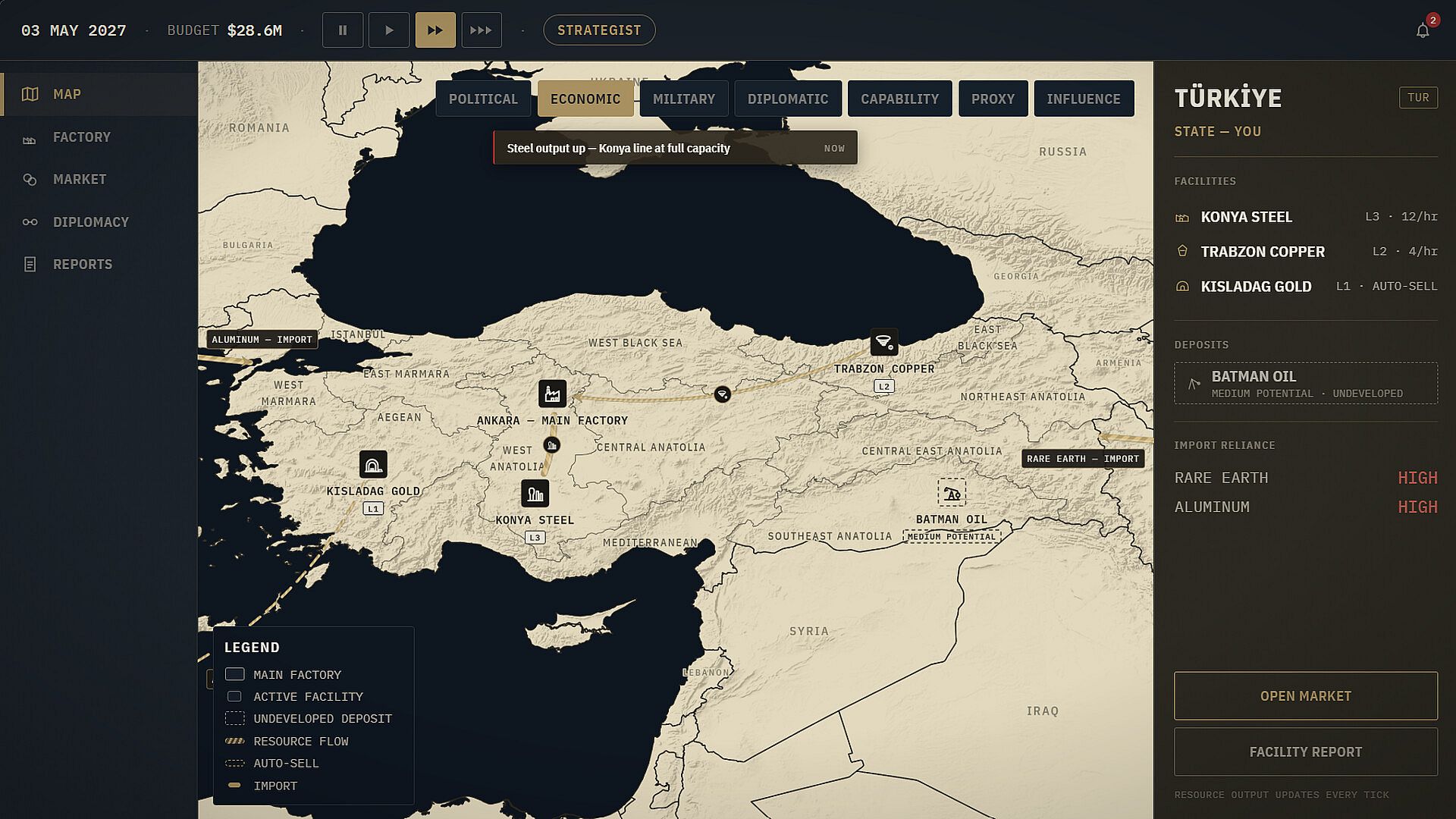
The underlying simulation tracks state interactions across real-world geography, with fictional factions and events driving changes in trade, embargoes, and active fronts. Equipment delivered or withheld directly influences how conflicts unfold, turning production decisions into factors that shape regional control and supply lines. This creates a systems-focused experience where reading market signals and geopolitical tensions becomes central to long-term strategy.
Game Modes
The game operates as a single-player title with no multiplayer components listed. All progression occurs through one continuous campaign-style experience that integrates factory management with the living world simulation. There are no separate modes for different play styles or scenarios; instead, the single structure allows players to experiment with allocation strategies and expansion paths within the same geopolitical framework.
Mechanics emphasize analysis over direct combat control. Players observe and respond to simulated conflicts rather than commanding units on the ground, focusing instead on how their shipments alter front lines and alliances. This approach keeps the emphasis on economic and logistical systems throughout the session.
Core Systems and Mechanics
Production starts small and grows into more advanced output, including vehicles, as infrastructure expands. Each decision about sourcing and output carries political weight because prices and access respond to world events. The three main channels for shipments-commercial sales, personal equipping, and proxy support-force players to weigh immediate profit against potential influence on ongoing conflicts.
The simulation runs independently beneath the factory layer, generating trade patterns, threats, and battles that players can monitor like economic indicators. Real geography provides the setting, but all specific factions, scenarios, and outcomes remain fictional to maintain focus on the mechanics of supply and consequence.
Is It Worth Playing?
Armory Doctrine targets players who enjoy grand strategy and simulation titles centered on complex systems rather than direct action or narrative-driven campaigns. Its emphasis on supply chains, allocation choices, and indirect influence over simulated conflicts offers a distinct angle for those interested in the logistics behind modern tensions.
With a planned release in Q1 2027 and no player reviews available yet, the game remains an upcoming title. Those drawn to management-focused experiences with geopolitical depth may find the described mechanics compelling once it launches, particularly if they prefer thoughtful planning over fast-paced combat. Availability will be limited to PC at launch, and the single-player structure suits solo sessions built around repeated playthroughs with different strategic priorities.











