






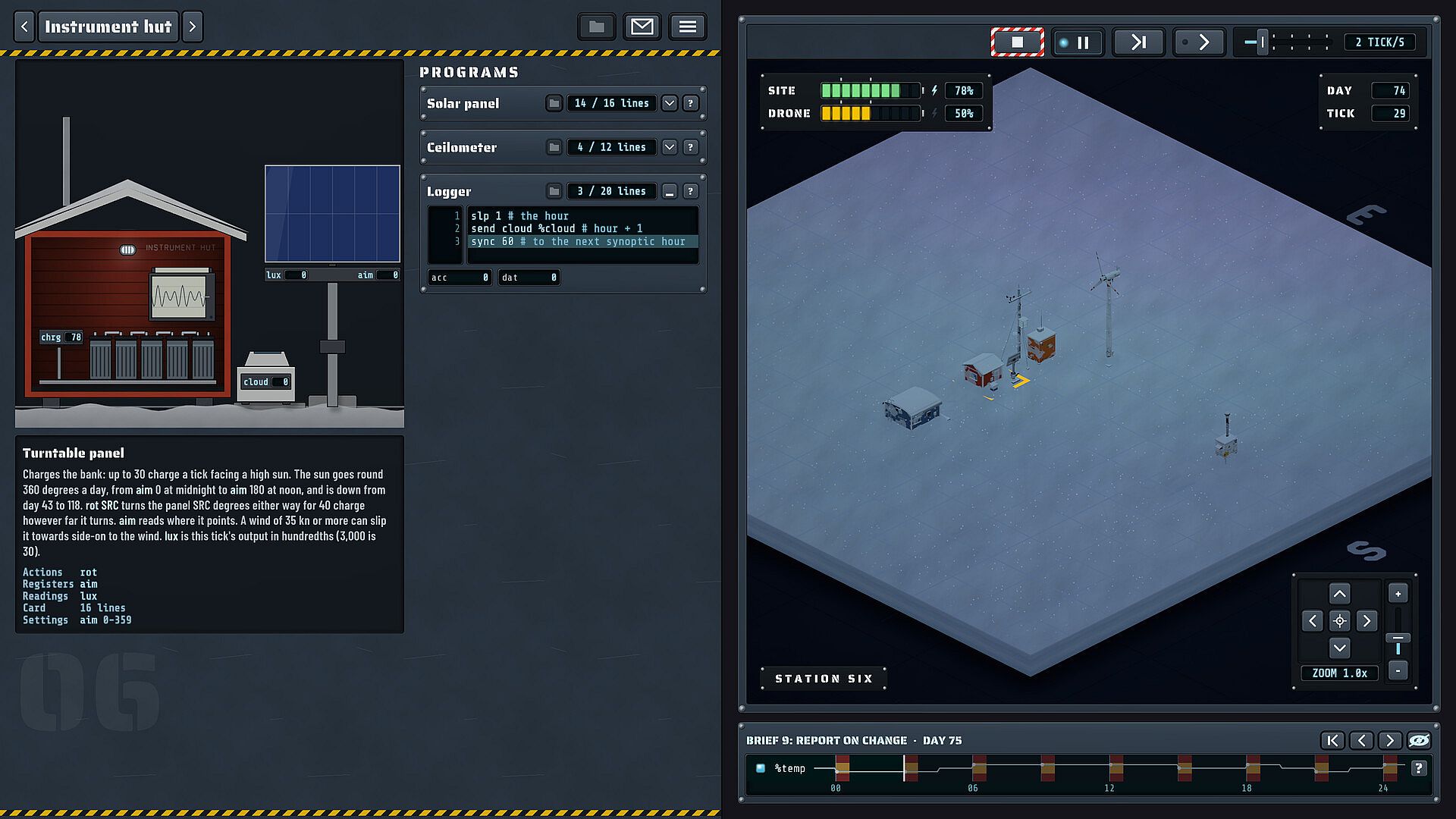
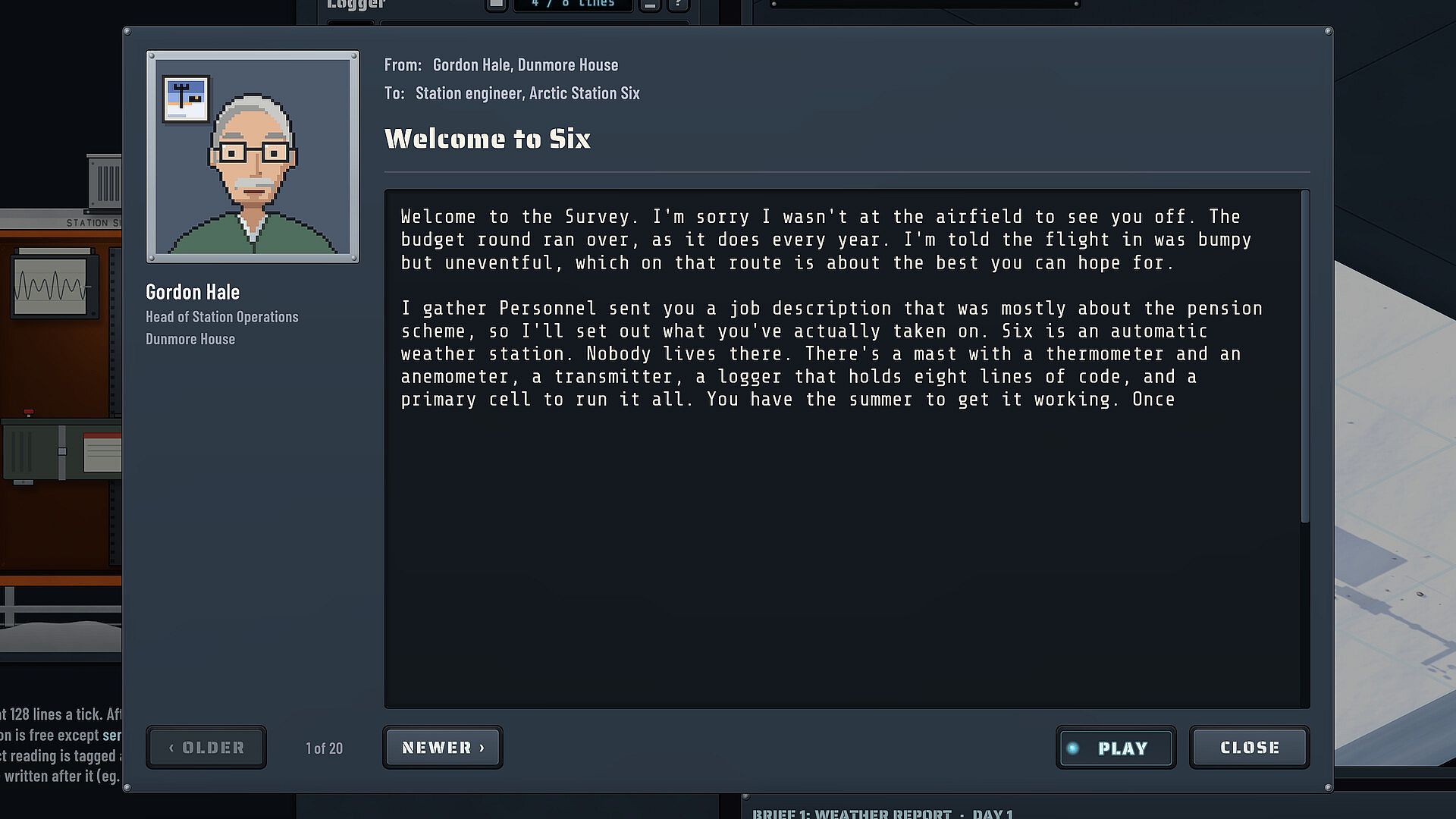
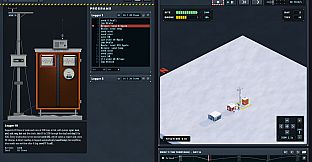
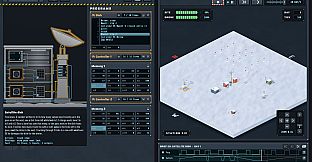
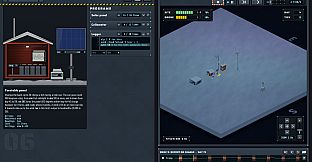
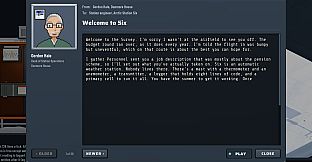
Arctic Station Six is an indie simulation game on PC that challenges players to program an automated weather station in the Arctic using assembly language. The core experience revolves around preparing the station for a long, unsupervised winter by writing precise code for its various components before the final supply plane departs.
Gameplay
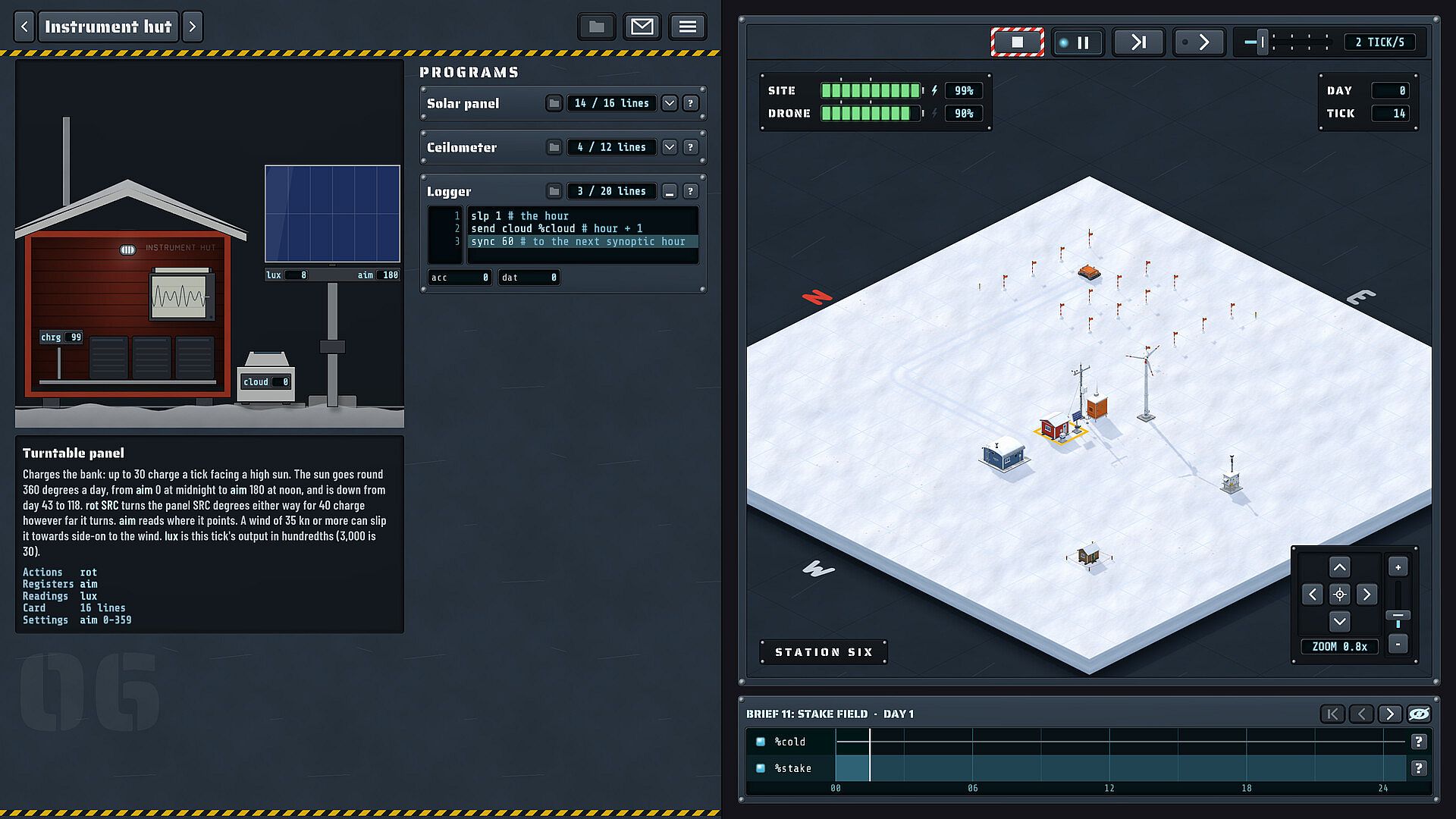
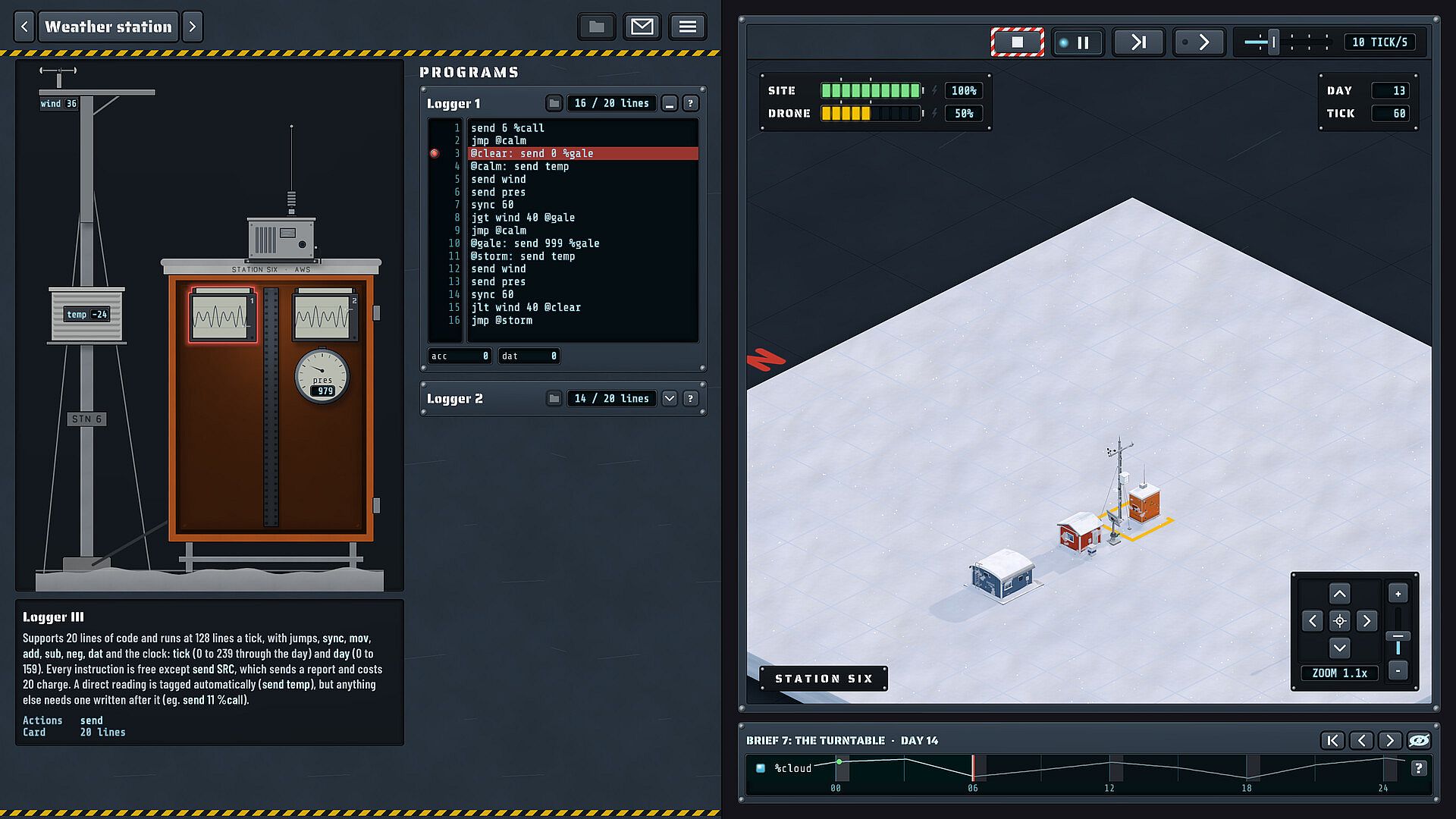
The gameplay centers on writing compact assembly programs for the station's loggers, controllers, and drone. Each component runs its own short script, typically limited to a handful of lines on dedicated cards. Players read sensor data, issue commands like sleeping until the next hour, performing comparisons, executing jumps, and transmitting reports. Instruments provide real-time inputs that the code must interpret correctly to handle changing conditions.
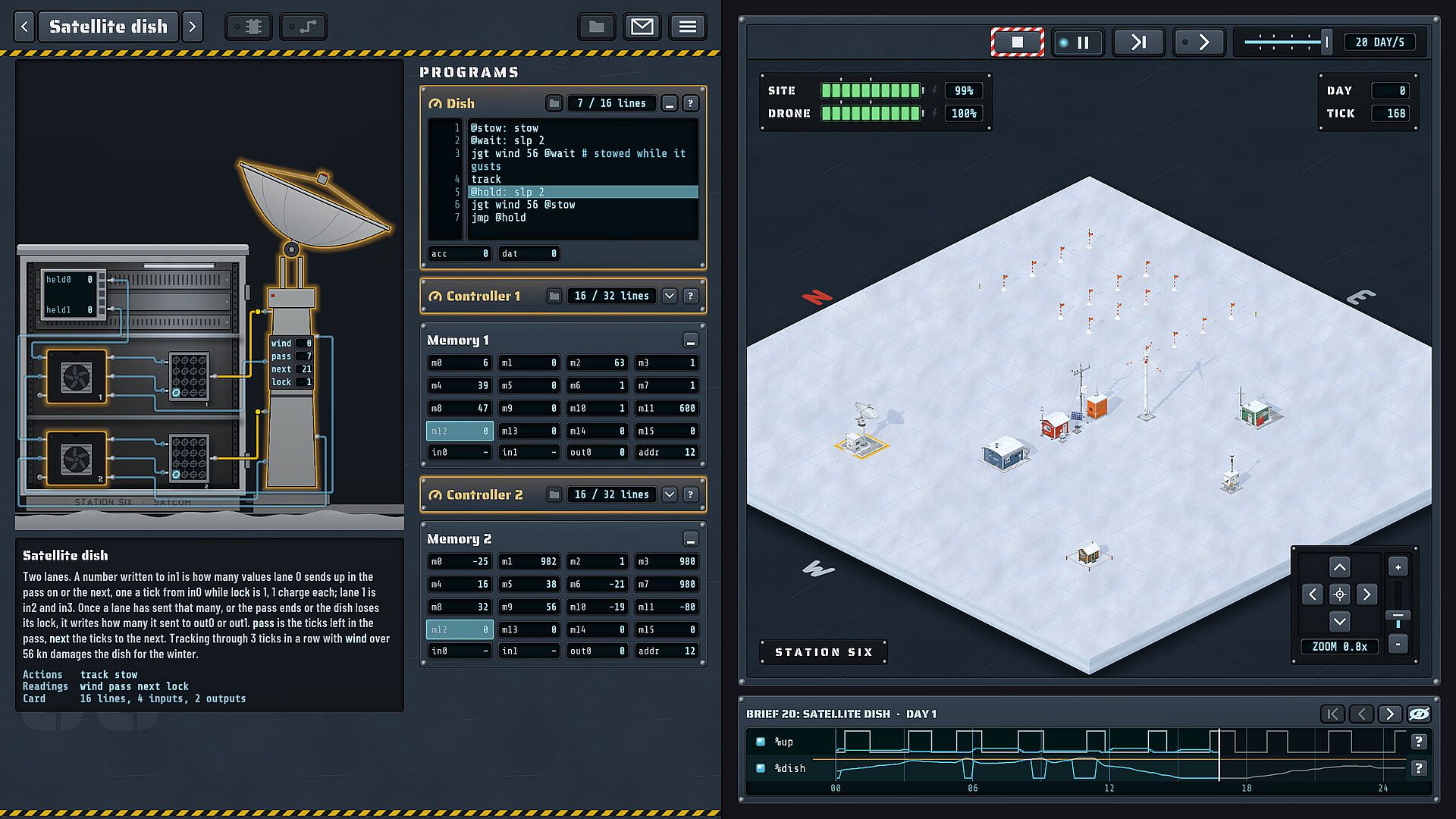
Wiring multiple parts together allows complex tasks to be distributed across controllers, memory units for storing tables, and the drone for collecting and delivering readings upon docking at the garage. The simulation then runs an entire polar winter in accelerated time, showing how the station responds to weather fronts, gales, accumulating snow, and the extended polar night with only the power generated or stored on site.
Debugging tools include single-step execution, breakpoints on specific code lines or times, and the ability to rewind to an earlier hour when issues arise. This setup encourages methodical troubleshooting of logic errors that would otherwise repeat throughout the season.
Game Modes
Arctic Station Six operates as a single-player puzzle experience built around sequential yearly challenges. Each year introduces new tasks, instruments, and buildings that expand the station from a basic mast into a more complete research facility. There are no separate competitive or cooperative modes; progress comes from completing the assigned briefs from the Forecast Service and Science Committee while refining solutions.
The structure emphasizes iterative improvement within the same core loop of programming, wiring, simulation, and review. A trace under the map displays hourly requirements, allowing players to see exactly where reports pass or fail before optimizing further.
Station Expansion and Instruments
Over multiple years the station grows with additions such as an instrument hut featuring a solar panel that tracks the sun, a drone garage for filter swaps and stake field surveys, a wind turbine requiring braking before high winds, a magnetometer hut, a balloon shed, and a satellite dish timed to satellite passes. Each new element comes with its own manual page integrated into the game, providing the specific instructions needed to program it effectively.
Power management becomes critical as the station must sustain operations through periods of low generation during the long winter darkness, relying on stored energy and efficient code to avoid failures.
Optimization and Scoring
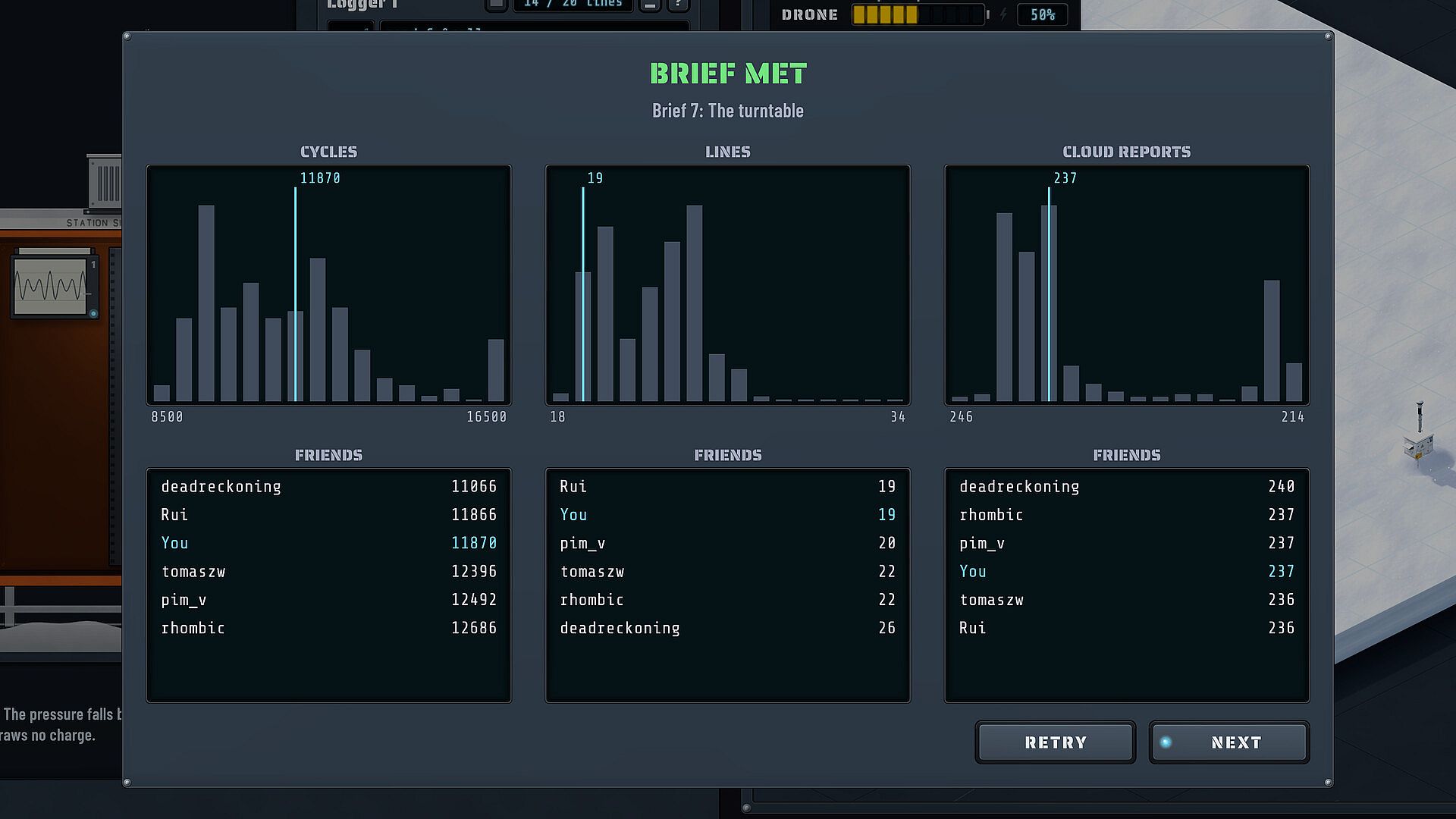
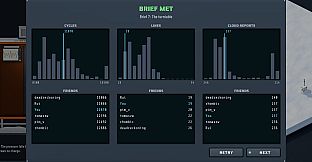
Once a solution functions, players can refine it for better performance. Solutions receive scores based on cycles used and lines of code, with additional criteria on certain tasks. Histograms display comparisons against other solutions, highlighting opportunities for improvement in efficiency.
This layer adds depth for those who enjoy iterative puzzle solving, turning a working program into an optimized one without altering the fundamental simulation outcome.
Is It Worth Playing?
Arctic Station Six suits players interested in programming puzzles and simulation mechanics where precision and logical thinking determine success. The focus on assembly-level coding, combined with the visual feedback of a simulated winter, provides a distinctive loop for those who appreciate engineering-style problem solving over action or narrative elements.
The game rewards careful planning and debugging skills, making it a strong fit for enthusiasts of technical indie simulations on PC. Those seeking fast-paced gameplay or multiplayer features may find the deliberate pace less appealing, while fans of puzzle games with clear feedback systems stand to gain the most from its systems.











