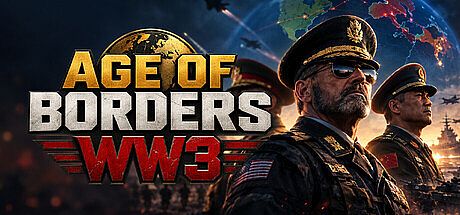


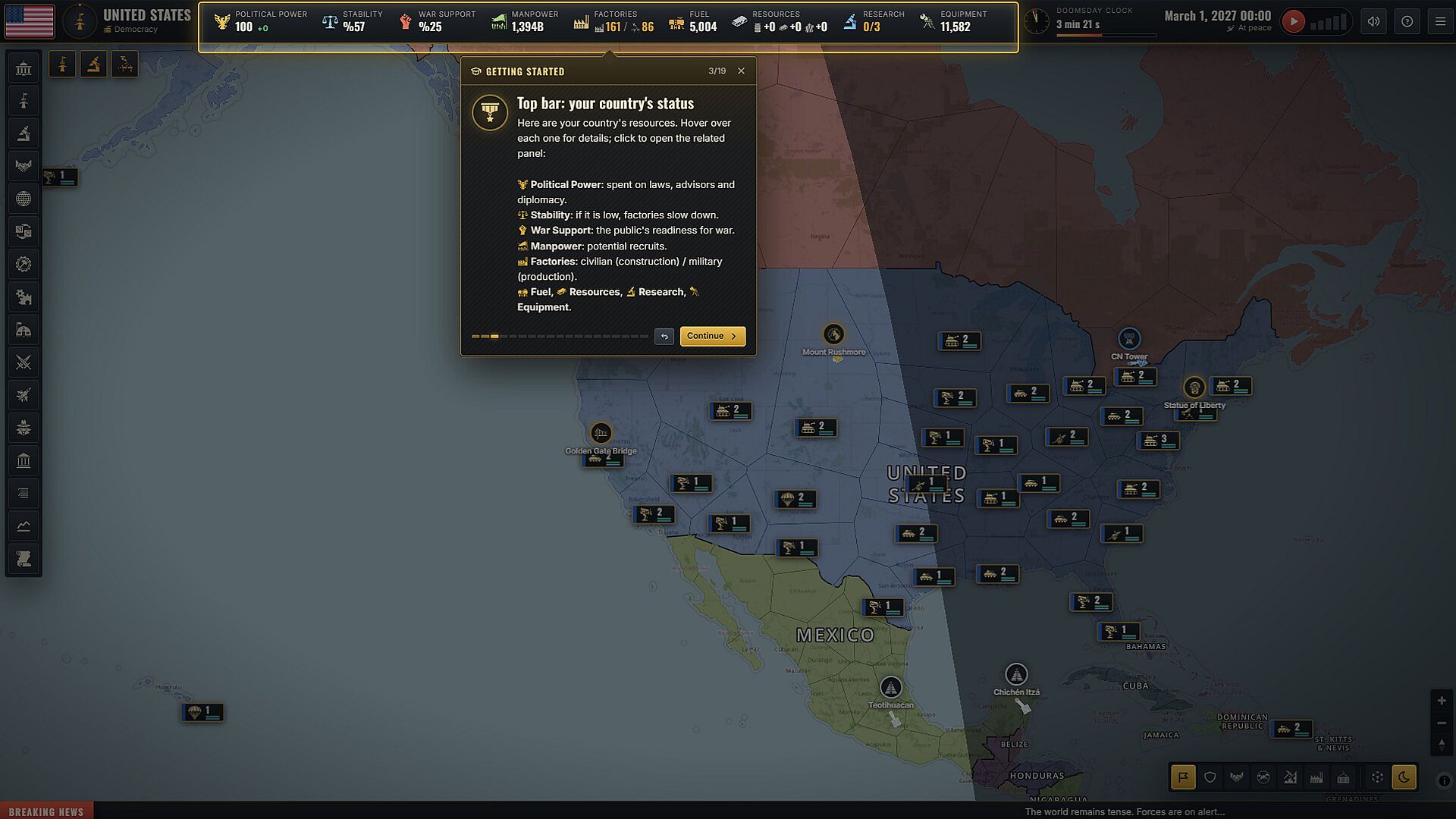
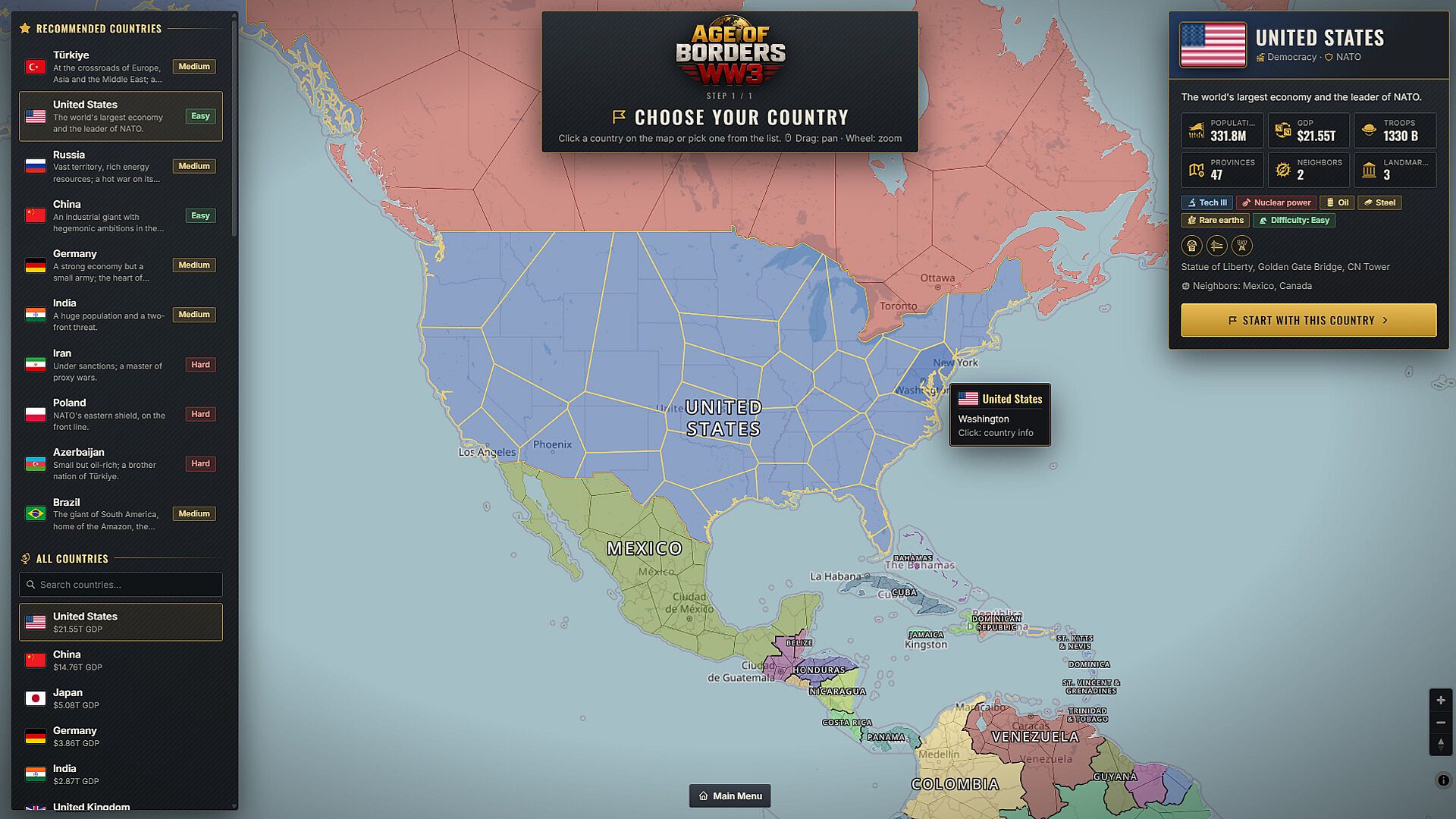
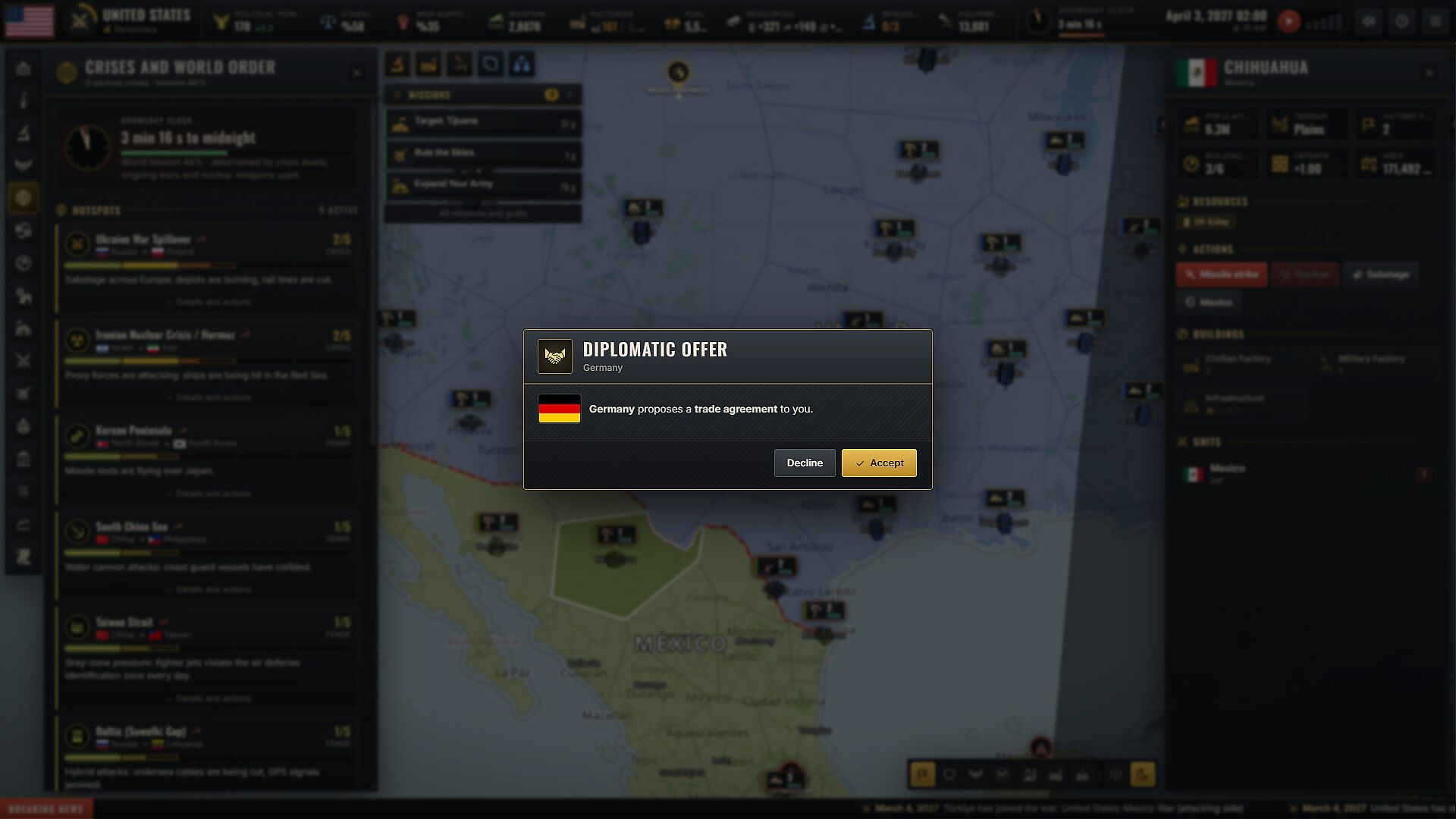
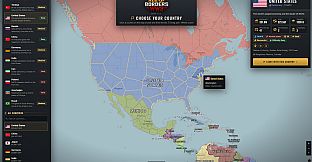
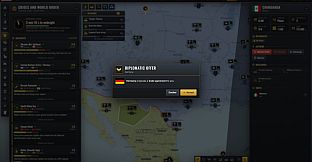
Age of Borders: WW3 is a real-time grand strategy game set in a tense 2027 scenario where global conflict looms. Players command any of over 200 nations on a detailed real-world map, managing economy, politics, diplomacy, and military forces through a decade of escalating crises. The title belongs to the strategy and indie genres and carries an early access label on PC.
Gameplay
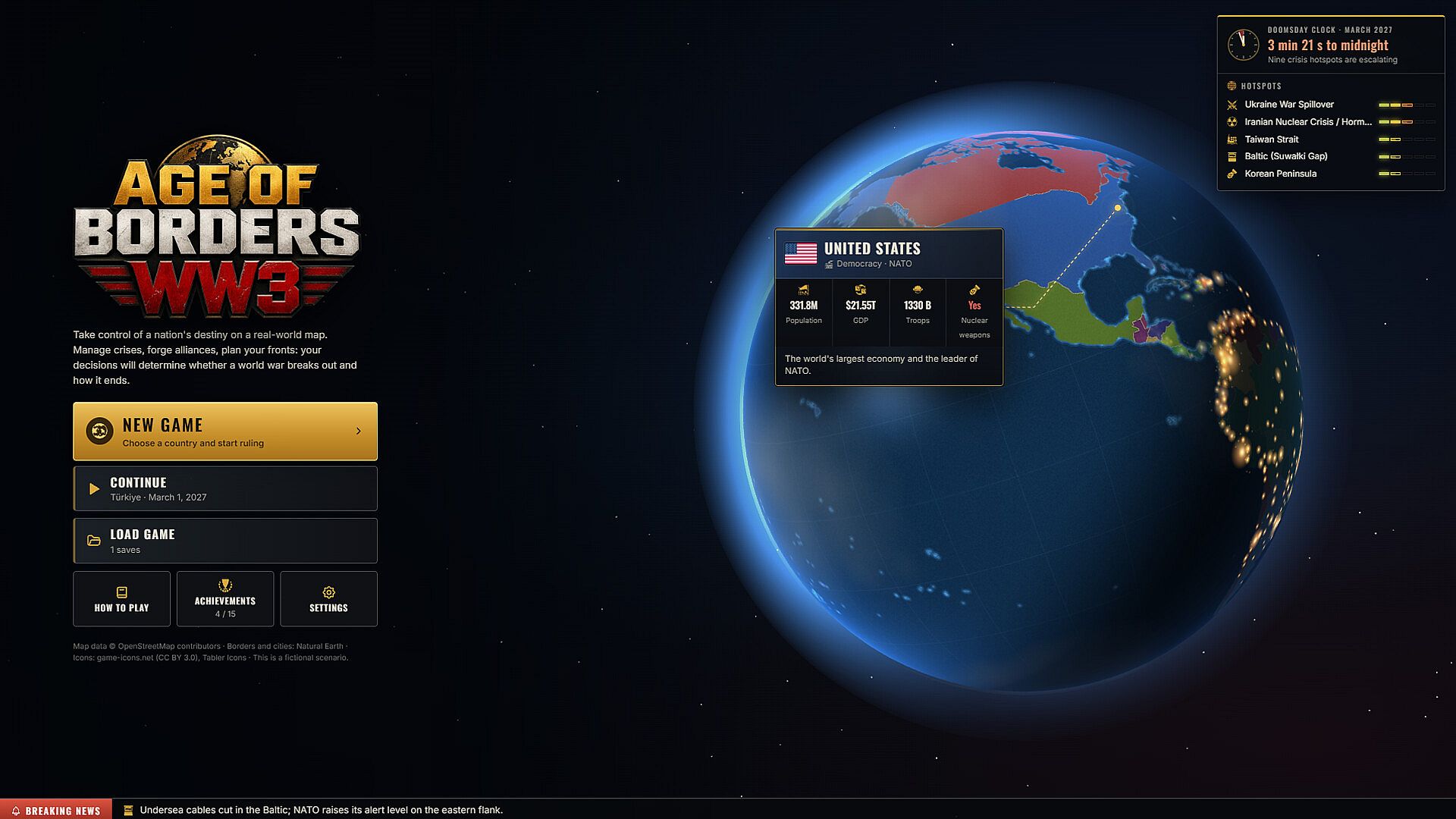
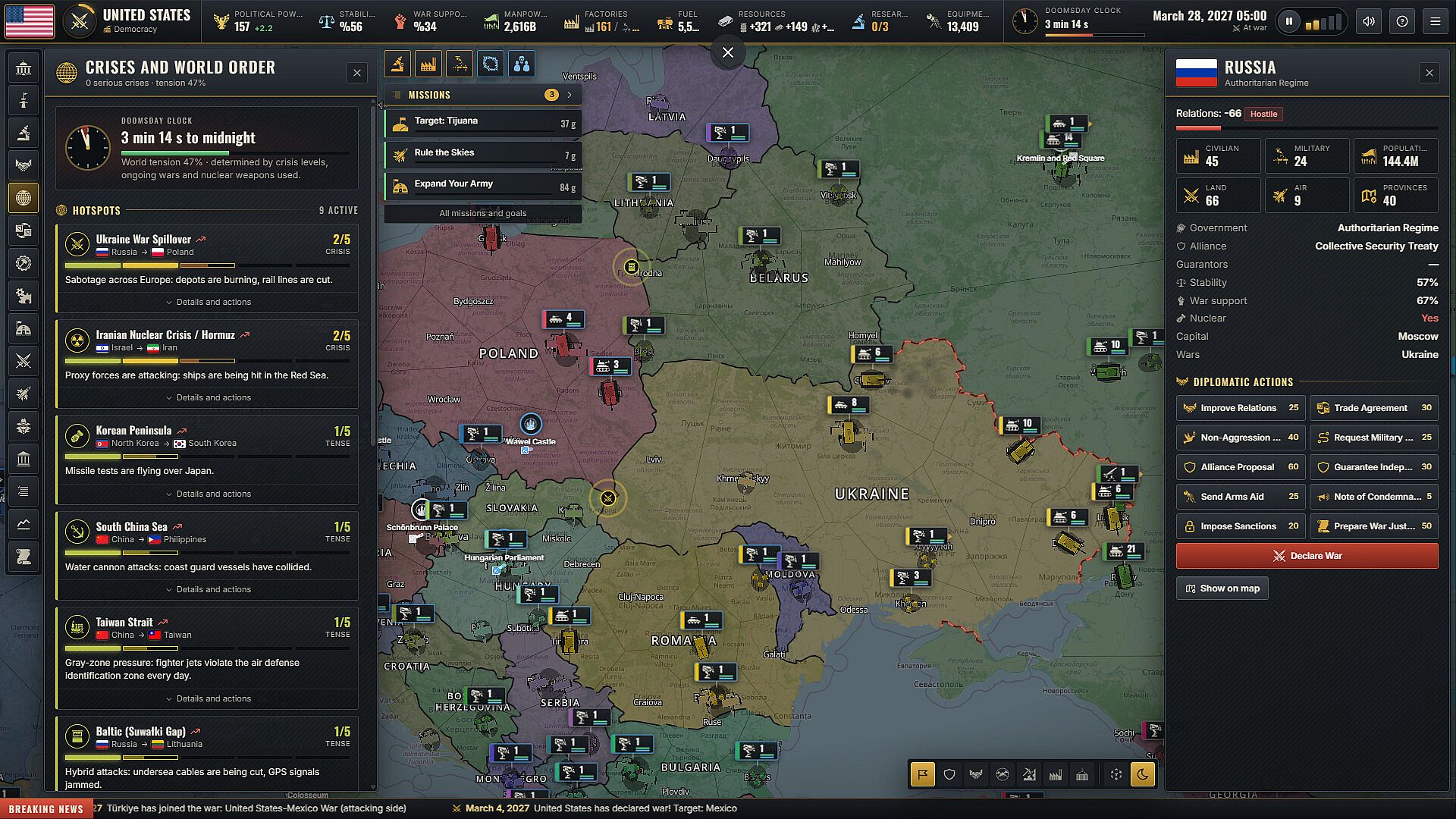
The core loop centers on guiding a chosen nation through economic production, political decisions, and military actions while responding to nine flashpoints that drive world tension. These include the Taiwan Strait, the Baltic and Suwałki Gap, the spillover from the war in Ukraine, the Korean Peninsula, Iran and the Strait of Hormuz, the South China Sea, Kashmir, the Arctic, and the South Caucasus. Each flashpoint advances along a five-step escalation ladder from gray-zone pressure to open war, with speed influenced by power balances, alliances, and events elsewhere.
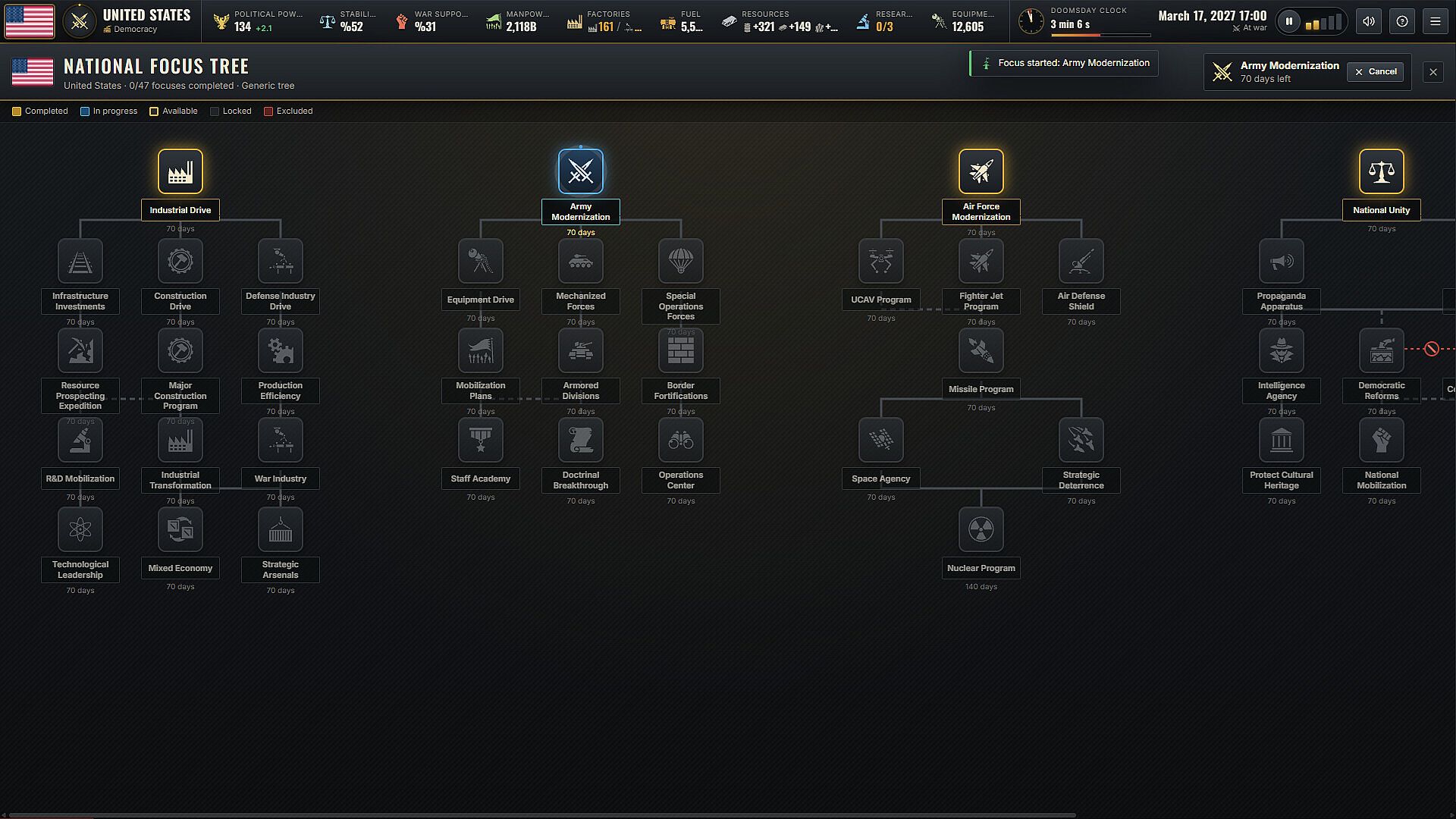
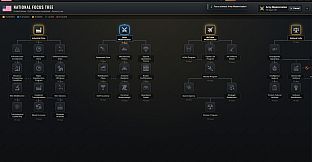
National focus trees provide general and nation-specific paths with mutually exclusive options, national spirits, and long-term strategies. Industry involves civilian and military factories, efficient production lines, building slots, and construction queues. Resources such as oil, steel, and rare earth elements fuel the war machine, while shortages and fuel needs affect output. Politics cover political power, stability, war support, laws, advisors, elections, and coup risks. Research spans six technology branches tied to the calendar, with penalties for advancing too quickly.
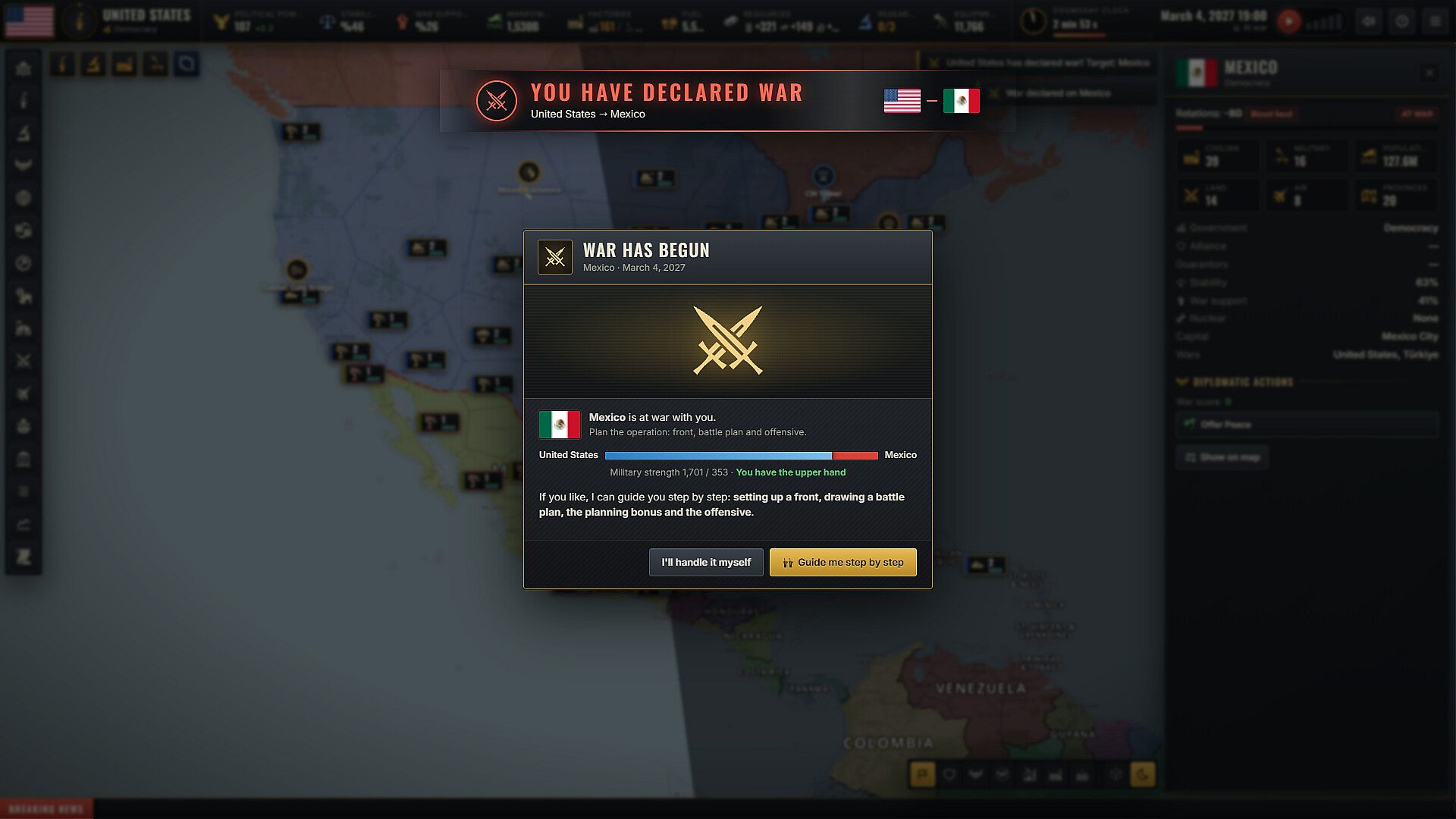
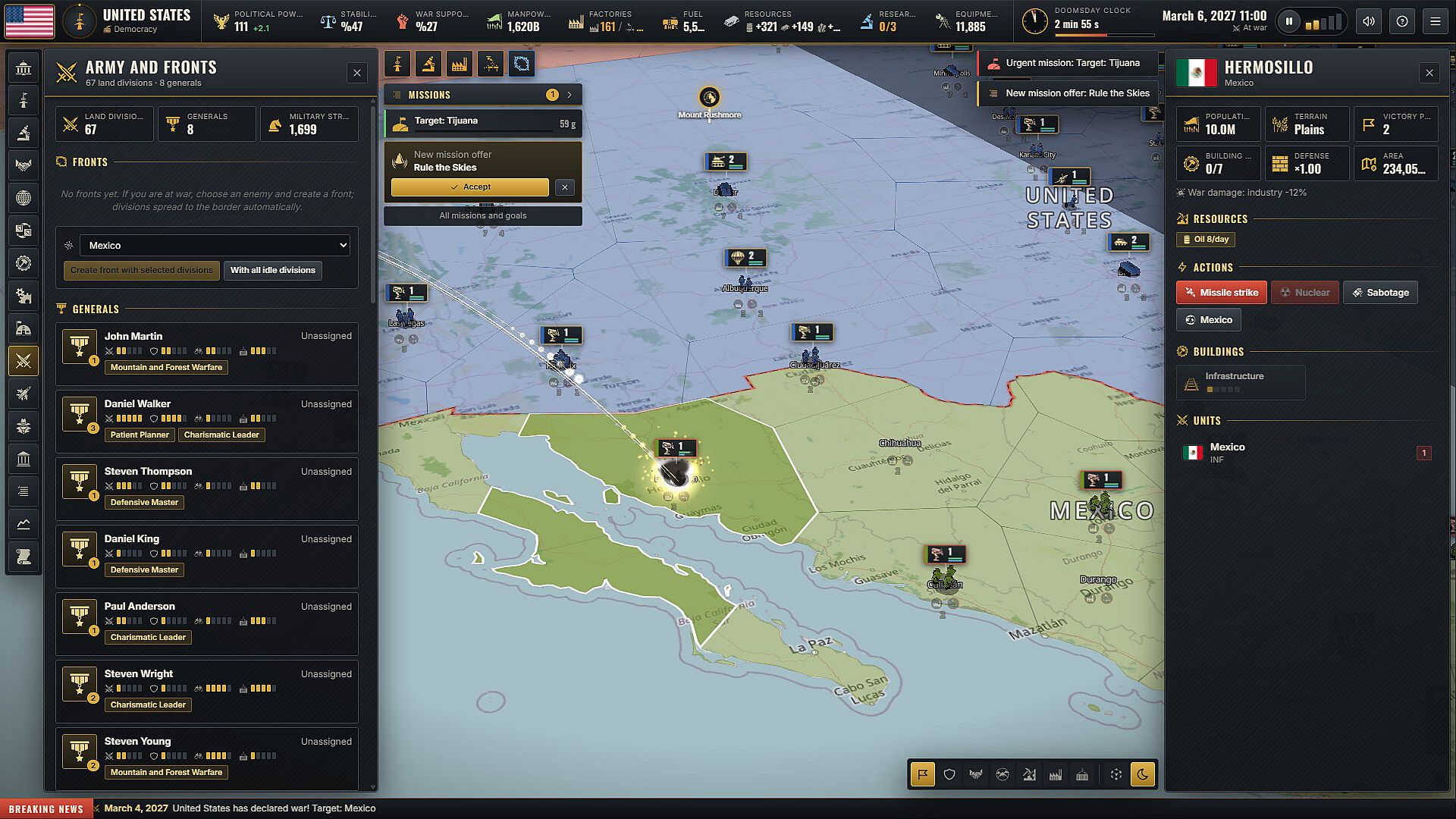
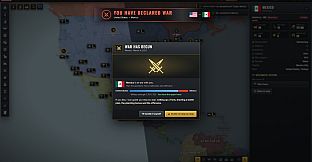
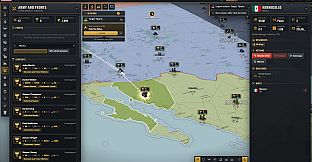
Warfare uses front drawing, multi-target offensives, planning bonuses, and generals with skills and traits. Terrain, fortifications, supply lines, morale, and encirclement shape outcomes. Power projection limits and convoy capacity restrict operations, requiring ports for sea crossings and amphibious capability plus naval superiority for landings. Air wings handle superiority, support, and bombing, while missiles and nuclear weapons add strategic options with retaliation risks. Diplomacy includes trade, pacts, alliances, guarantees, aid, and sanctions, alongside justifications for war and peace negotiations. Covert operations cover cyber attacks, sabotage, propaganda, and wildfires in 38 forest regions, plus control over 54 historical landmarks.
Game Modes
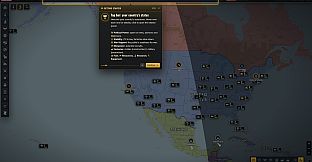
Age of Borders: WW3 operates as a single-player experience where over 200 AI nations pursue independent decisions on focuses, industry, research, alliances, and conflicts. Missions emerge dynamically based on the situation and reward preparation, deals, and defense. Army experience upgrades unit types, and veteran divisions gain ranks. Detailed statistics track industry, forces, territory, and global conditions over time. A step-by-step guide assists new players through systems, with an emergency guide for wartime setup and contextual hints available throughout. Experienced players can disable guidance.
Victory Conditions and Endings
Games conclude based on player choices and world events rather than a fixed script. Possible outcomes include global hegemony, victory for the Western or Eastern bloc in World War III, an armistice after stalemate, nuclear apocalypse, state collapse, a sustained peace through diplomacy until 2035, or judgment of history in 2040. A post-game timeline records key events leading to the result. The world reacts realistically to actions, with superpowers entering direct conflict only when choices align opposing sides.
Atmosphere and Accessibility
The presentation features a rotating 3D globe in the menu showing flashpoints and briefings, plus 3D map effects for missiles, explosions, air sorties, burning forests, and mushroom clouds. Low-poly unit models, day-night cycles, and a tilted camera support the view. An original soundtrack adapts across peace, war, and full conflict, incorporating sirens and battlefield audio. The game supports 11 languages with automatic detection and easy switching. Fifteen achievements track conquest, industry, diplomacy, deterrence, and varied endings.
Is It Worth Playing?
Age of Borders: WW3 suits players interested in detailed real-time grand strategy with reactive global systems and multiple paths to resolution. Its adjustable speed, pause function, and guidance tools lower the entry barrier for newcomers while offering depth for veterans through interconnected crises and realistic limits on projection and logistics. As an early access title, it emphasizes single-player depth over multiplayer features, with AI nations creating varied replays. Those who enjoy managing nations across economic, political, and military layers amid escalating flashpoints will find substantial replay value in the different endings and decision impacts. The fiction disclaimer notes that events remain imagined scenarios without real-world predictions.