



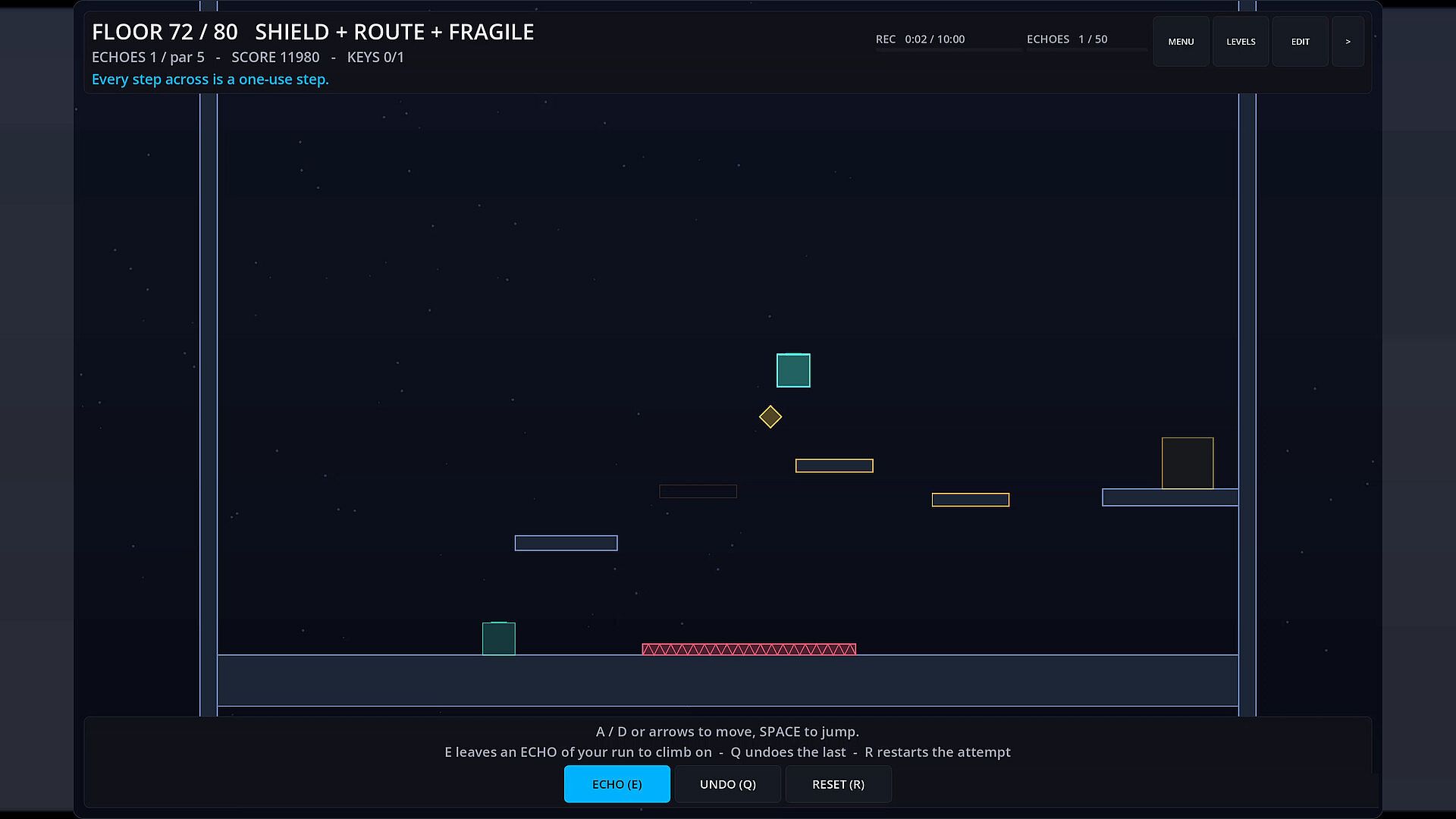
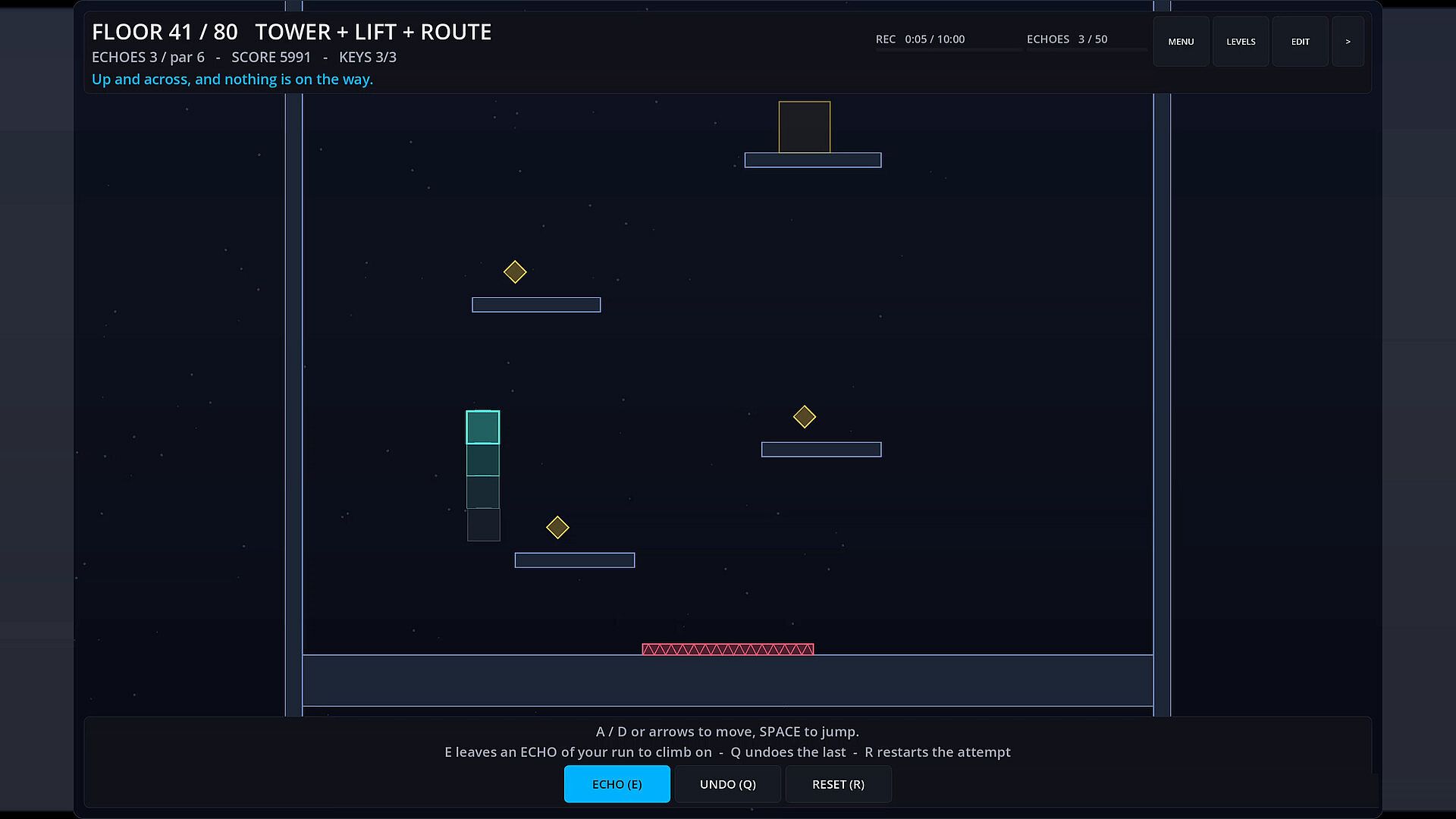
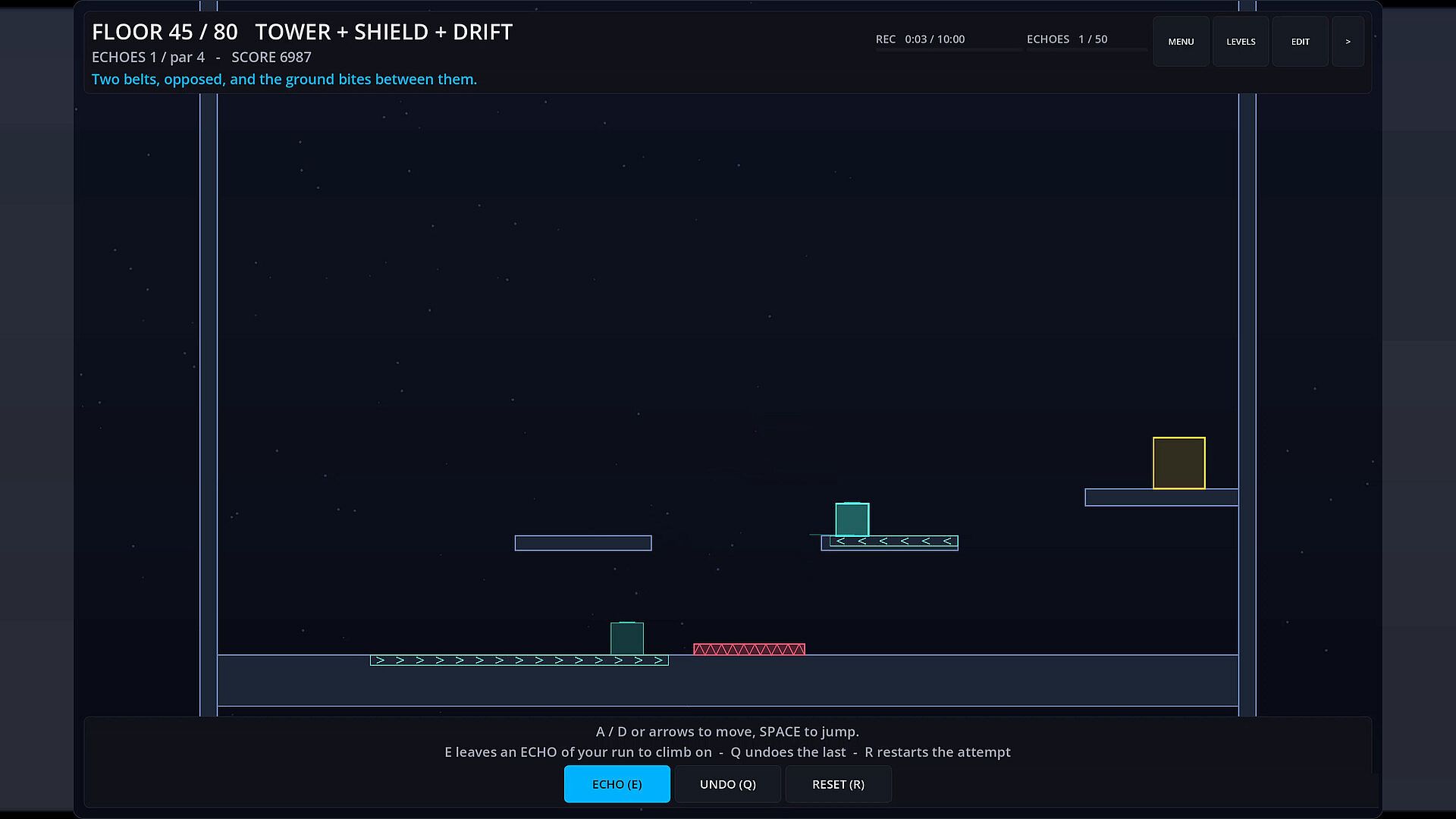
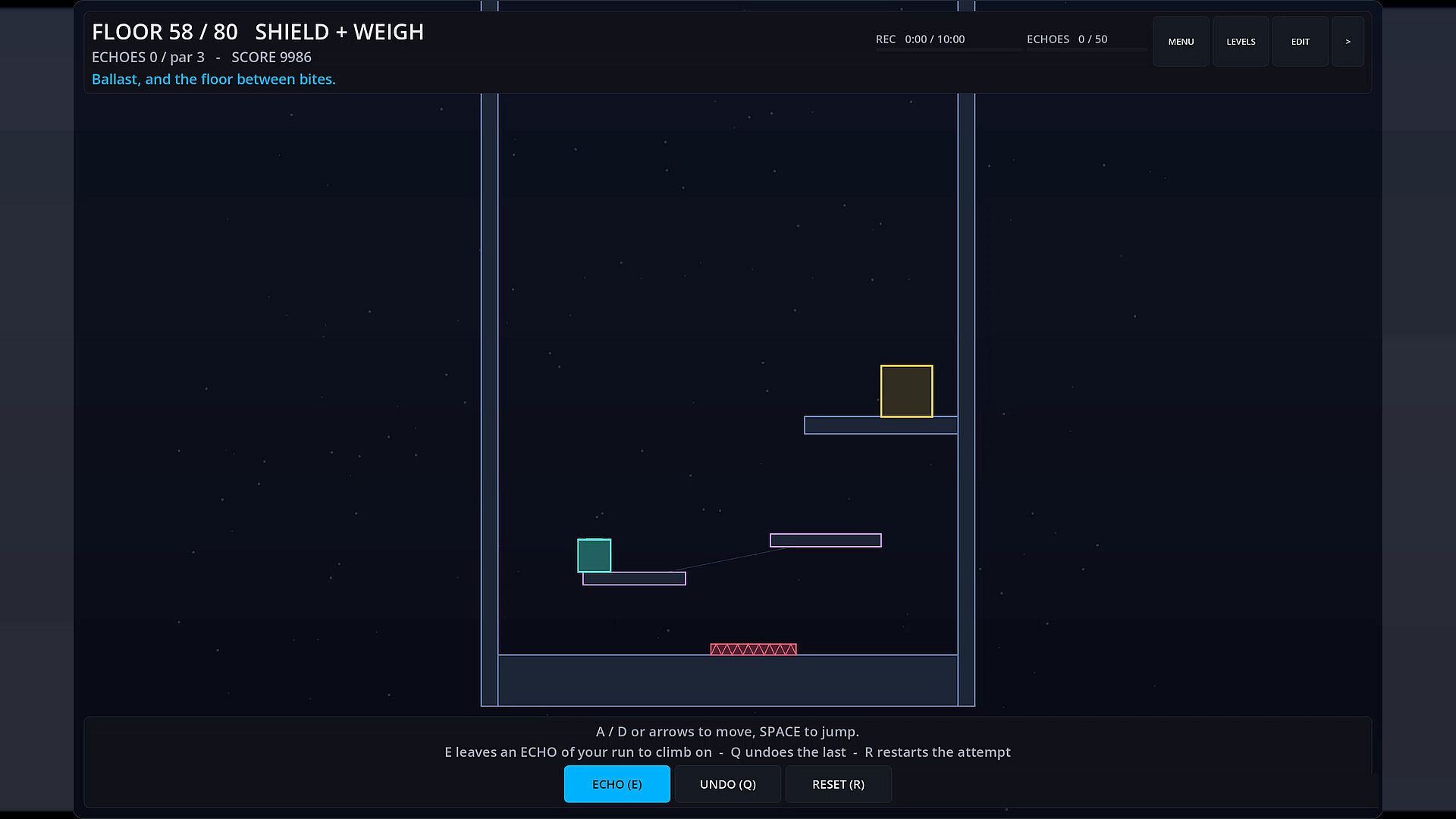
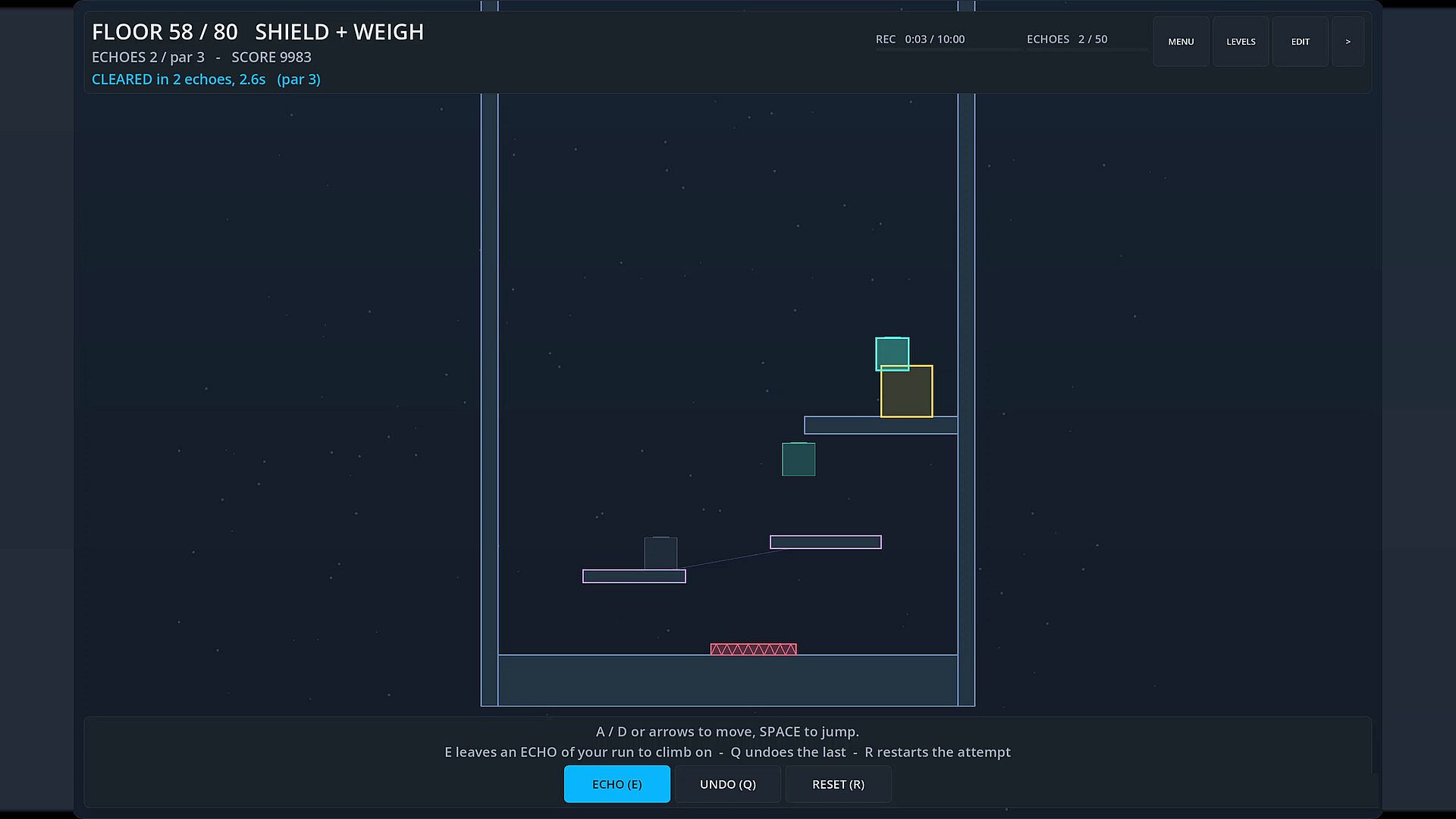
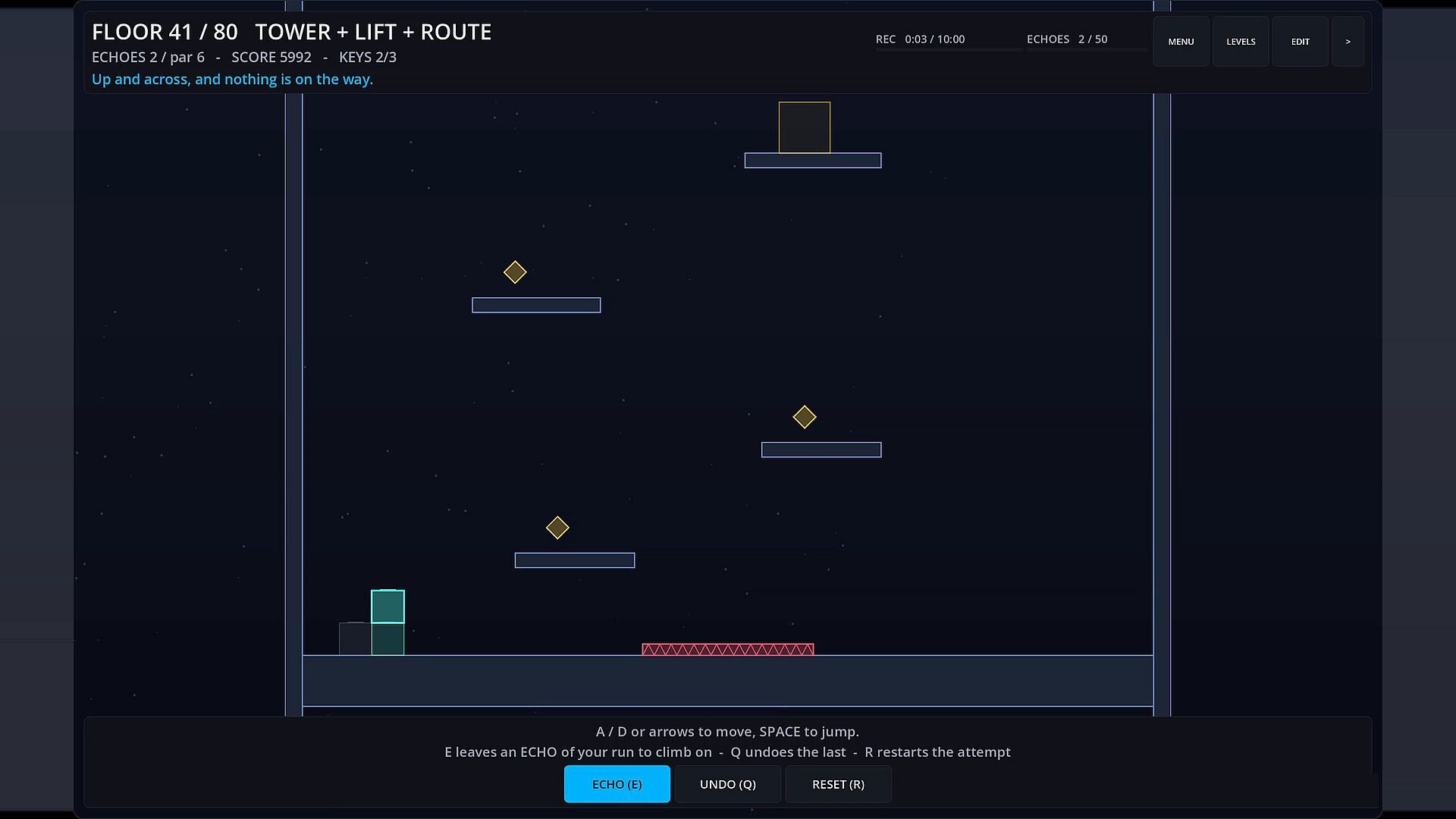
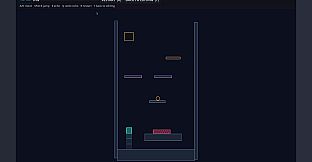
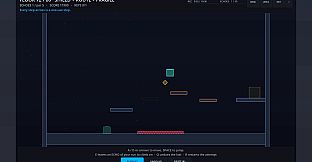
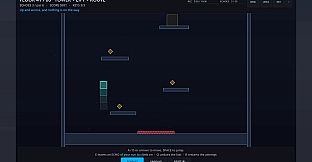
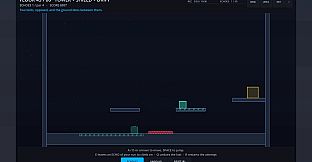

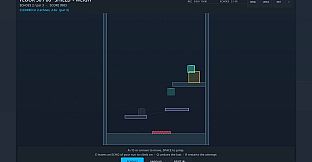
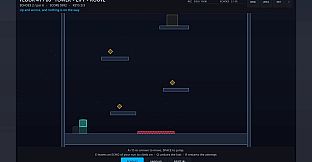
AfterImage is a puzzle platformer for PC that centers on a single core mechanic: recording runs and turning those attempts into solid, physical echoes that persist and interact with the environment. Players press one button to seal a past self into place, then restart from the beginning atop the growing stack of previous efforts. This system turns failure into the literal foundation for progress, with every route upward constructed from recordings that did not reach the goal.
Gameplay
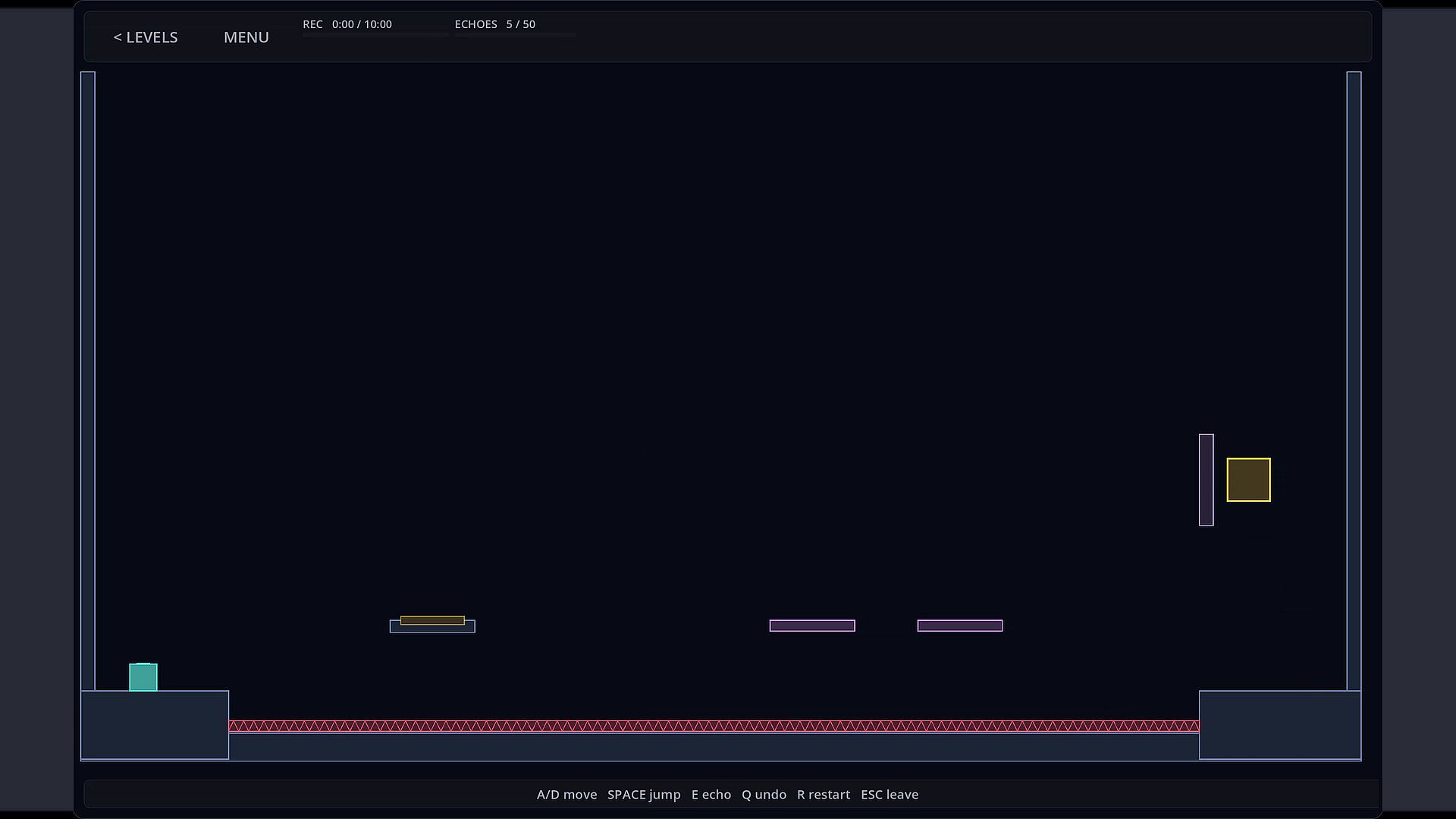
The core loop revolves around building solutions out of echoes that obey the same physics as the player character. Echoes remain solid and replay exact inputs indefinitely until destroyed by hazards. Anything resting on a moving echo inherits that motion, which opens precise timing and positioning challenges across the levels.
Eleven distinct applications emerge directly from the two rules that echoes are solid and inherit motion. Players park echoes to step up, stack them into towers, bridge gaps, ride sideways movers, lift via jumping arcs, hold pressure plates, collect keys on replays, manage conveyor drift, catch moving platforms, sacrifice fragile platforms, and balance counterweights. Hazards eliminate echoes on contact, so structures require careful planning rather than permanence.
Undo removes the newest echo and rewinds to its starting point for adjustments. Reset clears the current attempt while preserving the tower order for reassembly. Par times encourage efficient solutions that minimize echo count on each floor. The campaign consists of eighty hand-authored rooms across fourteen tiers, with each tier introducing one concept before layering prior ideas together. No procedural generation appears anywhere.
Game Modes
The primary experience is the single-player campaign of eighty authored floors. Progression follows a deliberate sequence of mechanics, each room solved by hand before release. Players advance through tiers that combine elements such as moving platforms, pressure plates, and hazards into increasingly complex spatial puzzles.
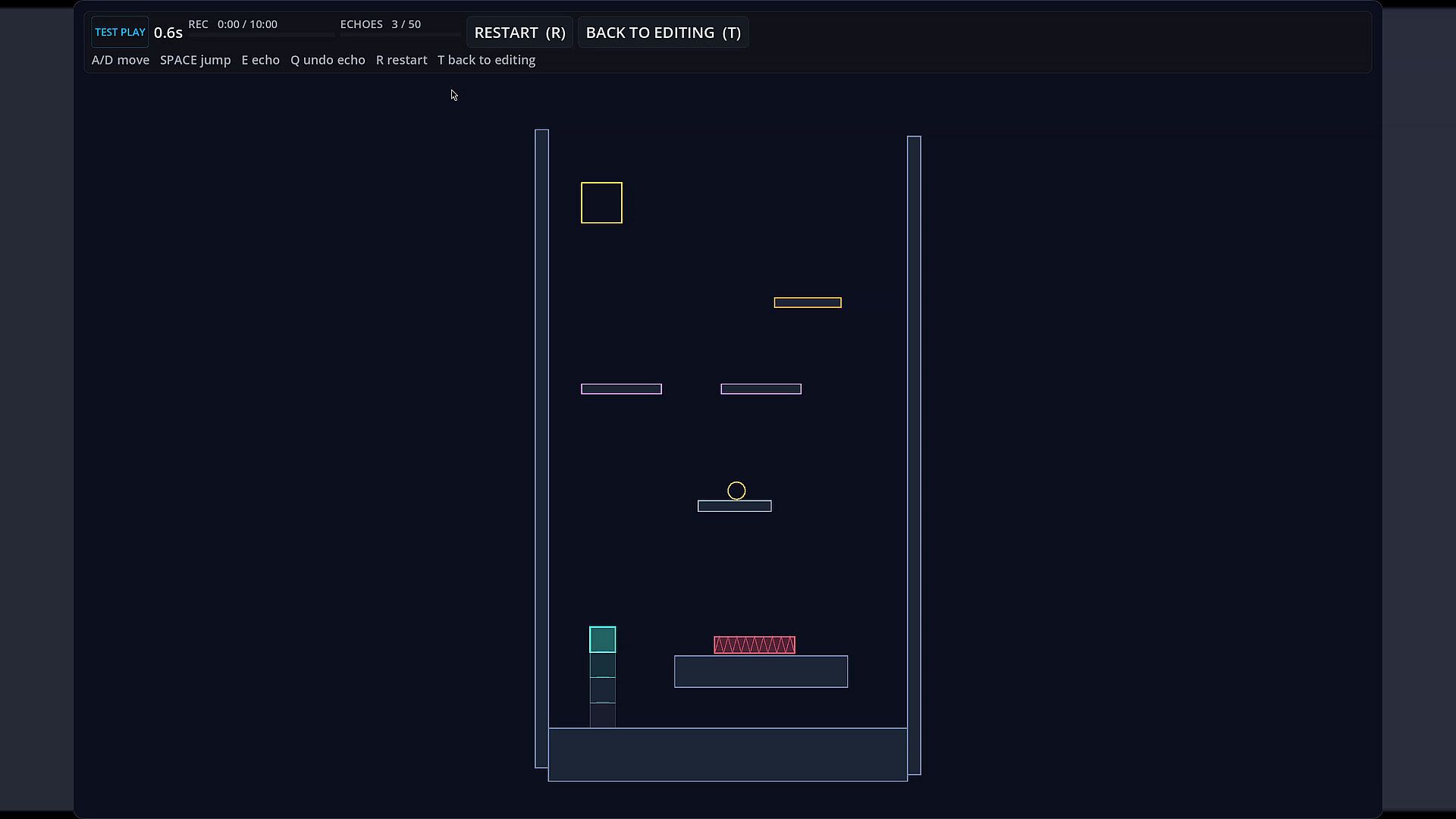
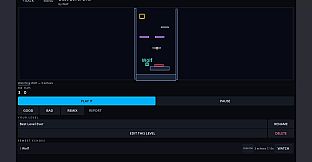
A built-in level editor operates under identical physics rules. Creators place and resize eleven elements on a grid, including solids, crumblers, belts, movers, hazards, counterweights, plates, gates, keys, spawn points, and exits. Test mode allows immediate verification. Publishing requires a successful clear of the level, after which the server re-simulates the recorded inputs to confirm completion. Verified levels receive a badge and enter the community pool.
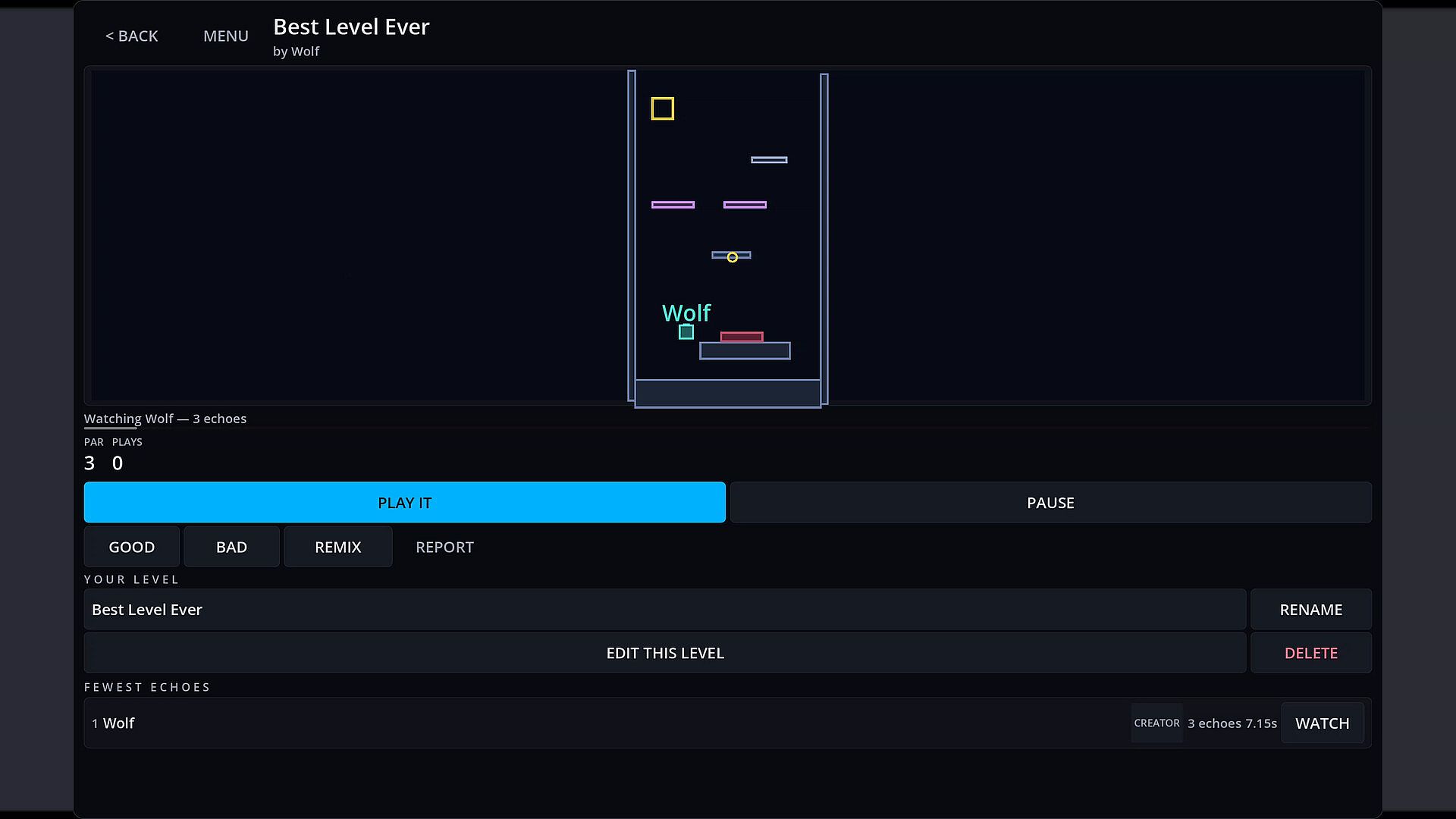
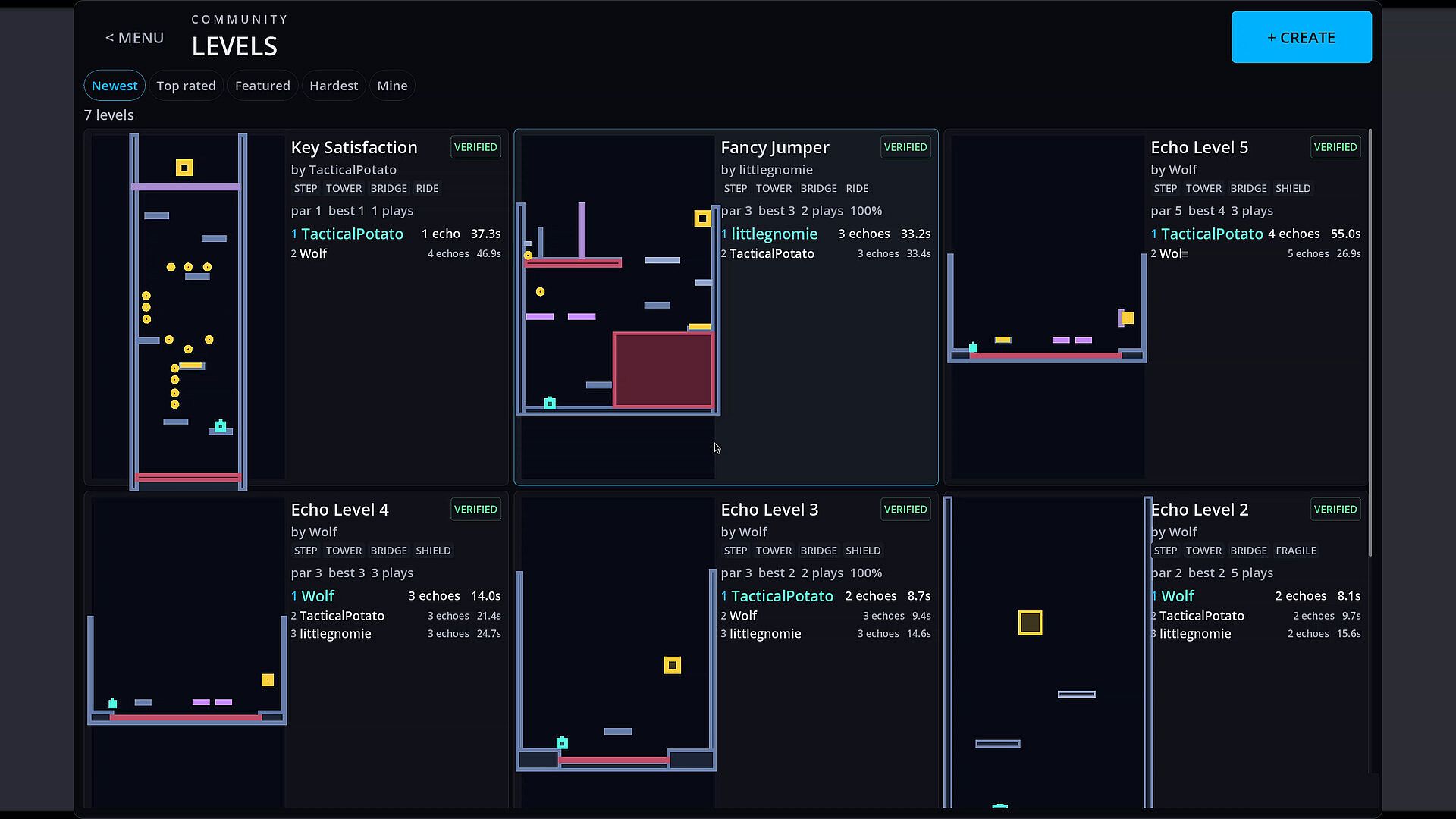
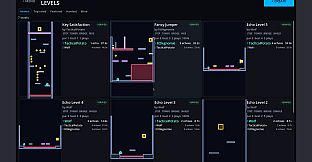
Community features let players browse newest, top-rated, featured, or hardest levels with previews. Per-level leaderboards track fewest echoes and fastest times. Any published level can be remixed into the editor, rated, or shared via short codes. The campaign runs entirely offline, while community content and leaderboards require a connection.
Level Design and Progression
Each of the eighty floors was placed and solved manually, ensuring consistent quality without filler. Tiers isolate new ideas before integration, so players encounter concepts like fragile platforms or counterweights in isolation first. The deterministic simulation records inputs frame by frame rather than positions, which guarantees that published solutions function exactly as intended.
Par scores add a secondary goal for players seeking minimal-echo clears. The absence of unlocks or upgrade trees keeps focus on spatial reasoning and echo placement. Everything derives from the echo solidity and motion inheritance rules, producing a compact yet deep set of interactions.
Is It Worth Playing?
AfterImage suits players who enjoy deliberate puzzle platformers built around a single, expressive mechanic. The campaign delivers eighty tightly authored rooms that systematically expand on echo interactions without relying on procedural content. The editor and verified community levels extend the experience for those who want to create or solve additional challenges under the same physics.
Support for Windows, Linux, and SteamOS, along with full translations in ten languages, broadens accessibility. The offline campaign ensures the core content remains available without connectivity. Players seeking precise spatial puzzles and creative construction from failure will find the systems rewarding, while those preferring combat, exploration, or narrative focus may look elsewhere. The deterministic verification of community levels removes uncertainty about whether published content is solvable.