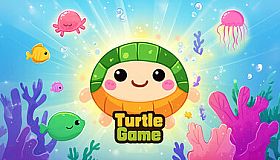



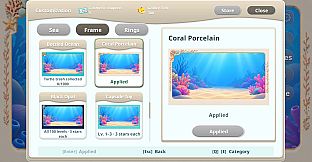
Turtle Game is a casual indie physics game for PC that recreates the mechanics of a classic water ring toss toy through digital simulation. Players generate currents to direct floating objects toward an AI-controlled turtle that moves independently through the water. The experience emphasizes short sessions built around timing, buoyancy, and object weight differences rather than complex narratives or competitive elements.
Gameplay
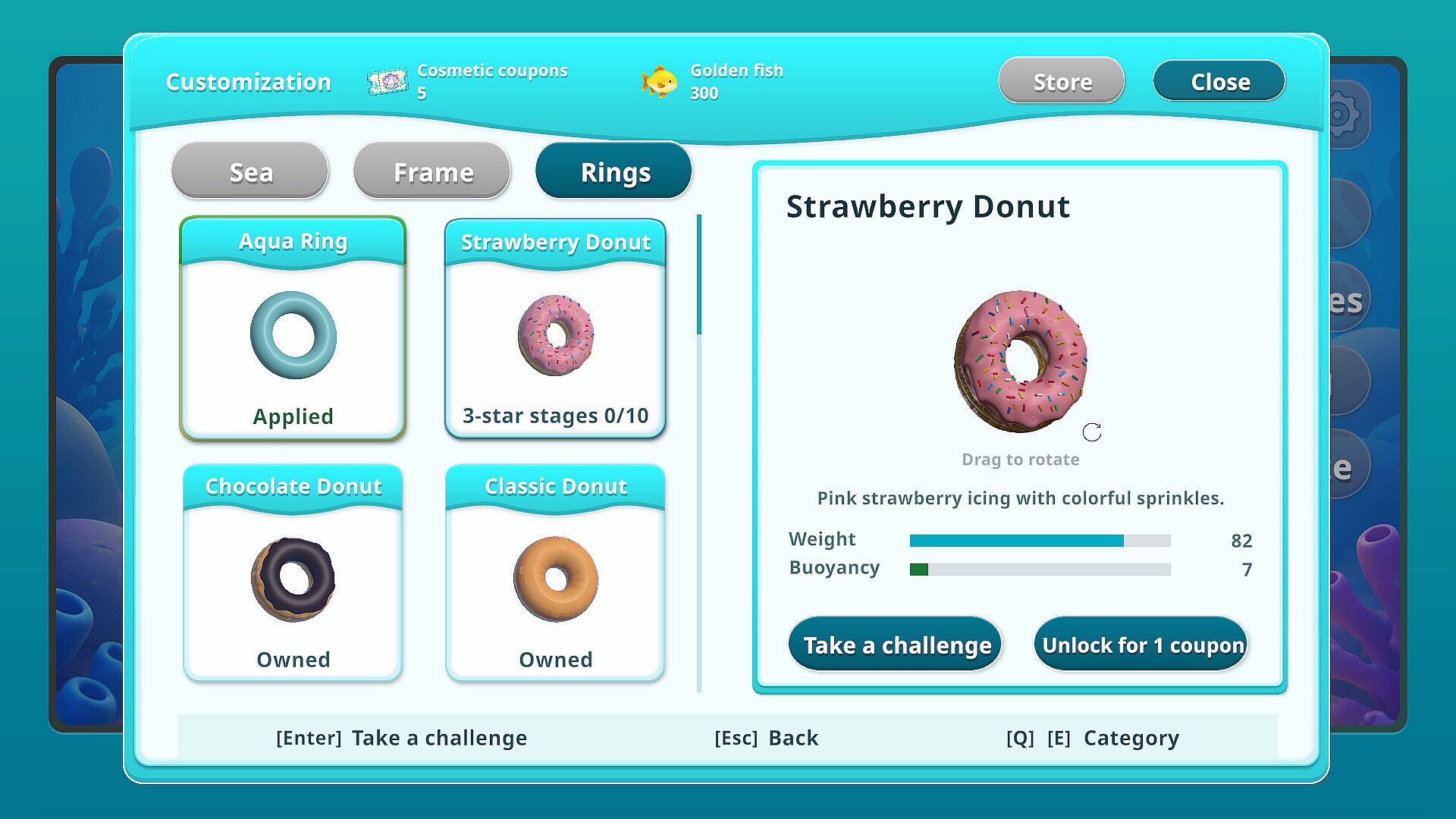
Core interaction revolves around pressing keys to create directional water flows that push targets such as jellyfish, clams, and other sea creatures. Each object responds uniquely based on its mass and buoyancy, so the same current produces different trajectories depending on the item selected. The turtle follows its own path, requiring players to anticipate its position and release food at the right moment for successful feeding. Physics elements including spin, resistance, and environmental factors introduce variability, ensuring no two attempts follow identical patterns. A progression system allows the turtle to advance through ten levels, altering its appearance and capabilities as experience accumulates from successful feeds. Sea life collection adds another layer, with players choosing combinations of creatures to influence scoring and future runs while managing inventory slots during play.
Sessions typically last between one and ten minutes, supporting quick entries or extended attempts. Controls remain minimal, relying on keyboard or gamepad inputs that deliver immediate visual feedback through water movement and object reactions. Educational aspects emerge naturally from observing how different weights and currents interact, though the focus stays on satisfying physical outcomes rather than instruction. The game runs smoothly on Steam Deck and includes support for a wide range of languages along with achievement tracking.
Game Modes
Turtle Game operates as a single-player experience centered on repeated feeding attempts within a shared underwater environment. The primary loop involves selecting and directing sea creatures to accumulate points while advancing the turtle through its level progression. No separate competitive or multiplayer modes appear in the current version, keeping attention on individual runs and personal improvement through physics mastery. Replay value stems from procedural variations in object behavior and the ability to experiment with different creature combinations across multiple attempts. Balance updates have refined scoring from sea creatures and adjusted experience requirements to maintain steady progression without early interruptions.
Is It Worth Playing?
Player reception stands at 100 percent positive across the available reviews, reflecting satisfaction with the straightforward yet engaging physics interactions. The full release arrived in September 2026 following Early Access, with continued balance patches addressing scoring flow and creature spawns into 2026. Short, self-contained sessions suit casual playstyles or brief breaks, while the low price point and unlimited replayability make it accessible for repeated visits. Those who enjoy retro toy recreations, simple controls paired with unpredictable outcomes, or light progression systems will find the core loop consistent and rewarding. Parents seeking a safe, family-friendly option or anyone interested in hands-on physics concepts may also appreciate the design. Ongoing support indicates active development, though the game remains focused on its foundational feeding mechanics without expansion into additional genres or player counts. Overall, it delivers reliable casual entertainment for those aligned with its physics-driven, single-player format.