


Space Trader Corps is a massively multiplayer space trading game on PC that blends action, adventure, and persistent online economy simulation. Players manage cargo routes, command fleets, and shape a shared galaxy where supply and demand shift with every transaction.
Gameplay
The core loop centers on trading ten commodities across thousands of ports in a living economy. Prices fluctuate based on real player activity, so ports stocked with goods sell low while starved ones pay premiums. Captains read planet types to anticipate demand, log ports in a personal codex, and automate profitable routes with freighters that continue working even when the player switches focus.
Fleet command expands options beyond a single ship. Players start with a Scout and progress to freighters, warships, and larger hulls. Multiple vessels operate simultaneously: one auto-trades a route, another mines asteroids, and a third scouts new territory. Any owned ship can be piloted directly from anywhere on the map.
Colonization adds long-term progression. Empty worlds can be claimed by landing colonists, then developed with mines, factories, defense grids, and spaceports that generate taxes and support further expansion. Rival captains notice established holdings and may target them.
Combat integrates directly into trading and empire building. Drone flights engage pirates, rival players, and alien raiders. Convoys receive escort protection and point-defense lasers, while proximity mines can secure lanes or ambush sites. Wreckage from successful defenses becomes salvageable resources.
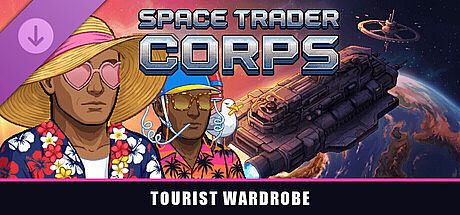
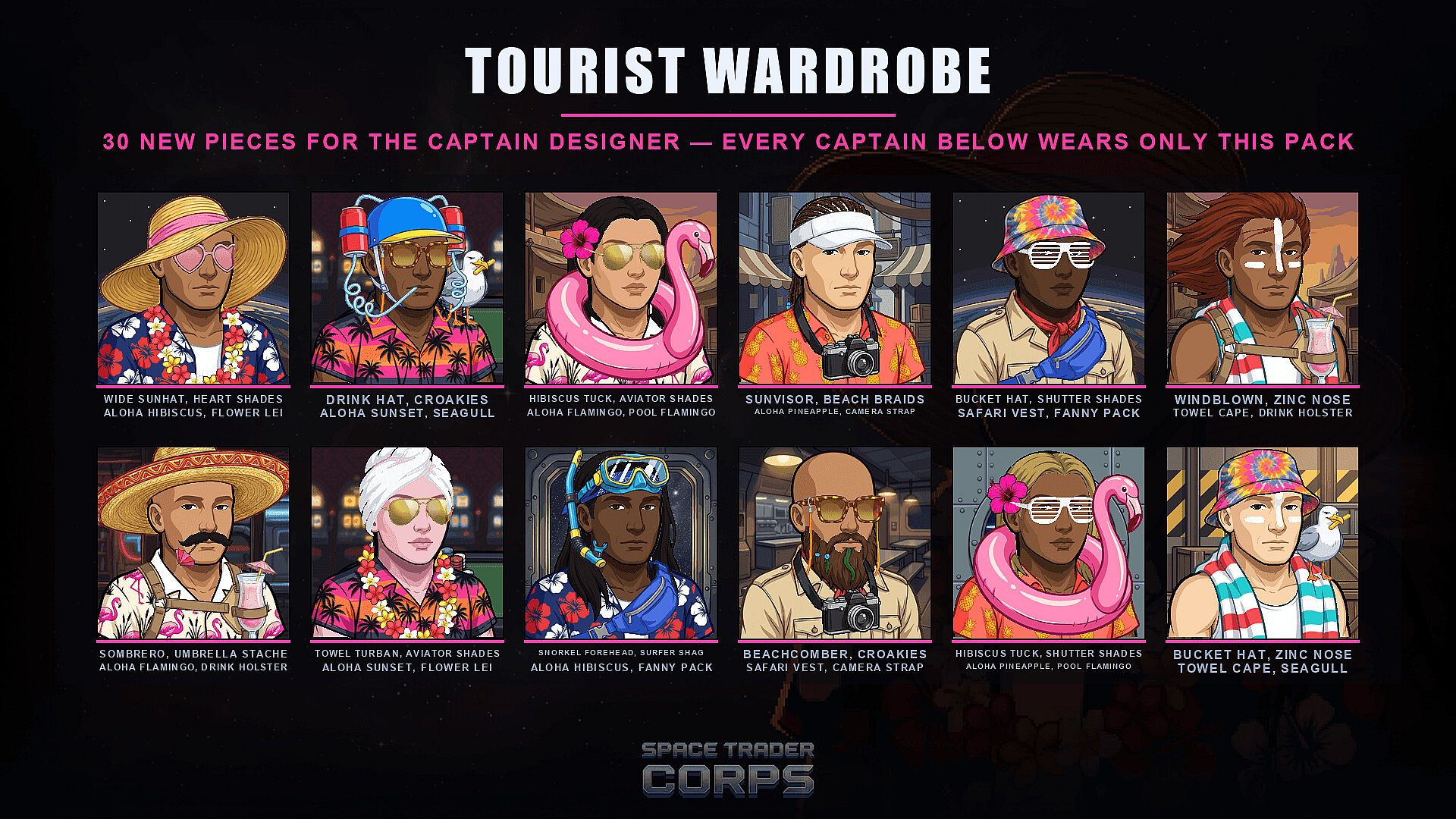
Customization appears in the Captain Designer, accessed through Captain's Status. The Tourist Captains Garb pack expands this system with thirty new pieces that mix freely with existing options. Outfits include four aloha shirts in distinct patterns, a safari jacket, and a beach towel cape. Headwear ranges from sun hats and visors to a sombrero and drinking helmet. Face items cover braids, tucked flowers, windblown hair, beards, shades, and zinc stripes. Carried accessories feature leis, cameras, fanny packs, cocktail rigs, and an inflatable flamingo ring. All items remain purely cosmetic, apply account-wide, and appear on portraits across mail, rankings, and tables.
Game Modes
Space Trader Corps supports both PvE and PvP interactions within the same persistent galaxy. Trading and automation run as ongoing activities that any player can pursue solo or alongside friends. PvE elements include asteroid mining, alien encounters, and planetary development against environmental or NPC threats.
PvP surfaces through direct competition for cargo, territory, or resources. Rival captains can observe and challenge built empires, leading to drone engagements or convoy ambushes. Piracy offers an alternative path where players target shipments or defend against others attempting the same. The shared economy means every trade or conflict influences prices for the entire player base.
Customization and Progression
Beyond core systems, the game emphasizes visual identity through the Captain Designer. Cosmetic additions like those in Tourist Captains Garb allow captains to reflect a relaxed or thematic style while retaining full functionality in flight suits or combat gear. These changes persist across all regions and interactions without affecting gameplay balance.
Progression spans ship tiers, fleet automation, and planetary empires. Achievements track seventy-three milestones tied to trading volume, colonization scale, and combat successes. The galaxy remains active regardless of individual login status, so automated operations and rival actions continue in the background.
Is It Worth Playing?
Space Trader Corps suits players who enjoy economic simulation, fleet management, and open-ended multiplayer competition in a space setting. The living economy and automation features reward long-term planning and route optimization. Colonization and combat layers add depth for those interested in empire building or defensive play.
As a recently released title with limited reviews available, the game shows promise in its core systems but lacks extensive player feedback on balance or long-term retention. Those drawn to persistent trading loops and player-driven markets will find the most immediate appeal, while others may prefer waiting for more community data before committing.