

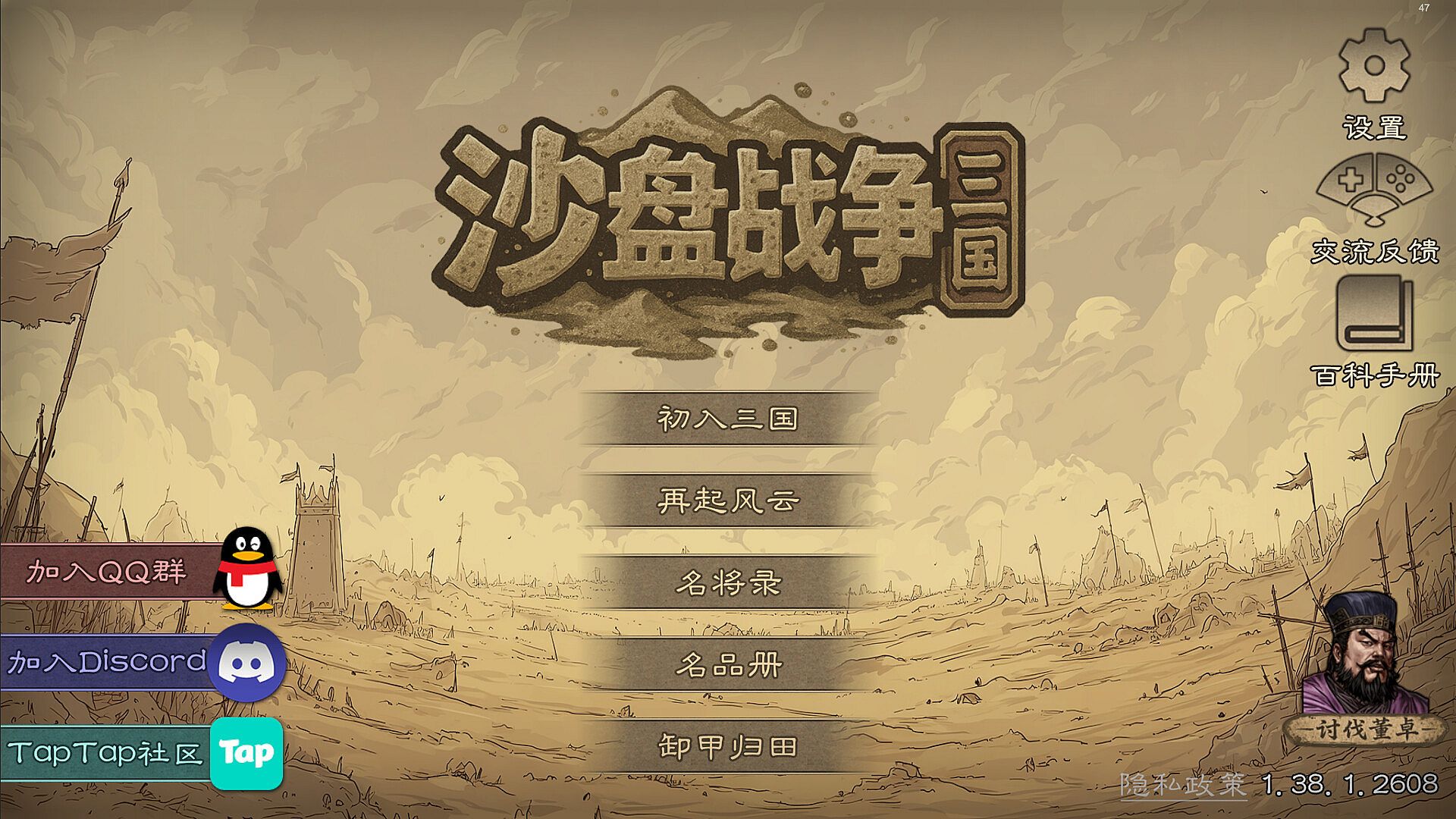
SandTable War: Three Kingdoms is a strategy simulation game set in the Three Kingdoms period of Chinese history. Players take control of historical factions on a large strategic map, managing cities, officers, resources, and conquests to unify the realm through a pure sandbox approach that resembles tabletop wargaming.
Gameplay
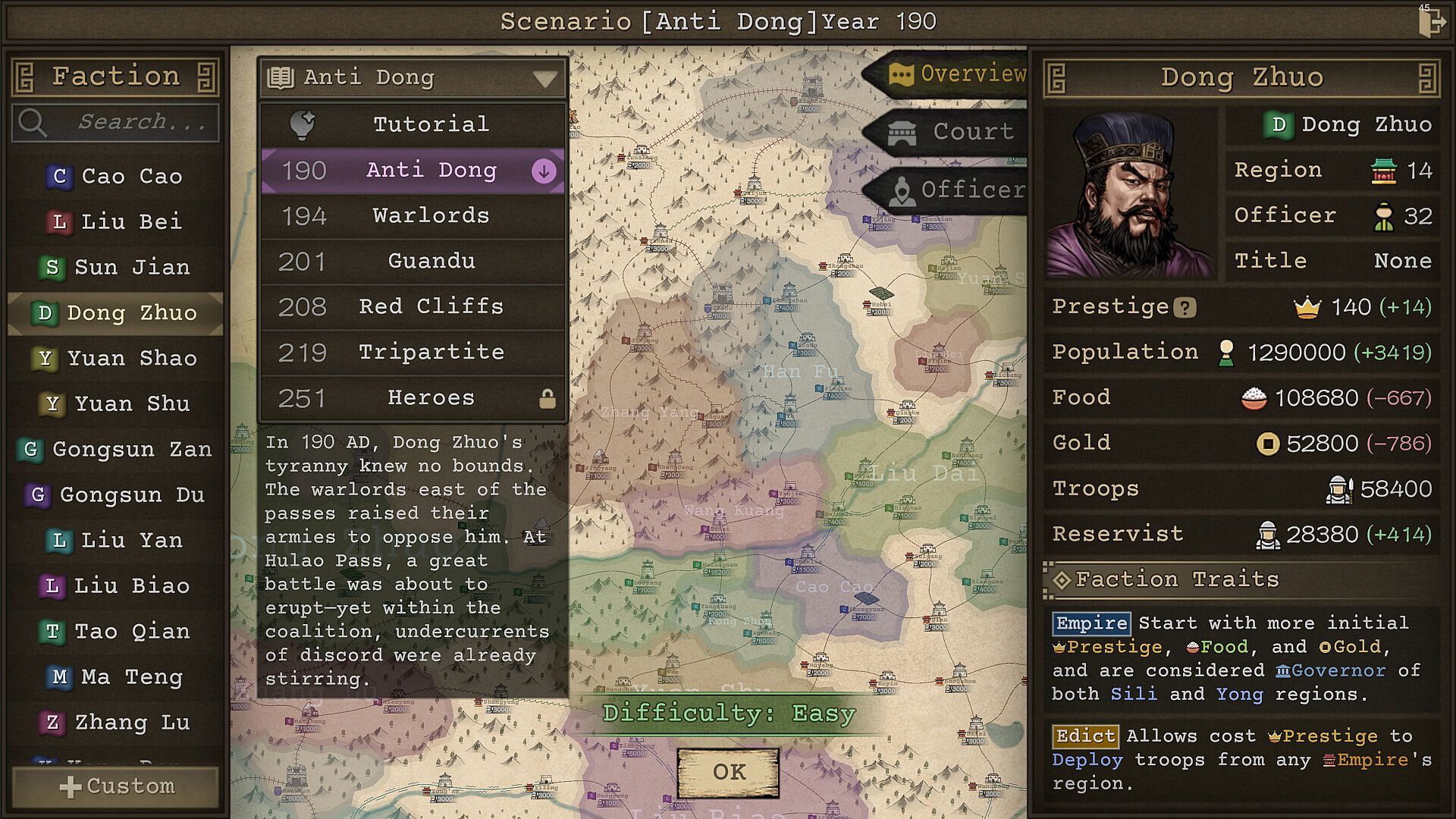
The core loop centers on high-level strategic decisions across a map featuring over 160 regions and cities. Factions expand territory by conquering locations while balancing civil and military management in each area. This includes adjusting taxes and conscription levels to maintain output and public order.
Officers play a central role, with more than 400 historical figures available across the game. Each brings unique traits that influence city development, and players recruit and appoint them to key positions. Equipment and items further modify officer attributes and abilities to support long-term strategies.
Regional buildings, numbering over 20 types, allow development of productivity in conquered areas. The system emphasizes empire management through governors and related mechanics introduced in specific scenarios. Diplomacy, internal politics, and resource allocation form the foundation of progress, with warfare resolved at the strategic level rather than through direct tactical battles or cutscenes.
Game Modes
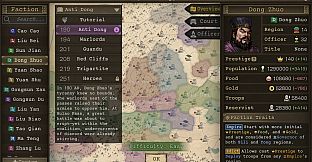
Play revolves around multiple historical scenarios that place players in different eras and conflicts. Each scenario offers a distinct starting position and set of objectives, such as the free DLC titled Campaign against Dong Zhuo, which unfolds in 190 AD amid coalition efforts against tyranny at Hulao Pass.
In that scenario, 23 factions become playable, including seven new featured ones like Dong Zhuo, Han Fu, Kong Zhou, Liu Dai, Liu Yu, Zhang Chao, and Wang Kuang. The base game supports over 10 factions with their own characteristics. New officers such as Sun Jian, Hua Xiong, Li Ru, and Pan Feng join the roster, alongside an Empire system that incorporates governor-related mechanisms.
Scenario-specific content includes 12 new achievements, three of which are hidden, and an exclusive background music track. The overall structure supports sandbox-style play where players pursue unification through varied paths of expansion and administration.
Historical Context and Factions
Scenarios draw directly from documented events and figures of the era. Players navigate alliances and rivalries among warlords while developing provinces through construction and officer assignments. The 10-plus base factions each carry distinct traits that shape available strategies for growth and conflict.
Expansion in the Campaign against Dong Zhuo scenario broadens options significantly, introducing fresh officers and mechanics tied to the coalition's internal tensions. This setup encourages repeated playthroughs to explore different faction paths toward dominance.
Is It Worth Playing?
The game suits players who enjoy grand strategy simulations focused on map management, officer development, and long-term empire building without real-time tactical combat. Its indie scale and sandbox freedom appeal to those interested in the Three Kingdoms setting through a tabletop-inspired lens.
Availability of a free demo allows direct testing of the core systems. The addition of the Campaign against Dong Zhuo scenario expands content with new factions, officers, and mechanics at no extra cost. Those seeking deep historical strategy with emphasis on administration and conquest will find the verified features align well with that preference.