

Idle Demon Lord II is a single-player idle strategy RPG that blends automatic combat with dark fantasy loot progression on PC. Players select from multiple classes and focus on long-term character growth through equipment customization and repeated challenges rather than direct control of every action.
Gameplay
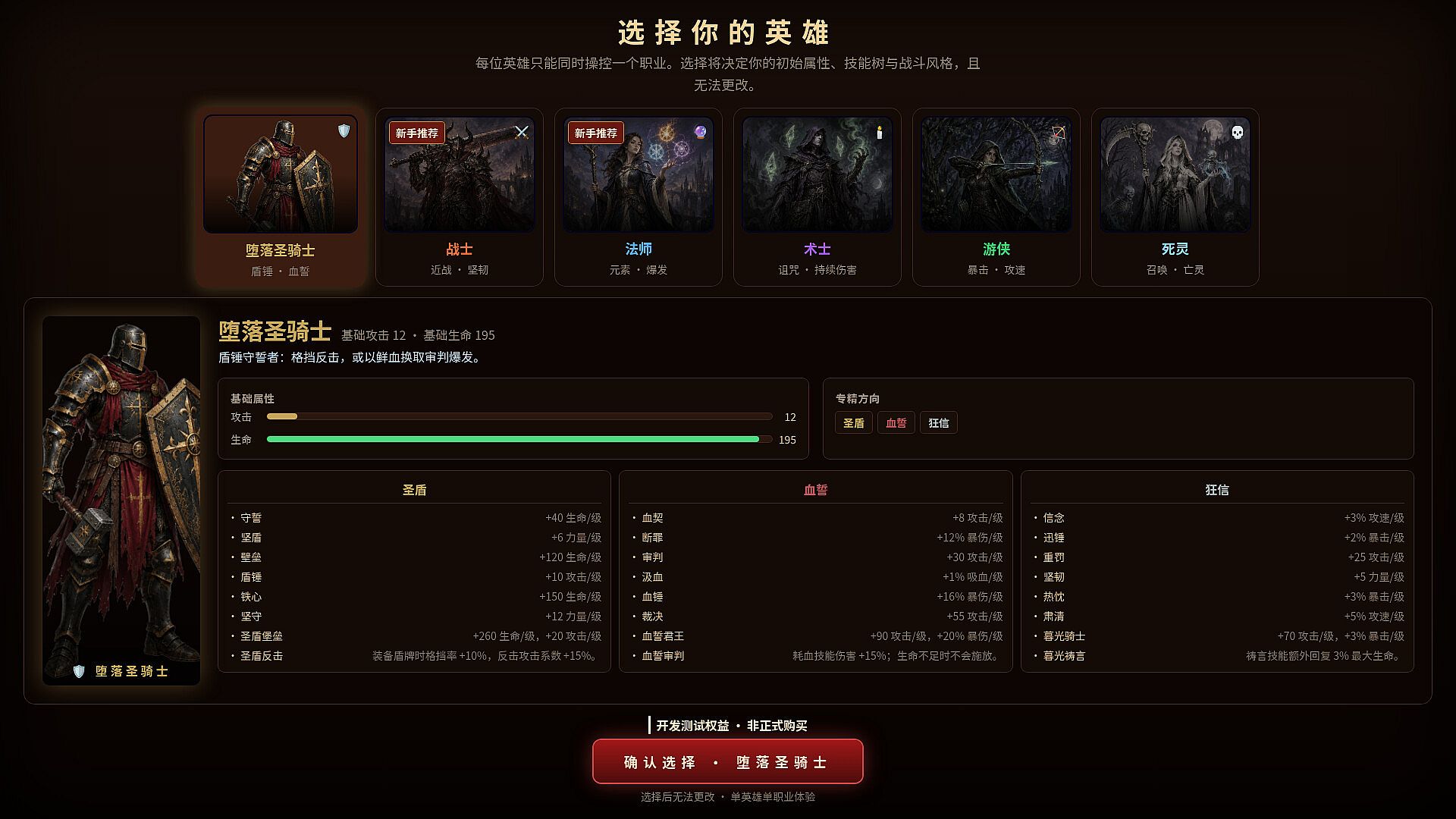
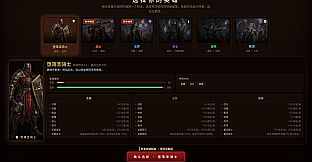
The core loop centers on automatic battles that continue even when the game is closed, generating gold, experience, and gear drops in the background. Upon returning, players manage inventory, refine equipment through affixes, gems, runes, and Legendary Powers, then push into higher difficulties. Each class maintains its own skill tree and equipment preferences, with distinct combat animations and mechanics that shape build decisions. The Fallen Paladin class expansion introduces a new option built around shield and warhammer use alongside blood-oath abilities. This class emphasizes blocking incoming attacks for retaliation damage and spending life resources for powerful bursts while managing recovery. Two distinct progression paths exist: one focused on Sacred Shield Retaliation that converts blocks and counters into offensive opportunities, and another centered on Blood Oath Judgment that trades health for damage spikes balanced by survival tools. Class-specific legendary sets and a dedicated skill tree expand endgame options for both new and existing characters.
Game Modes
Progression revolves around several persistent challenge systems. The Greater Rift offers an endless scaling dungeon where higher tiers improve drop quality and introduce unique rewards. The Ladder provides fixed-floor trials that test build strength and strategy across increasing difficulties, including a Hell variant. World Bosses rotate on a two-hour schedule with six distinct encounters, each featuring a five-minute window and guaranteed high-value drops on first kills. Hell Tide events activate hourly for thirty minutes, raising monster strength alongside improved loot bonuses during the window. These systems encourage repeated sessions focused on optimization rather than one-time story completion.
Class Builds and Progression
Equipment spans eleven slots across six rarity tiers, supported by hundreds of affixes that allow fine-tuned stat adjustments. Gems and runes add further layers of customization, while set bonuses and Legendary Powers enable synergistic combinations. Rebirth and ascension mechanics reset certain progress for permanent gains, feeding into an endgame Paragon-style board for continued node-based advancement. The Fallen Paladin integrates into this framework with its own equipment preferences and skill options, providing fresh choices for players seeking tankier or life-drain focused playstyles alongside the existing Warrior, Mage, Warlock, Ranger, and Necromancer options.
Current State and Updates
The base game launched in late October 2026 and receives regular patches addressing balance, display issues, and quality-of-life improvements. The Fallen Paladin expansion arrived as a recent update, adding the class, its skill tree, and associated legendary items to the available roster. All content remains single-player with no multiplayer components, and the experience continues to receive support through bug fixes and feature refinements.
Is It Worth Playing?
Player reception sits in the Mostly Positive range based on available reviews, with many appreciating the offline progression and depth of equipment crafting. The game suits individuals who enjoy idle systems combined with strategic build experimentation and repeated loot-focused runs. Those seeking direct combat control or social features will find less appeal, while fans of dark fantasy ARPG progression without constant input can find satisfying long-term engagement through the class variety and scaling challenges. The recent addition of the Fallen Paladin further expands options for new or returning players interested in retaliation and life-management mechanics.