













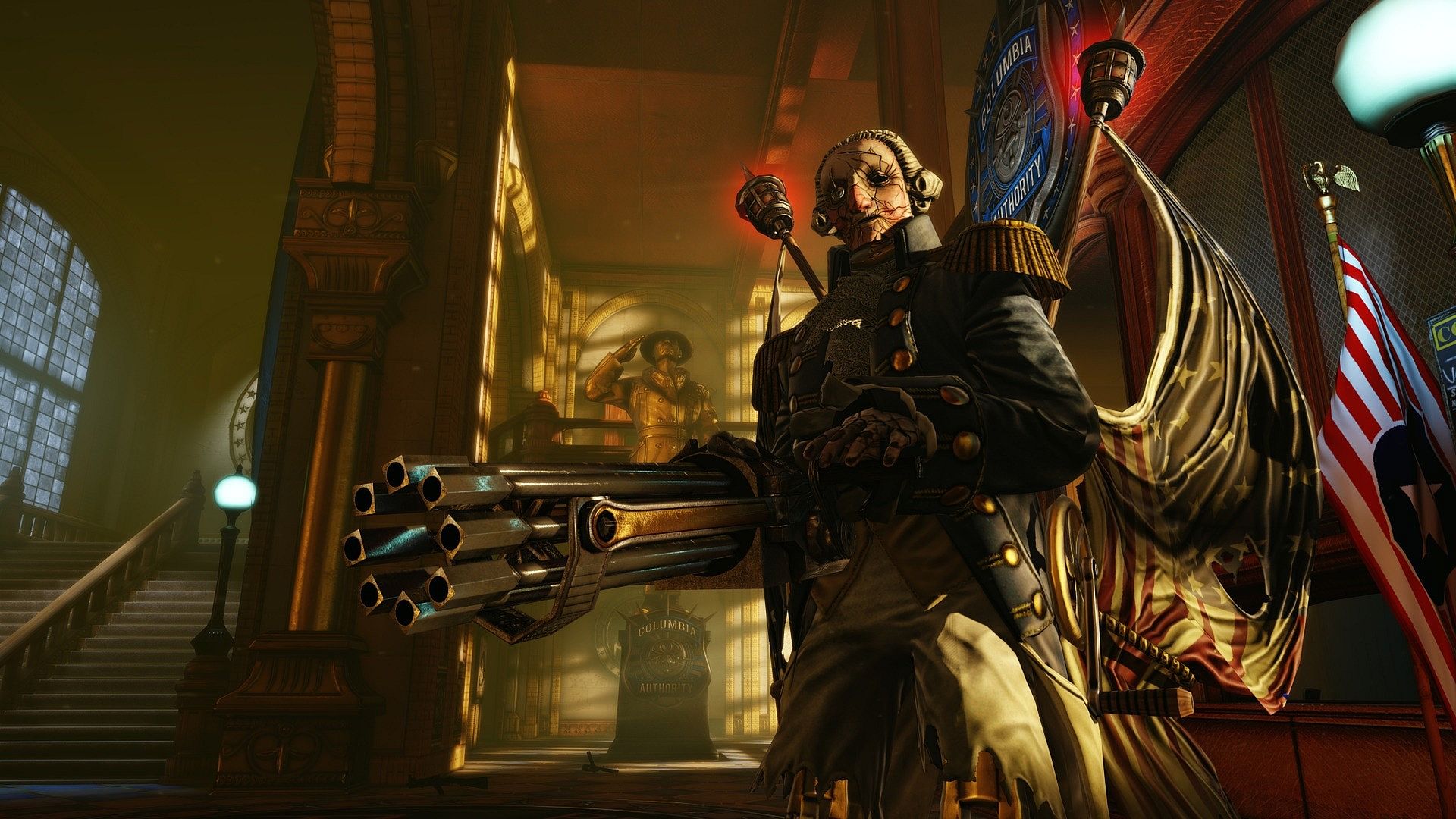
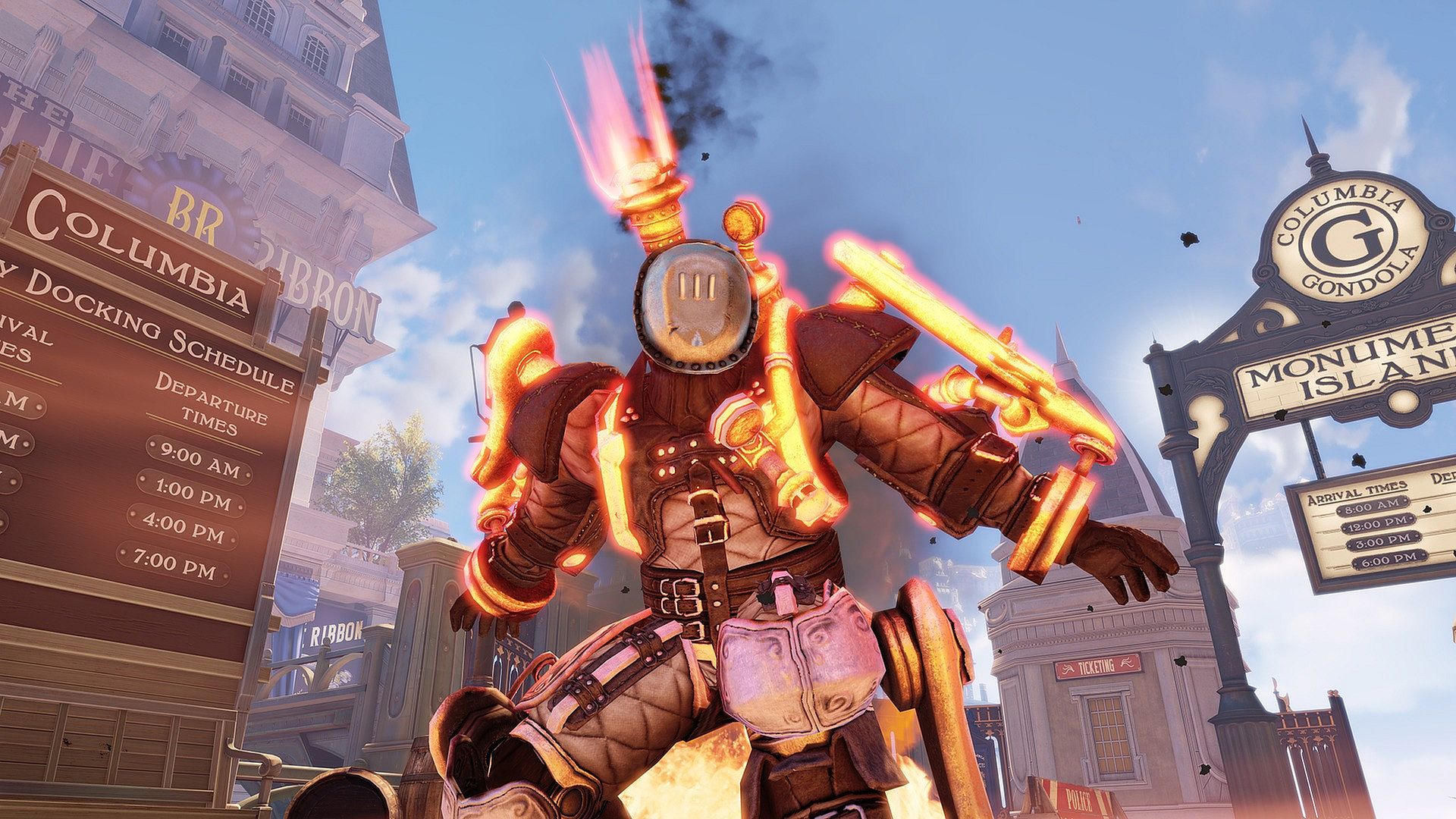

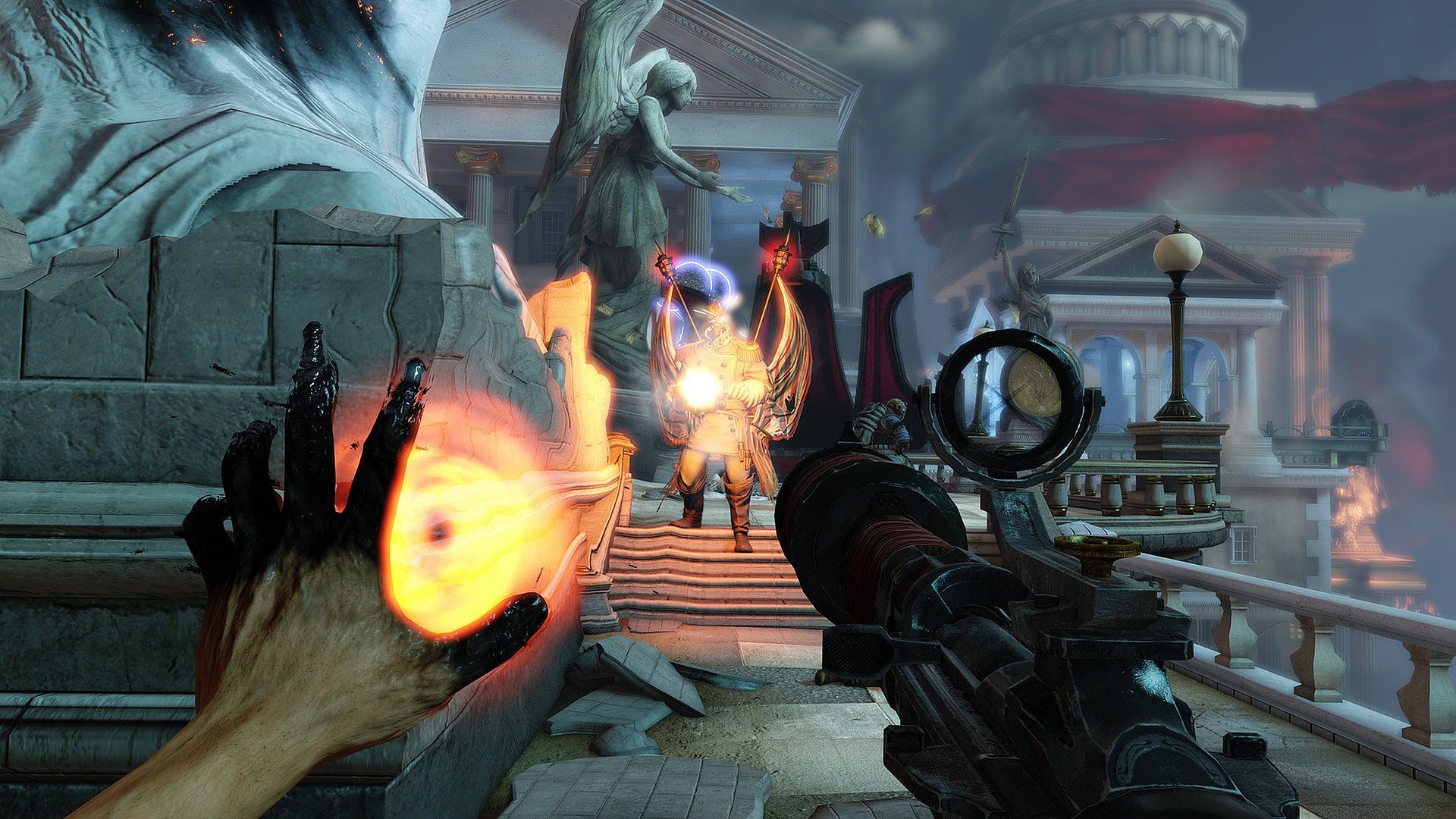
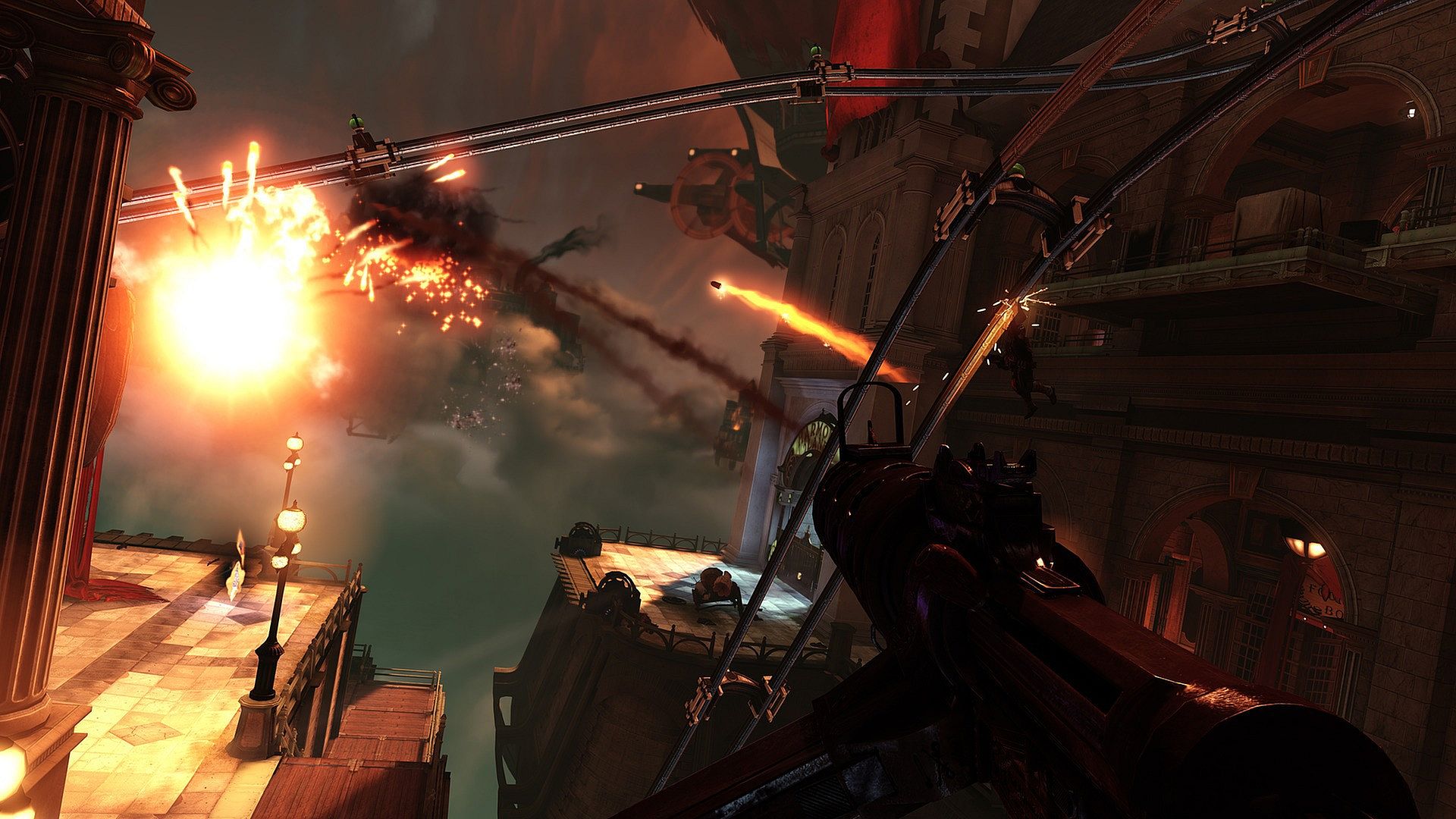
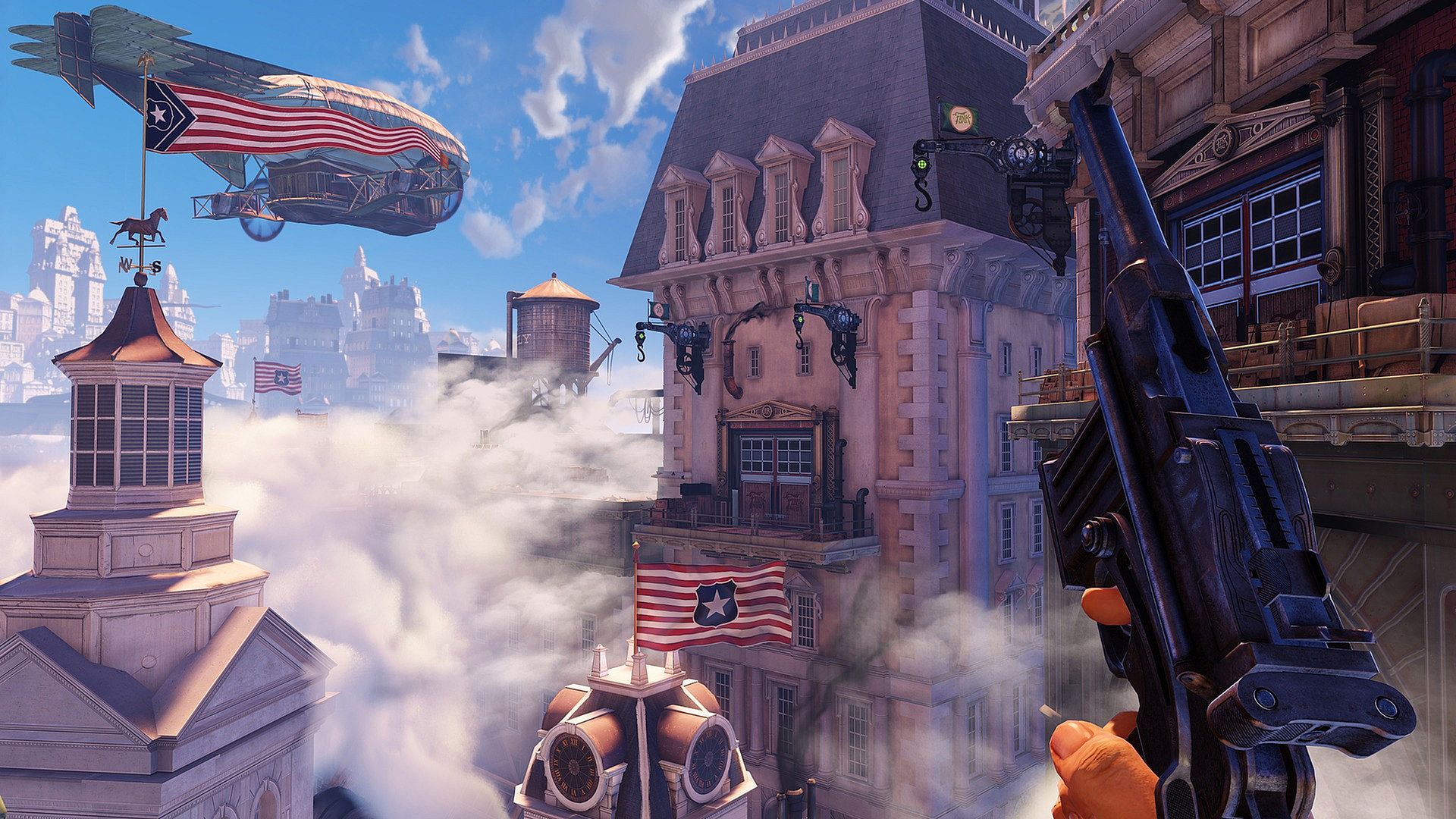

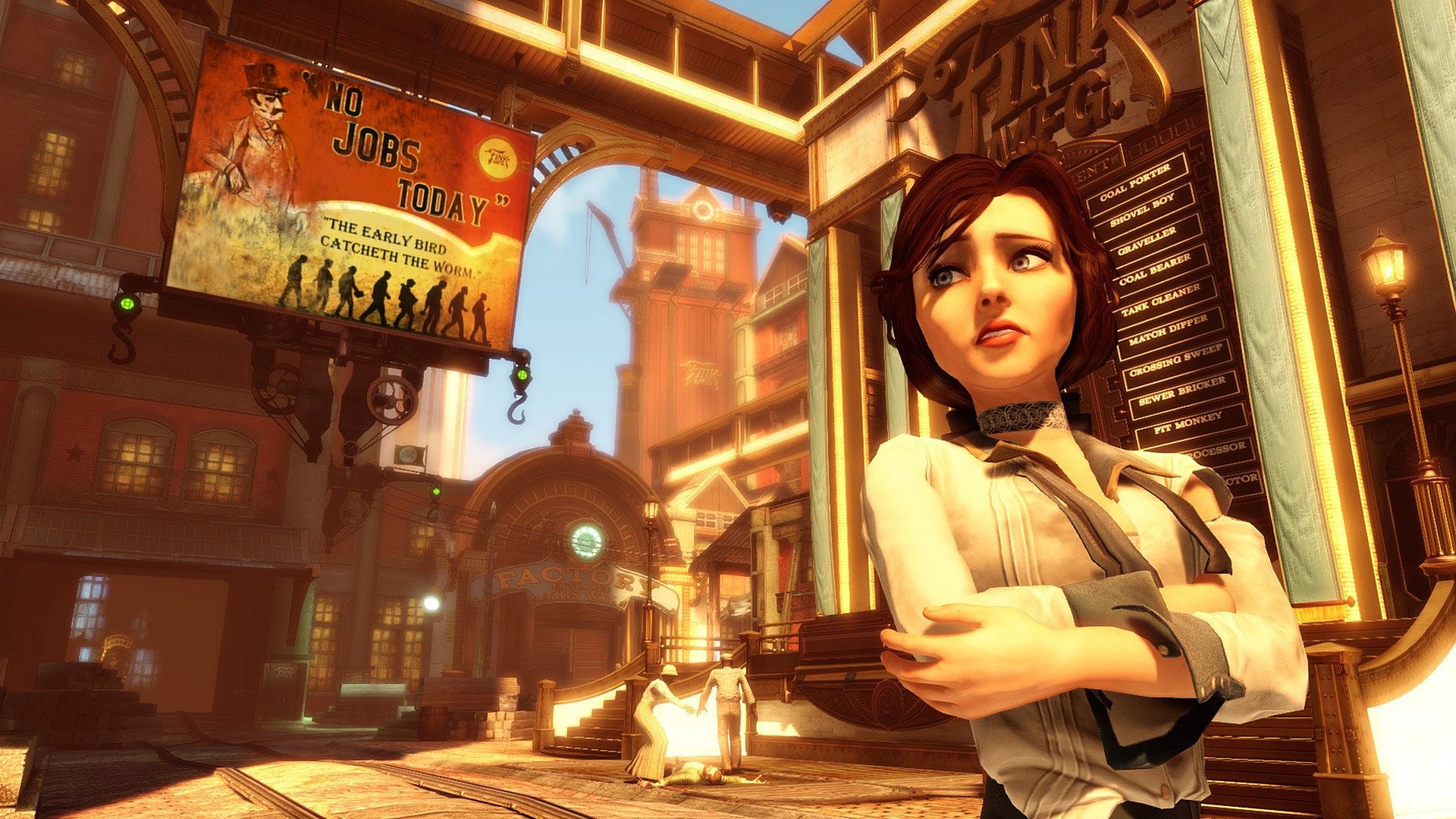








BioShock Infinite stands as a first-person shooter that places players in the role of Booker DeWitt, navigating the floating city of Columbia through a focused single-player campaign. The experience blends gunplay with supernatural abilities known as vigors, allowing combat to unfold across both tight interiors and expansive open areas connected by aerial rail systems.
Gameplay
Core mechanics revolve around collecting and upgrading an arsenal of firearms while acquiring vigors that deliver elemental effects such as electricity or fire. These powers combine with standard shooting to create layered encounters where positioning matters. A distinctive skyline system lets players latch onto rails for rapid movement between structures, enabling attacks from above or quick repositioning during fights. Gear items further customize play by granting bonuses to damage output, movement speed, or resource gathering. Specific pieces like Handyman Nemesis, Sugar Rush, Fleet Feet, Bull Rush, Extra! Extra!, and Betrayer alter how encounters resolve by emphasizing certain playstyles over others. Starting with 500 Silver Eagles provides immediate currency for purchases, while five lockpicks ease early exploration of locked containers scattered through Columbia. Two specialized weapon upgrades, Comstock's China Broom Shotgun and Comstock's Eagle Eye Sniper Rifle, enhance close-range power and long-range precision respectively.
Infusions serve as permanent upgrades that improve health, shield capacity, or vigor effectiveness, encouraging players to explore thoroughly for these collectibles. Combat demands adaptation because enemy types vary in behavior and resilience, pushing use of cover, skyline swings, and vigor combinations rather than relying on a single tactic. The campaign structure moves through distinct districts, each presenting fresh environmental challenges that reward experimentation with the available tools.
Game Modes
The primary mode consists of the full single-player campaign, which unfolds as a linear yet choice-influenced narrative journey. Difficulty settings adjust enemy aggression and resource scarcity across Easy, Medium, and Hard options. A separate 1999 Mode unlocks after initial completion or via specific input, enforcing stricter rules that limit saves and increase overall challenge to test mastery of the systems. No separate multiplayer or cooperative modes exist, keeping the focus entirely on solo progression through Columbia's environments and conflicts.
Exploration and Progression
Progression ties directly to scavenging resources and discovering hidden items that enhance capabilities over time. Vigors and weapons receive upgrades through purchases or found blueprints, while gear selection happens at specific stations to tailor loadouts before major sections. The skyline encourages vertical thinking, turning traversal into an active part of combat rather than simple movement. Players encounter a mix of human adversaries and more unusual threats that require different approaches, such as prioritizing certain vigors for crowd control or using upgraded firearms for distant targets. This loop of exploration, resource management, and combat refinement keeps sessions engaging across the campaign length.
Is It Worth Playing?
BioShock Infinite appeals to those who enjoy narrative-driven first-person shooters that integrate ability-based combat with distinctive movement mechanics. The campaign delivers consistent variety through its environments and enemy encounters, supported by the ability to experiment with vigor and weapon pairings. The included starting resources and gear options from Columbia's Finest reduce early friction for new players while adding meaningful customization that influences later fights. Those who prefer pure action without multiplayer elements or ongoing seasonal content will find the complete experience self-contained and replayable through different difficulty settings and gear choices. The title suits players seeking a polished single-player adventure focused on atmosphere and mechanical depth rather than competitive or live-service formats.