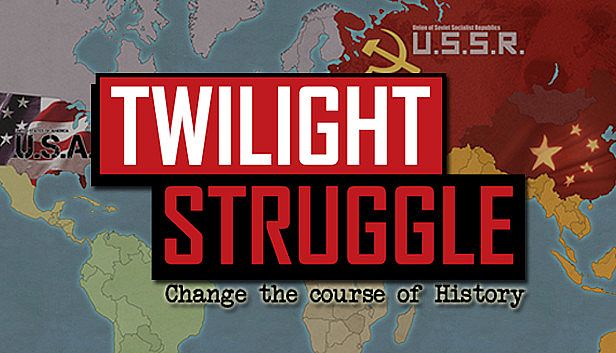















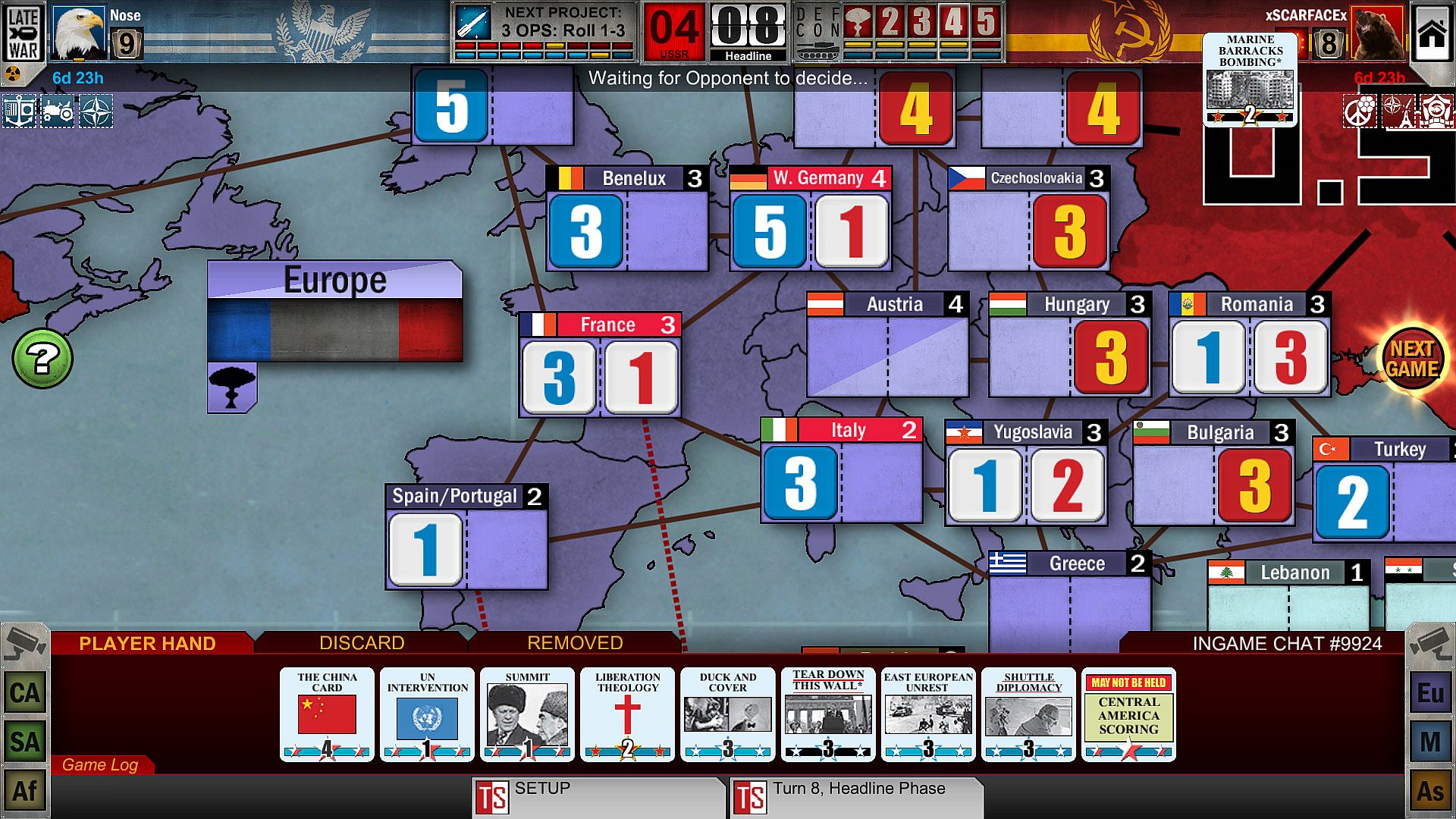
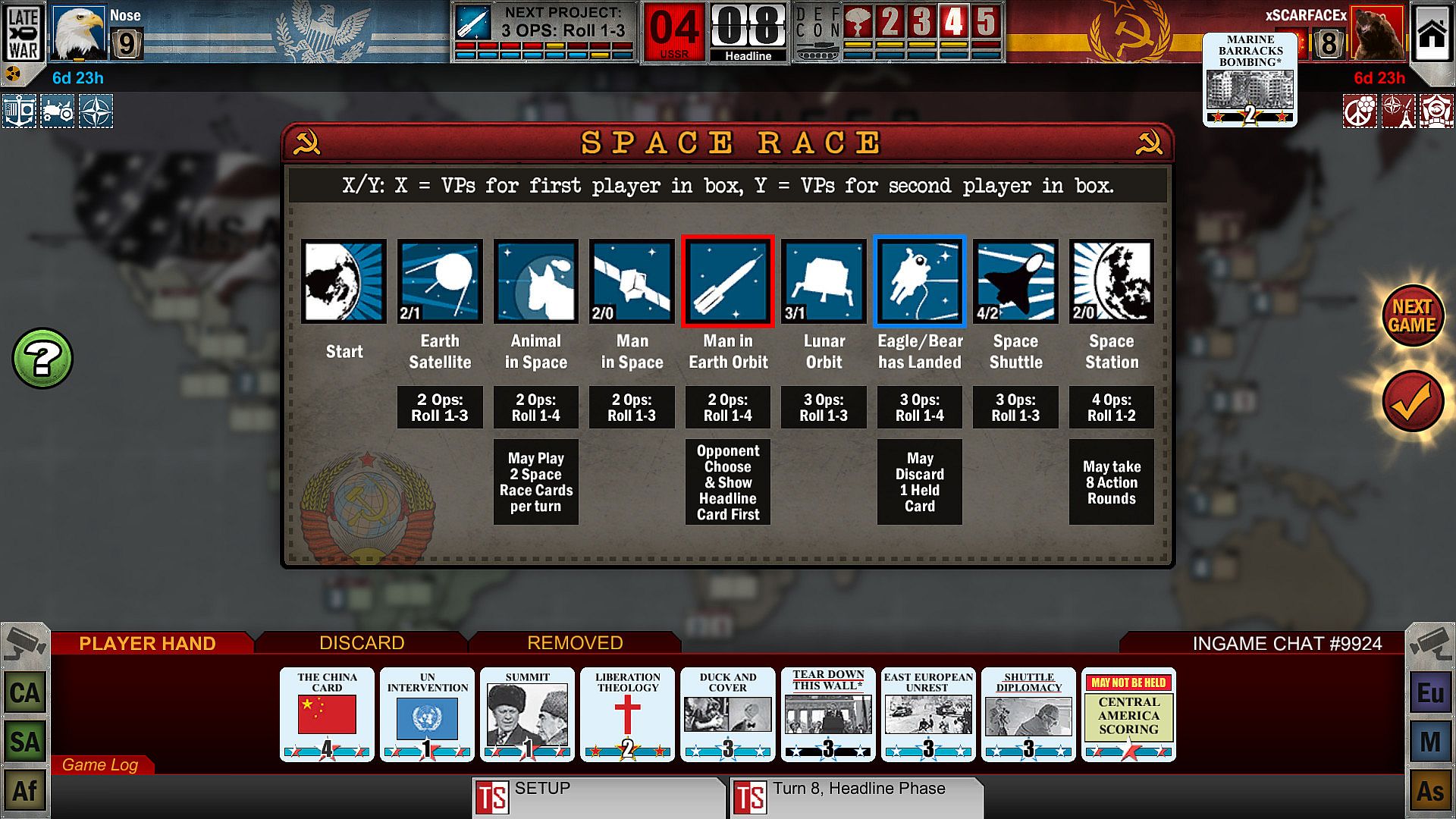
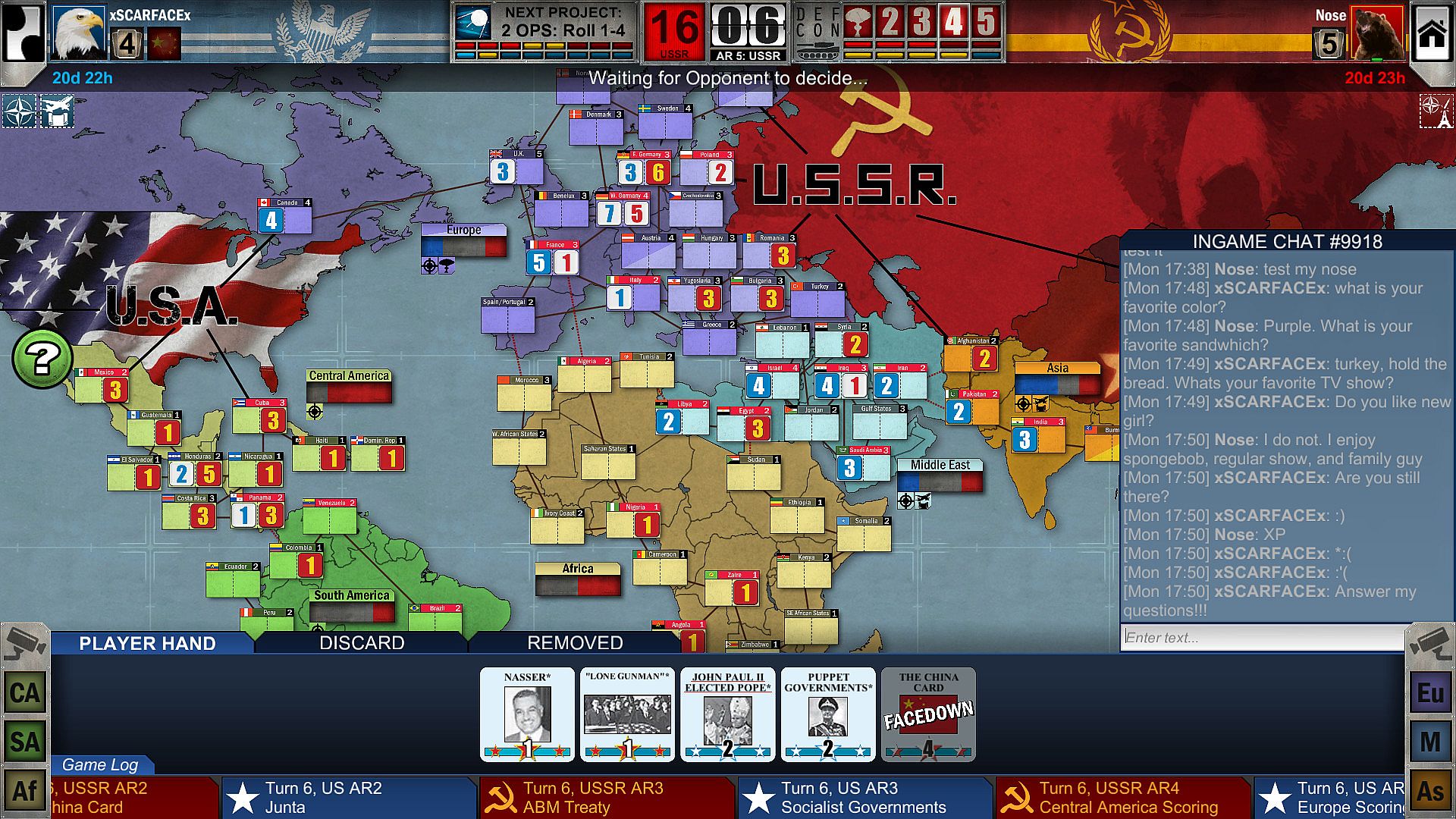
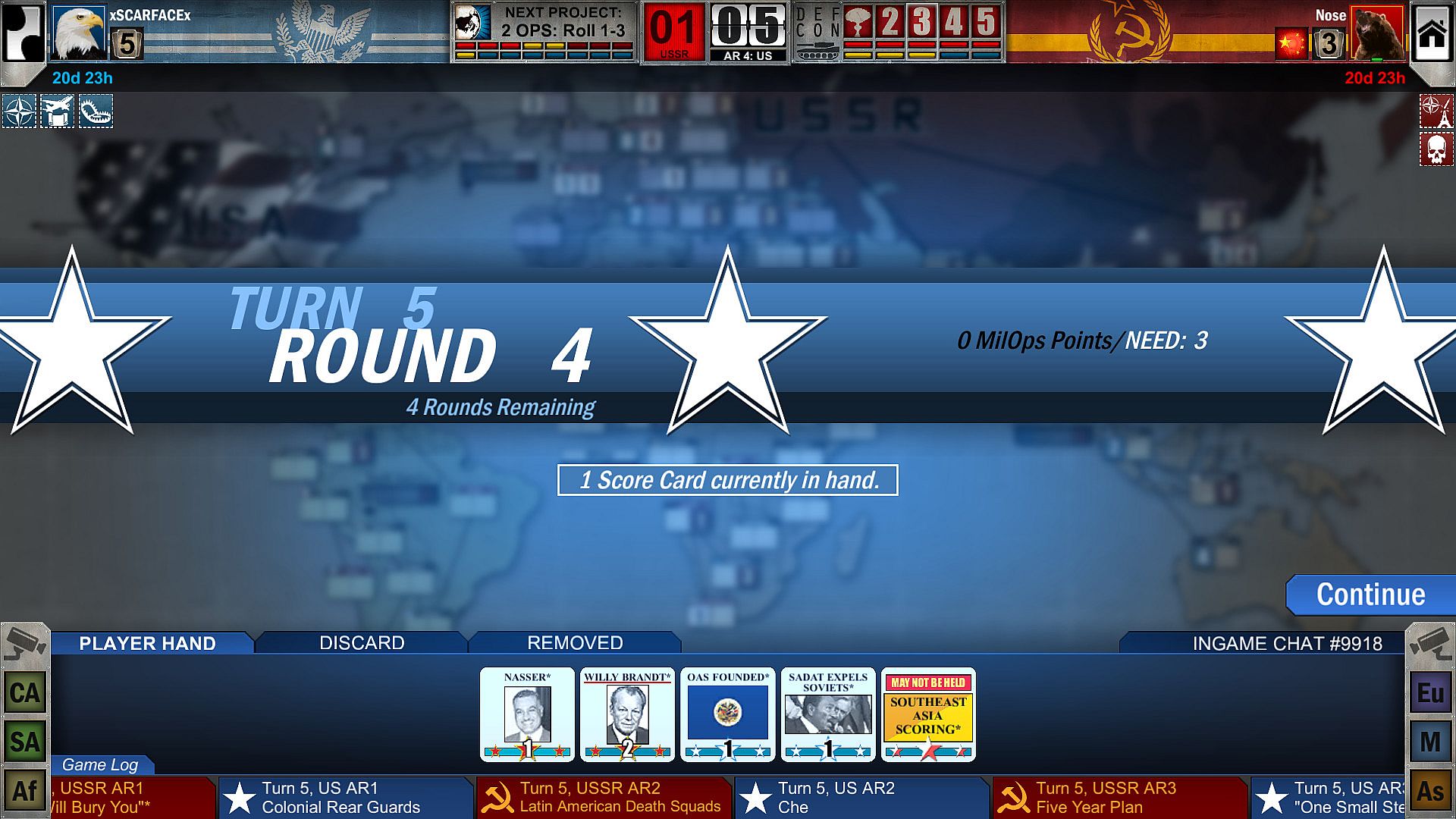
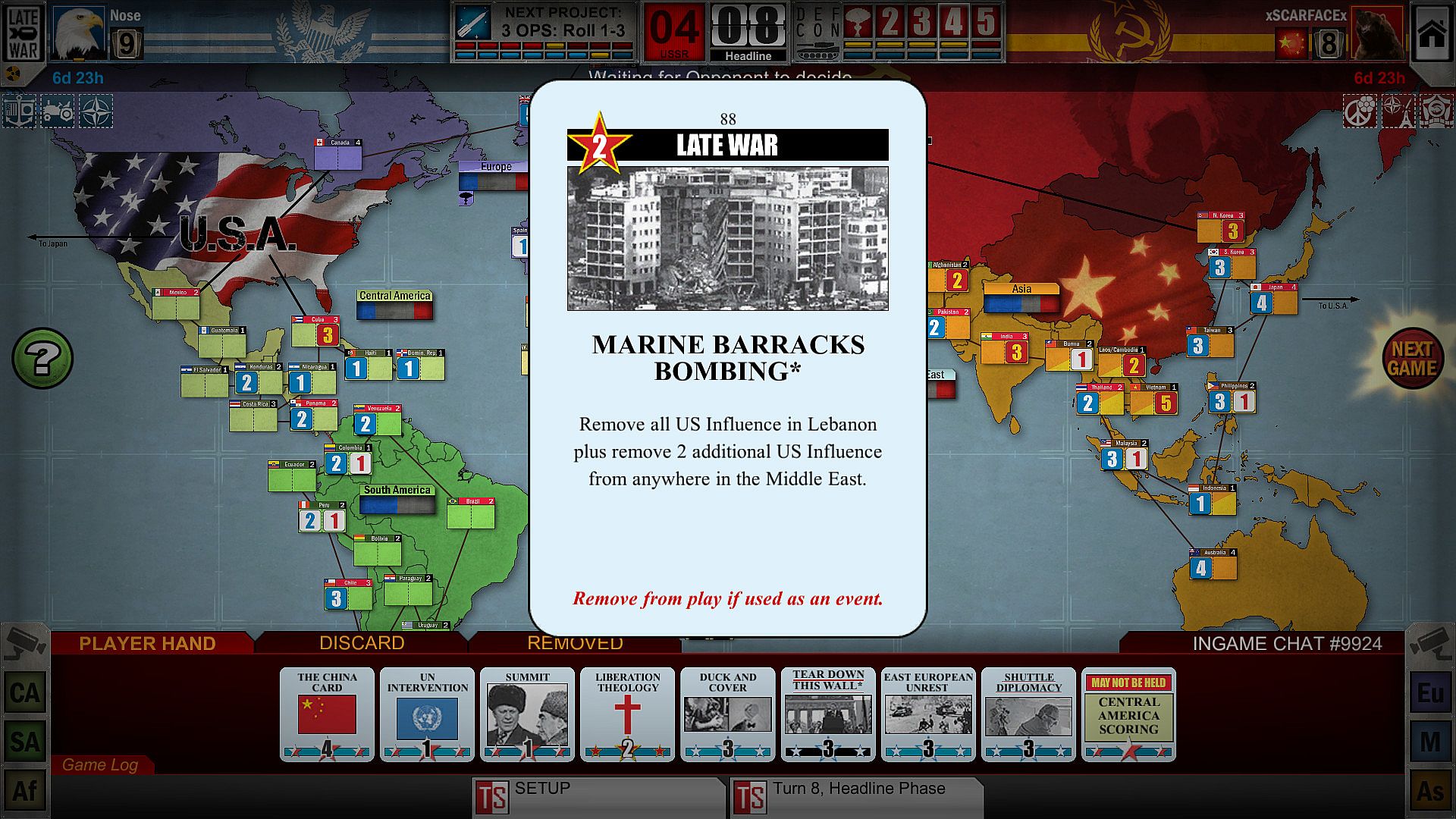
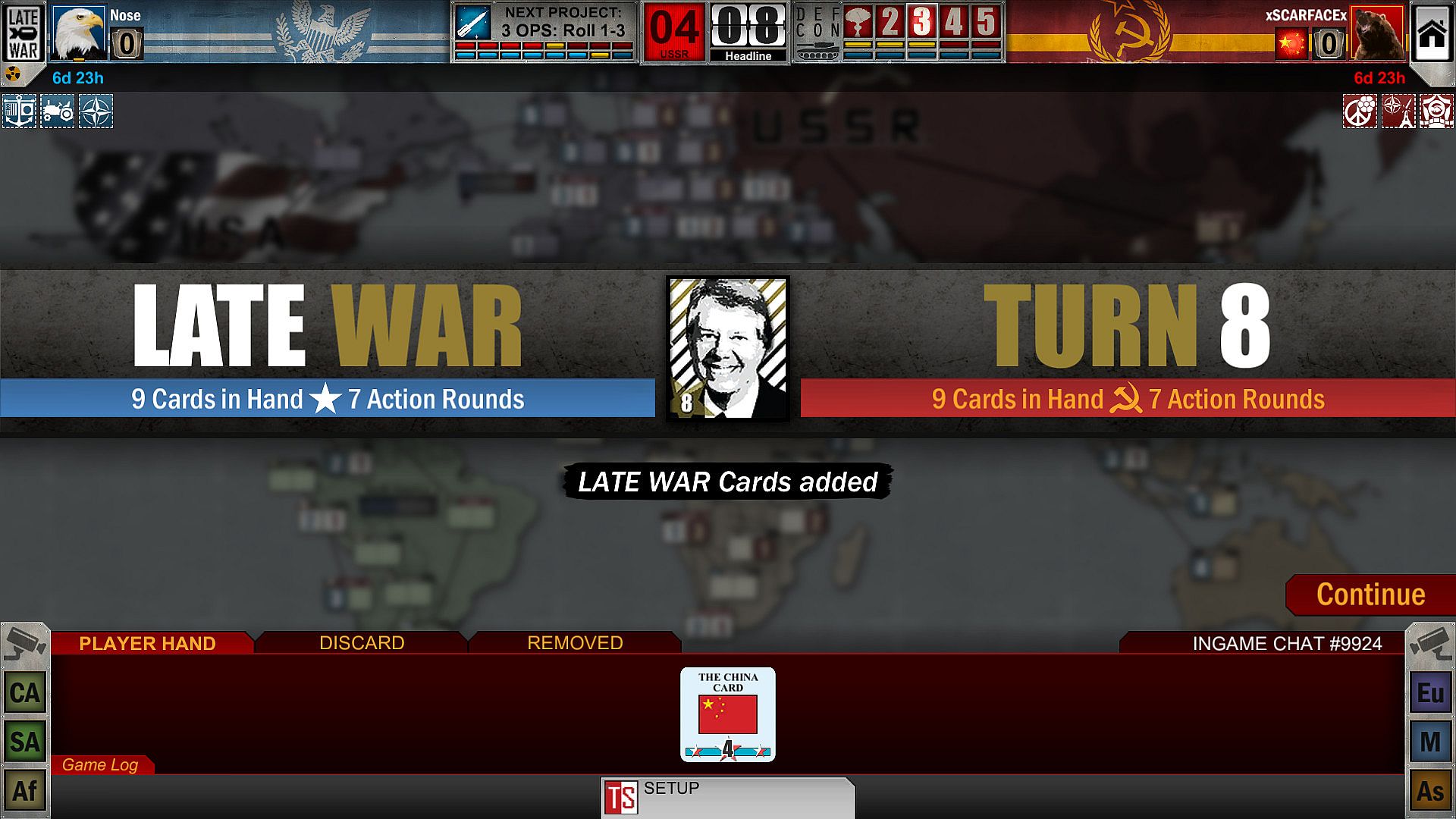
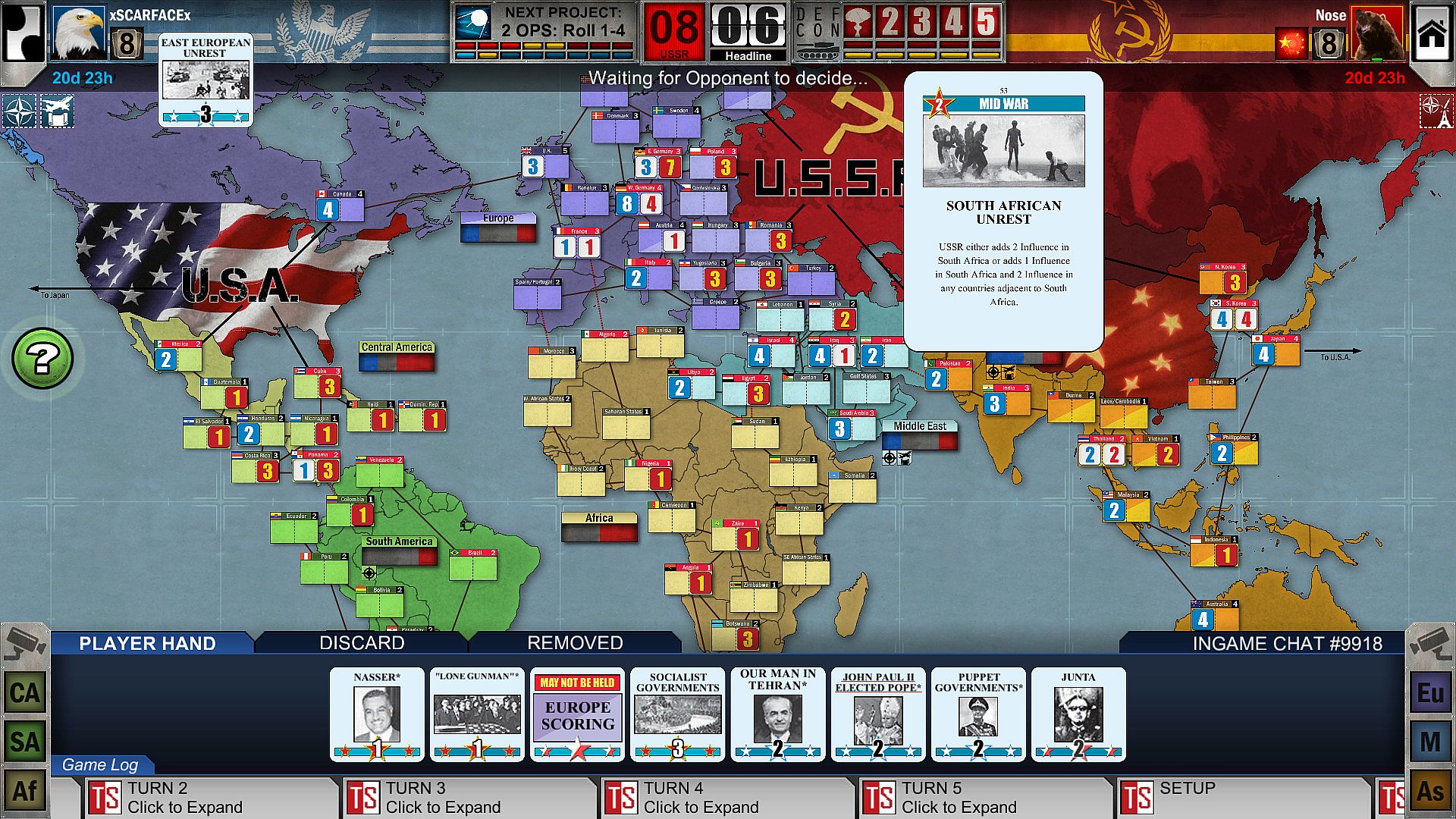
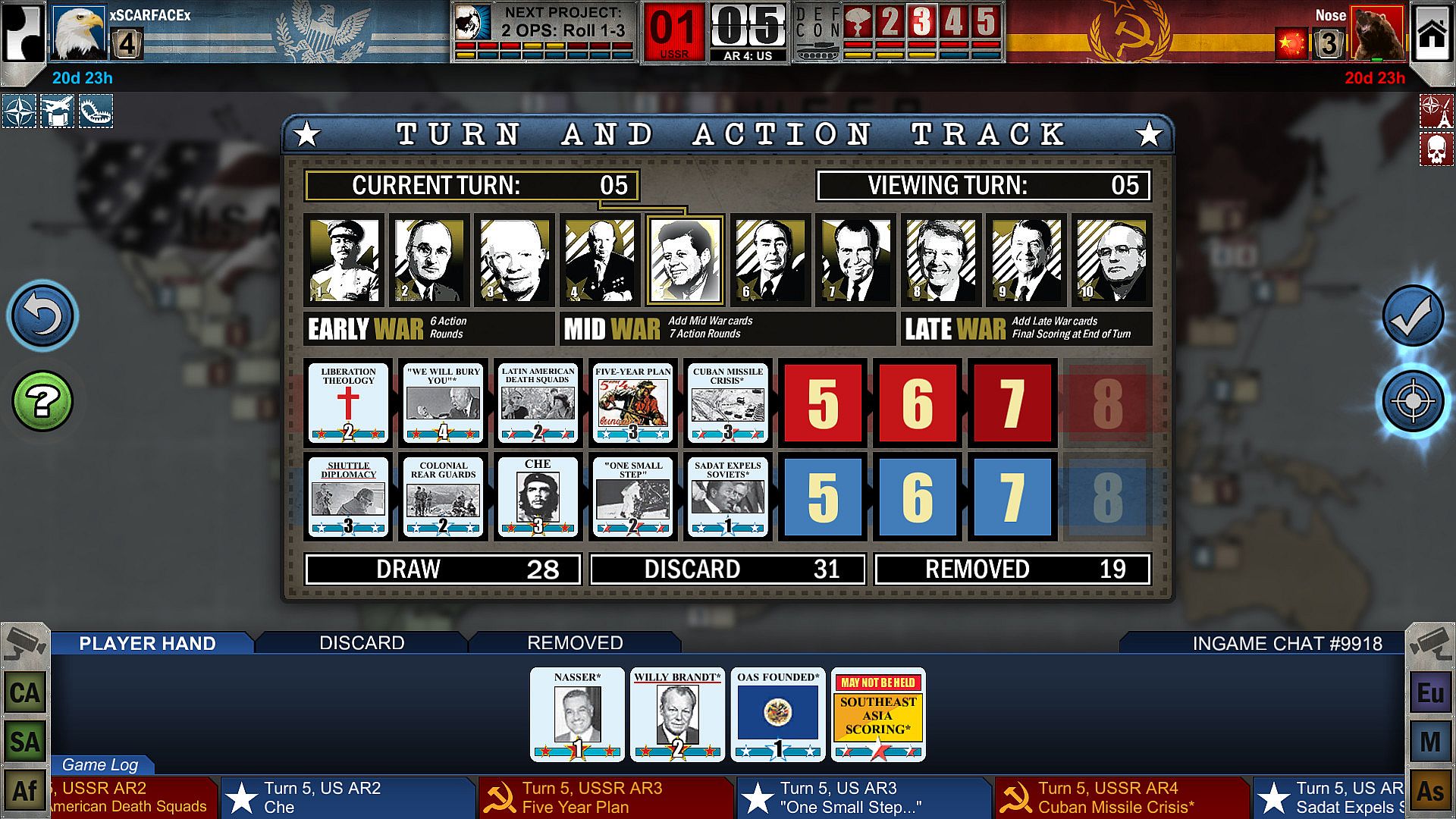
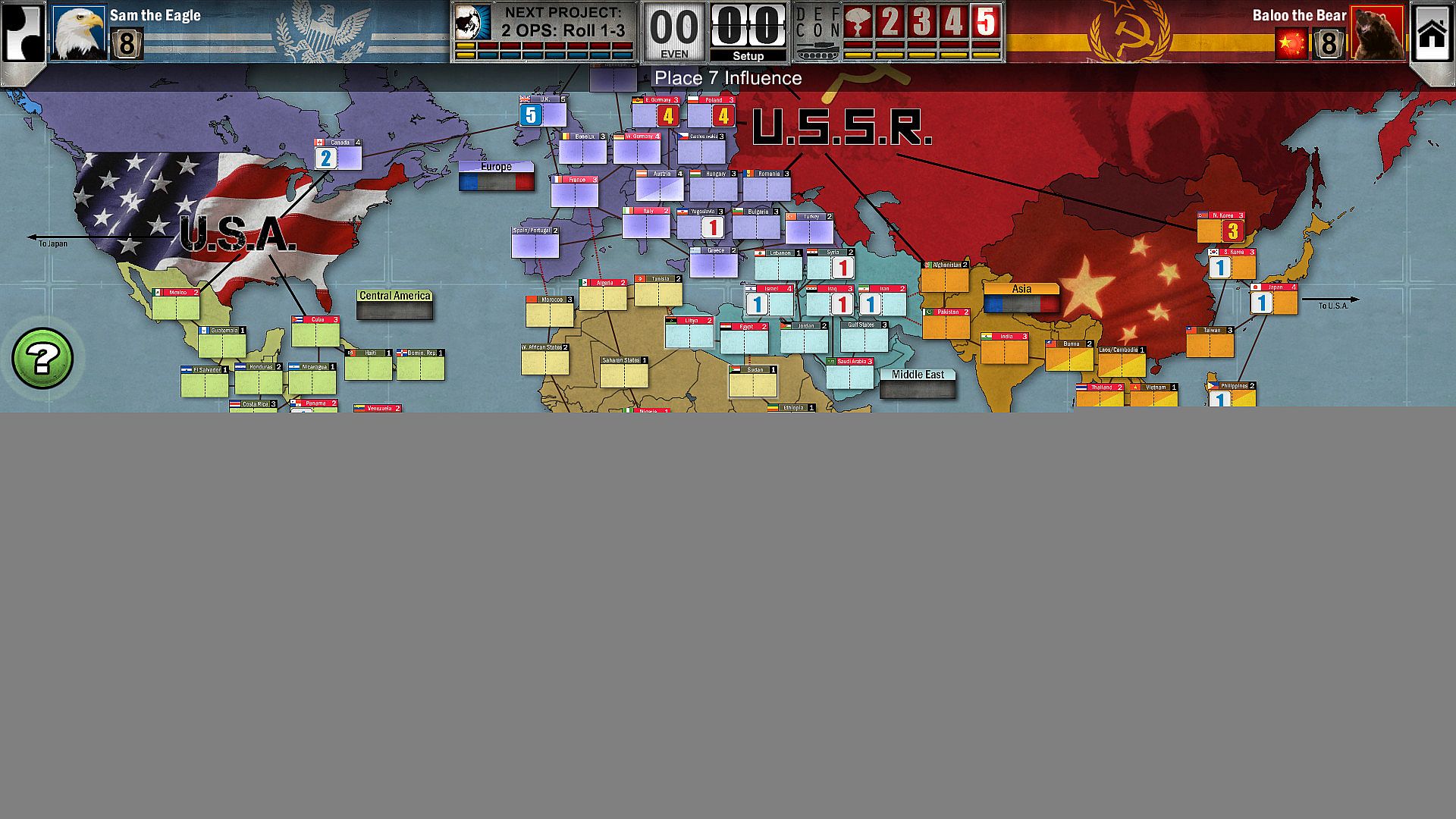
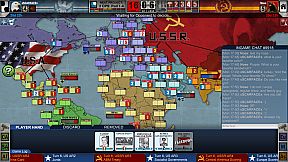
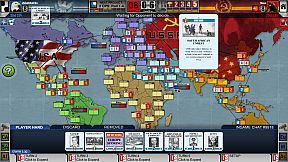
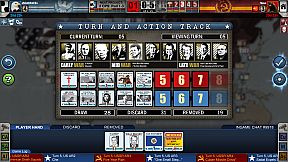
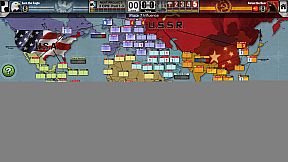
Twilight Struggle is a strategy simulation game set during the Cold War, where two players compete as the United States or the Soviet Union for global influence. The experience centers on a period-accurate world map divided into regions, with gameplay revolving around the deployment of influence markers and the resolution of historical events through card play. Each session unfolds differently because the deck incorporates dozens of real occurrences from the era, ranging from regional conflicts to major crises that shaped superpower relations.
Gameplay
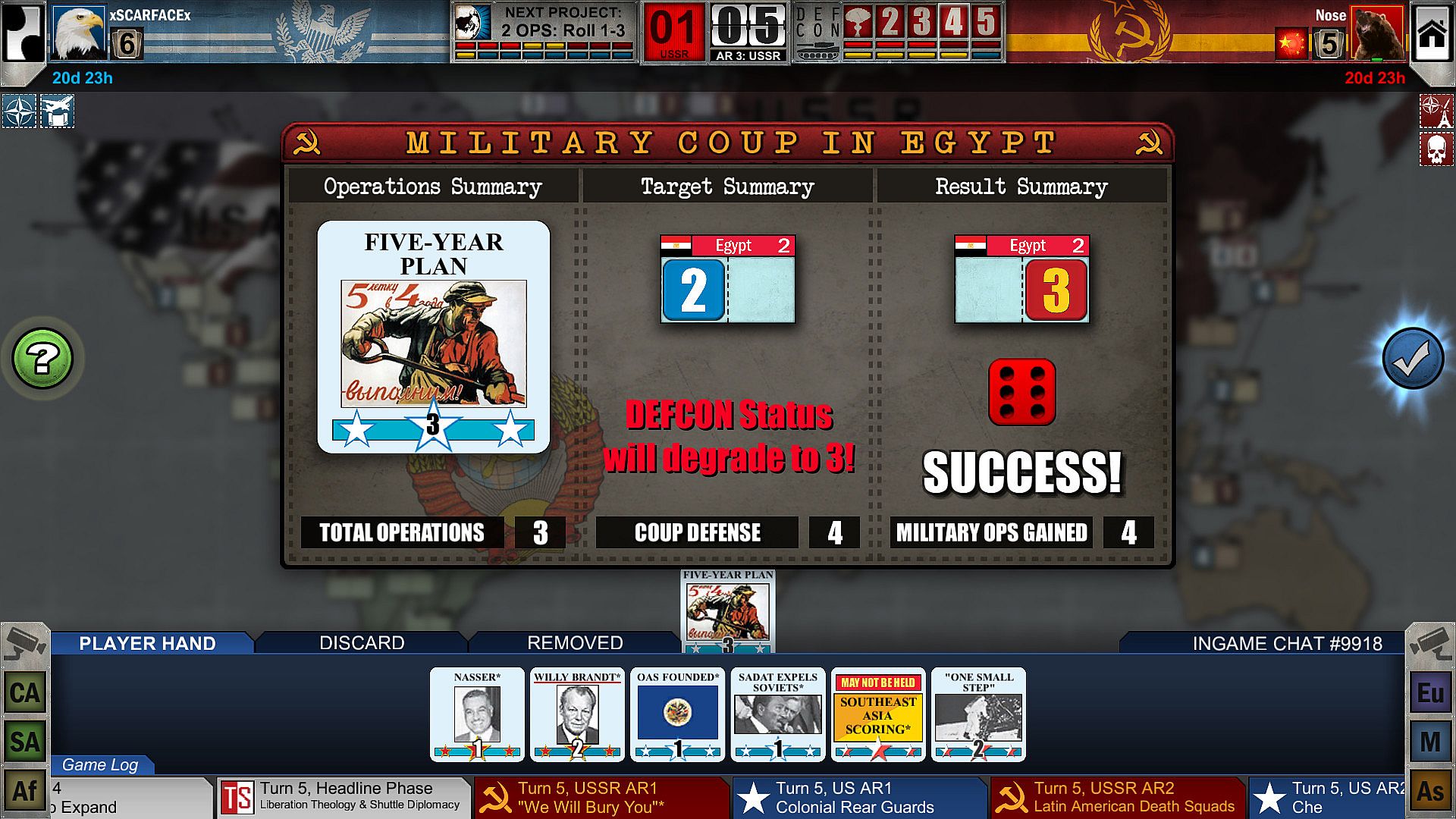
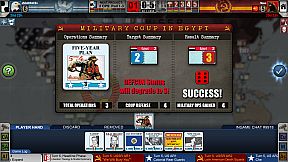
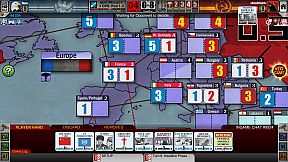
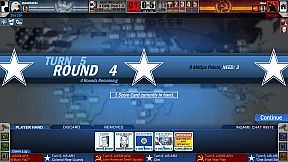
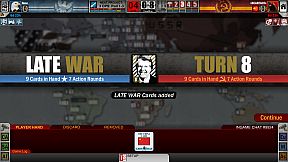
The core loop involves drawing cards that represent either operations points or specific events. Operations allow players to place influence in countries, attempt coups to flip control, or realign nations through dice rolls modified by existing influence. Events trigger automatically when played and often carry lasting effects that alter the balance of power. The map tracks stability and control across continents, with victory determined by reaching a target score through dominance in key areas or by forcing the opponent into a position where nuclear escalation becomes unavoidable. Turns alternate between the two superpowers, and the game progresses through multiple rounds that mirror the decades from the late 1940s onward.
Decision-making emphasizes long-term planning because many events carry trade-offs. Playing an event for its immediate benefit might hand the opponent an advantage later, while saving operations points builds toward decisive coups or realignments. The presence of actual historical incidents adds layers of tension, as players must weigh the risks of triggering crises that historically brought the world close to open conflict.
Game Modes
Single-player matches pit the user against an artificial intelligence opponent that handles the opposing superpower with varying levels of competence. Multiplayer options include pass-and-play on the same device for local sessions and full online support that accommodates both real-time and asynchronous turns. The asynchronous format lets participants respond to moves on their own schedule without requiring simultaneous connection, which suits extended campaigns that can span multiple days or weeks. Cross-platform compatibility extends these options beyond the PC version.
Historical Depth and Mechanics
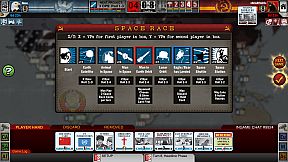
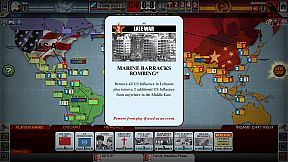
Every playable event draws directly from documented Cold War episodes, including the Arab-Israeli wars, the Vietnam conflict, domestic political movements in the United States, and flashpoints such as the Cuban Missile Crisis. These cards integrate into the strategy layer rather than serving as mere flavor text, often shifting influence totals or imposing restrictions that reflect the real-world consequences of those moments. The simulation avoids abstract scoring systems in favor of concrete control over nations, where stability ratings and regional dominance determine the flow of victory points each round.
Mechanics reward careful resource management because operations points remain limited each turn. Players must decide whether to invest in defensive influence to protect allies or aggressive actions to undermine enemy positions. The two factions begin with asymmetric starting positions that mirror their historical strengths, and the deck composition ensures that early, middle, and late periods of the Cold War feel distinct.
Is It Worth Playing?
Twilight Struggle receives consistent praise from players who enjoy deliberate, two-player competitive strategy with a strong historical foundation. Steam user reviews stand at Very Positive, reflecting sustained appreciation for the faithful adaptation of its tabletop origins. The game continues to attract those seeking a focused experience without the sprawl of larger-scale titles, and its asynchronous multiplayer keeps matches accessible even when schedules conflict. Individuals drawn to card-driven systems, geopolitical maneuvering, and sessions that reward repeated play will find the mechanics hold up well years after release. Those preferring fast-paced action or solo campaigns with branching narratives may find the structure too rigid. The title remains available at a modest price point with no ongoing seasonal content required, making it a straightforward choice for anyone interested in Cold War strategy simulation.