

Turing's Hive is a strategy indie game for PC that puts players in the role of a bee researcher reconstructing lost mathematical concepts through hands-on puzzle design. The core experience centers on routing numbers across a honeycomb grid to build functional computation from basic rules, turning abstract ideas into working systems without relying on written formulas.
Gameplay
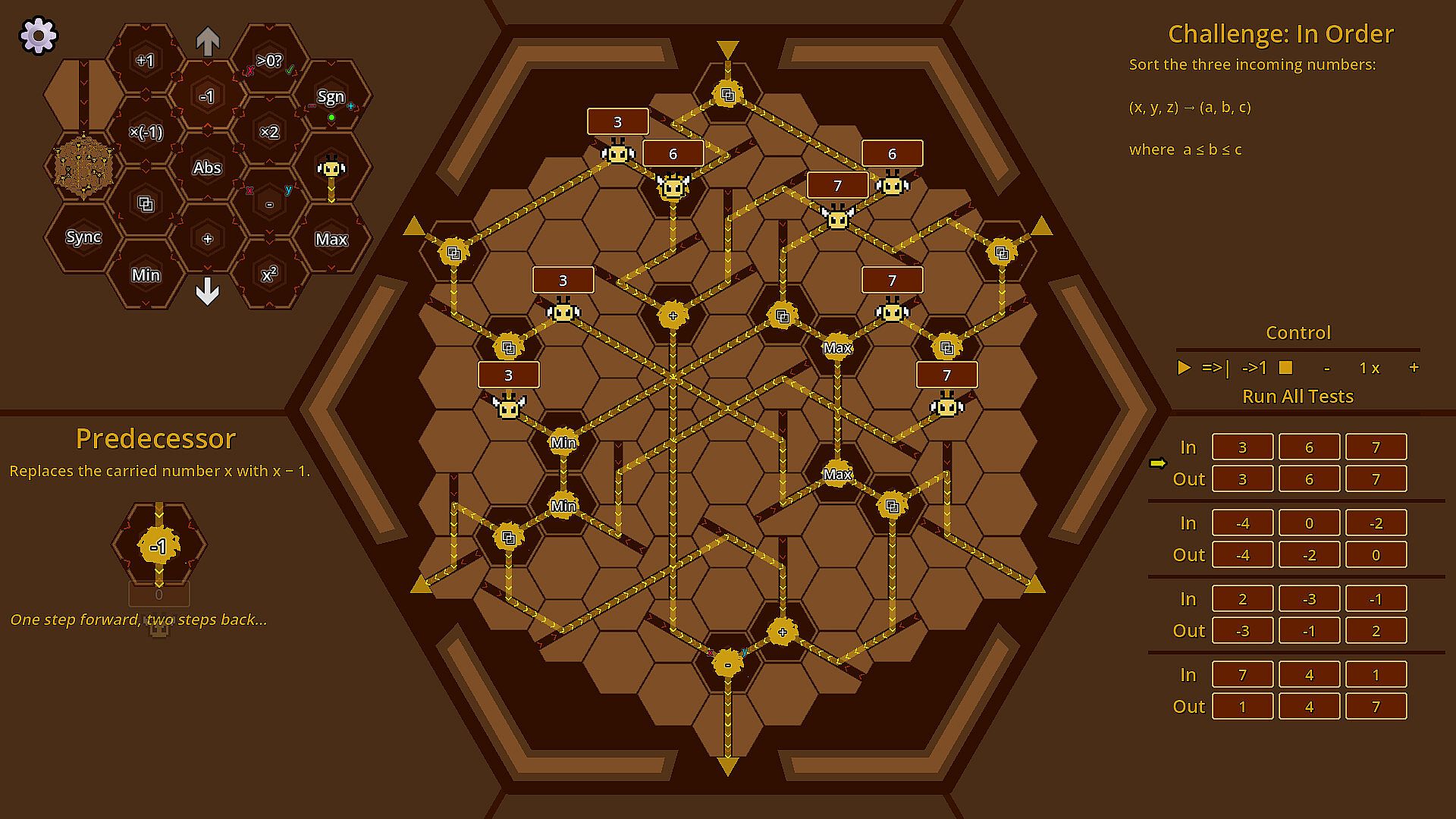
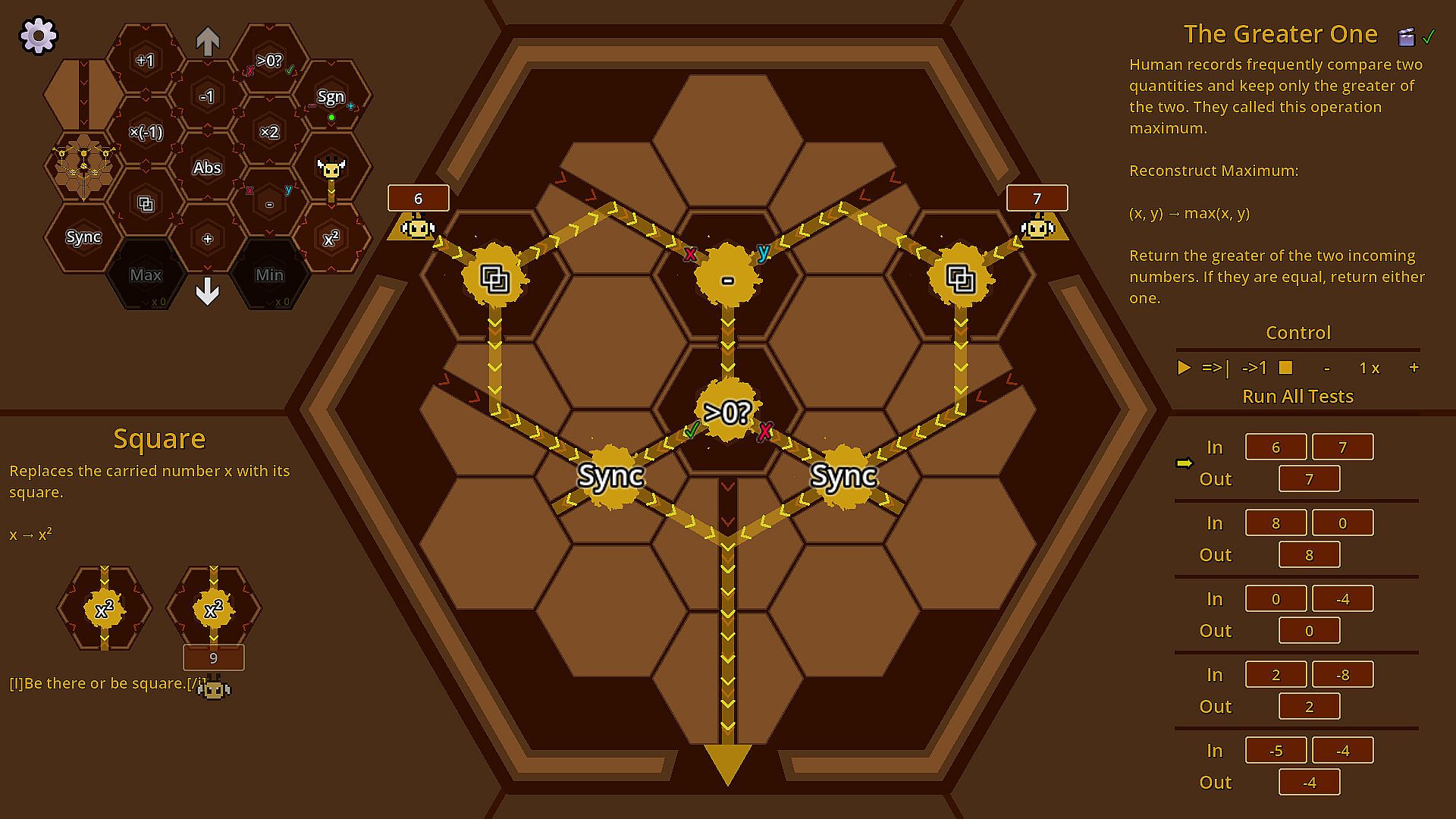
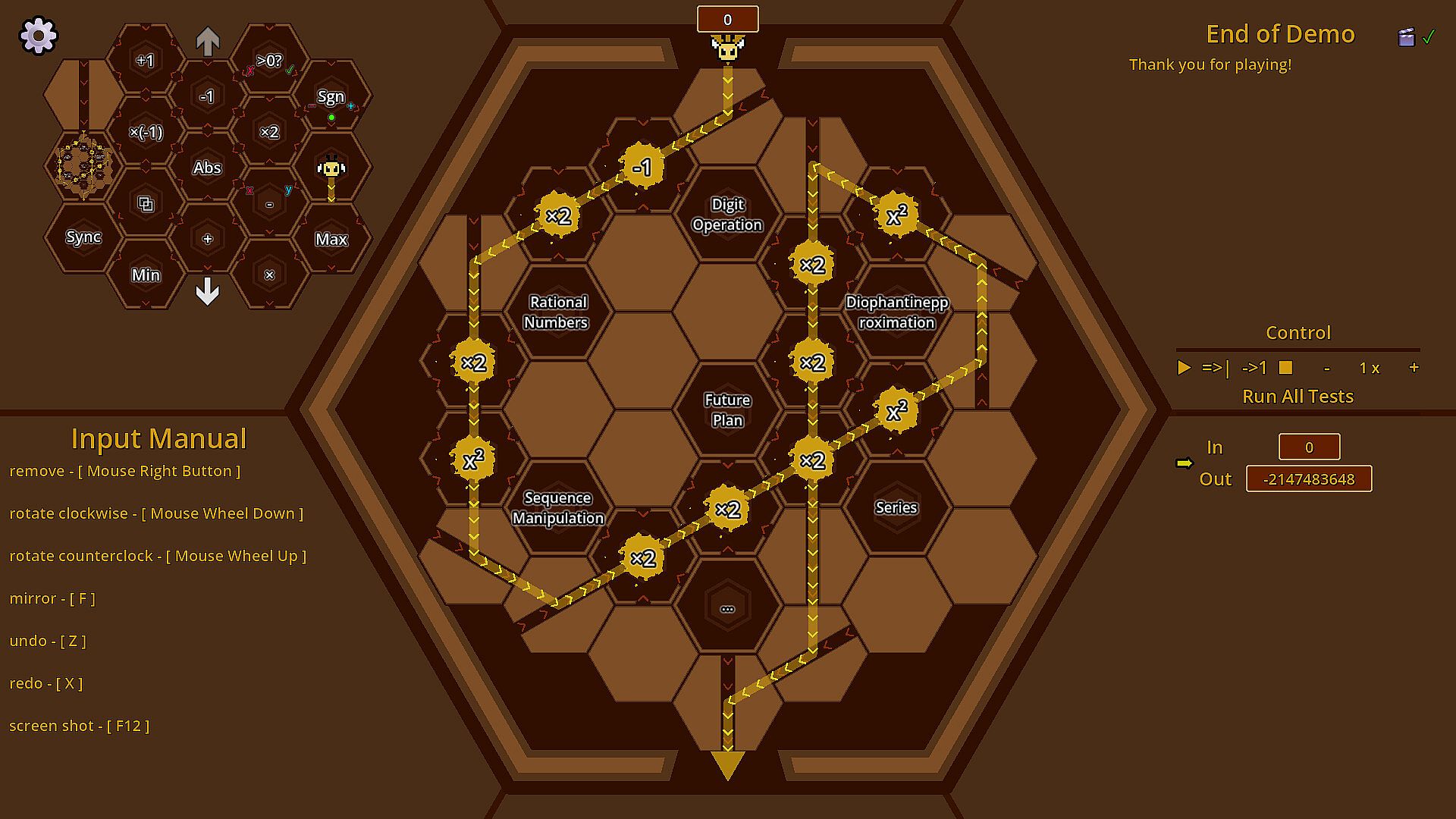
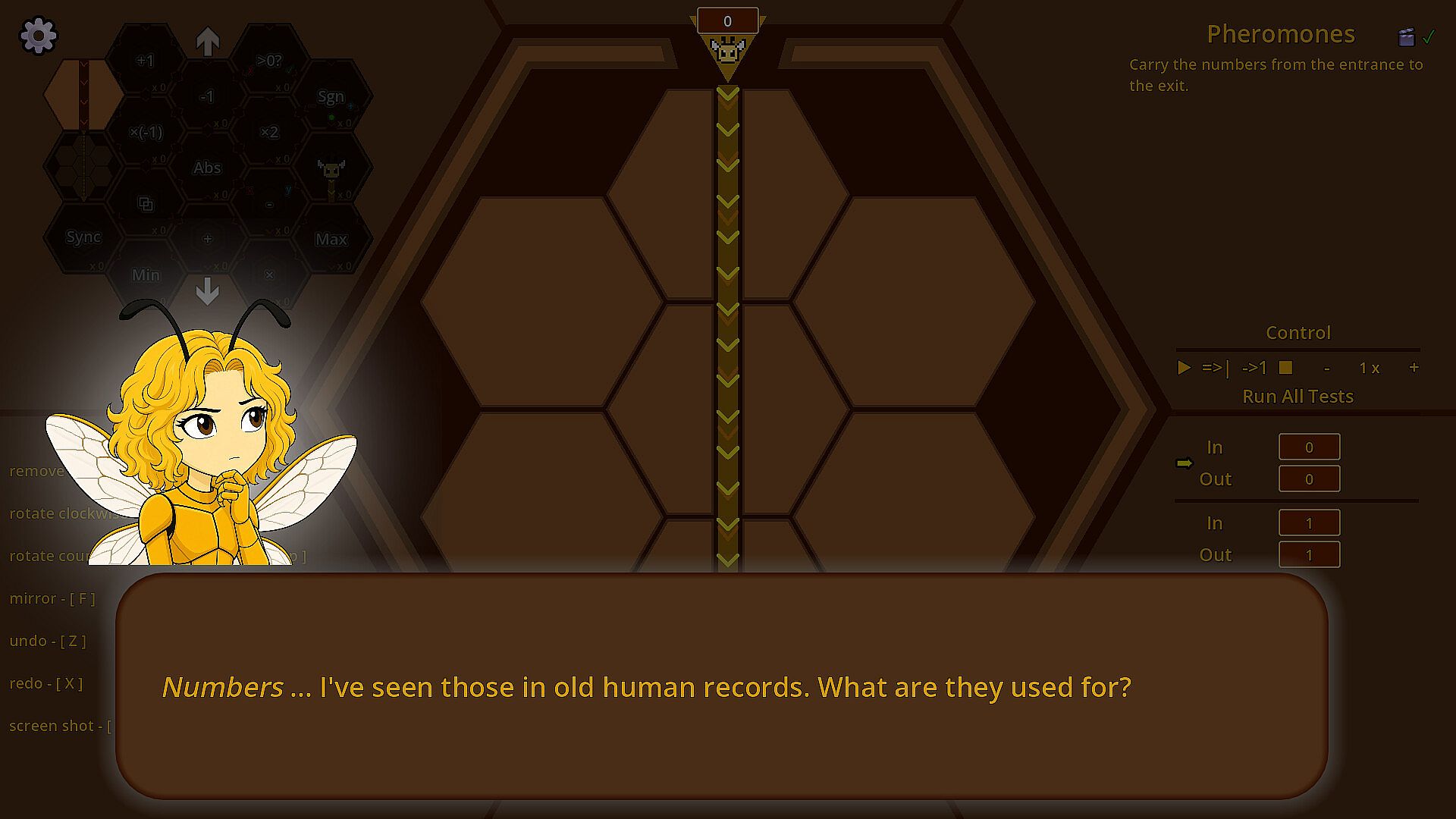
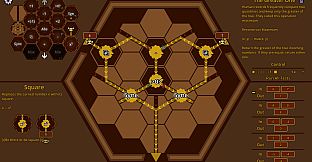
Players guide workers that carry numbers through the grid by laying pheromone trails and placing computational cells. These cells allow branching paths and coordination of multiple workers to convert each input into the required output. The process starts with elementary operations such as addition by one, subtraction by one, and simple comparisons. Successful combinations of these operations become reusable building blocks that unlock more advanced puzzles involving arithmetic and algorithms.
The grid layout encourages careful planning of routes and interactions. Workers move according to the trails and cells placed, and the goal is always to achieve the specified transformation. Solutions emerge from experimentation with cell placement and path coordination rather than from following preset instructions.
Game Modes
The game consists of a series of puzzles, each defined by a clear input and a required output. No separate multiplayer or competitive modes exist. Instead, each puzzle allows complete freedom in how the transformation occurs, so players can create any functional design that meets the criteria. This structure supports repeated attempts on the same puzzle to discover alternative or more efficient arrangements.
Progression moves from basic rules to layered systems, with each new discovery serving as a tool for subsequent challenges. The emphasis stays on individual puzzle resolution and refinement rather than on timed challenges or external competition.
Recursion and Nested Structures
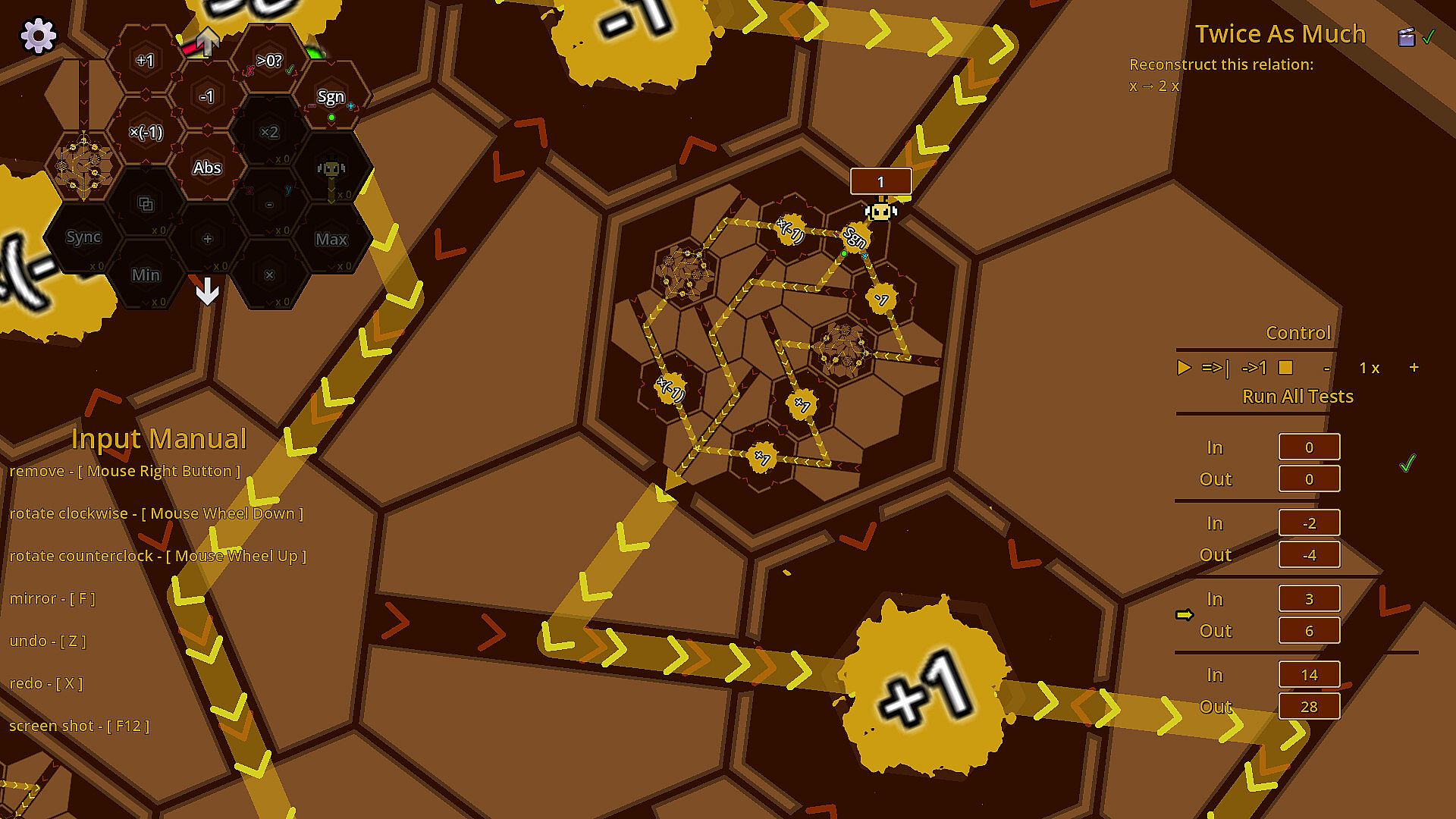
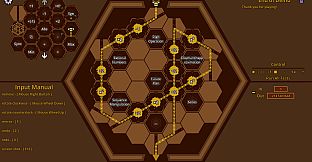
A distinctive element involves embedding one hive inside a cell of another, with the possibility of further nesting. This recursive setup lets workers carry numbers between layers, using the geometry of the nested hives as an additional computational resource. The approach turns the physical layout into a tool for handling complex operations that would otherwise require many separate steps.
Players learn to manage these layered systems by designing paths that cross between levels while maintaining the required number transformations. The mechanic adds depth without introducing new controls, relying instead on the same core placement and routing tools.
Is It Worth Playing?
Turing's Hive suits players who enjoy logic puzzles, programming concepts, and systems thinking presented in a visual, grid-based format. The single-player focus and open-ended puzzle design reward experimentation and iterative improvement on each challenge. Those drawn to the idea of rebuilding mathematical operations from simple components will find consistent progression through increasingly capable building blocks.
Because the game provides clear input-output requirements without dictating exact methods, it appeals to anyone who values creative problem solving over linear tutorials. The recursive nesting offers an extra layer of interest for those comfortable with nested systems. Availability on PC makes it accessible for sessions of varying length, with each puzzle standing alone while contributing to overall advancement.