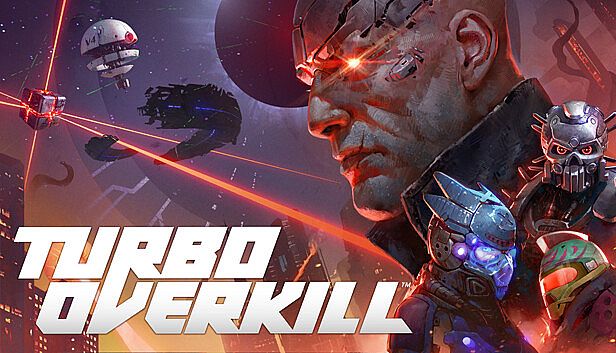









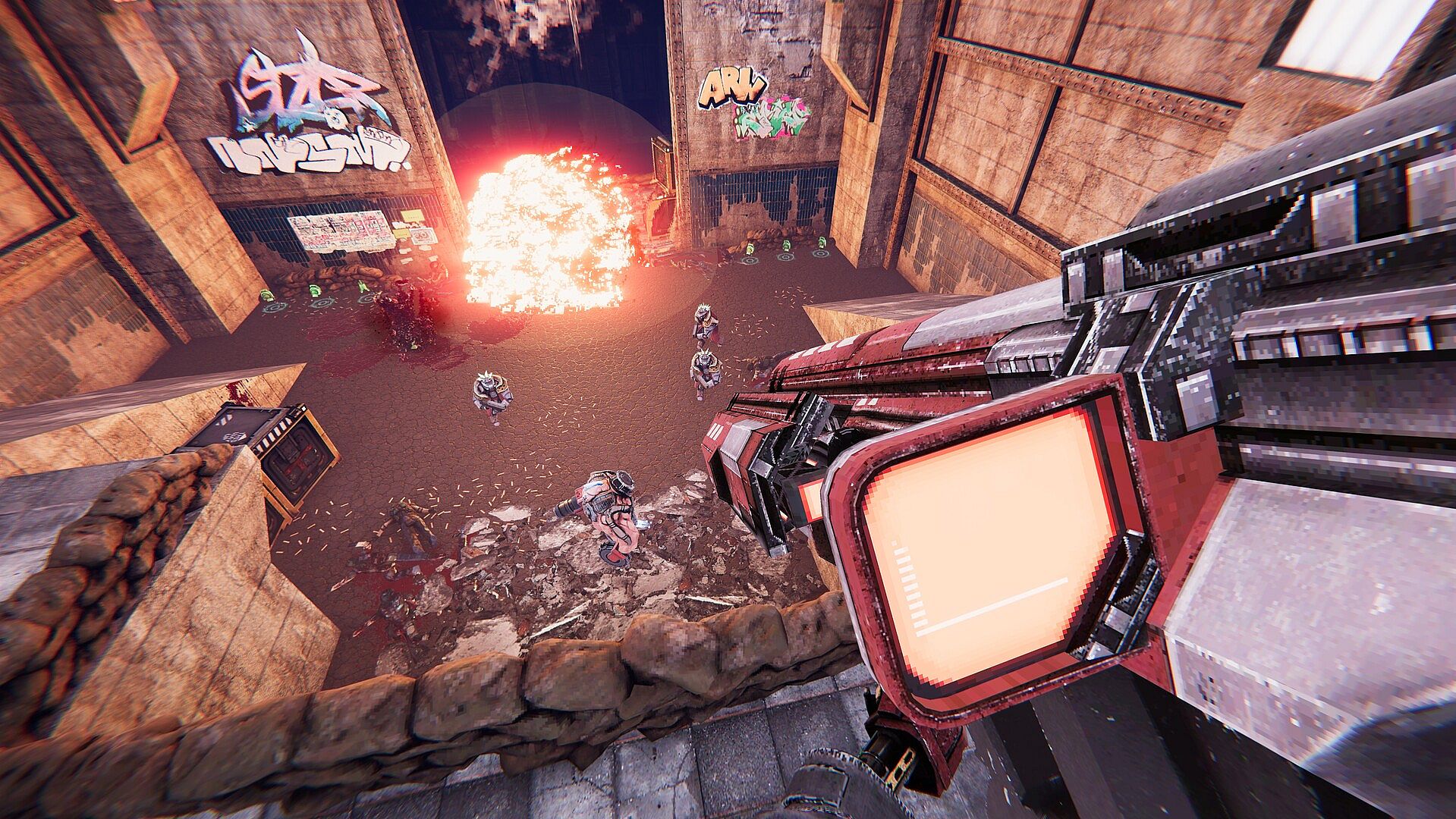
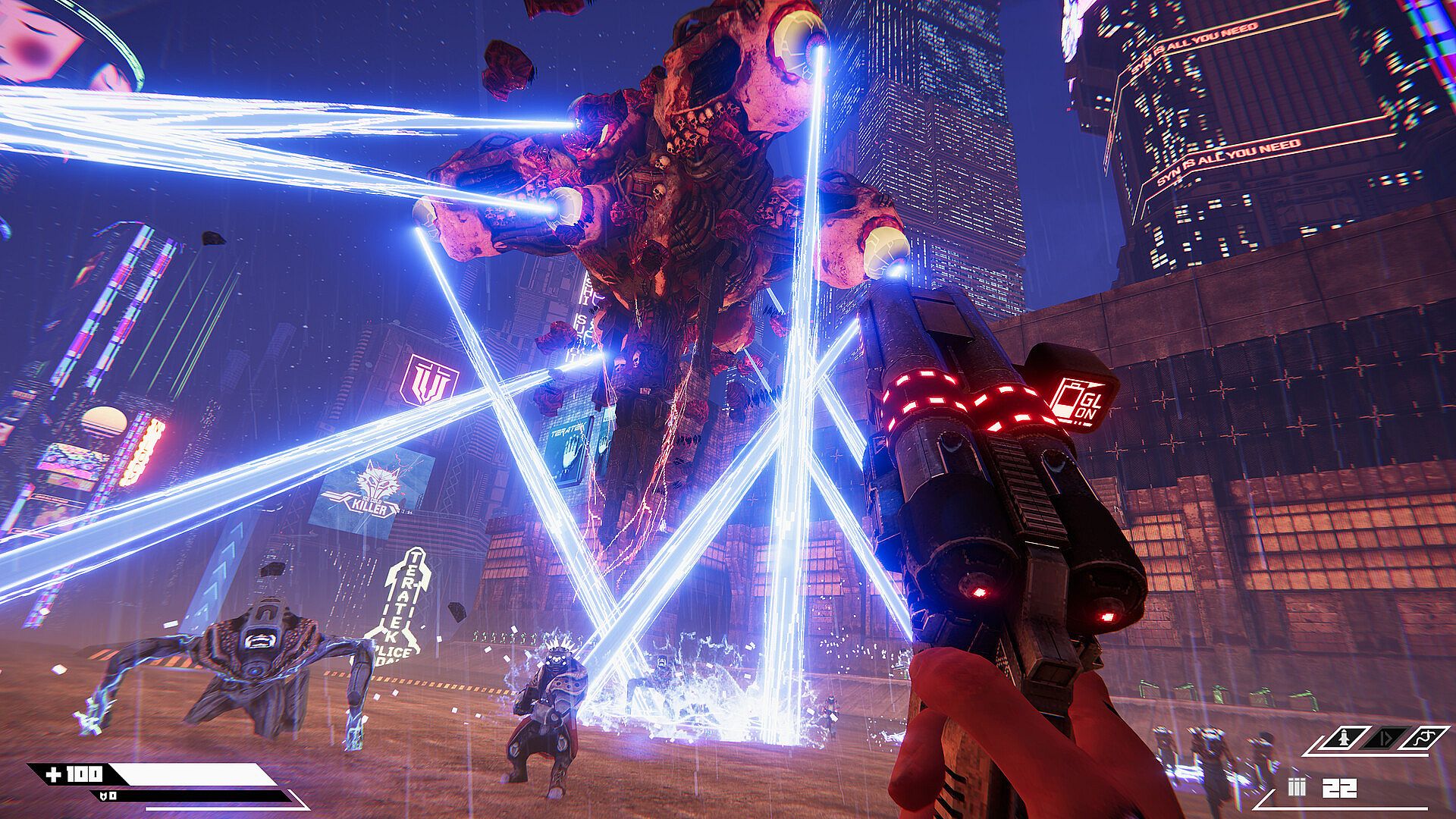
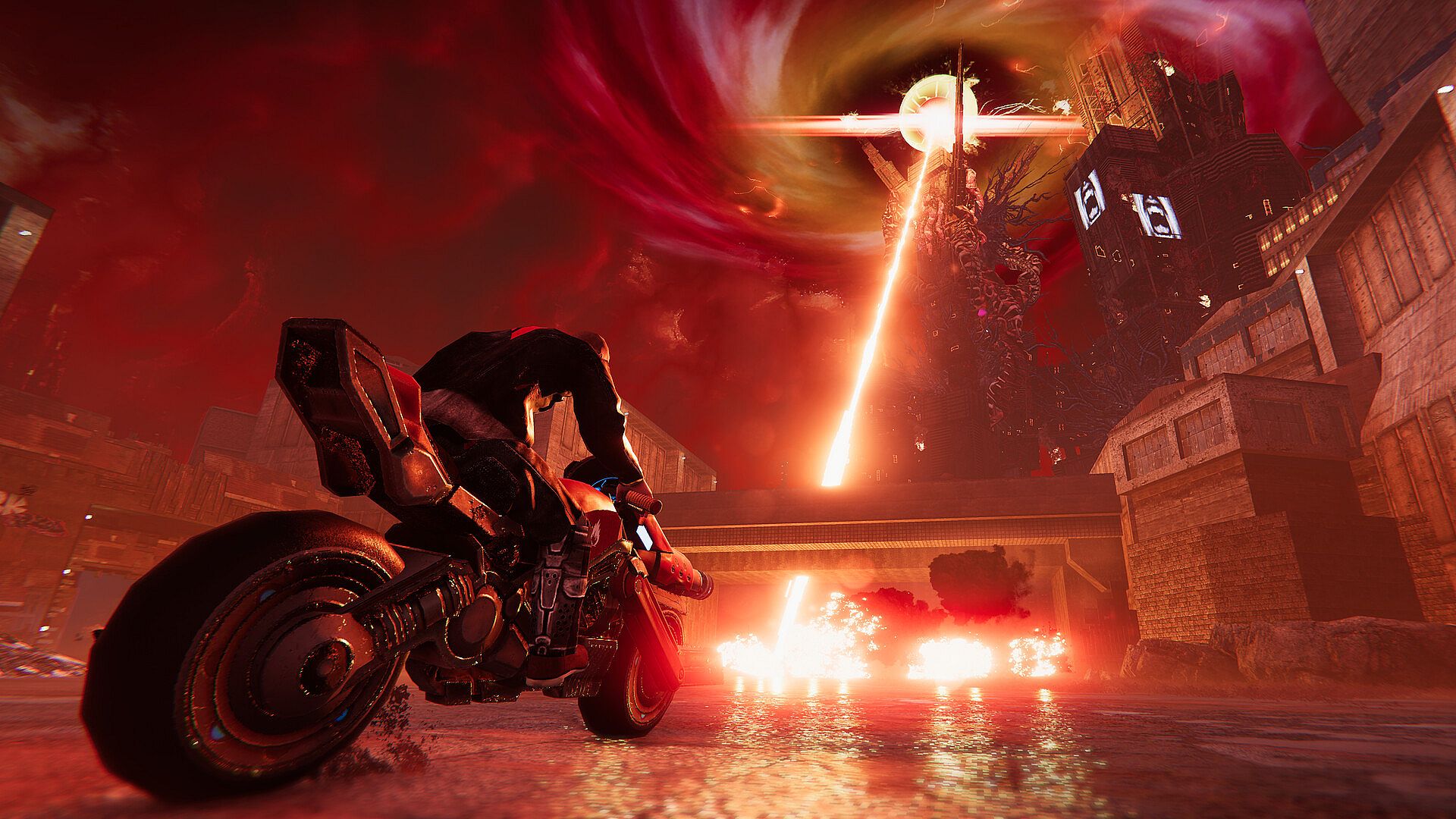
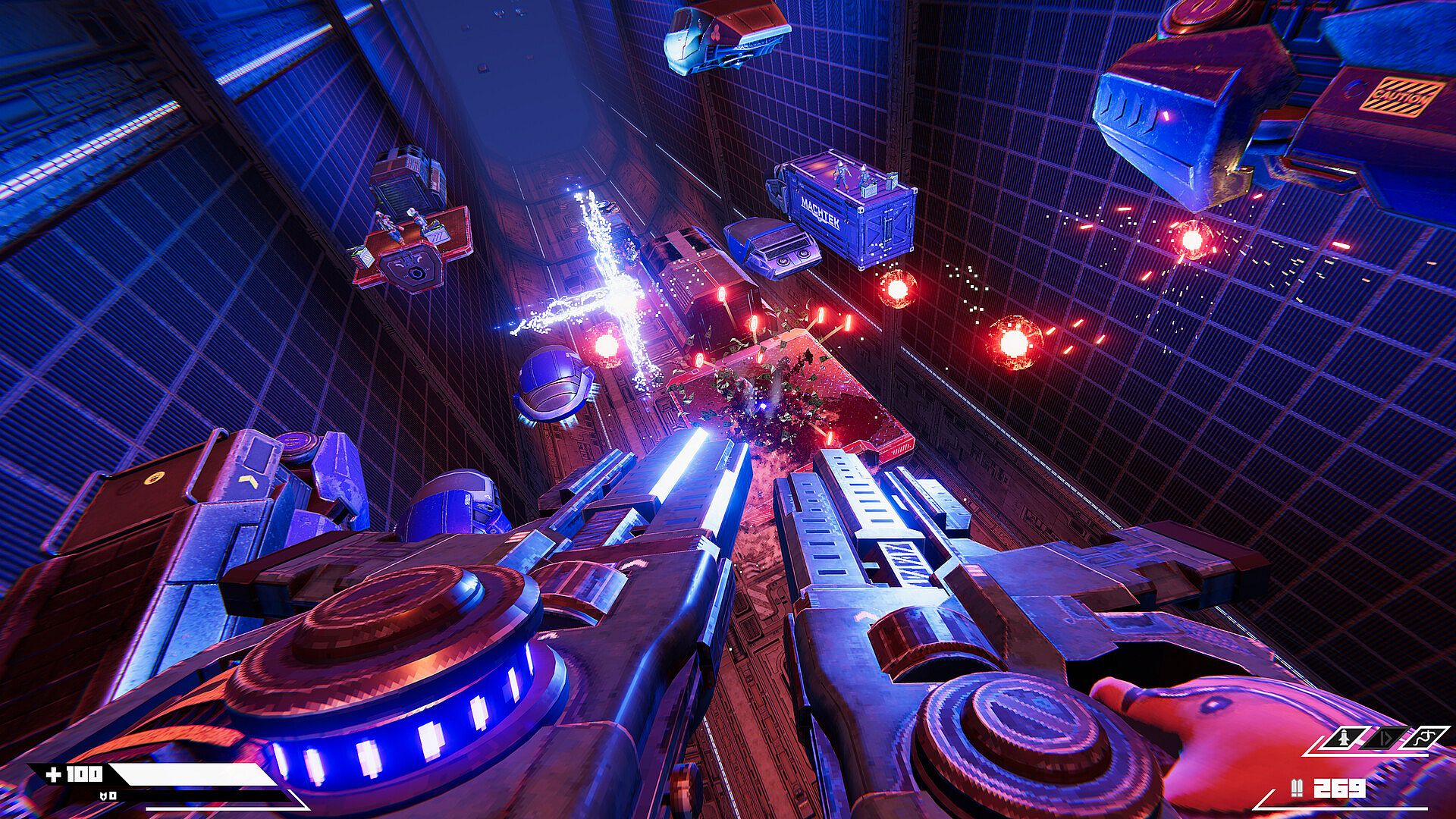
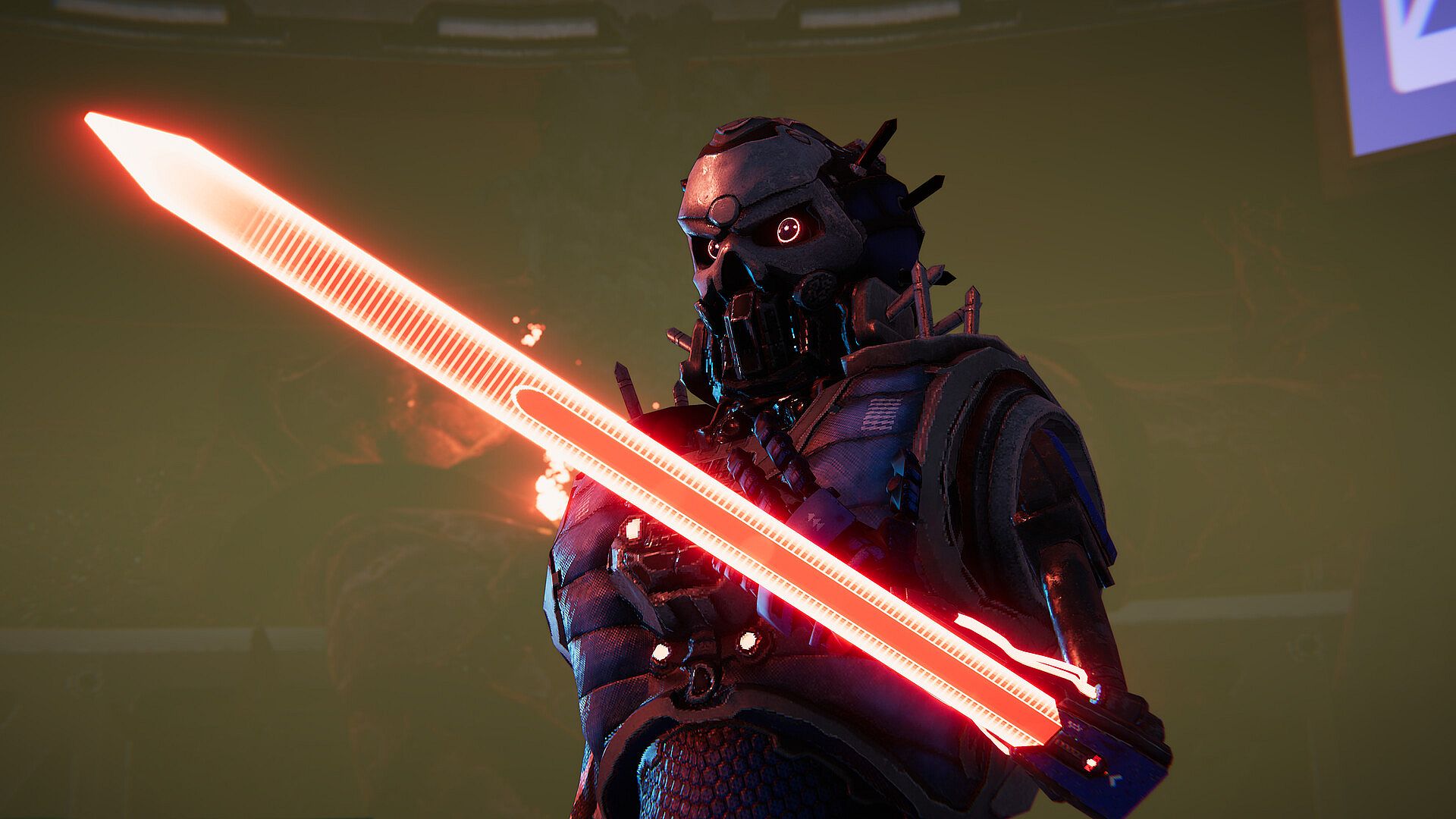
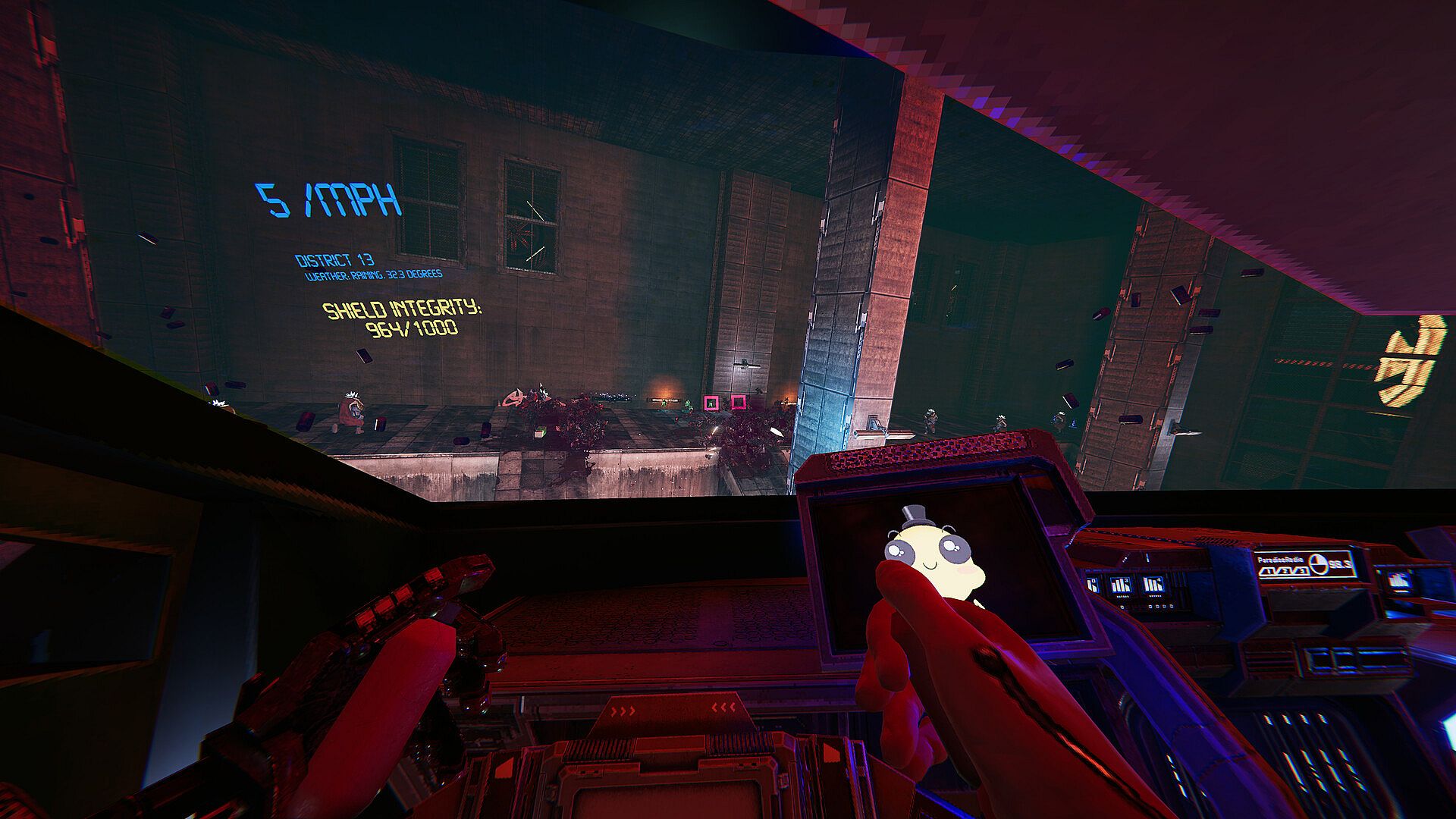
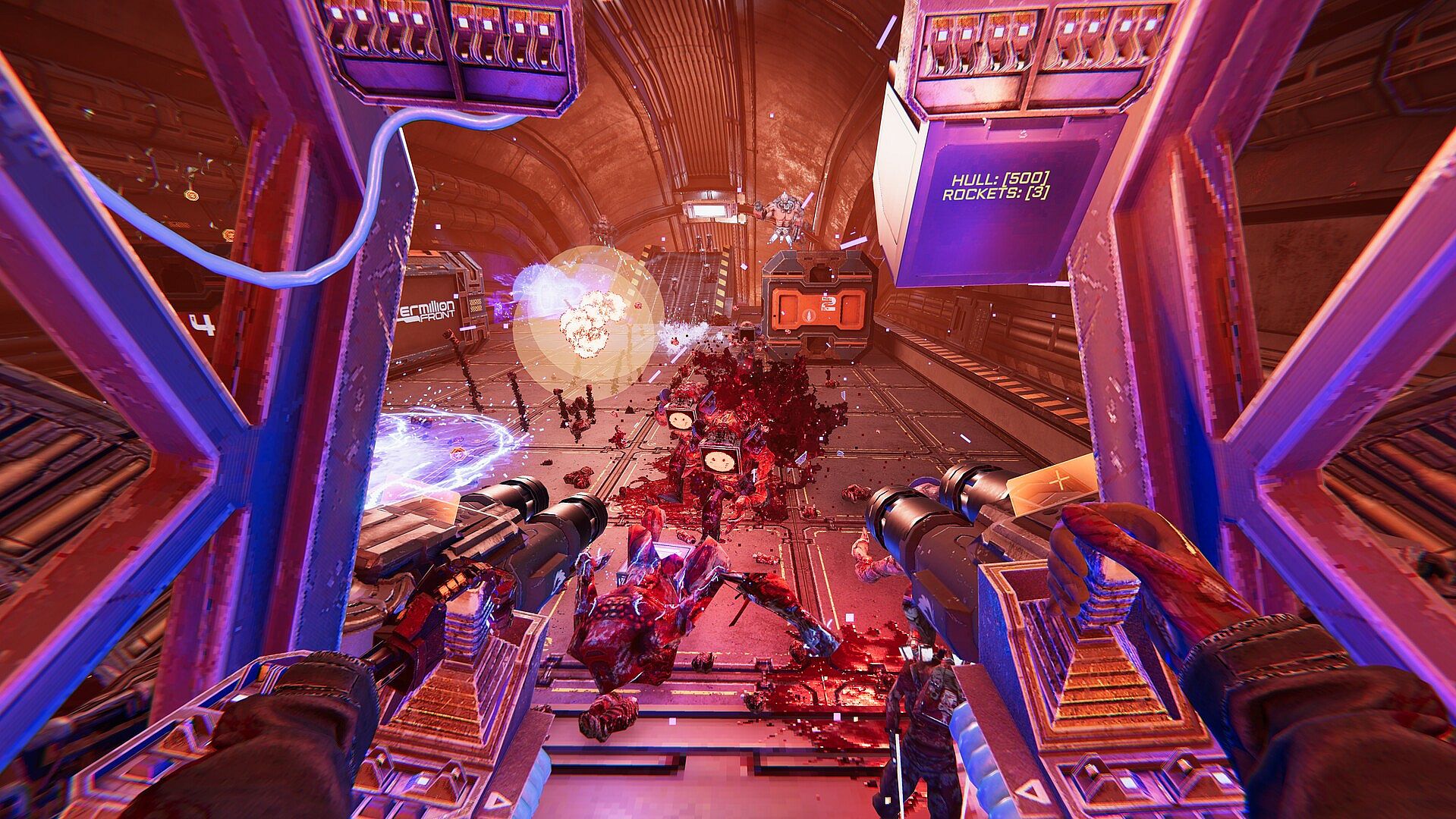
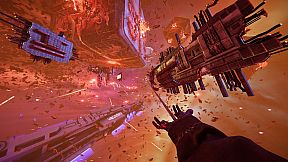
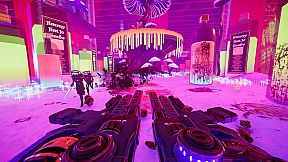
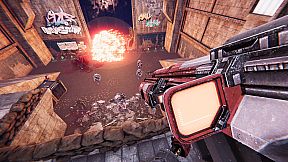

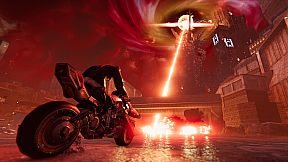
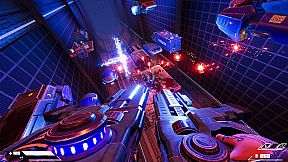
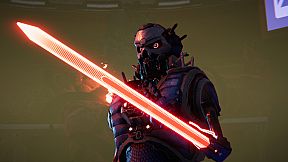
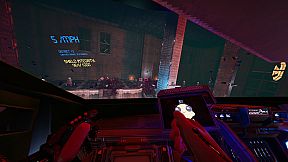
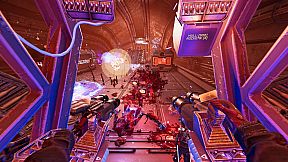
Turbo Overkill is a fast-paced single-player FPS that blends boomer shooter roots with modern movement mechanics in a cyberpunk setting. Players control Johnny Turbo, a half-human, half-machine bounty hunter who returns to the city of Paradise to battle a rogue AI named Syn and its possessed forces. The game emphasizes speed, precision, and creative violence through a mix of shooting, traversal, and melee tools that reward aggressive playstyles.
Gameplay
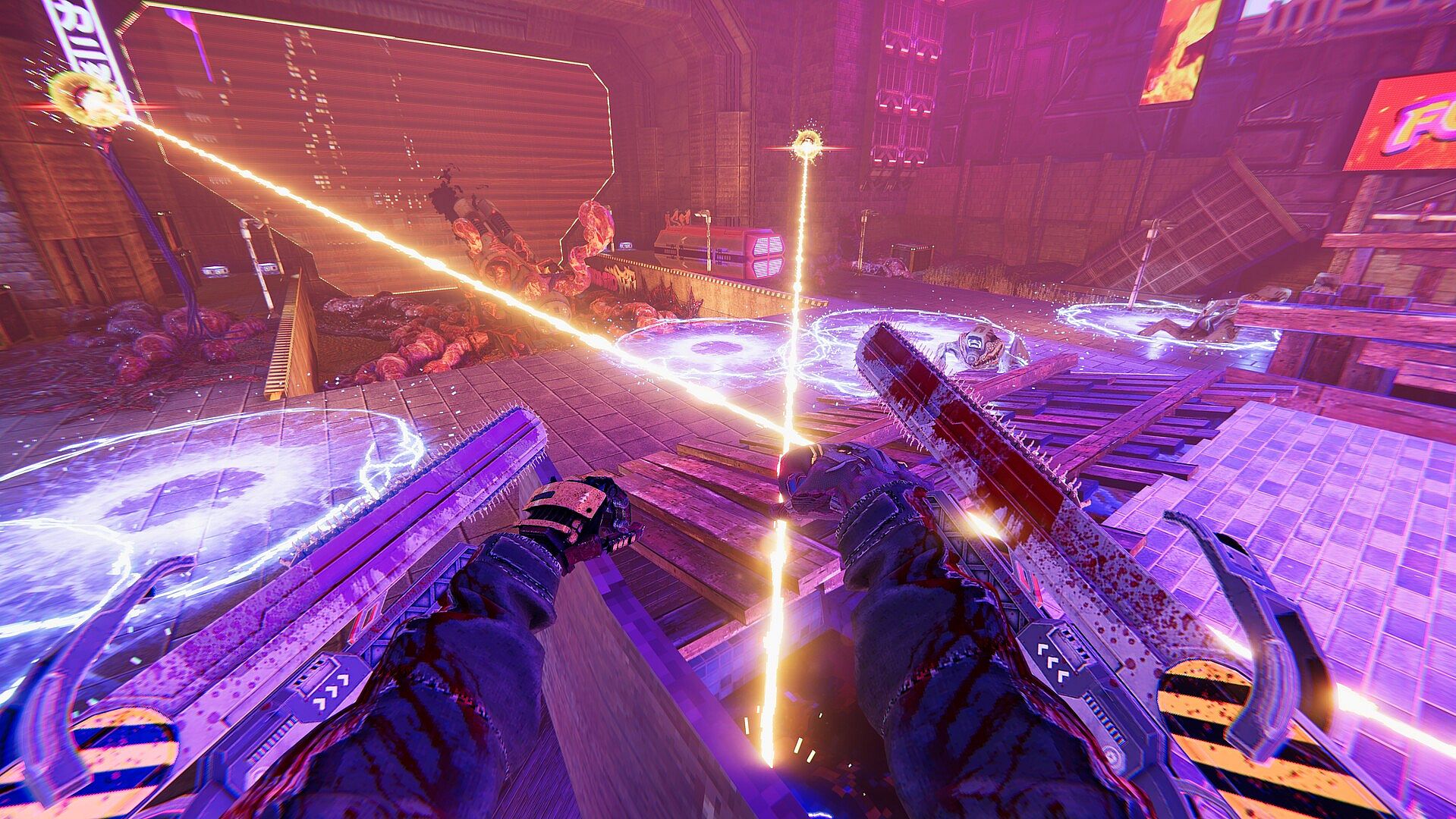
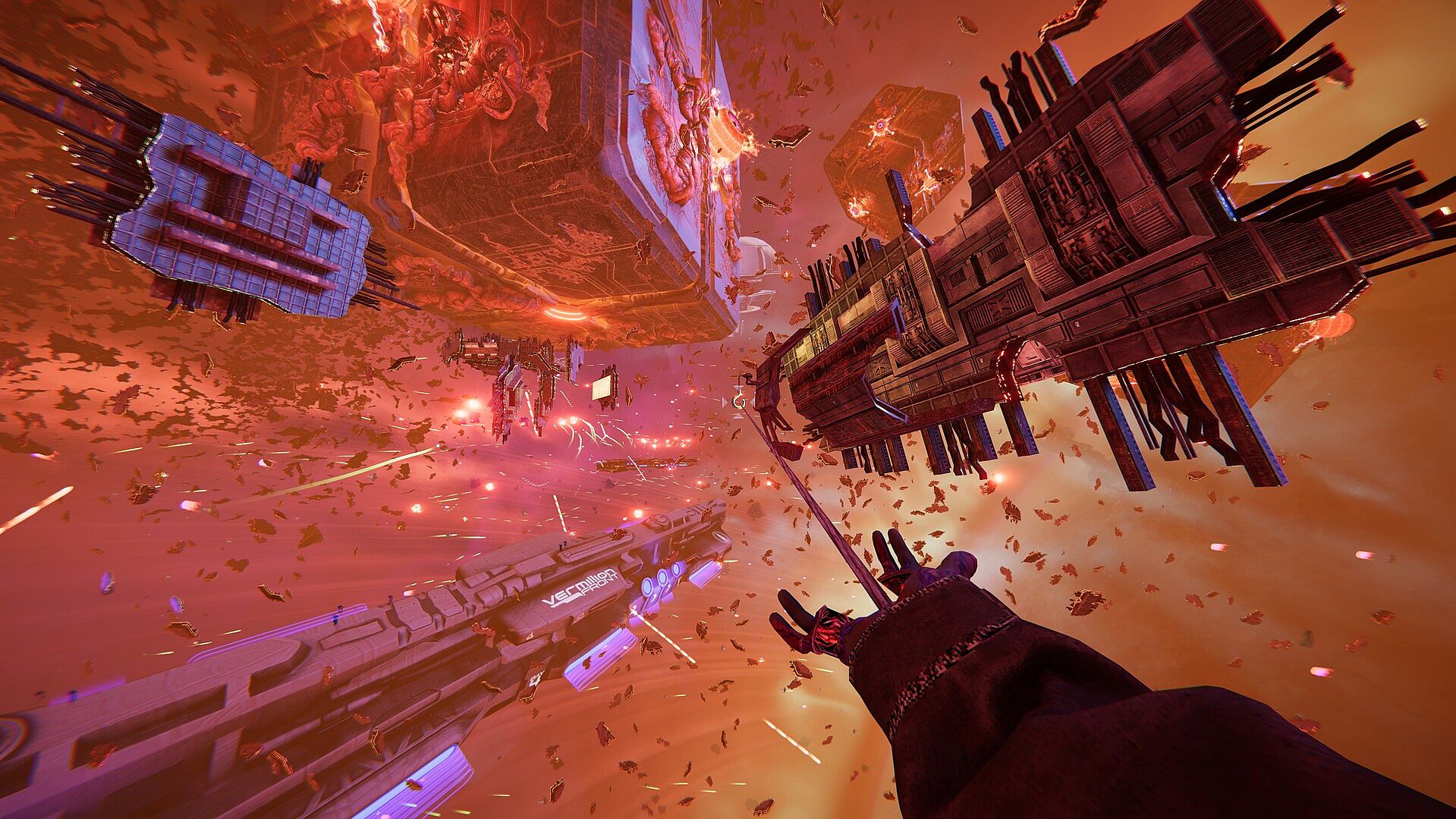
Core movement includes wall-running, dashing, and a grappling hook that lets players swing between surfaces and reposition quickly during fights. Turbo Time activates a unique slow-motion effect that builds momentum for high-speed sequences. The signature chainsaw leg allows sliding attacks that slice through groups of enemies and expose bosses to extra damage. Combat mixes ranged weapons with close-quarters execution, where kills generate cash used to purchase augments, weapon upgrades, and talent tree abilities.
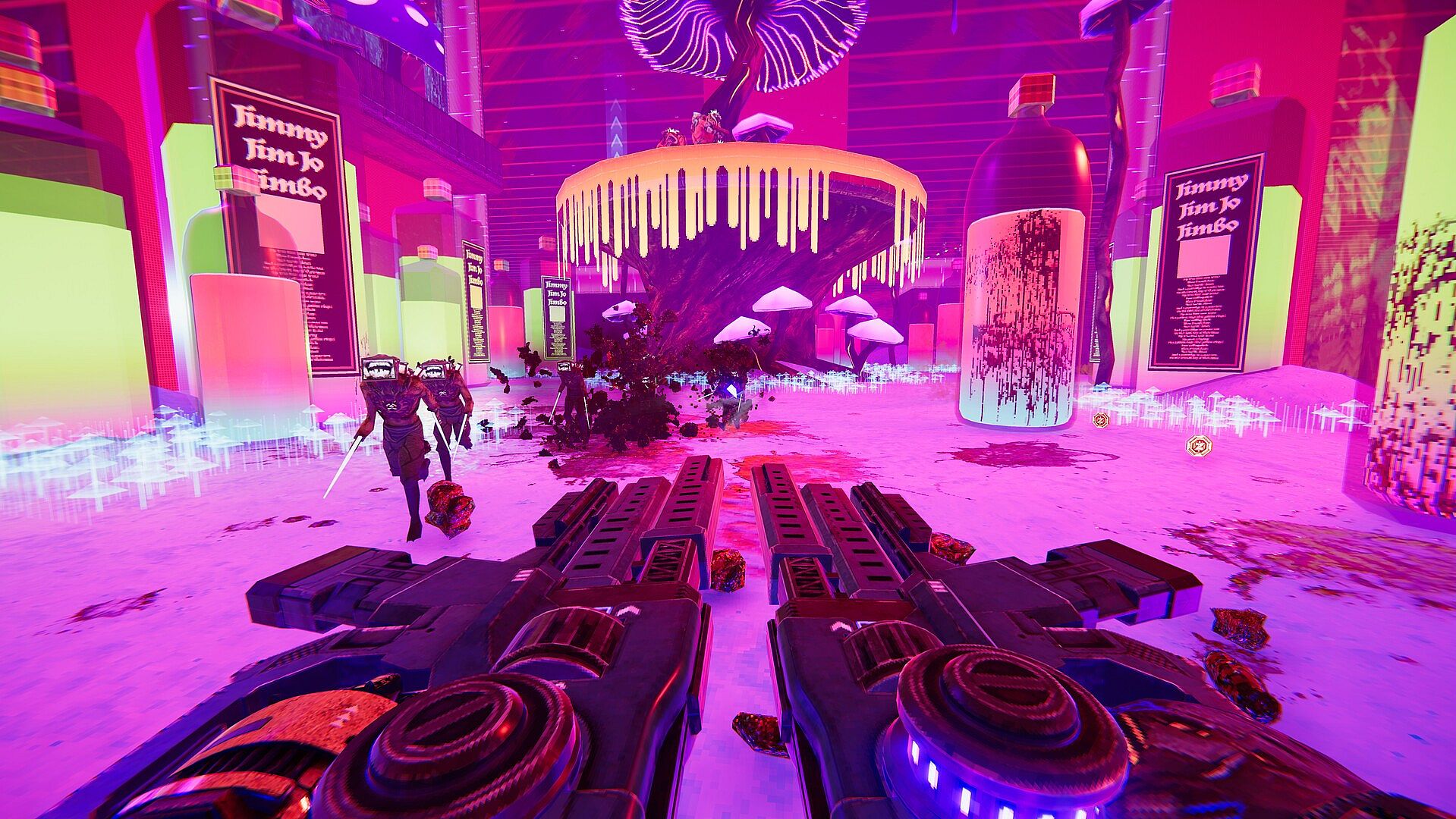
Johnny starts with basic tools but gains new powers by defeating bosses, each granting a permanent augment that changes how fights unfold. Weapons feature distinct behaviors such as the Twin Magnums that lock on and eliminate multiple targets, the Boomer Shotgun equipped with an attached grenade launcher, and the Telefragger sniper rifle that teleports the player inside an enemy before detonation. Levels contain hidden collectibles that unlock challenge modifiers, including increased enemy speed or one-hit kills, encouraging repeated runs to discover optimal paths and loadouts.
The design draws from classic shooters while adding verticality and momentum-based traversal. Players alternate between platforming sections and dense arena encounters, using the environment and abilities to maintain flow without slowing down.
Game Modes
The main experience is a campaign divided into episodes, each containing multiple lengthy stages filled with secrets and combat puzzles. Bonus arena stages appear throughout, offering focused combat challenges separate from the story progression.
Arcade Mode strips away narrative elements for direct, high-score runs through selected levels. Endless Mode provides a horde-style survival option where players test builds against waves of enemies without level boundaries. A built-in level editor allows creation and sharing of custom stages, extending play beyond the official content.
These modes support different session lengths. Campaign suits players seeking structured progression, while Arcade and Endless cater to quick or extended practice sessions focused purely on mechanics and scoring.
Weapons, Augments, and Progression
Weapon variety encourages experimentation. Each gun handles differently in close or long range, and upgrades improve damage, capacity, or add secondary functions. The talent tree further customizes Johnny with new movement options or combat bonuses purchased with cash earned from kills.
Augments obtained from bosses integrate directly into the core loop. They provide abilities that complement existing tools, such as enhanced mobility or area effects, and players combine them with the grappling hook and chainsaw slide for varied approaches to the same encounters.
Collectibles scattered across stages unlock additional modifiers that alter difficulty or rulesets. This system rewards thorough exploration without forcing it on every playthrough.
Is It Worth Playing?
Turbo Overkill delivers consistent, high-intensity action for fans of classic first-person shooters who enjoy fast movement and satisfying gunplay. The single-player focus keeps attention on personal skill and level mastery rather than online competition.
Reception has been strongly positive, with the game maintaining very positive user ratings across thousands of reviews long after its full release. It appeals to players comfortable with retro-inspired design that prioritizes momentum and creative kills over modern cover systems or narrative complexity.
Those who value precise controls, weapon feel, and replayability through secrets and modifiers will find substantial content. The absence of multiplayer means it suits solo sessions best, but the included modes and editor provide ongoing variety for dedicated players.