



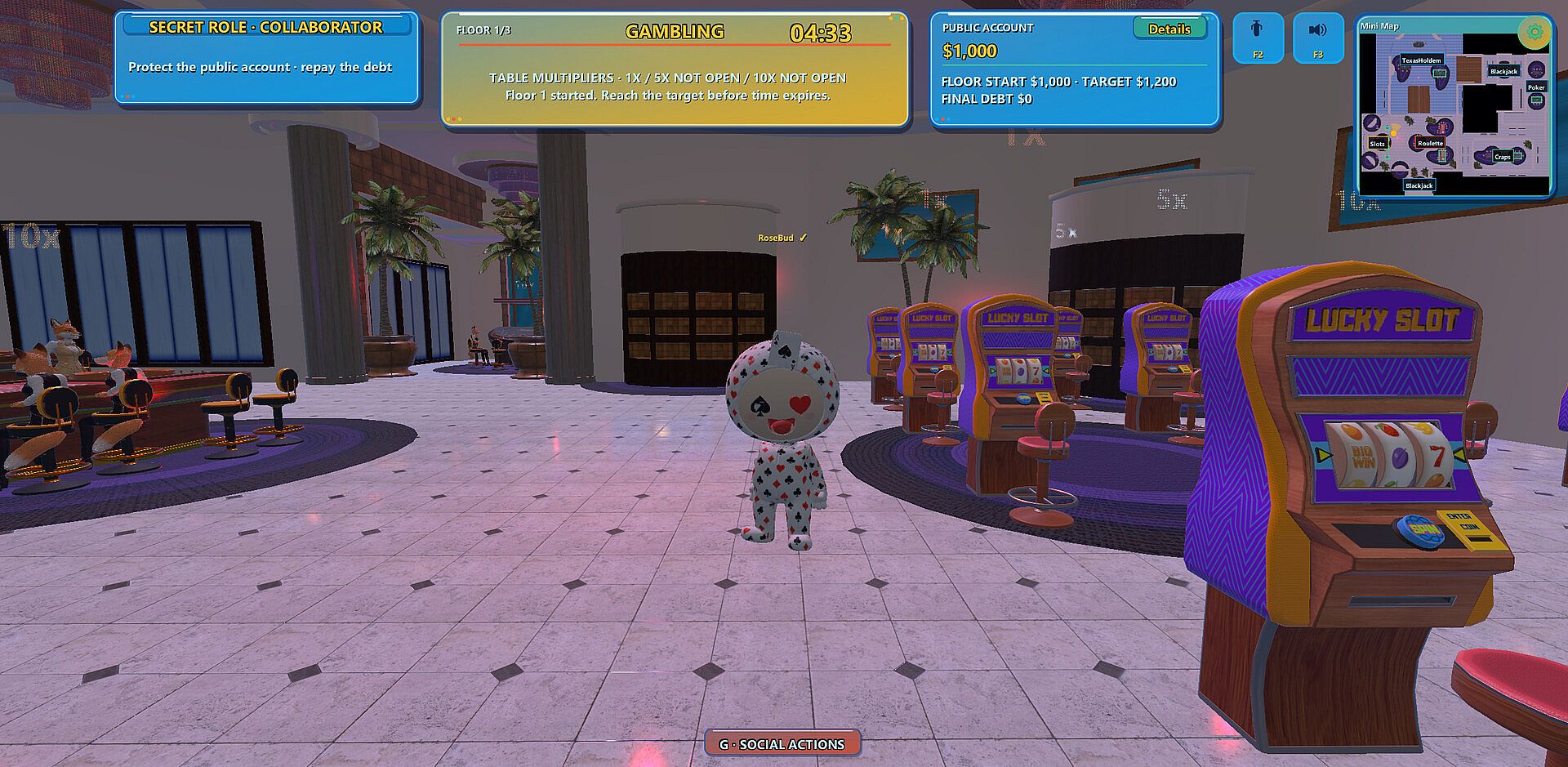
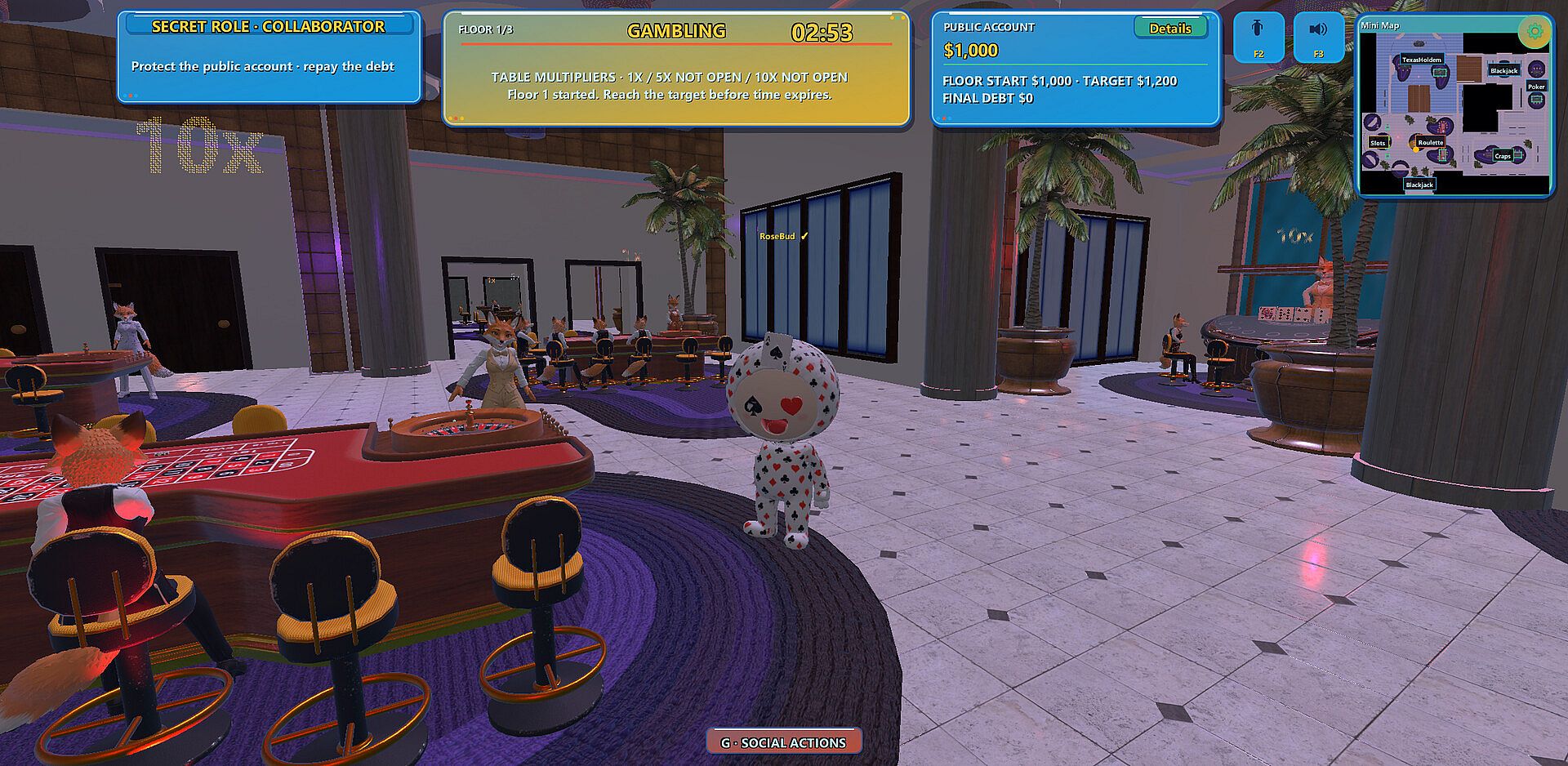



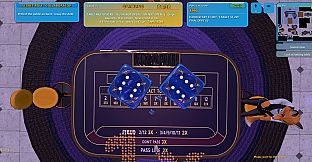
Traitor Gamble is a first-person online social-deduction casino party game for 2 to 8 players on PC. Players share a single casino account and a collective debt while navigating three timed stages filled with betting across multiple table games. Hidden traitors work to siphon profits from failed wagers into private funds, forcing the group to balance cooperation with suspicion and oversight.
Gameplay
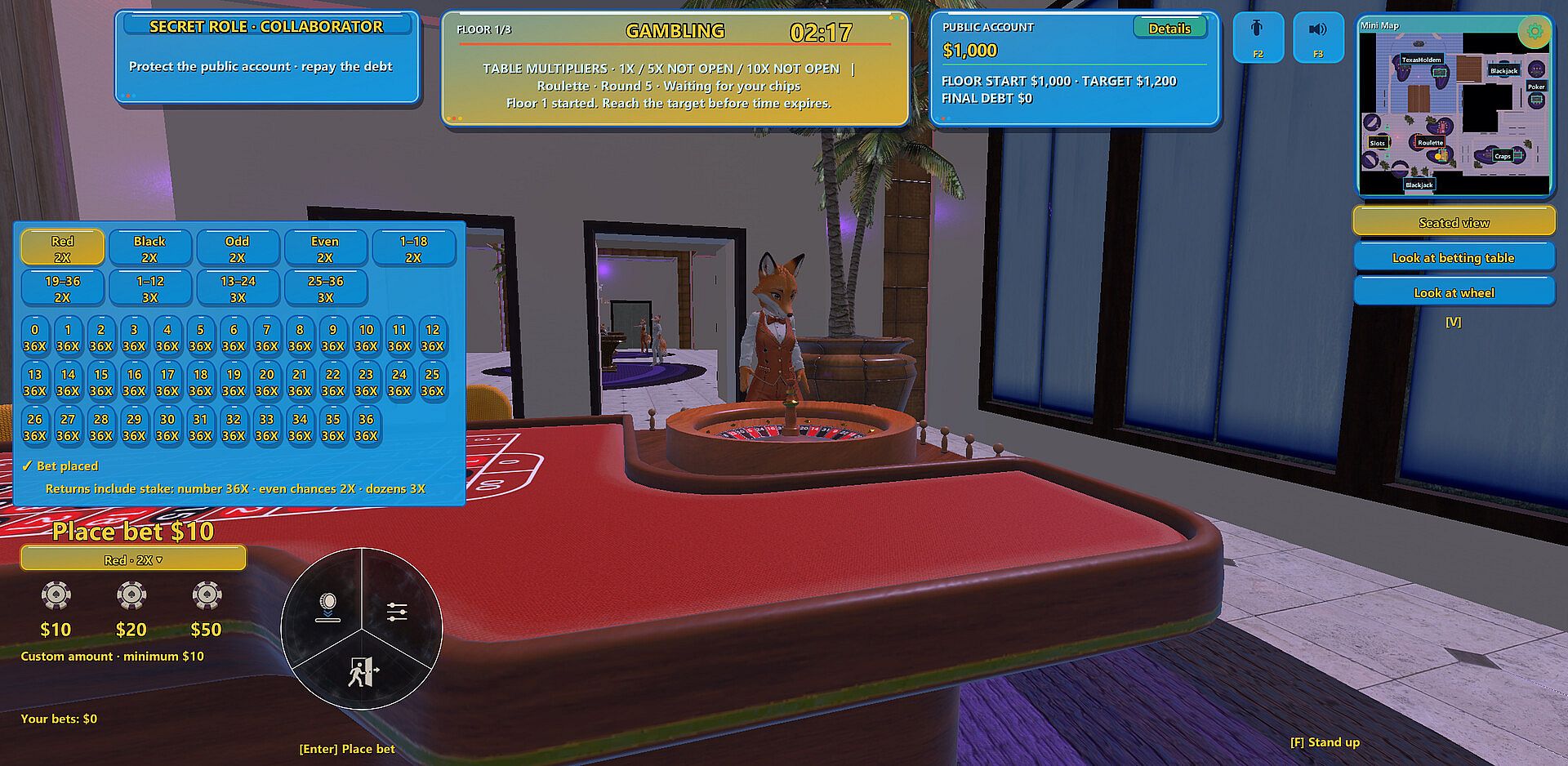
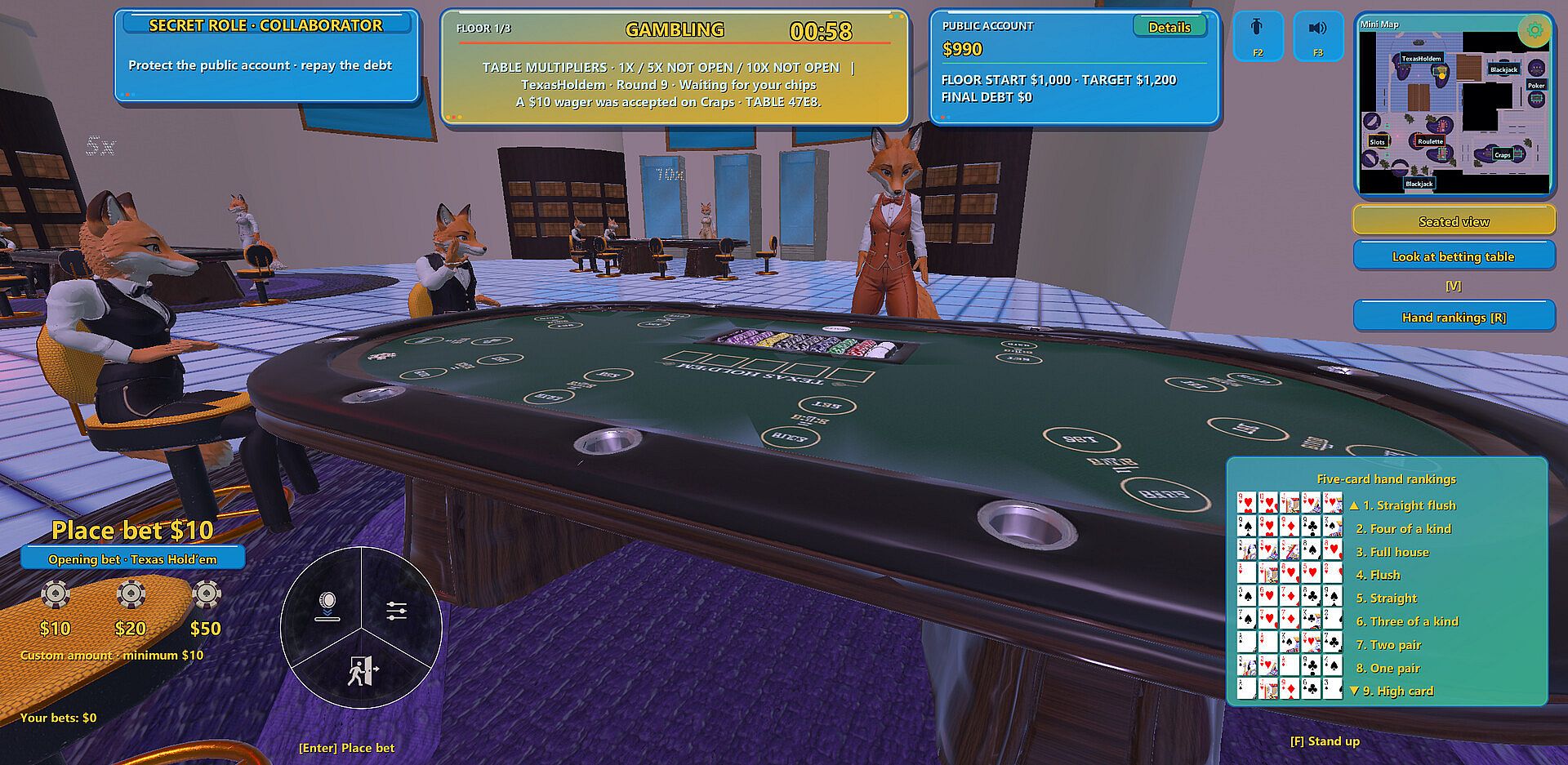
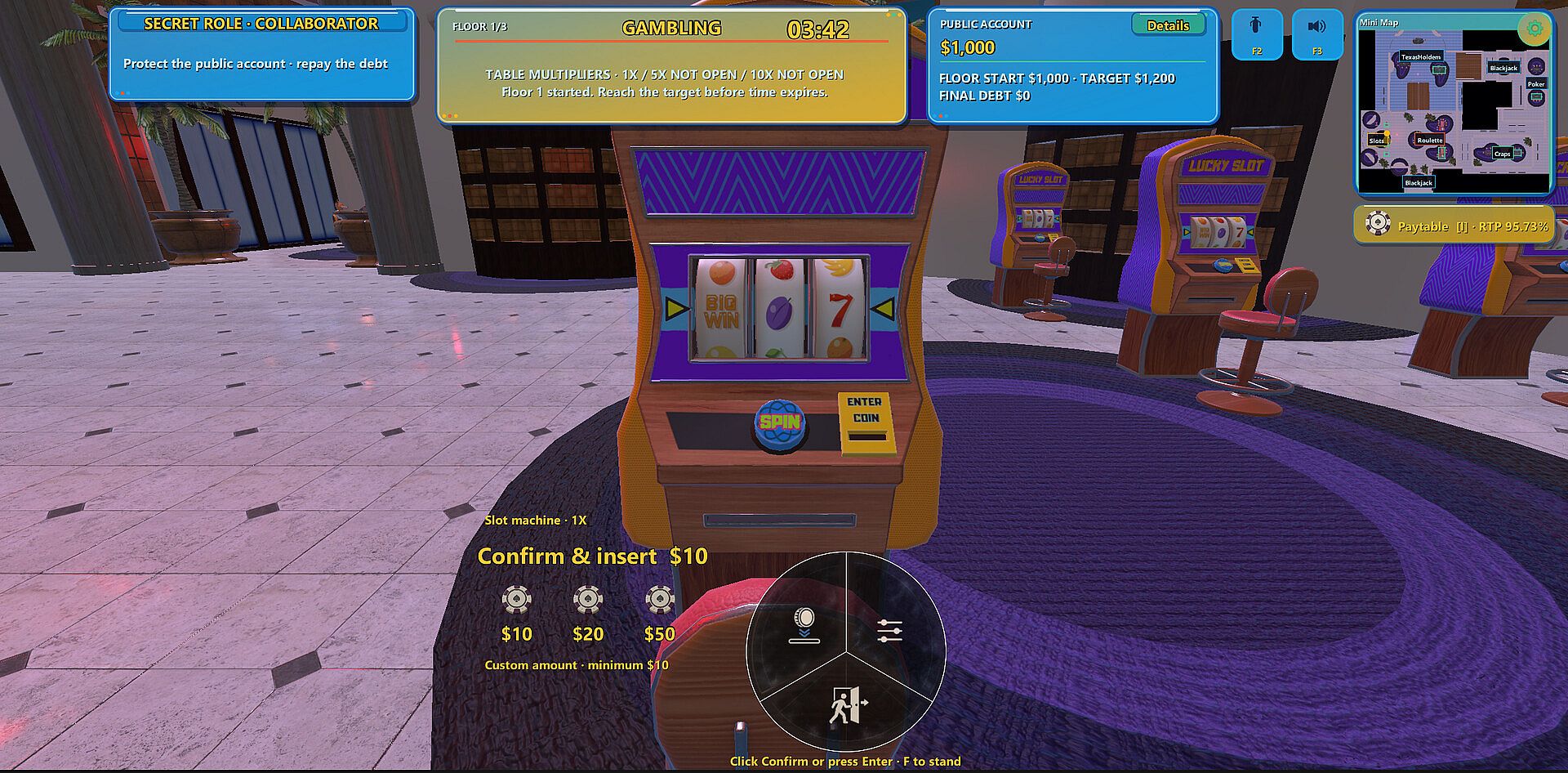
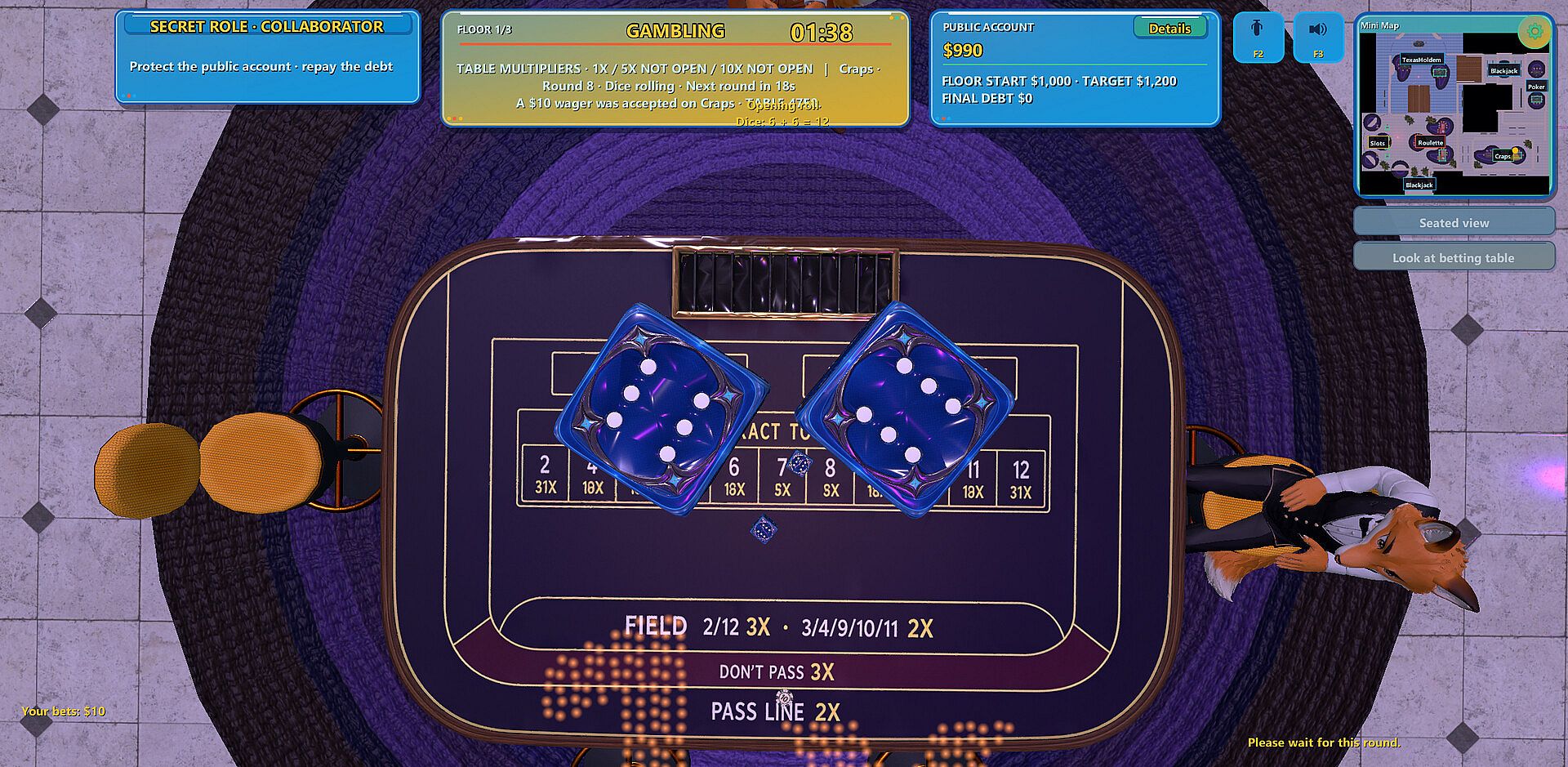
The core loop centers on shared financial pressure and hidden roles. Everyone starts with the same bankroll and must collectively reach escalating targets before each stage timer runs out. Bets placed at slots, roulette, blackjack, five-card poker, Texas Hold'em, or craps directly affect the shared balance. After each stage, participants review a detailed ledger that records every wager, including who continued betting after targets were met and who took the largest risks.
Traitors operate with a secret advantage: they convert portions of their own losing dark wagers into personal reserves while still relying on the team to avoid bankruptcy. Non-traitors counter this through direct actions such as questioning suspicious bets, approving or rejecting high-risk wagers, voting to restrict reckless players, and selecting individuals for end-of-session audits. If the shared account hits zero, the group votes on who accepts a loan that increases the final debt. Occasional three-card team-item offers appear randomly and can alter outcomes, though each purchase draws from the common funds everyone needs to survive.
Supporting systems include seating at specific tables with tailored views, a minimap for navigation, social actions, and full-room voice chat. The entire experience uses only fictional currency confined to the current session, with no real-money elements involved.
Game Modes
Traitor Gamble operates through a single continuous session structure rather than separate named modes. Matches support 2 to 8 players via Steam online multiplayer, with options for friend invites, room codes, passwords, and quick match. Hidden roles assign one or more traitors who remain unaware of each other's identities, creating layers of uncertainty even among those working against the team.
Each session unfolds across three escalating timed stages inside one casino environment. The focus stays on cooperative betting to clear targets while applying social tools to identify and limit traitors. No additional standalone modes or variations appear in the available details; the emphasis remains on the core loop of shared debt, ledger scrutiny, and final audit.
Key Mechanics and Features
Several interconnected systems shape every round. Shared funds create constant tension because every bet impacts the entire group. Detailed betting records allow precise tracking of behavior, while risk approvals and restriction votes give non-traitors direct ways to curb potential sabotage. Bankruptcy triggers a loan vote that raises stakes for the whole team, and team items introduce limited strategic purchases that still cost collective resources.
Interface support spans 16 languages, and the game runs exclusively on PC through Steam. All elements reinforce the social-deduction focus: players must communicate, observe patterns in betting, and decide whom to trust or audit without external progression systems or additional content layers.
Is It Worth Playing?
Traitor Gamble targets groups that enjoy social deduction combined with light casino mechanics and shared accountability. The hidden-traitor setup and ledger analysis reward careful observation and discussion, particularly in sessions with 4 to 6 players where conversation flows naturally. Voice chat integration and table-specific views support the party atmosphere, while the absence of real-money gambling keeps the focus on strategy and interaction.
The game remains in a pre-release state with a planned launch in Q4 2026, so no player reviews or long-term update history exist yet. Those drawn to cooperative betting under pressure and the challenge of spotting deception will find the described systems align closely with that preference. Players seeking pure competitive modes or solo experiences should look elsewhere, as the design centers on group sessions with hidden roles and collective outcomes.