













The Corporate Machine is a real-time economic strategy and business simulation game originally released in 2001. Players build and expand corporations across global markets with the aim of achieving market dominance through production, research, marketing, and targeted competitive actions.
Gameplay
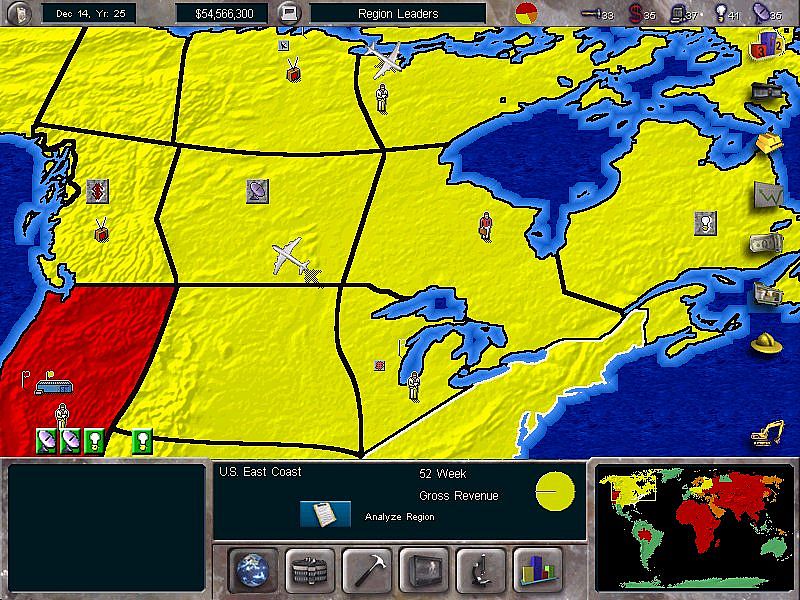
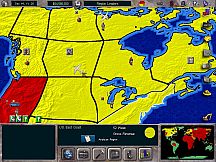
The core loop centers on managing a corporation from a starting headquarters while expanding influence across a map of regions. Exploration reveals local market conditions, consumer preferences, resource availability, and rival presence. Sales executives drive market penetration in assigned areas, and their reach expands as more are hired through profit milestones or special actions.
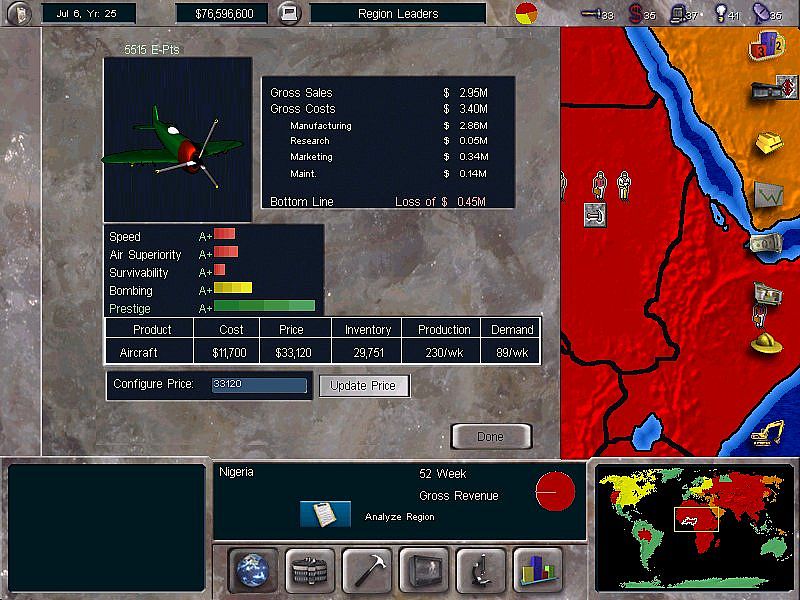
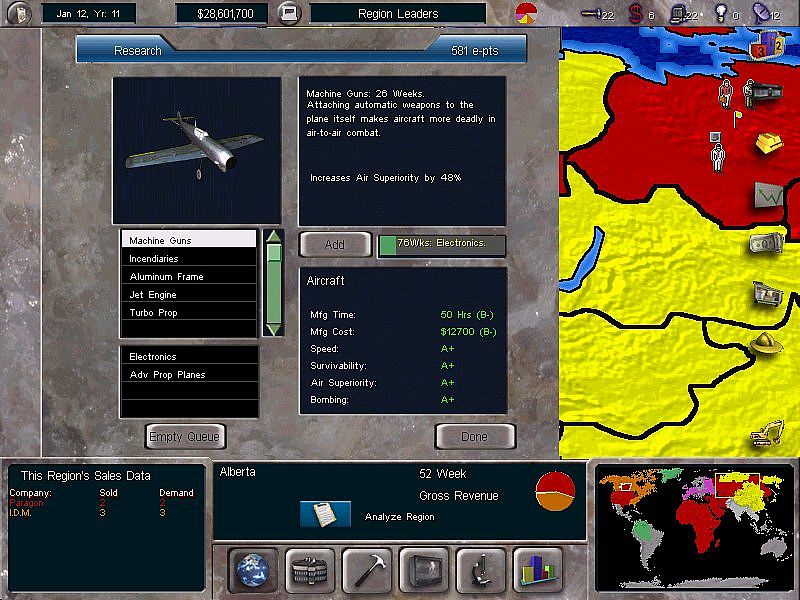
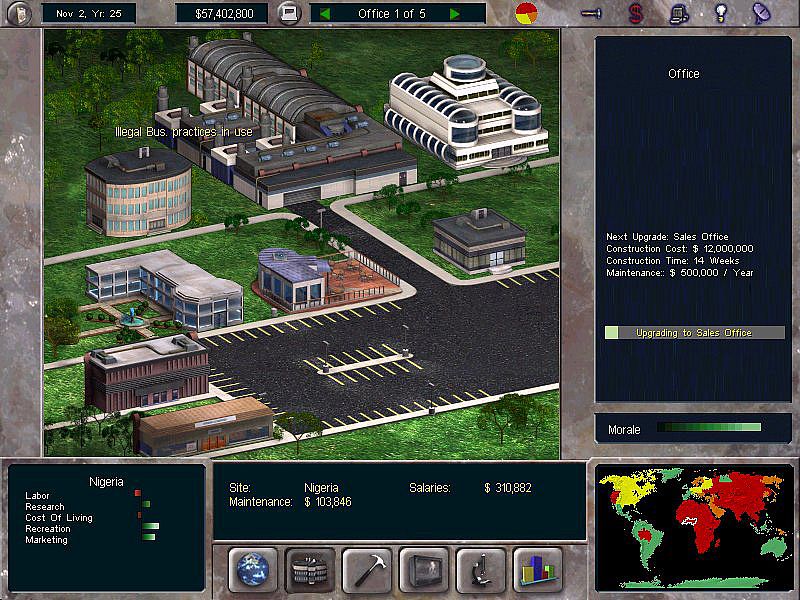
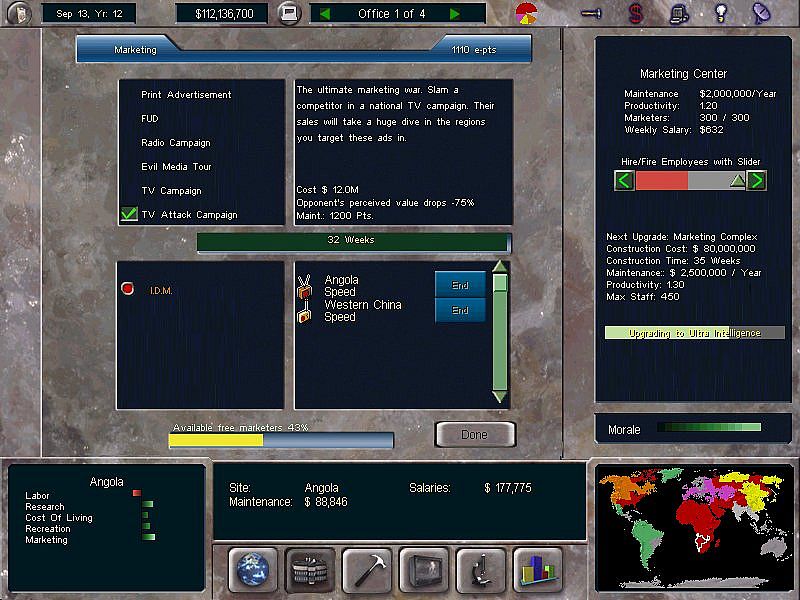
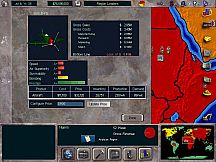
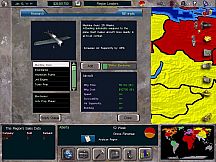
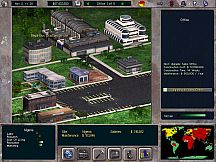
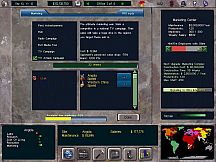
Company sites form the operational backbone. Players construct and upgrade facilities for manufacturing, research, and marketing while adding support structures like training centers for efficiency and recreation centers for employee morale. Manufacturing focuses on scaling production capacity, adjusting workforce levels to match demand, and setting prices that balance profitability against competition. Research queues allow development of product improvements that lower costs or increase consumer appeal. Marketing departments produce campaigns that enhance product qualities or diminish those of rivals through various media channels.
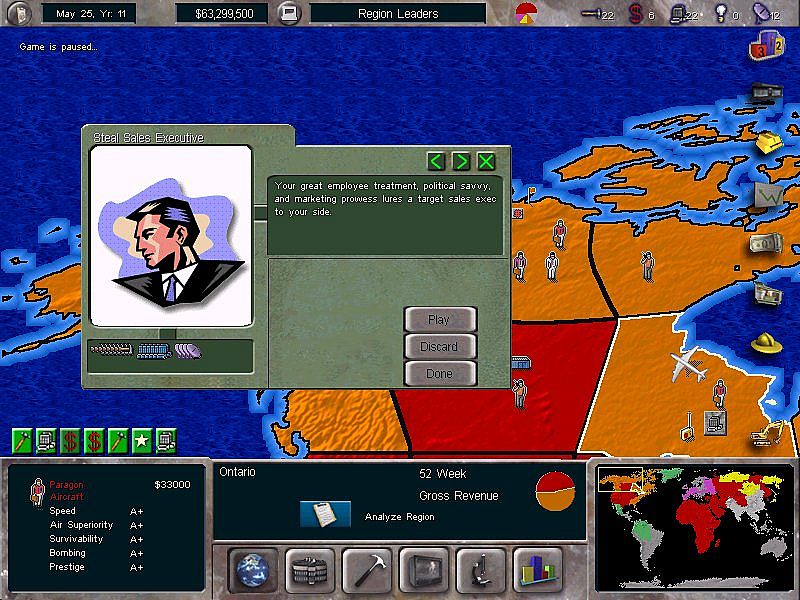
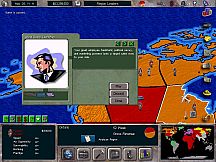
Direct action cards introduce tactical elements. Regions controlled over time generate resource points in categories such as labor, government, intelligence, marketing, and underworld. These points fund cards that deliver effects including financial support, research advances, intelligence gathering, consumer preference shifts, or direct interference with competitors such as strikes or executive recruitment.
Industries available include automobiles, aircraft, computers, and soft drinks. Each game begins with selection of a specialty that boosts productivity in marketing, labor, or research, followed by choices for map, opponents, difficulty, and starting capital. The objective requires capturing a majority market share, typically between 55 and 65 percent depending on the number of rivals.
Game Modes
Single-player campaigns pit the player against AI opponents on maps that range from real-world layouts to fictional designs. Difficulty settings and opponent counts adjust the challenge, while the real-time progression unfolds across years with annual resource gains and executive hiring thresholds that increase over time.
Multiplayer supports up to eight participants in matches that emphasize the same economic systems and card-based interactions. Games can run over local networks or internet connections, allowing direct competition for regional control and overall market leadership.
Key Mechanics and Systems
Resource management ties directly to territorial control, with each controlled region contributing points that enable card plays. Employee dynamics add layers through hiring, firing, training, and morale maintenance, as unhappy staff reduce output and lost market leadership in a site location can trigger sharp morale drops.
Product development evolves through research projects that provide ongoing bonuses, while marketing campaigns can be relocated like mobile executives to target specific regions. Price setting in manufacturing requires constant monitoring of rival offerings to avoid demand collapse or loss of leadership position.
Is It Worth Playing?
The game remains available as a re-release of the 2001 title with no major recent updates or seasonal content. Steam user reviews stand at mixed, with 68 percent positive from a modest total of 63 reviews. Reception from the original period described favorable critic scores on aggregate sites, highlighting the strategic depth and artificial intelligence.
This title suits players who enjoy deliberate economic simulation and long-term empire building without reliance on fast-paced action. Those seeking classic real-time strategy focused on market control, facility management, and competitive card play will find a complete experience in its single-player and multiplayer formats. Newcomers to the genre may appreciate the accessible starting options, while veterans can explore the interplay of specialties, resources, and direct actions across multiple industries.