


























Tennis Manager 2021 is a strategy and simulation game focused on sports management. Players take control of a tennis academy on PC, guiding young talents from junior circuits through professional tours toward Grand Slam success. The experience centers on long-term planning, resource allocation, and real-time decision making rather than direct control of matches.
Gameplay
Core gameplay revolves around academy development and player progression. Users select or create an academy and expand its facilities, including tennis courts, medical centers, and business areas. Upgrades increase capacity for staff and attract higher-caliber recruits while improving overall operations.
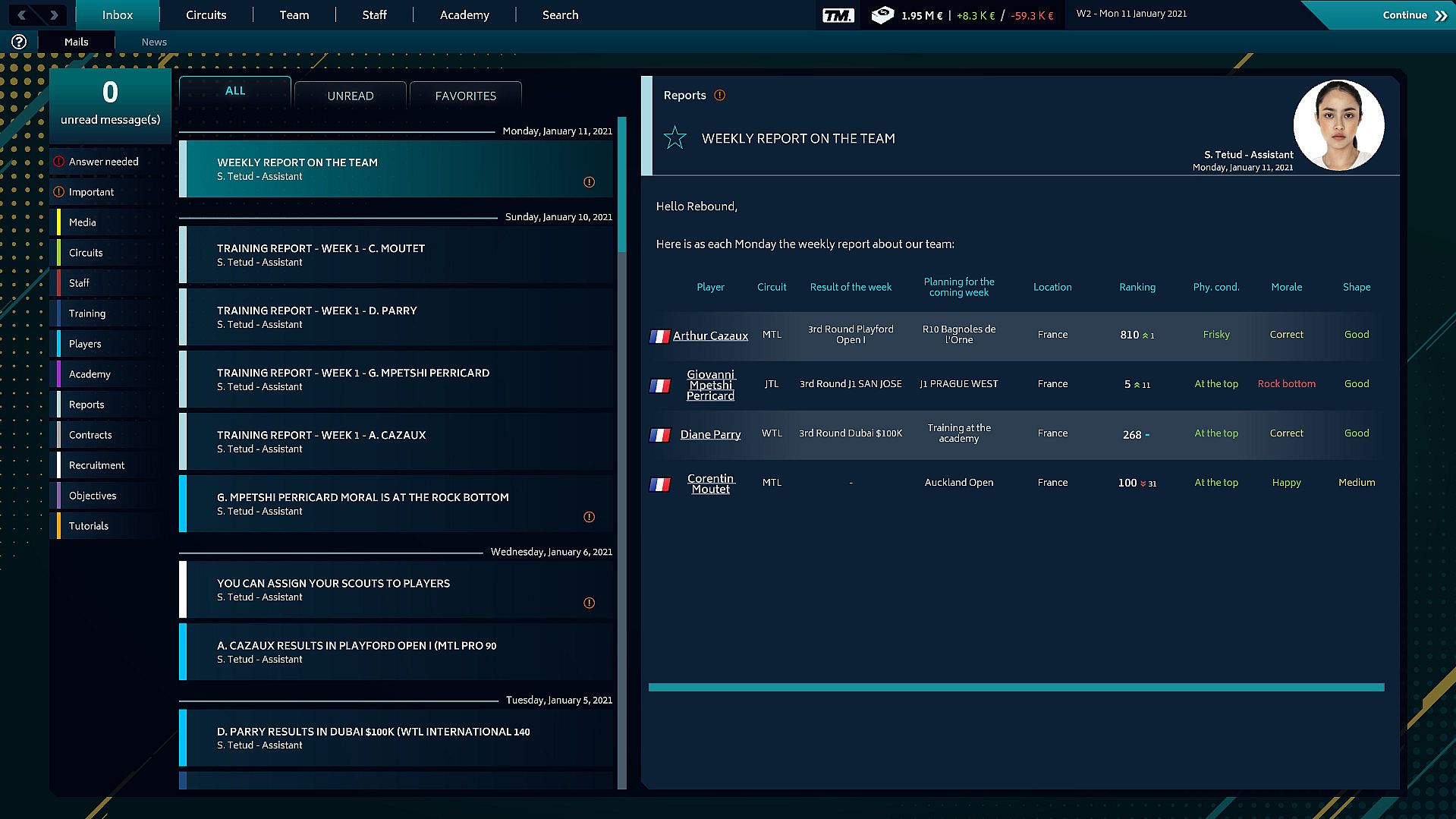
Financial management forms a constant layer. Revenue comes from tournaments, sponsorships, and investor deals, while expenses cover player salaries, facility maintenance, and equipment. Tools allow monitoring of cash flow and staff performance to maintain stability across seasons.
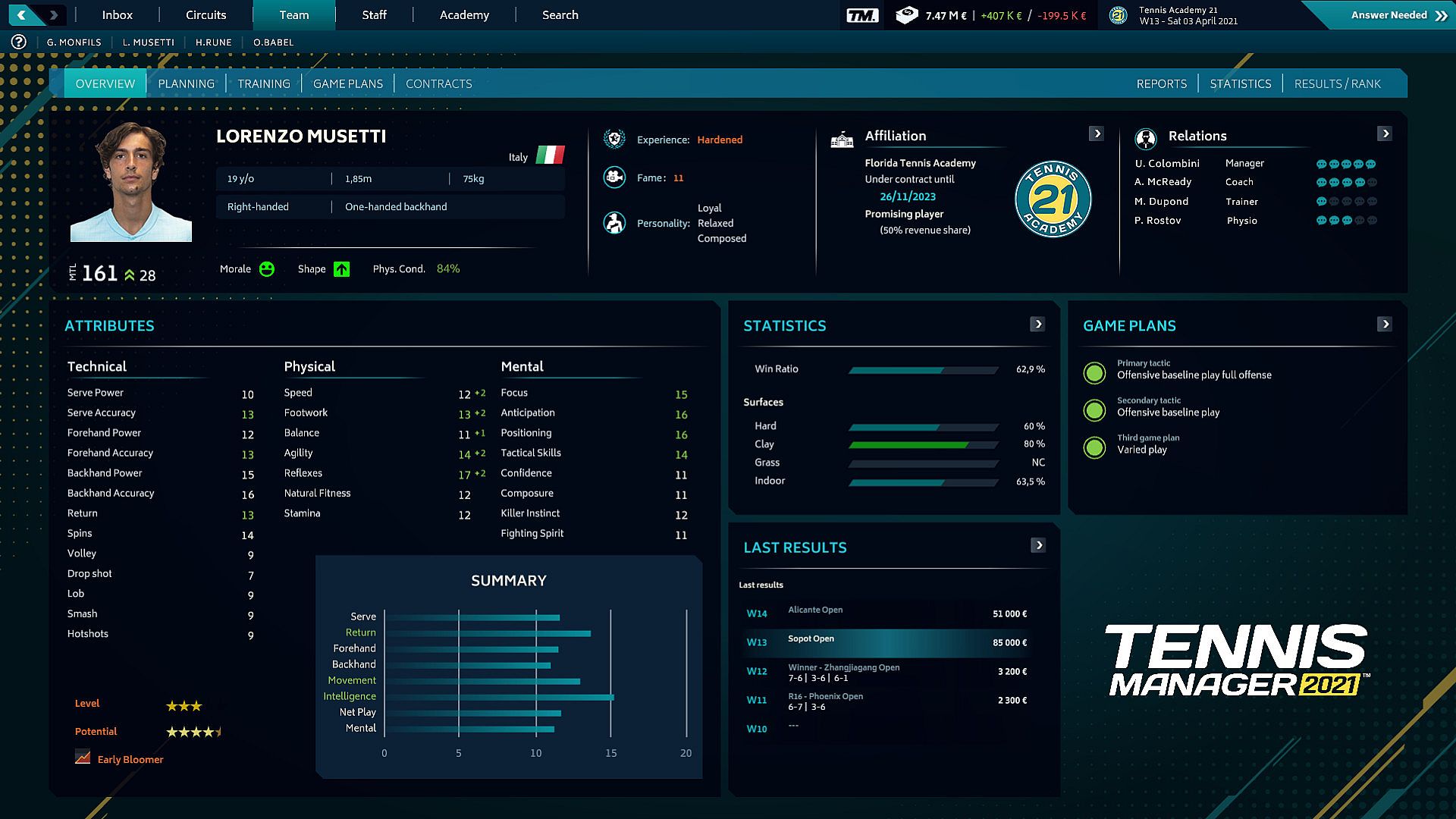
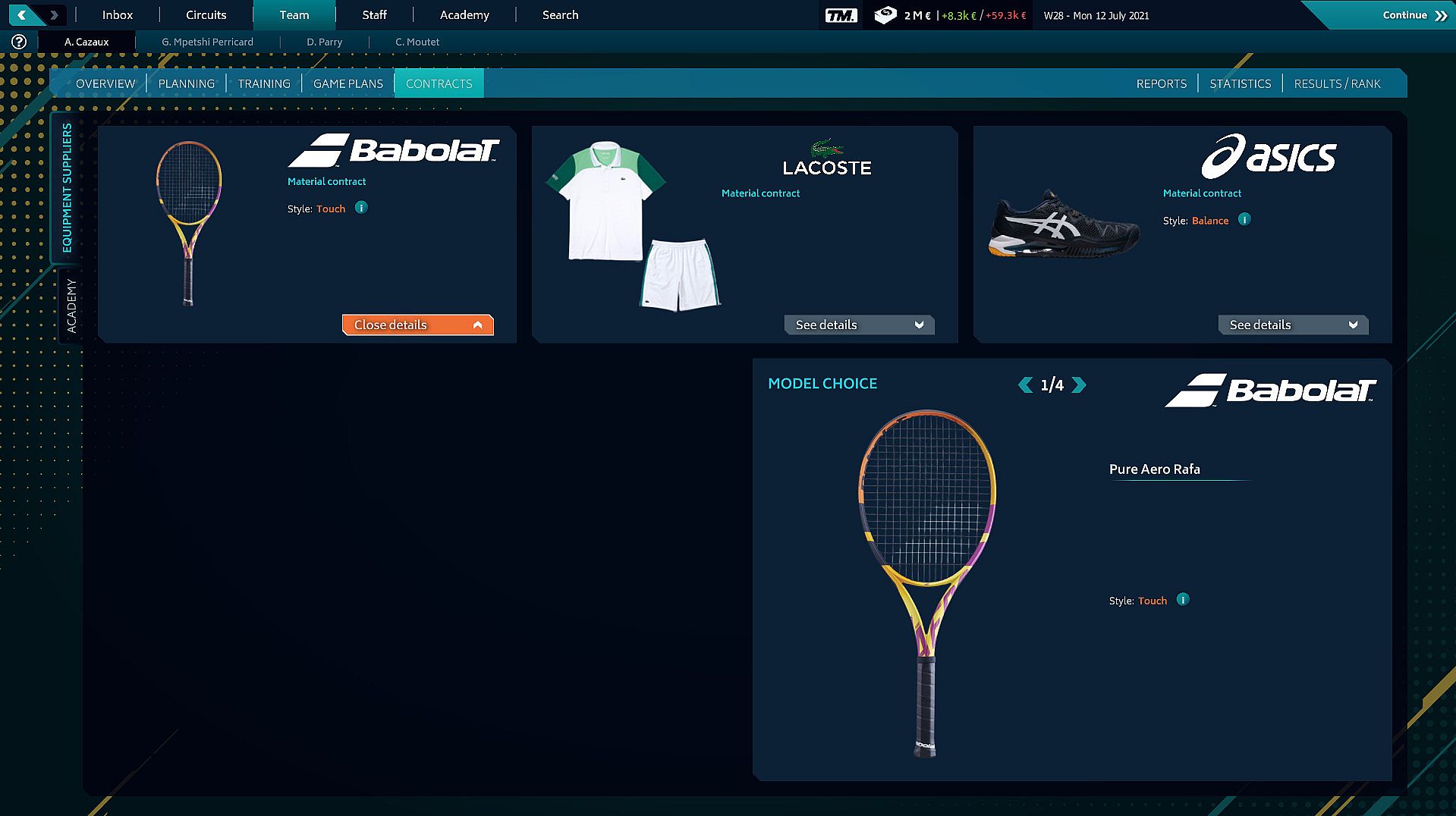
Player recruitment and development rely on detailed attributes. Each athlete features unique traits such as preferred surface, morphology, temperament, and physical condition. Analytical tools track these elements over time, helping managers tailor training schedules and match preparations. Equipment contracts with brands like Wilson, Lacoste, and ASICS add another layer of choices between performance gains and income opportunities.
Communication plays a direct role in outcomes. Managers deliver pep talks before matches or between sets to influence player mindset. Press interactions help manage expectations from academy leadership and shape public perception.
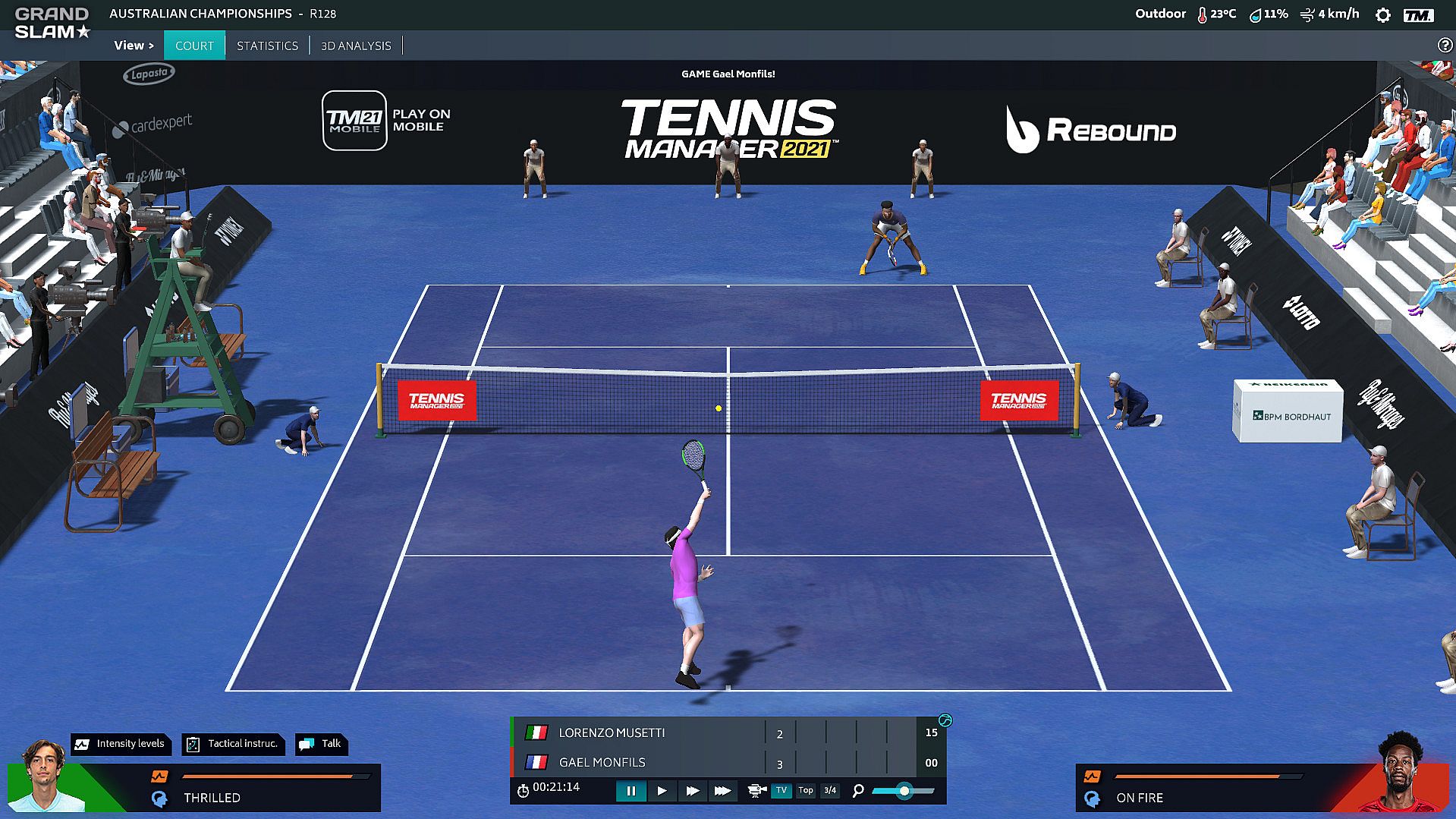
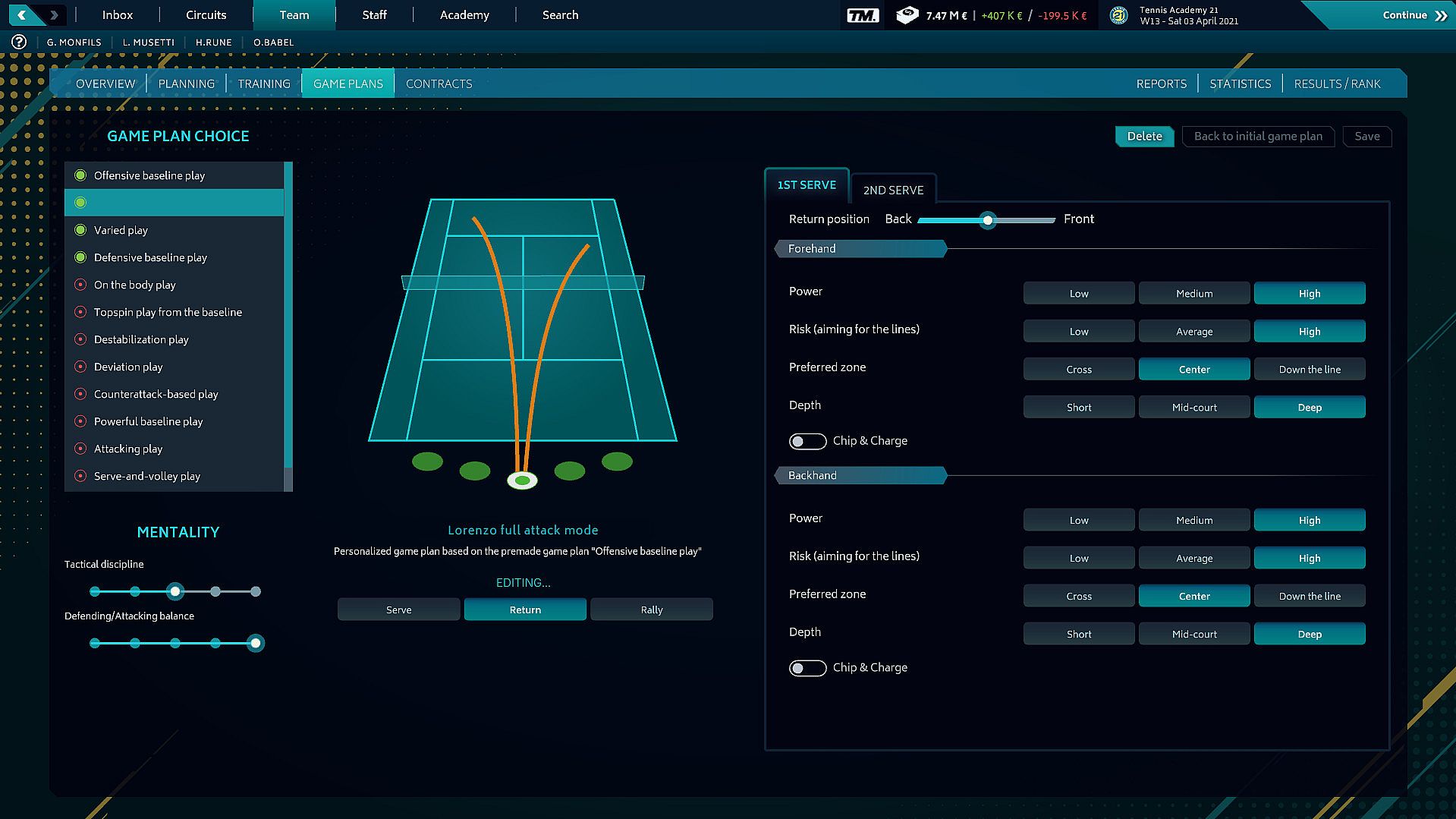
Matches unfold through a 3D engine that displays live statistics. Pre-set plans allow quick starts, while deeper adjustments cover shot selection, power levels, and positioning to exploit opponent weaknesses during play.
Game Modes
The primary structure involves overseeing an academy across multiple circuits. Junior and professional tours feature more than 2000 tournaments where players compete under the manager's guidance. Progression tracks individual careers from early promise to elite levels.
Academy building operates as an ongoing mode. Choices range from joining established institutions to founding a new one, with infrastructure decisions directly affecting recruitment pools and business revenue streams.
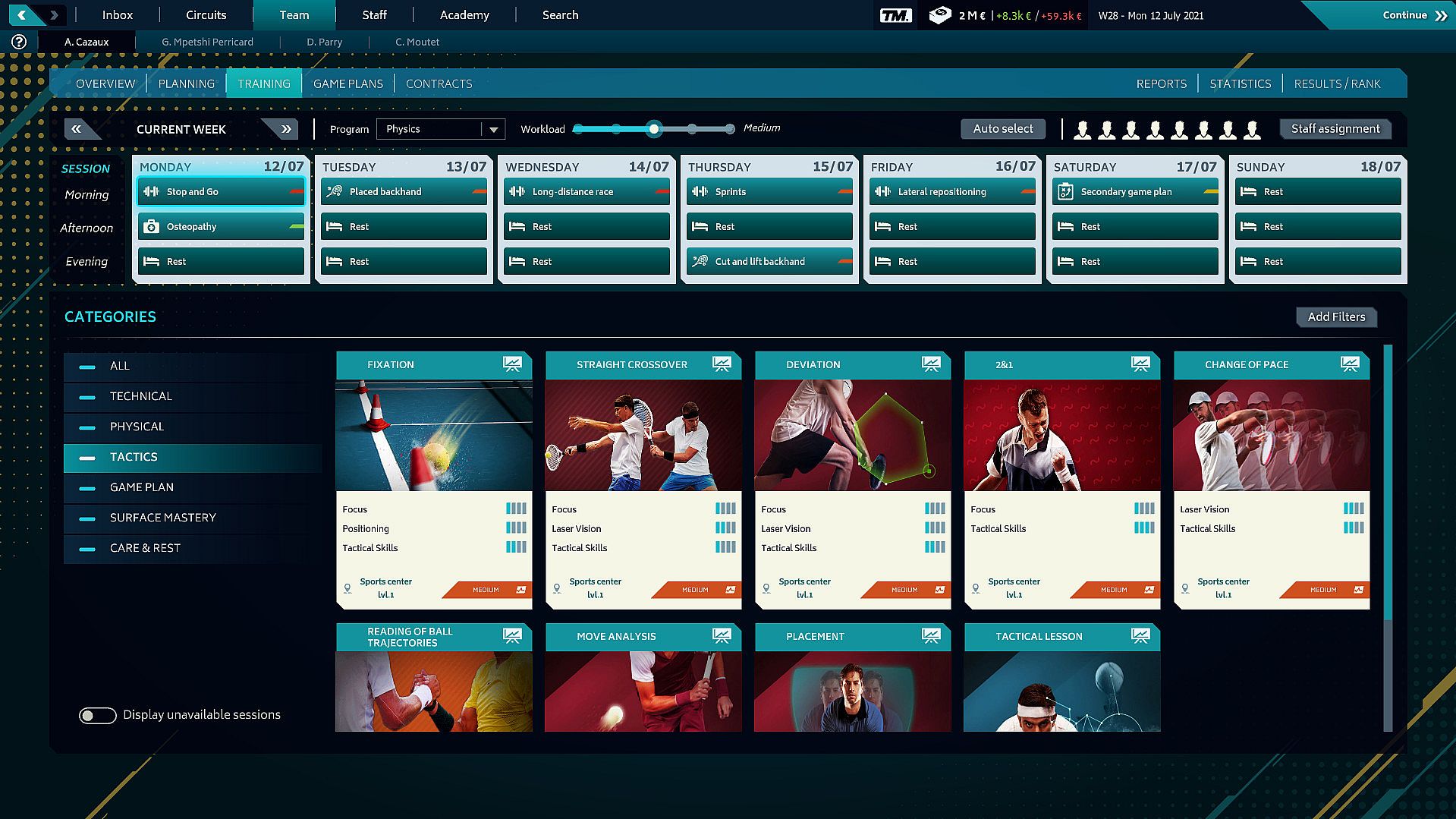
Team management covers scheduling, training routines, and brand partnerships for the roster. Staff recommendations provide guidance, yet managers retain full authority over routines and equipment decisions for each player.
Real-time coaching during matches serves as an interactive element within the broader simulation. Decisions on tactics influence immediate results and long-term player growth metrics.
Academy Development and Player Progression
Building infrastructure unlocks higher staff numbers and better facilities, which in turn support larger rosters and improved training outcomes. Each upgrade carries costs that must balance against tournament earnings and sponsorship income.
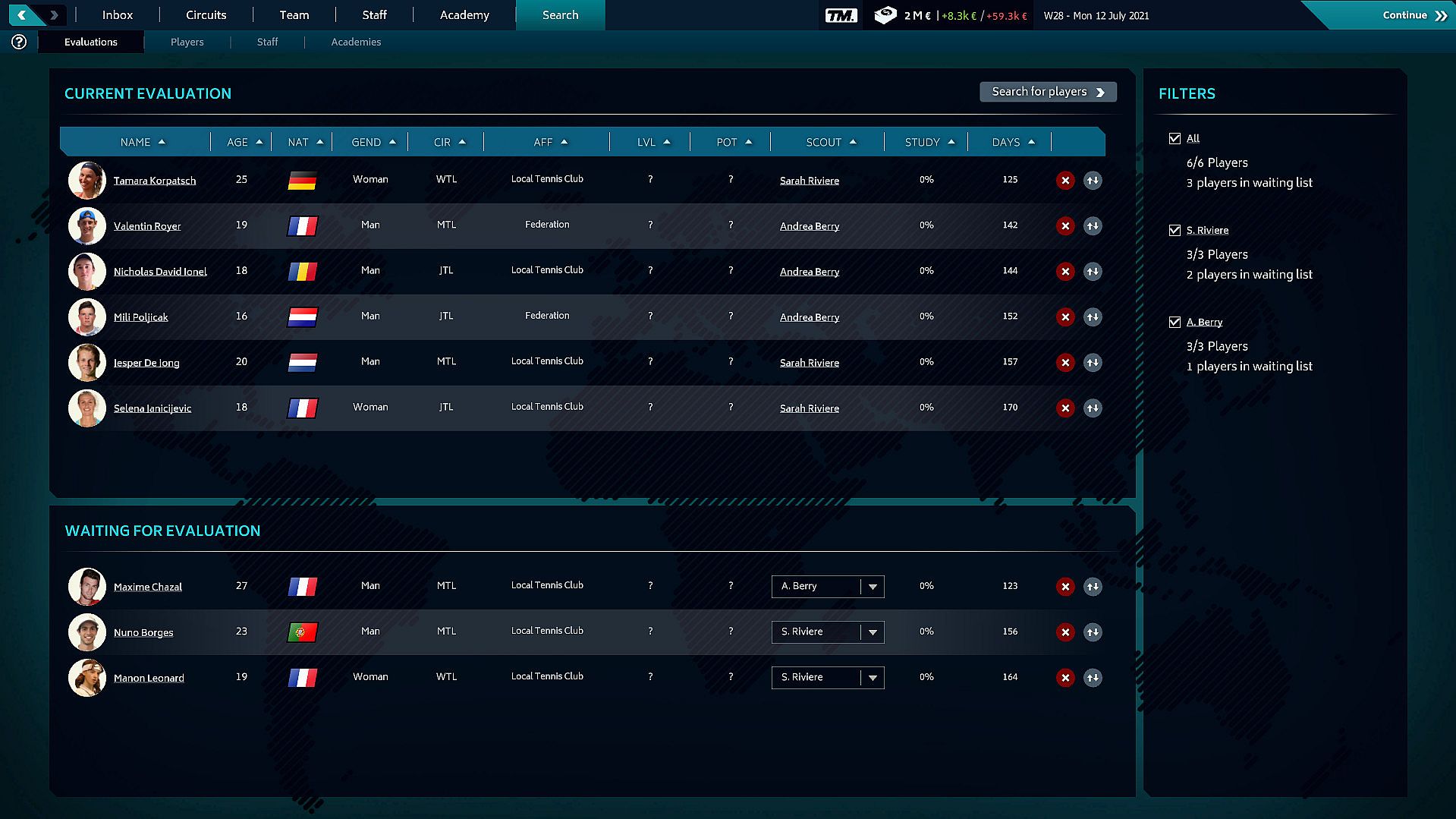
Player evaluation uses dozens of parameters to assess fit for specific surfaces and competition levels. Managers monitor physical condition and mental state alongside technical skills, adjusting approaches to maximize individual potential across the roster.
Is It Worth Playing?
Tennis Manager 2021 appeals to players who enjoy detailed sports management simulations with single-player focus. The combination of academy construction, financial oversight, and tactical coaching during matches provides depth for those interested in long-term strategy rather than fast-paced action.
Reviews highlight solid mechanics for recruitment and match preparation alongside occasional inconsistencies in match simulation results. The game suits enthusiasts of niche management titles who value attribute tracking and real-time intervention options.
Availability remains limited to its original PC release without confirmed ongoing seasonal content or major updates in recent years. Those seeking a focused tennis academy experience will find the verified systems rewarding, while broader audiences may prefer titles with more varied multiplayer elements or frequent content additions.