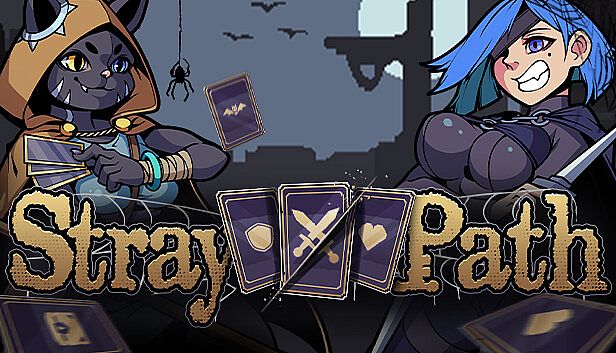




























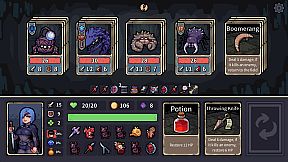
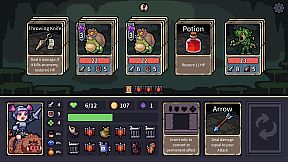
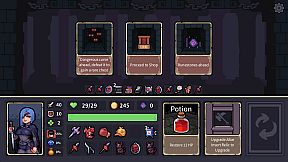
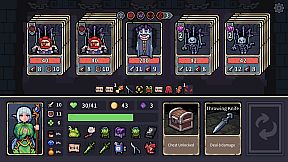
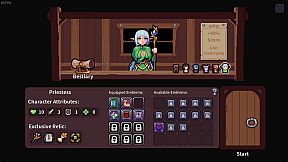
Stray Path is a roguelike card game that combines elements of strategy, adventure, and casual play on PC. Players select from a variety of adventurers and navigate a randomly generated world by flipping and managing cards in a style inspired by FreeCell solitaire. The experience centers on decision-making around skill cards, item cards, and equipment choices that determine survival through successive challenges.
Gameplay
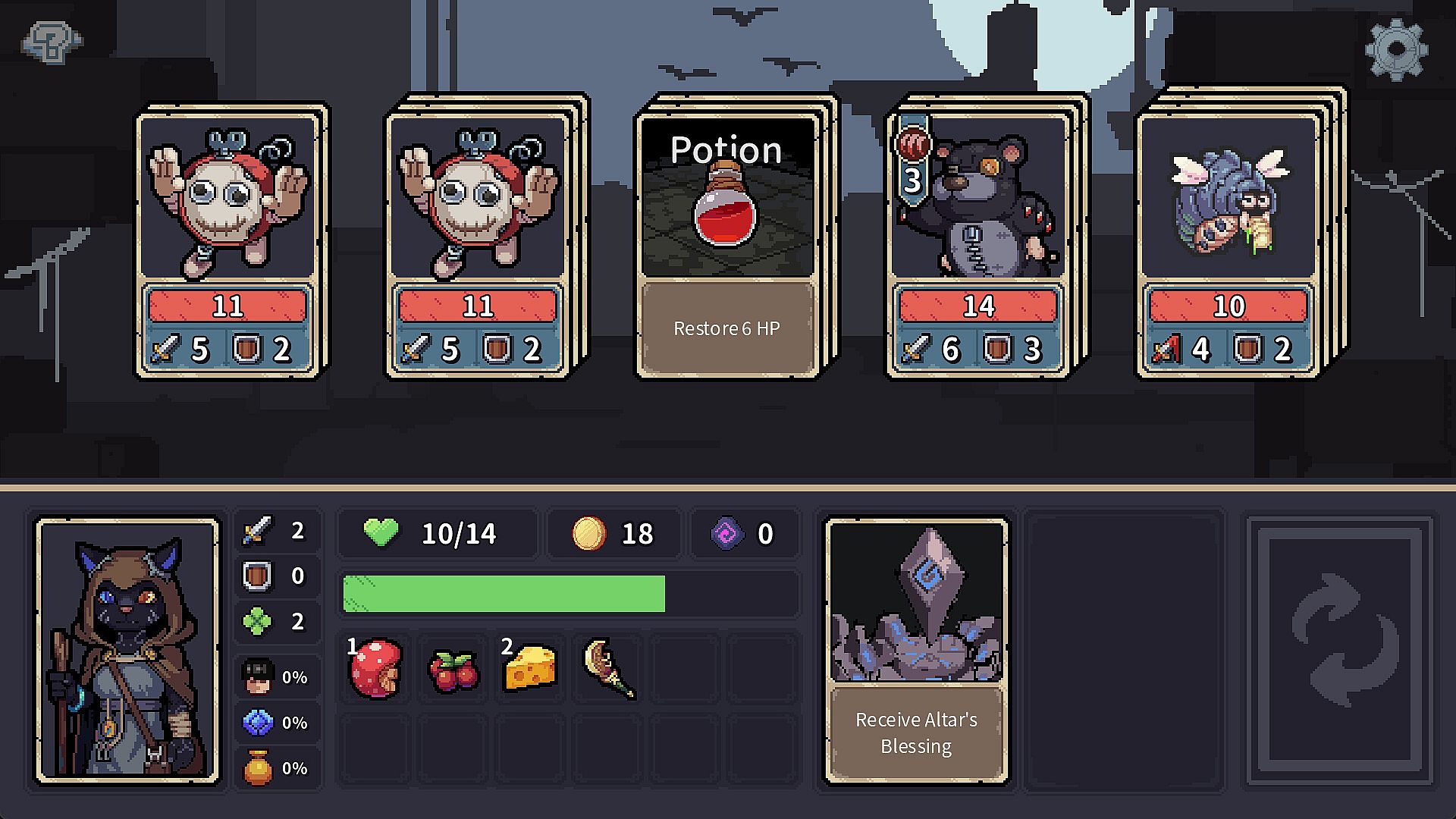
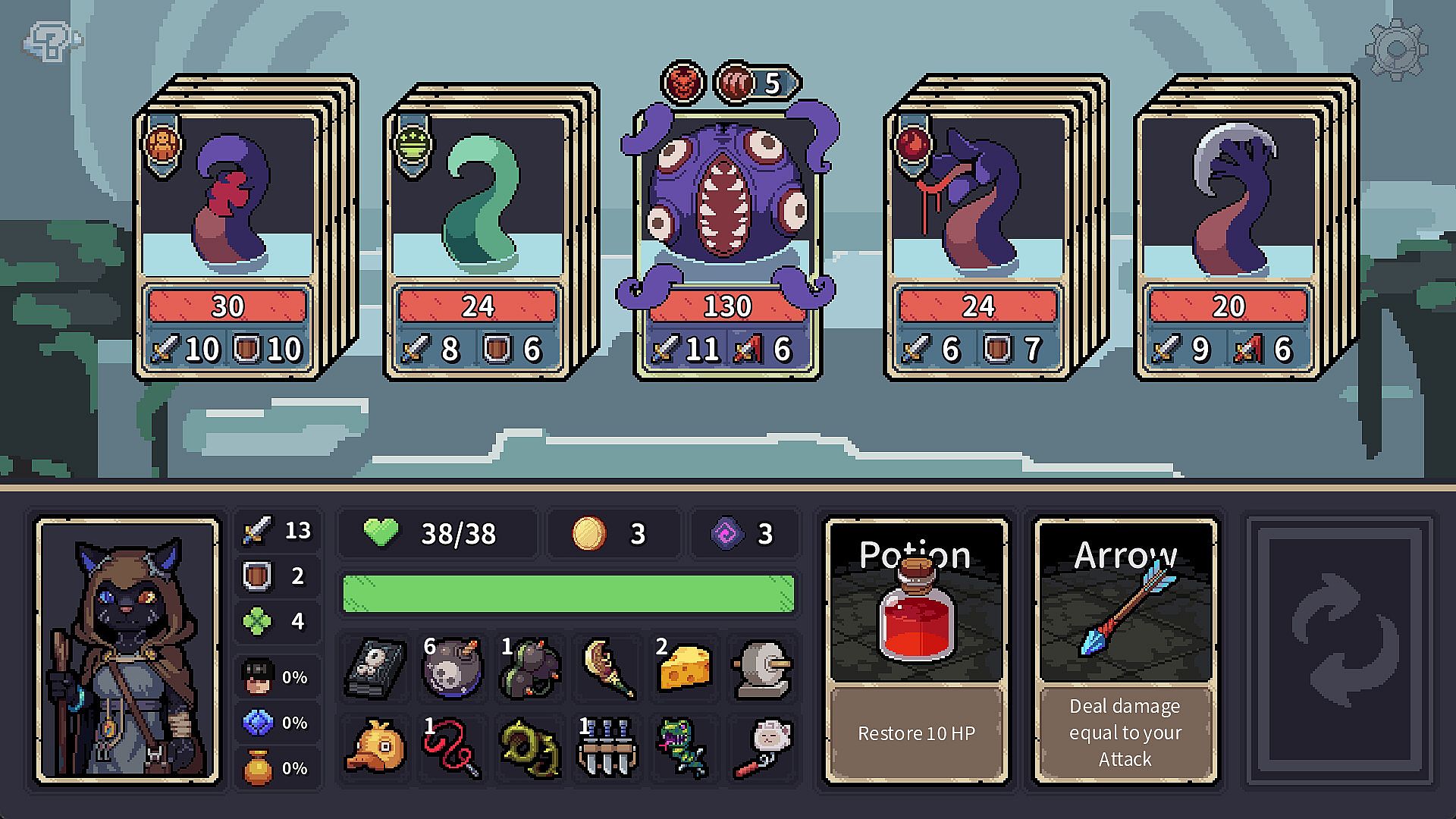
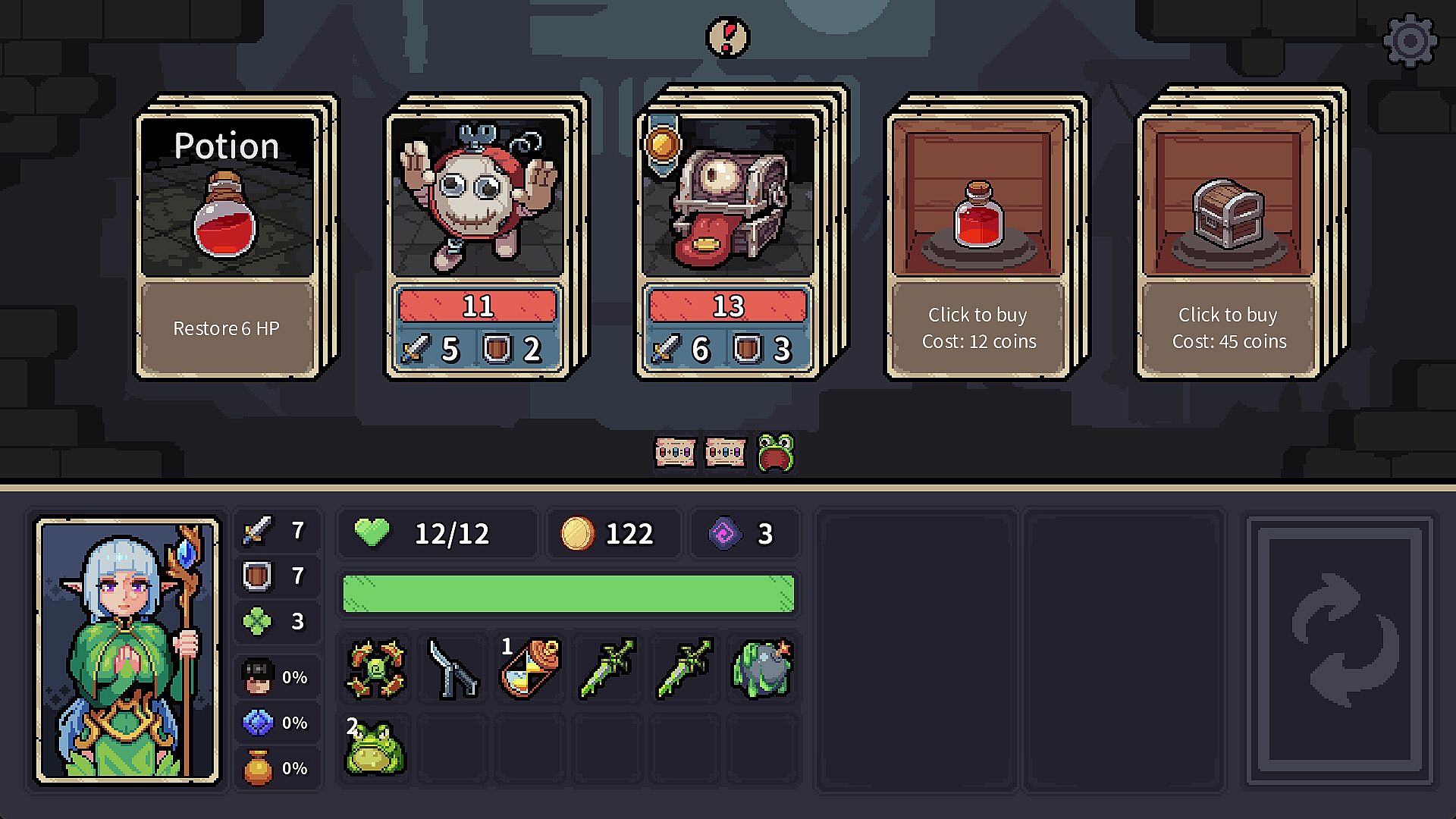
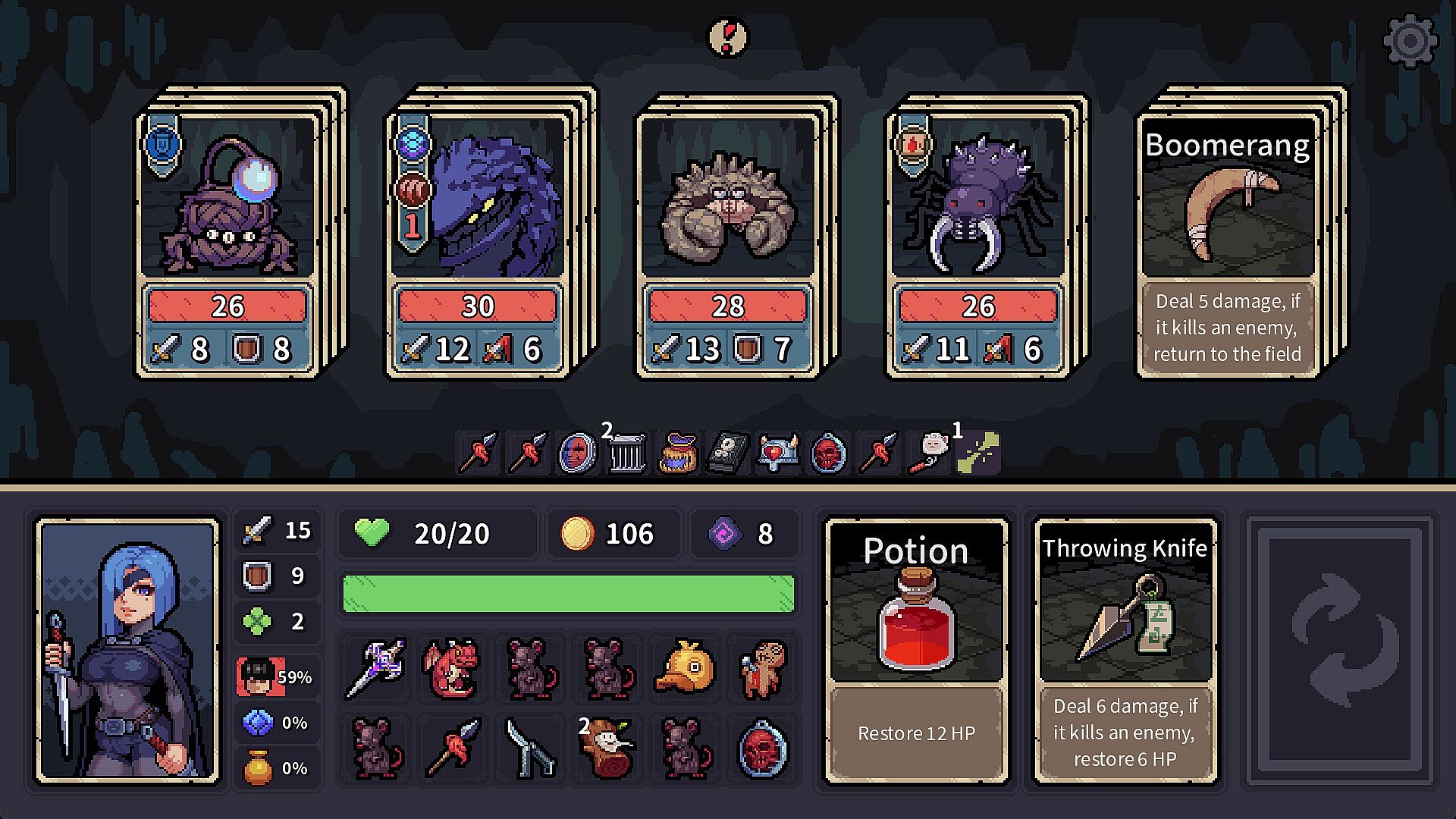
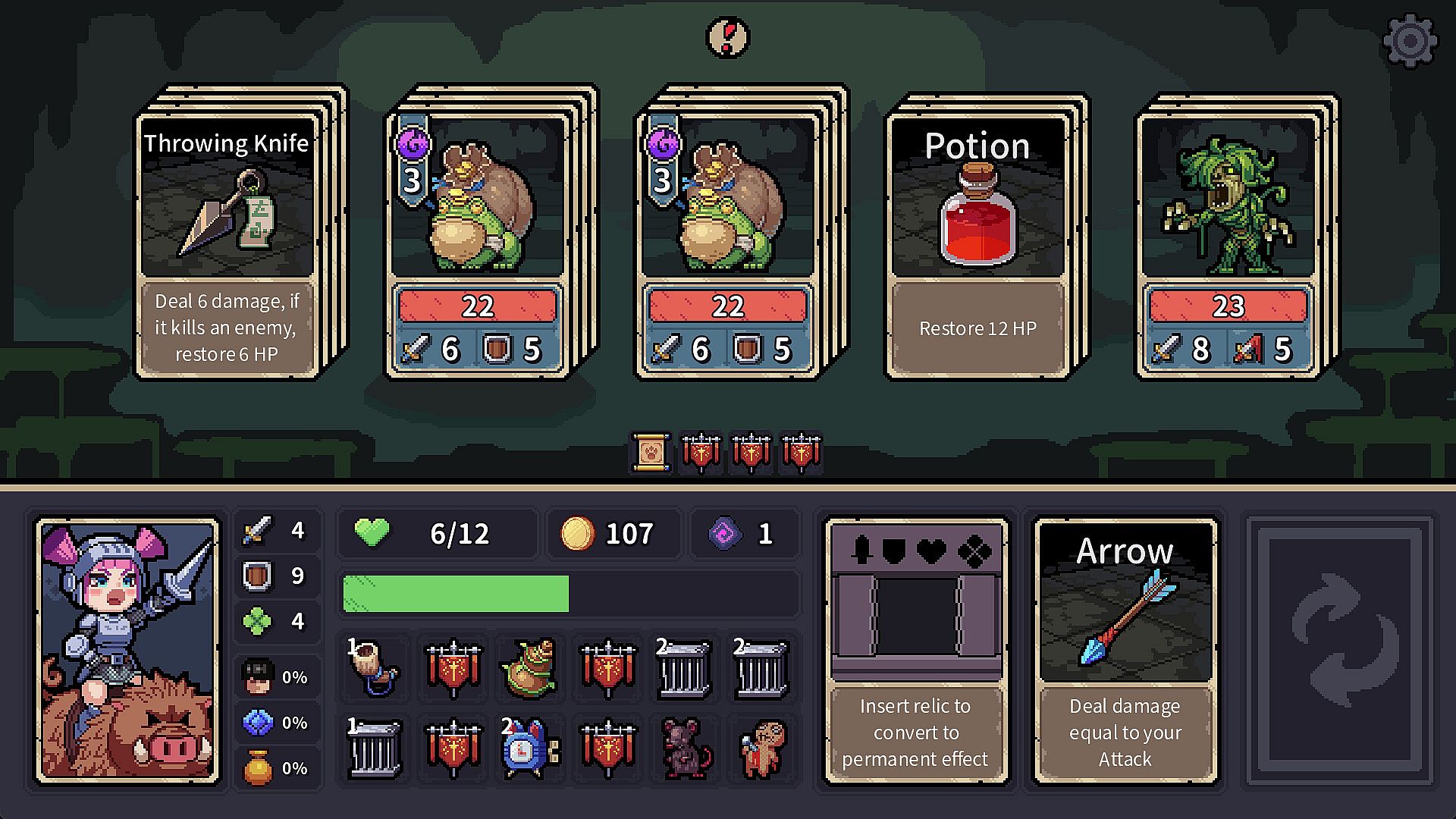
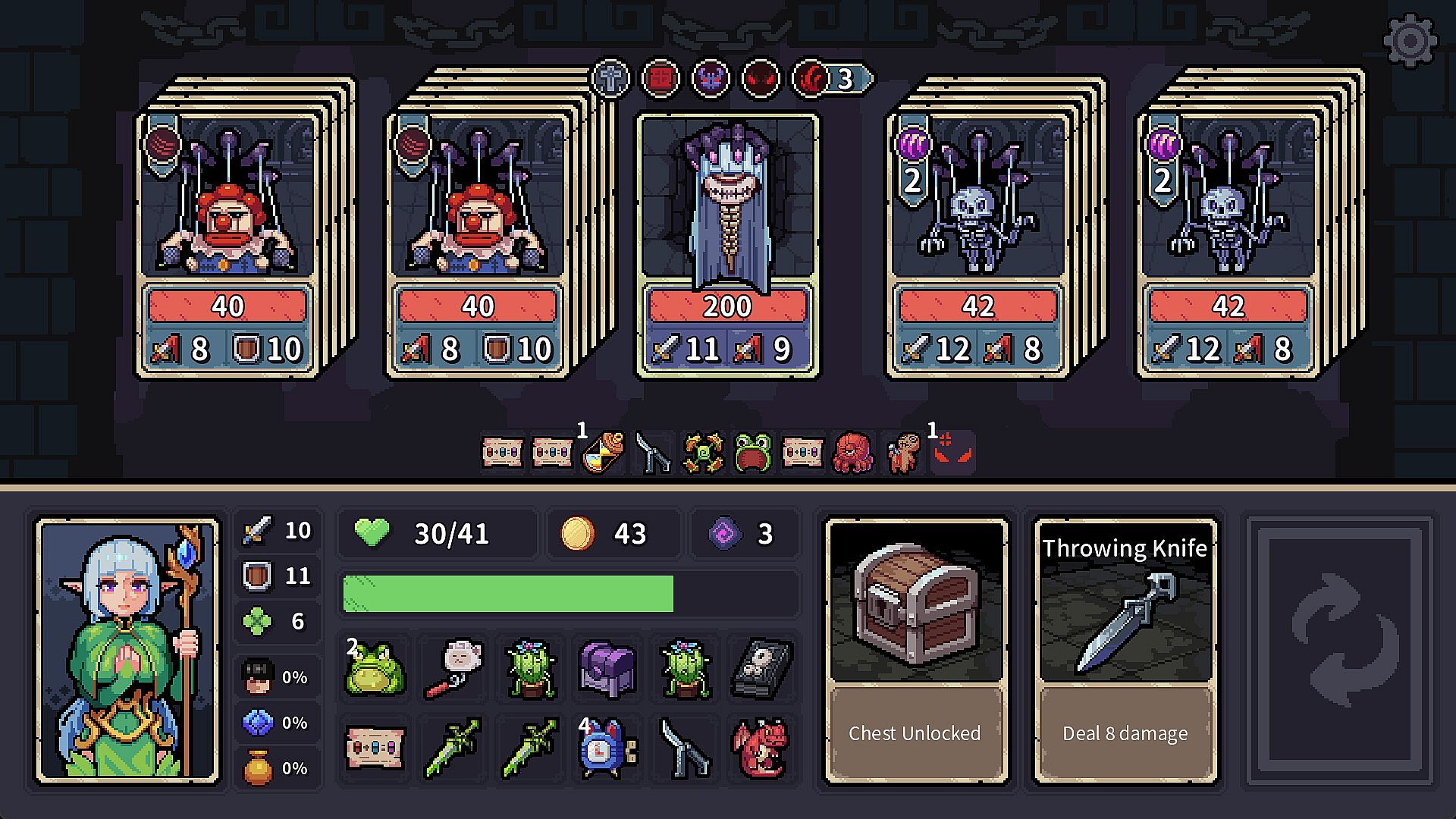
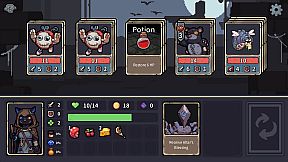
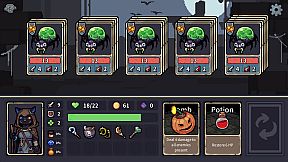
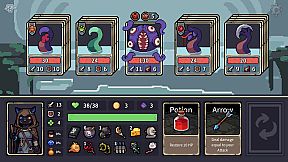
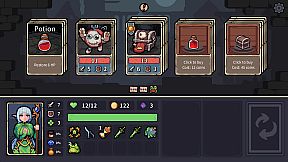
The core loop involves presenting players with sets of face-down cards that reveal enemies, chests, or items upon selection. Combat resolves through straightforward calculations comparing attack and defense values, with retaliatory damage possible based on the difference between stats. Players can drag cards to free up space in the layout, similar to moving sequences in FreeCell, and maintain an inventory limited to two cards for holding items or equipment temporarily.
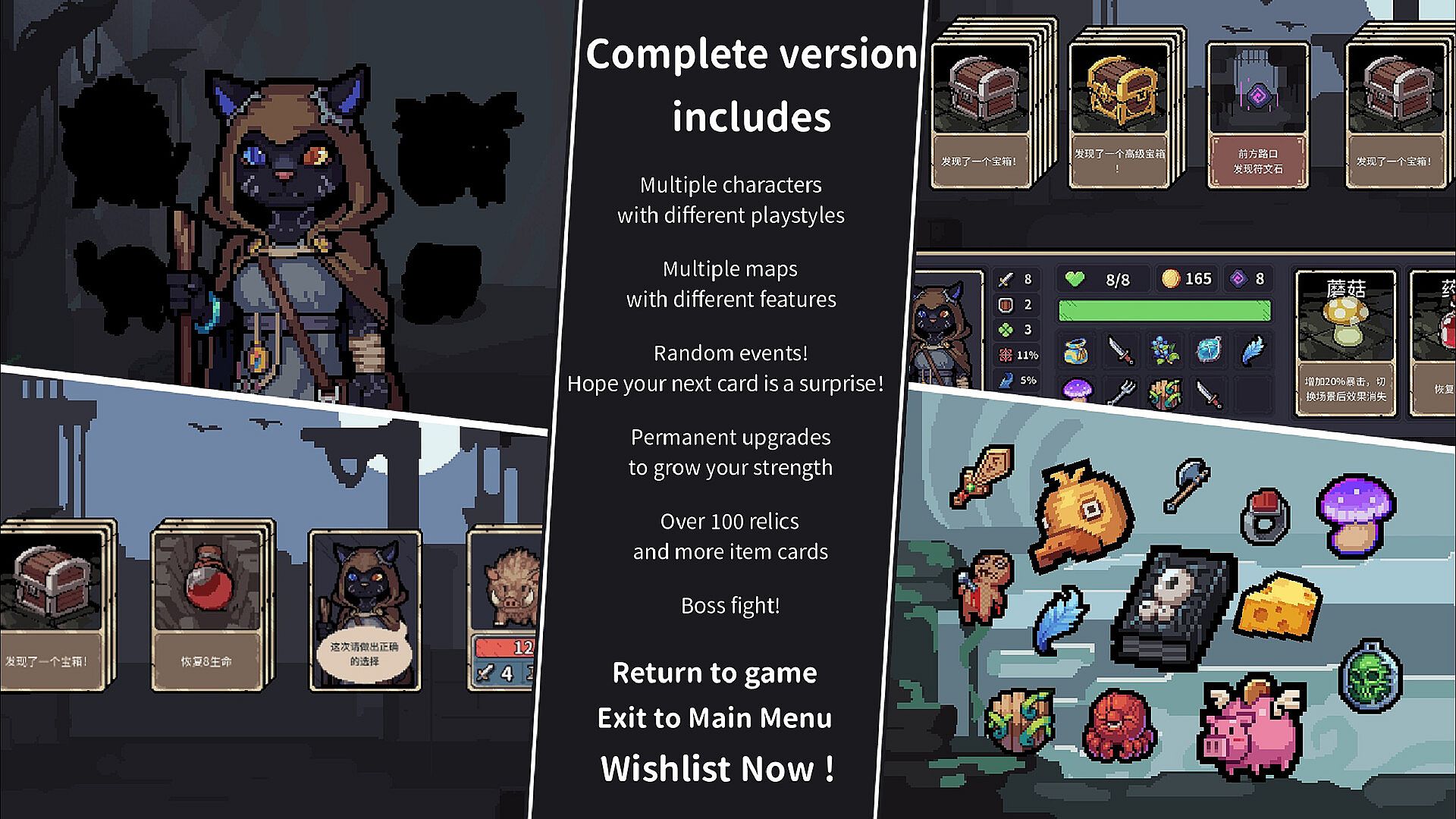
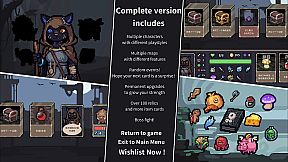
Optimization comes from choosing whether to engage threats, bypass them, or collect rewards from chests. Discarding unwanted cards provides resources like gold, while kept items and relics modify stats such as attack power or defensive capabilities. Over 100 pieces of equipment and items support varied builds, allowing approaches that emphasize high defense to absorb hits or aggressive setups focused on quick eliminations. Each run progresses through layers of the world, with random encounters shaping the path until reaching the conclusion or failing.
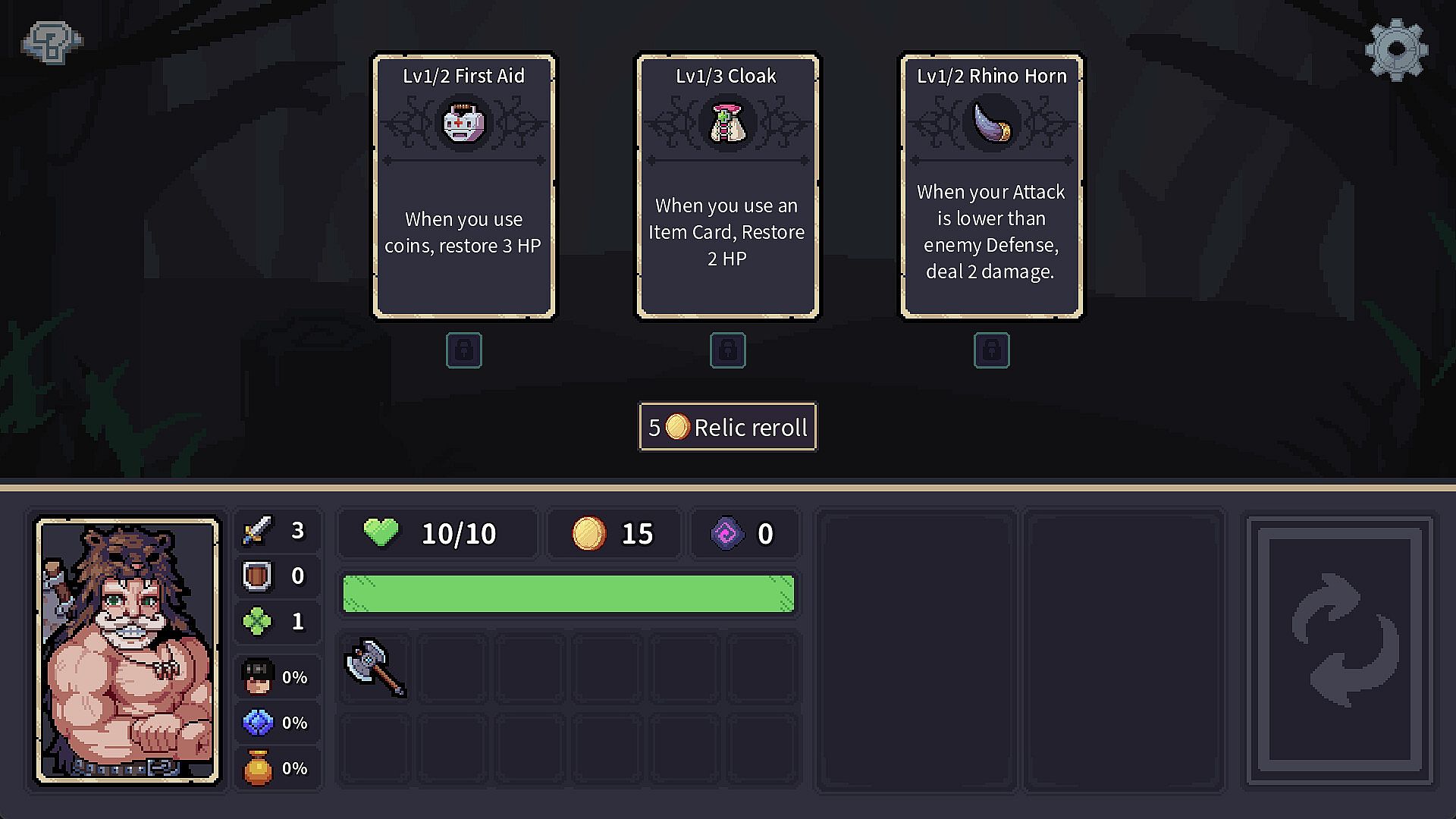
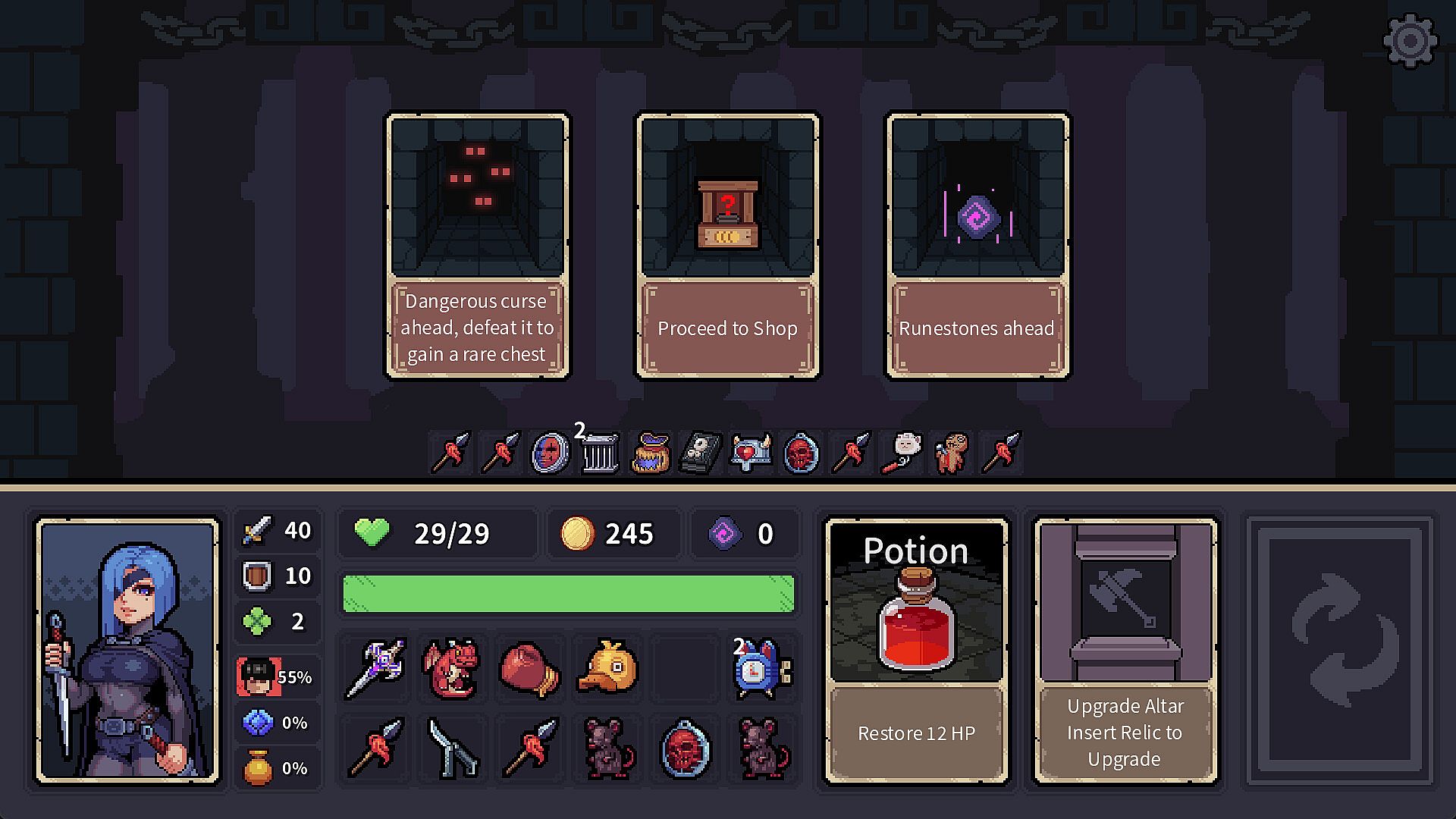
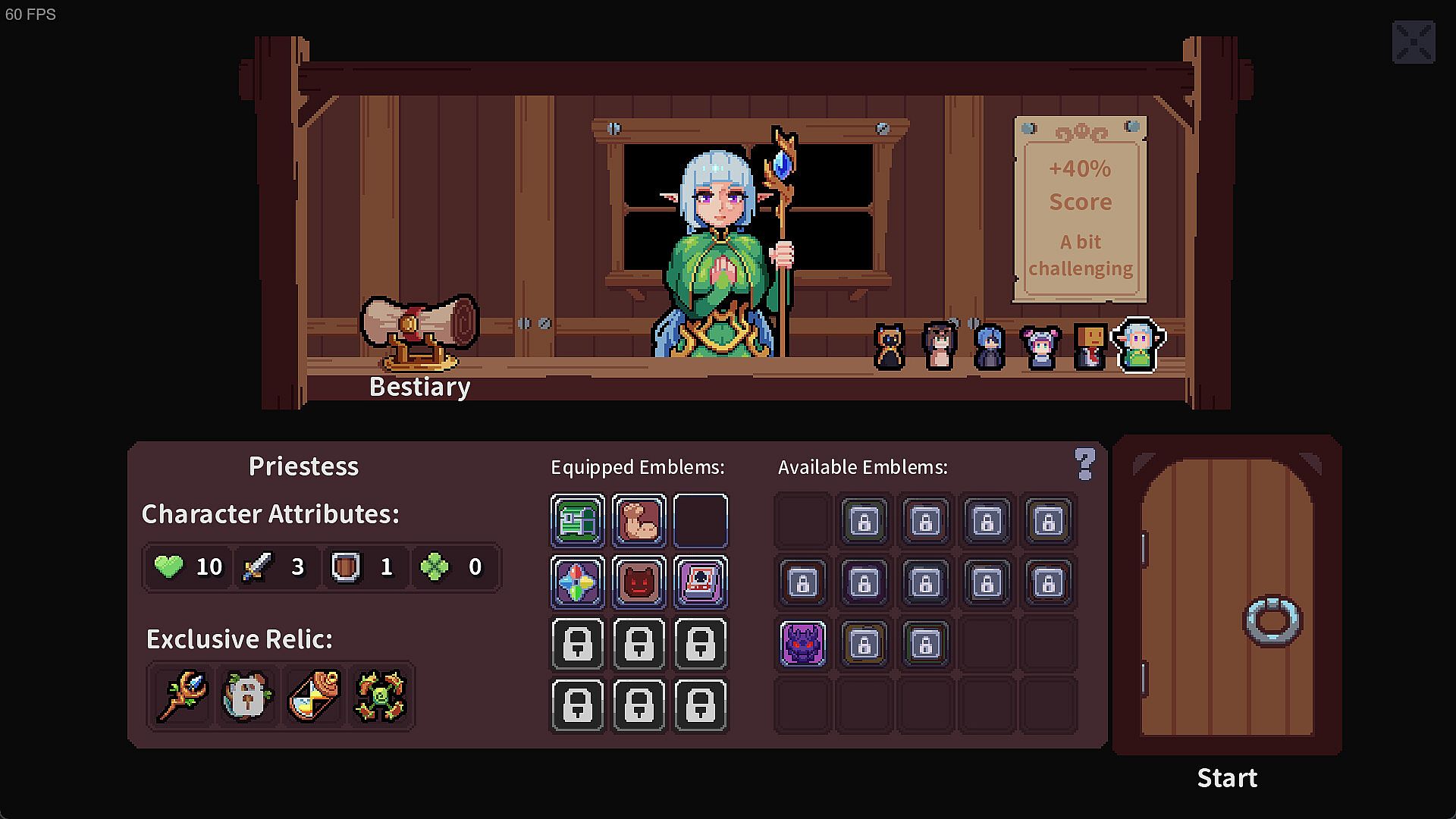
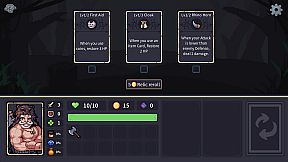
Character selection influences starting stats and potential synergies with collected relics and blessings from altars. Upgrades occur during runs, expanding options for loadouts that suit different risk tolerances. The random generation ensures that card layouts, enemy types, and prize distributions differ across attempts, encouraging repeated play to refine strategies around the limited inventory and card management.
Game Modes
Stray Path operates as a single-player roguelike experience built around repeated runs in procedurally generated environments. Each attempt starts with character choice and proceeds through card-based exploration without separate multiplayer or competitive formats. The structure emphasizes progression via accumulated knowledge of mechanics rather than distinct named modes, with all content revolving around the central stray world traversal.
Random events, enemy encounters, and item placements create variability within the unified run format. Players advance by managing card piles, deciding on combat or avoidance, and adapting loadouts on the fly. This setup supports extended sessions focused on optimization and adaptation, with no verified variations such as endless modes or challenge variants beyond the standard roguelike loop.
Key Mechanics and Progression
Card layout management forms the foundation, where freeing spaces reveals new options and allows strategic repositioning. Inventory constraints force prioritization, turning every keep-or-discard choice into a meaningful trade-off that affects combat effectiveness and resource gathering. Equipment collection builds toward powerful combinations, such as layering defensive buffs or amplifying damage output through specific relics.
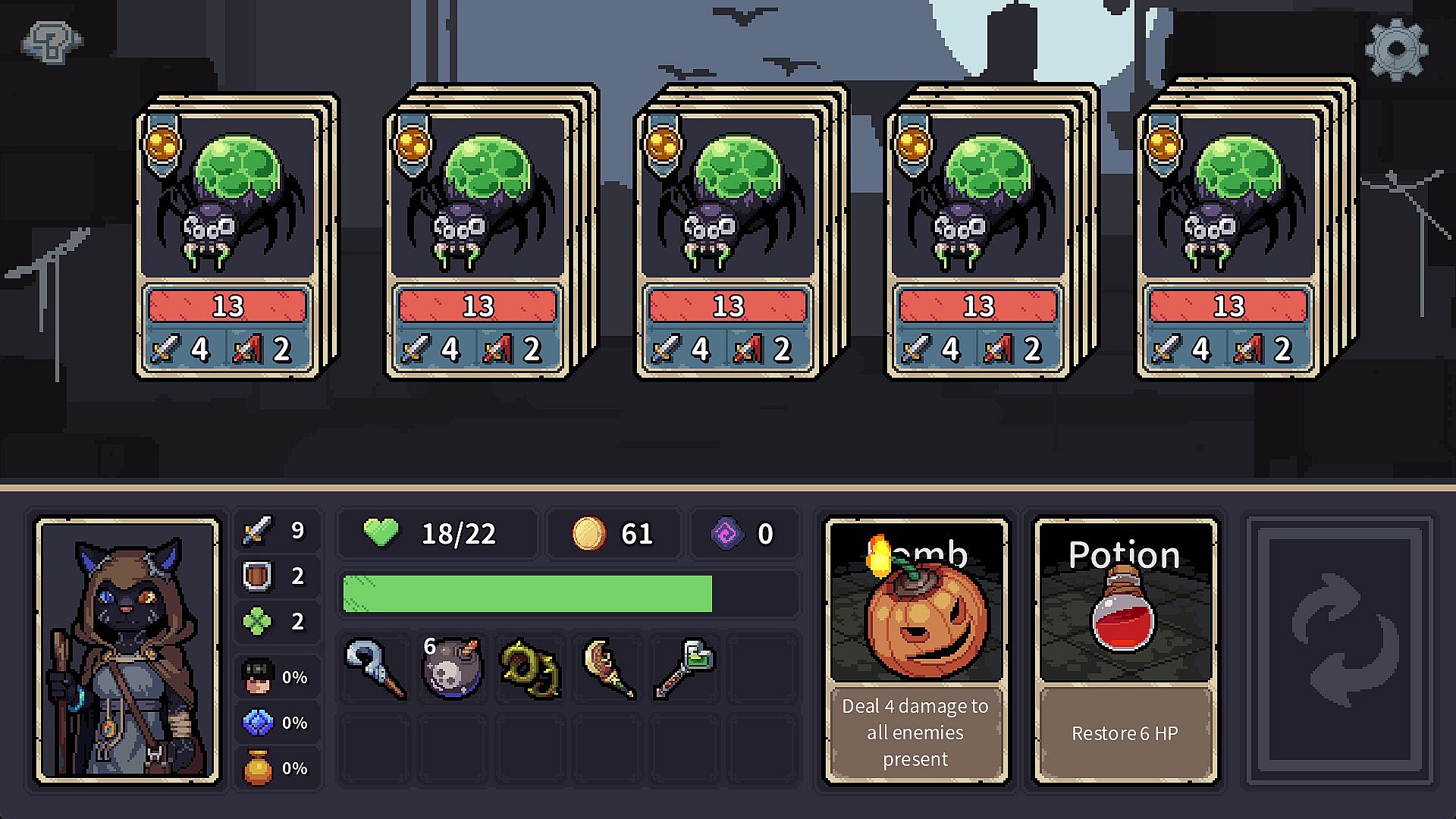
Enemy variety includes standard foes and tougher variants that test different build strengths. Events and prizes add layers of opportunity or risk, with outcomes depending on prior decisions. The system rewards careful planning around visible math for damage exchanges, helping players anticipate results before committing to fights.
Is It Worth Playing?
Stray Path delivers a focused roguelike card experience suited to players who enjoy strategic decision-making and short-to-medium session lengths. The blend of FreeCell-style movement with combat and collection creates a distinctive loop that rewards experimentation with different characters and item synergies. Reviews on the platform show mostly positive feedback, highlighting the engaging card management and replayability from random generation.
Some players note areas for balance refinement in enemy damage types or consistency across runs, yet the core systems remain accessible for casual strategy fans while offering depth for those seeking optimization challenges. At its price point, the game provides solid value for indie roguelike enthusiasts interested in PC titles that emphasize thoughtful choices over fast-paced action. Continued updates from the developer support ongoing improvements, making it a reasonable pick for those drawn to card-driven adventures with procedural elements.