













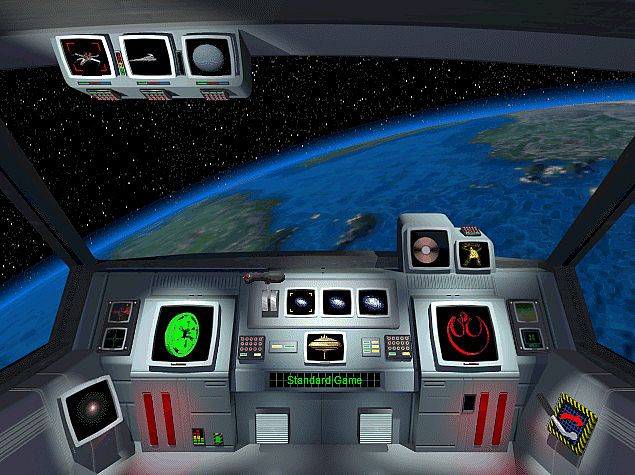
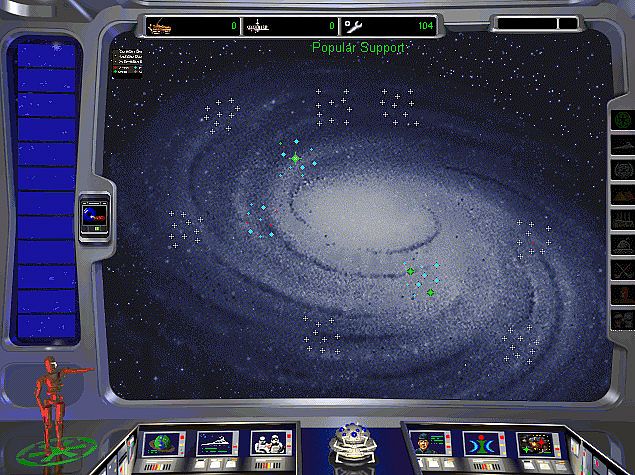
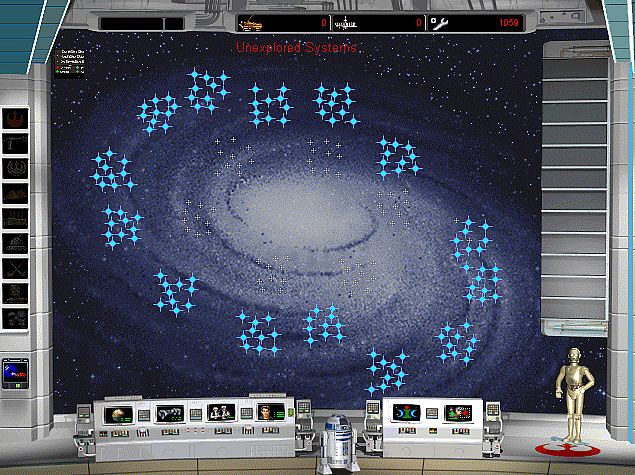
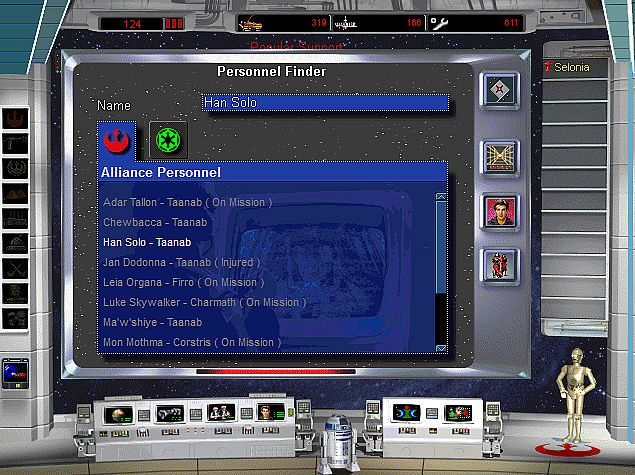
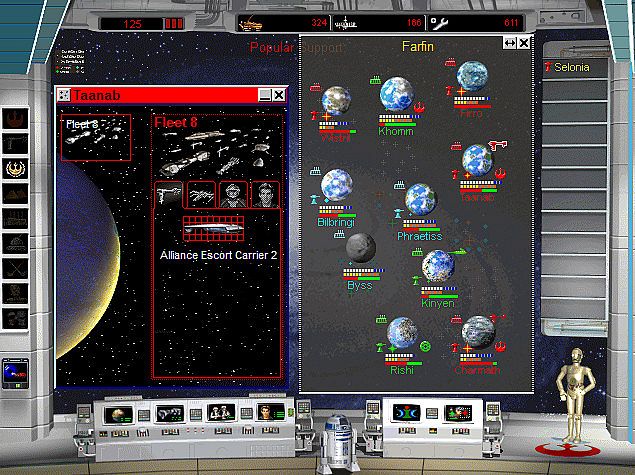
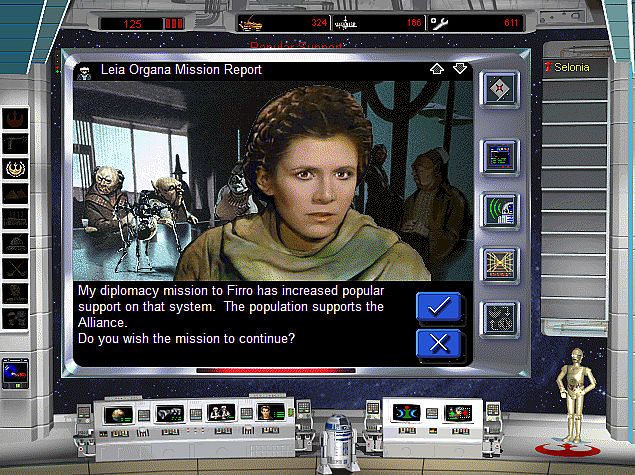
Star Wars Rebellion is a real-time strategy game that places players in command of either the Rebel Alliance or the Galactic Empire during the period following the destruction of the first Death Star. The core objective centers on achieving galactic domination through control of up to 200 planets scattered across the Star Wars galaxy. Available on PC, the title combines grand-scale planning with direct fleet engagements in a single continuous environment.
Gameplay
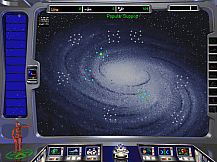
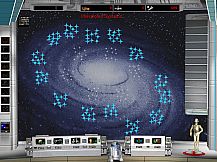
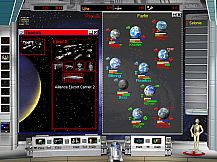
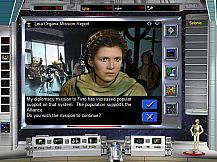
Players manage resources, manufacturing output, and fleet movements while assigning missions to agents and units. The strategic layer requires balancing production across multiple worlds to build ships, train personnel, and expand influence. Diplomacy plays a role in swaying planetary loyalty, while covert operations allow for sabotage or intelligence gathering against the opposing faction. The game operates in real time, so decisions on resource allocation and unit deployment unfold continuously without pauses for turns.
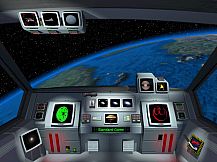
Fleet command shifts to a dedicated 3D battle view when opposing forces meet. Here, players issue orders to individual ships or groups during combat sequences that emphasize positioning, targeting priorities, and tactical maneuvers. Success in these battles depends on the composition and upgrades of the fleets assembled during the strategic phase. The two playable factions offer distinct starting positions and unit rosters, with the Empire favoring larger capital ships and the Rebellion relying on hit-and-run tactics and smaller vessels.
Game Modes
The primary experience unfolds in a single-player campaign where one side pursues victory against computer-controlled opposition. Objectives revolve around capturing key systems, eliminating enemy leadership assets, and securing enough worlds to force a surrender. Multiplayer support allows head-to-head matches between two players, each selecting a faction and competing for the same galactic control goals through the same resource and combat systems.
No additional named modes such as skirmish or scenario editors appear in the core design. All play revolves around the full galactic map and the integrated battle sequences that occur naturally during larger conflicts.
Factions and Core Mechanics
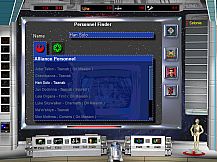
The Rebel Alliance and Galactic Empire represent the two opposing sides, each with unique strengths in ship design and mission options. Resource management forms the backbone of progress, as players must allocate credits and materials to construct facilities, recruit heroes, and maintain supply lines across distant sectors. Mission assignments send characters on tasks that can reveal hidden information, disrupt enemy production, or sway neutral planets toward one faction or the other.
Planetary loyalty serves as a key victory condition metric. Holding or influencing worlds generates income and recruits while denying those benefits to the opponent. The real-time nature means that threats can emerge from multiple directions simultaneously, requiring constant monitoring of the map and rapid response to fleet movements.
Is It Worth Playing?
Star Wars Rebellion appeals to players who enjoy detailed grand strategy titles set in the Star Wars universe. Its combination of resource oversight, diplomatic influence, and direct 3D fleet battles creates a self-contained loop that rewards long-term planning. The game received mixed reception upon release in 1998, with criticism focused on interface and pacing issues, yet later reflections highlight its effective storytelling through gameplay and the depth of its Star Wars reference materials.
Today the title remains available through legacy PC channels with no ongoing updates or seasonal content. Those drawn to asymmetric faction play and large-scale 4X mechanics may find value in its systems despite the age of the presentation. Prospective players should expect a deliberate pace and a focus on macro decisions over fast tactical action.