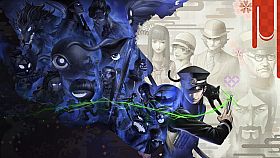















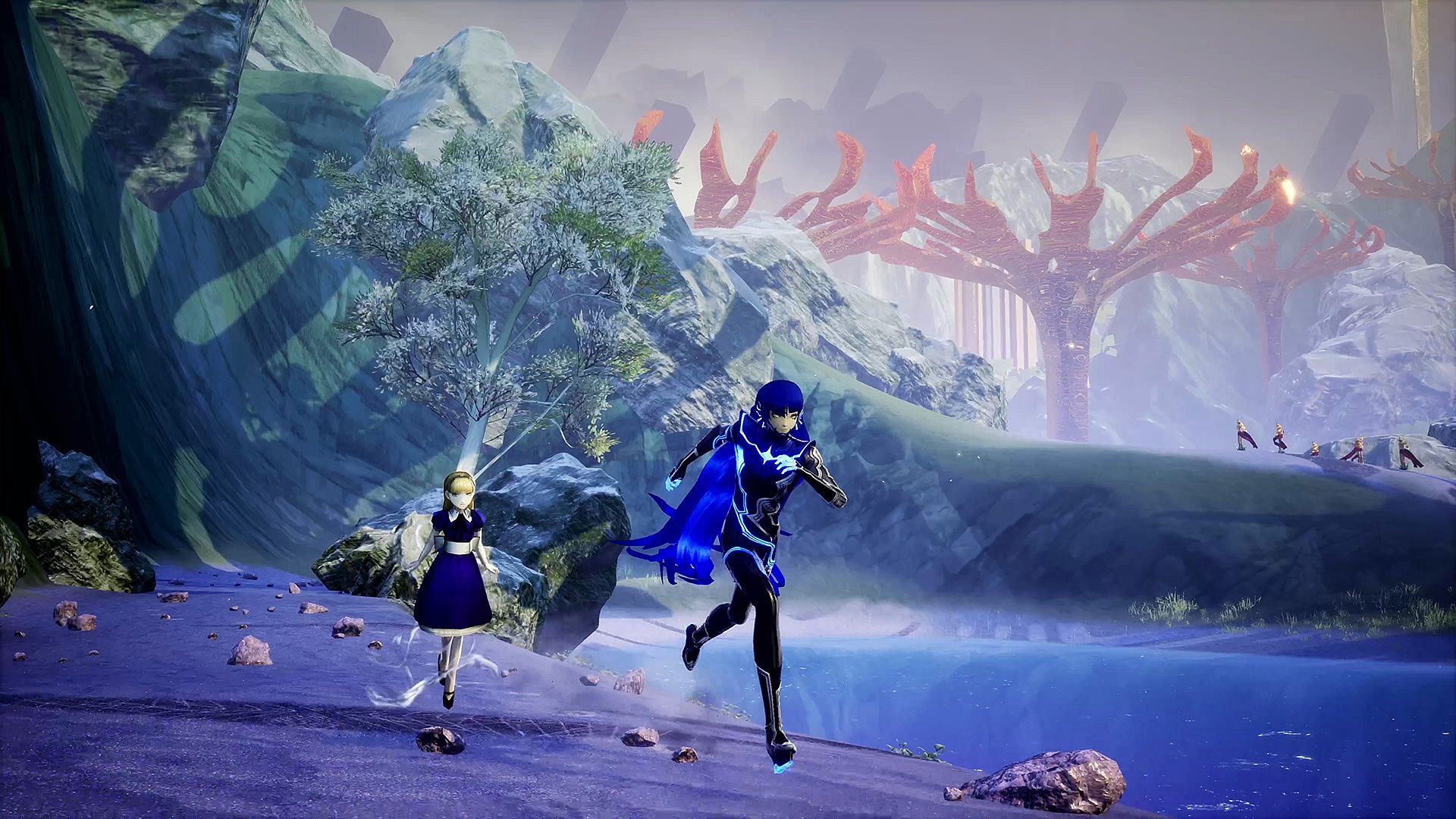


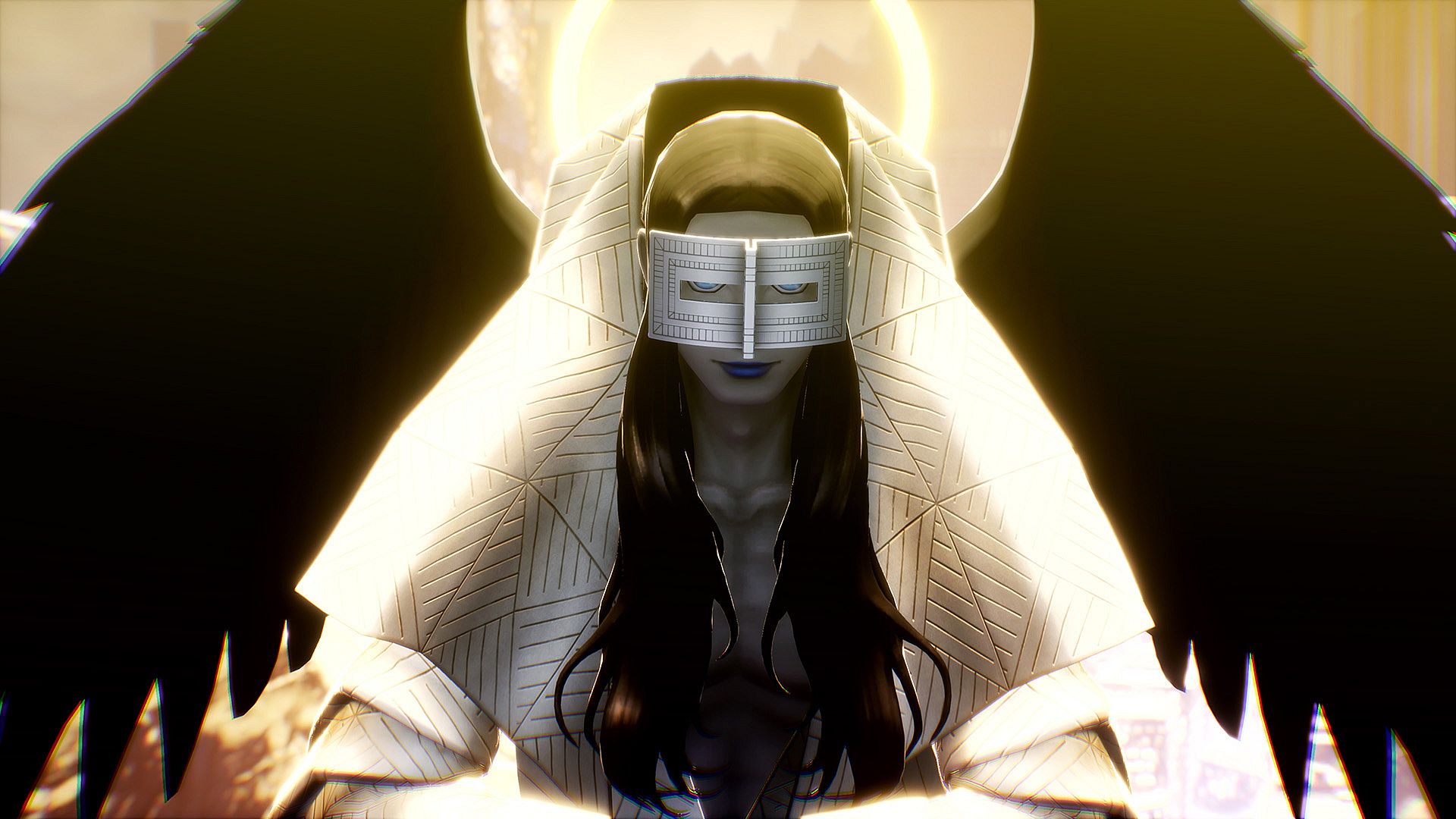





Shin Megami Tensei V: Vengeance is a role-playing game centered on turn-based combat, demon recruitment, and exploration in a post-apocalyptic setting. The player controls the Nahobino, a powerful entity formed through fusion with a supernatural partner, while navigating the ruined expanse of Tokyo now known as Da'at.
Gameplay
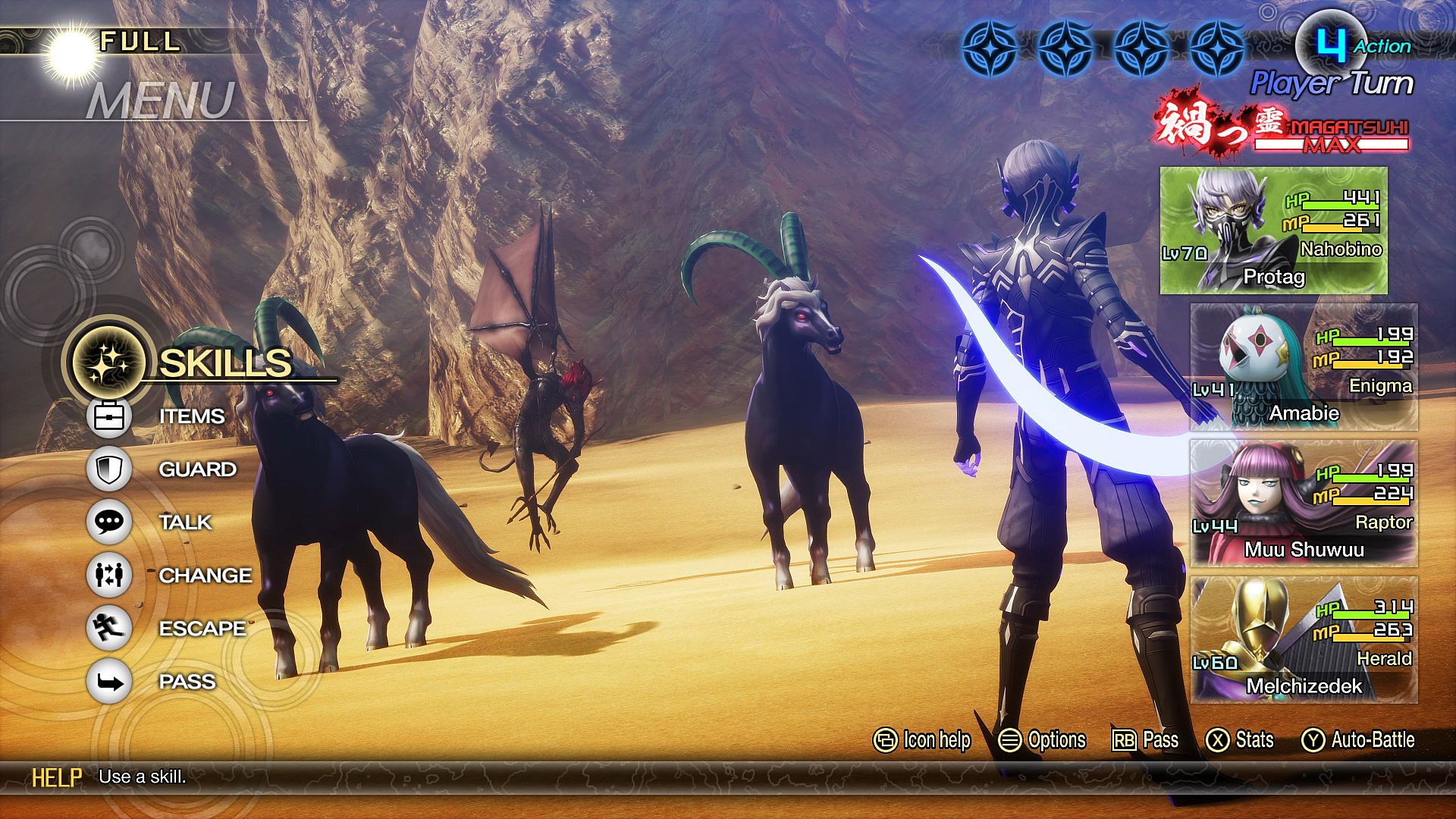
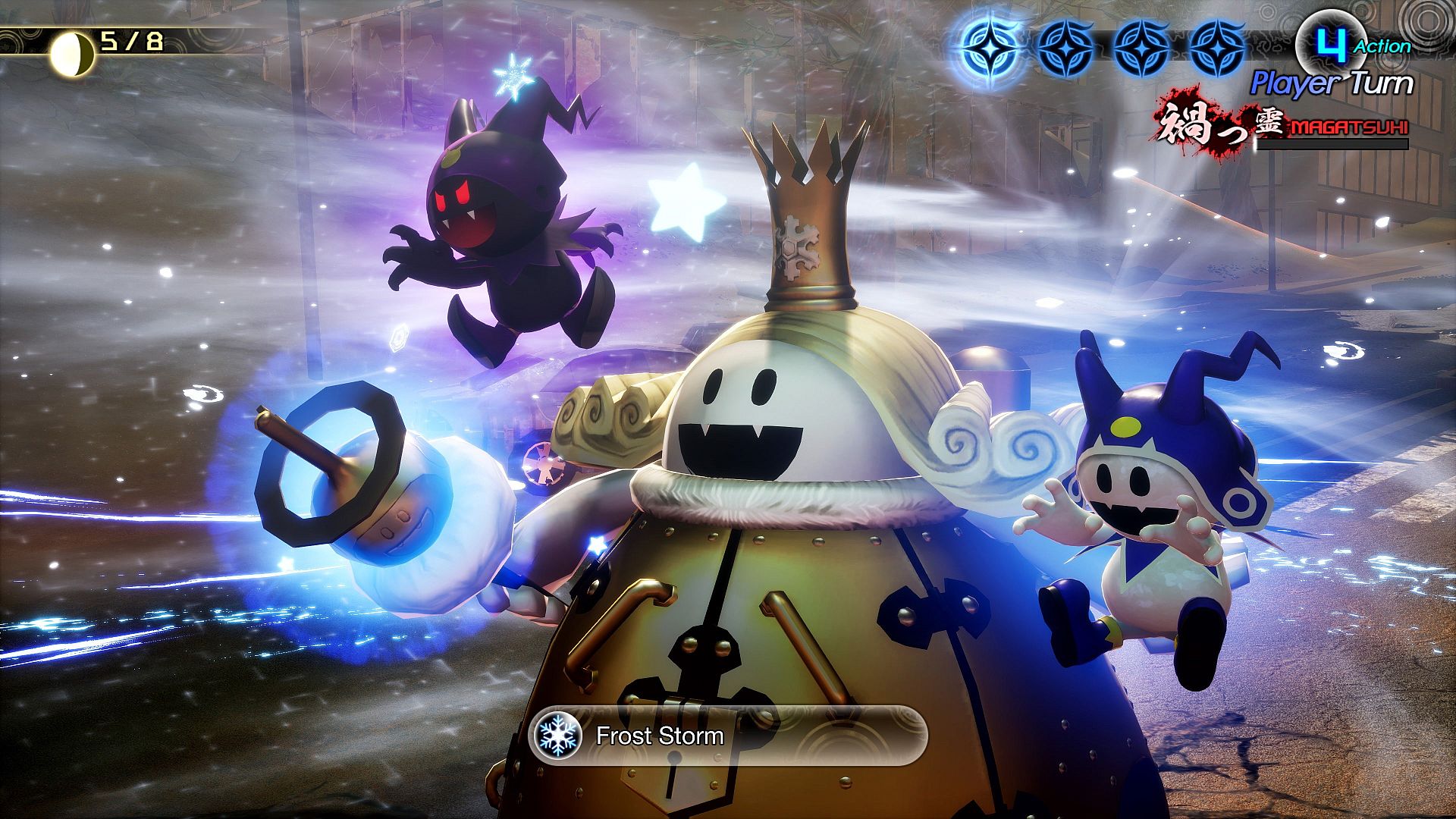
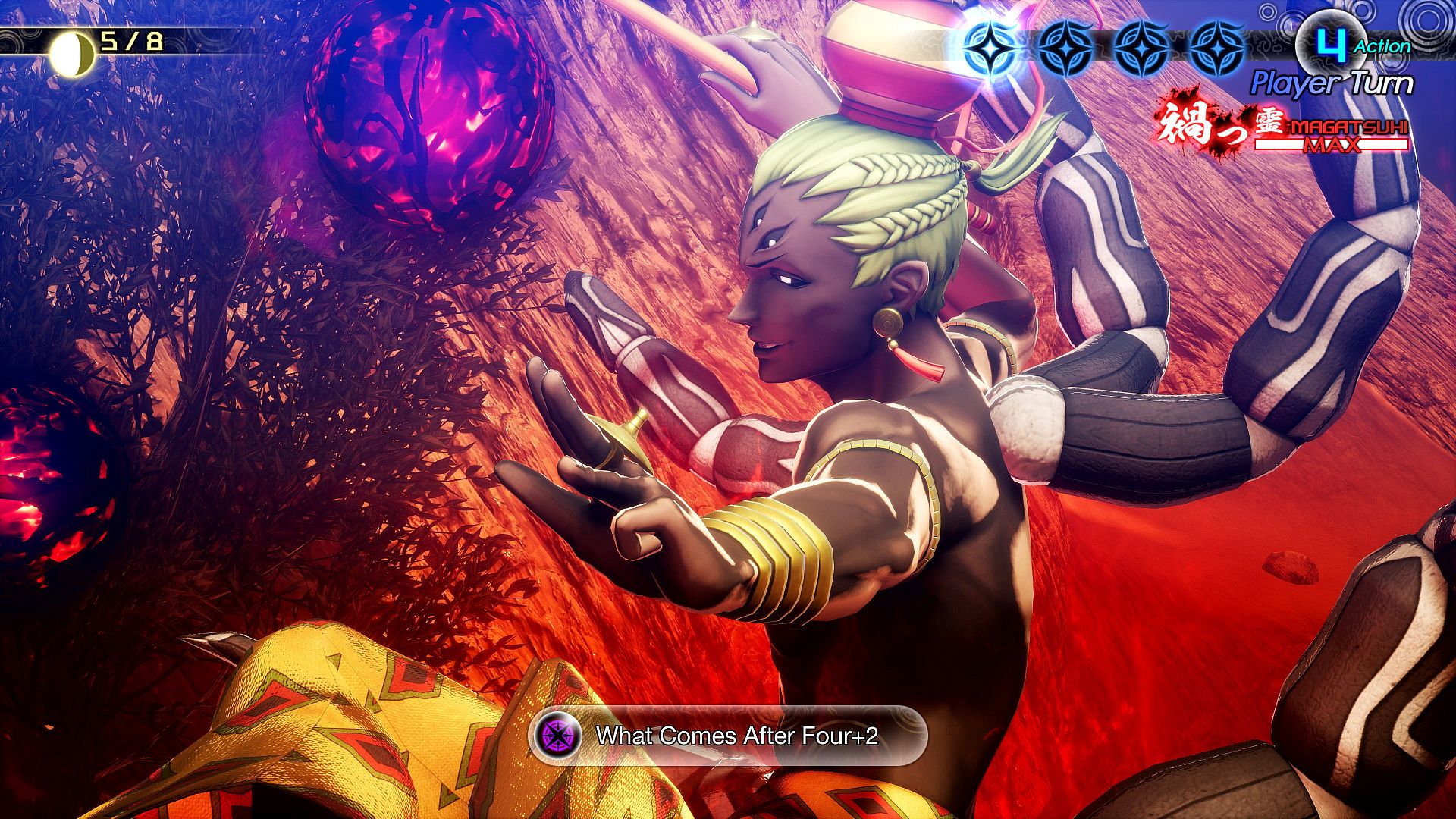
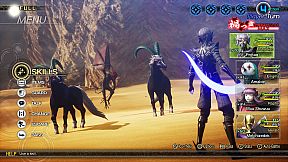
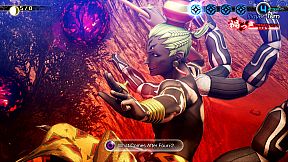
Core combat relies on the Press Turn system. Each action consumes a turn icon for the party or enemies. Striking an enemy's weakness or landing a critical hit grants an extra turn, while missing an attack or having it nullified removes one. This encourages careful analysis of enemy affinities before committing to skills or attacks.
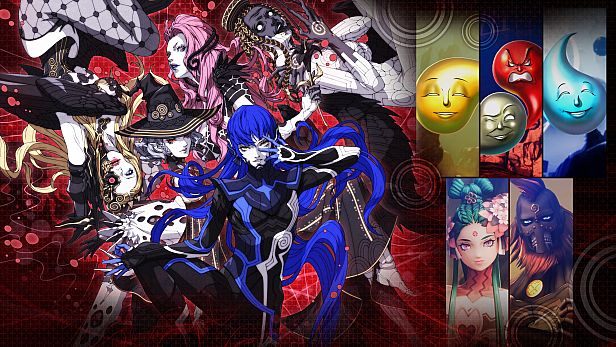
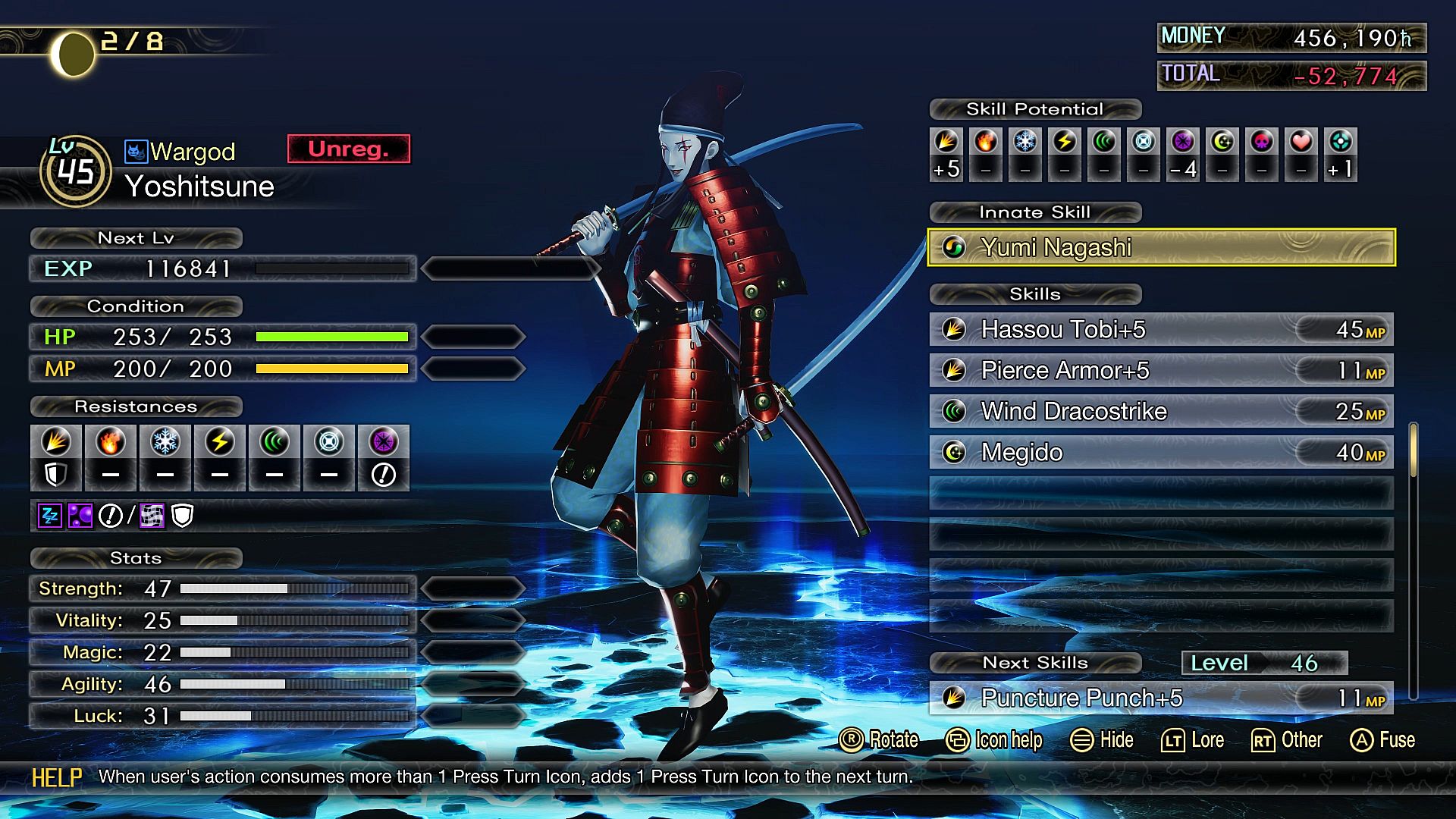
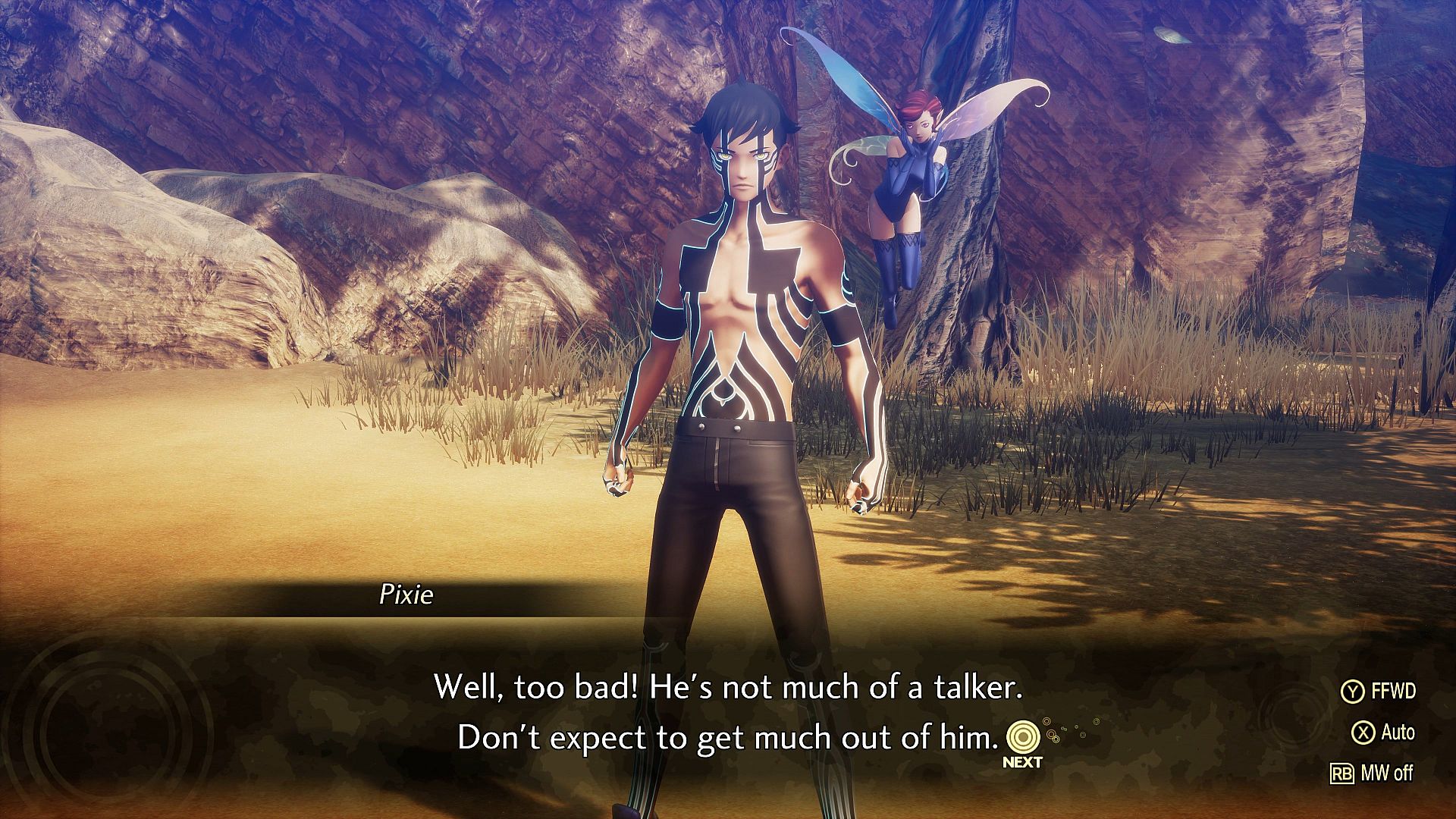
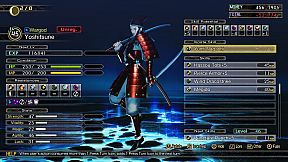
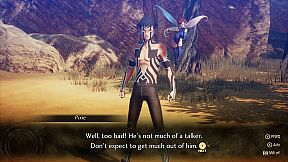
Parties consist of the Nahobino and up to three demons. Demons are recruited through negotiation during encounters or obtained via fusion at special locations. Fusion combines two demons to create a new one, passing along selected skills to customize abilities across the roster. The Magatsuhi gauge fills during battle and unlocks powerful Magatsuhi Skills that do not consume press turns, providing options such as guaranteed critical hits or full-party healing for a single round.
Field movement takes place across wide, open zones. Players search for items, hidden paths, and additional demons. New traversal tools include Magatsuhi Rails that connect distant areas and lead to secret spots. Demon Haunts serve as rest points where party members can converse, receive stat boosts, or accept side quests. Demon navigators assist in locating items outside of scripted sequences, and consecutive battles can occur when multiple enemy groups are nearby.
Game Modes
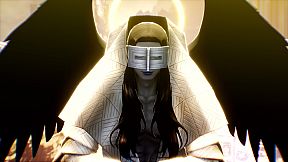
The game offers two distinct story routes that can be selected at the start. The Canon of Creation follows the original narrative path. The Canon of Vengeance introduces a separate storyline with new characters, locations, and branching choices that affect the outcome.
After completing the main story, New Game Plus options become available. Newborn Mode carries over only the Demon Compendium. Reborn Mode transfers the compendium along with the Nahobino's level, skills, stocked demons, currency, and items. A separate Godborne difficulty mode unlocks after defeating a post-game superboss and features significantly stronger enemies while retaining their original move sets.
Virtual Battles provide a boss rush format that scales up to high levels for repeated challenges.
Exploration and Progression
Progression centers on leveling the Nahobino and demons through combat and quests. The level cap extends beyond the initial story through post-game content. Players balance party composition by fusing demons with complementary skills and resistances to handle varied encounters across the wasteland zones.
Exploration rewards come from discovering new demons, collecting items that aid survival, and completing subquests that deepen relationships with recruited allies. The structure supports repeated playthroughs by allowing different route selections and carry-over systems that alter the difficulty curve on subsequent runs.
Is It Worth Playing?
Reception has been generally favorable, with praise directed at the tactical depth of the combat system and the additions of a second story route plus quality-of-life improvements to exploration and demon interactions. Reviewers highlight the challenge level and the satisfaction of building effective demon teams through fusion and recruitment.
The game suits players who prefer single-player RPGs focused on strategic turn-based battles, monster collection mechanics, and narrative choices with lasting consequences. Those who enjoy methodical planning around enemy weaknesses and iterative party optimization will find substantial content across the dual story paths and post-game modes. Availability on Xbox and PC platforms supports flexible play sessions without requiring additional hardware considerations.