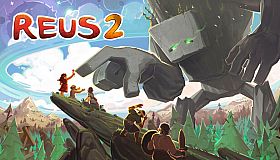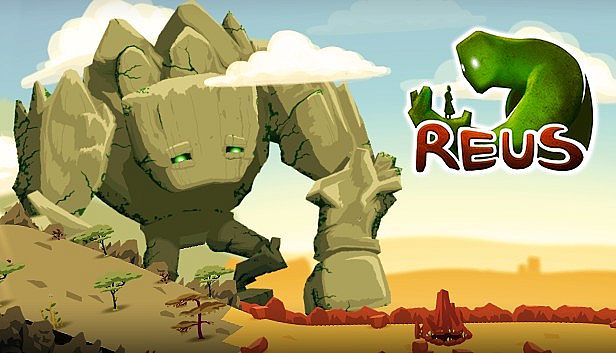














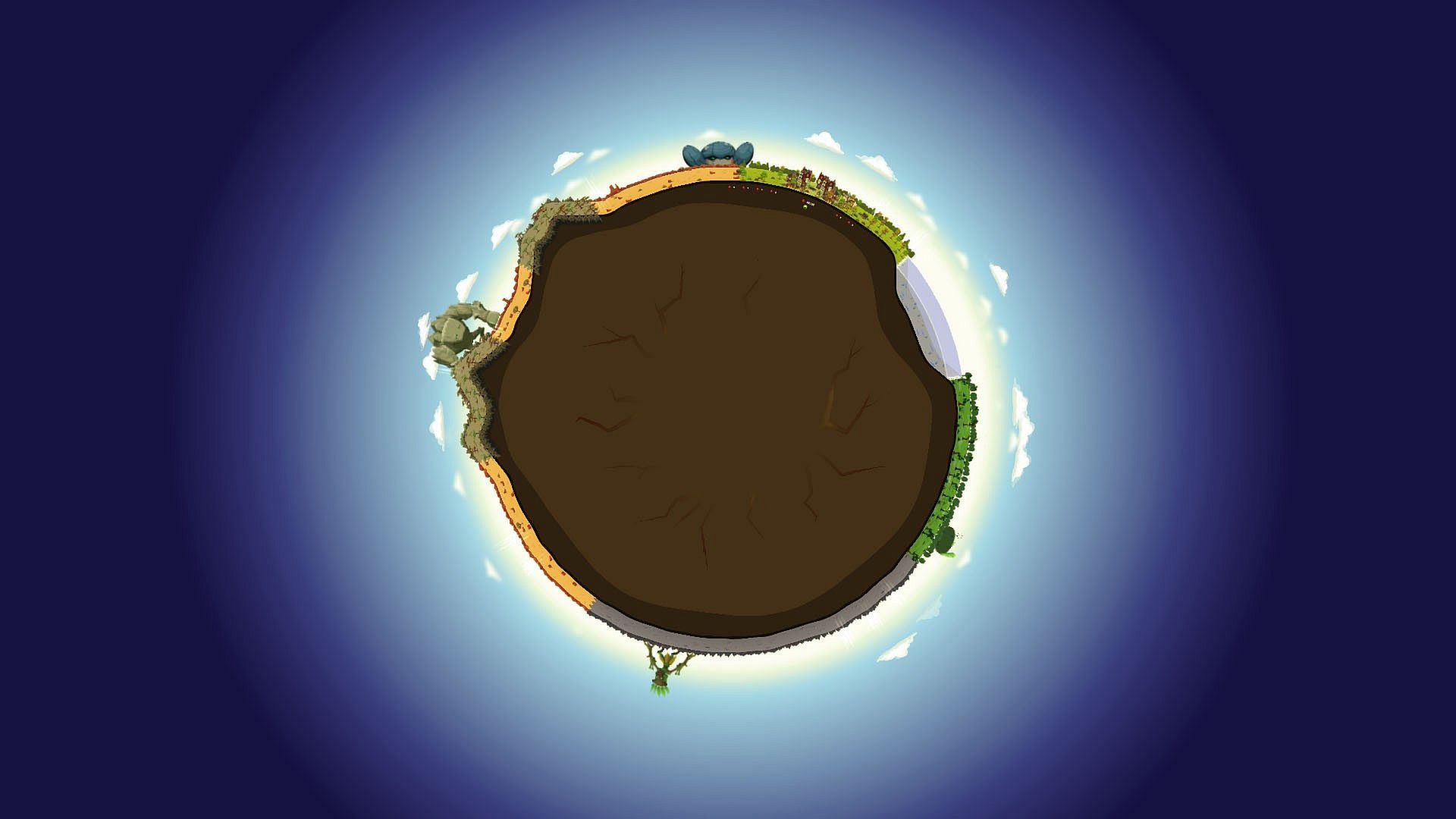
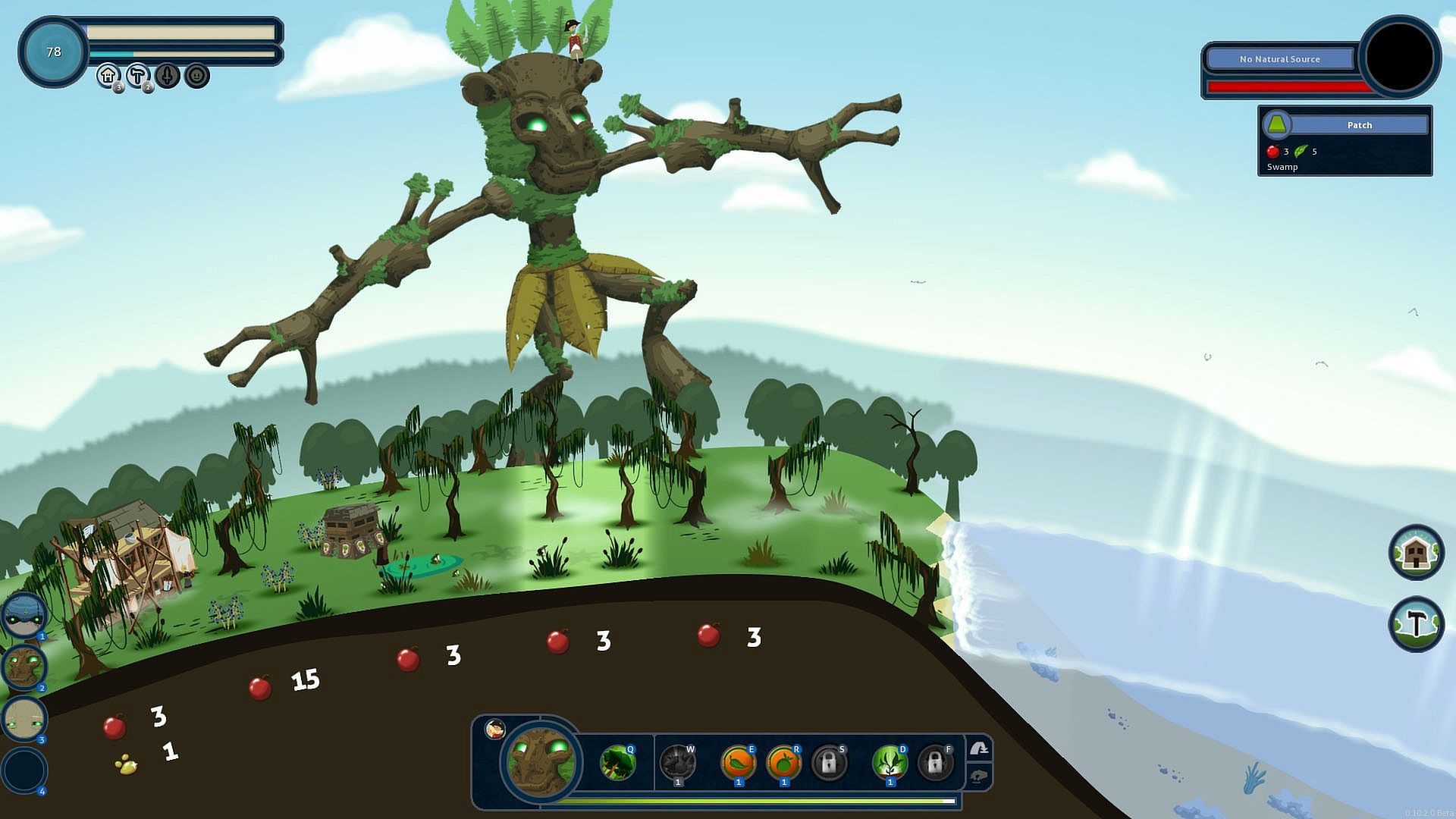
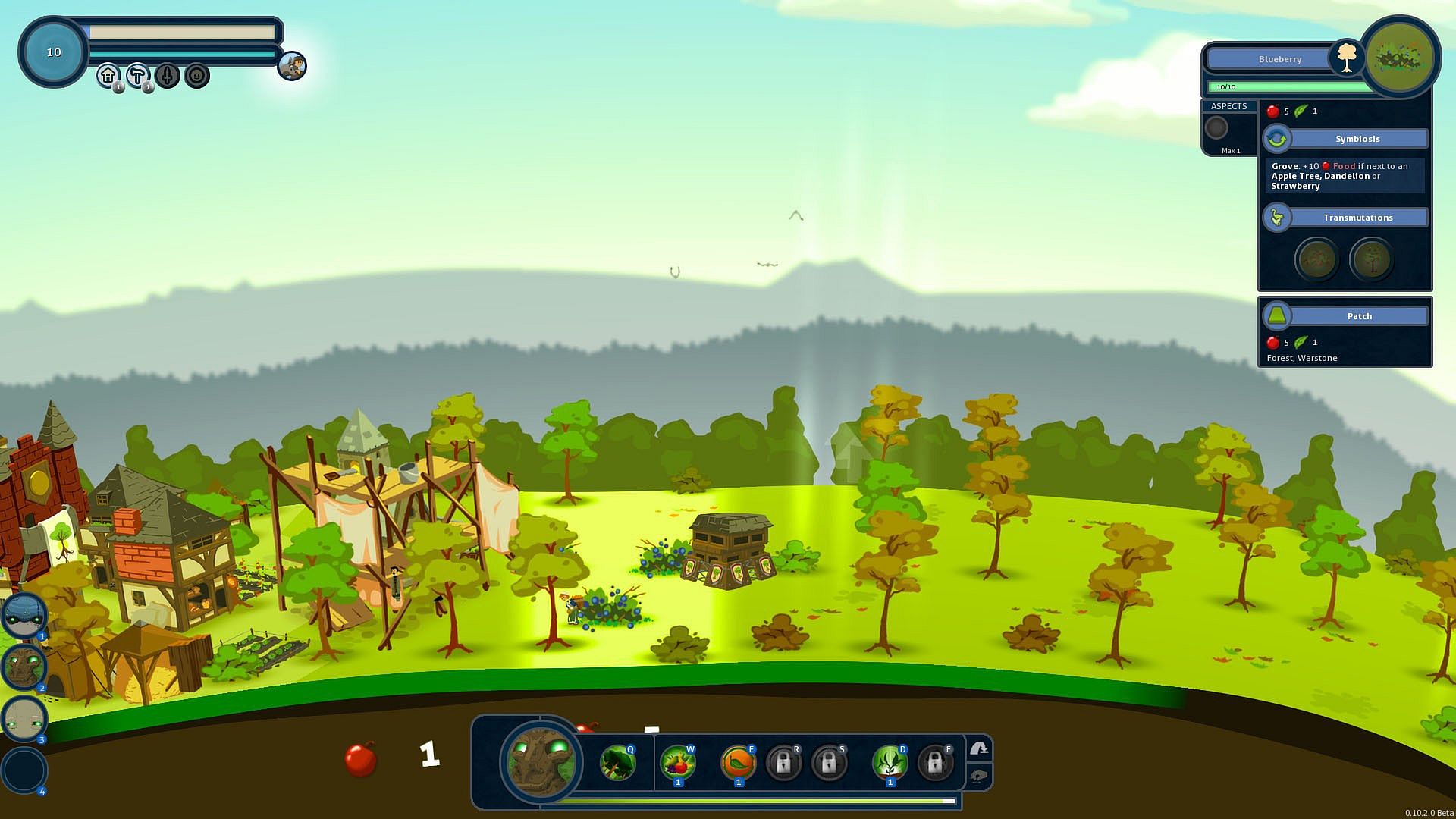
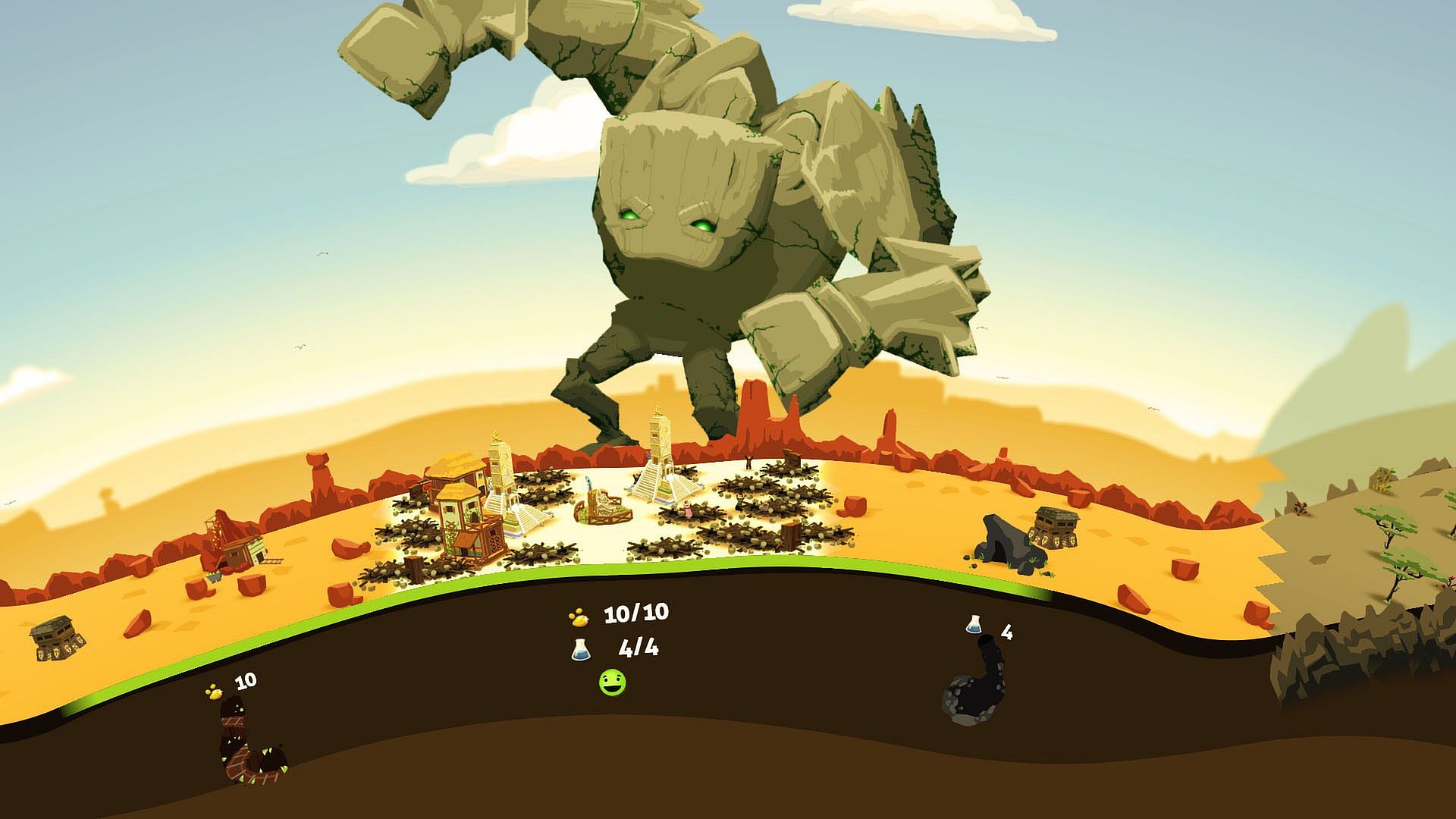
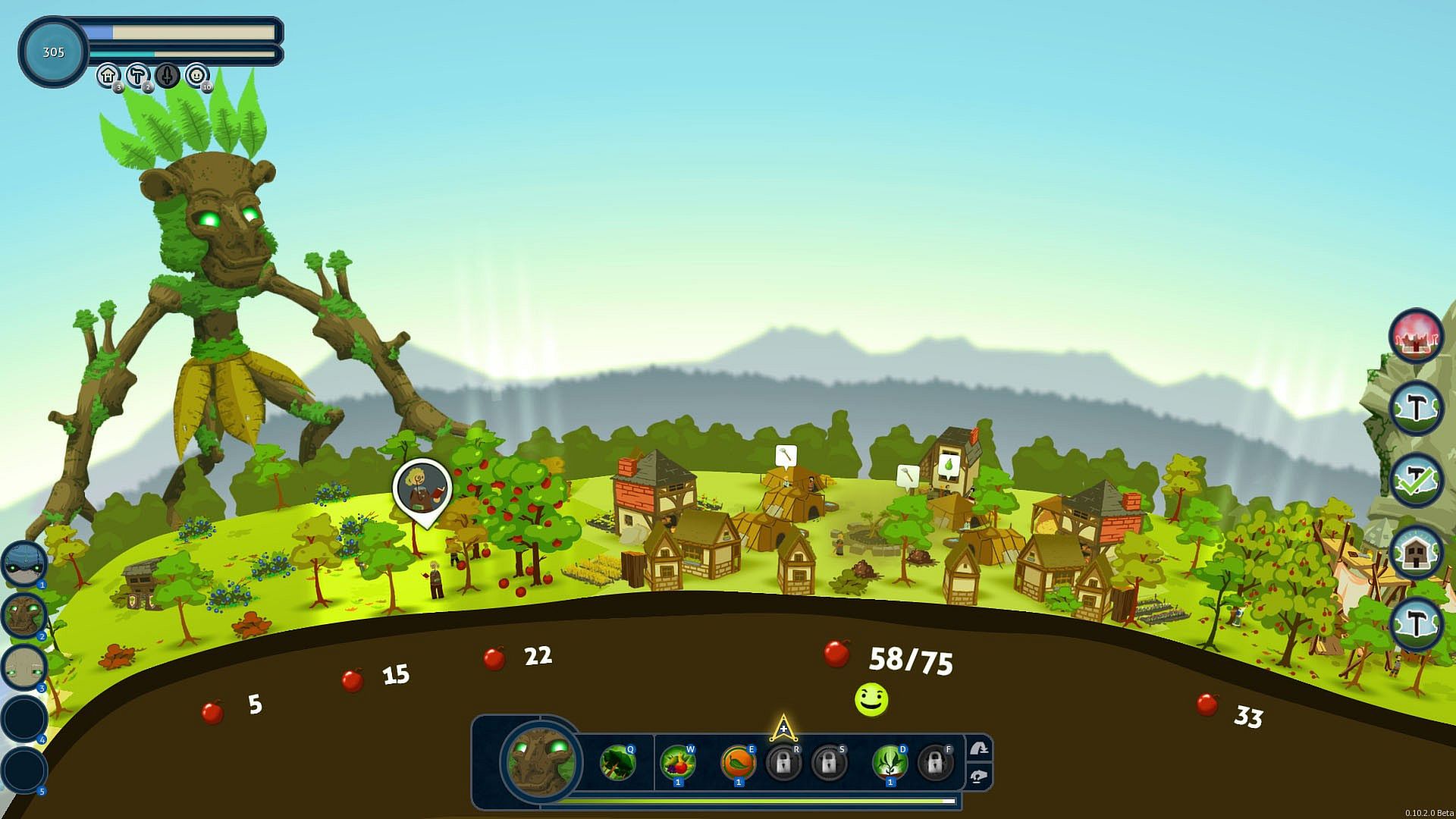
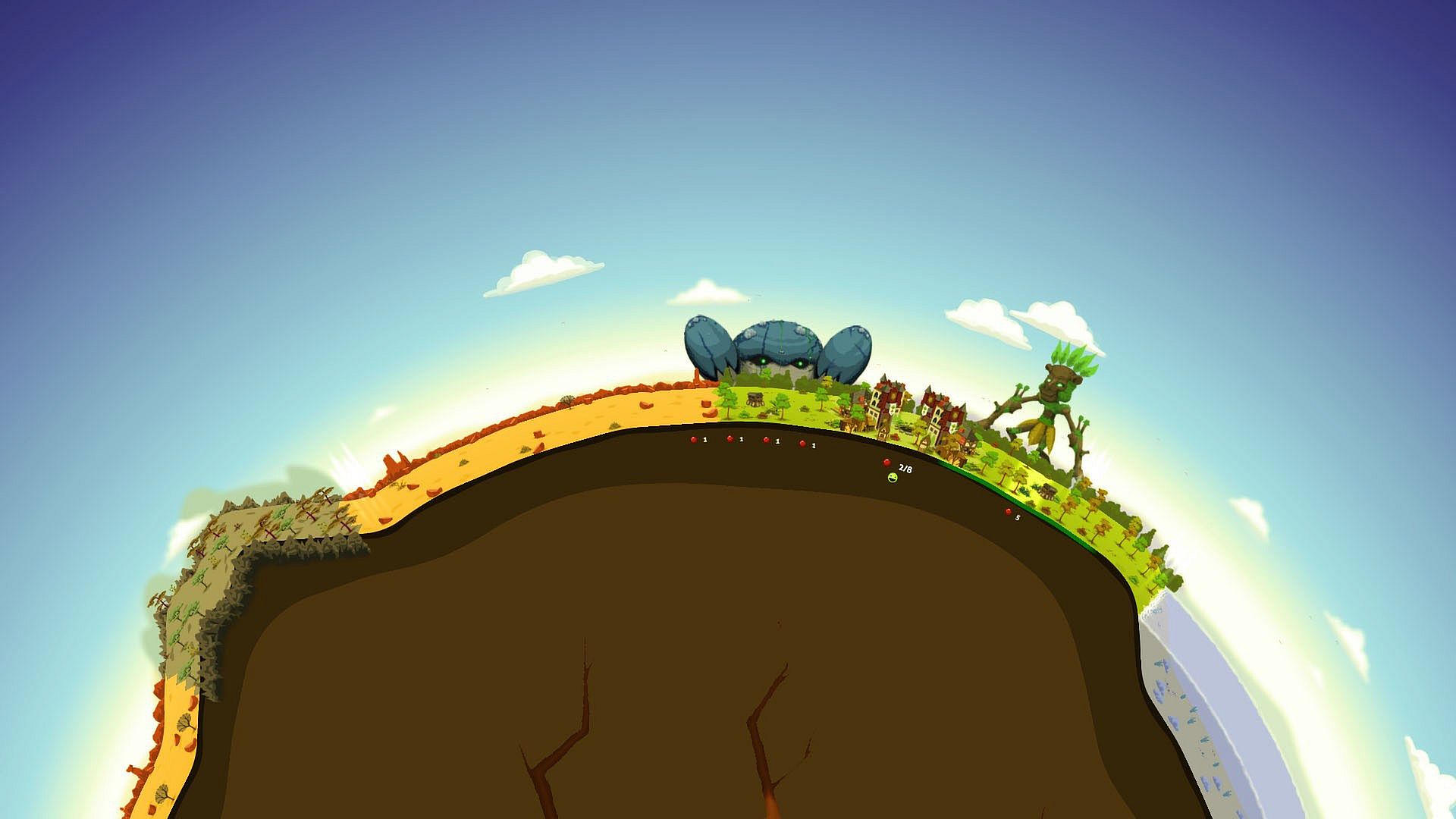
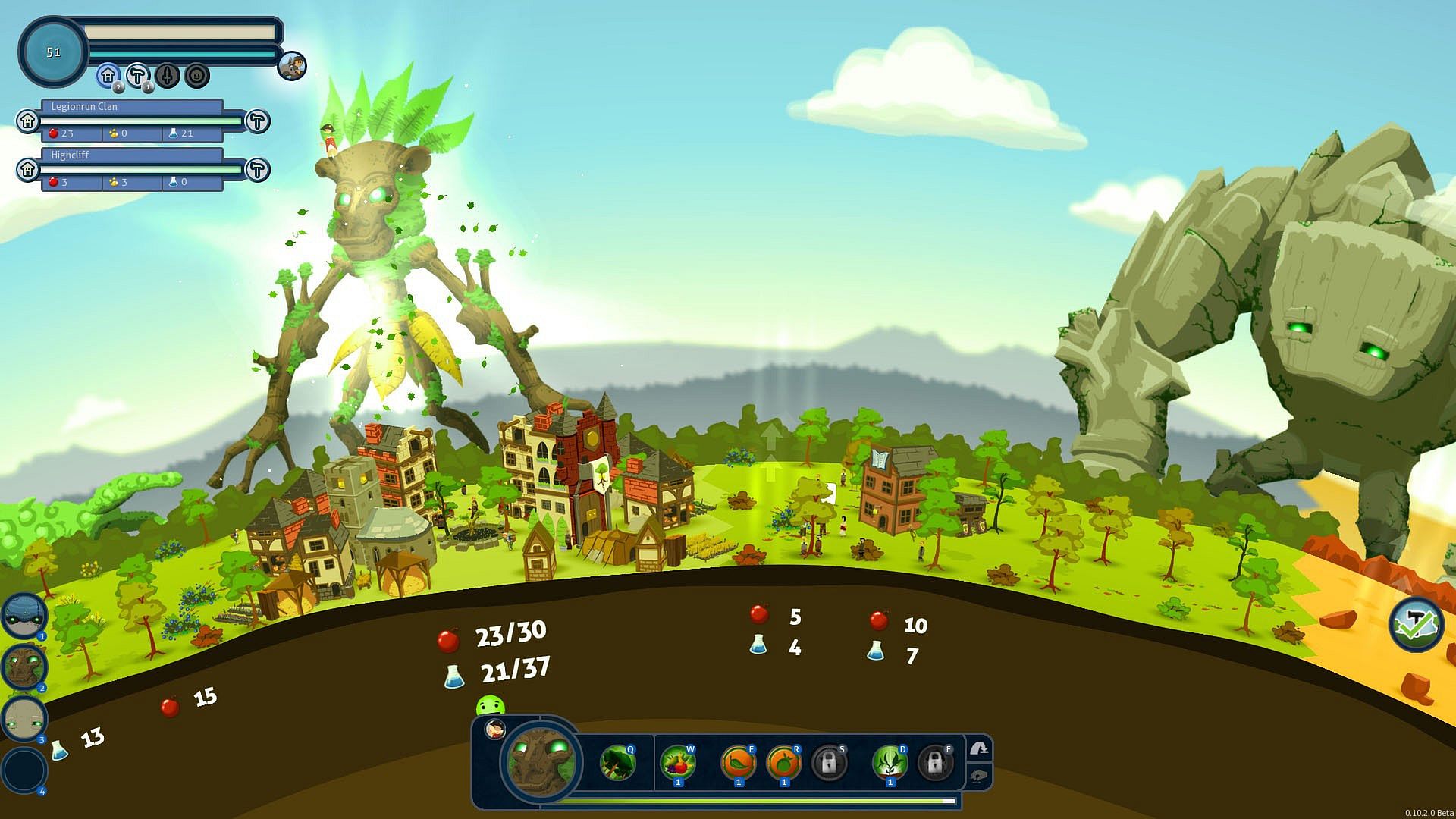
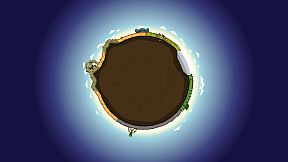
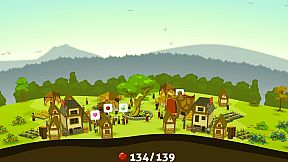
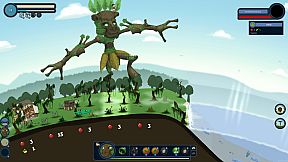
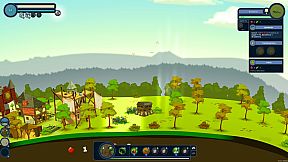
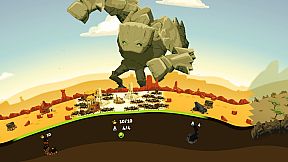
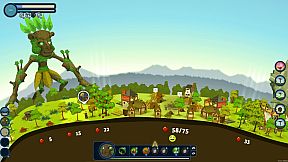
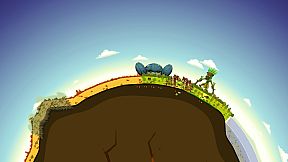
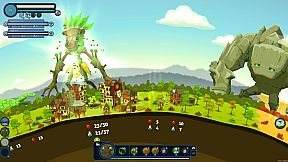
Reus is a strategy indie simulation game on PC in which players take on the role of a godlike entity directing powerful giants to shape a developing world. The core experience revolves around terraforming a two-dimensional planet and guiding the growth of its ecosystems while observing the independent actions of human civilizations.
Gameplay
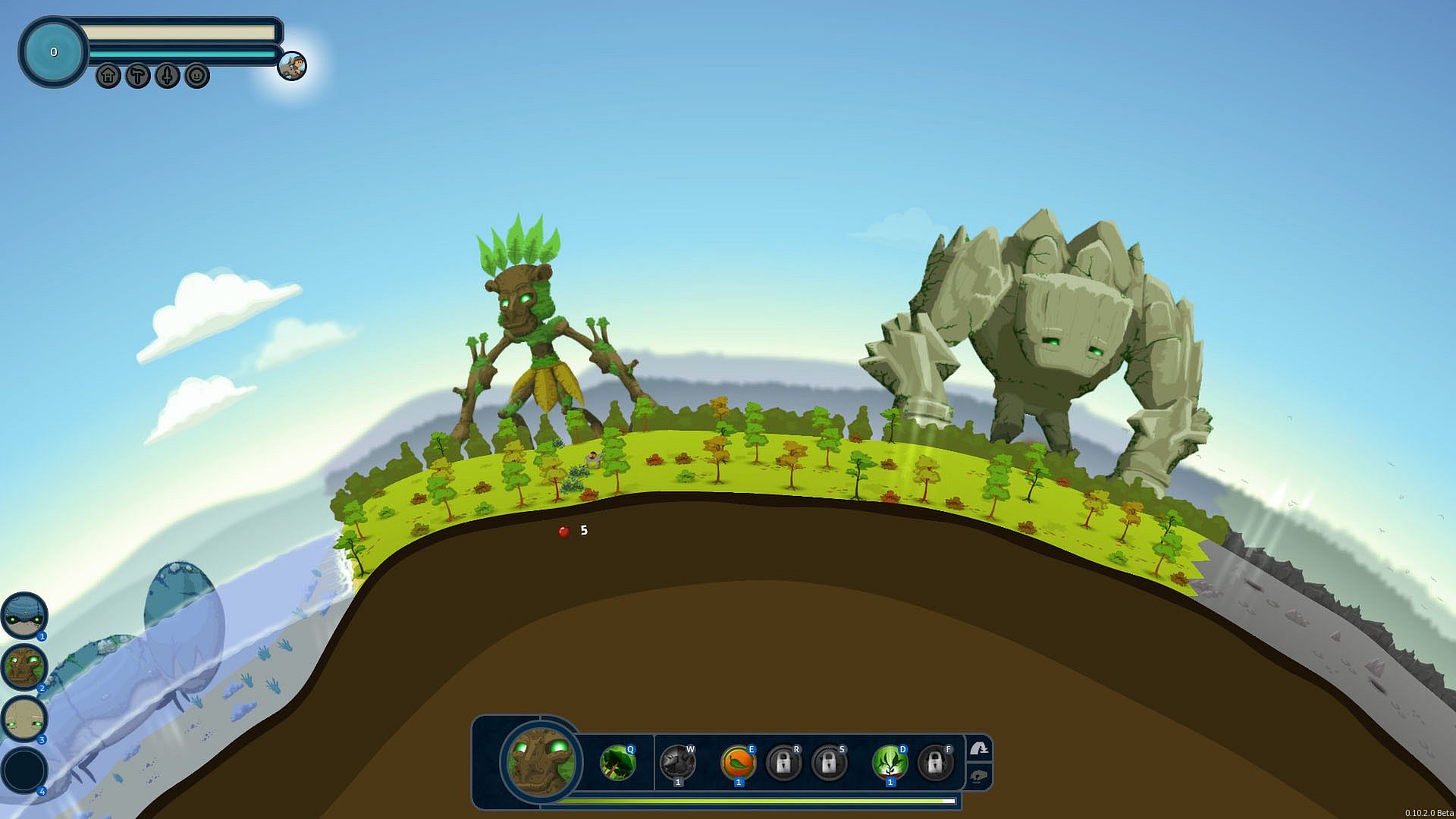
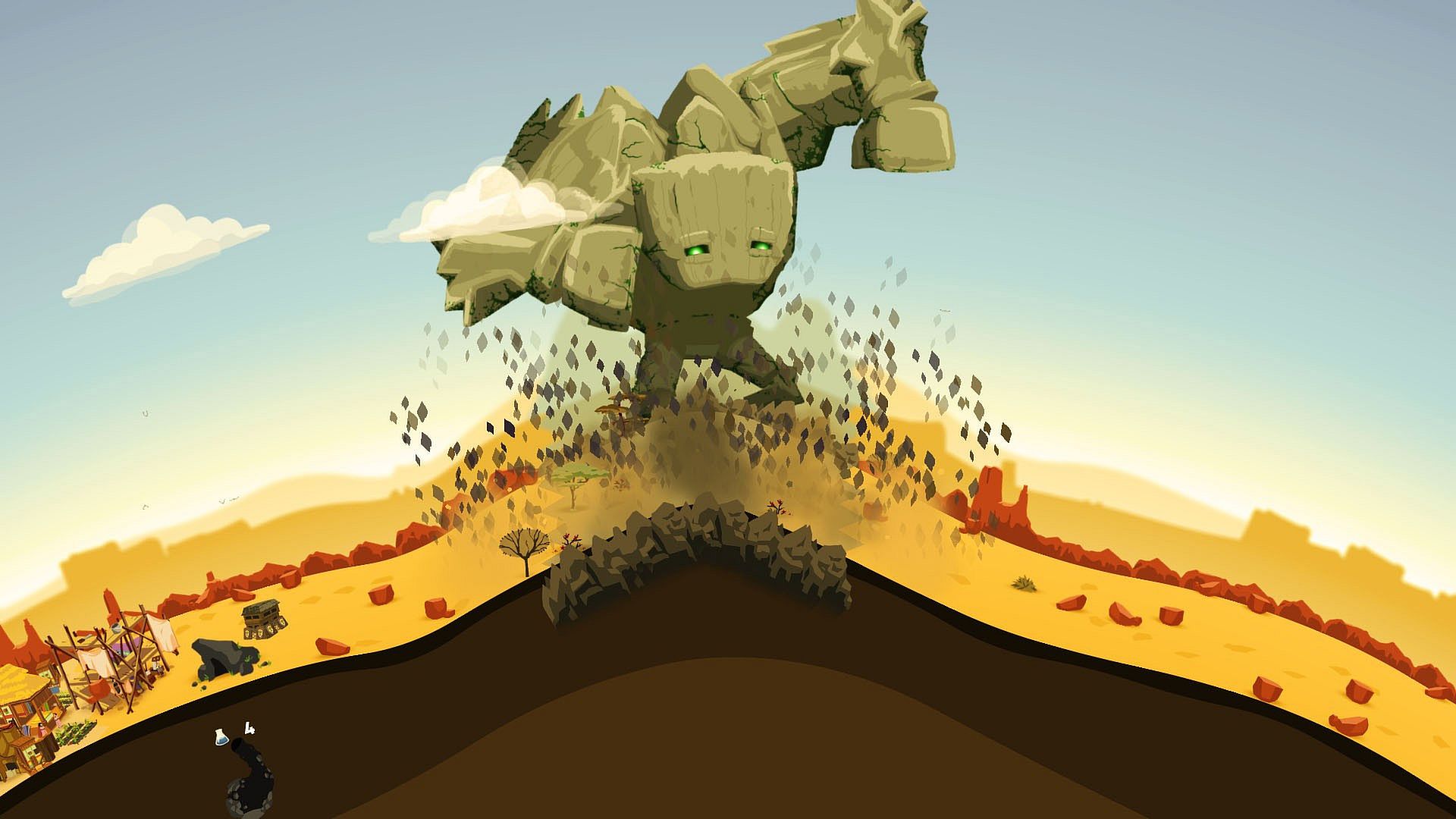
Players command four distinct giants, each equipped with specialized abilities for altering terrain and introducing life forms. These giants allow the creation of varied landscapes including mountains, oceans, and forests, followed by the placement of plants, minerals, and animals to populate each area. A system of upgrades and synergies emerges as different combinations of biota interact, producing resources that support human settlements and unlock further developments.
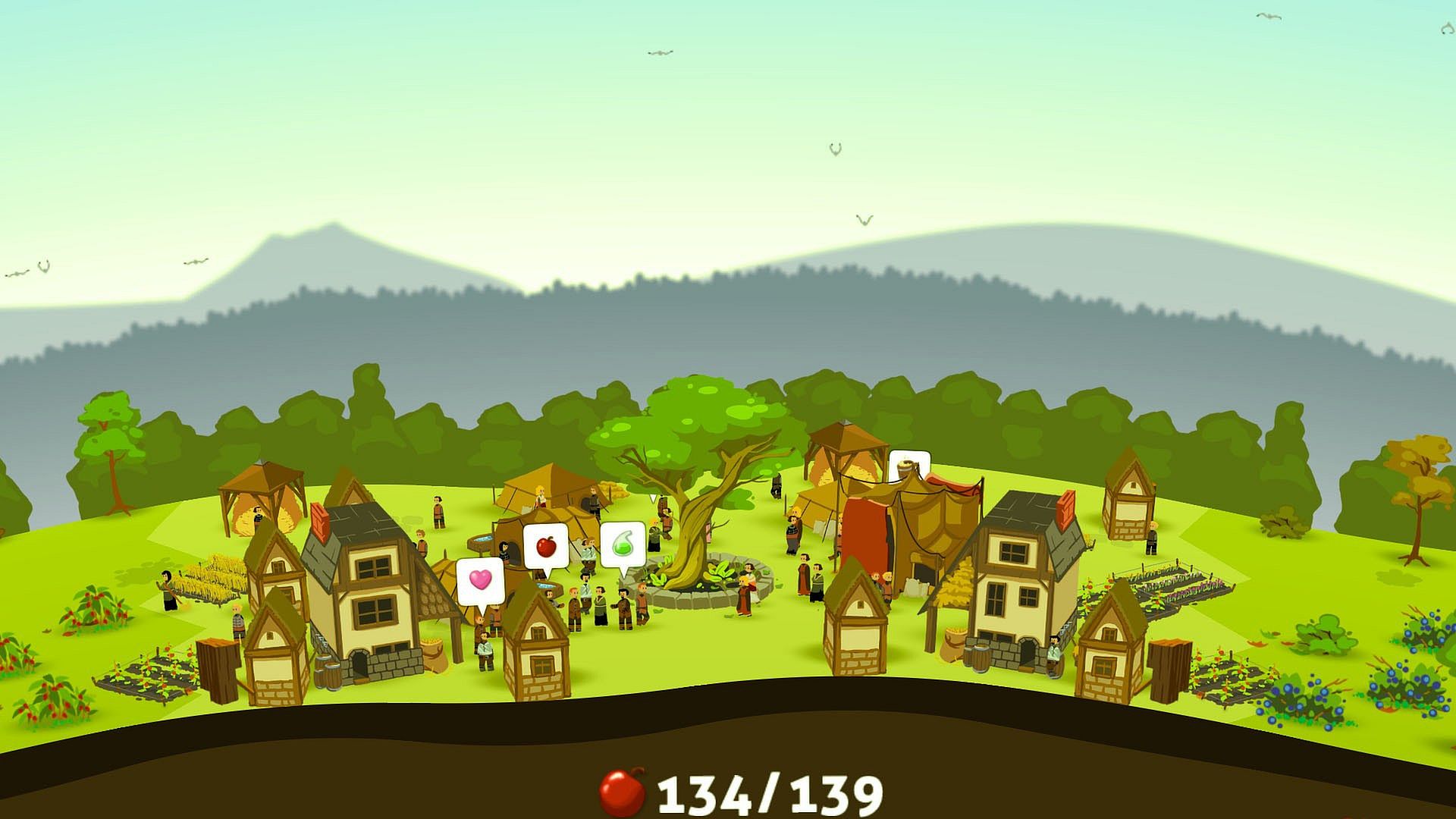
Humanity operates without direct player control, pursuing its own path based on the environment provided. Balanced resource distribution encourages technological and cultural progress, while excess can lead to negative traits such as greed or conflict among settlements. Giants can intervene indirectly by praising beneficial human actions or punishing disruptive ones, adding layers of observation and adjustment to the loop. The game features over one hundred distinct plants, animals, and minerals that contribute to complex chains of production and interaction.
Game Modes
Reus offers three primary modes that structure the experience differently. Beginning serves as an introductory option focused on learning the basics of giant abilities and initial planet shaping. Era functions as the central mode, progressing through structured periods of development where players guide humanity toward specific achievements across multiple eras. Freeplay removes time constraints and objectives, allowing unrestricted experimentation with terrain types, biota placements, and long-term synergies.
Each mode emphasizes the same underlying mechanics of terraforming and resource management but varies the pace and goals. Era in particular highlights the progression of human developments, requiring players to adapt strategies as new challenges and opportunities arise from the independent human population.
Core Mechanics and Progression
The progression system ties directly to human advancements. By supplying appropriate resources through carefully arranged ecosystems, players unlock new content such as additional giant abilities or expanded options for biota. This creates replayability through different approaches to balancing food, wealth, and knowledge generation while managing the side effects of overprovisioning.
Visual presentation relies on a distinctive art style that emphasizes clean, stylized representations of natural elements and settlements. The soundtrack supports the deliberate pace, underscoring moments of planetary transformation and human milestones without overwhelming the focus on strategic placement.
Is It Worth Playing?
Reus appeals to players interested in god games and simulation titles that emphasize indirect influence rather than direct command. Its single-player focus and emphasis on experimentation with synergies make it suitable for those who enjoy puzzle-like strategy sessions on PC. The game remains available as a complete experience from its original release, though older titles like this may encounter compatibility considerations on modern hardware.
Reception highlights its unique take on terraforming and human observation, with many appreciating the depth found in resource chains and the consequences of player choices. For fans of indie strategy and simulation genres seeking a thoughtful, non-traditional god game without multiplayer elements, it delivers a self-contained experience centered on creative world-building and observation of emergent human behavior.