






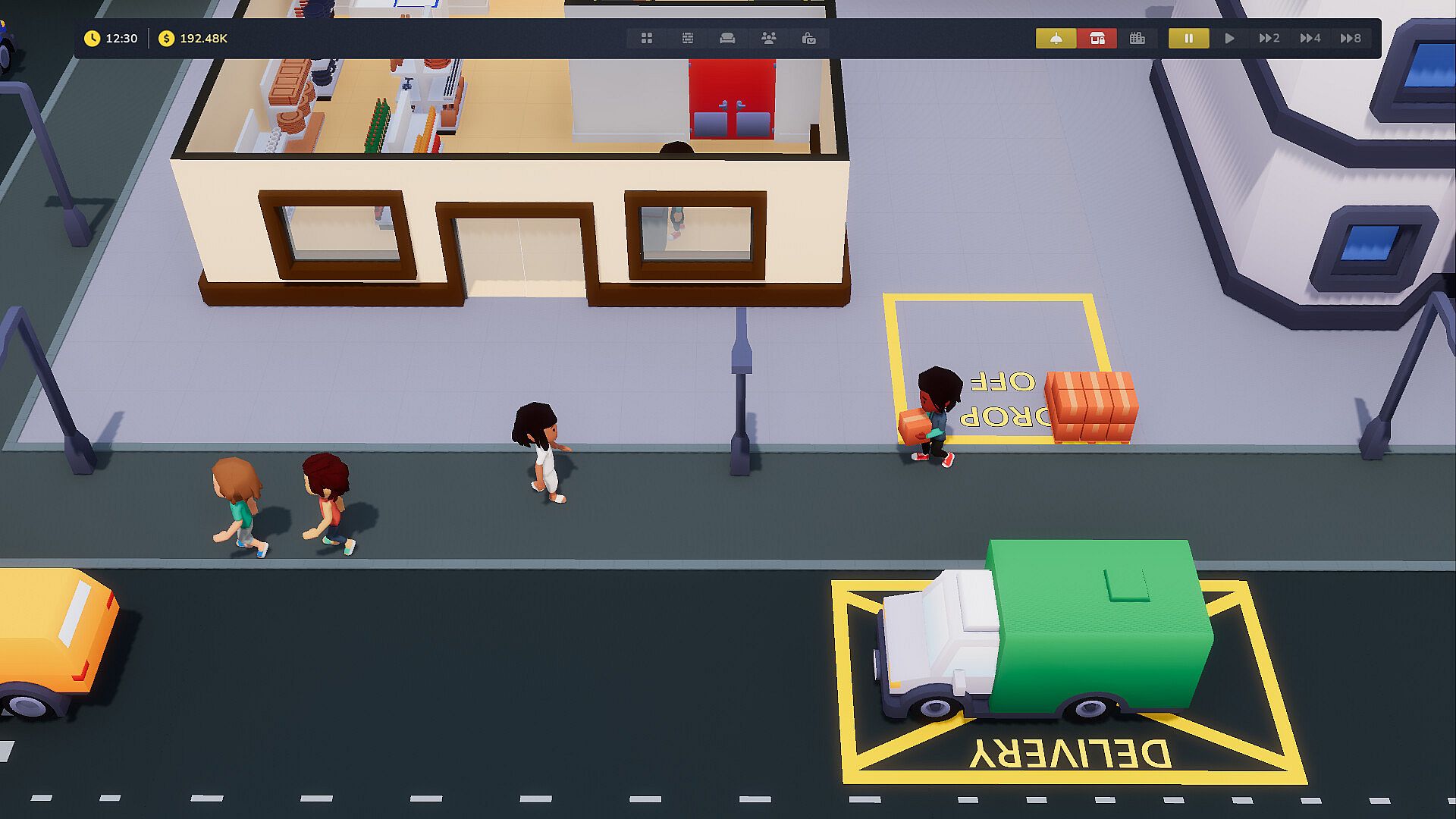
Price War is a strategy simulation game where players build and expand a retail empire in a low-poly world. The focus lies on turning empty lots and existing properties into profitable stores through careful planning and ongoing management. Available on PC in Early Access, it combines city-building elements with detailed store operations and staff oversight to create a complete business simulation experience.
Gameplay
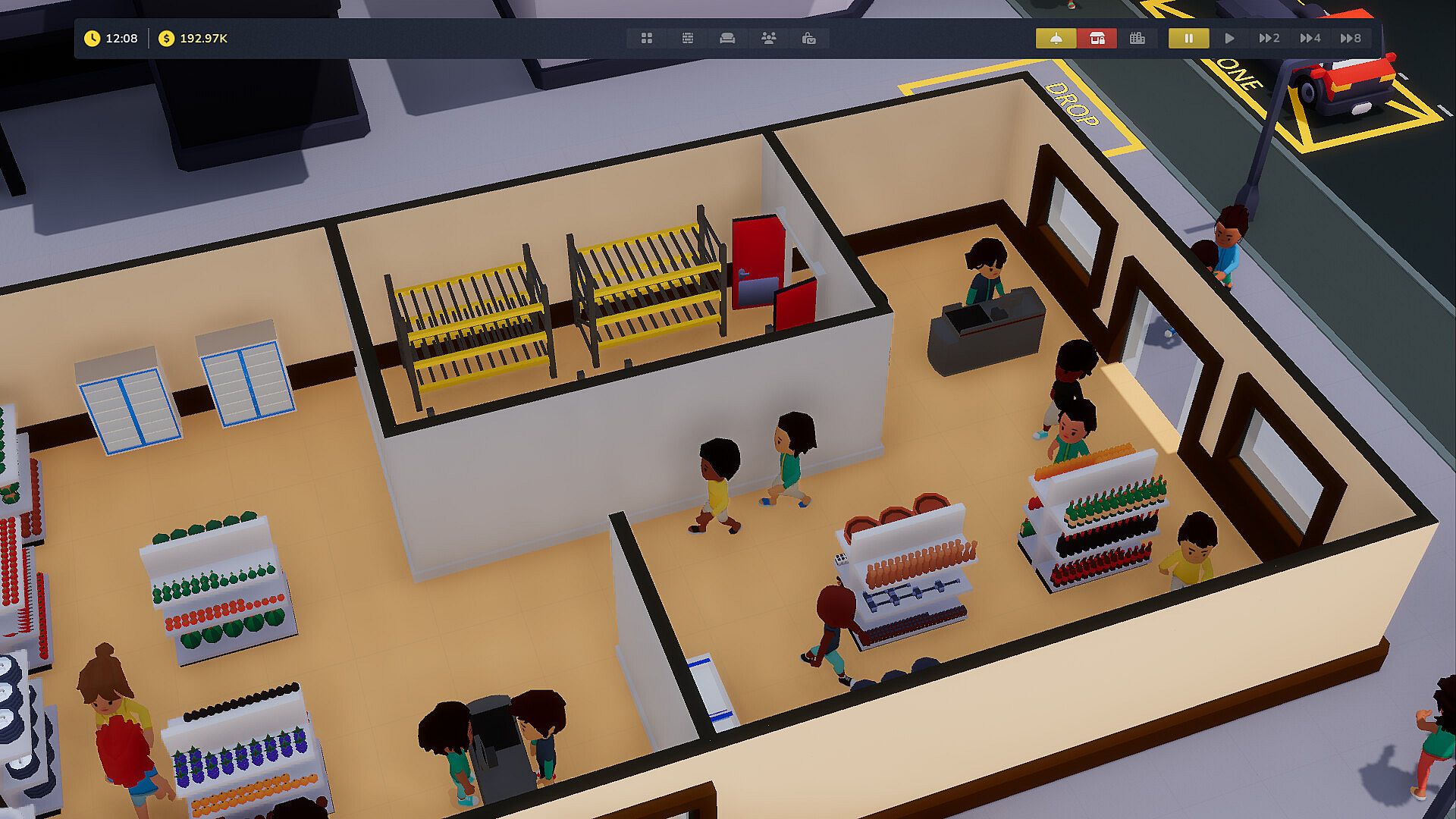
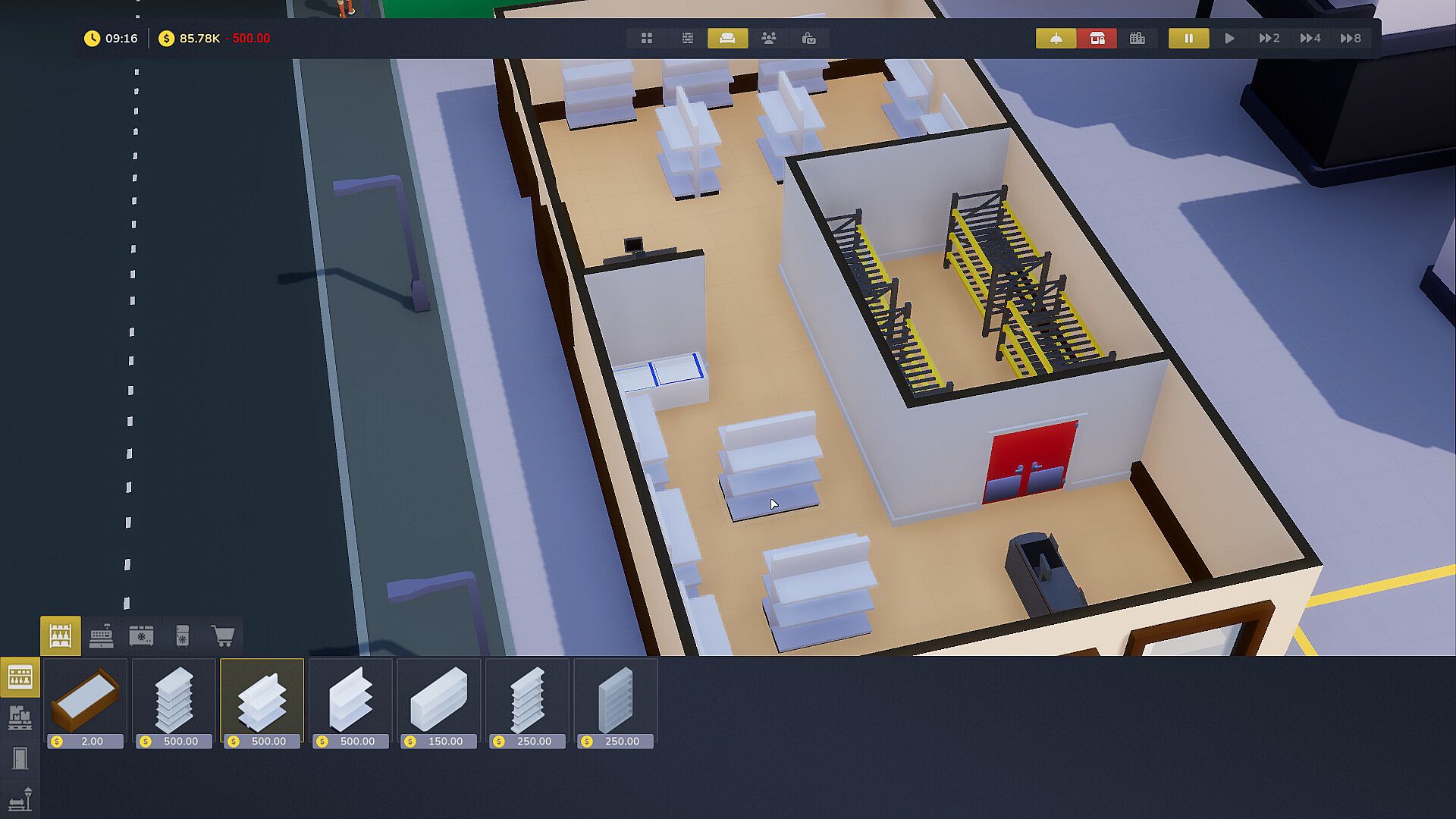
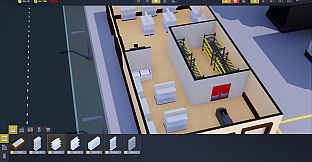
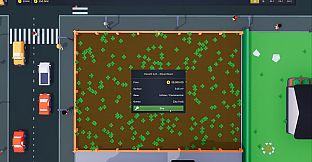
Players start by selecting locations across the city and constructing stores from the ground up or by renovating existing ones. The low-poly art style keeps the visual presentation clean while allowing full freedom in layout design. Every decision about shelf placement and product arrangement directly influences customer behavior and sales volume.
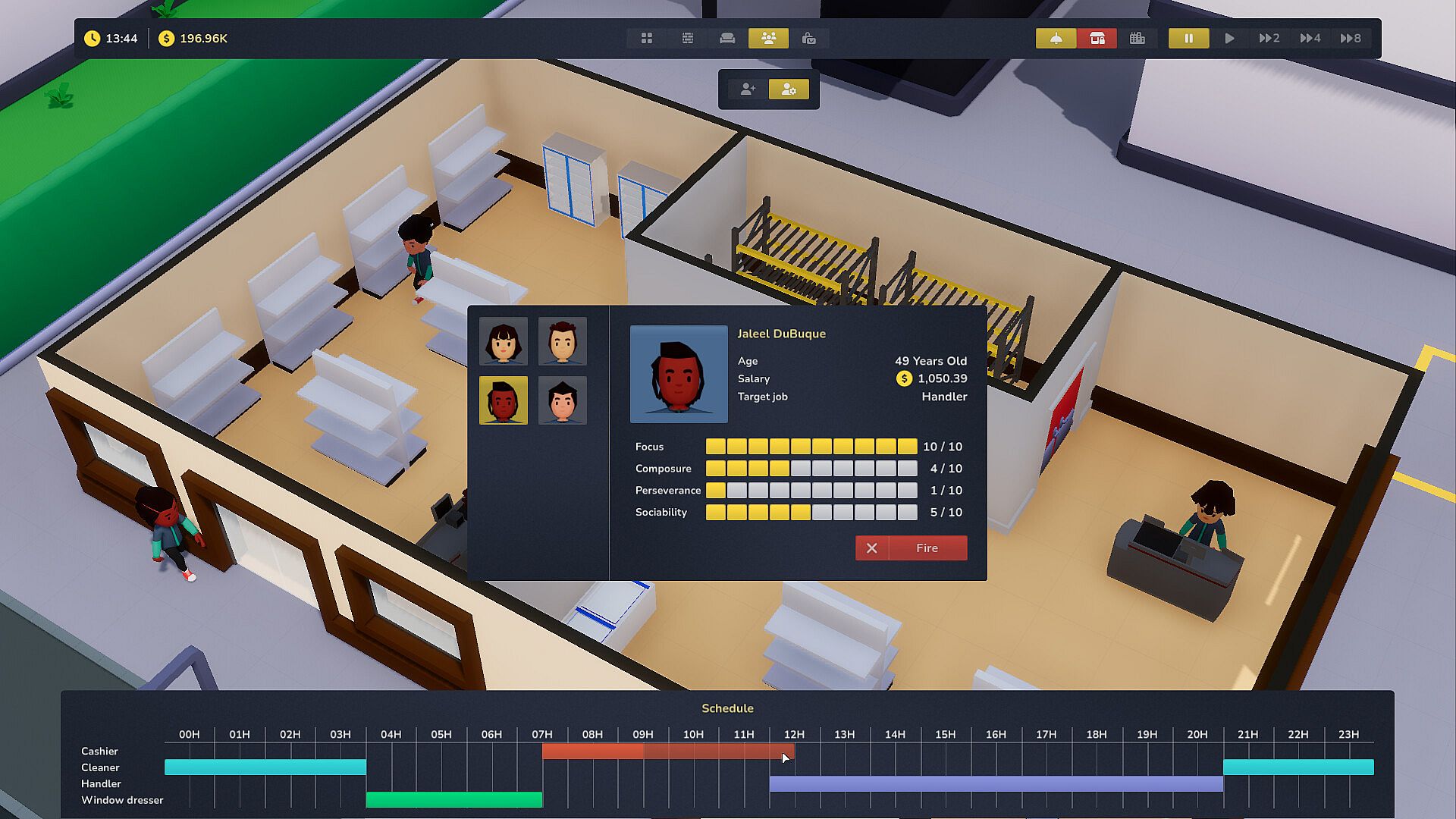
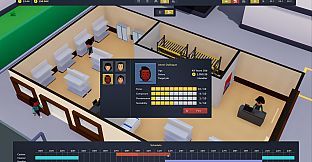
Staff management forms a core part of daily operations. Hiring decisions involve setting wages at or above minimum levels, assigning fixed shifts, and providing training to improve service quality. Balancing payroll costs against customer satisfaction requires constant attention, as understaffed stores lose sales while overstaffed ones cut into profits.
Customer interactions add another layer of strategy. Each shopper arrives with specific needs, and effective shelf layouts encourage additional impulse purchases. Rearranging products and experimenting with store flow becomes essential for maximizing revenue from every visit.
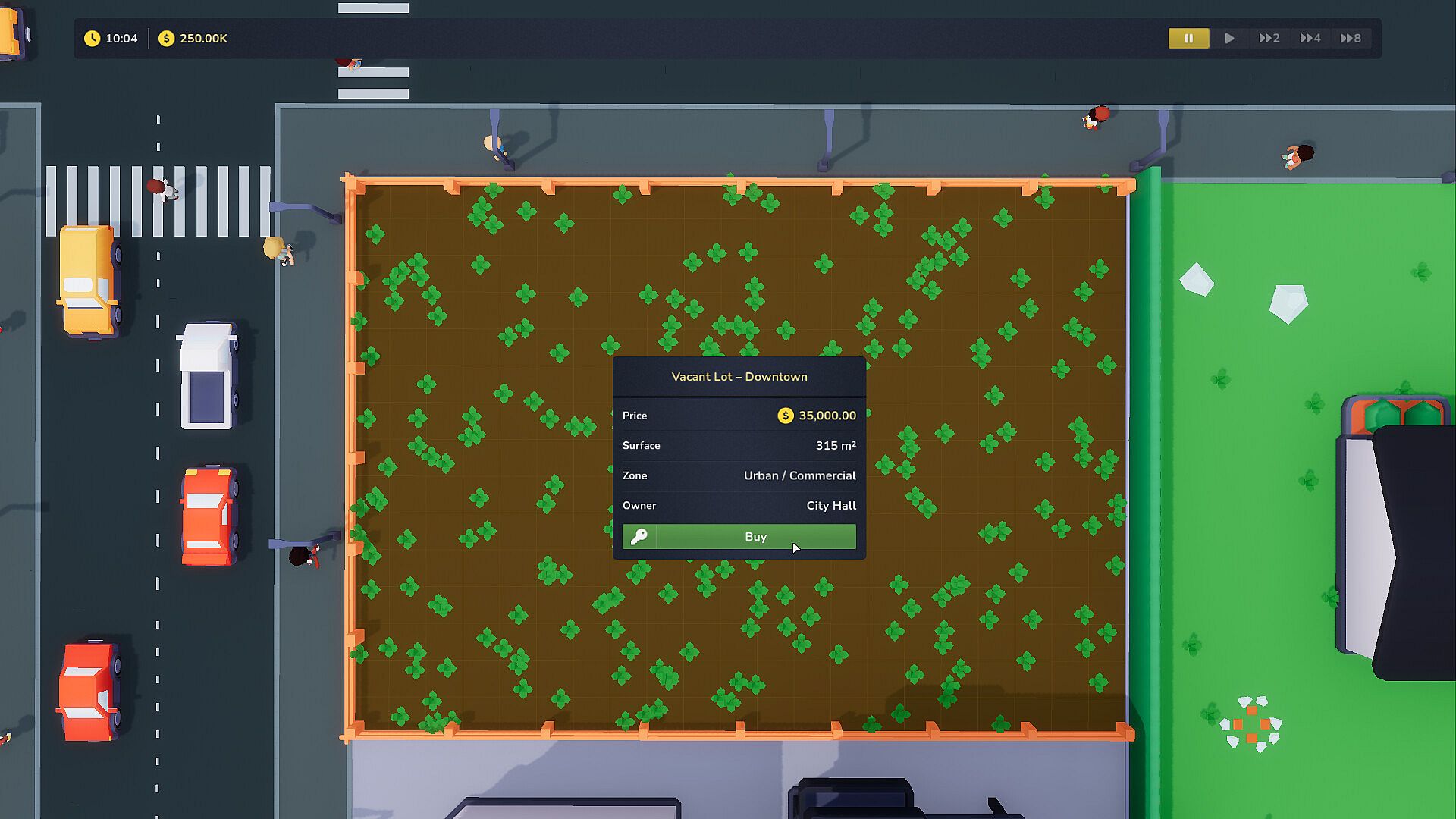
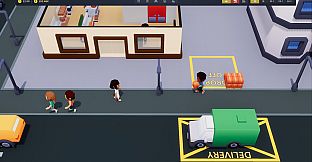
Expansion happens gradually as successful stores generate funds for new acquisitions. Players can purchase vacant lots or take over established businesses, then customize them to fit their growing network. The city map encourages district-by-district growth, turning isolated shops into a connected retail presence.
Game Modes
The game centers on a single-player campaign of empire building without separate competitive or multiplayer modes. Progression follows a continuous loop of construction, management, and expansion that unfolds across the entire city map. Players advance by improving individual store performance and scaling operations to cover more districts over time.
Within this framework, the simulation allows for different approaches to growth. Some focus on optimizing a small number of high-performing locations while others prioritize rapid acquisition and broad coverage. The core systems of layout design, staffing, and customer flow remain consistent regardless of the chosen pace.
Building and Managing Stores
Store construction offers direct control over every aspect of the physical space. Players can expand lots, clear existing structures, or start fresh on open land. This flexibility supports varied strategies, from compact neighborhood shops to larger flagship locations.
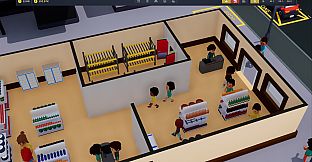
Product placement and inventory decisions tie directly into customer wish lists. A well-organized store increases the chance of additional purchases beyond the initial intent. Regular adjustments based on observed customer patterns help maintain strong sales across different store sizes and locations.
Staff and Operations
Employee management requires attention to both costs and performance. Fixed shifts and wage structures create predictable expenses that must be weighed against service levels. Training investments can raise efficiency, but they add to the budget that might otherwise fund expansion.
Effective teams keep stores running smoothly during peak hours while avoiding unnecessary overhead. Players learn to match staffing levels to store traffic patterns, creating a balance that supports steady growth without draining resources.
Is It Worth Playing?
Price War suits players who enjoy detailed management simulations and incremental empire building. The combination of store layout planning, staff scheduling, and city-wide expansion provides a focused loop that rewards careful observation and adjustment. As an Early Access title, it continues to receive updates that refine these core systems.
Those interested in retail-themed strategy games will find the low-poly presentation and direct control over operations engaging. The absence of combat or external competition keeps the emphasis on internal optimization and steady progress across the city map. Players who prefer hands-on business simulations over fast-paced action or narrative-driven experiences are most likely to appreciate the depth available here.











