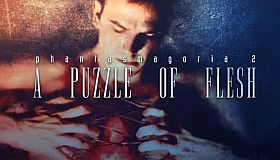











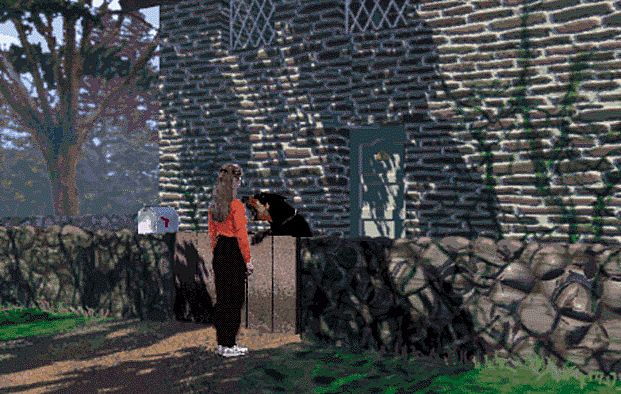
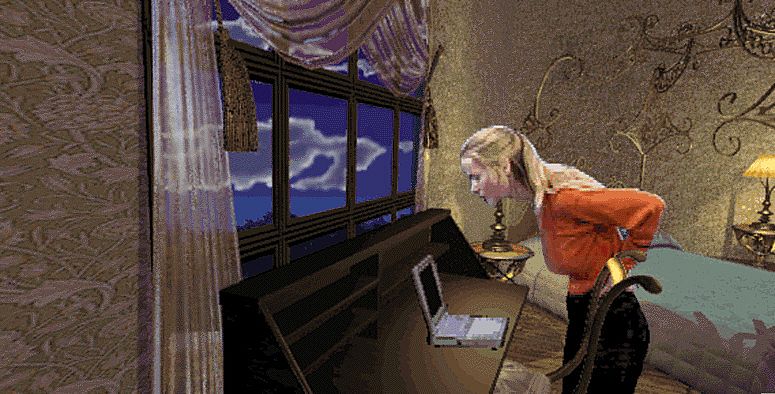
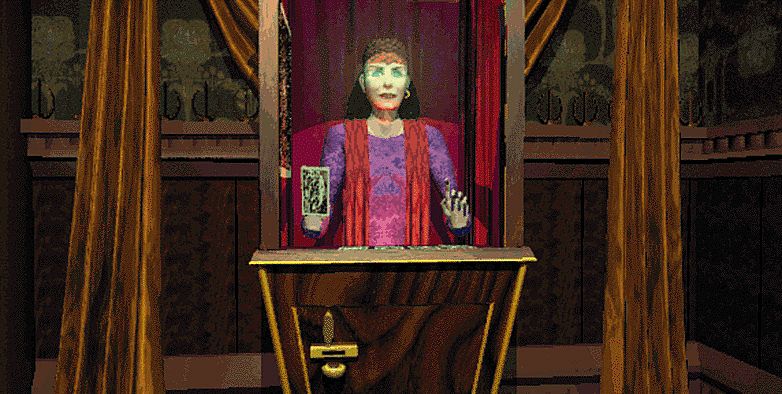
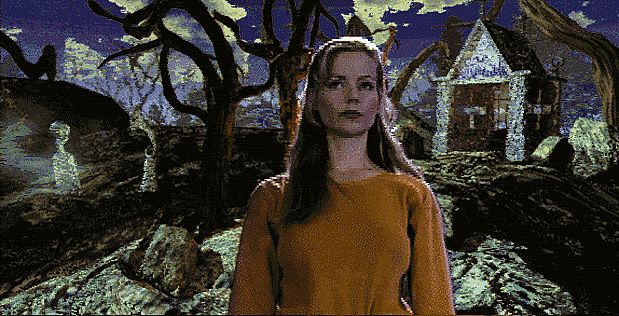
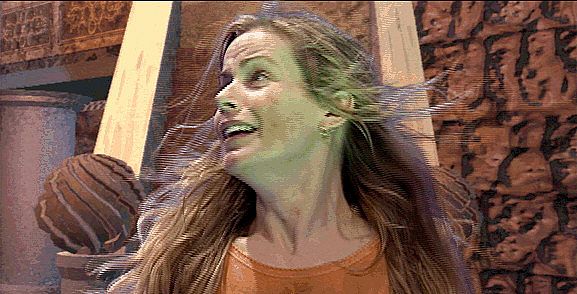
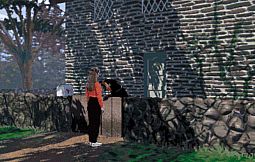
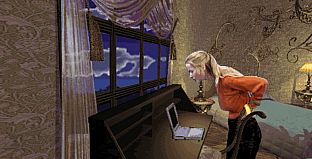
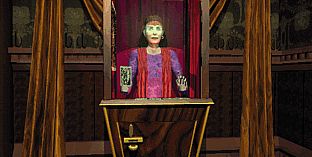
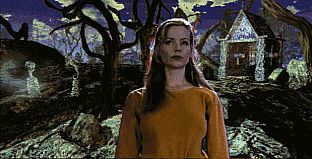
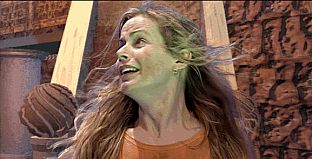
Phantasmagoria is a point-and-click adventure horror game released for PC in 1995. Designed by Roberta Williams, it places players in control of writer Adrienne Delaney as she moves into a remote mansion once owned by a 19th-century magician. The title blends live-action footage with three-dimensionally rendered environments to deliver a story of supernatural terror and personal dread.
Gameplay
The core loop centers on exploration and interaction within a fixed set of locations. Players guide Adrienne through rooms and grounds by clicking to walk, examine objects, or engage with characters. The interface remains minimal, with a cursor that turns red over interactive elements and four primary actions: look or talk, pick up, use an item, and move. Items collected automatically enter an inventory limited to eight slots, encouraging careful selection of what to carry forward.
Puzzles stay straightforward and logical, often tied directly to story progression rather than obscure combinations. A hint system and chapter progress indicator help maintain momentum across the experience. Cinematic sequences advance the narrative between player actions, while the ability to skip non-essential footage keeps the focus on key decisions. The design prioritizes atmosphere and suspense over mechanical complexity, with environments that shift perspective as Adrienne explores.
Game Modes
Phantasmagoria offers only a single-player campaign structured across seven distinct chapters. Each chapter builds tension incrementally and corresponds to a separate disc in the original release. Players can start a new session at the beginning of any chapter, though this skips optional content from earlier sections. Progress is tracked via a single bookmark rather than multiple save slots, reinforcing the linear path through the story.
No alternative modes, multiplayer options, or branching paths exist beyond the main narrative thread. The structure emphasizes sequential discovery and escalating events within the mansion setting.
Story and Atmosphere
The narrative follows Adrienne as she uncovers the mansion's dark history involving its previous owner and a series of mysterious deaths. Visions and encounters reveal past events while present-day threats intensify. The game incorporates full-motion video sequences featuring live actors to heighten the sense of unease, with detailed sets and practical effects supporting the horror tone.
Sound design and musical score contribute to the unsettling mood, using choral elements and ambient cues to underscore moments of isolation. The overall presentation targets adult audiences, incorporating mature themes that generated discussion upon release.
Is It Worth Playing?
Reception at the time highlighted strong visuals and a compelling sense of dread alongside critiques of deliberate pacing and accessible puzzle design. The title remains available on PC through modern re-releases and appeals primarily to players interested in classic point-and-click adventures or 1990s interactive movies. Those who enjoy story-focused horror with straightforward mechanics and cinematic presentation may find value in its focused single-player experience. The game's emphasis on atmosphere over challenge suits sessions where narrative immersion takes precedence.