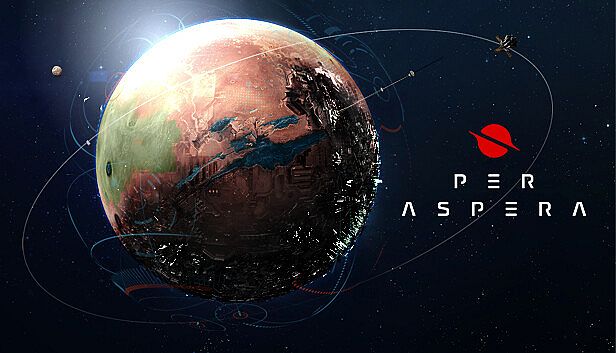






























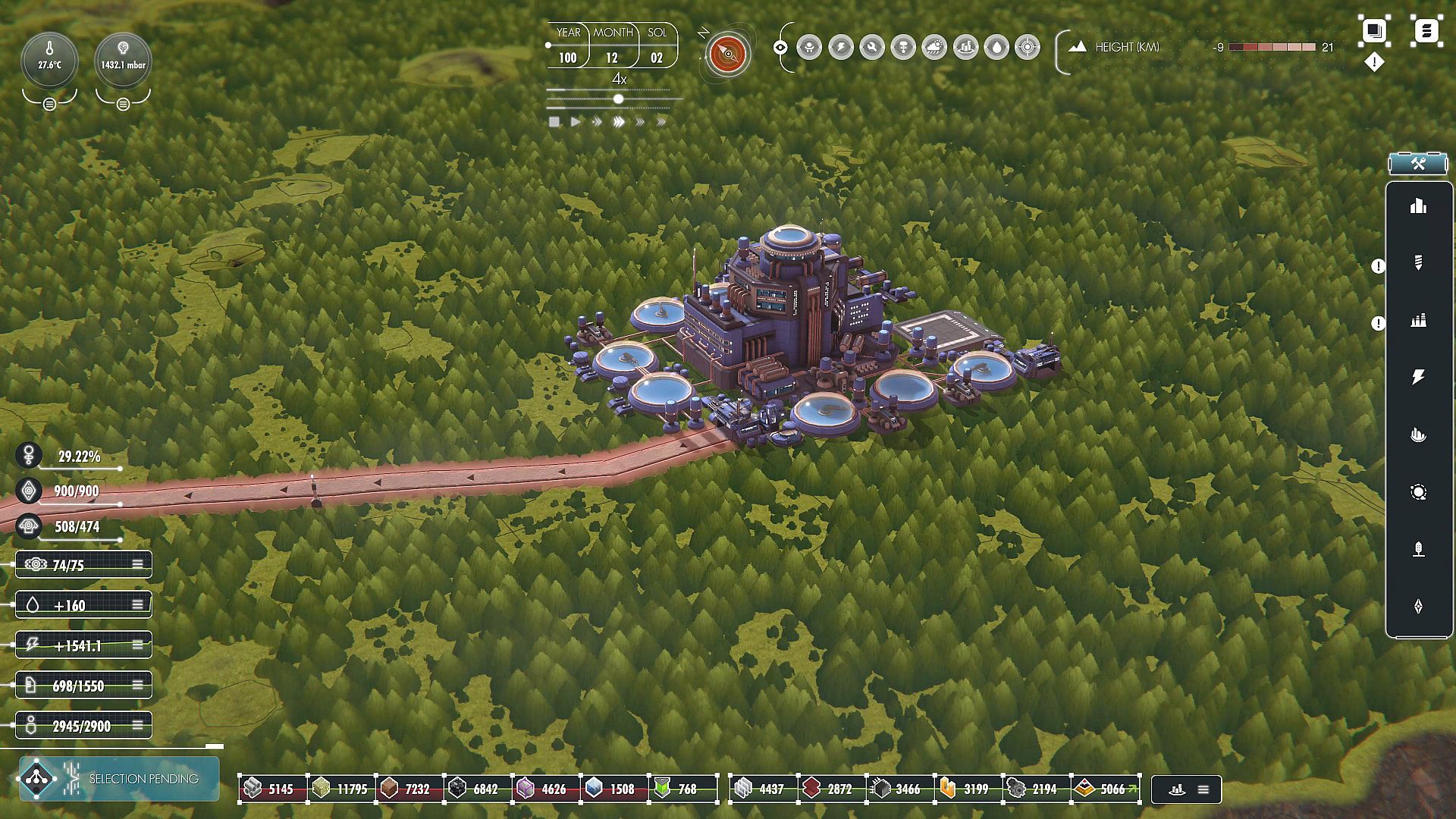
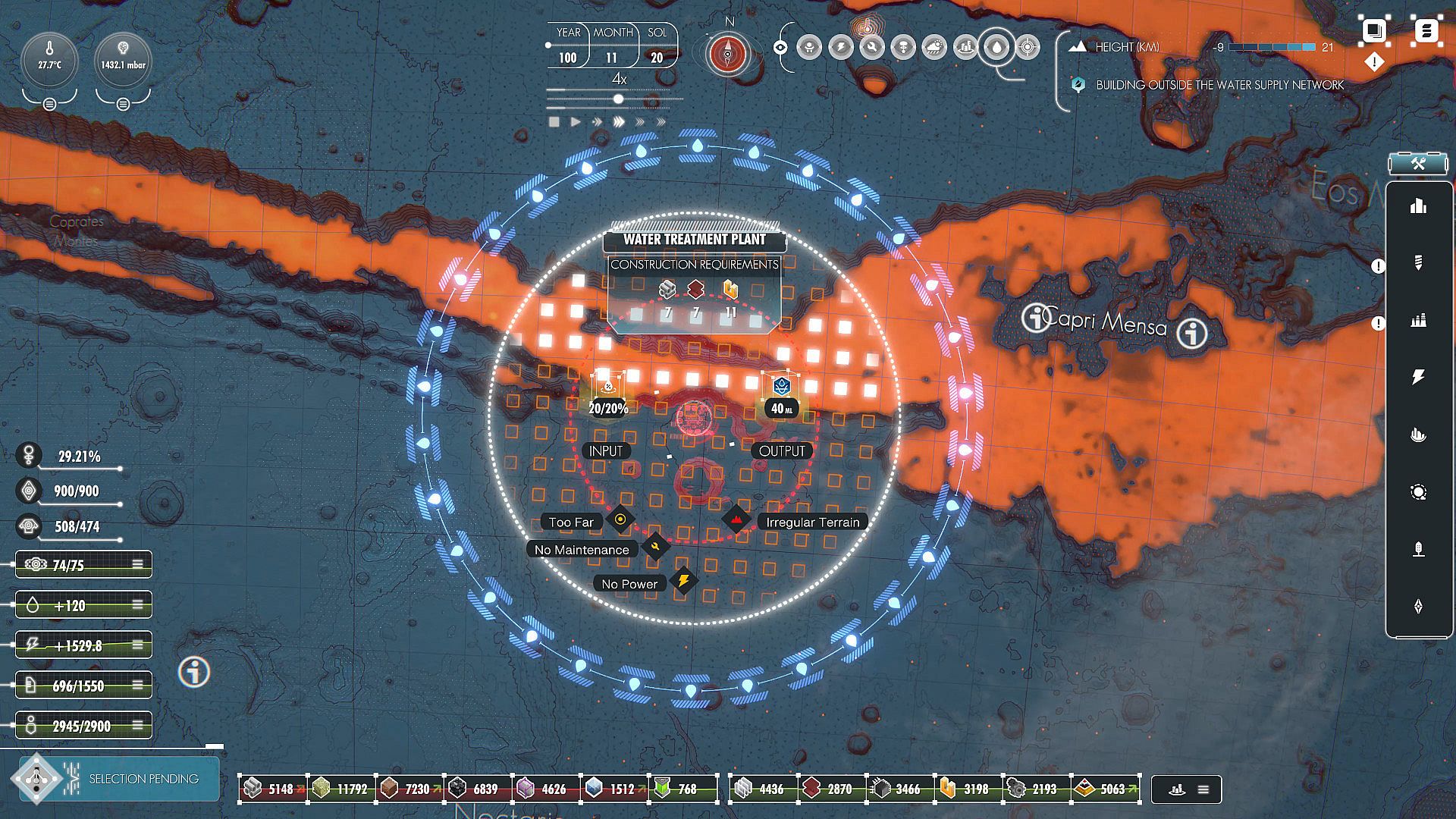
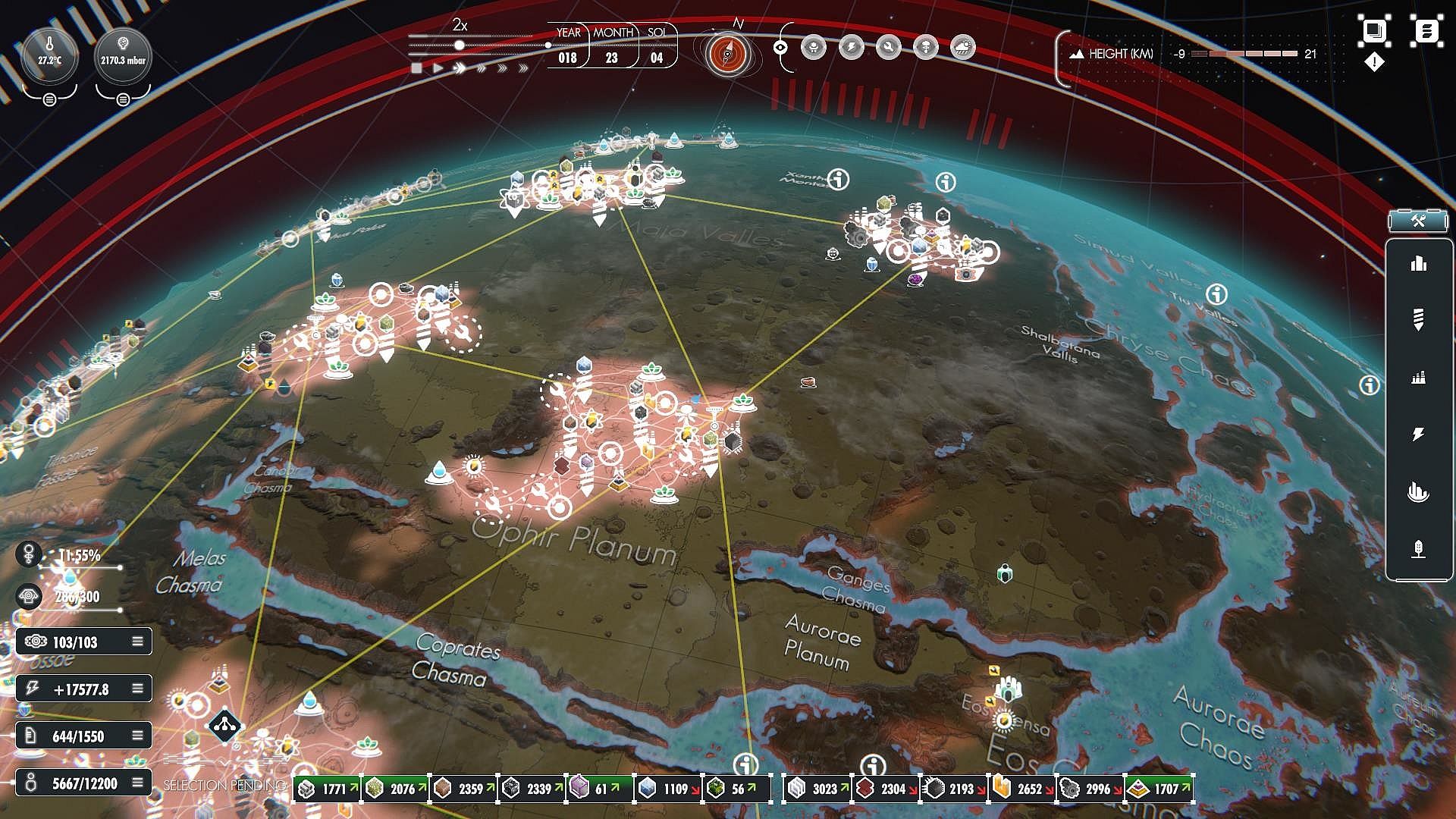
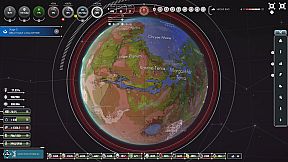
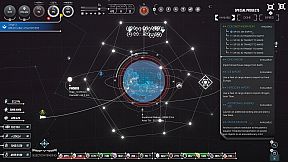
Per Aspera is a strategy simulation game that places players in control of an artificial intelligence tasked with transforming the surface of Mars. The experience blends resource management, base construction, and long-term planetary engineering in a setting grounded in real scientific concepts drawn from space agency research.
Gameplay
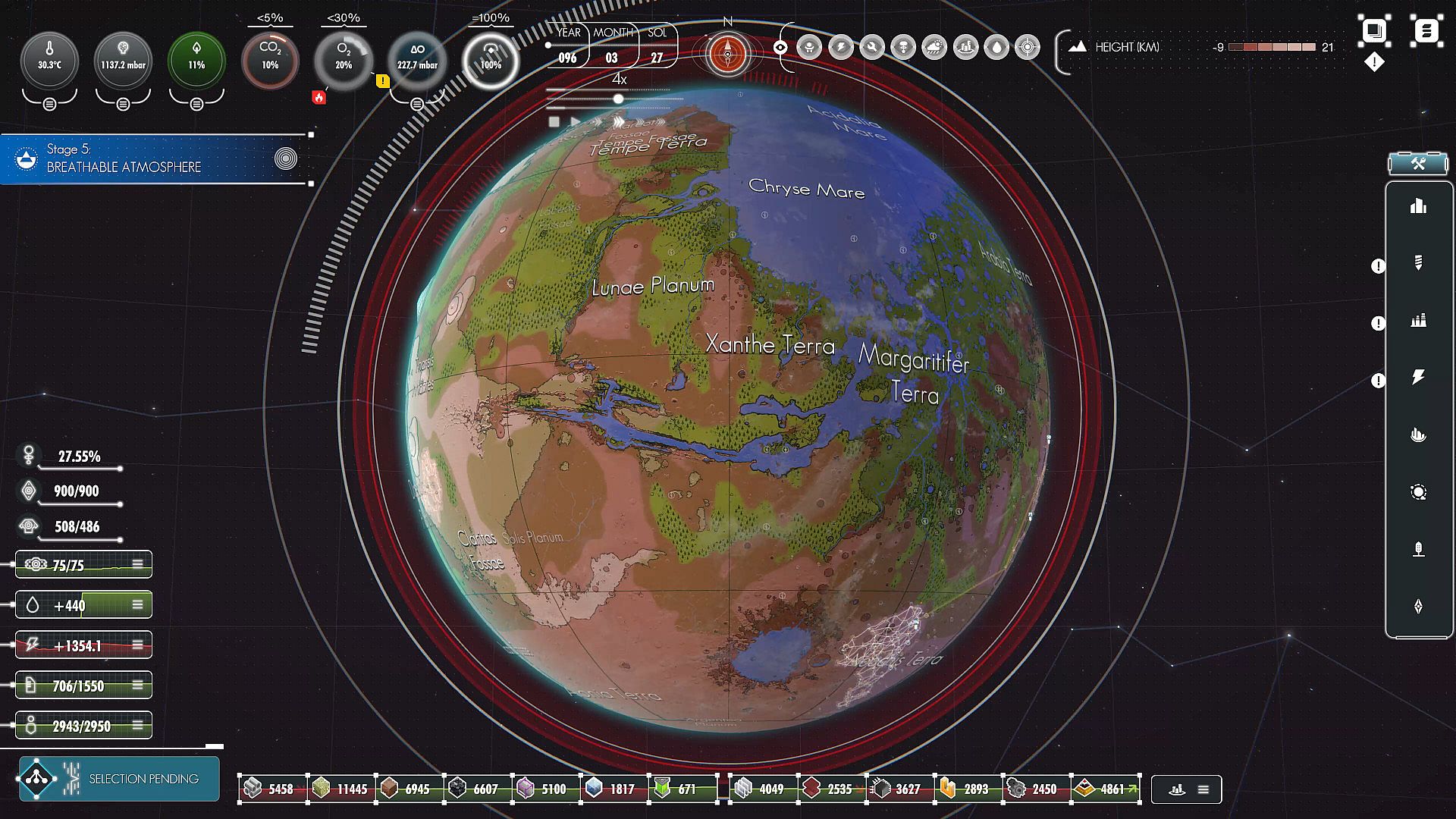
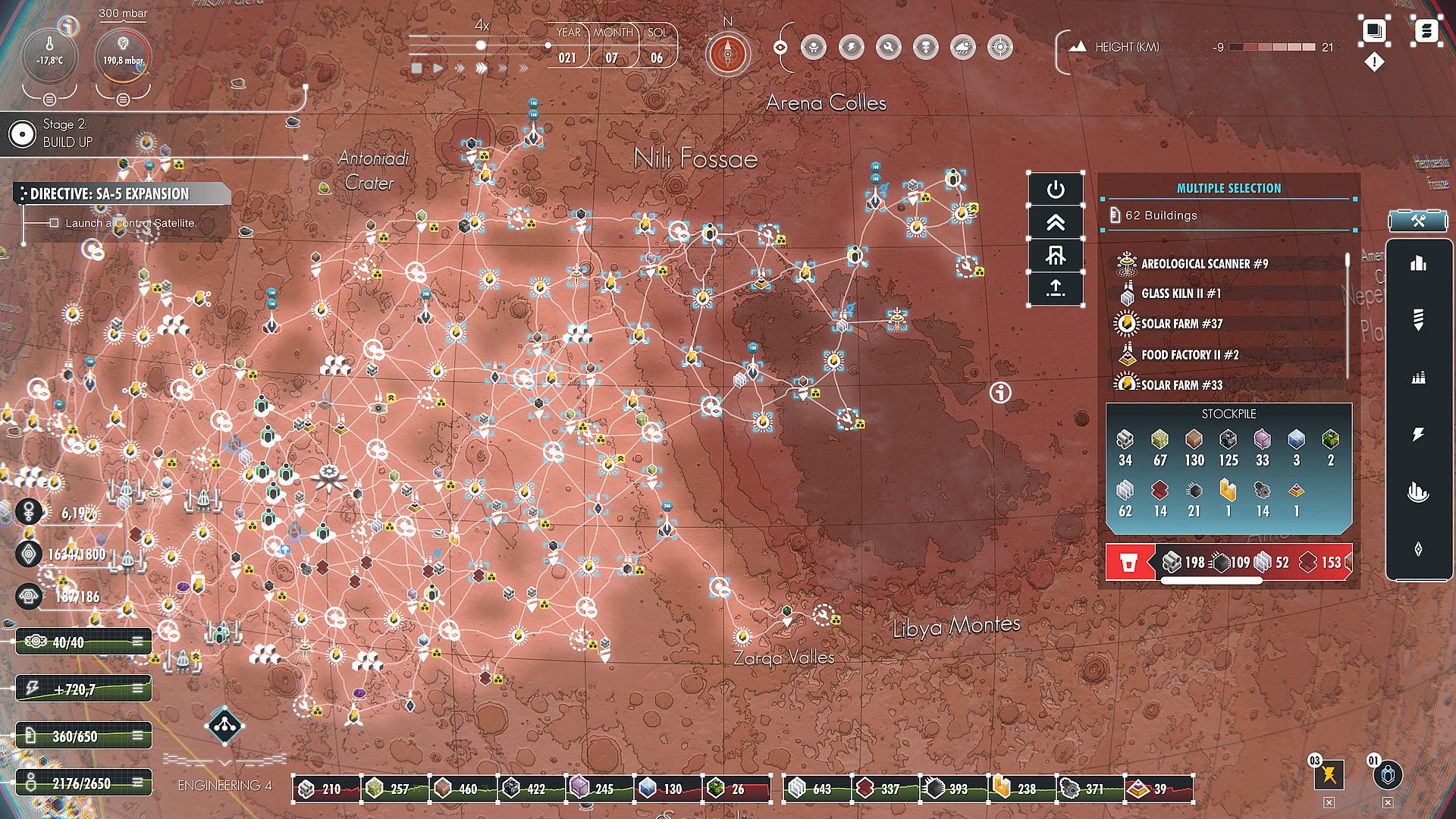
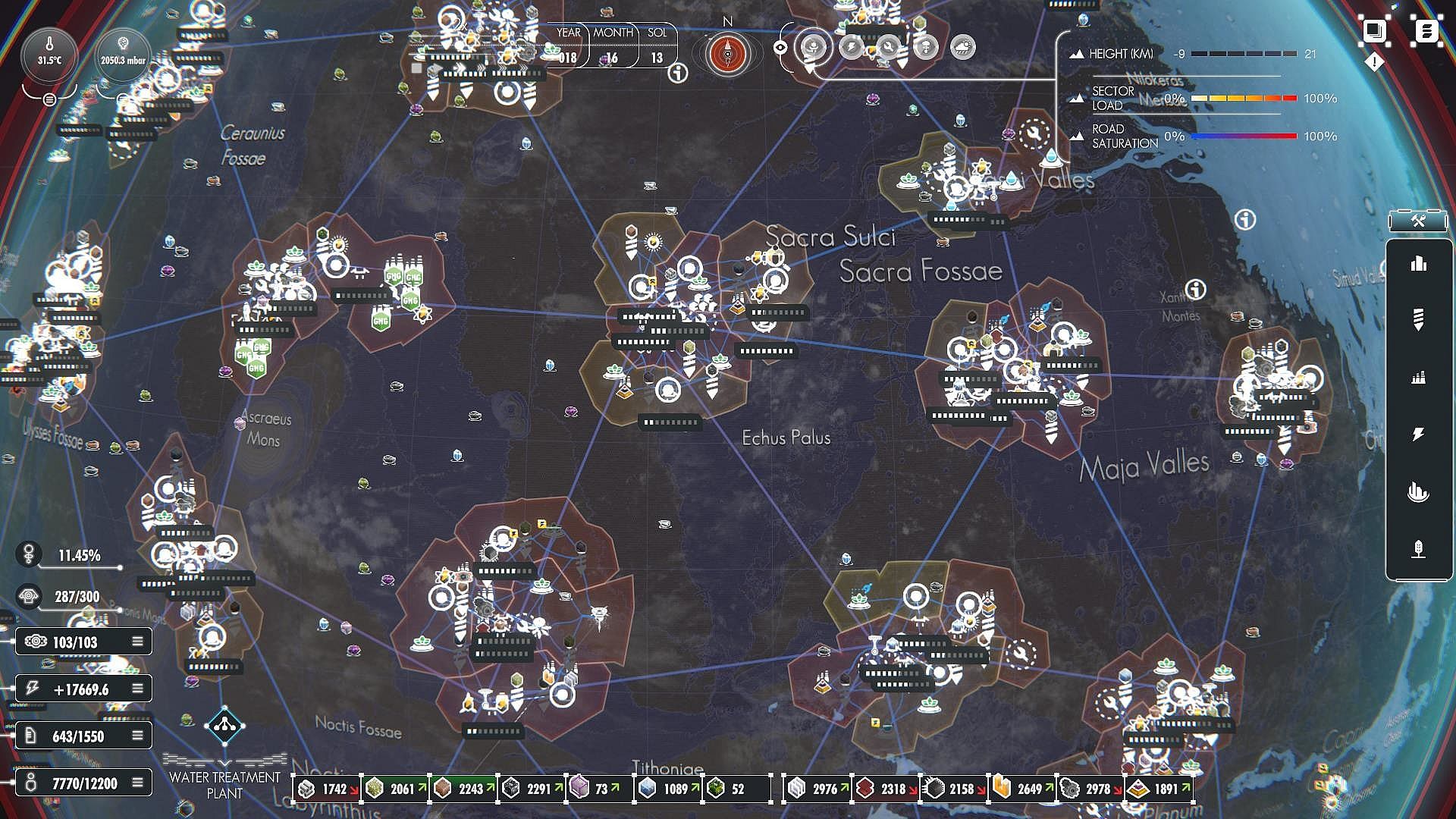
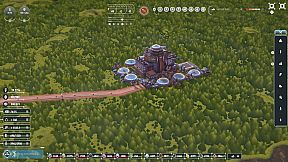
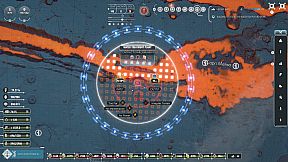
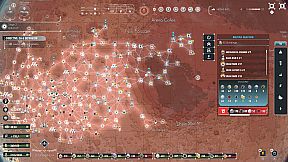
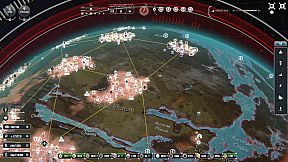
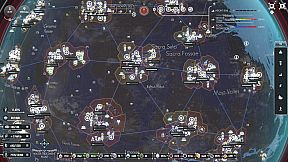
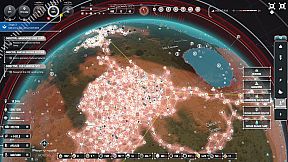
Core systems center on balancing resource flows across an expanding network of facilities. Players extract raw materials such as aluminum, iron, carbon, water, silicon, and chemicals, then route them through factories that produce refined outputs including polymers, electronics, parts, and food. Worker hubs manage logistics and transport, while power infrastructure supports operations across the planet-scale map. Buildings must connect through grids that expand reach and efficiency, creating an interconnected web that grows from a single landing site into a global operation.
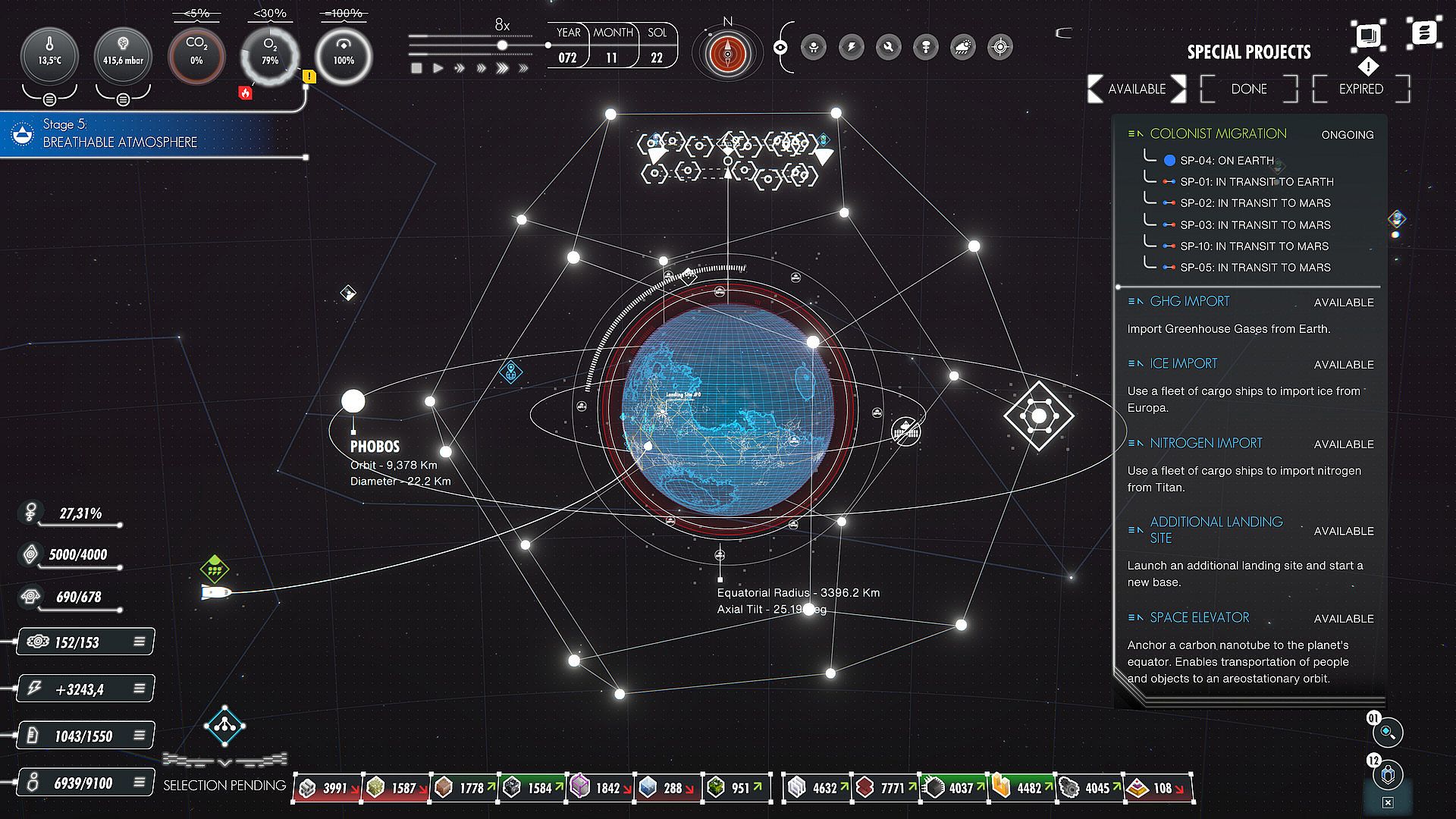
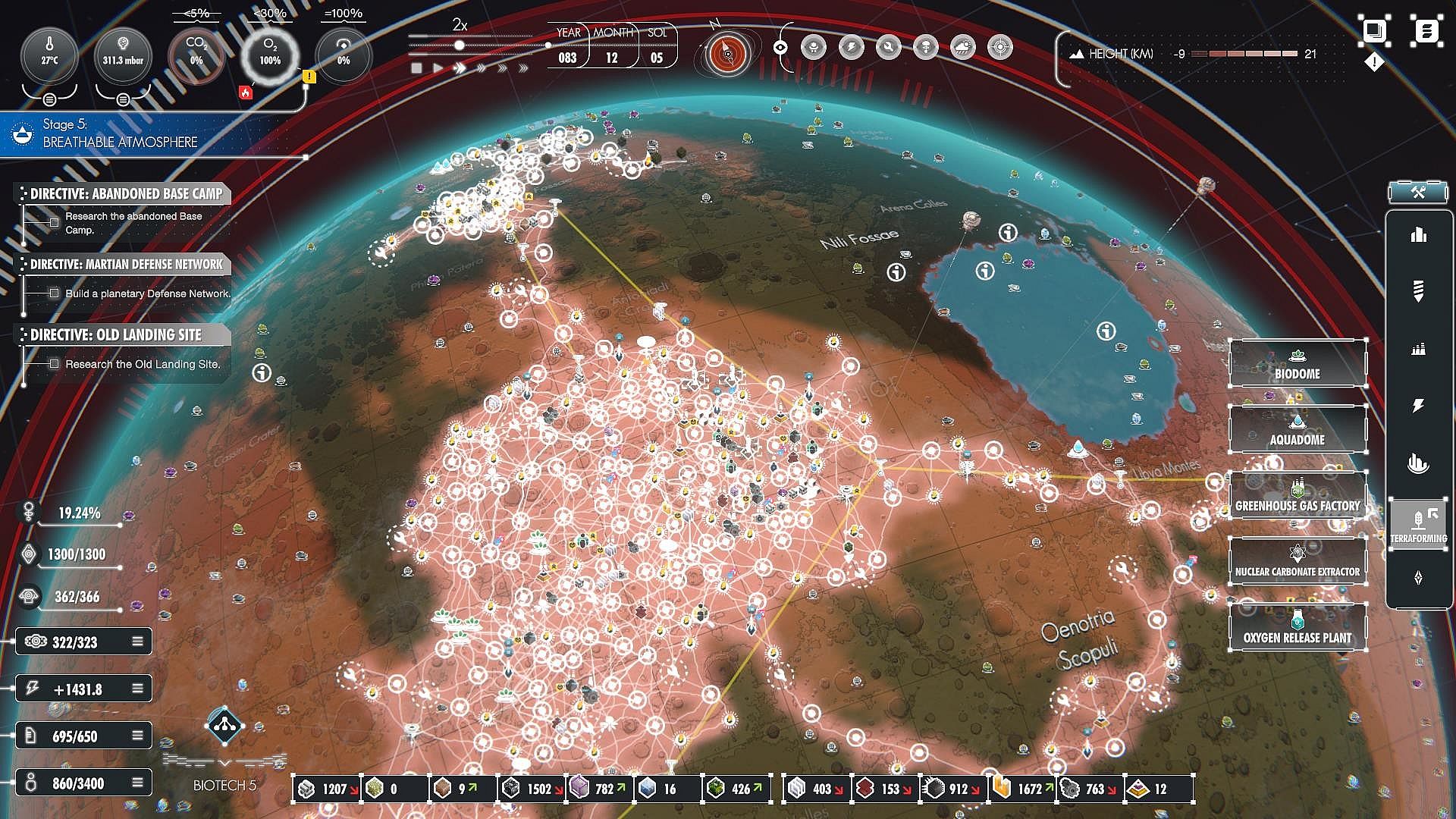
Research follows branching paths that unlock technologies based on theoretical science. These advancements support terraforming steps like raising atmospheric temperature to release trapped gases and building a breathable environment. Combat elements require defending colonies from external threats, using limited military structures to protect against combative forces. Maintenance and productivity mechanics add ongoing challenges, as structures can degrade without proper support.
Logistics form a central loop, with players optimizing transport routes and facility placement to sustain growth. The game emphasizes careful planning over rapid expansion, rewarding setups that maintain steady resource circulation while advancing planetary conditions.
Game Modes
Two primary modes define the experience. Campaign mode integrates the full narrative arc, guiding players through a sequence of objectives tied to colonization efforts and external conflicts. Sandbox mode removes narrative constraints, allowing free-form terraforming and construction at any pace.
Multiplayer support operates exclusively in sandbox mode, enabling up to four players to collaborate on shared resources and research while establishing separate landing zones and colony districts. Sessions support saving and resuming, focusing on cooperative building without competitive elements or access to military options.
Difficulty options adjust parameters such as construction costs, structure durability, and productivity minimums. These settings range from eased values suited to story focus to stricter rules that increase maintenance demands and resource requirements.
Story and Decisions
The narrative follows the perspective of AMI, an artificial consciousness evolving through its mission. Players encounter choices that influence relationships with human colonists and shape the mission outcome. Multiple endings reflect different paths through moral and practical dilemmas presented during the campaign.
Exploration reveals remnants of prior human attempts on Mars, providing context for current challenges. These elements tie into defensive actions against ongoing threats, blending construction goals with reactive strategy.
Is It Worth Playing?
Per Aspera suits players who enjoy deliberate city-building simulations combined with narrative progression. The campaign delivers a structured journey with branching outcomes and voice performances that enhance key moments. Sandbox and co-op options extend play for those focused on optimization and shared planetary projects.
Reception highlights strengths in the science-based terraforming systems and overall presentation, while some note that logistics and interface elements require patience. The game reached a stable state after launch with added multiplayer features and expansions that expanded content options. Those drawn to thoughtful management titles with a focus on long-term planetary change will find the most consistent engagement here.