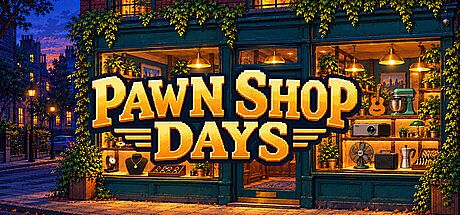



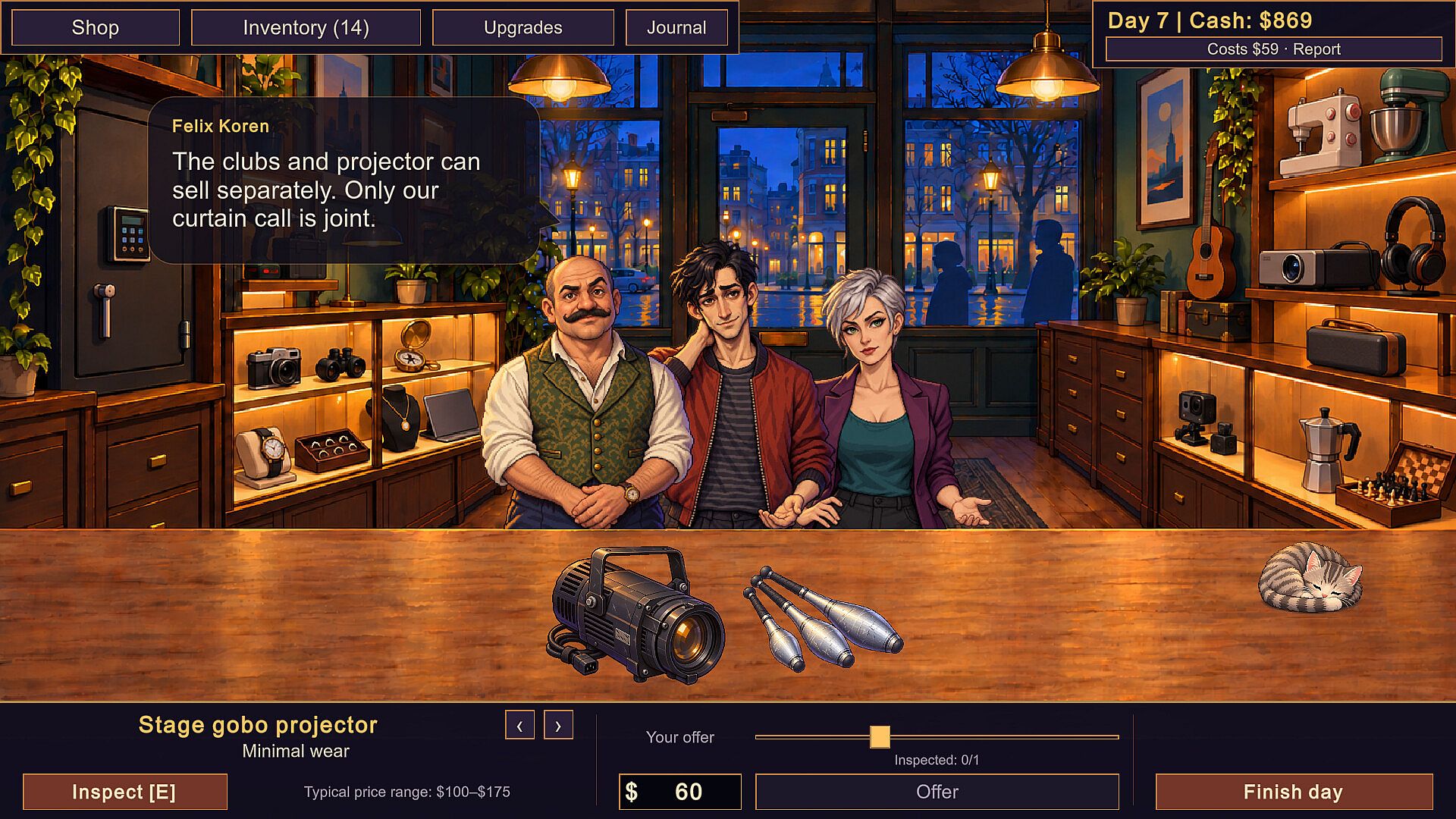



Pawn Shop Days is a pixel-art pawn shop simulator that blends strategy, simulation, and casual management elements on PC. Players run a small shop by buying items from visitors, restoring select pieces, and reselling them for profit while balancing daily expenses and shop upgrades.
Gameplay
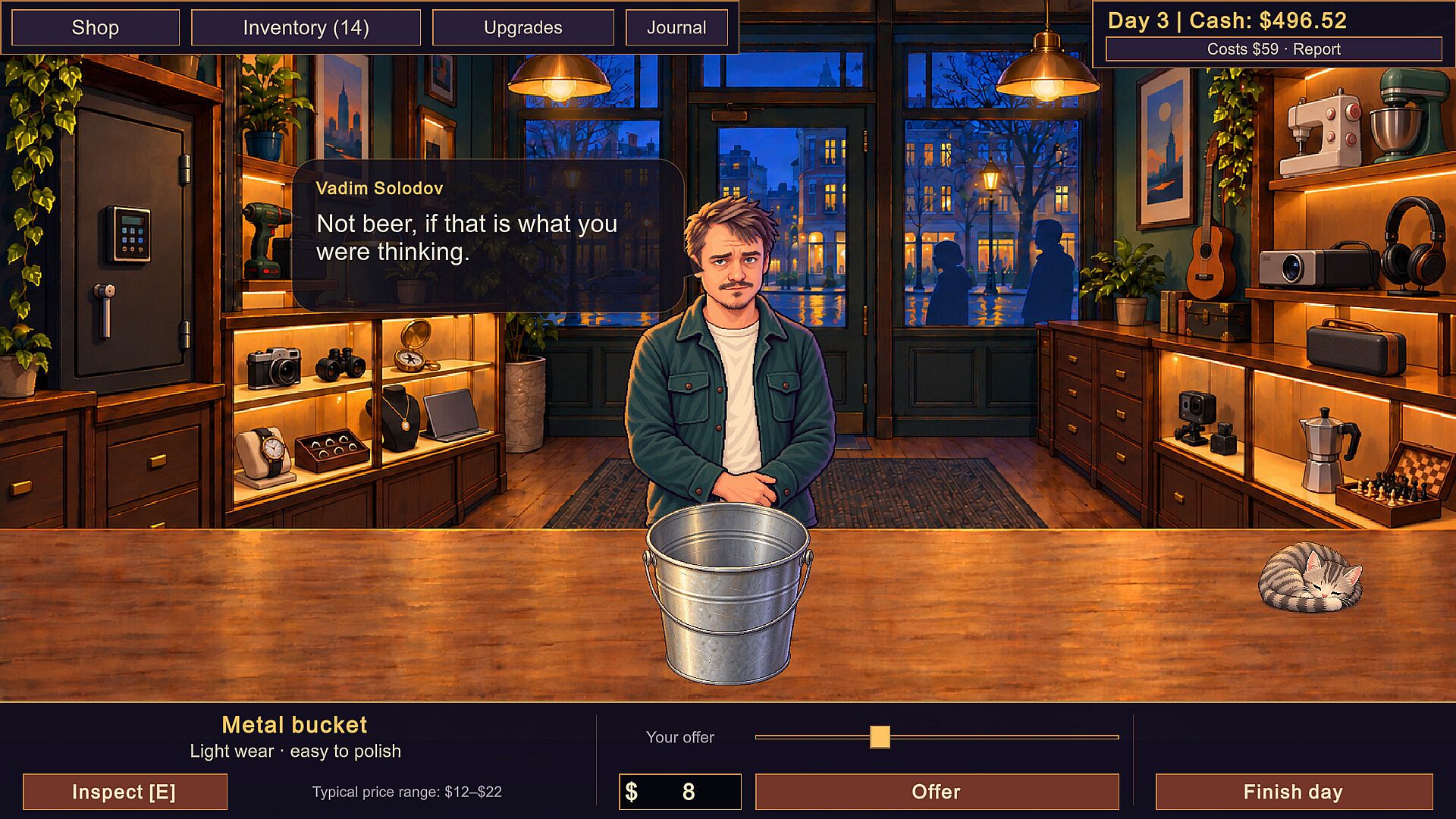
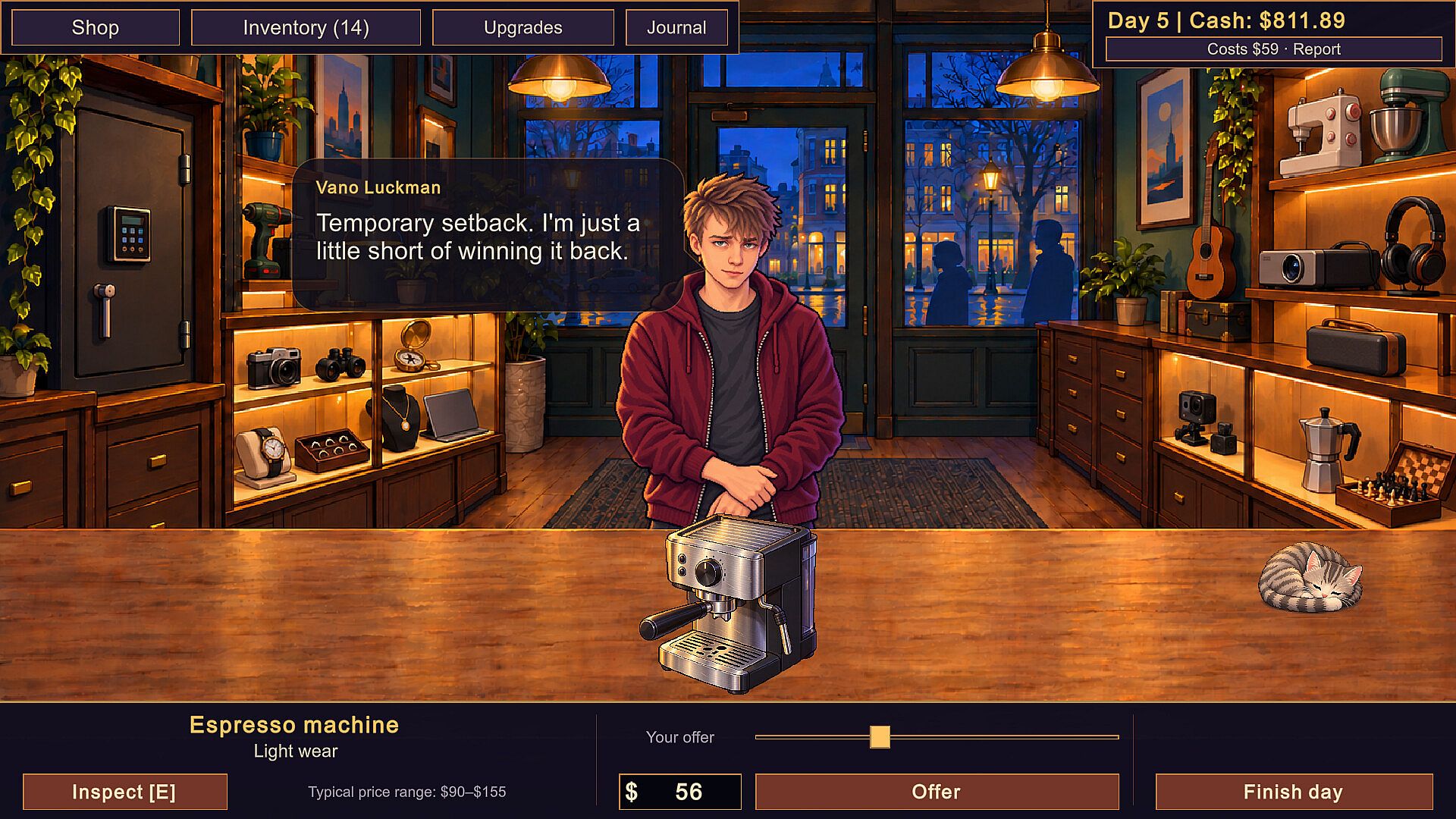
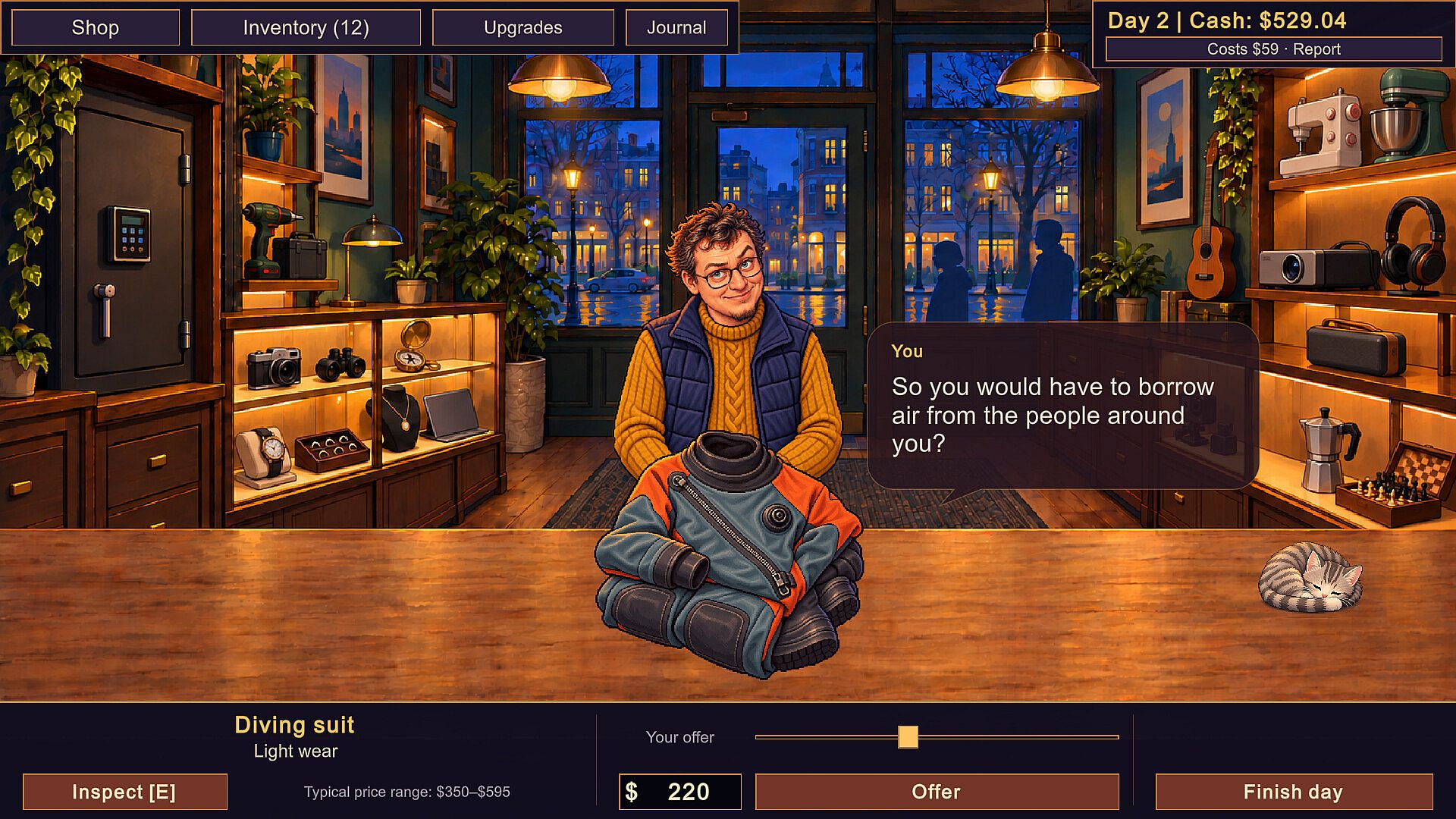
The core loop revolves around daily operations at the counter. Visitors arrive with items ranging from household goods to equipment, each accompanied by a story that may or may not match the actual condition. Players inspect markings, accessories, documents, and physical state to assess value, then negotiate a purchase price. Refusals, arguments, or successful deals influence future interactions with recurring characters.
Restoration forms a key decision point. Scuffs, missing parts, or faulty connections can be addressed through polishing, battery replacement, soldering, or sourcing accessories, but only when the investment promises a worthwhile return. Items can also be sold as-is if repairs would cut too deeply into margins. Profit calculations account for purchase cost, materials, and final asking price, with the goal of maintaining enough cash reserves for the next day.
Shop progression comes from earned money. Tools, display improvements, expanded space, and security measures become available as funds allow. Stock management requires setting prices and deciding whether to sell quickly or hold for better offers. Rent, electricity, and other bills arrive regularly, adding pressure to maintain steady cash flow. Thirty-six distinct characters appear across play sessions, some returning with new items and reactions shaped by prior encounters. A kitten rests on the counter and can be petted between transactions.
Game Modes
Pawn Shop Days operates as a single-player experience without separate game modes or multiplayer options. All activity centers on sequential shop days where negotiation, inspection, restoration choices, and reinvestment form the complete structure. Recurring visitors and evolving shop conditions provide ongoing variety within this unified loop.
Shop Management and Progression
Upgrades focus on practical improvements that affect daily efficiency and security. New equipment speeds restoration work, better displays help attract buyers, and security features reduce risks from dubious transactions. Players weigh immediate needs against long-term growth, such as expanding premises or adding tools that open new repair possibilities. Stock decisions extend beyond individual sales to overall inventory balance, ensuring the shop stays viable amid fluctuating customer offers and fixed costs.
Character Interactions and Risk
Each visitor brings personality to the transaction. Some accept refusals calmly while others push back or share elaborate explanations. Comparing claims against physical evidence helps identify bargains, fakes, or stolen goods. Police inspections or returning unhappy buyers can follow poor choices, making careful questioning a valuable habit. These elements tie directly into the simulation of running a real business where trust and verification matter.
Is It Worth Playing?
Pawn Shop Days suits players who enjoy deliberate management sims with negotiation and light puzzle elements in item appraisal. The pixel-art style and focus on everyday transactions create a grounded atmosphere rather than high-stakes action. With its release scheduled for November 12, 2026, the game remains unavailable for play or review at present. Those drawn to indie simulation titles centered on buying, restoring, and selling secondhand goods may find the described systems appealing once it launches.