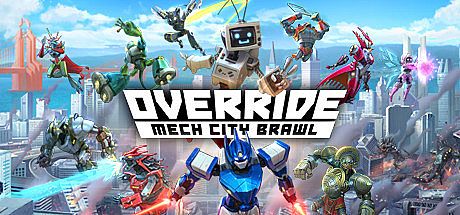


























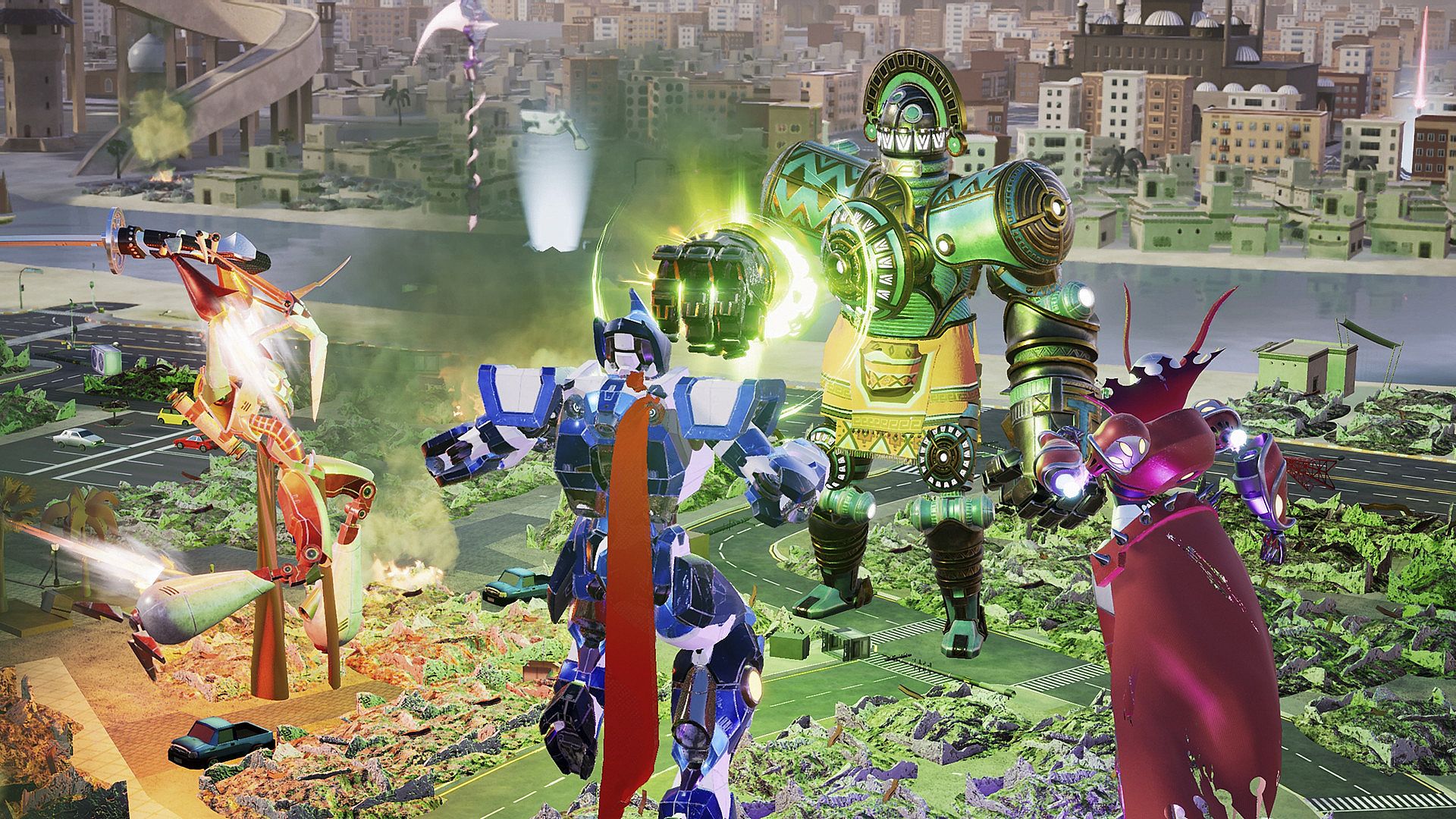
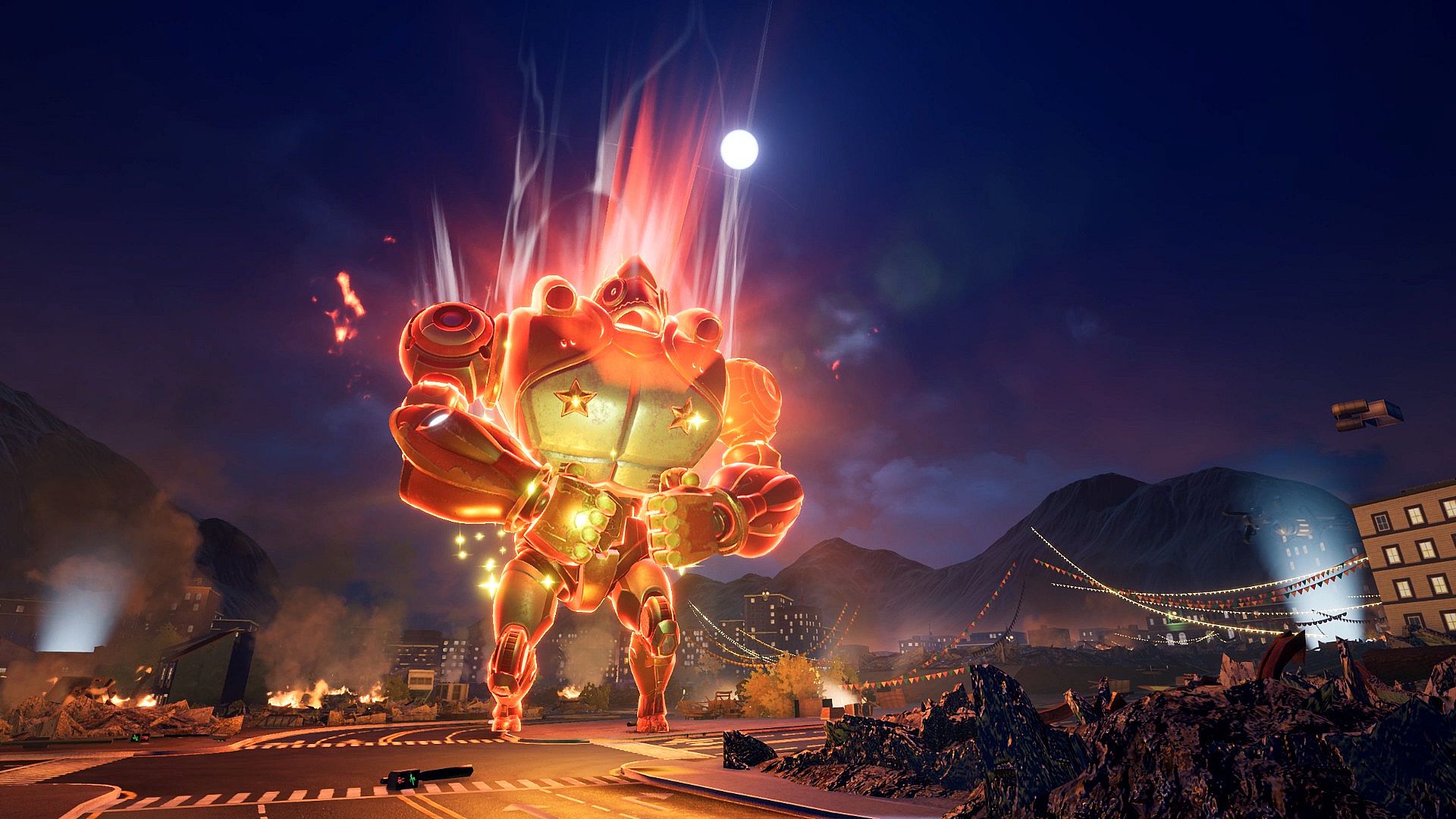
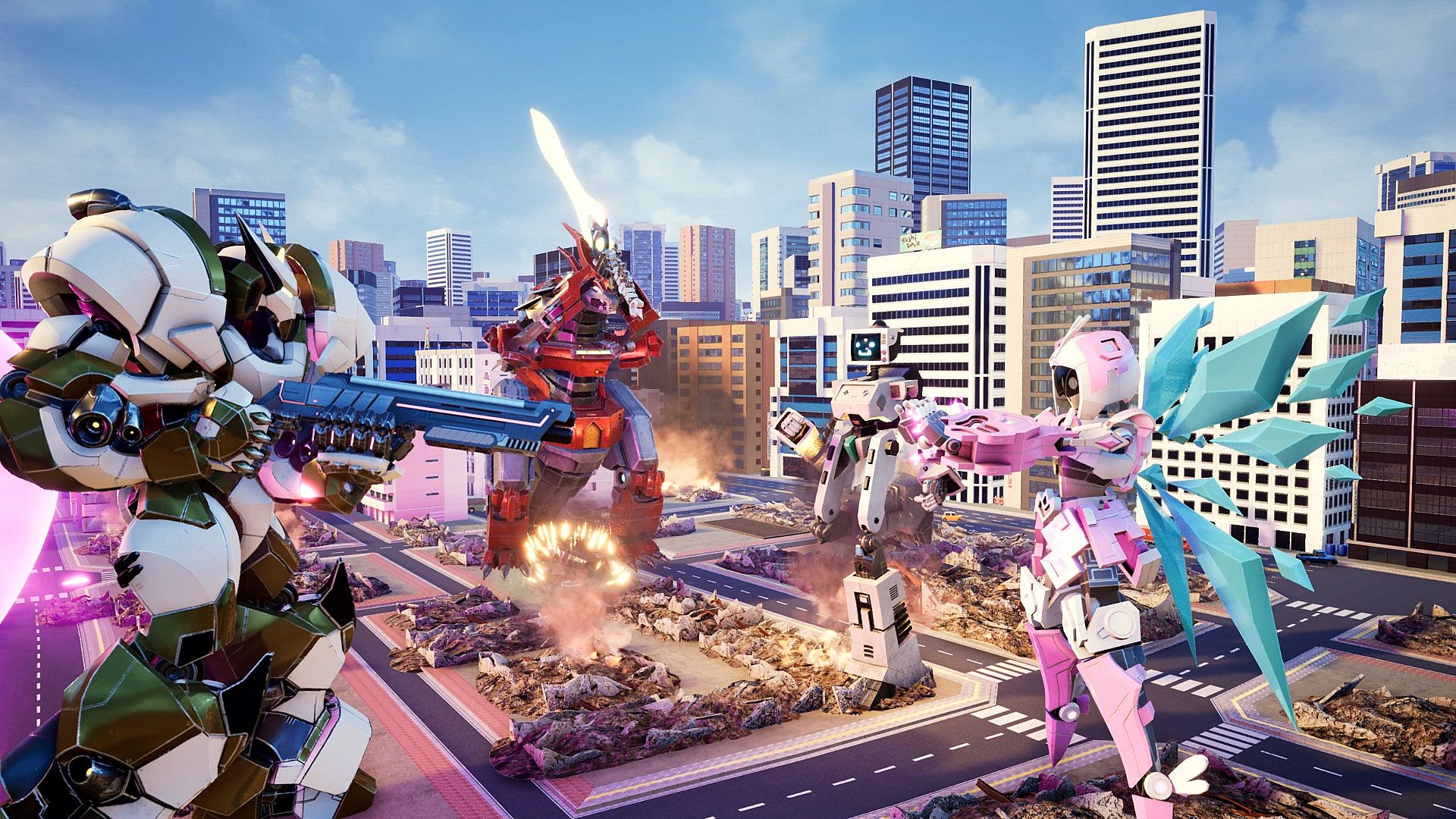
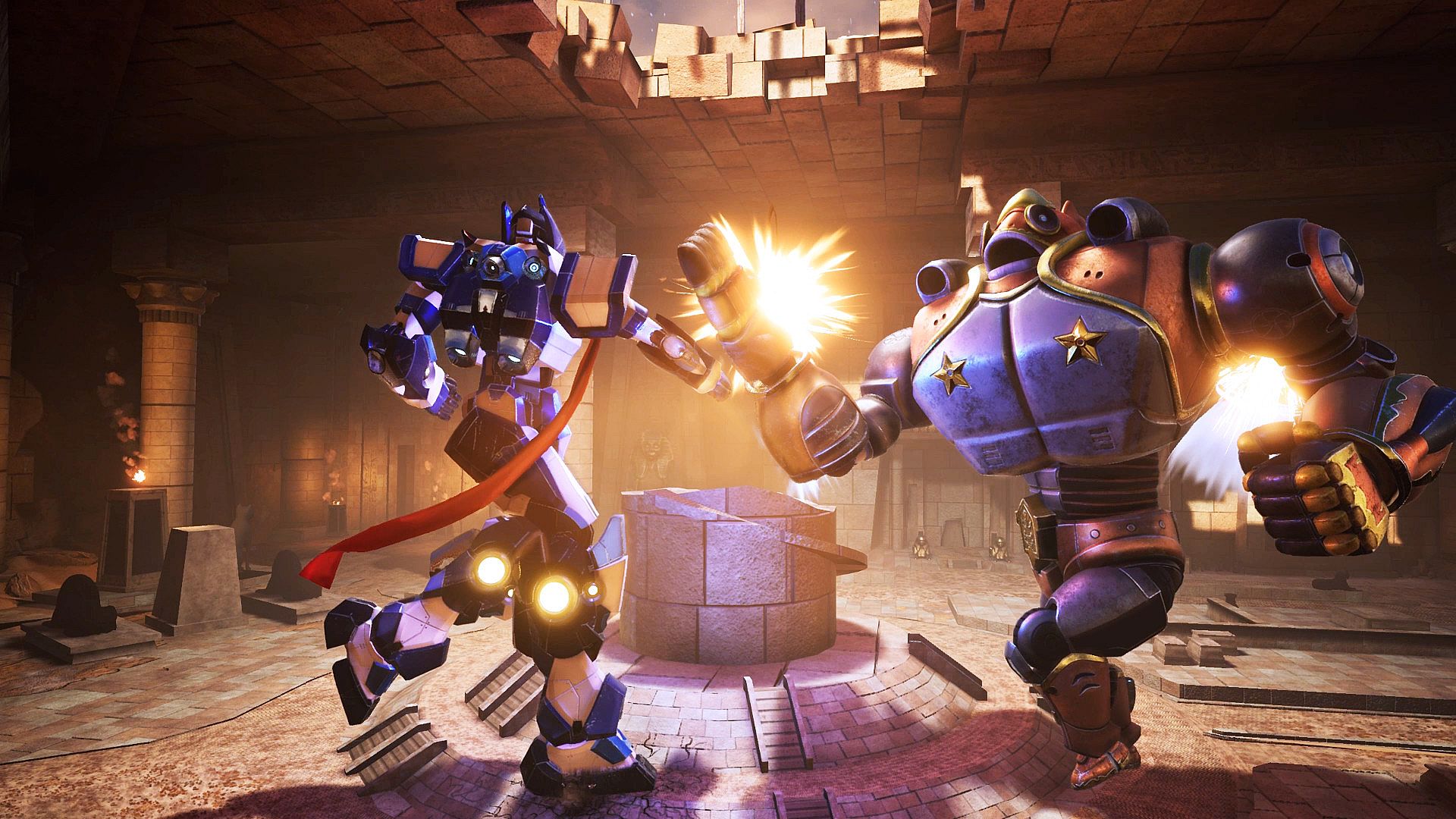
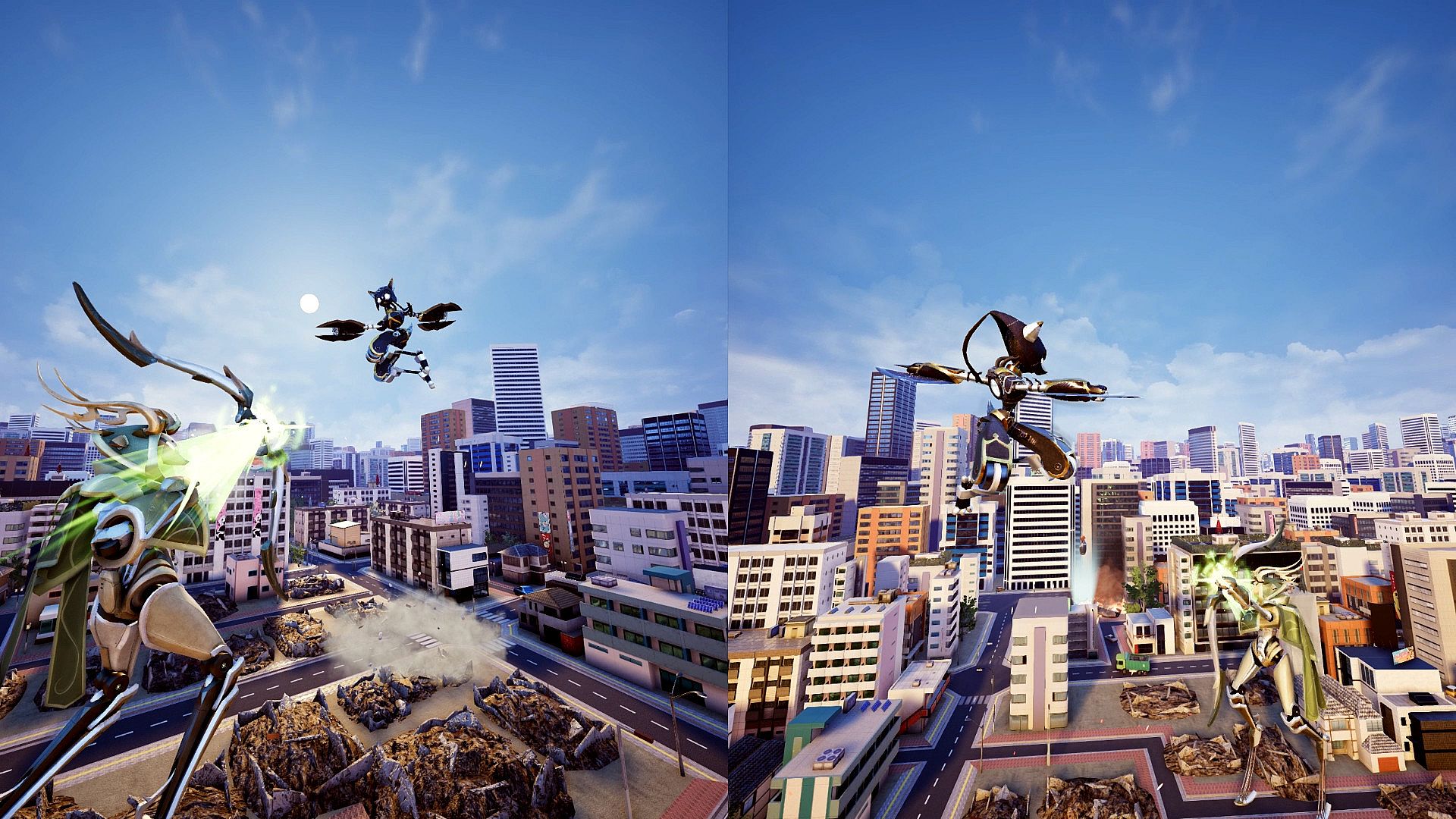
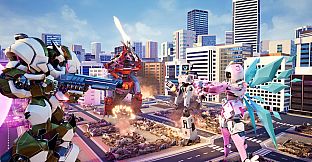
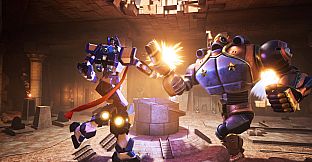
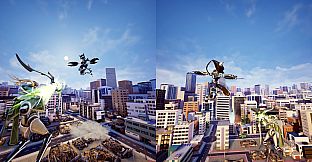
Override: Mech City Brawl is a 3D mech brawler that places players in control of towering robots for close-quarters combat across detailed urban environments. Released as an action and indie title for PC, the game centers on fast-paced fights where each mech brings distinct movement, attacks, and finishing moves. Battles unfold in arenas inspired by real-world cities, with destruction as a core element of the experience.
Gameplay
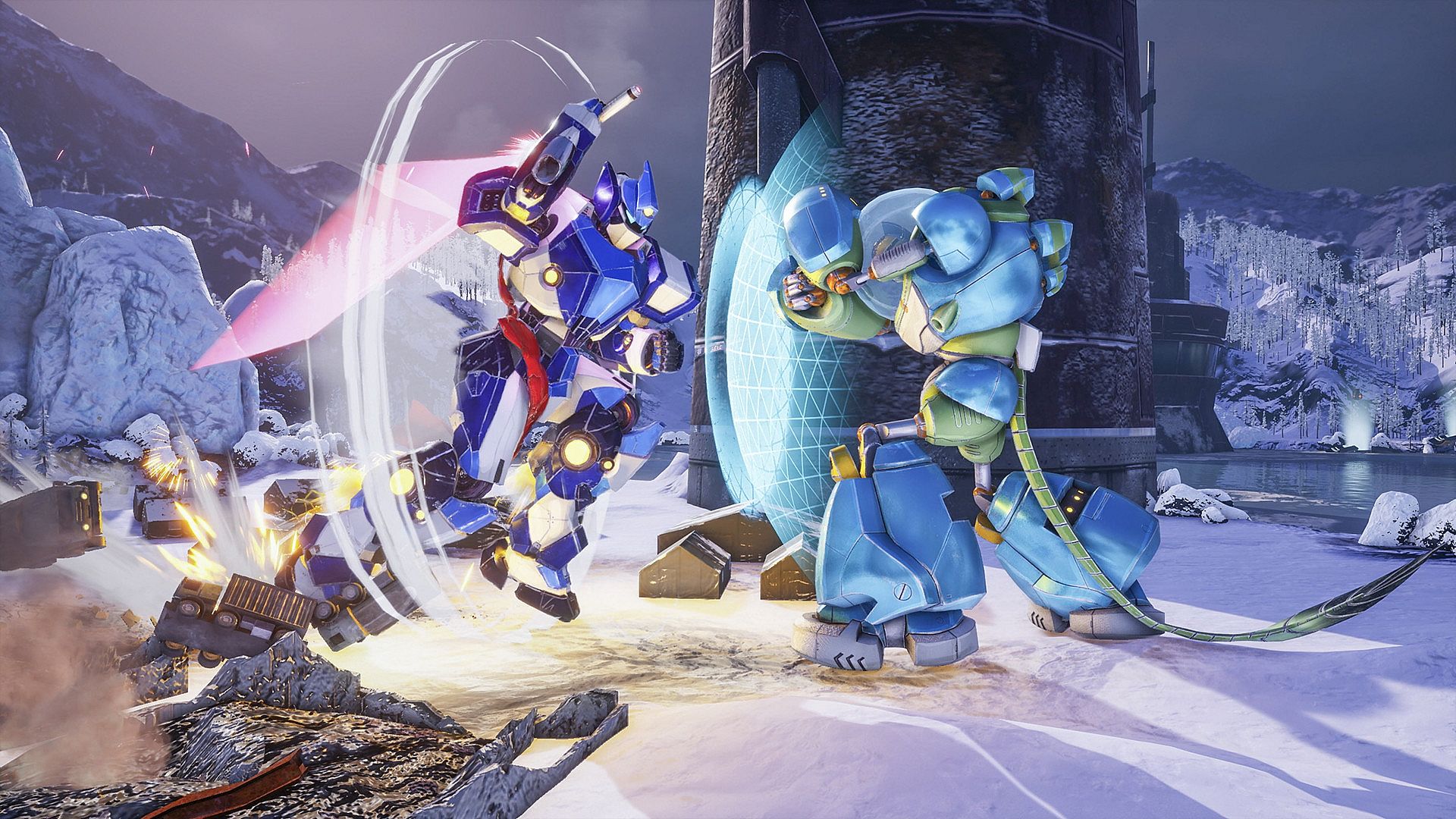
Players pilot one of twelve mechs, each designed with its own size, speed, and combat approach. Some emphasize heavy strikes and area control while others focus on agility and precise counters. Combat revolves around basic attacks, special abilities, and powerful ultimate moves that can turn the tide in prolonged exchanges. The environments allow for verticality and collateral damage, as mechs smash through structures during fights.
Control schemes support both solo play and shared input in certain modes. Mechs move with weight and momentum, requiring players to manage positioning carefully amid the chaos of city streets and landmarks. Unique finishers provide visual payoffs after successful combos or positioning plays.
The garage system lets users alter appearances through accessories and color schemes. These changes affect visual identity without altering core performance, giving each mech a personalized look for repeated sessions.
Game Modes
Arcade mode delivers the single-player campaign, guiding players through a series of matches against AI opponents with story progression and escalating challenges. Options within this mode allow for varied difficulty and match setups to suit different skill levels.
Versus mode supports local and online play, offering team-based matches or free-for-all formats. Up to four participants can join, with split-screen available for couch play. Matchmaking expands online options through ranked ladders, dedicated 1v1 queues, and open brawl lobbies for quicker sessions.
Party co-op stands out as a distinct experience where two to four players divide control of a single mech, each handling a specific section such as limbs or weapons. This setup demands coordination and communication, turning standard fights into collaborative efforts against opponents.
Training mode provides a space to practice mechanics, test ultimate timing, and experiment with different mechs before entering competitive or story content.
The Mechs and Battlefields
The roster features a range of designs that encourage experimentation across multiple play sessions. Each mech carries signature moves that reward learning timing and matchup knowledge. Battles take place in destructible 3D arenas drawn from recognizable locations, including Tokyo, Egypt, San Francisco, and Mexico. These settings influence sightlines and movement options, adding variety to how fights develop.
Environmental interaction plays a consistent role, as large-scale attacks can reshape the battlefield and create new openings or hazards. The combination of mech variety and location diversity keeps core loops engaging even after initial matches.
Is It Worth Playing?
Reception has been mixed since the 2018 launch, with critics noting the novel co-op mechanics and colorful presentation alongside occasional technical inconsistencies. The game appeals most to players who enjoy local multiplayer sessions or party-style brawlers where teamwork and shared control add a fresh layer to fights.
Those seeking straightforward versus action or a short campaign will find accessible entry points through the arcade and training options. Online features remain functional for versus matches, though ranked play has seen reduced activity over time. The title suits groups looking for lighthearted mech combat rather than deep competitive systems or ongoing seasonal content.