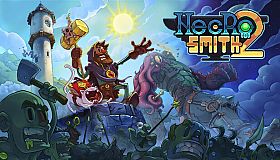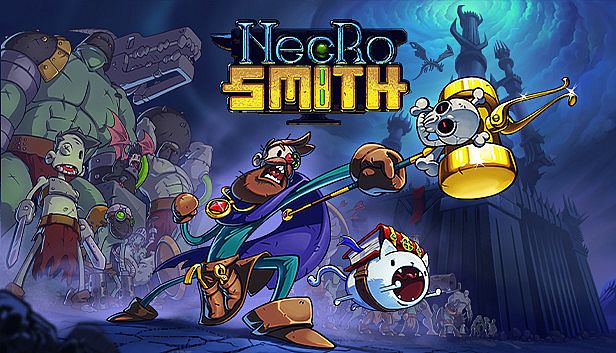


























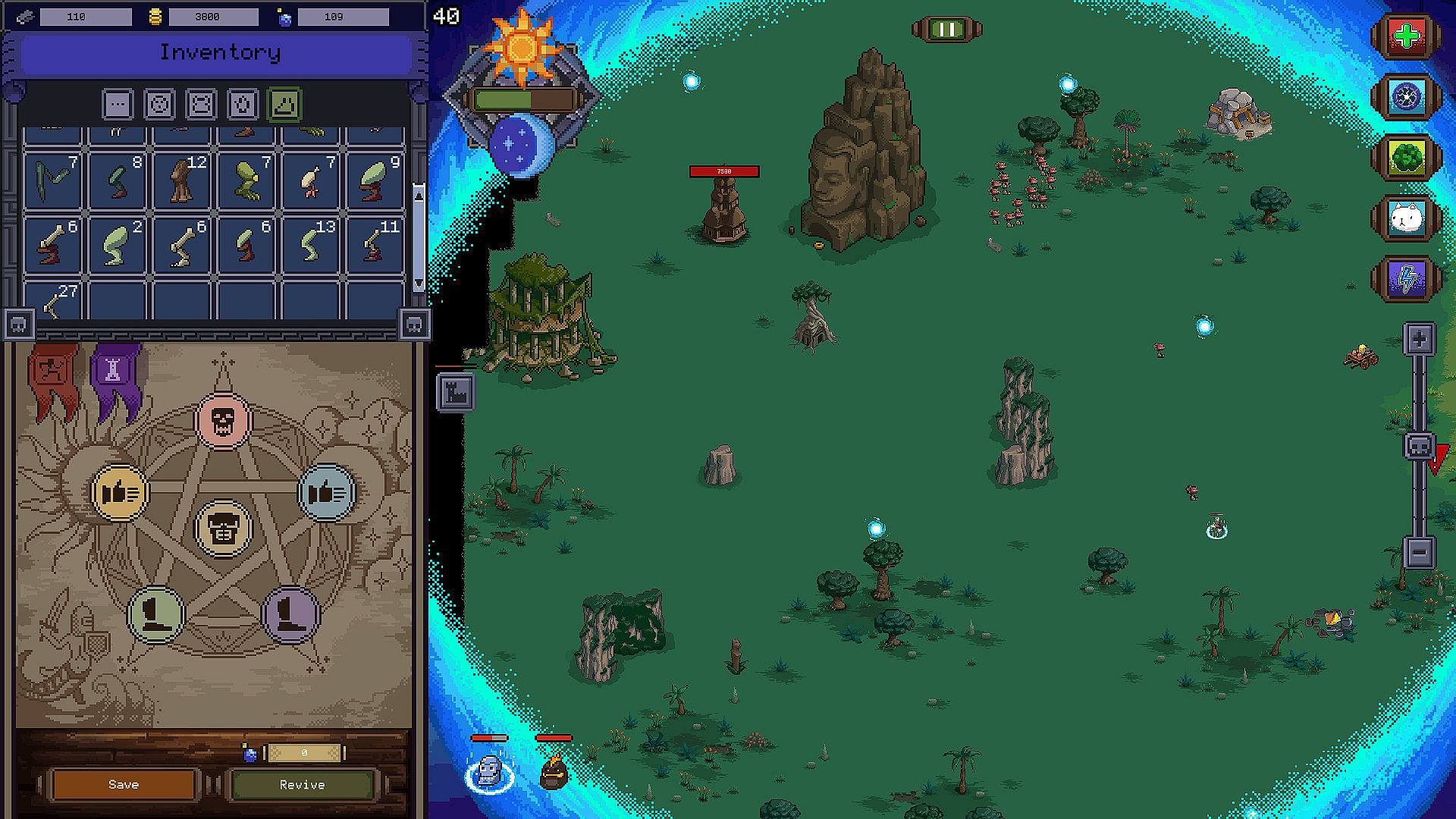
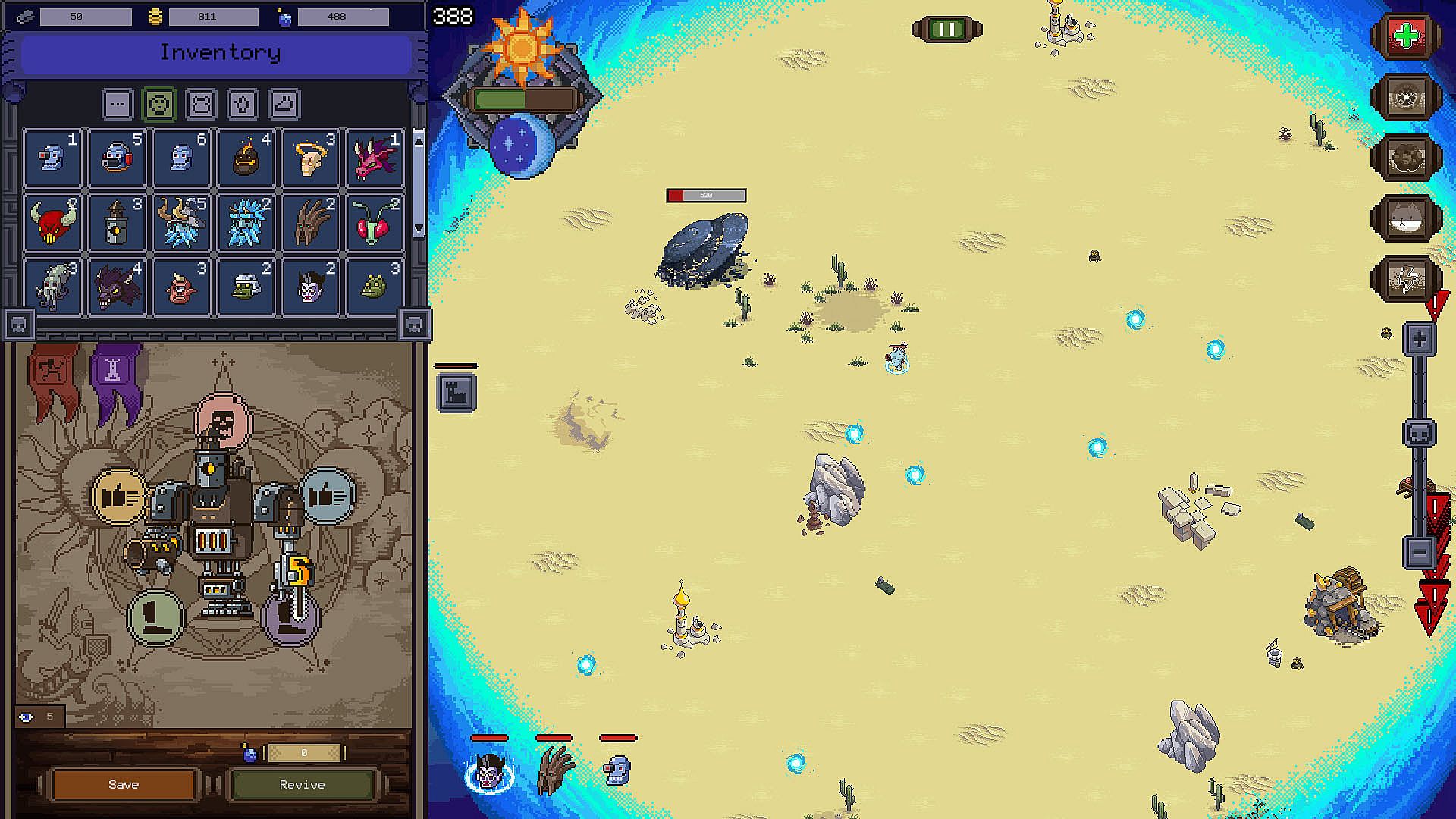
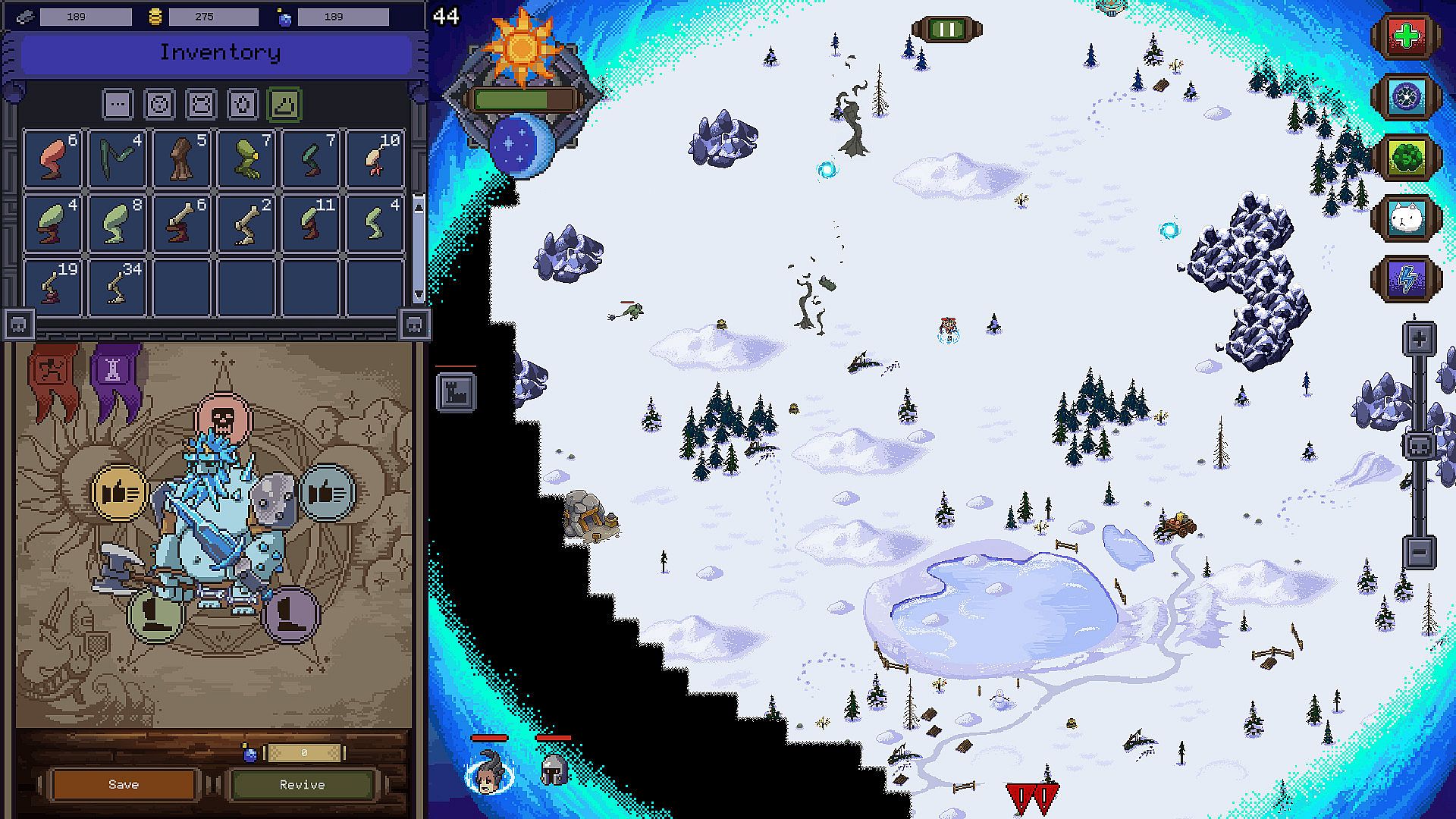
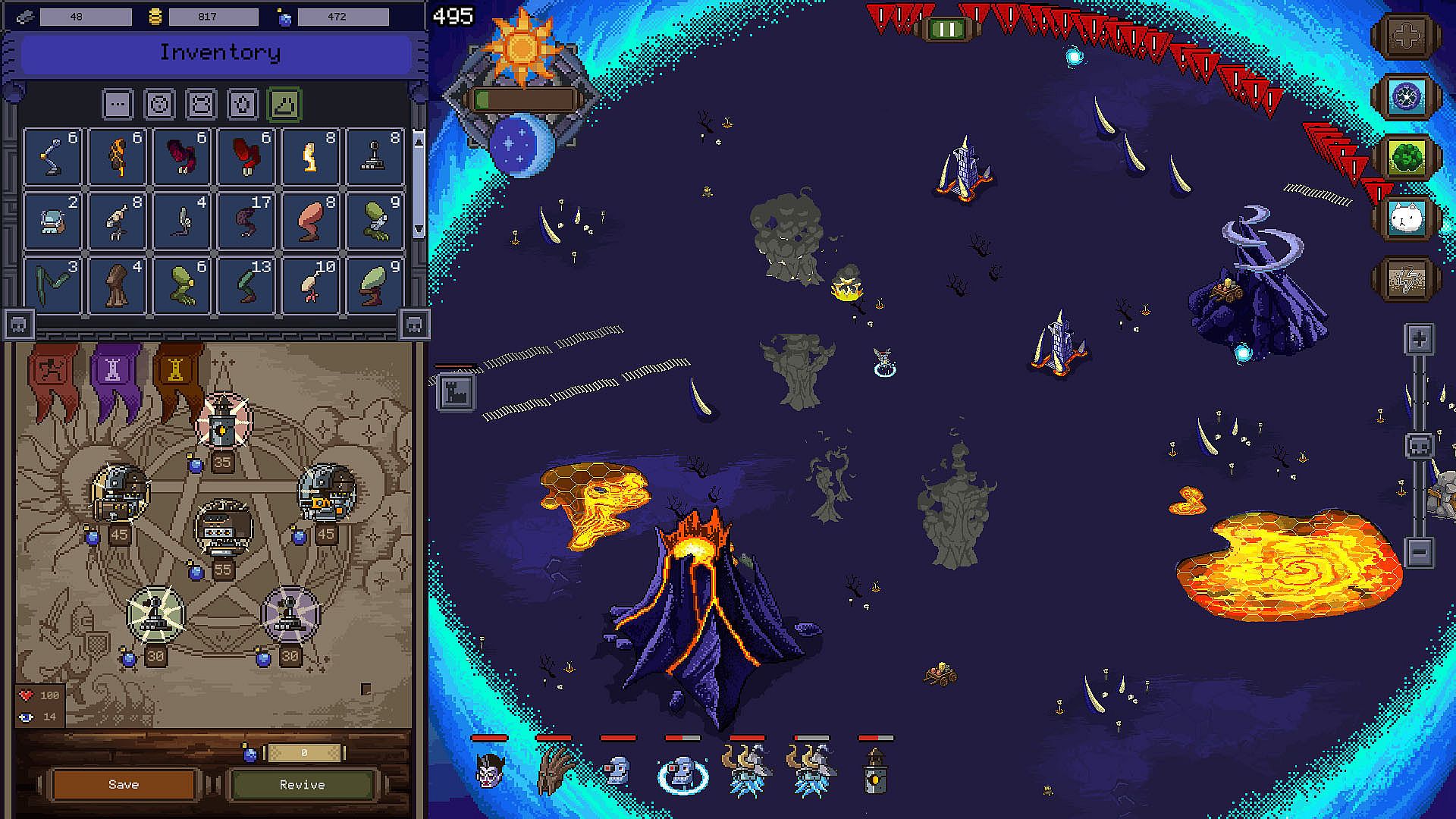
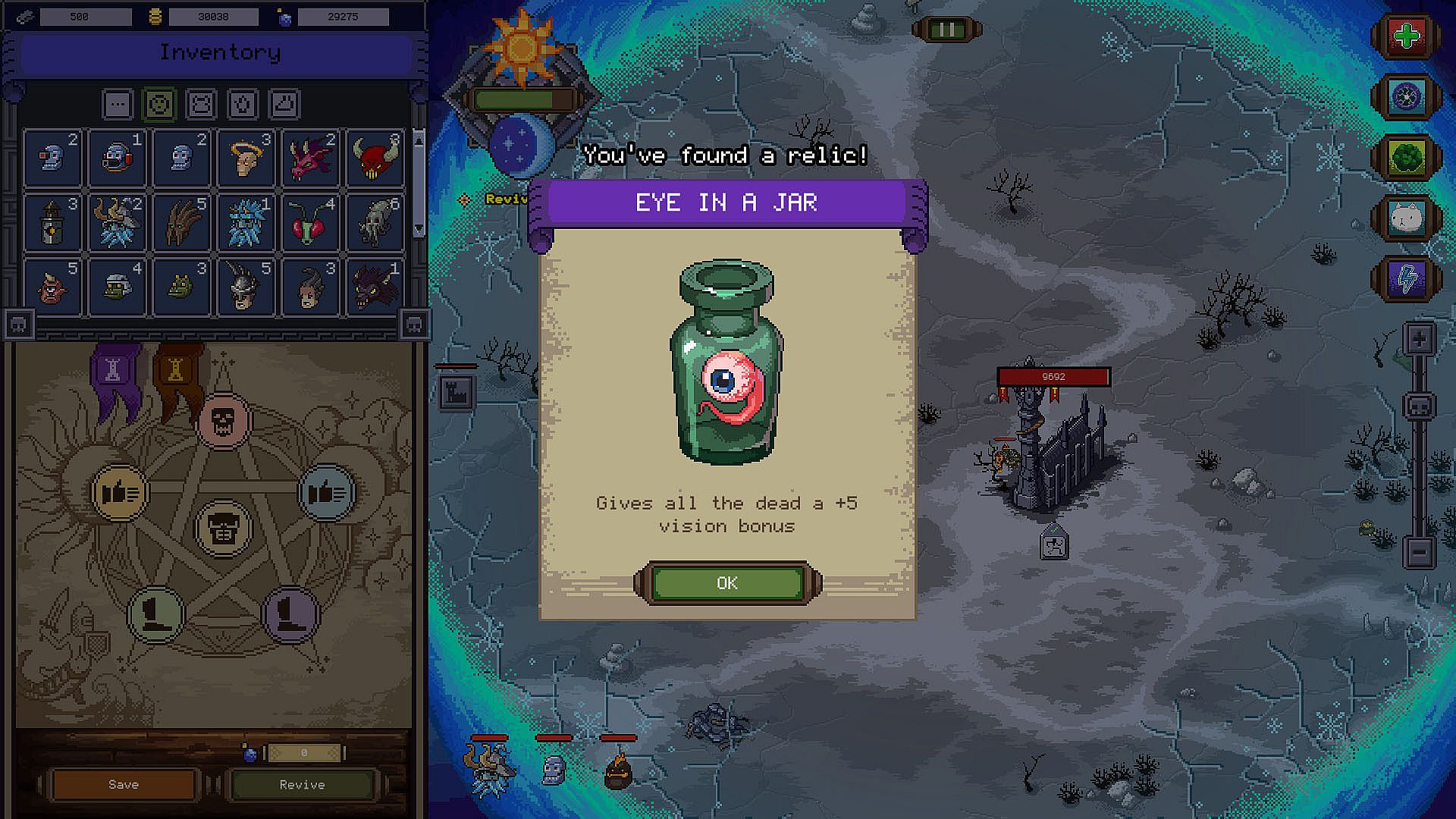
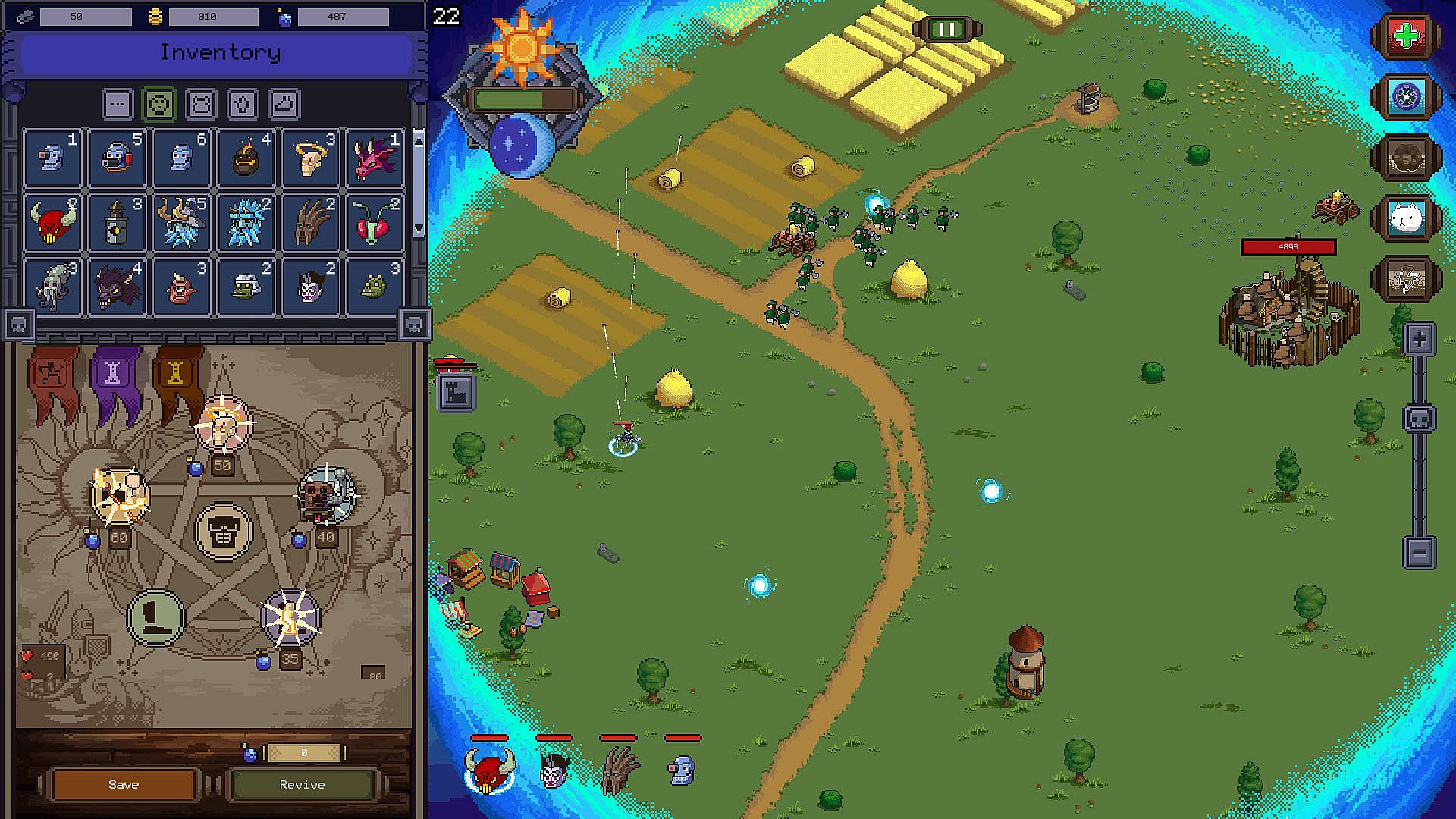
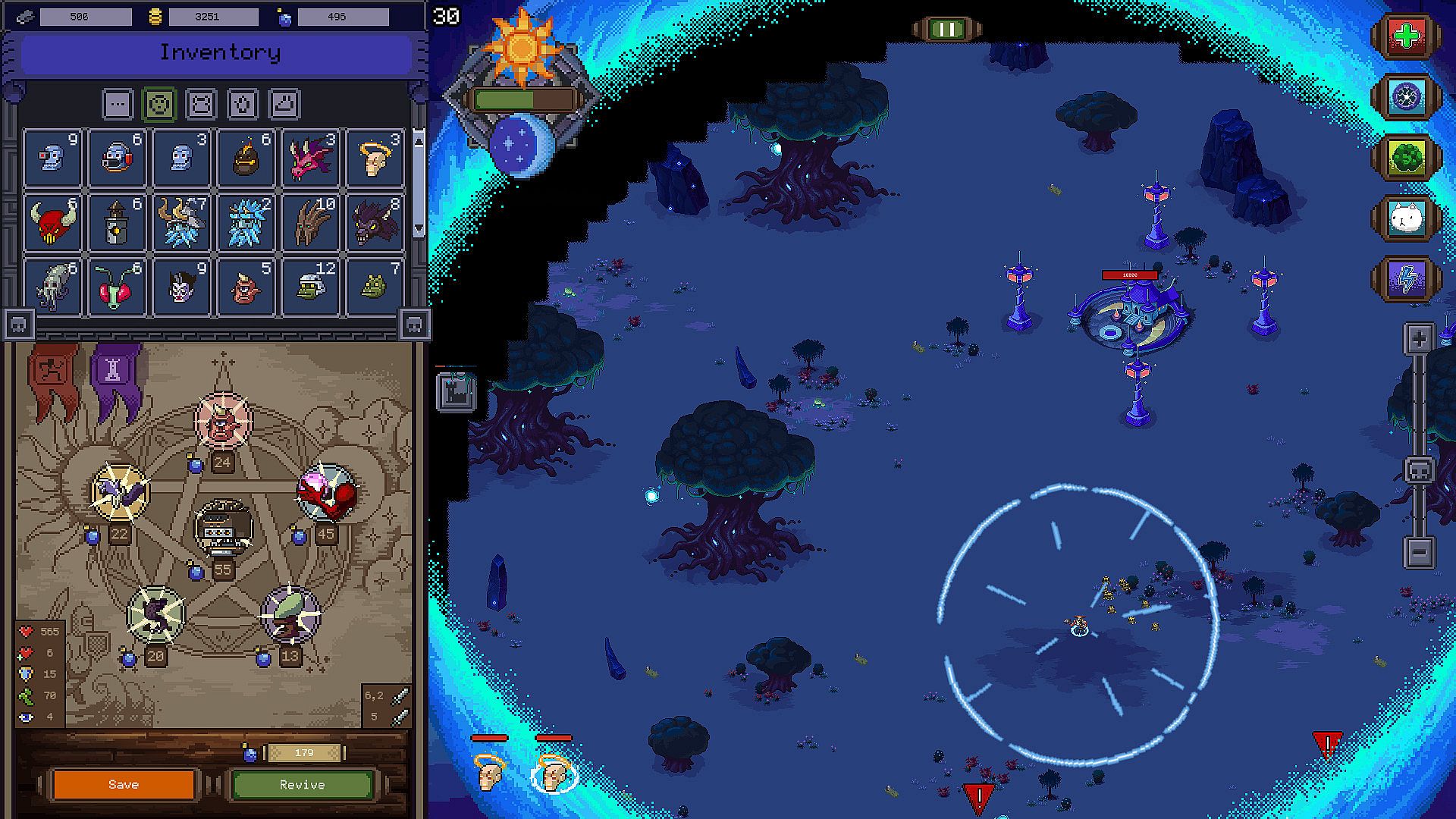
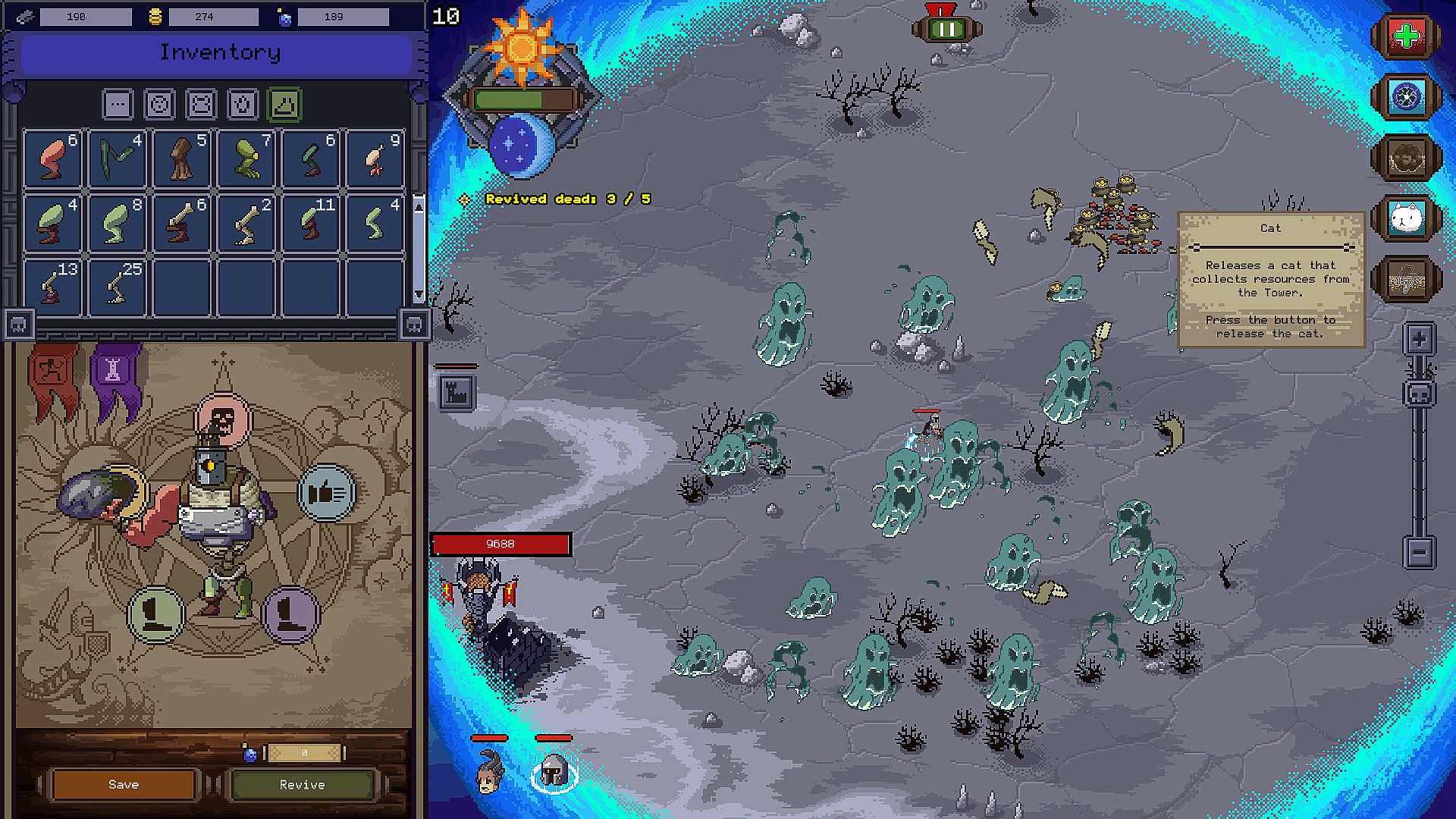
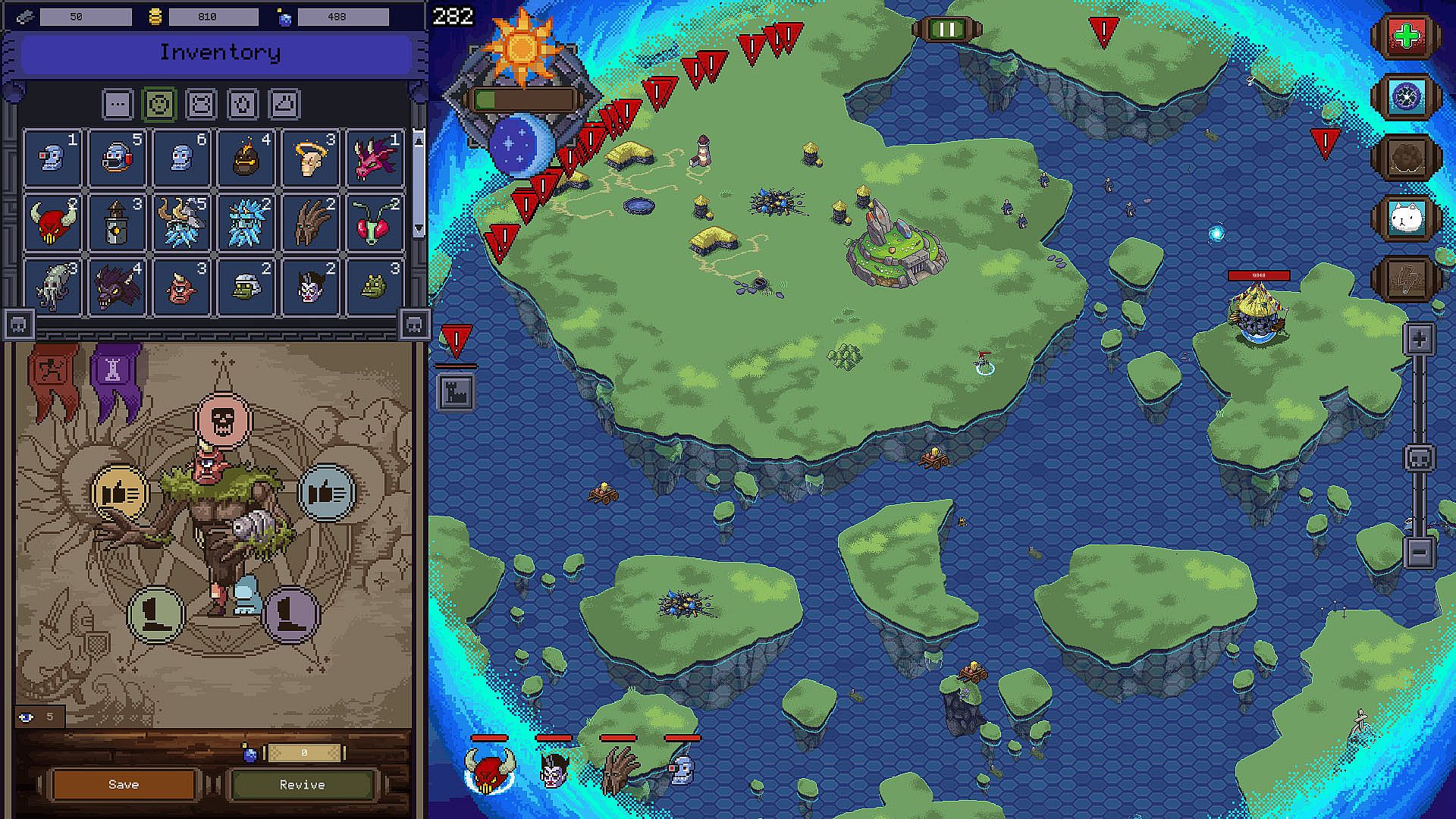
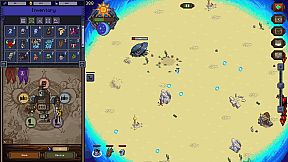
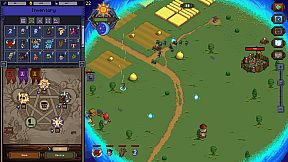
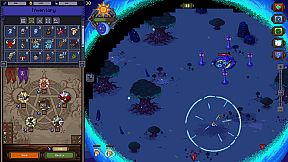
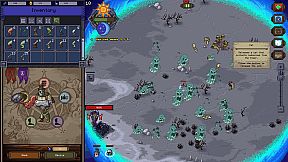
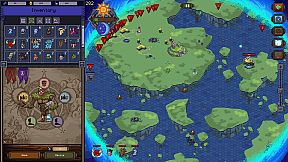
Necrosmith is a strategy indie simulation adventure game developed for PC that places players in the role of a necromancer building and commanding an army of the undead. The core experience centers on constructing minions from assorted body parts, upgrading a central tower, and navigating a procedurally generated world filled with biomes. This setup blends simulation elements of resource management and army customization with strategic decision making during exploration and combat encounters.
Gameplay
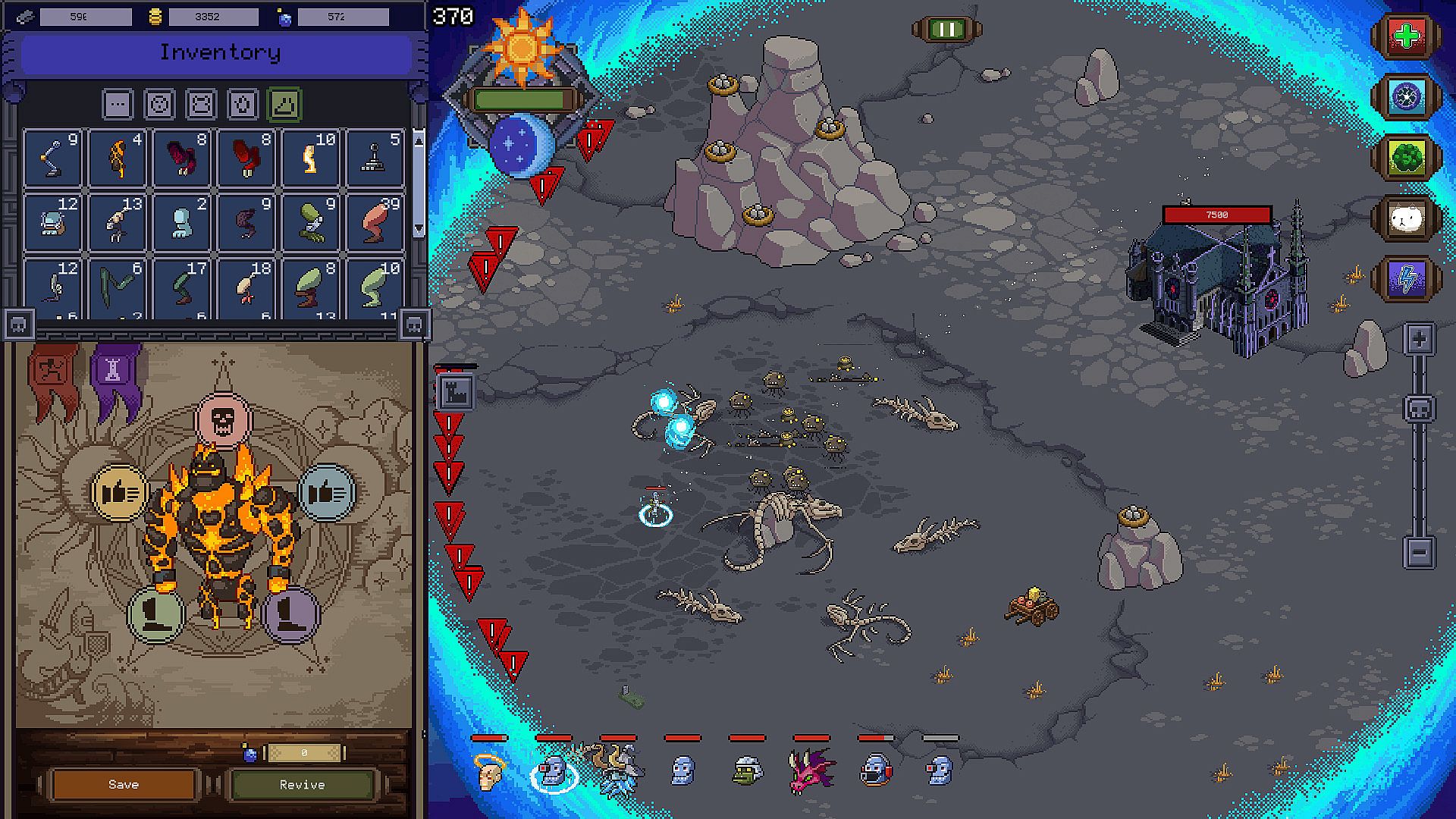
The gameplay loop revolves around collecting and combining body parts from skeletons, zombies, orcs, harpies, elementals, and robots to form effective units. Each part contributes specific traits that influence survivability, movement speed, and attack capabilities, encouraging experimentation to create balanced or specialized minions. Players manage these creations through the necromancer's tower, where upgrades expand options for army composition and performance.
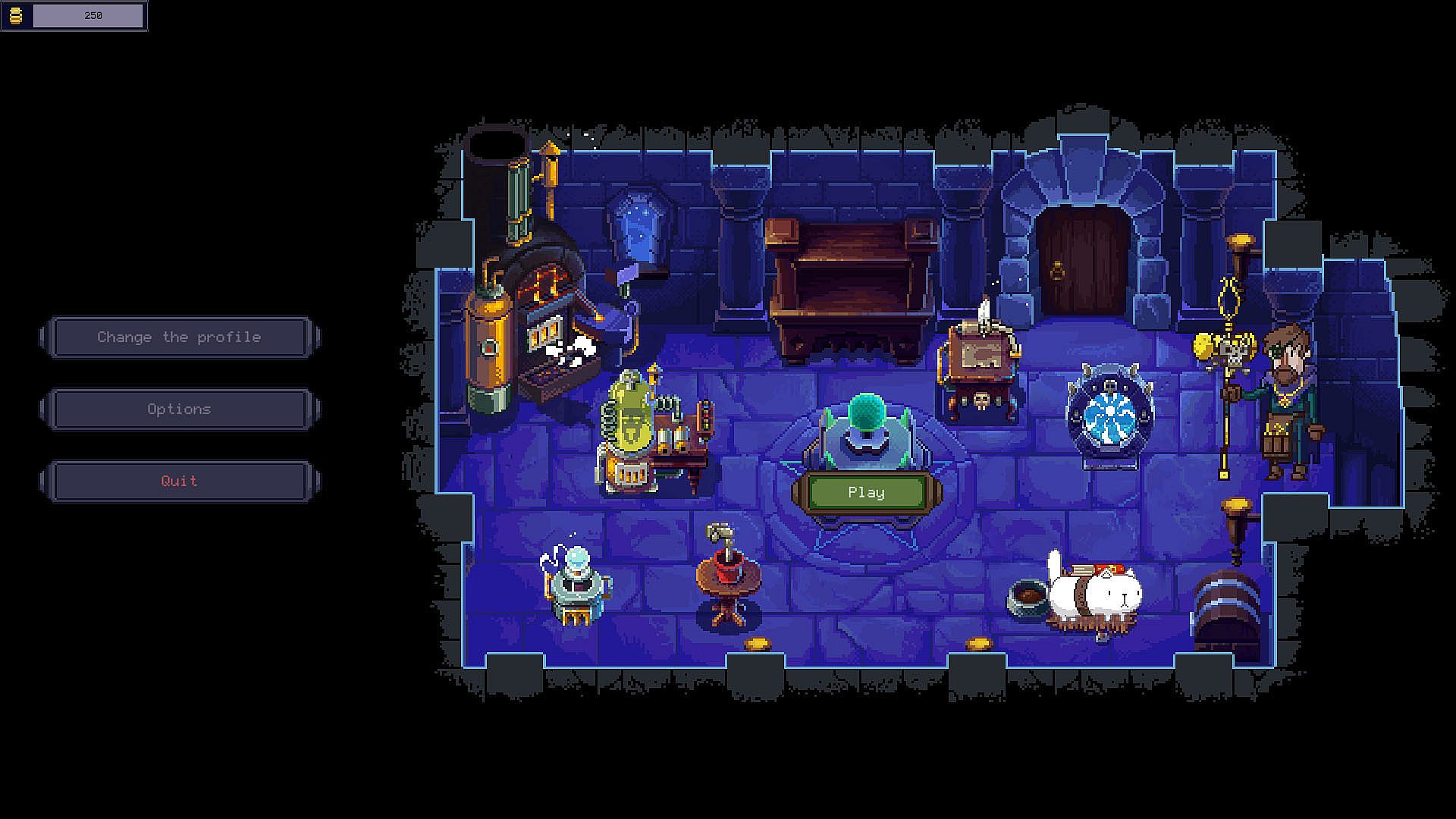
Tower progression involves constructing necro labs that produce additional body parts and techno-magic devices. These facilities support ongoing army development by providing materials and enhancements that improve unit quality over time. Exploration requires directing groups of undead across varied terrain, adapting formations to handle environmental challenges and enemy presence while searching for objectives that advance the escape from the tower's strange world.
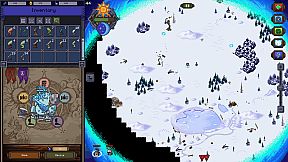
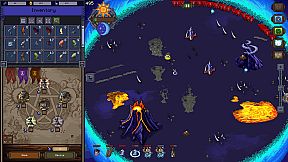
Procedural generation shapes each session through more than a dozen biomes, introducing variety in available parts and obstacles. The system rewards careful planning of unit groups, as similar speeds and abilities allow coordinated movement and combat effectiveness. This creates a focus on iterative refinement rather than direct control, with the necromancer overseeing production and deployment from the tower base.
Game Modes
Necrosmith operates through a single-player roguelike structure where each run involves building an army, upgrading facilities, and pushing through generated maps to locate keys for progression. The format emphasizes repeated attempts with accumulating knowledge of effective combinations and biome layouts, rather than separate distinct modes.
Within this framework, players encounter waves of opposition during exploration, requiring defensive positioning of units alongside offensive pushes toward key locations. The absence of multiplayer components keeps the focus on personal strategy refinement and tower management across successive runs.
Biome variety and part acquisition tie directly into run progression, with discoveries in different zones unlocking new customization paths. This integrated approach means the primary experience serves as both the core loop and the main way to engage with the game's systems, without additional named variants like survival challenges or versus formats.
Key Mechanics and Progression
Army customization stands out as the central mechanic, where matching parts creates synergies in speed, durability, and damage output. Techno-magic upgrades from labs add layers of enhancement, allowing units to adapt to tougher biomes or enemy types encountered later in a run.
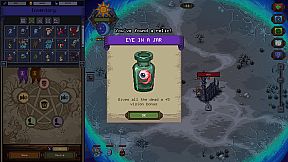
World navigation involves guiding undead hordes while managing their formation and capabilities to overcome terrain barriers and threats. Portals and zone-specific rewards influence part availability, adding a layer of strategic routing to each attempt at escaping the world.
Tower upgrades provide the foundation for scaling army power, with labs acting as production hubs that sustain longer explorations. This progression system encourages balancing immediate unit needs against long-term facility investments to handle increasing difficulty as biomes are traversed.
Is It Worth Playing?
Necrosmith appeals to players interested in strategy and simulation games that emphasize creative army building and roguelike exploration. The combination of body part assembly, tower development, and biome traversal delivers a focused experience centered on experimentation and adaptation across multiple runs.
Reception on PC has been positive, with the game maintaining steady interest since its 2022 release through updates that refine core systems. It suits those who enjoy managing resources and optimizing unit compositions without reliance on direct combat control or multiplayer elements.
For fans of indie titles blending necromancy themes with procedural worlds, the game offers substantial depth in its customization and progression. Those seeking quick sessions or high-action gameplay may find the deliberate pace less engaging, while strategy enthusiasts can appreciate the iterative improvement across runs.