

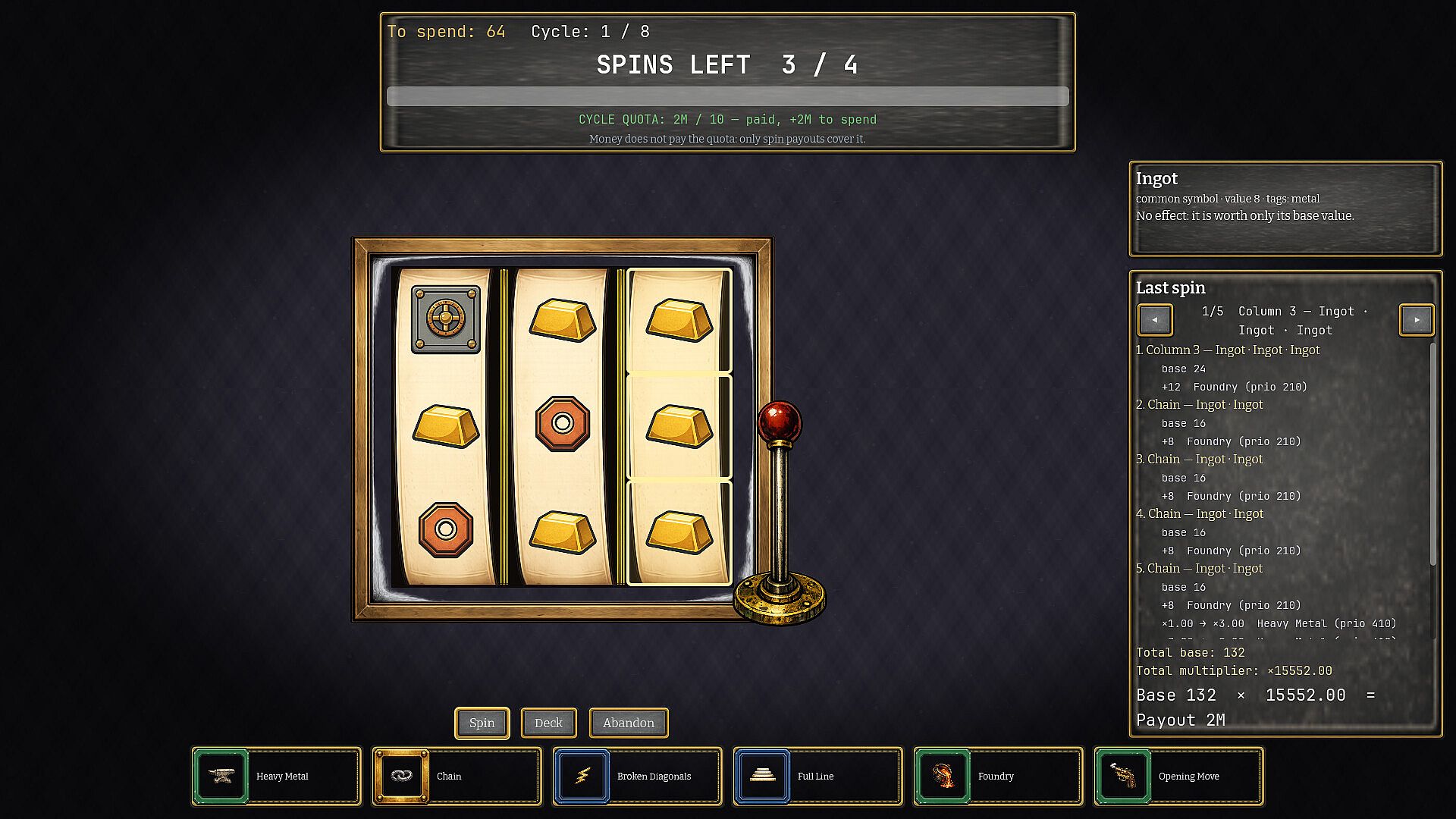
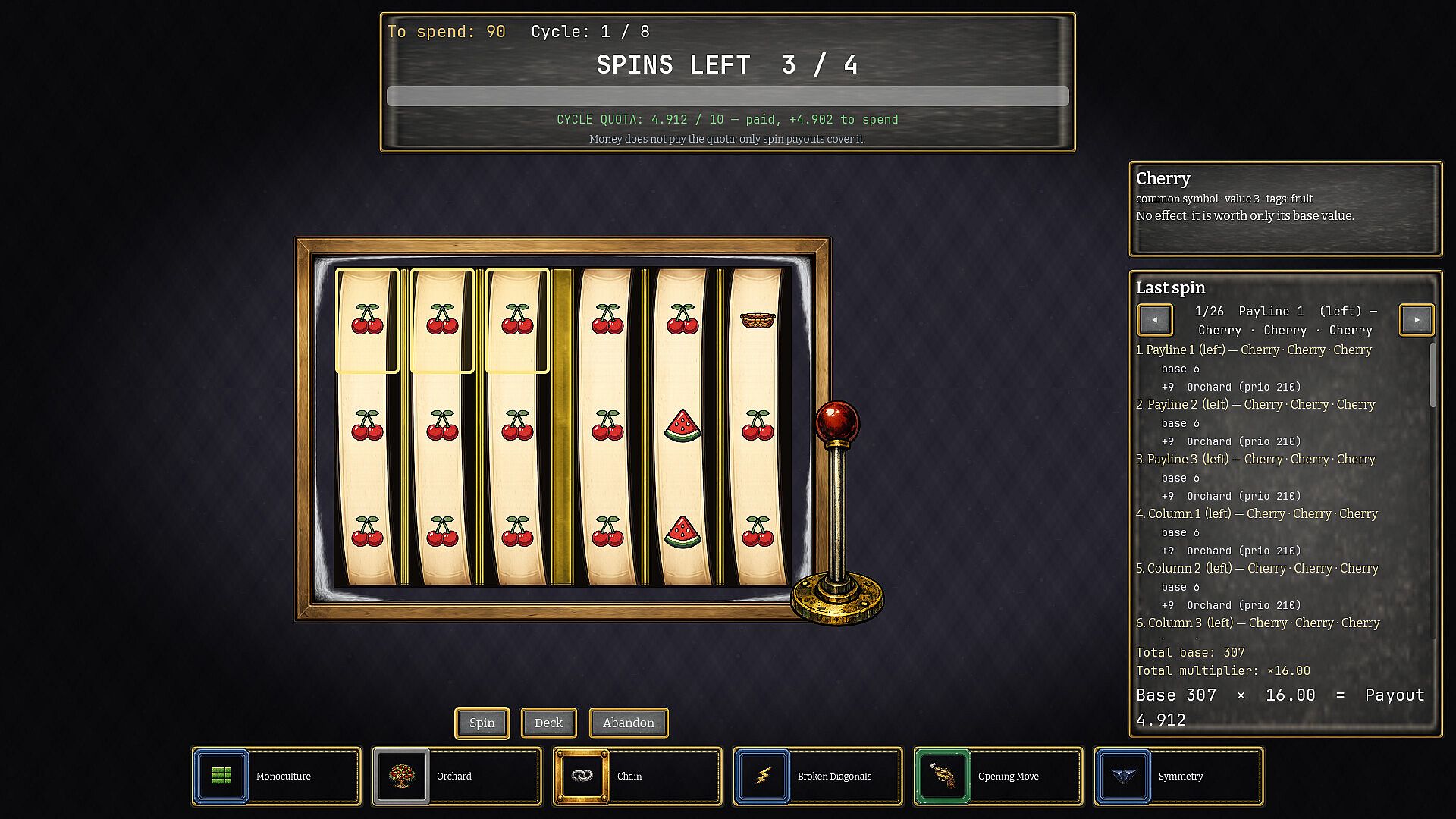


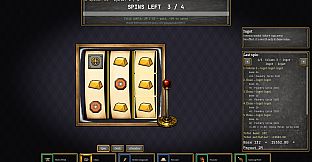
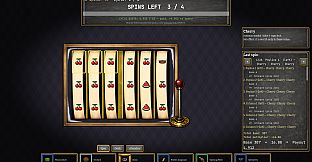

Lucky Debt is a single-player strategy indie game on PC that blends roguelike deckbuilding with slot machine mechanics in a tense cycle of debt repayment. Players manage limited spins to meet escalating quotas while building combinations that grow stronger over repeated runs.
Gameplay
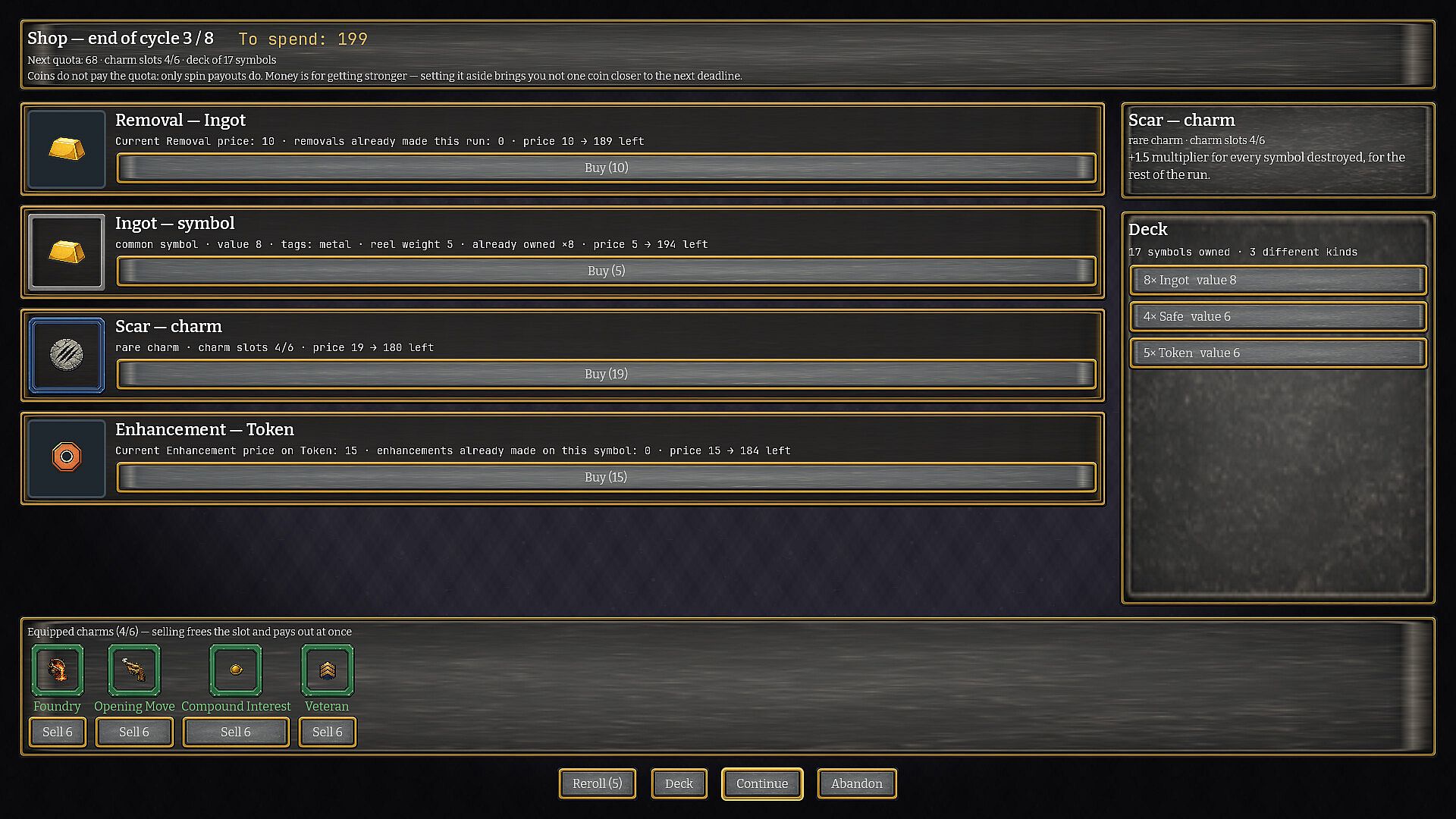
The core loop centers on surviving eight deadlines with a fixed number of spins each cycle. Excess winnings fund upgrades and new acquisitions that improve future performance. Symbols occupy the reels directly, so the entire collection influences every outcome rather than forming isolated hands. Charms alter probabilities, apply conditional effects, or enable specific synergies that define viable strategies.
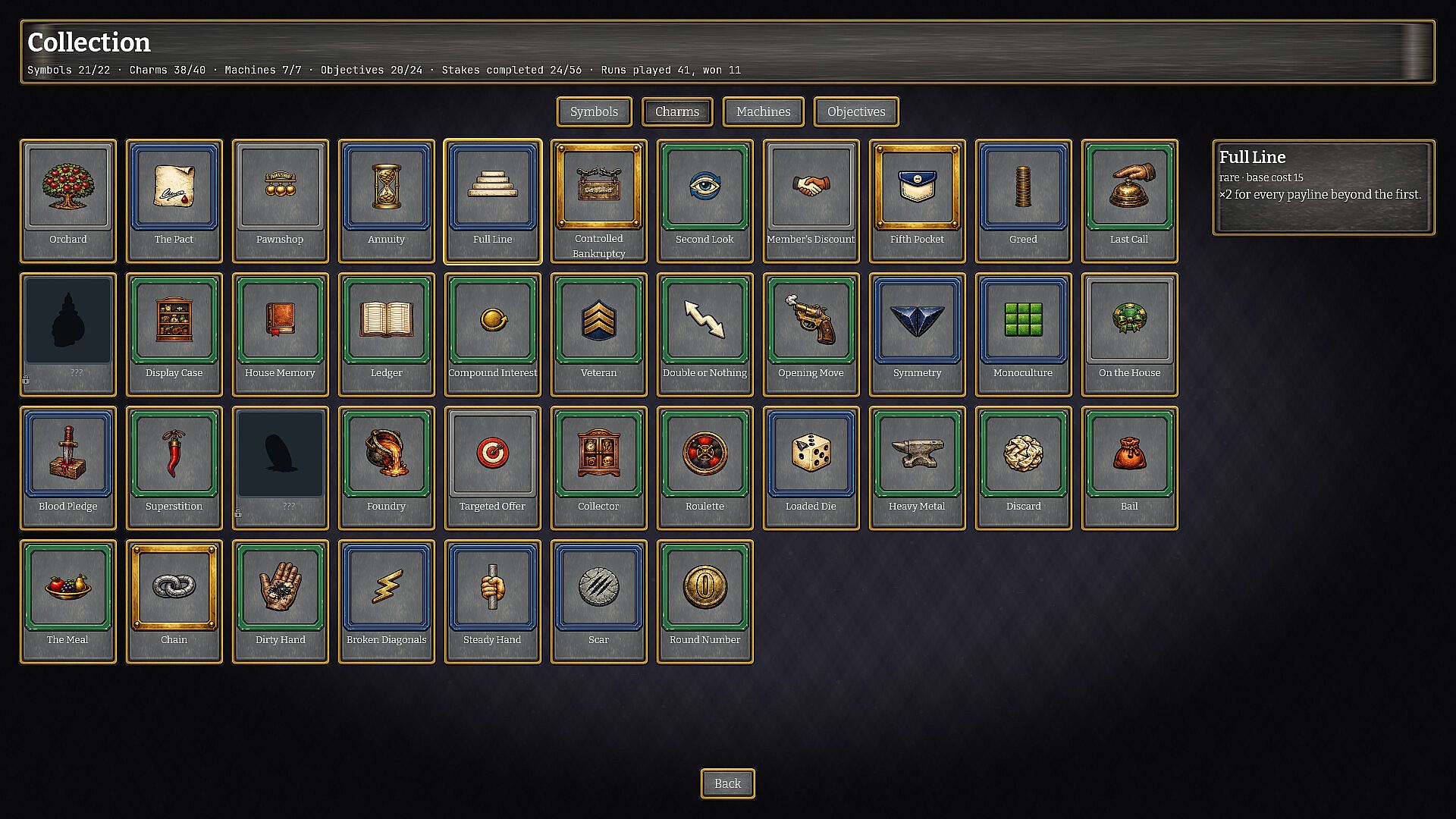
Twenty-two symbols range from standard fruit and metal icons to wilds and cursed variants that deliver high payouts at a later cost. Forty charms introduce multipliers, interest mechanics, and tools for manipulating results or supporting particular archetypes. Managing the collection requires deliberate choices about what to acquire, upgrade, or remove, because an overcrowded set rarely aligns efficiently. Multipliers activate once per valid combination, rewarding focused builds that chain effects across a single spin to clear large debts.
Game Modes
Seven distinct machines provide varied layouts and rules that change how symbols interact and how information is presented. The Classic uses a standard three-reel, three-row grid for foundational play. The Wide expands to four reels with adjusted values and extended lines. The Held allows a chosen symbol to carry over between spins. The Tall stretches to three reels and five rows for deeper vertical alignments.
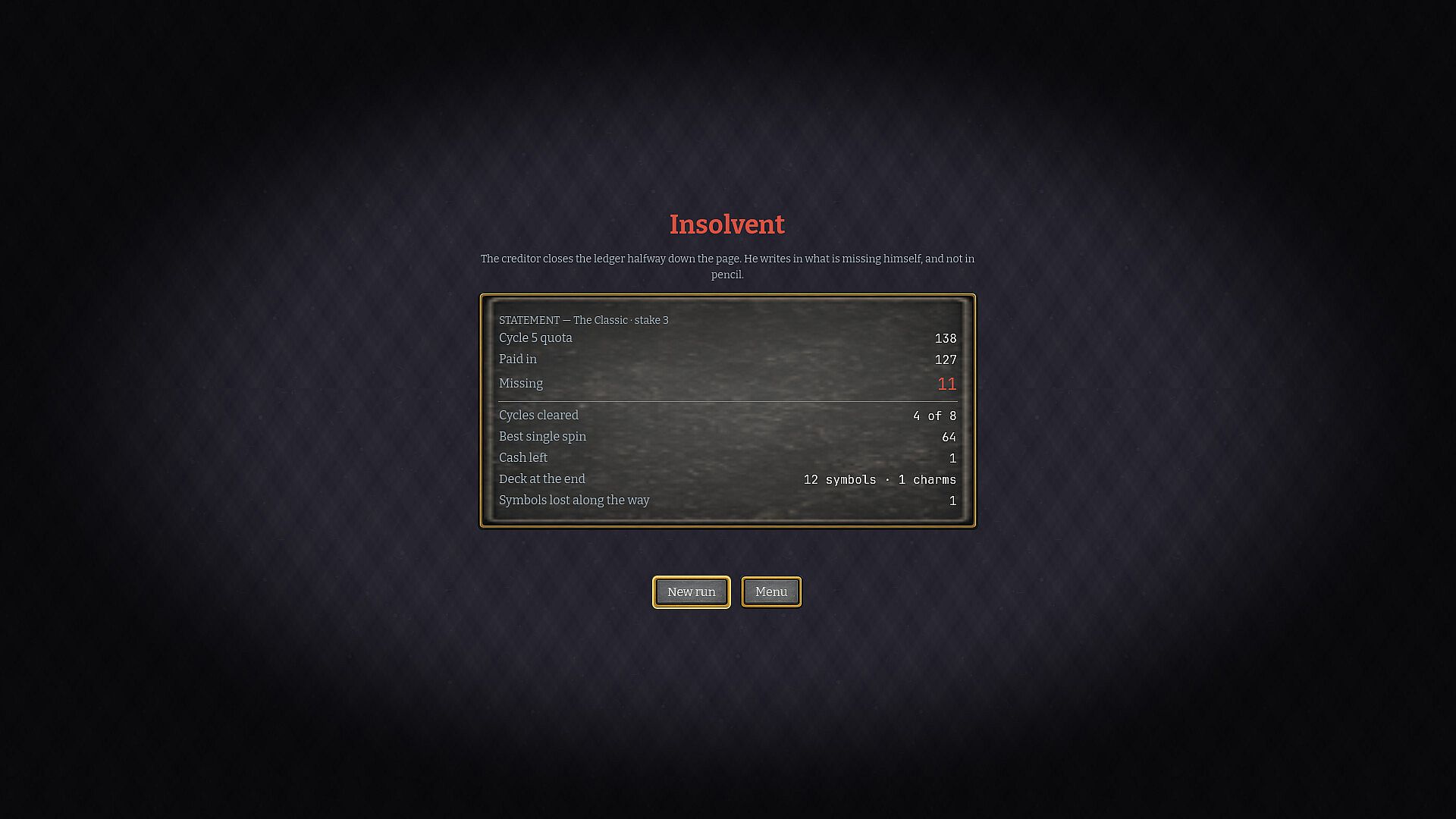
The Broken features a single dead cell that shifts position each cycle. The Blind conceals the final reel until payment reveals it or the spin proceeds without that knowledge. The Double presents two separate grids that share the same spin budget. Each machine supports eight increasing stakes that raise required payments, raise shop costs, reduce available spins and charm slots, and introduce a final creditor encounter that applies curses and removes key symbols.
Progression and Builds
Progression comes from refining collections across runs rather than permanent unlocks. Successful spins generate resources that purchase or enhance symbols and charms, while failures reset the current stake but preserve lessons about effective combinations. Large numbers emerge from stacked multipliers applied per combination, turning deliberate construction into exponential results instead of relying on random jackpots. The system emphasizes arithmetic planning over chance, with every decision shaping the next cycle's potential.
Is It Worth Playing?
Lucky Debt suits players who enjoy roguelike strategy games focused on deck construction, synergy hunting, and resource management under pressure. The debt theme drives the tension without involving real currency or gambling elements. As an upcoming title with no released version yet, its appeal rests on the described systems of symbol and charm management across varied machine layouts and escalating challenges. Those drawn to single-player experiences that reward careful planning and iterative improvement will find the mechanics align closely with that preference.