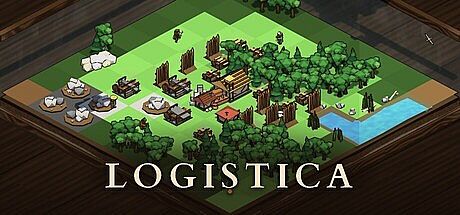


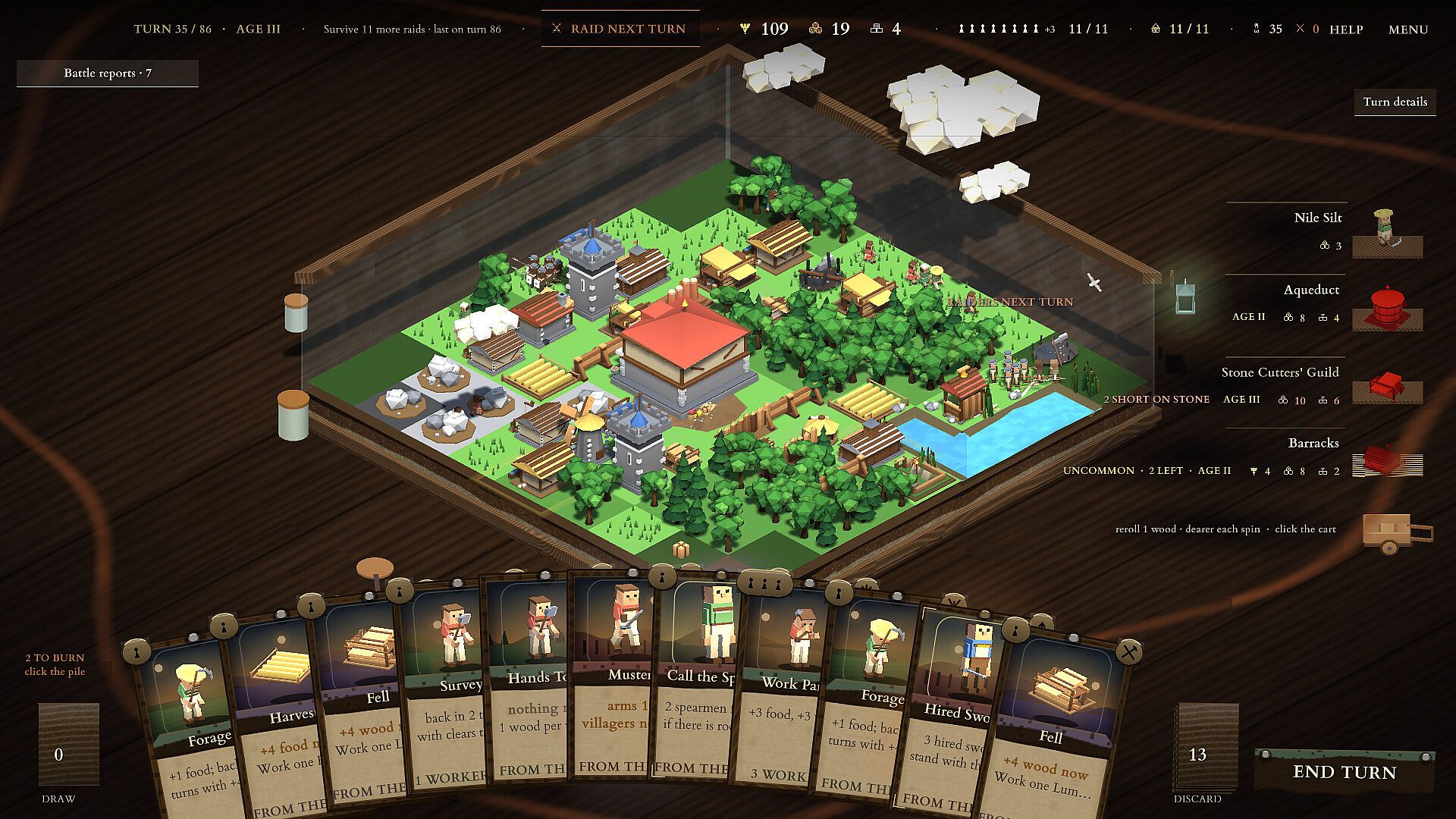

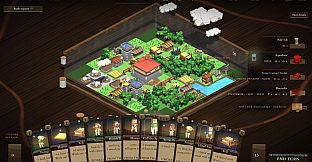
Logistica: Under Glass is a strategy simulation that blends deck-building with village management inside a sealed glass case. Players grow a medieval settlement by playing cards that represent buildings and actions, where the cost comes in the form of villagers who leave the hand to perform work and return later. Unspent villagers expand the hand size on the following turn, creating a resource loop tied directly to timing and restraint rather than traditional mana or currency systems.
Gameplay
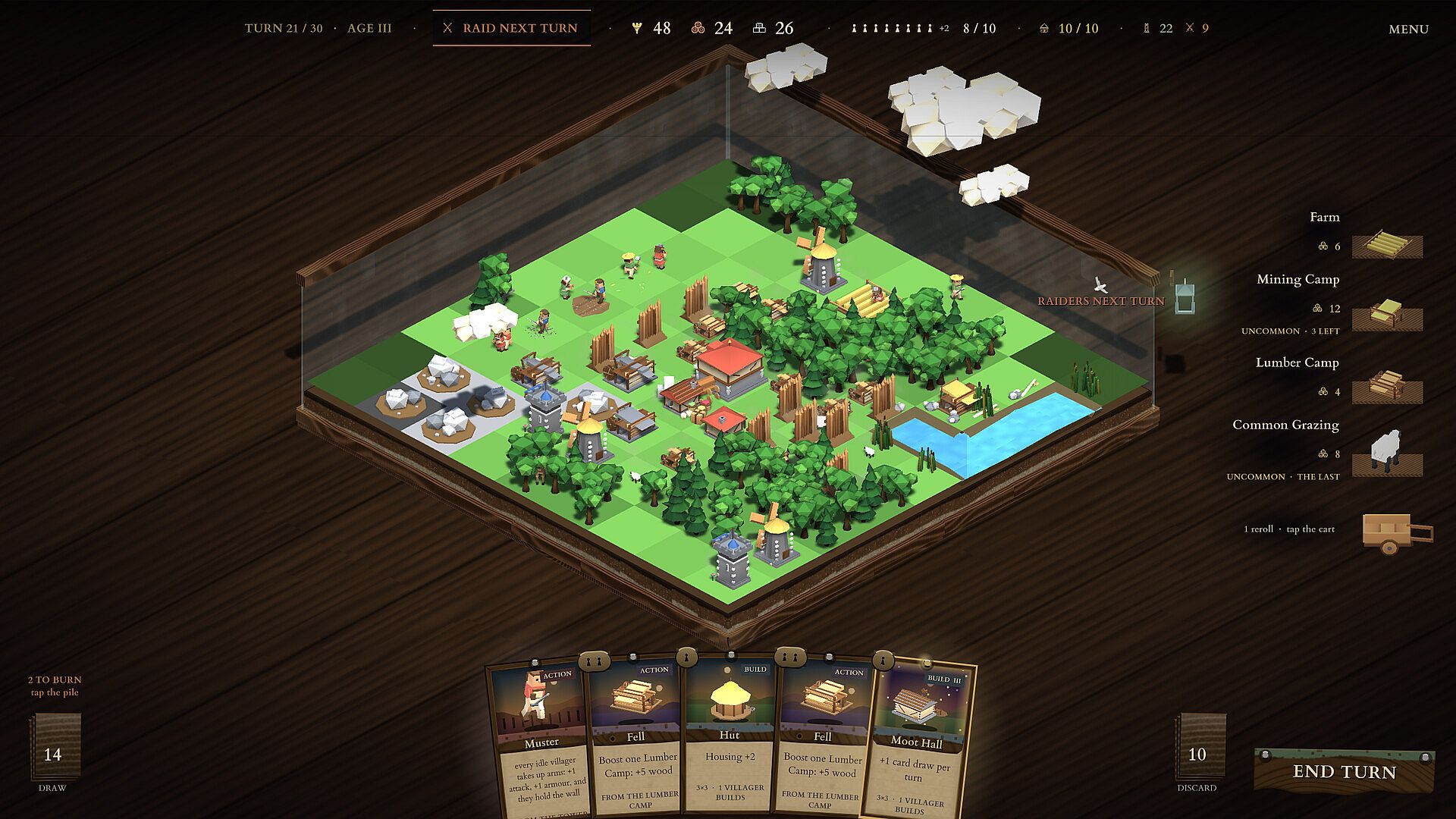
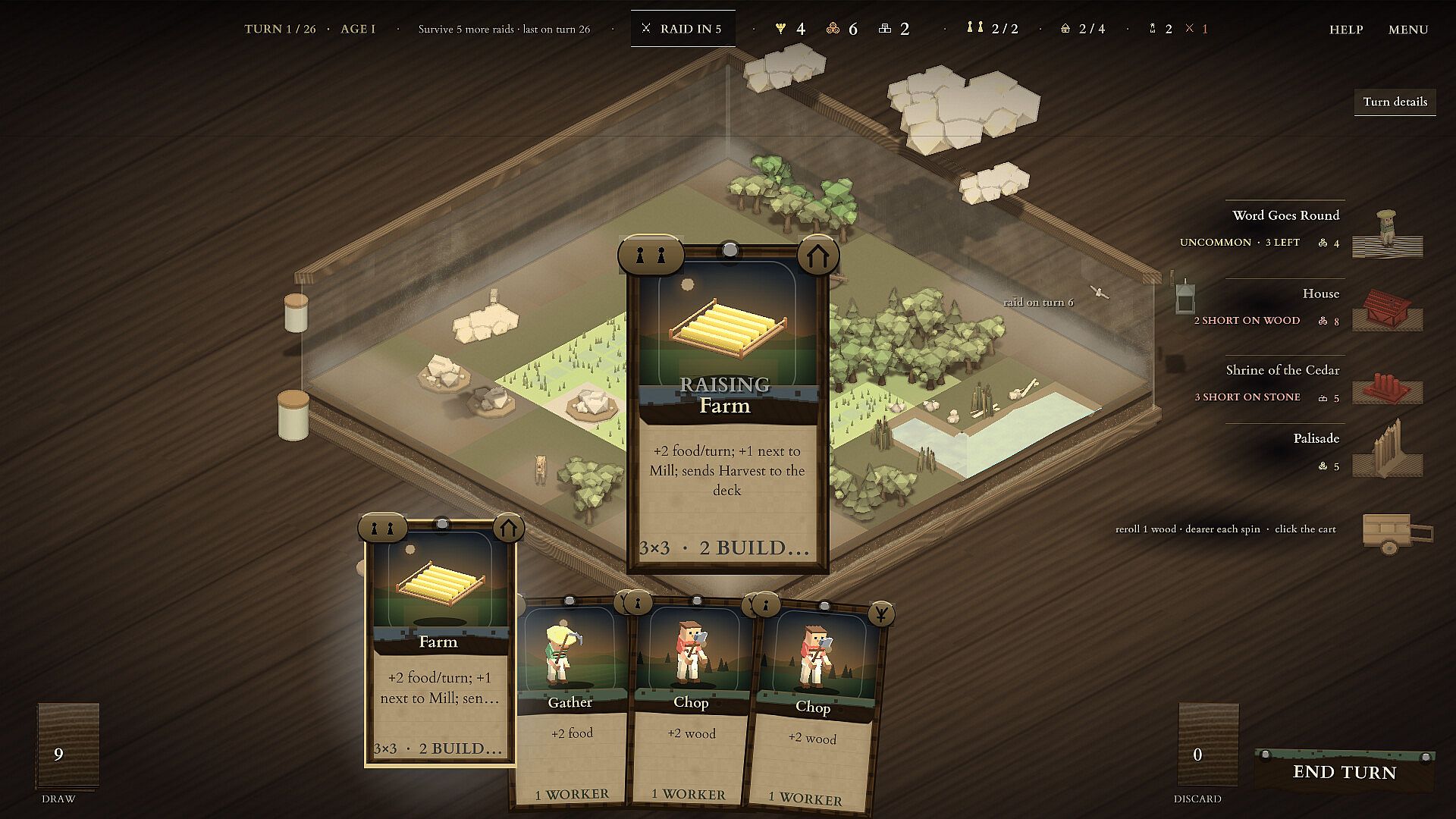
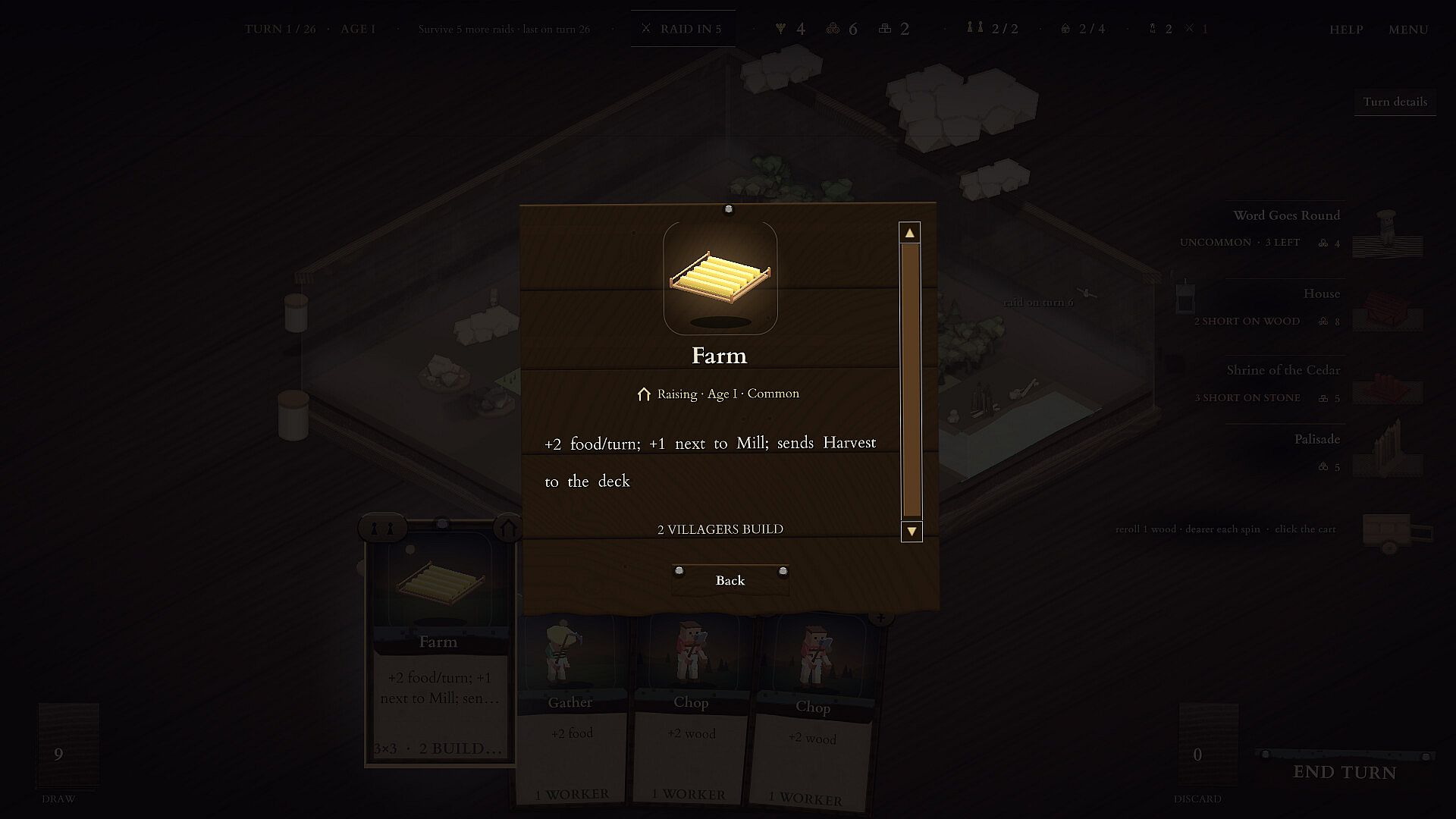
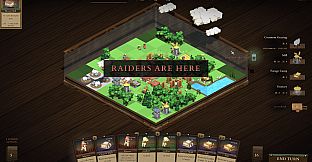
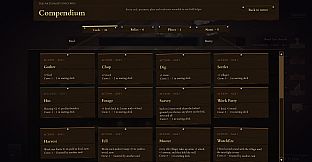
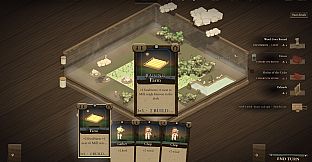
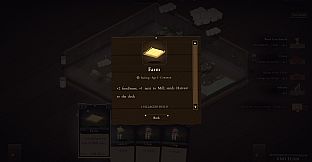
The core loop revolves around placing buildings that function as one-shot cards removed from the deck upon use. Each building delivers a specific resource card back into play, such as harvest from a farm or muster from a tower, and these resources can be lost if the building is destroyed. Placement occurs on a board of tiles divided into 3x3 cells, where positioning matters because effects like mill boosts or palisade support interact with neighboring structures. Terrain dictates viable spots, with docks requiring water and quarries needing stone, while trees occupy cells and influence buildable gaps.
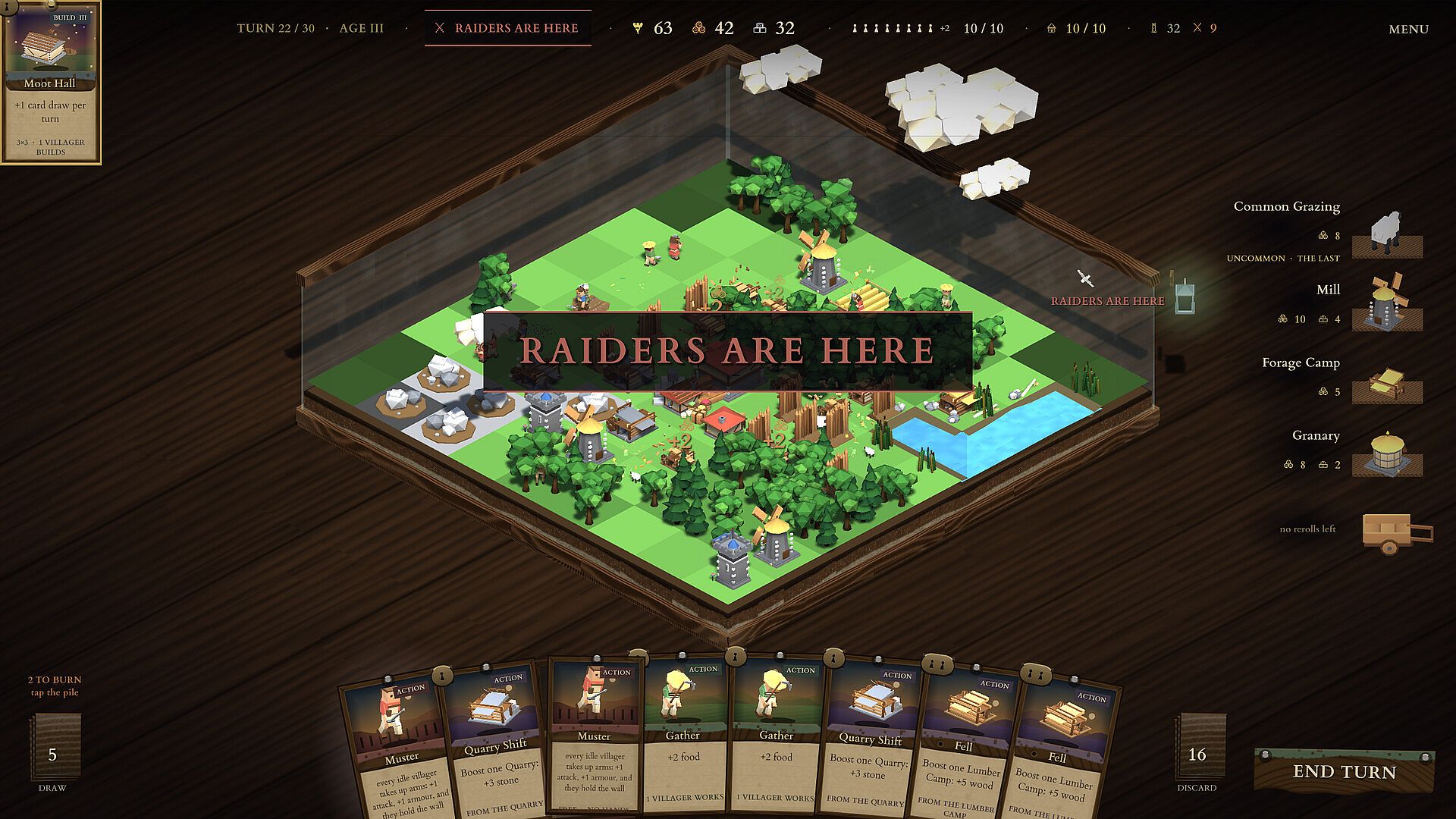
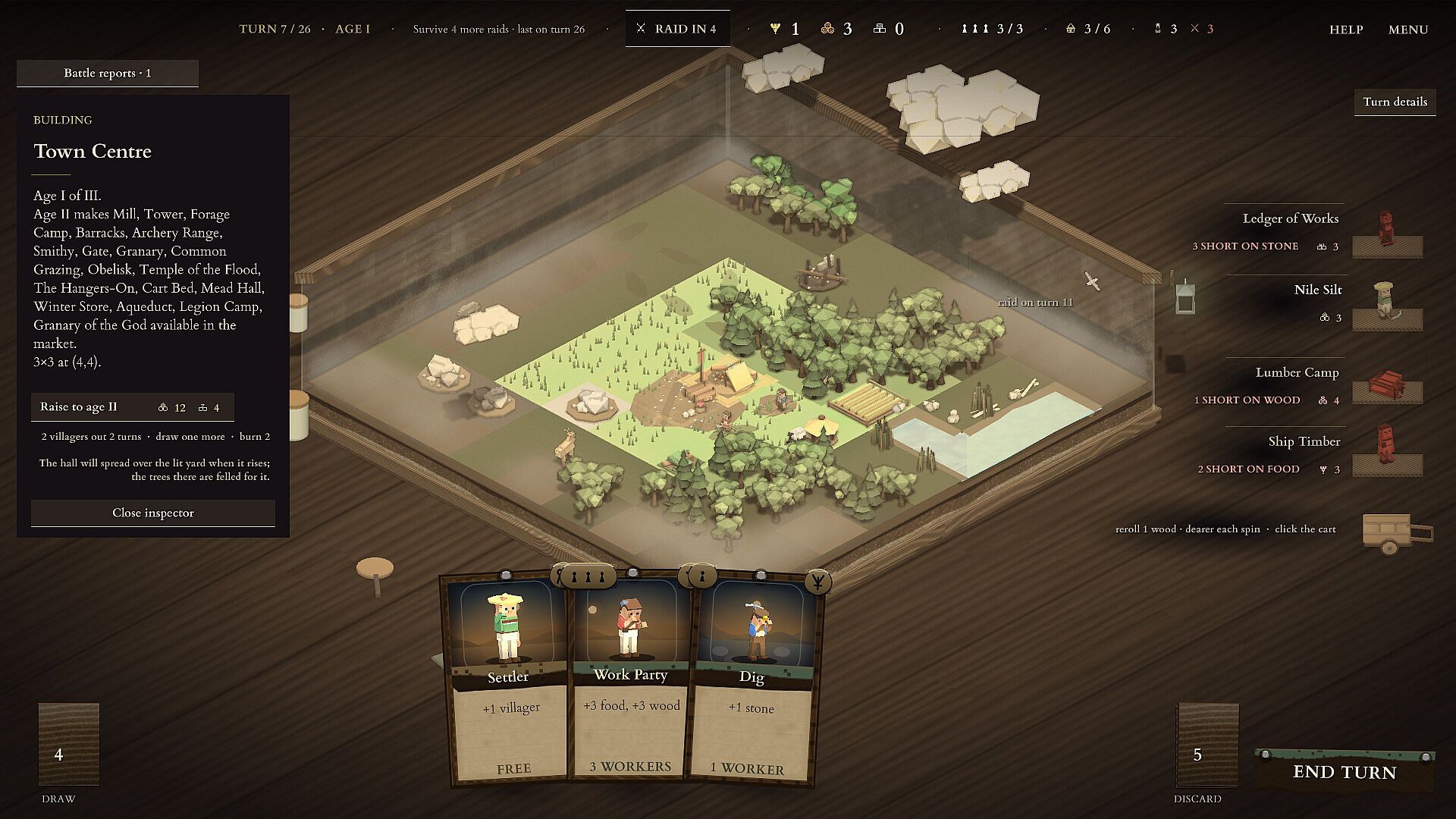
Raids introduce tension as threat accumulates with every cleared tile, shown by a lantern shifting from green to red. Damage from raids first depletes the largest stockpile before targeting walls, buildings, and finally villagers. Muster cards allow idle villagers to defend walls, but playing additional cards afterward thins defensive lines. The market offers items rather than cards, with stock depending on existing village structures, and a single reroll available each turn.
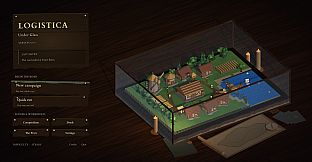
Ages advance the village through the town centre, sending builders away for two turns while granting a larger hand and new market shelf, at the cost of a permanent card burn from the deck. Raiders can reverse an age if they breach defenses. The visual style uses flat-shaded low-poly models viewed through the glass case, with an orbitable camera for inspection.
Game Modes
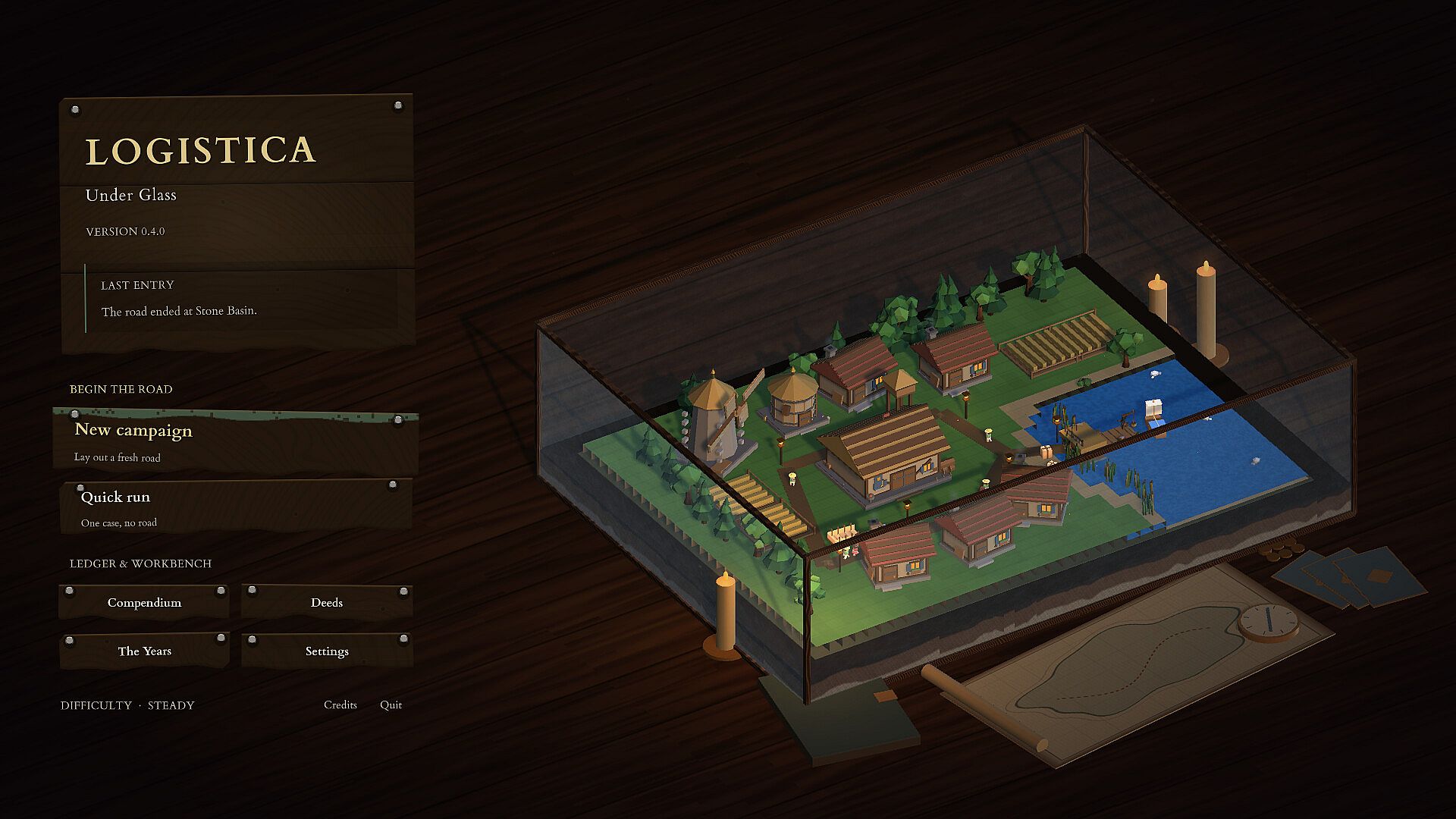
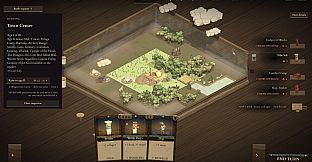
The experience centers on a single-player campaign structured around individual cases and a connecting road. Each case represents one self-contained run inside the terrarium, where success opens access to the road across an island that regenerates with each new campaign. The road presents a sequence of stops, each with its own biome, board outline, and starting conditions such as pre-placed buildings or coastal raider entries.
Between stops, choices appear in the form of notes offering cards, currency, burns, or upgrades, while jars contain relics that alter rules for subsequent runs. Failure at any stop ends the road, requiring a fresh start on a newly generated island. This structure emphasizes progression through layered decisions without separate competitive or cooperative variants.
Key Mechanics
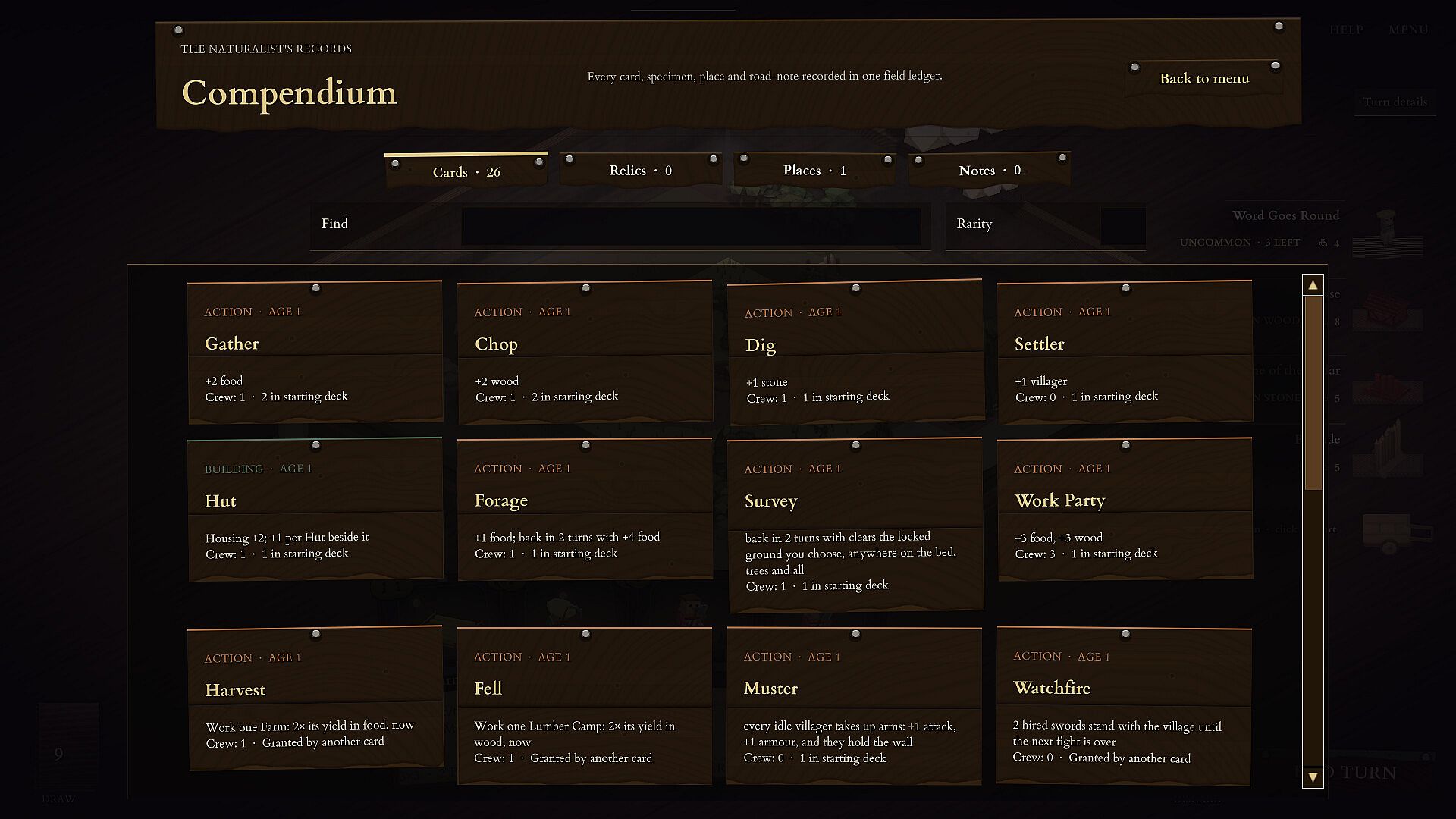
Villagers serve as the primary energy source, walking out to work when spent and returning after one turn. Buildings thin the deck while feeding specific cards into the draw pile, and burning a building removes its associated card from wherever it sits in hand, draw, or discard. Sub-cell placement allows footprints to straddle tile borders, rewarding careful neighbor synergies like reinforced walls or boosted farms.
Growth directly feeds threat, as each new tile cleared increases raid exposure visible on the case lantern. The market shelves expand with village development, gating advanced options behind prerequisites such as a smithy for hired swords. Relics from jars provide persistent changes like cheaper tiles or pre-raid warnings, adding variety across repeated campaigns.
Is It Worth Playing?
Logistica: Under Glass suits players who enjoy deliberate strategy simulations with interconnected systems and visible consequences. The deck-thinning through construction, villager timing puzzle, and raid defense layers create a cohesive loop that rewards planning over rapid expansion. The road campaign adds replayability through fresh island layouts and relic choices without requiring external progression systems.
Those drawn to casual strategy titles that combine board placement puzzles with resource management will find the mechanics accessible yet deep. The absence of multiplayer keeps focus on solo optimization, and the visual presentation under glass supports relaxed observation of village growth. Availability on PC makes it straightforward to try for anyone interested in this specific blend of deck-building and simulation elements.