








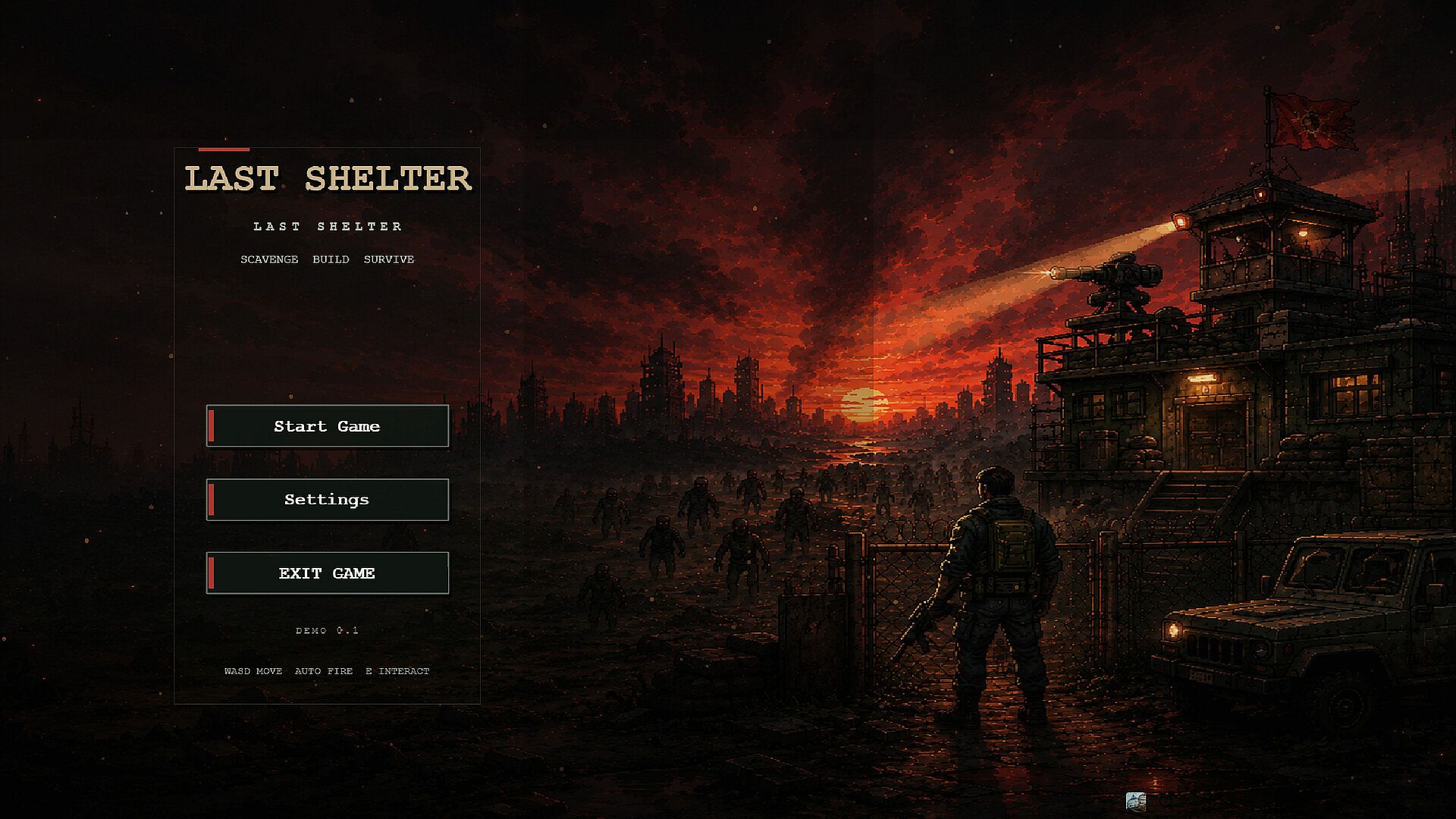
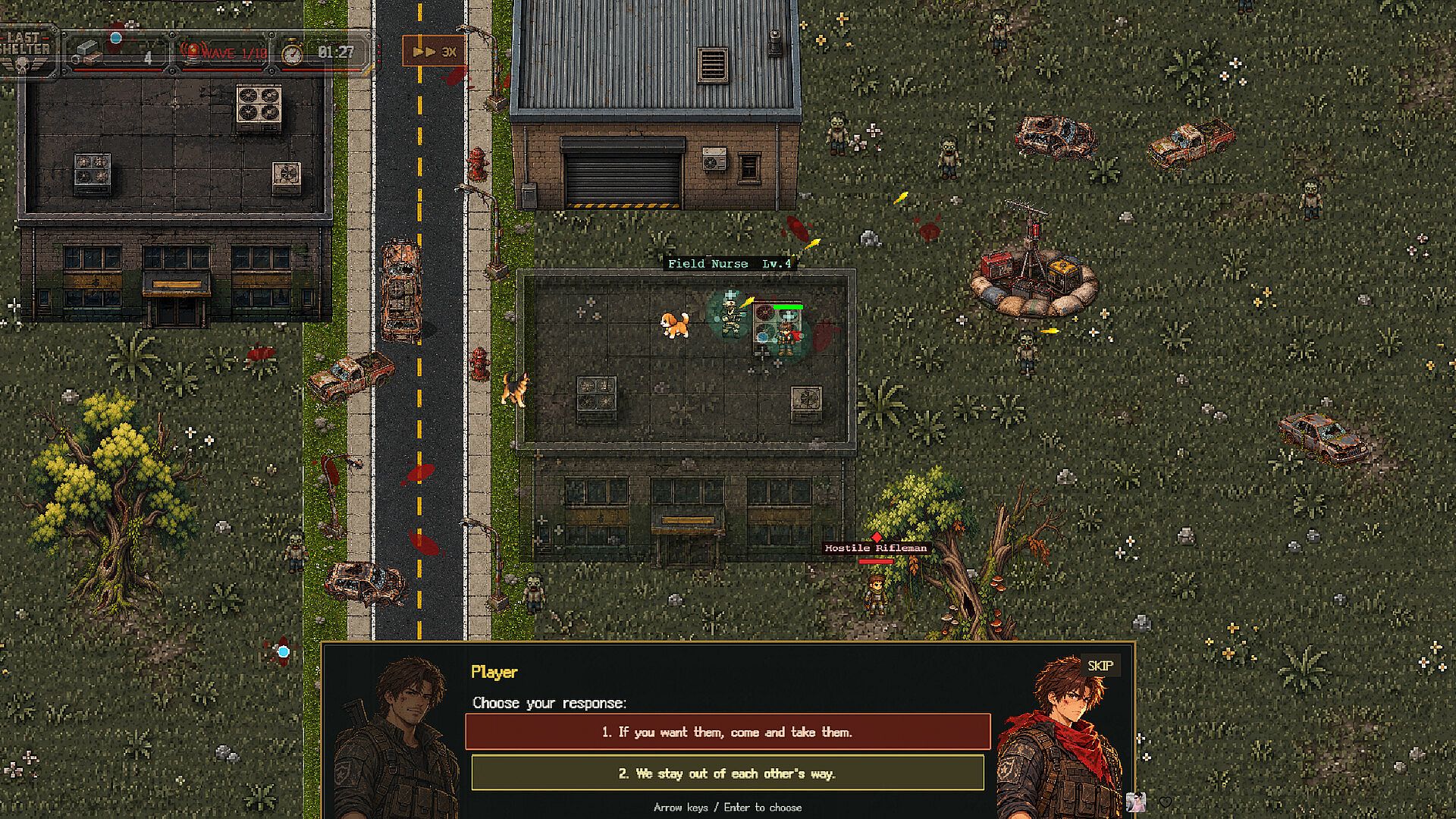




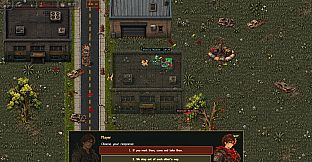
Last Shelter is a top-down post-apocalyptic survival shooter developed for PC in Early Access. Players manage expeditions into ruined zones while maintaining and defending a central shelter against waves of infected. The game blends resource gathering, combat, and base management into a single loop where every trip outside carries the risk of losing progress if extraction fails.
Gameplay
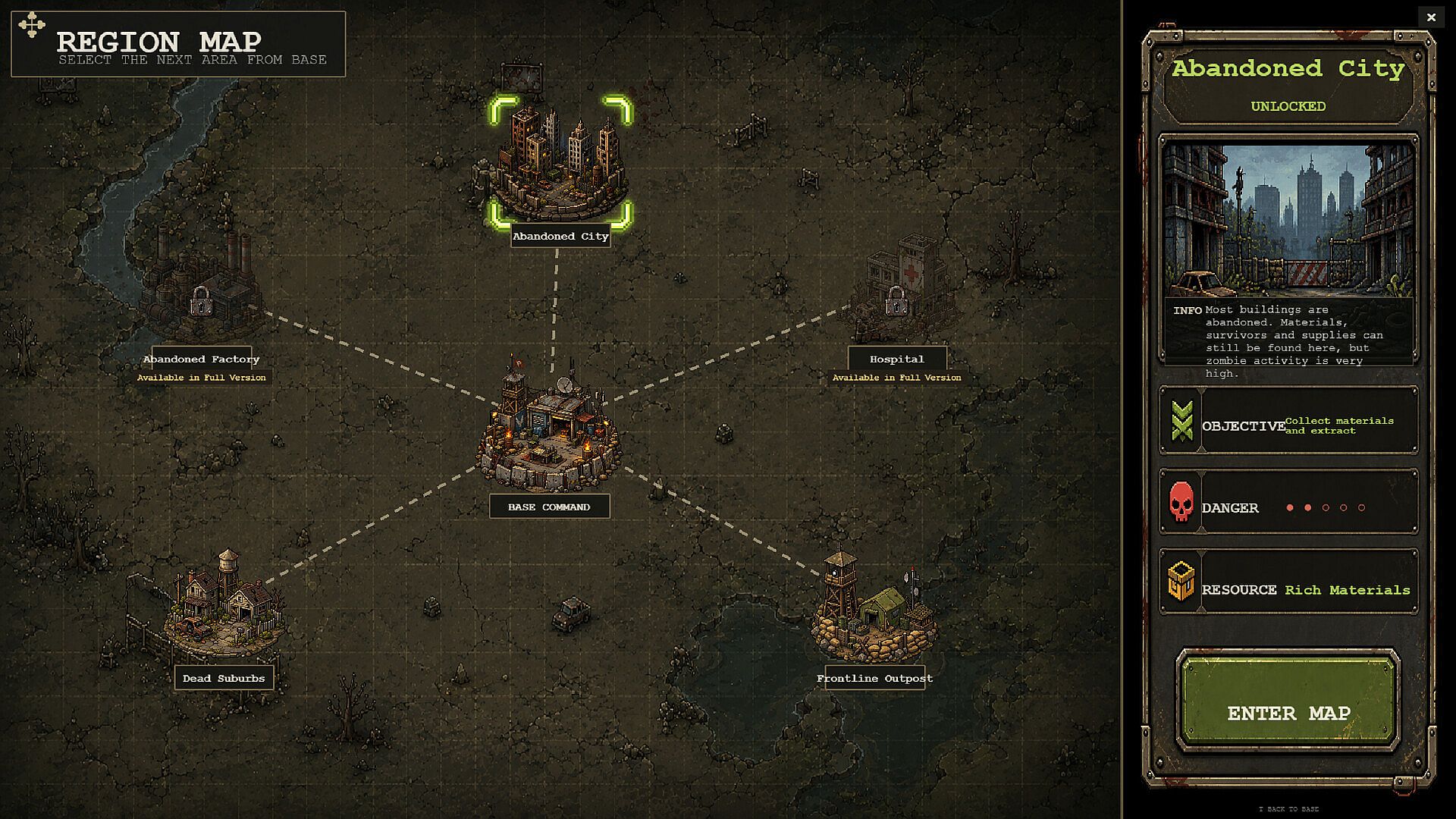
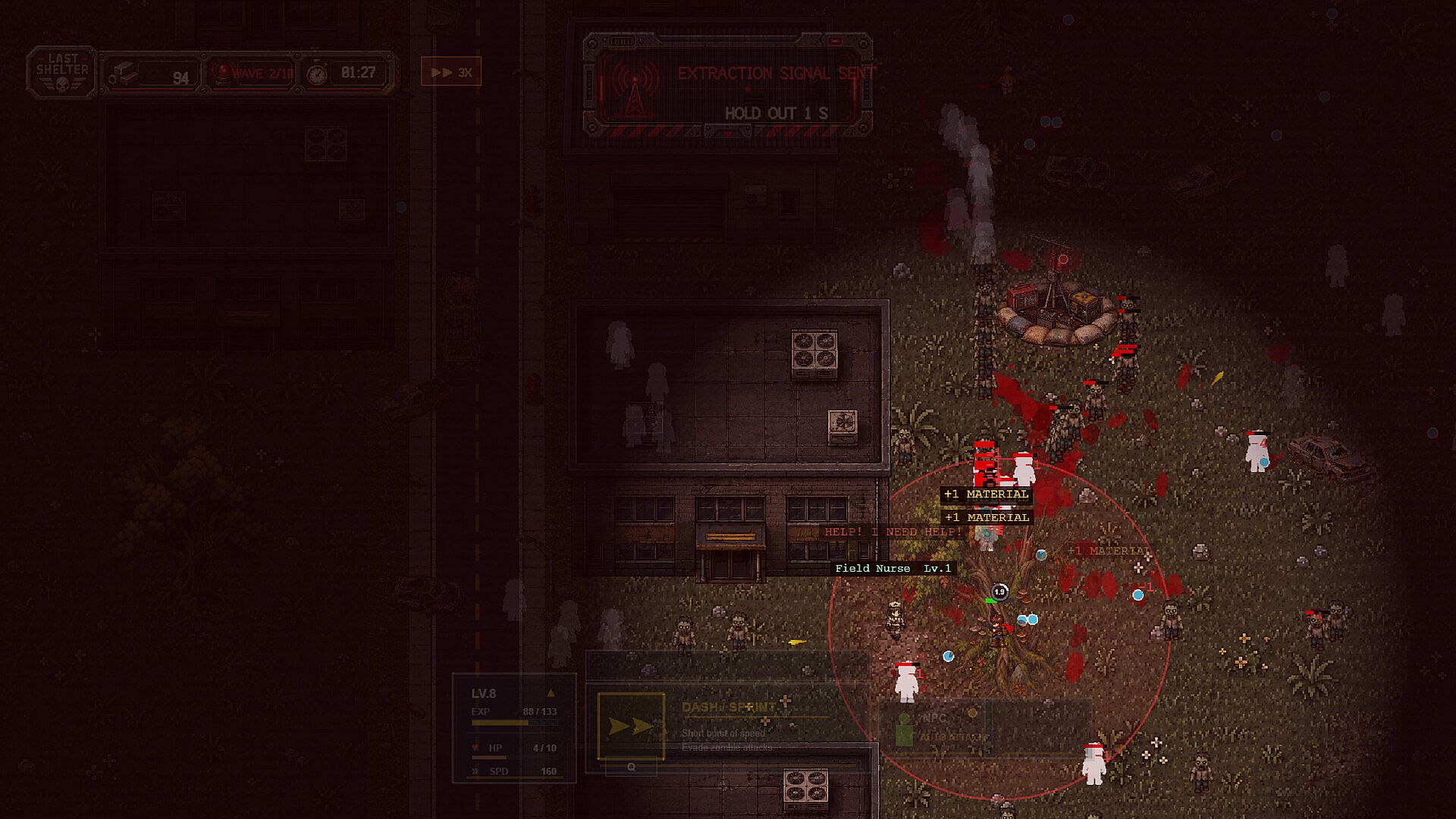
The core loop centers on leaving the shelter to explore dangerous regions such as ruined cities, abandoned suburbs, and wilderness areas. Players fight through groups of infected, search for weapons, materials, and supplies, then return safely to deposit loot. Combat occurs in real time against growing numbers of enemies, with opportunities to rescue survivors who can later join expeditions or contribute to base operations.
Resources recovered from runs fuel shelter upgrades, including expanded facilities, defensive structures like turrets, and recruitment of additional survivors. These improvements directly affect how well the base withstands periodic horde attacks that increase in difficulty over time. The pixel-art style emphasizes clear visibility of threats and loot during runs, while the top-down perspective supports quick movement and positioning in combat.
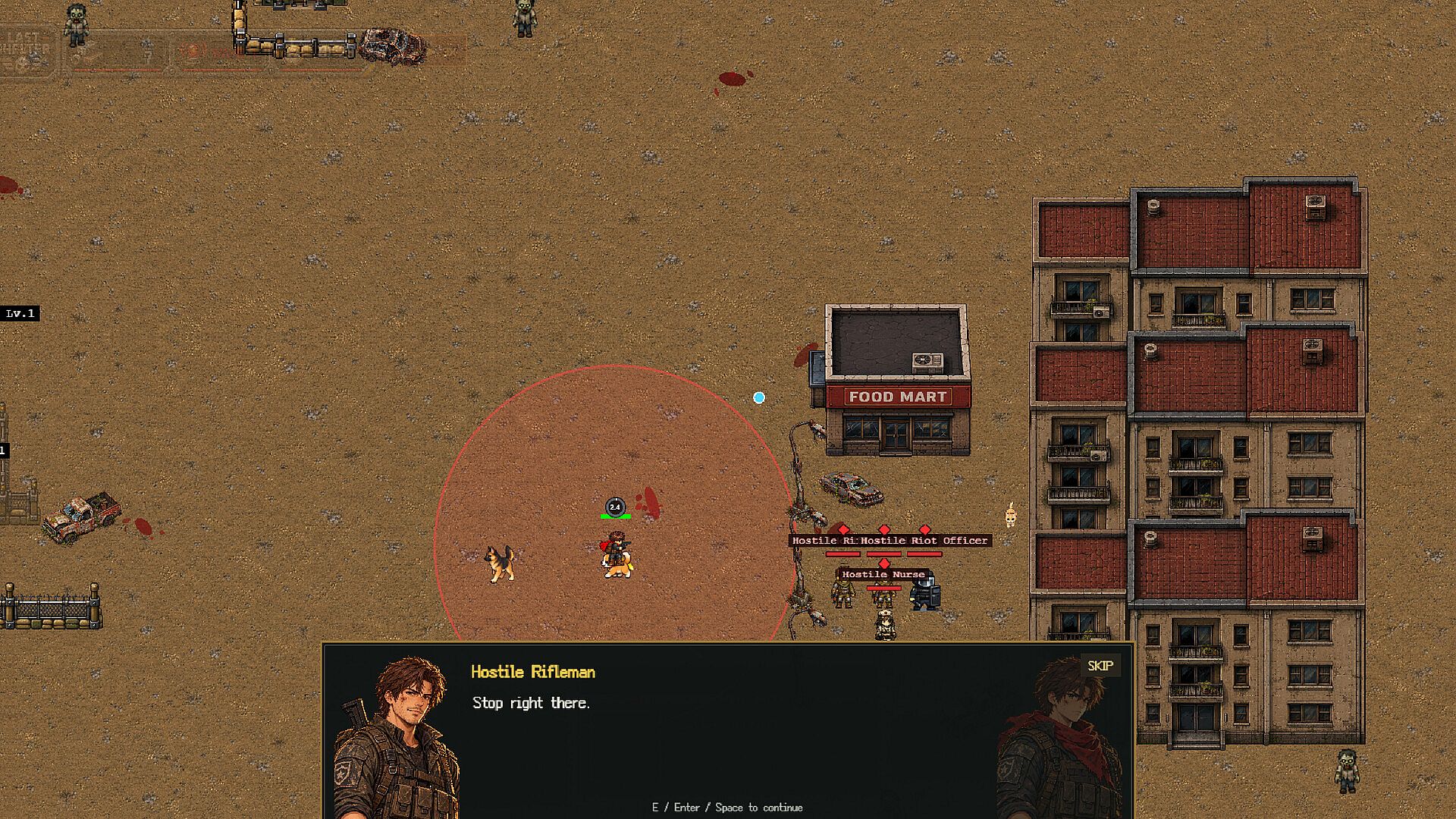
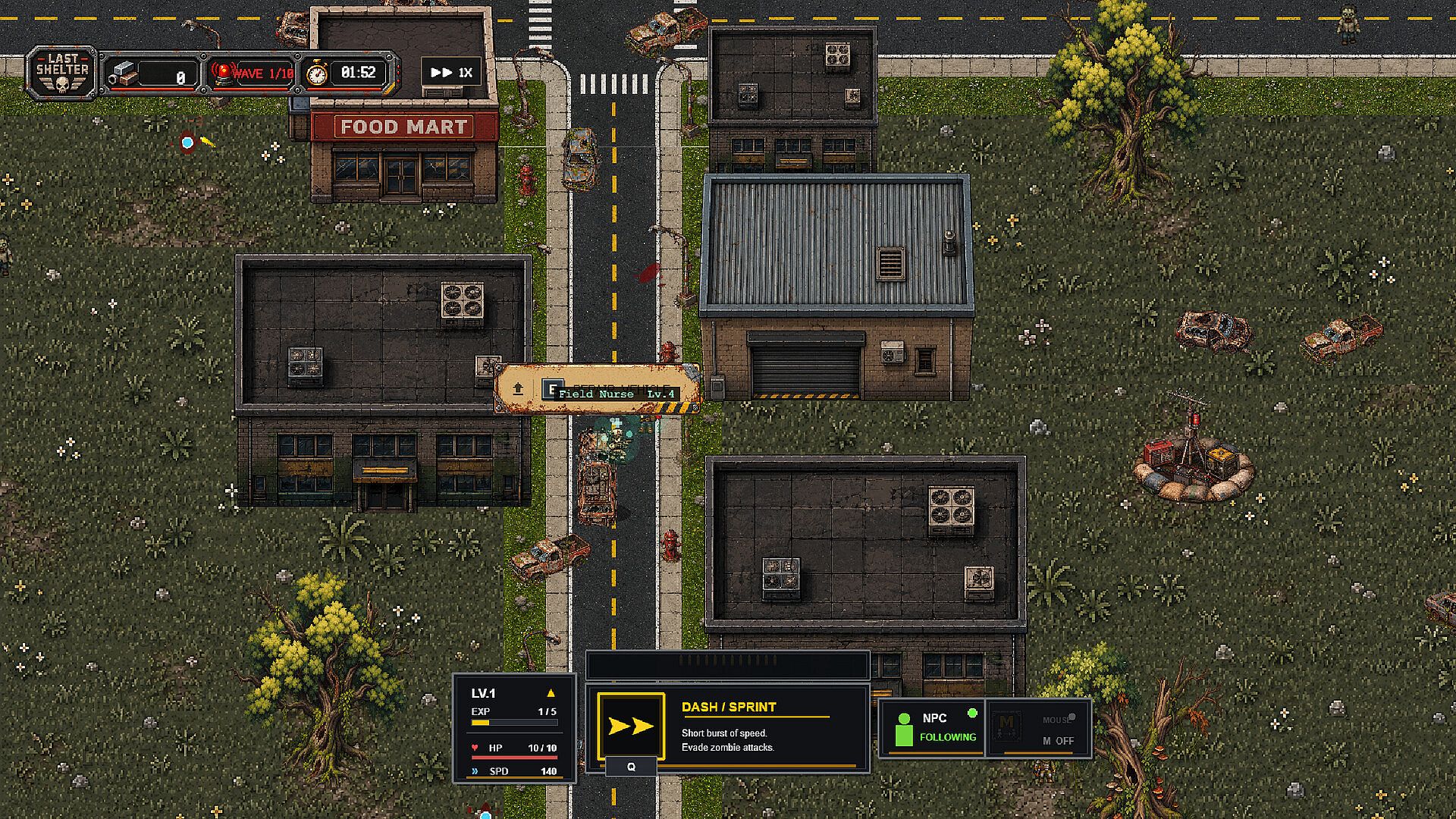
Recent updates have introduced a vehicle system that players can discover, repair, and upgrade across different maps. Vehicles provide extra storage and influence exploration efficiency, adding another layer to preparation before heading out. Encounters extend beyond zombies to include hostile survivors and stronger boss-type enemies that require careful resource management and positioning to overcome.
Game Modes
Last Shelter integrates its main activities into one cohesive experience rather than separating them into distinct modes. Expeditions form the primary activity, where players balance looting, combat, and safe return to the extraction point. Base defense phases occur regularly, testing the upgrades and recruited survivors accumulated from prior runs.
Exploration covers multiple distinct regions, each with its own layout and risks, encouraging repeated visits as the shelter grows stronger. Recruitment and management of survivors tie directly into both expedition success and base resilience, creating a progression system that rewards consistent play across these interconnected systems.
Key Mechanics and Progression
Preparation before each expedition matters because carrying capacity and available weapons determine how much can be brought back. Survivors recruited from the wasteland offer varied support during runs and help fortify the shelter against attacks. Upgrades to facilities and defenses scale with collected resources, allowing players to handle larger threats as the game advances.
The risk-reward structure keeps tension high on every outing. Overextending for extra loot can lead to being overwhelmed before reaching safety, while cautious play builds steady progress toward stronger defenses. This loop supports both short sessions focused on quick supply runs and longer ones aimed at major upgrades or new recruitments.
Current State and Development
The game remains in Early Access with ongoing updates that refine maps, add content such as new enemies and base features, and expand exploration options. The developer has focused on core systems like city exploration, horde defense, turret placement, and NPC recruitment, with plans for further maps and mechanics. As a solo experience, it emphasizes personal decision-making in resource allocation and risk assessment during runs.
Is It Worth Playing?
Last Shelter suits players who enjoy survival games that combine extraction runs with base-building and defense elements in a compact package. The integrated loop rewards careful planning and repeated expeditions, making it a good fit for those who like managing risk across multiple systems without heavy multiplayer requirements. Early Access status means the experience continues to evolve, with updates addressing feedback on maps and features. Those interested in post-apocalyptic settings with pixel-art presentation and straightforward progression through exploration and defense will find the current build engaging, particularly if they appreciate games where every run contributes directly to long-term shelter strength.











