


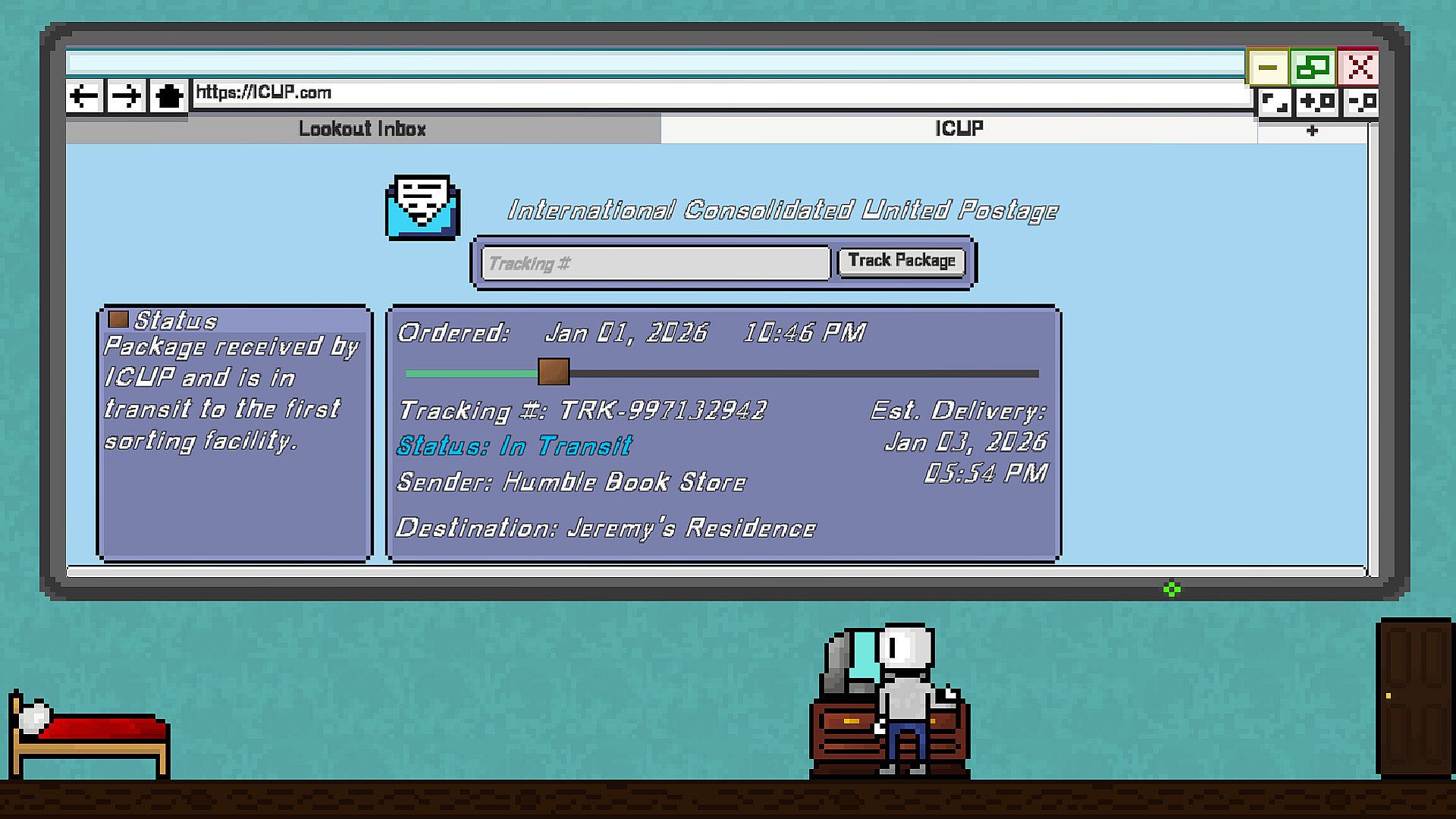

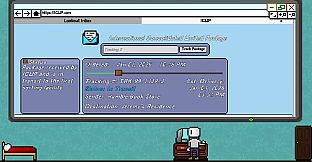
Jeremy is Broke is a single-player strategy and simulation game that places players in the role of an ordinary person navigating unemployment through entrepreneurial hustle. With only a modest starting sum and a basic desktop computer, the experience centers on managing limited resources to cover essential expenses like rent while exploring various income streams in a contained bedroom setting.
Gameplay
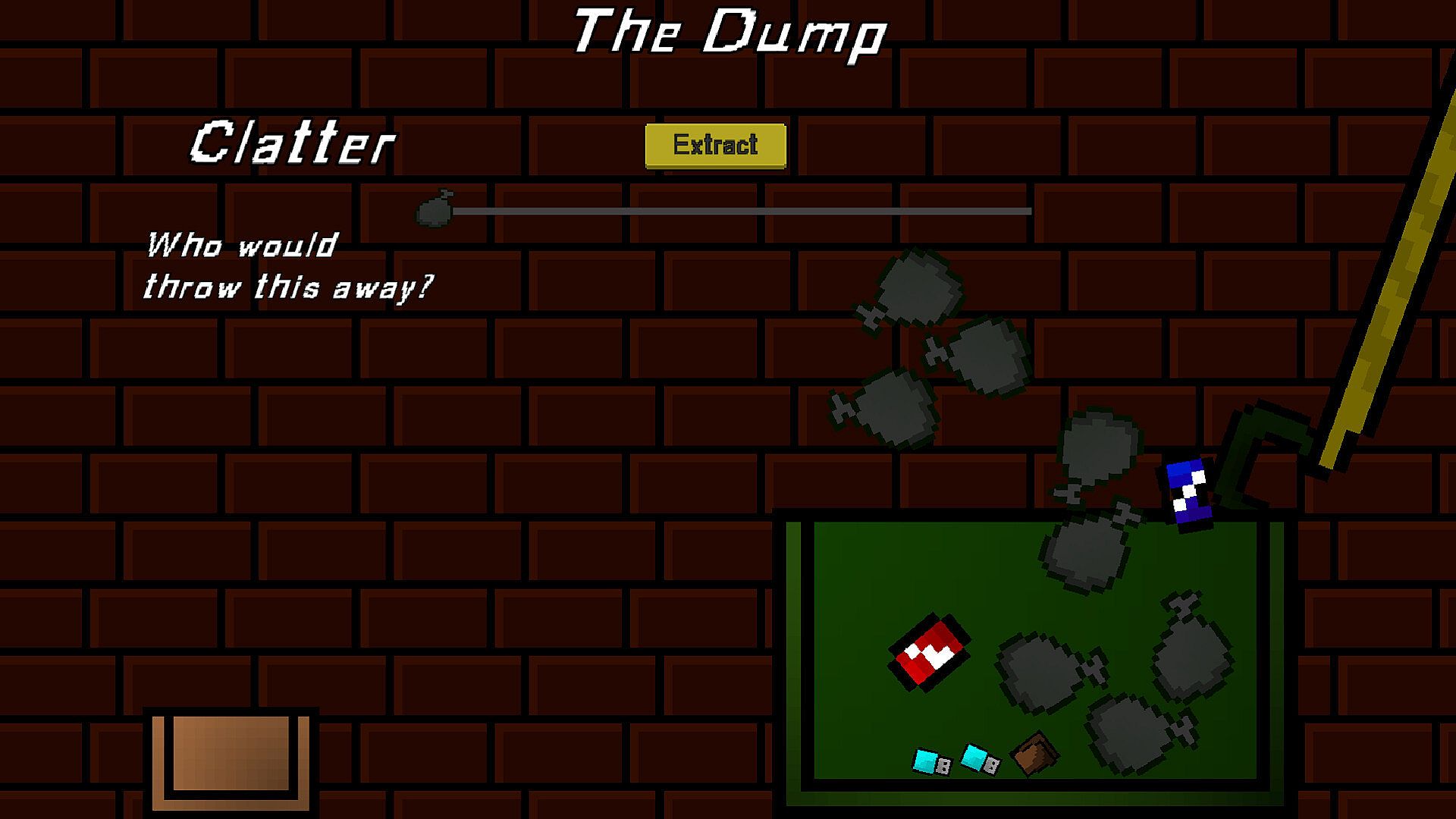
The core loop revolves around scavenging, trading, and managing digital assets to generate steady income. Players begin by searching dumpsters for assorted goods that can then be listed for sale. These items range from everyday objects to broken electronics, introducing an element of unpredictability in what becomes available each time.
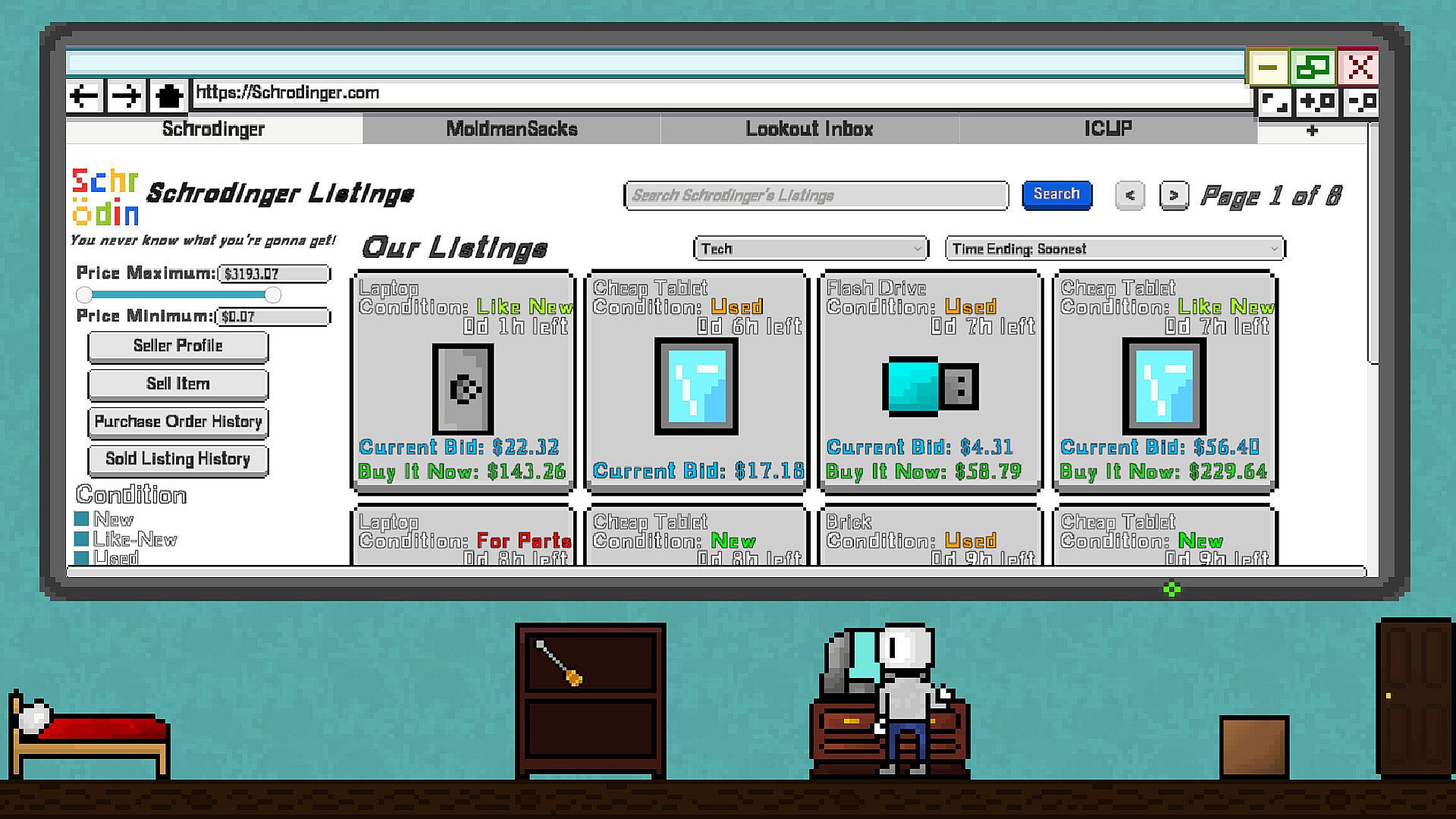
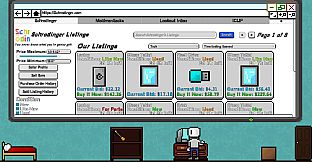
Once items are acquired, they move to an auction-style marketplace where listings require careful tuning to attract interest from automated buyers. Adjustments to descriptions and pricing can spark competitive bidding, though overstepping into misleading territory risks penalties that affect future transactions. Handling buyer disputes forms another layer, as complaints must be addressed promptly to avoid unfavorable resolutions.
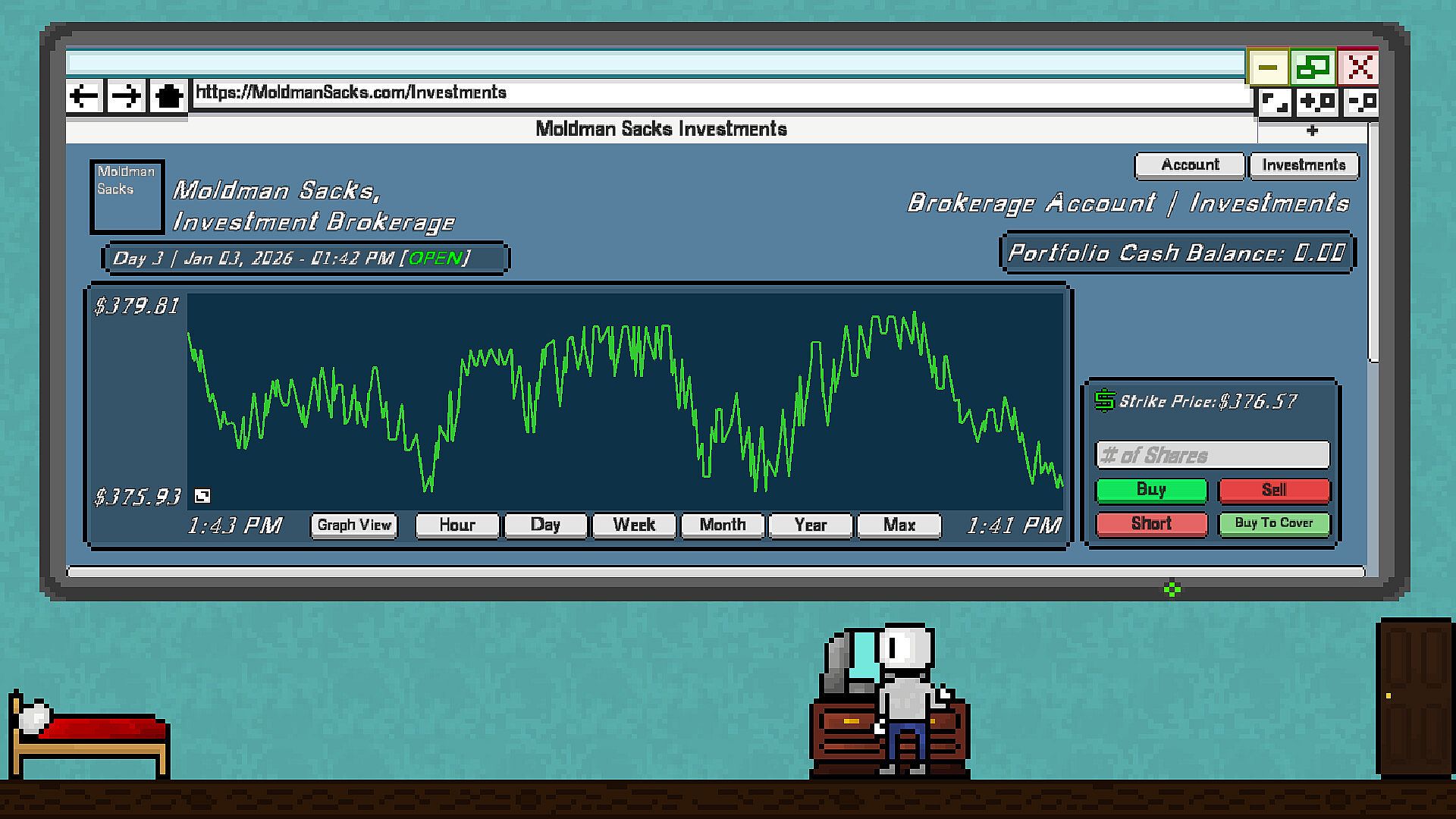
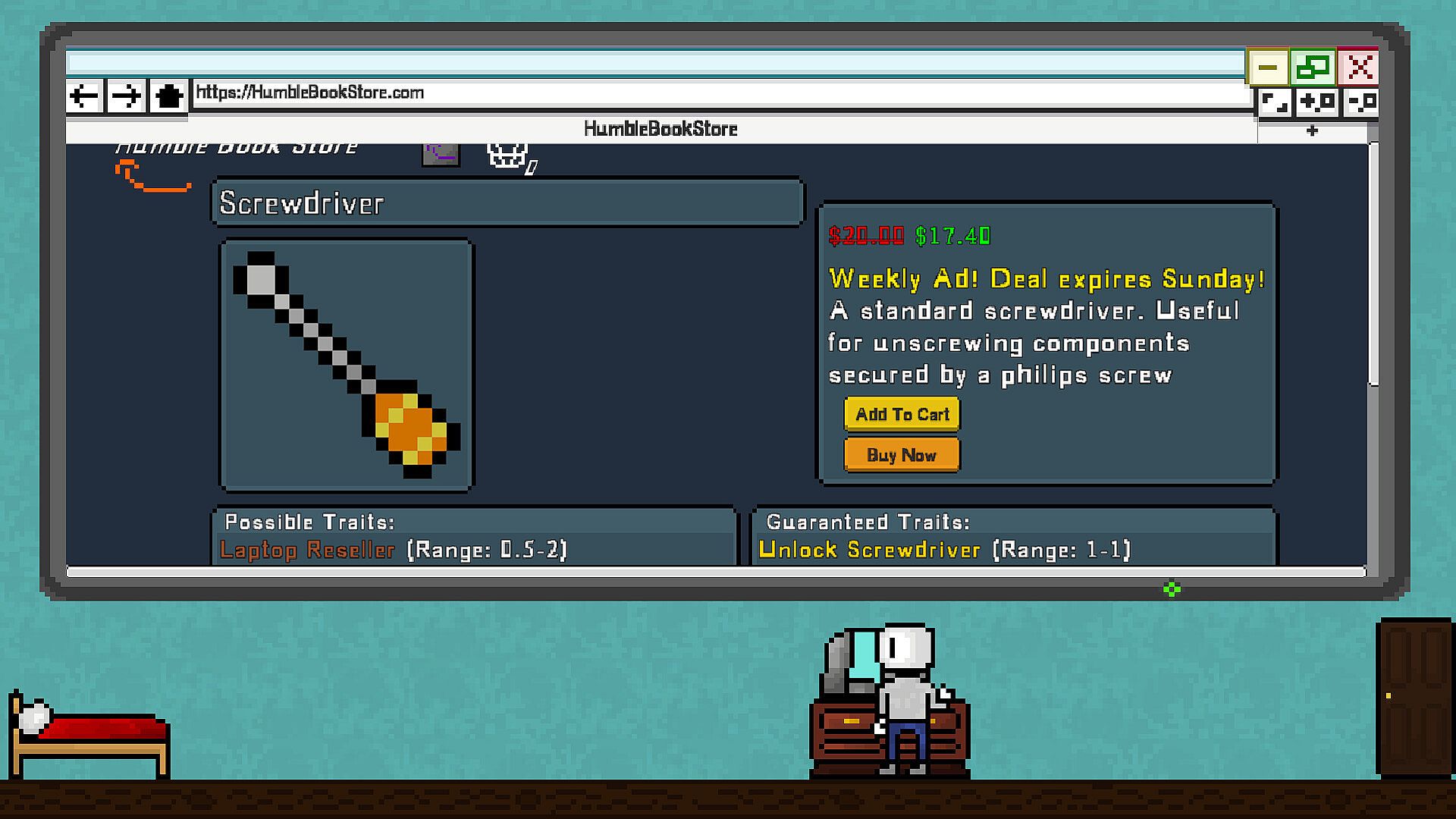
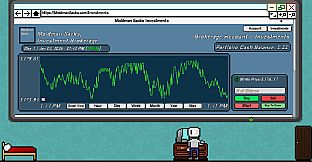
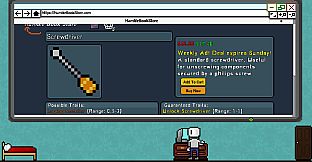
Stock trading adds depth through a simulated brokerage where players buy, sell, and short shares in a dynamic market. Laptop repair serves as a hands-on activity, including mini-games for cracking USB drives in a style reminiscent of minesweeper. Purchases from a specialty store provide items with distinct traits that enhance overall progress when used correctly.
Room customization ties directly into mechanics by allowing furniture placement and item displays that unlock passive benefits. These upgrades influence efficiency across other systems, encouraging players to balance immediate sales with longer-term improvements to their setup.
Game Modes
The game operates as a cohesive single-player simulation without separate named modes. All activities integrate into one continuous experience focused on resource management and incremental growth. Players freely switch between scavenging, marketplace trading, stock operations, repairs, and room enhancements as needs arise.
This unified approach emphasizes experimentation within the core systems rather than structured playlists or competitive formats. Progression builds naturally through repeated cycles of collection, listing, and investment, with no multiplayer elements or faction-based divisions present.
Key Systems and Progression
Central to advancement is the interplay between short-term gains and sustainable upgrades. Scavenged goods feed directly into marketplace activity, while profits fund stock positions and new purchases that carry unique advantages. The functional computer interface requires ongoing attention to maintain smooth operation across all tools.
Passive traits from displayed items create compounding effects, rewarding thoughtful arrangement of the living space. Risk management appears in marketplace decisions and stock moves, where poor choices can reduce available funds and force reliance on other methods to recover.
- Scavenging yields variable results each session
- Marketplace tuning influences sale outcomes
- Stock positions provide alternative revenue paths
- Repairs and mini-games offer focused tasks
- Customization delivers ongoing efficiency boosts
Is It Worth Playing?
Jeremy is Broke targets players who enjoy detailed simulation games centered on economic systems and incremental management. The current version delivers a playable loop built around the listed activities, though it remains in active development with plans for additional content such as a story mode and expanded ventures in later updates.
Those drawn to casual strategy experiences with elements of trading, customization, and light risk assessment will find the mechanics align closely with the described systems. Feedback from early participants helps refine the many interconnected parts, making the title suitable for individuals comfortable engaging with works in progress. Availability on PC supports straightforward access for those matching the described interests.