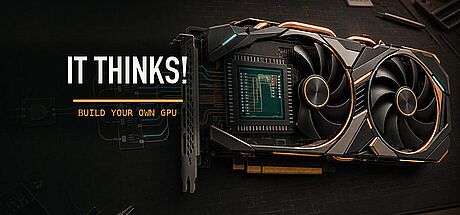


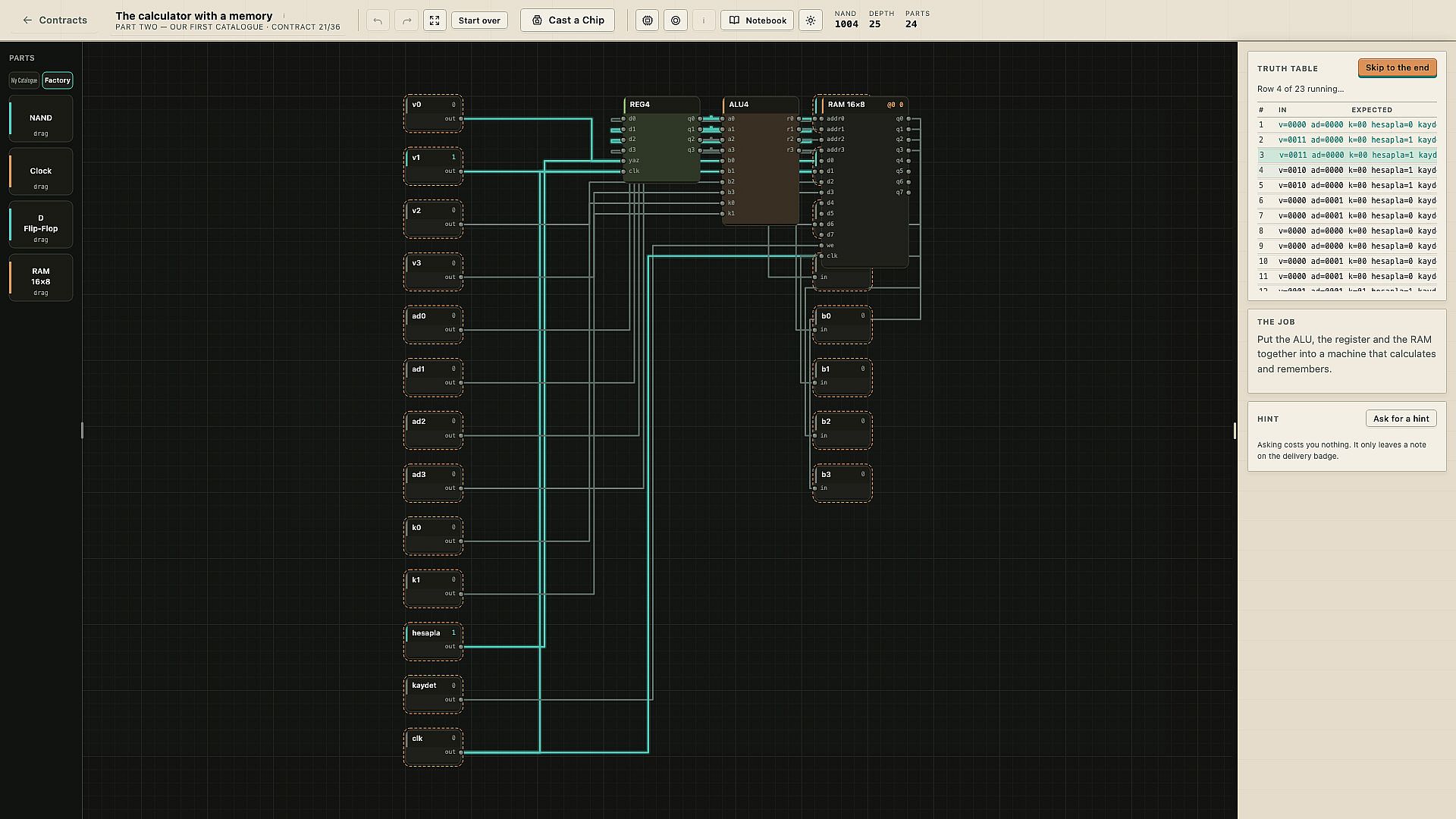
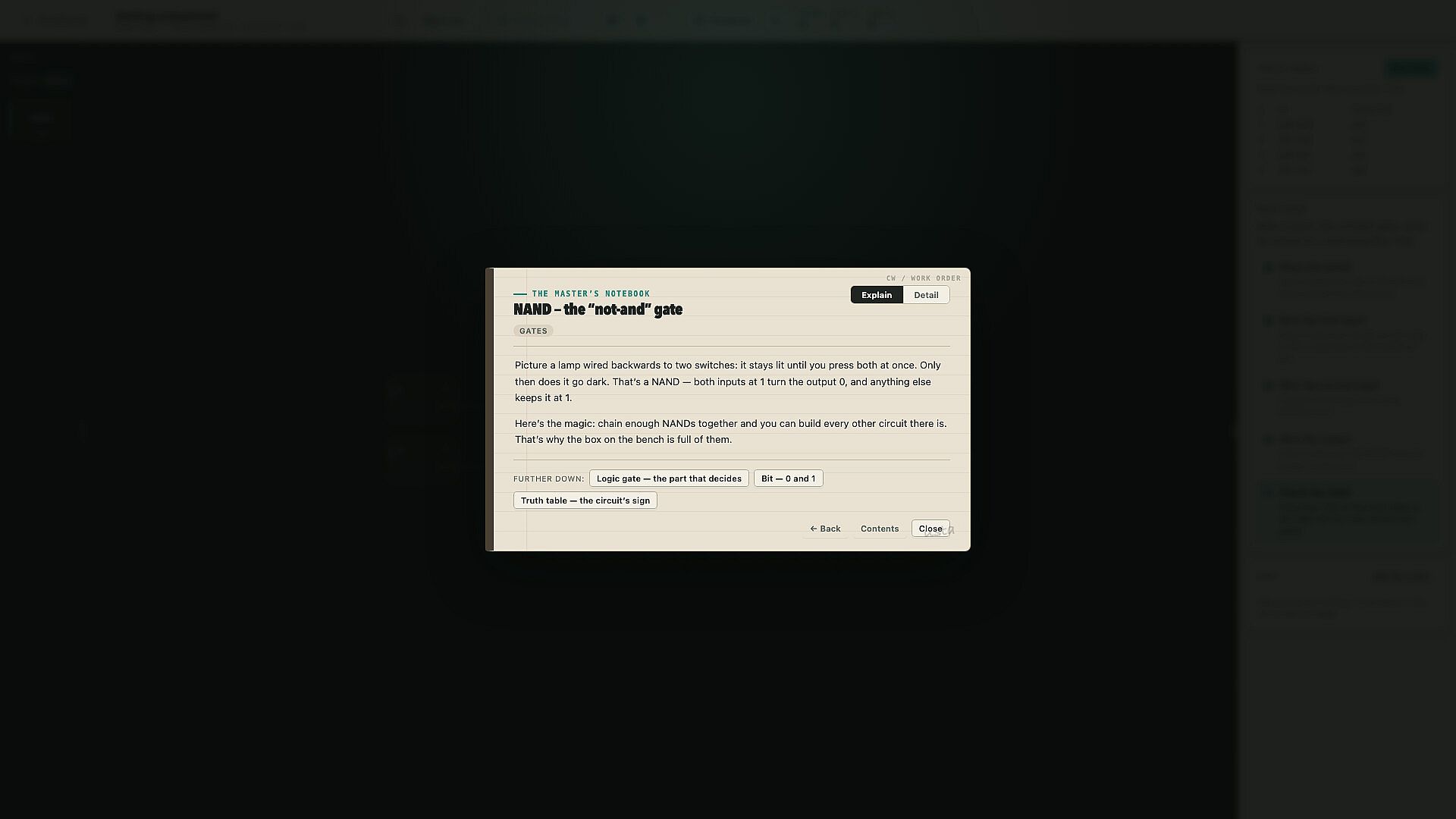
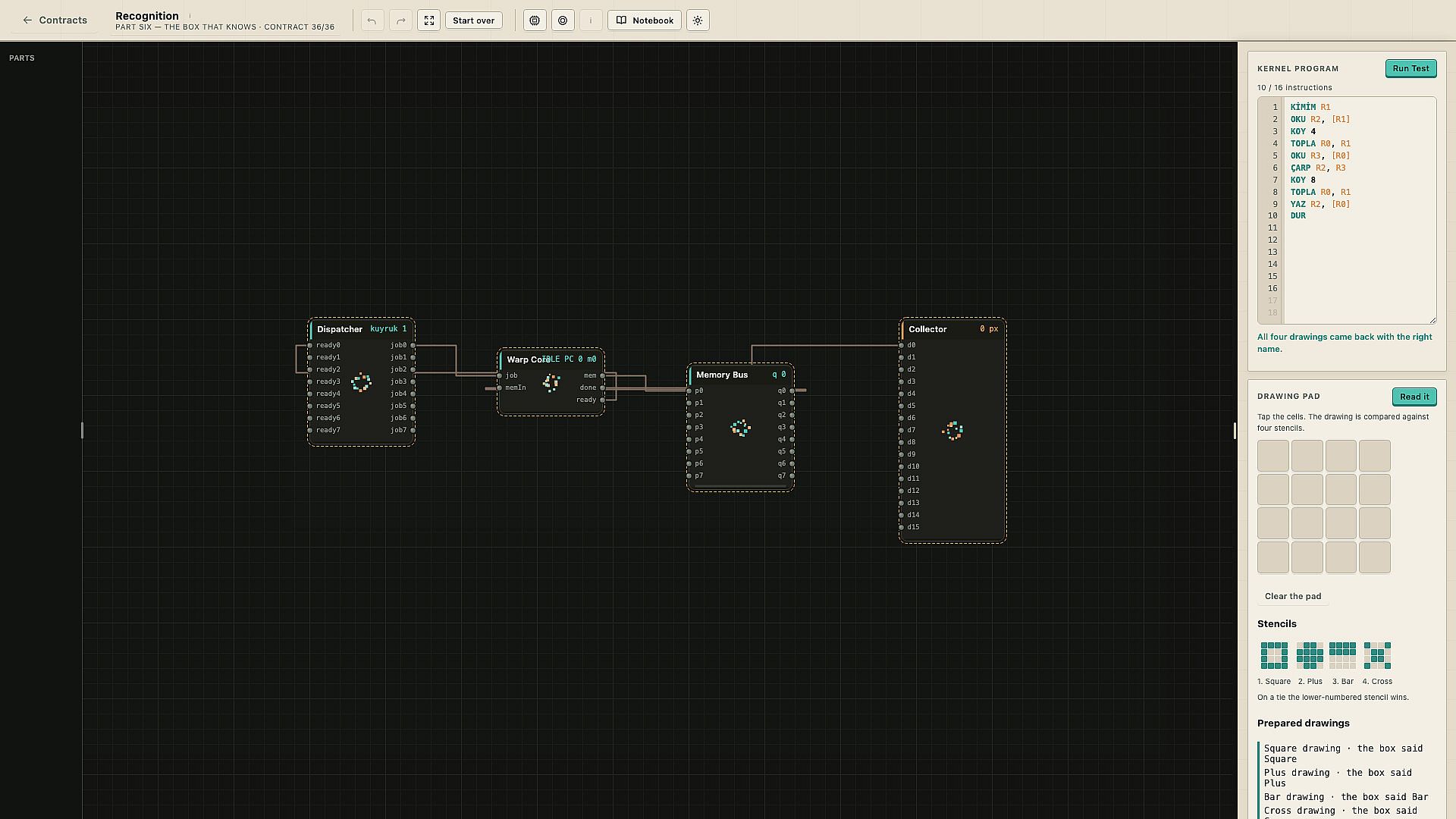


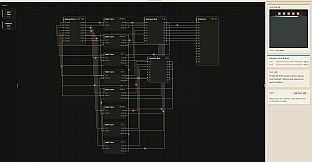
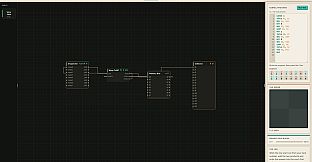
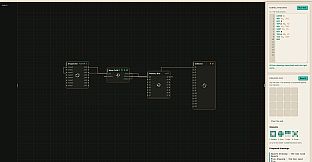
IT THINKS! is a strategy, indie, and simulation game on PC that puts players in the role of a hardware designer building functional computers from the ground up. The experience centers on constructing digital logic from basic components, starting with a single NAND gate and scaling designs into full processors and specialized chips. Players place parts, route connections, observe signal flow in real time, and validate each creation on an integrated test bench before moving forward.
Gameplay
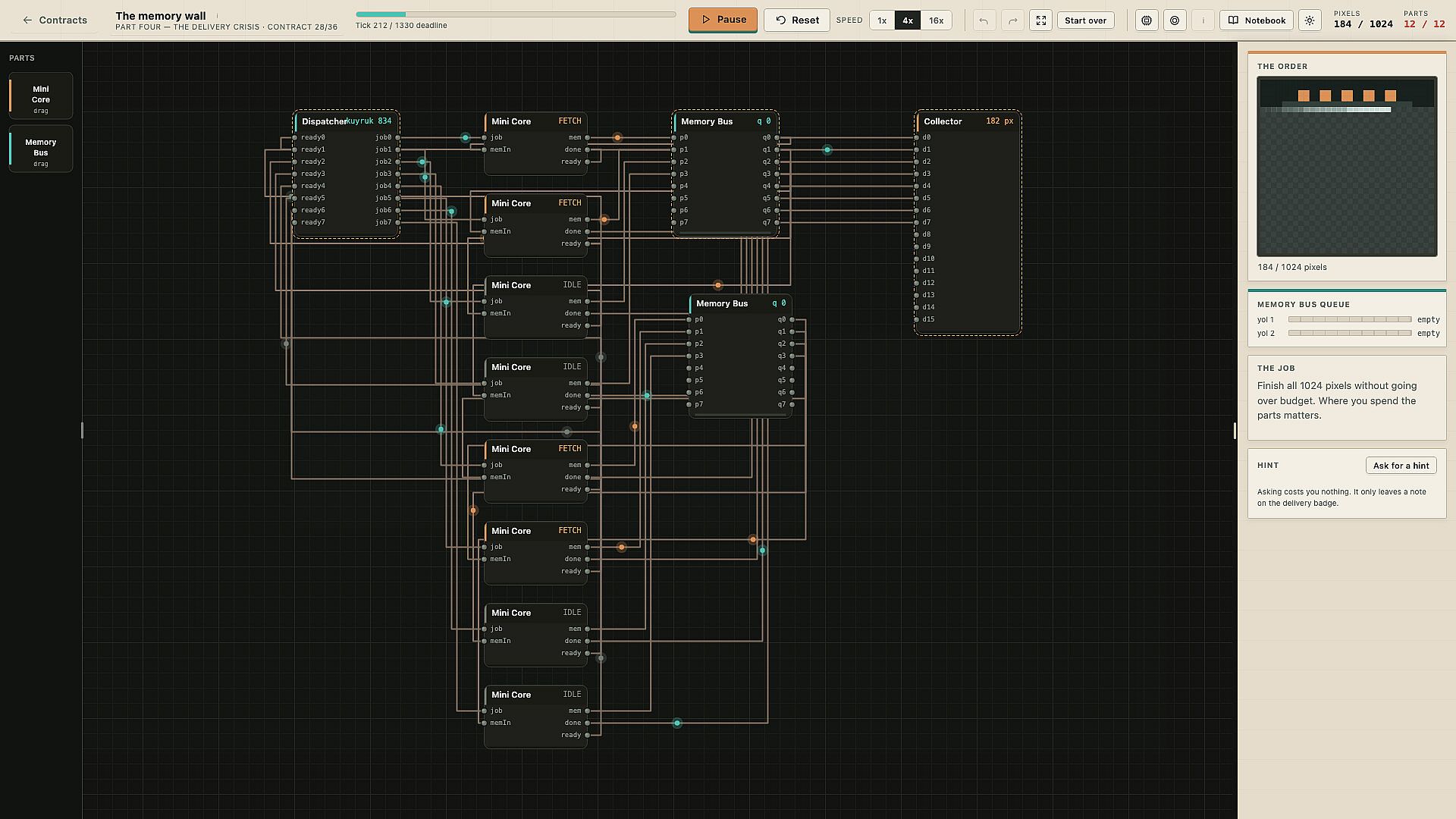
The core loop revolves around iterative circuit design. Every solution begins with fundamental logic elements and expands through successive layers of complexity. Early work focuses on basic gates and simple arithmetic units. Later stages introduce memory structures, instruction execution, and coordinated processing across multiple units. Signals propagate visibly across the layout, allowing immediate inspection of timing and behavior. Designs must satisfy precise test conditions on the bench, which enforces correctness at each step.
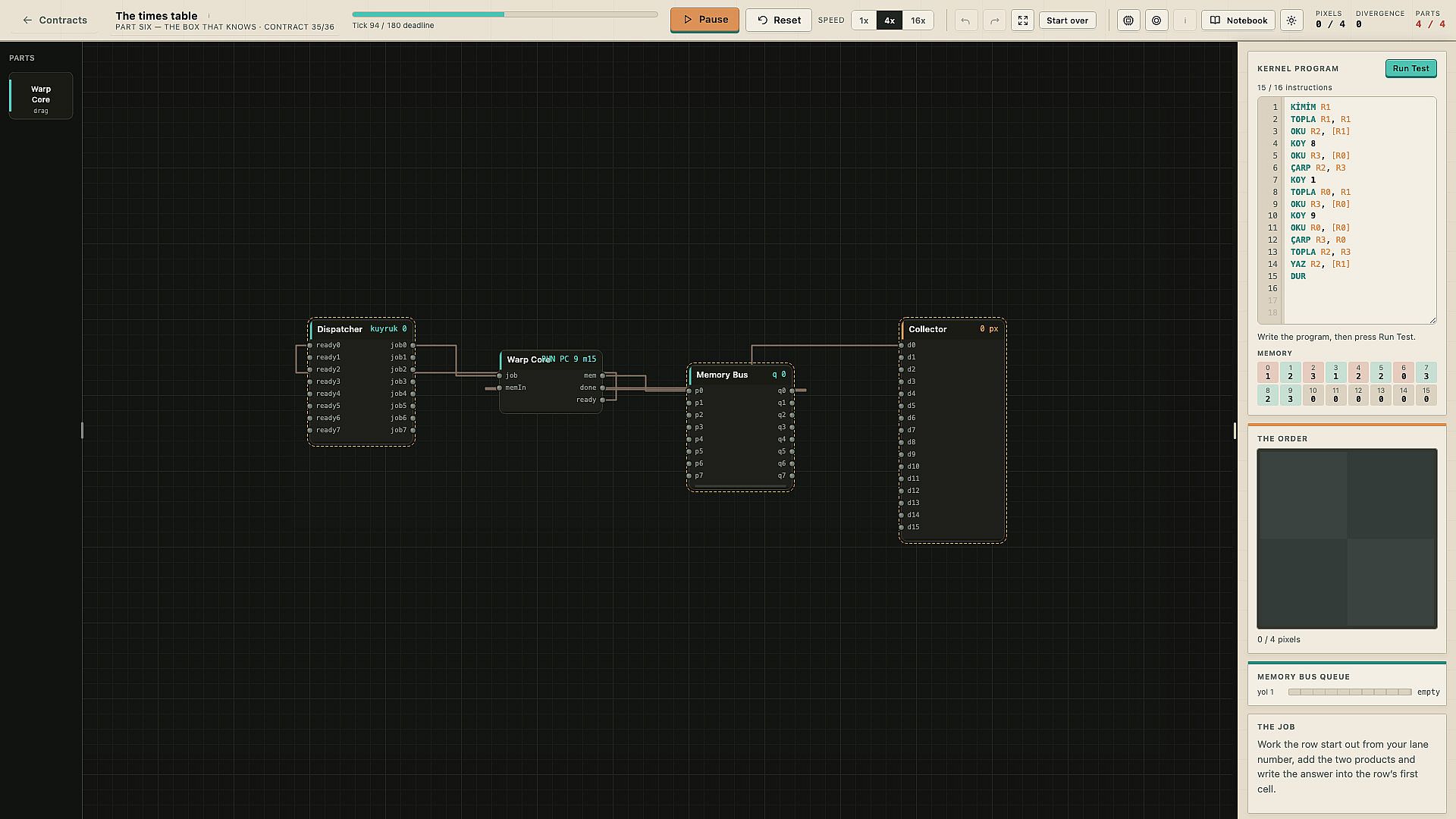
Once a circuit functions reliably, it can be packaged as a reusable chip for placement in larger systems. This creates a growing personal library of components that carry forward into subsequent challenges. Programming enters the picture through a compact assembly language that runs directly on the hardware built by the player. The same code can execute across parallel cores, highlighting trade-offs in speed, resource use, and coordination.
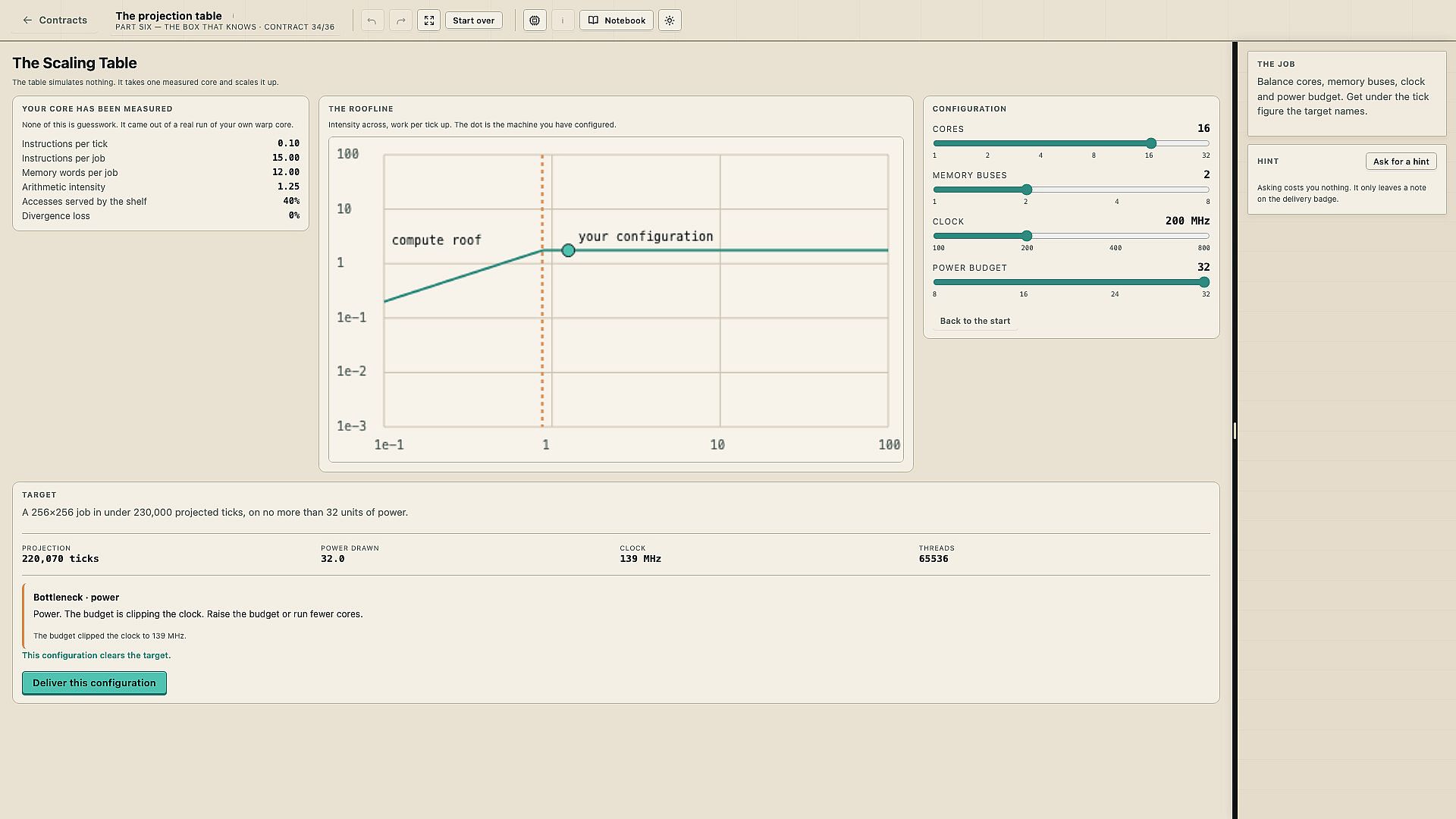
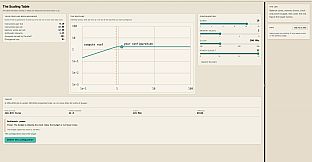
Architectural decisions matter throughout. Layouts are judged on physical area, clock cycles required for operations, memory access patterns, power draw, and how effectively work distributes across parallel elements. These constraints encourage refinement rather than single-pass solutions. Optional tools support different learning styles: contextual hints appear when needed, a reference notebook collects key concepts, and certain tests can be bypassed once the underlying idea is understood.
Game Modes
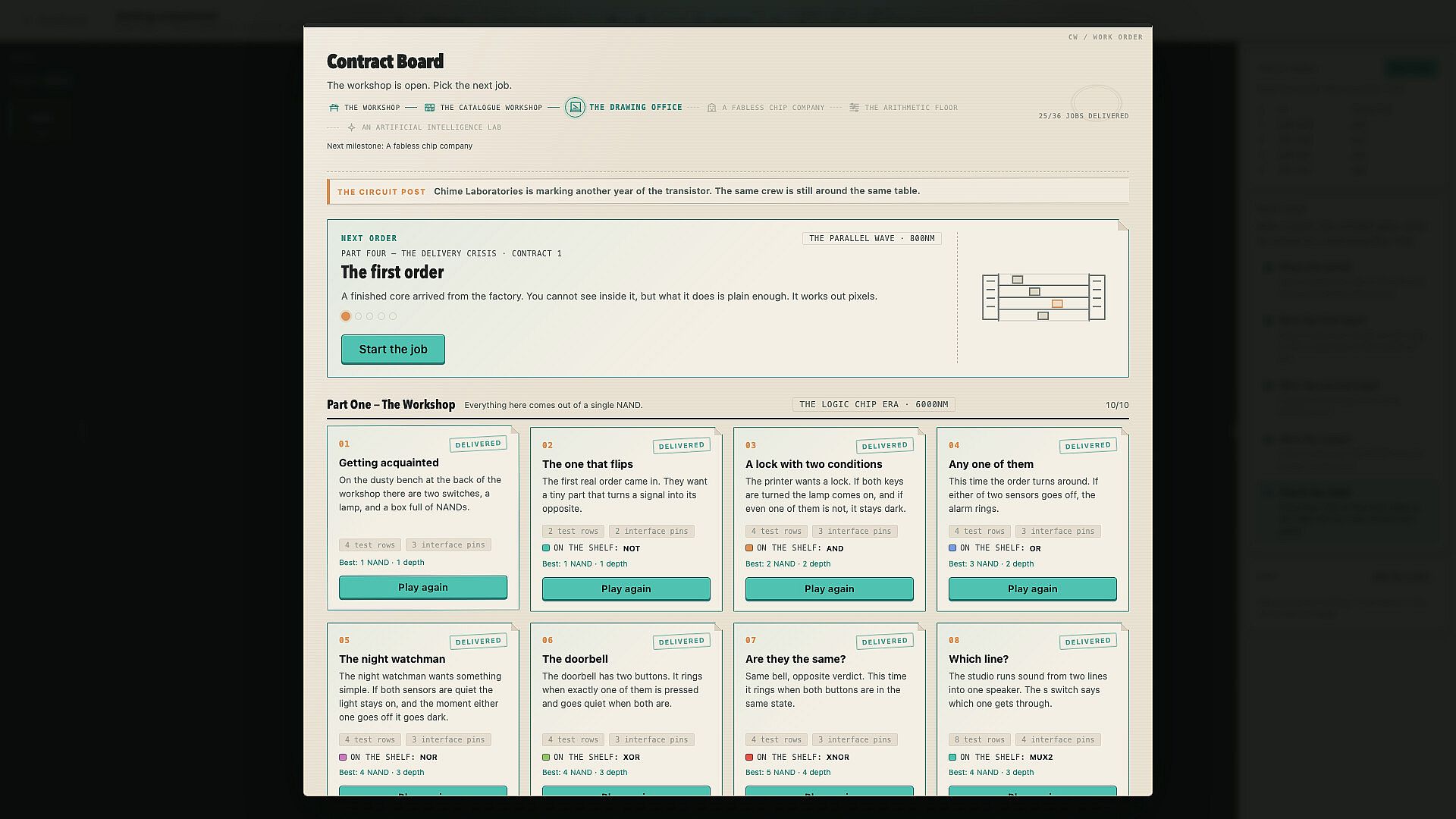
Progression unfolds through a sequence of 36 handcrafted contracts organized into six distinct eras. The journey begins in a modest workshop setting and advances through increasingly sophisticated environments that culminate in an AI research facility. Each era introduces new requirements and component types while building on prior knowledge.
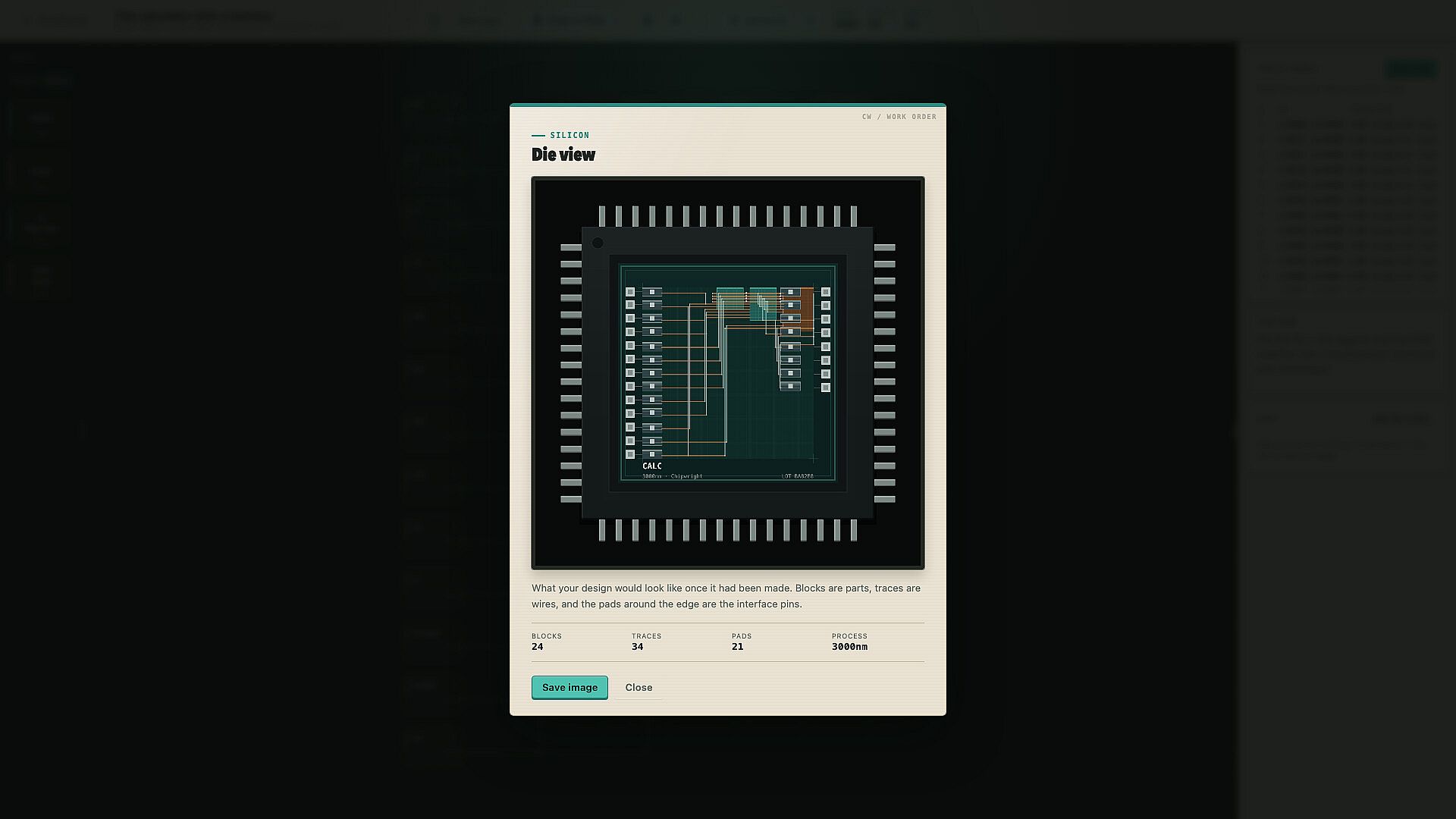
Contracts function as self-contained design problems with clear success criteria. Players receive specifications for the desired behavior, then iterate on layouts until the test bench confirms the result. There are no separate competitive or cooperative modes; the focus remains on individual construction and verification. Solutions can be exported as visual die layouts or short looping animations for review and sharing.
Progression and Systems
Advancement follows a clear technological arc. Early contracts establish foundational logic and arithmetic. Mid-game work incorporates memory and basic programmability. Later contracts emphasize parallel execution, matrix operations, and pattern recognition tasks such as handwritten digit identification. Each completed contract unlocks new parts and capabilities for future use.
The assembly language layer adds another dimension once programmable hardware appears. Players write compact routines that the constructed processor executes, then observe how those routines behave when scaled across multiple cores. This integration of hardware design and software execution mirrors real architectural considerations without requiring prior engineering expertise.
Is It Worth Playing?
IT THINKS! suits players interested in understanding how digital systems operate through direct construction rather than abstract theory. The absence of any electrical engineering prerequisite makes the experience accessible, while the depth of the design challenges rewards careful observation and incremental improvement. Support for fifteen languages at launch broadens accessibility for a wide audience.
Those who enjoy puzzle games built around systems thinking will find consistent engagement across the contract structure. The ability to revisit and refine earlier work, combined with export options for completed designs, extends the value beyond a single playthrough. The game emphasizes clarity and measurable progress at every stage, delivering a focused simulation of hardware development from the simplest gate to functional GPU-like chips.