


















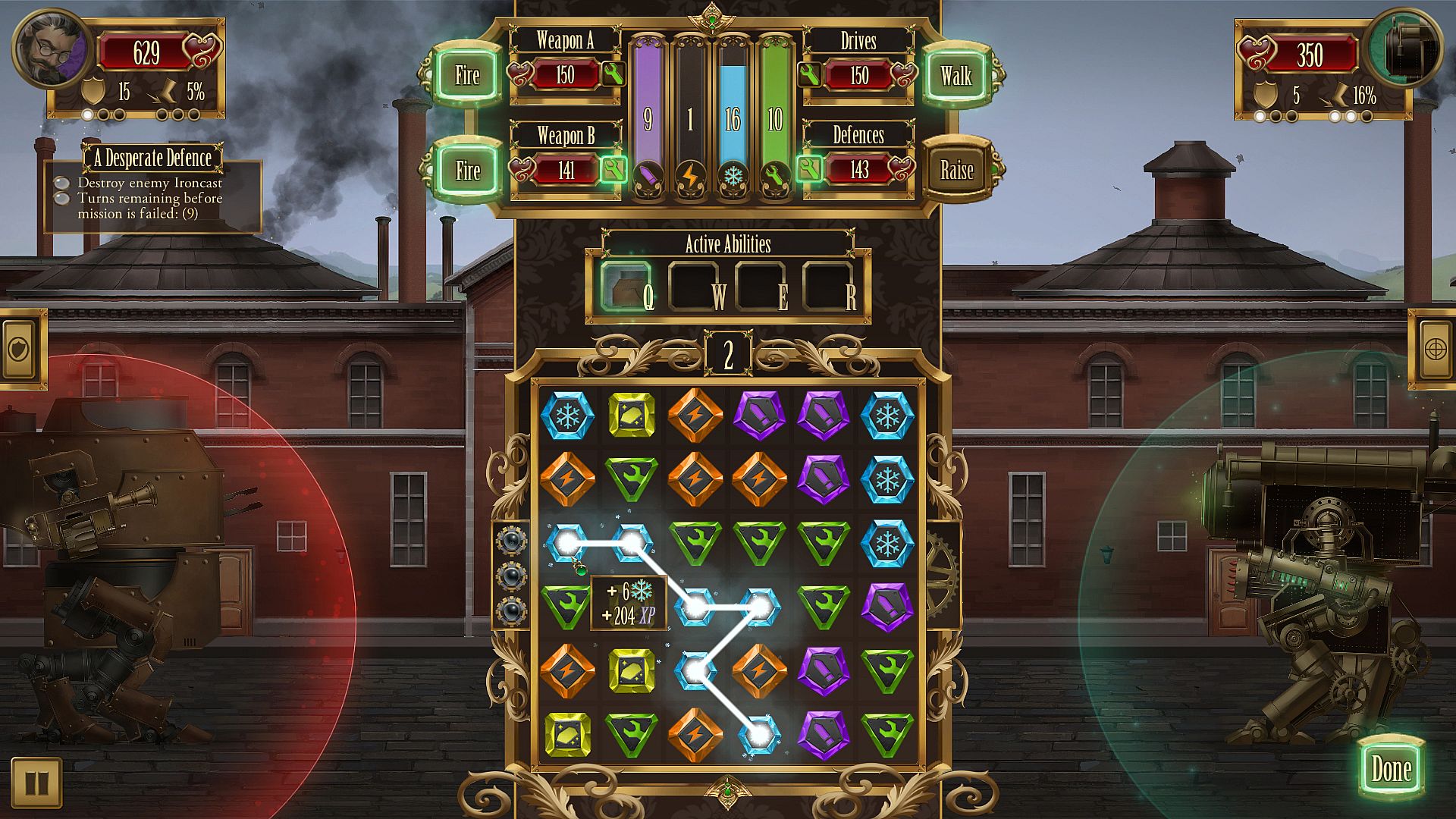
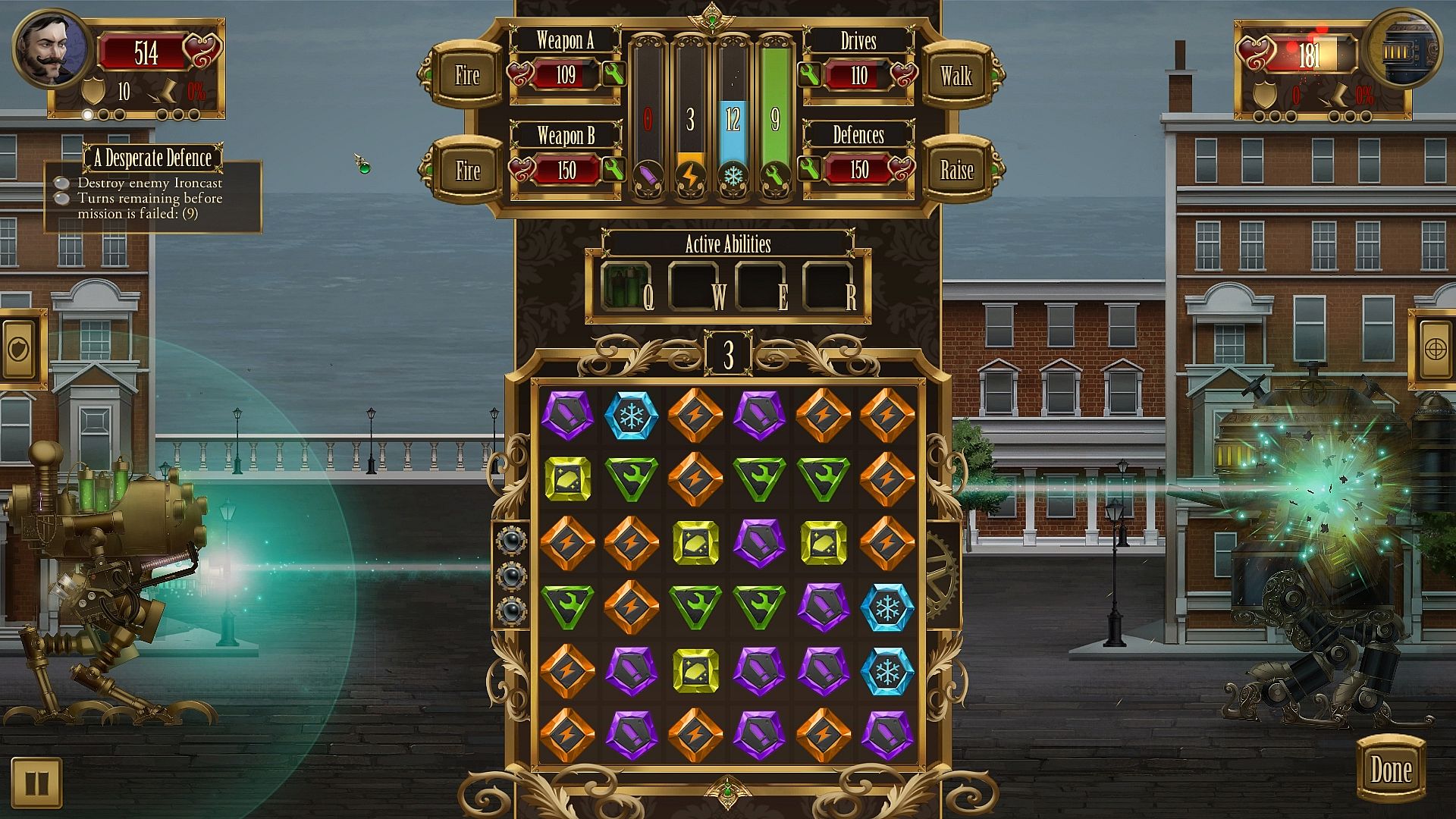
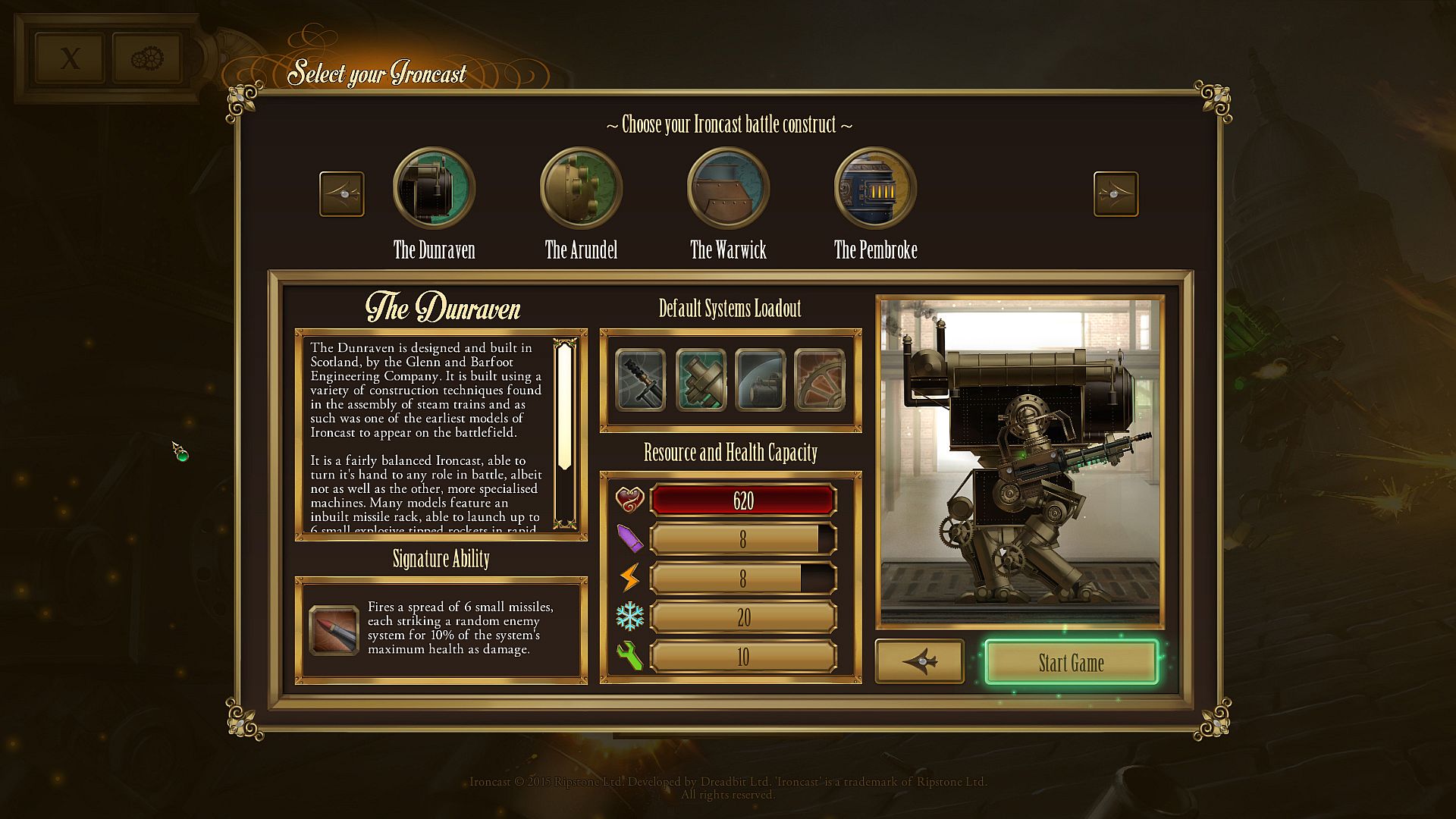
Ironcast is a turn-based strategy game that blends puzzle mechanics with roguelite progression in a steampunk-inspired alternate history of 1880s Britain. Players command massive walking war machines known as Ironcasts to repel invading forces threatening Victorian England. The core experience revolves around resource management during combat, where matching colored nodes generates the power needed to activate weapons and defensive systems.
Gameplay
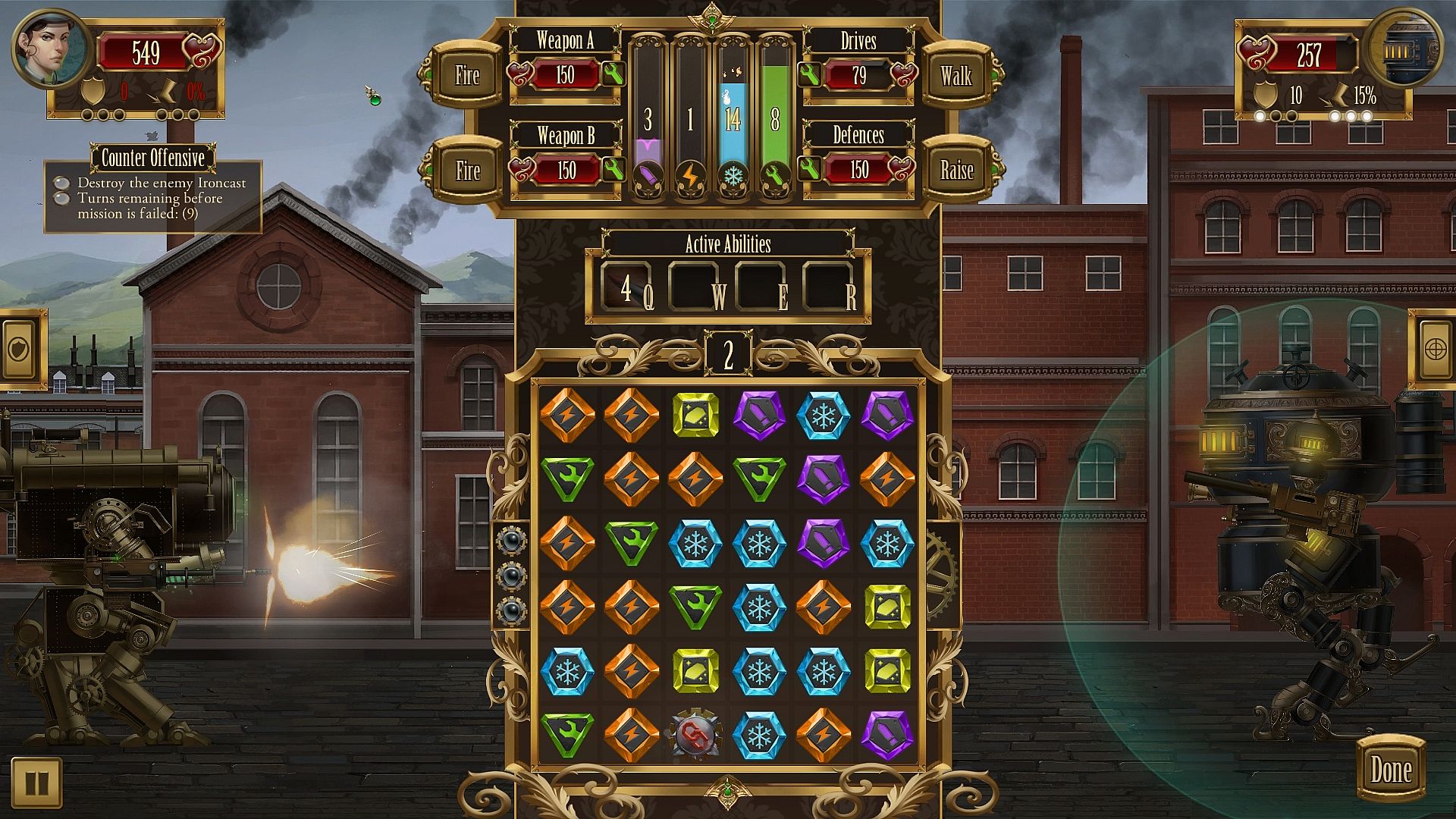
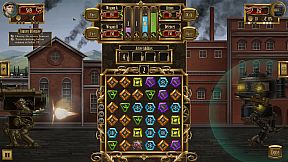
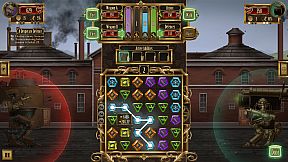
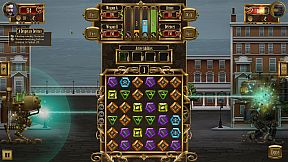
Combat unfolds in a turn-based format where each action depends on generating resource nodes through a match-three style puzzle interface. Players align matching colors on a grid to produce energy that powers offensive strikes or protective measures against enemy attacks. Decisions matter because nodes spent on one system cannot support another in the same turn, forcing careful prioritization between crippling opponents and surviving incoming barrages.
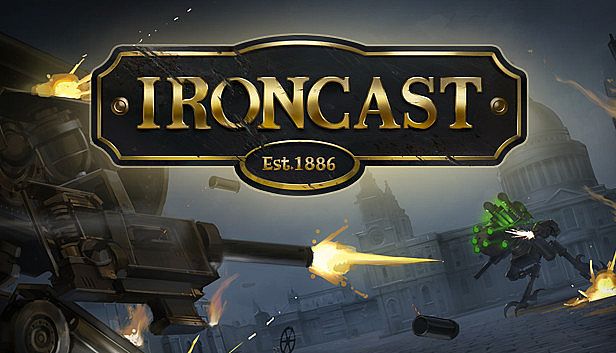
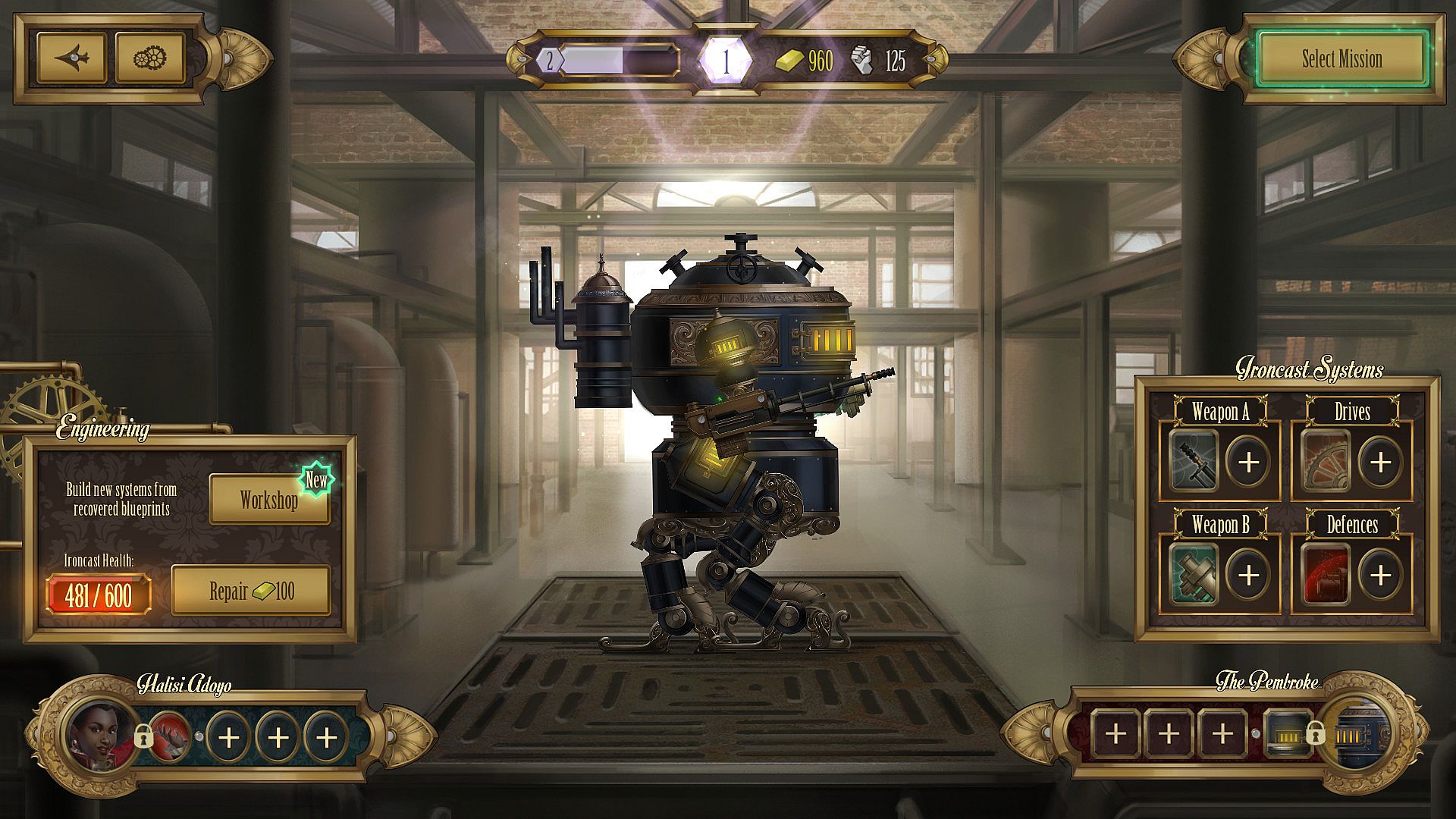
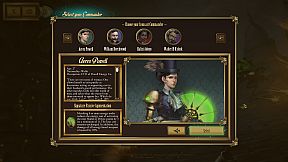
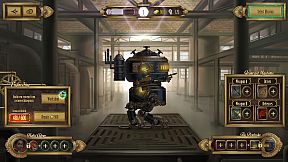
The setting draws from Victorian science fiction influences, placing refined commanders inside towering mechanical vehicles that clash across detailed battlefields. Hand-painted artwork renders the Ironcasts and environments with a distinctive period aesthetic, emphasizing brass fittings, rivets, and ornate detailing on the war machines.
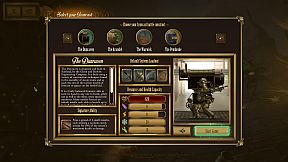
Between encounters, players salvage technology from defeated enemies to expand their arsenal. This loot feeds into a growing collection of weapons, defensive modules, and passive augmentations that alter how abilities function. Over fifty distinct items create varied loadouts, allowing different approaches to the same mission objectives.
Game Modes
The primary experience is the roguelite campaign, where each run features permanent death for the current Ironcast. Failure ends the session but carries forward unlocked items and upgrades for future attempts. This structure encourages experimentation with new combinations while building toward longer successful campaigns.
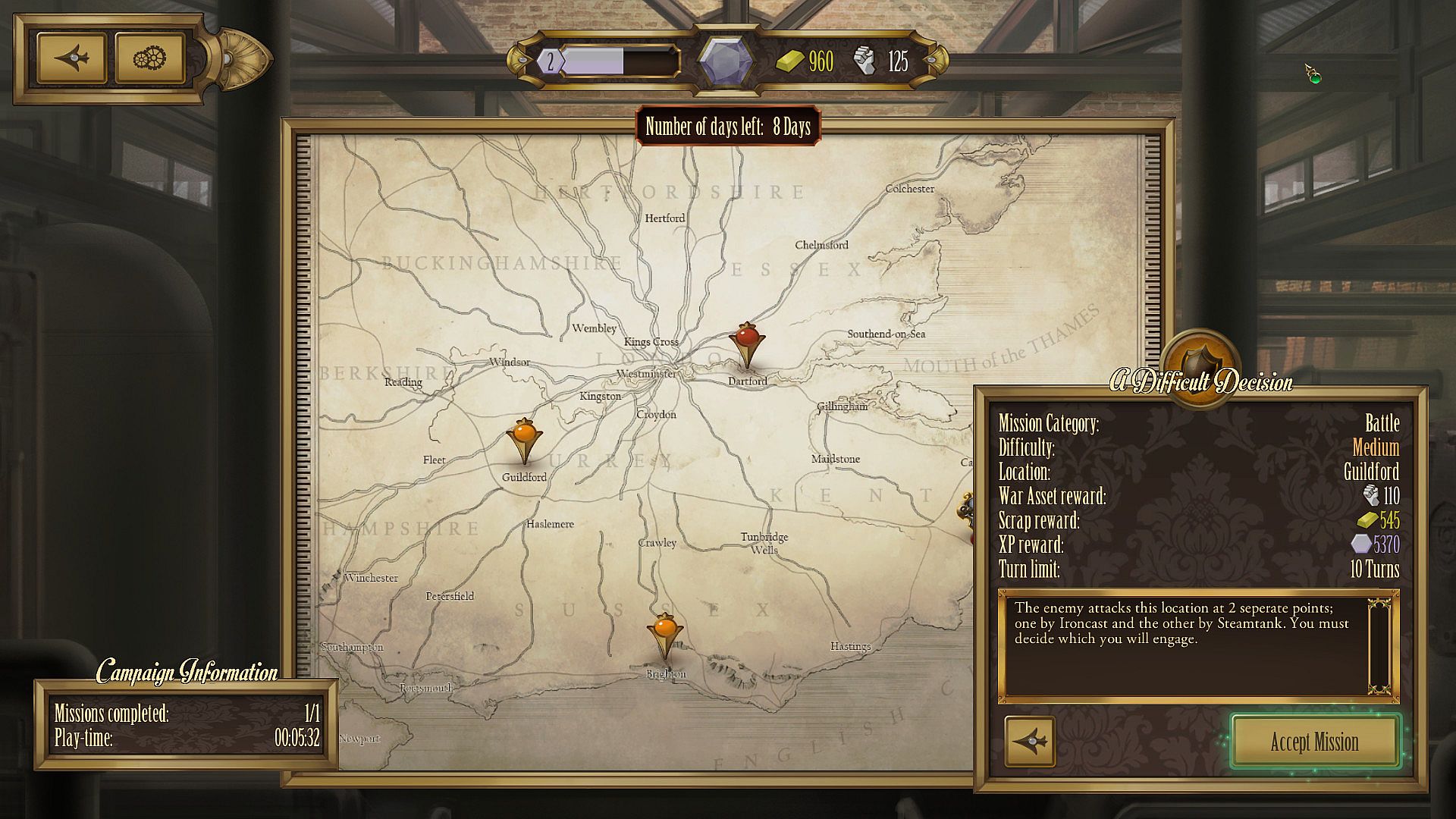
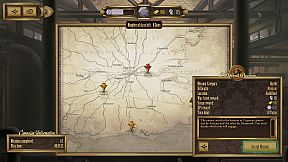
Missions include a mix of direct combat objectives, trade assignments, and survival challenges that test resource efficiency over extended sequences. The campaign advances by pushing back enemy lines, with each victory opening access to new areas and stronger opposition.
Customization and Progression
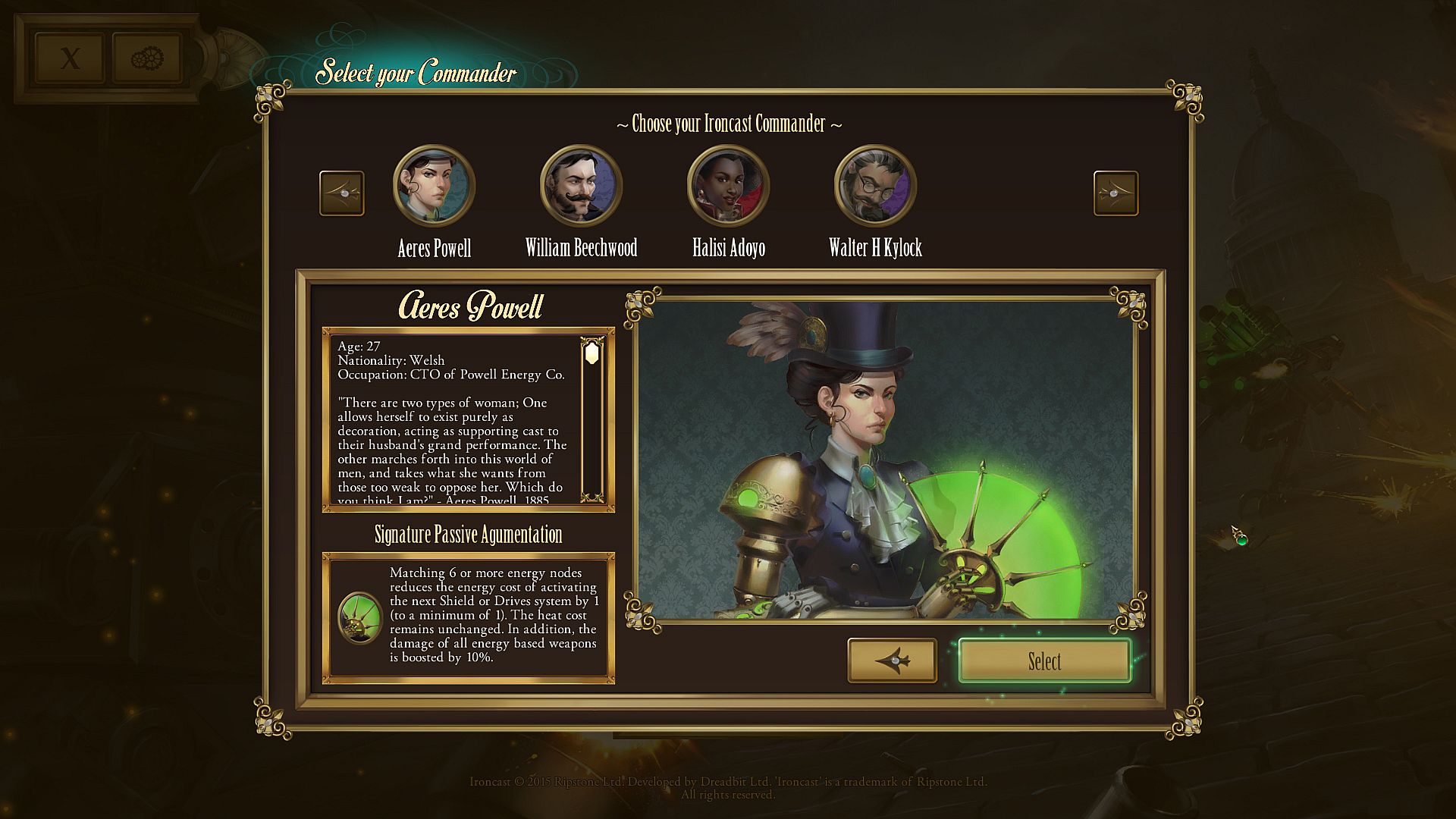
Progression centers on collecting and equipping components recovered from wrecks. Weapons range from direct damage dealers to area effects, while defensive systems provide shields or countermeasures. Passive augmentations modify existing tools without consuming active resources, creating layered builds that evolve across multiple runs.
The system supports extensive experimentation because items combine in numerous ways. Players can focus on aggressive loadouts that prioritize node generation for repeated attacks or balanced setups that emphasize recovery and sustained defense.
Is It Worth Playing?
Ironcast suits players who enjoy deliberate, puzzle-driven strategy where every resource decision carries weight. The roguelite loop provides replayability through fresh item combinations on each attempt, and the permanent consequences add tension to longer campaigns. Availability on PC makes it accessible for those interested in turn-based combat with a unique Victorian mechanical theme.
Reception highlights the originality of its resource puzzle integration and the satisfaction of successful runs after multiple failures. The game remains a complete single-player title without ongoing seasonal content or multiplayer elements.