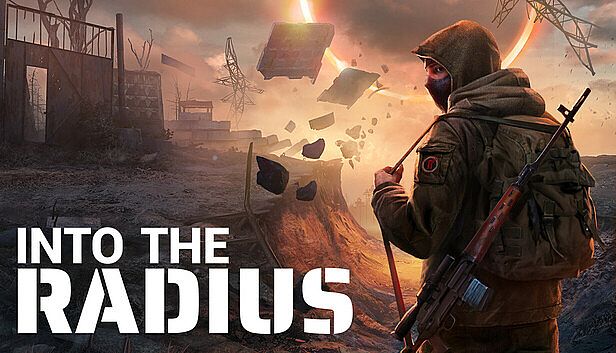












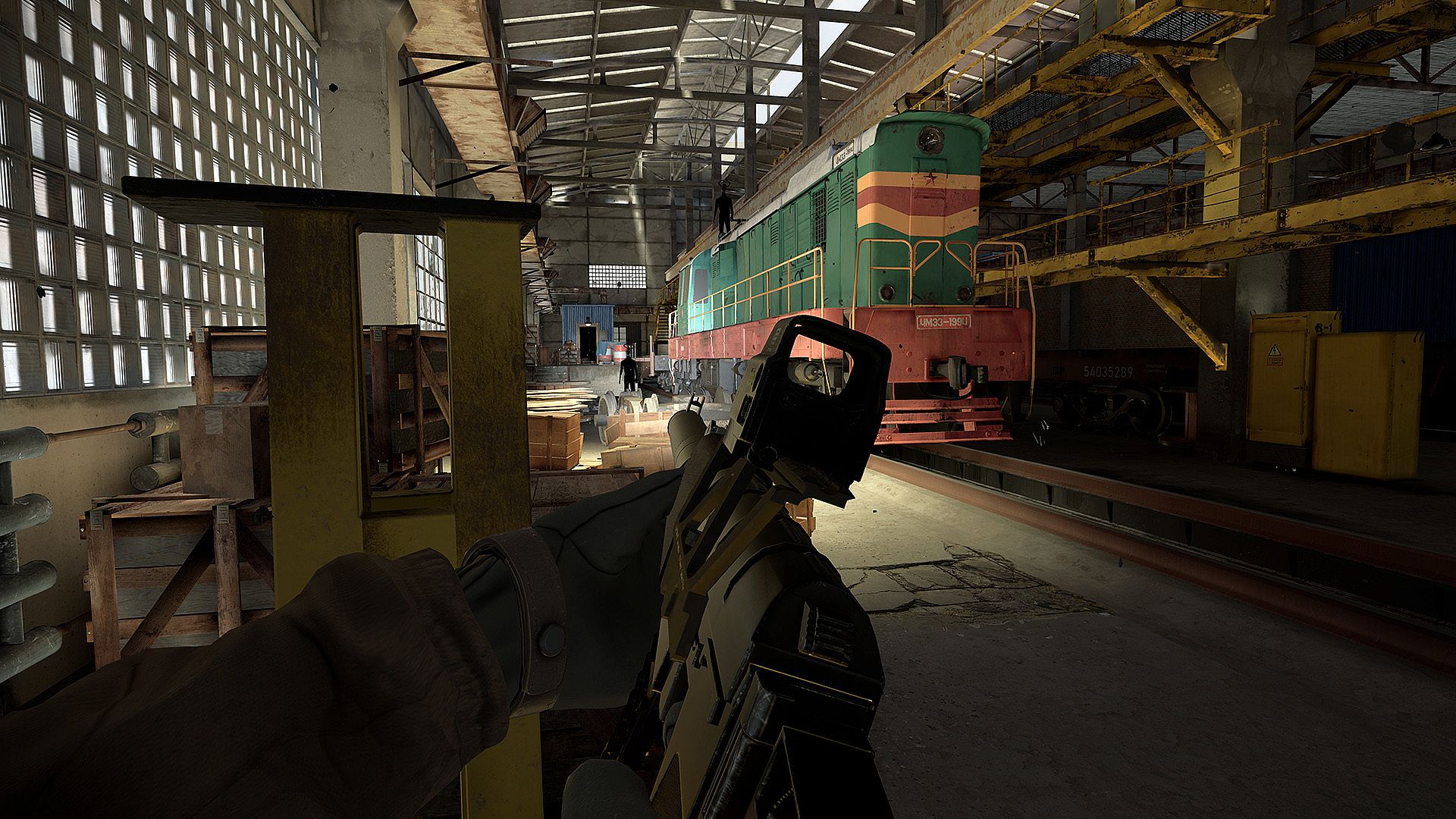
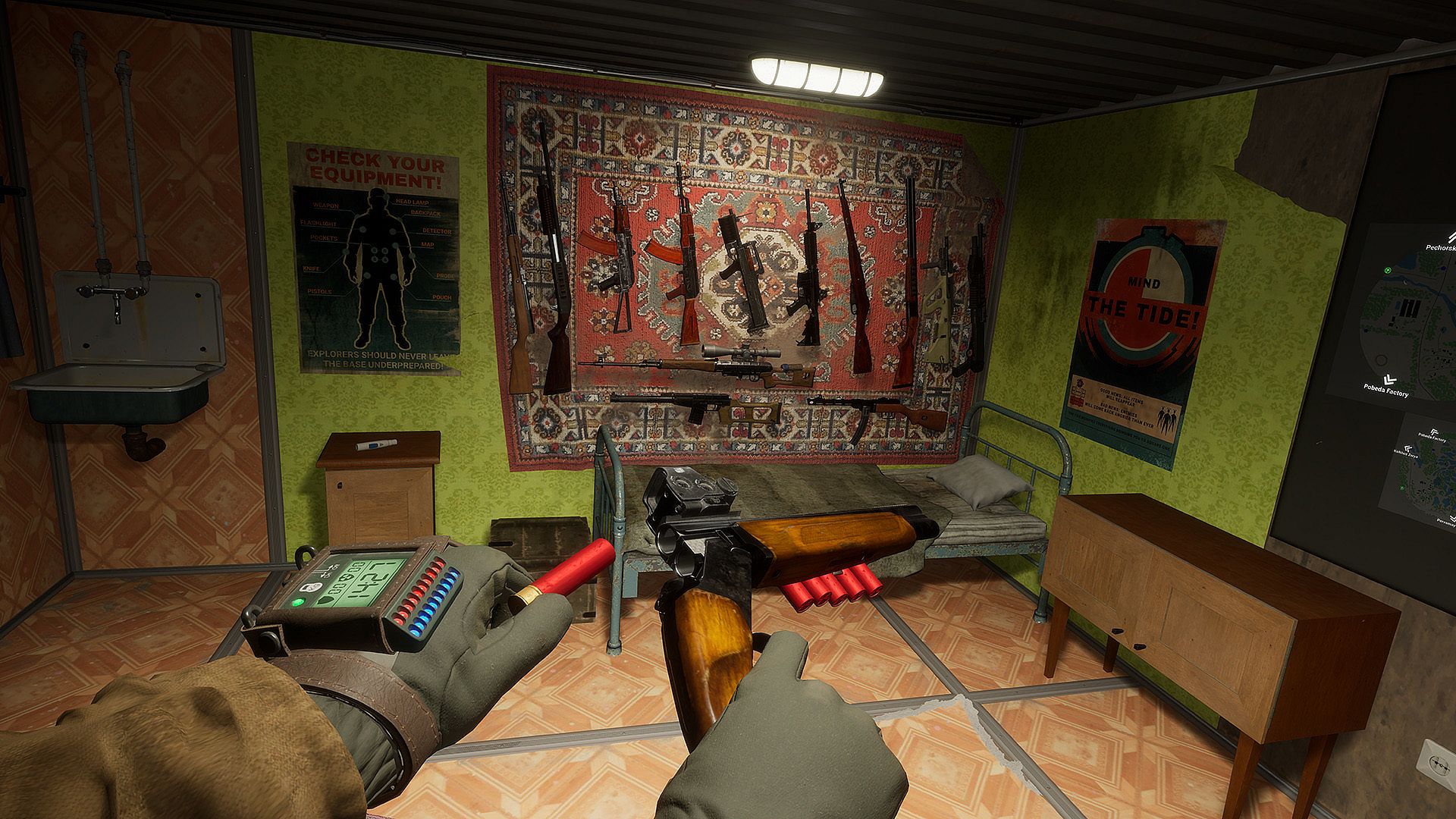
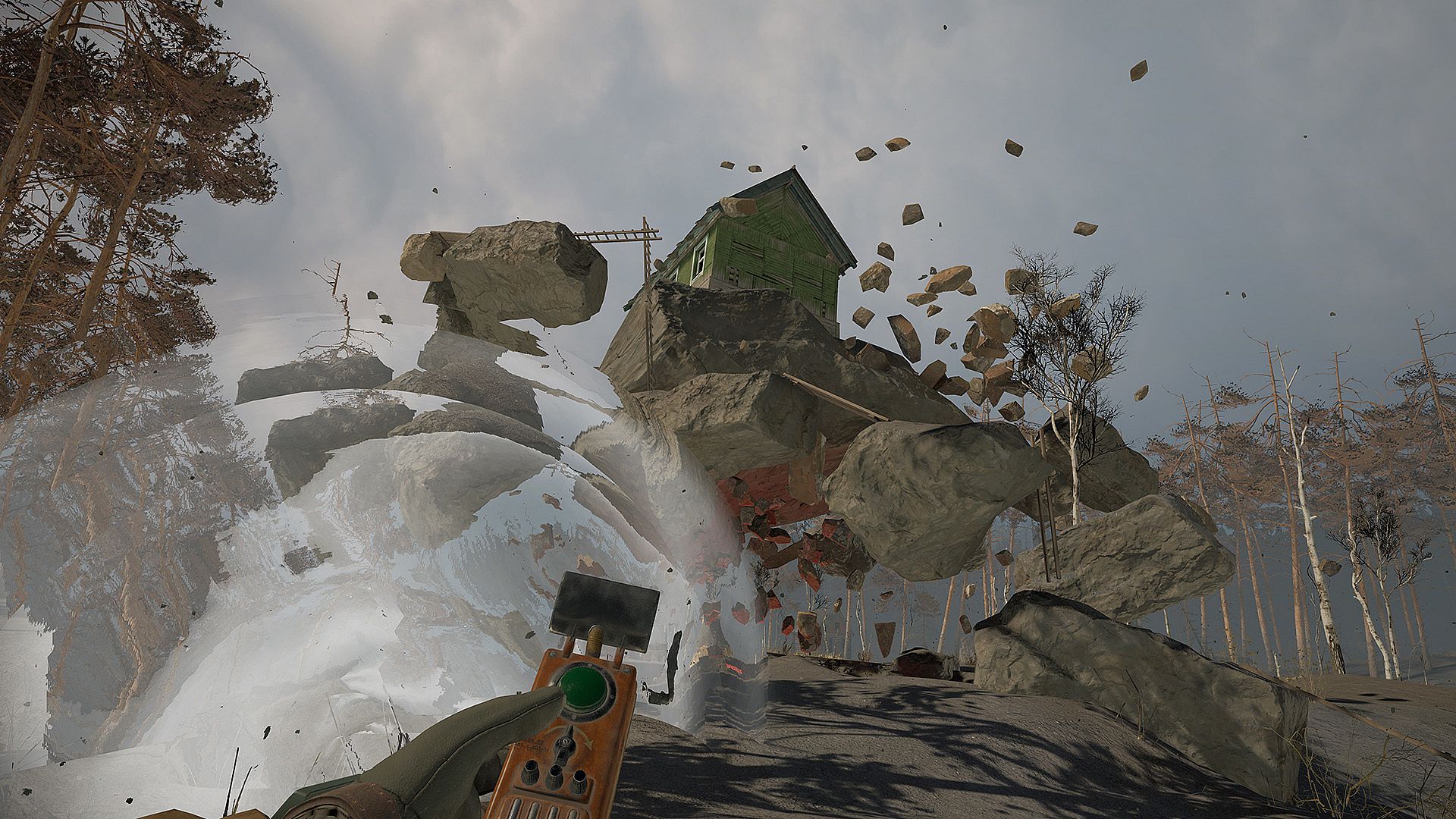
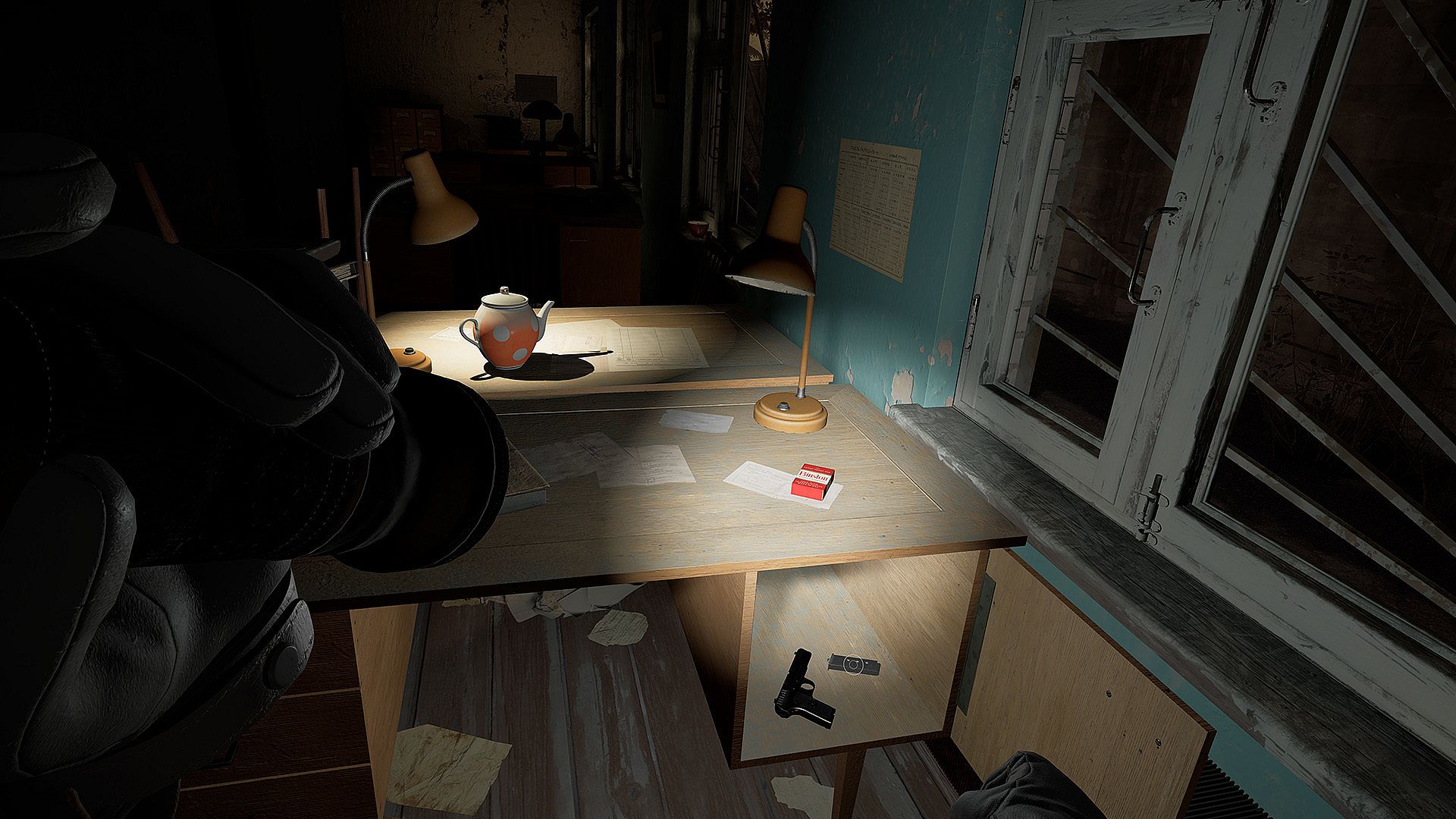
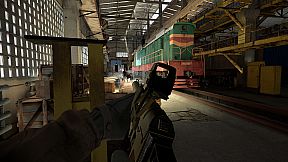
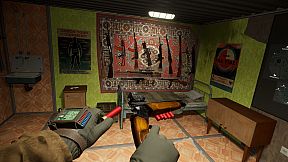
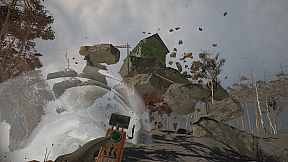
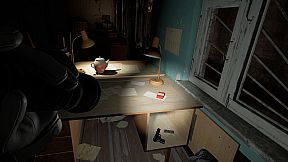
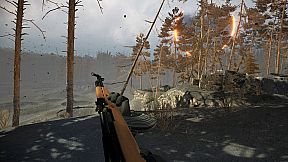
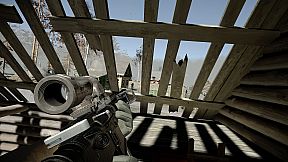
Into the Radius VR is a single-player VR survival shooter set in the dangerous Pechorsk Anomaly Zone. Players take on the role of an explorer tasked with scavenging artifacts, completing objectives, and surviving hostile conditions using realistic tools and weapons. The game emphasizes methodical pacing, environmental awareness, and careful resource management in a dystopian setting filled with anomalies and threats.
Gameplay
The core loop revolves around venturing into expansive zones that include forests, swamps, industrial ruins, and urban areas. Navigation relies on a physical map for route planning, obstacle climbing, and locating shelters or hidden caches. A day and night cycle influences strategy, with daylight suited for broader scavenging and nighttime favoring stealth to avoid detection.
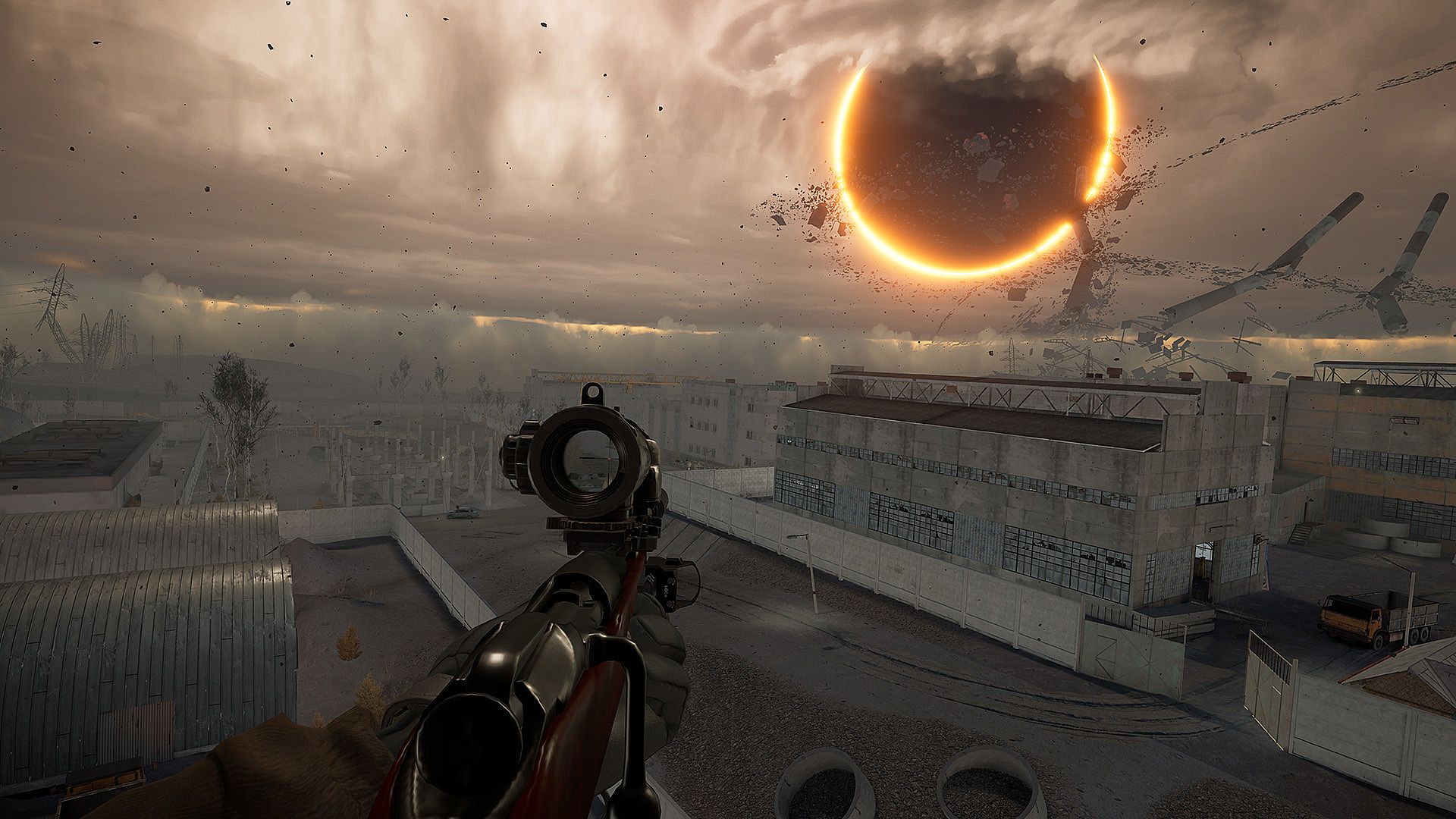
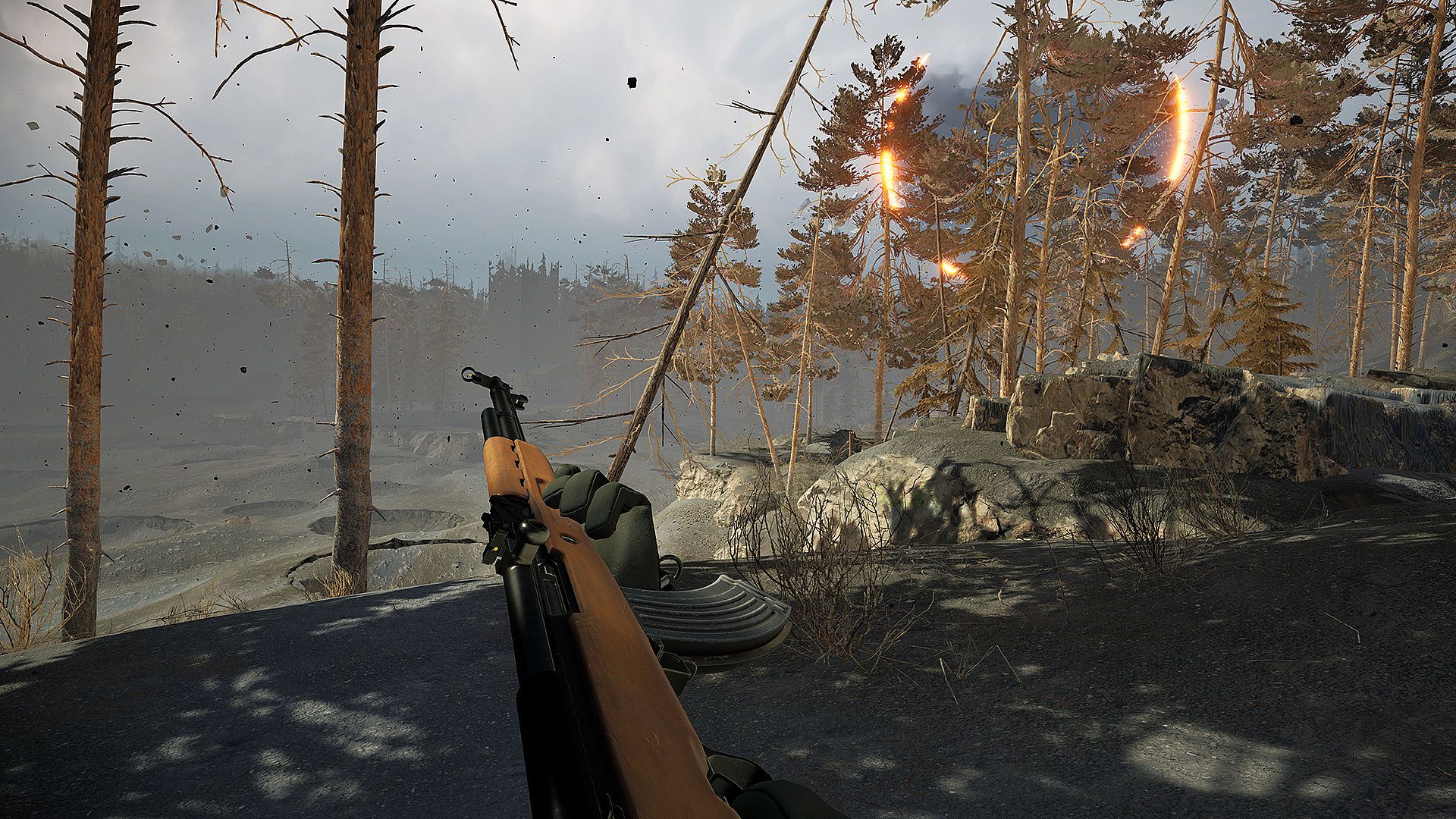
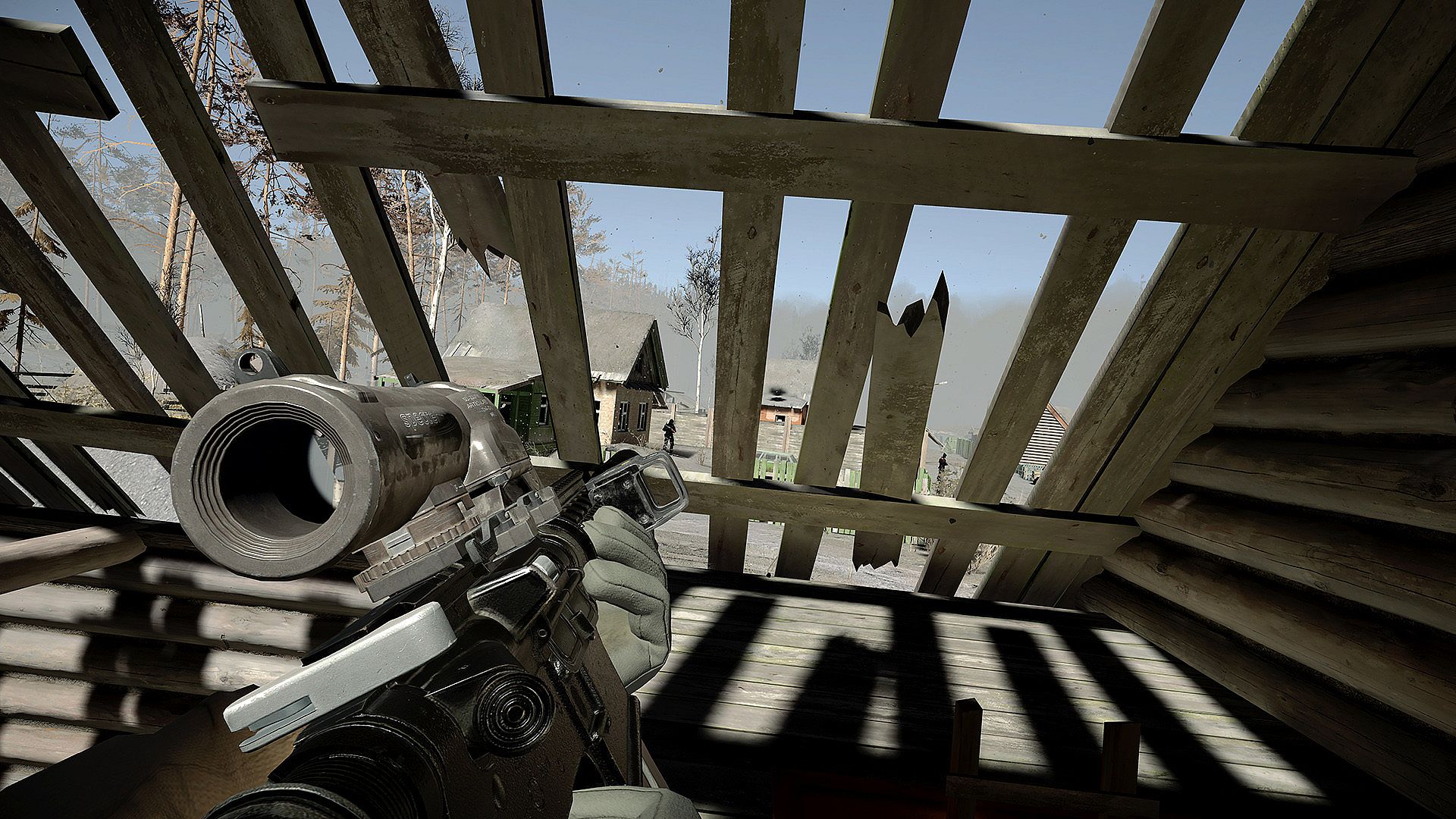
Weapon handling stands out for its detail. A range of firearms such as the AKM, SKS, M9 Beretta, PPSh, and FN SCAR require manual reloading, attachment management, and maintenance to prevent jams from wear or damage. Bullet physics include penetration and ricochets, while safety switches must be toggled before firing. Players also use a detector to locate artifacts amid dangerous anomalies that inflict harm on contact.
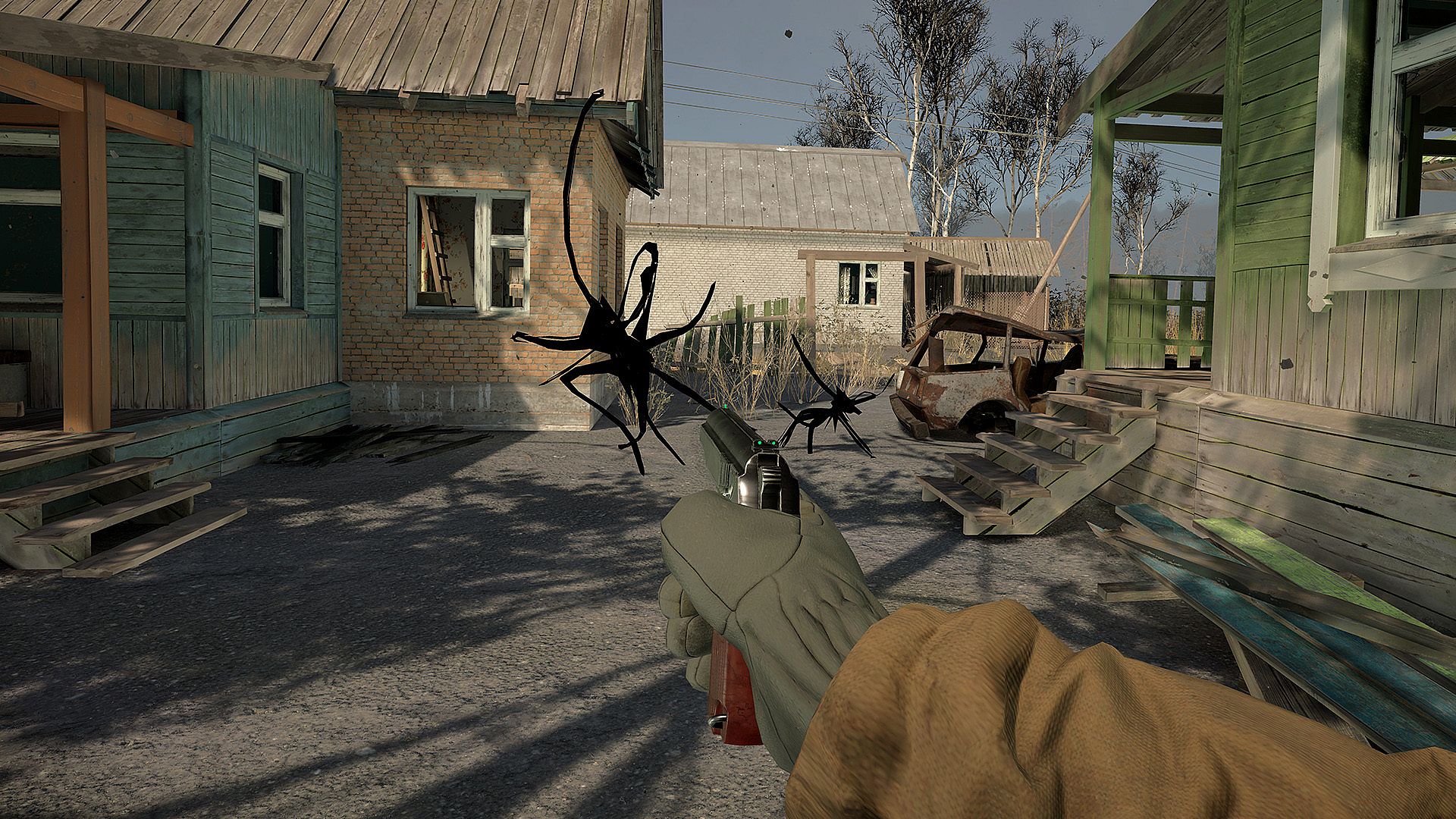
Survival demands constant vigilance. Hostile entities including Fragments and Mimics patrol areas at all times, forcing players to rely on crouching, cover, slow movement, and planning. Missions originate from a base terminal, guiding exploration while the overall atmosphere remains bleak and tense through environmental storytelling and sound design.
Game Modes
The experience centers on a single-player survival campaign without separate multiplayer or co-op options. All progress occurs in one continuous world where players manage their own expeditions from a central base. Difficulty can be adjusted through preset options or individual sliders that alter enemy behavior, resource scarcity, and environmental hazards to suit different skill levels.
This structure encourages repeated playthroughs focused on optimization rather than branching story paths. Players return to base between outings to organize gear, repair equipment, and accept new tasks, creating a loop of preparation, exploration, and extraction.
Exploration and Threats
The Pechorsk zone spans multiple distinct maps with varied terrain that rewards thorough searching. Anomalies appear as environmental hazards that demand precise avoidance, while creatures add dynamic pressure during travel. Loot caches and artifact hunting provide the primary incentives for venturing deeper, supported by realistic inventory management and limited carrying capacity.
Stealth and sound play key roles in encounters. Moving too quickly or firing unsuppressed weapons can draw attention, leading to intense chases or defensive stands. The combination of procedural-feeling layouts and fixed points of interest keeps each outing distinct even after multiple hours.
Is It Worth Playing?
Player feedback highlights strong immersion and satisfying gunplay as standout elements, with the title maintaining very positive reception across thousands of reviews. The unforgiving nature appeals to those seeking a deliberate, high-stakes VR survival challenge rather than fast-paced action. Dozens of hours of content emerge from thorough exploration and mission completion, supported by ongoing patches that refine mechanics over time.
It suits players comfortable with VR controls who enjoy methodical planning and atmospheric tension. Those preferring easier difficulty curves or social multiplayer features may find the solo focus and steep learning curve less appealing. The game remains actively available with a dedicated community that continues to discuss strategies and updates.