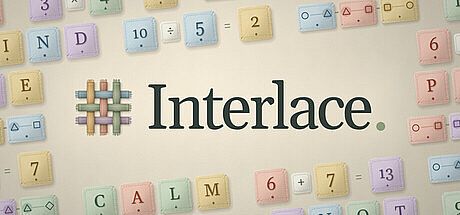


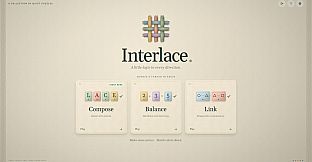
Interlace is a casual strategy puzzle game for PC that centers on quiet, thoughtful logic challenges across small tile grids. Players rearrange elements to satisfy overlapping rules, creating a satisfying tension between row and column requirements without any time pressure or complex controls.
Gameplay
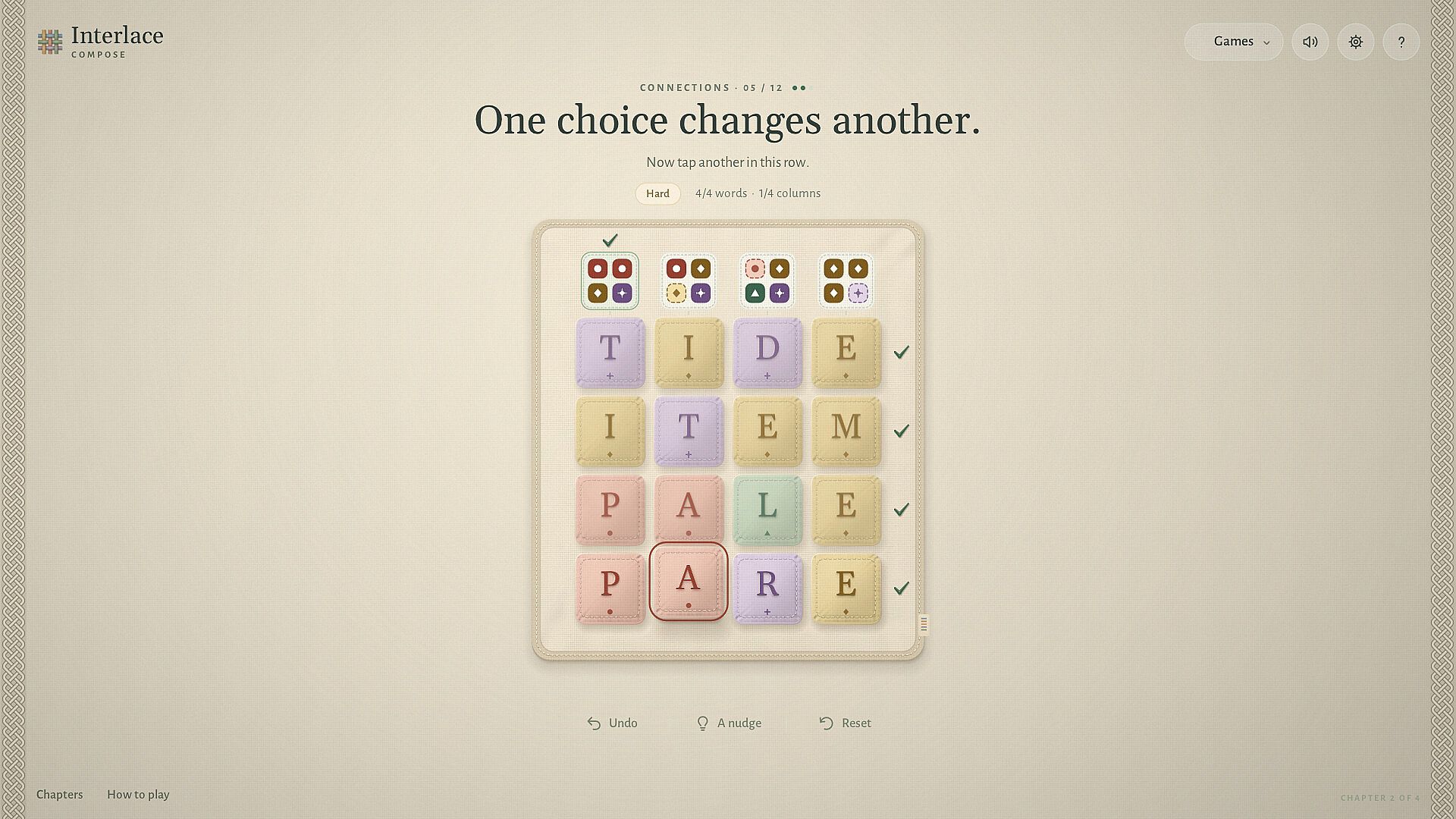
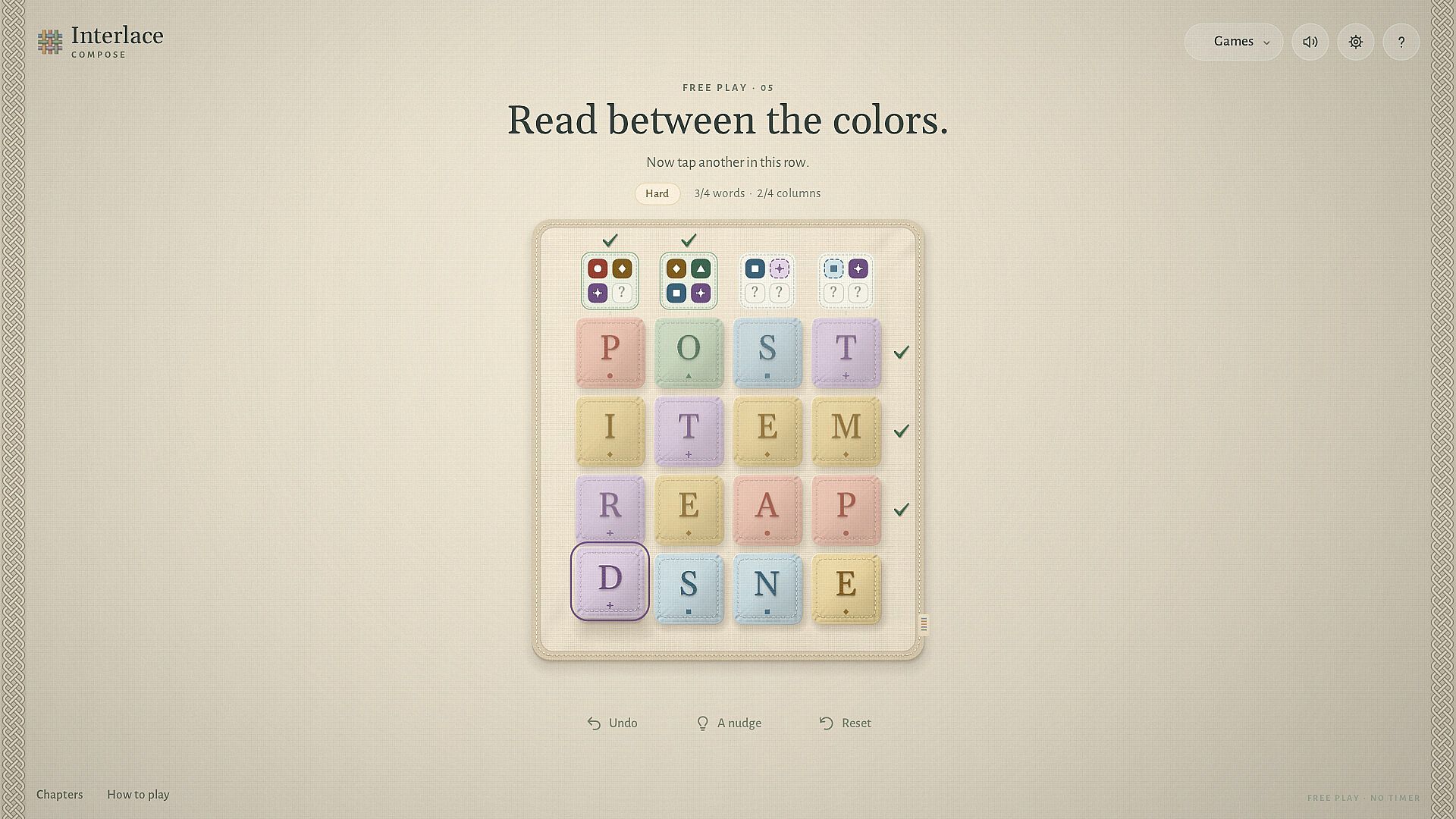
Each puzzle presents a compact grid of tiles that players swap within rows. The goal is to align rows so they read correctly while ensuring columns match the exact color requirements shown at the top. These two constraints interact constantly, turning every swap into a decision that affects multiple parts of the board at once.
The experience emphasizes deliberate pacing. Boards introduce mechanics through direct demonstration rather than text explanations, allowing players to learn by attempting moves. When progress stalls, a gentle nudge highlights a useful direction, and an additional tap reveals a complete solution step. Any arrangement meeting both rules counts as a win, opening multiple valid paths to completion on most puzzles.
Game Modes
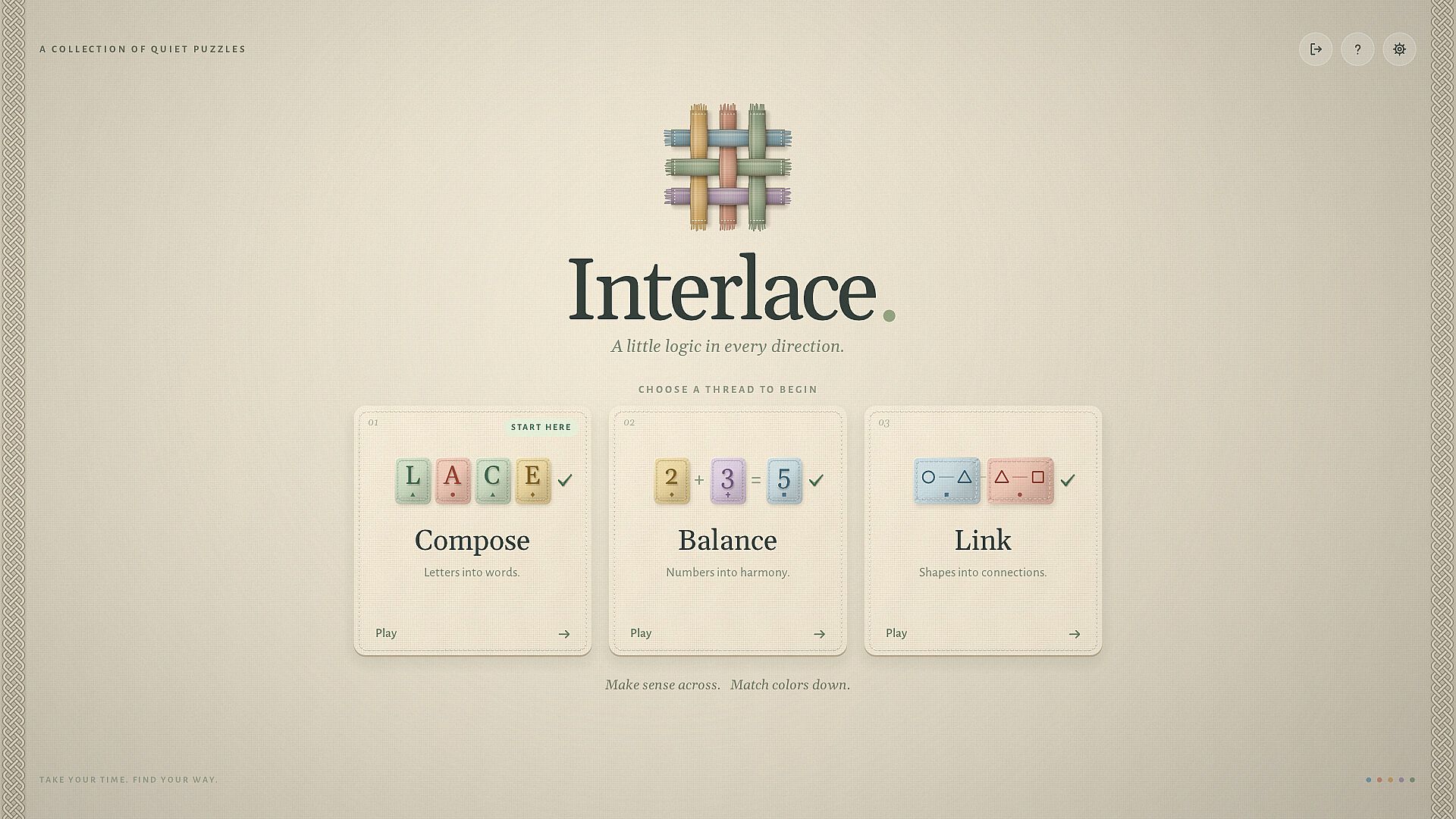
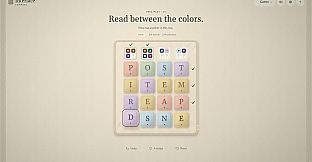
Interlace organizes its puzzles into three distinct threads that share the core grid-swapping foundation while introducing unique elements. Compose challenges players to rearrange letters into words, with each letter tied to a color so later stages can conceal the letters themselves and rely on color patterns alone.
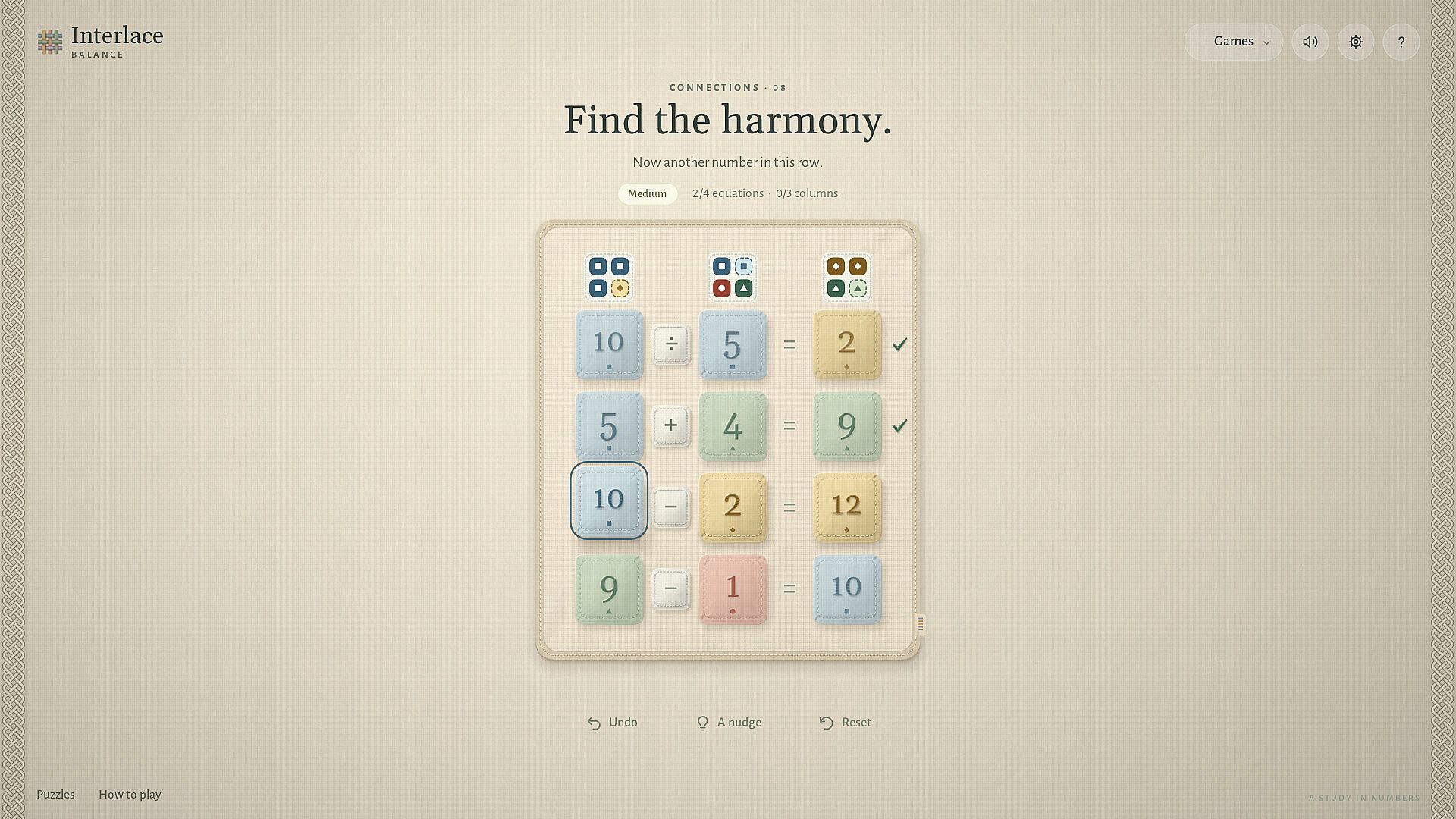
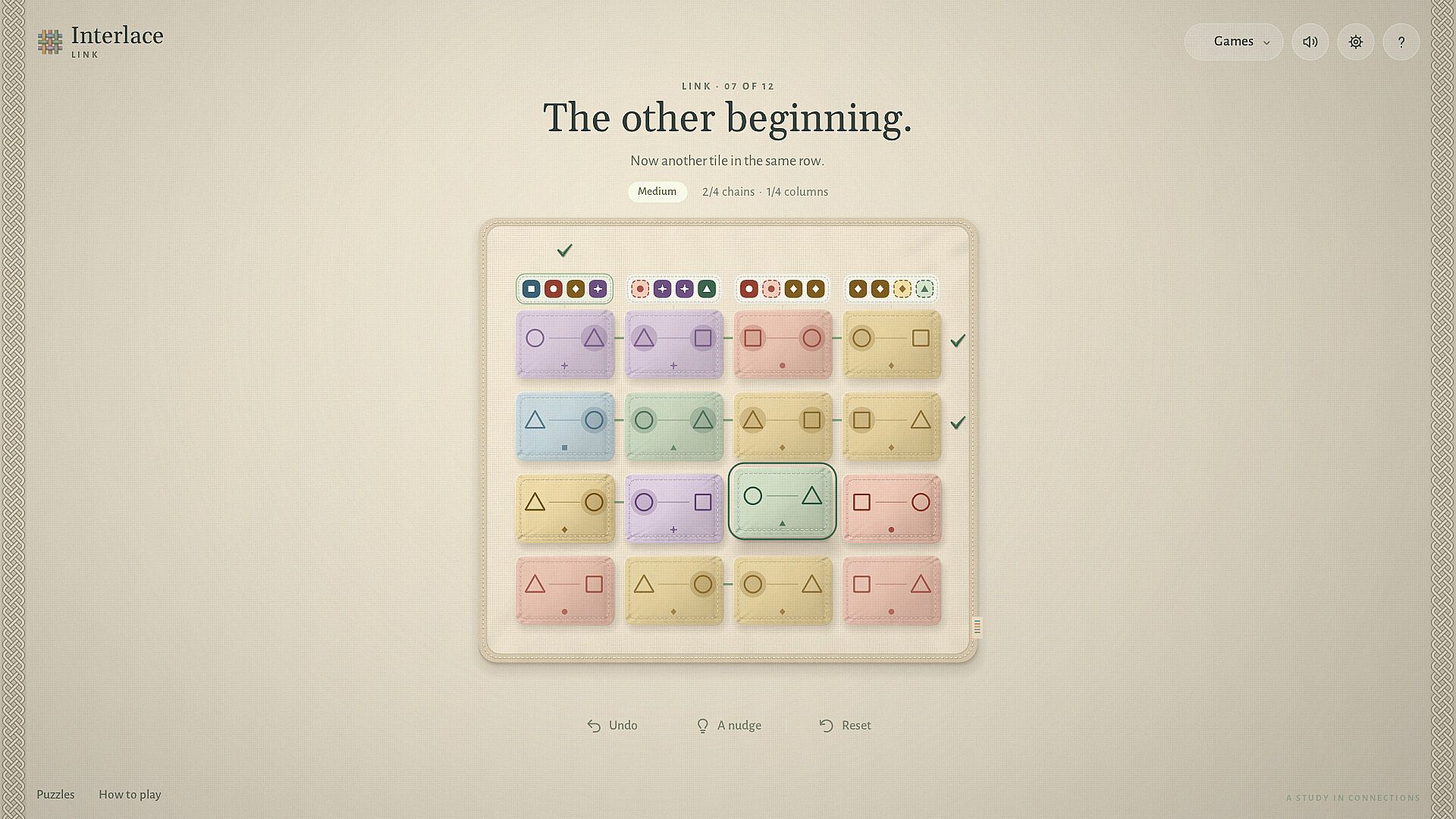
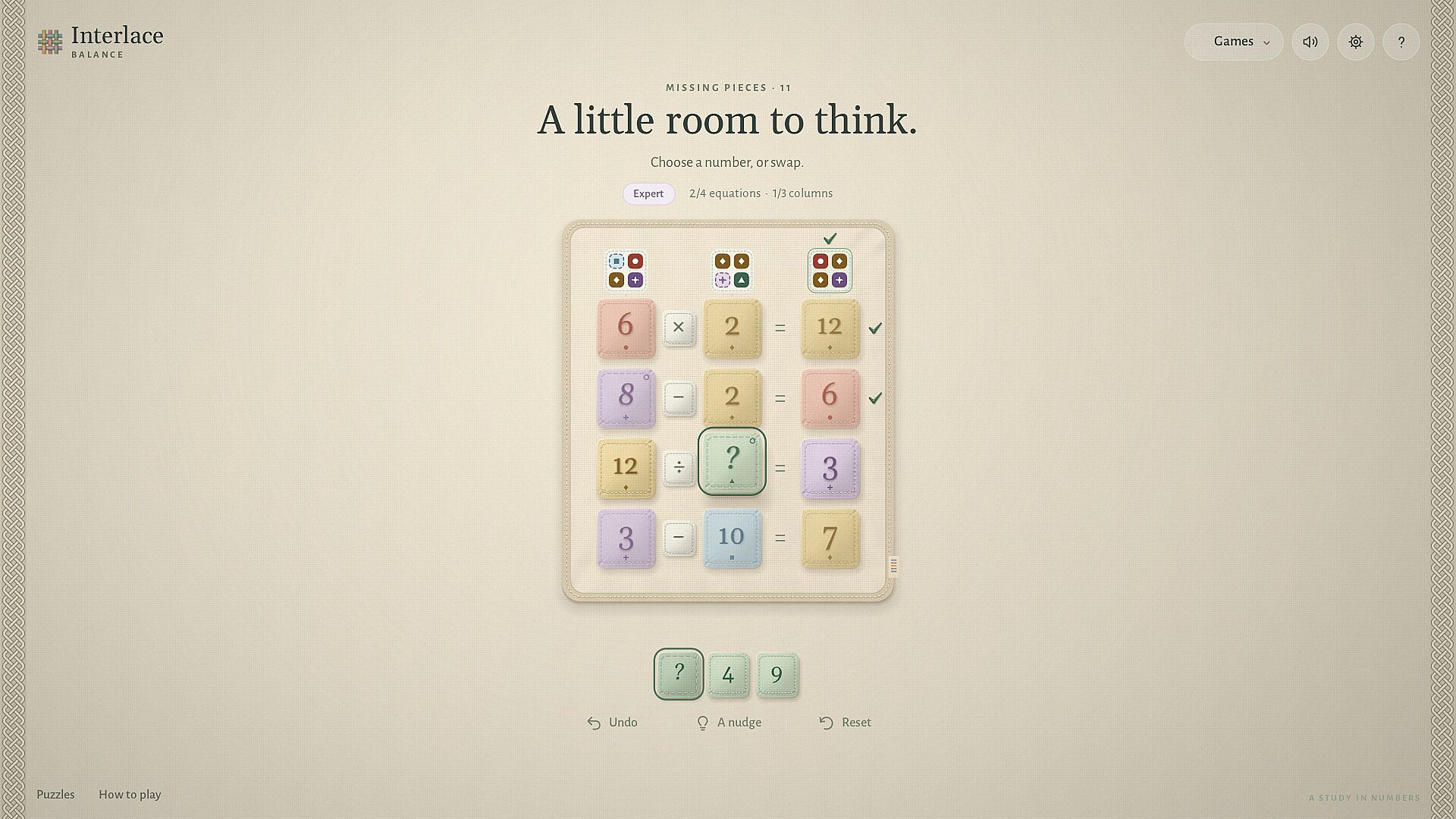
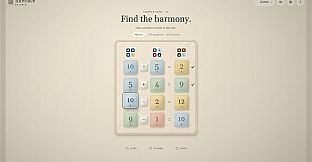
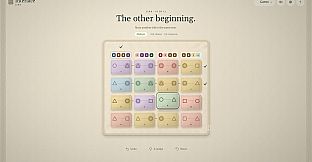
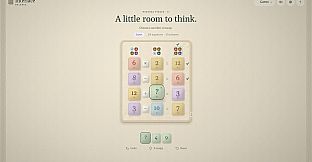
Balance requires arranging numbers into valid equations. Players shift plus, minus, multiplication, and division signs between rows while supplying missing digits to make the math hold true. Link focuses on shape tiles, where the objective is to connect them end to end so the right-hand shape of one tile matches the left-hand shape of the next, forming unbroken chains.
Core Mechanics and Design
The shared idea across all puzzles is making sense across rows while matching colors down columns. This interlacing of rules creates the central challenge, where a single change ripples through the entire grid. The absence of timers supports extended sessions of experimentation, and the hint system keeps frustration low without removing the satisfaction of independent discovery.
Every board remains small and self-contained, encouraging focused attention rather than sprawling complexity. The design rewards observation and incremental adjustment over rapid trial and error.
Is It Worth Playing?
Interlace suits players who enjoy relaxed logic puzzles and strategy games that reward careful thought over speed or reflexes. Its unhurried approach, built-in guidance, and allowance for multiple solutions make it accessible for casual sessions while still offering depth through the interplay of rules in each thread. Those seeking a quiet, meditative puzzle experience on PC will find consistent appeal in its straightforward yet interconnected mechanics.