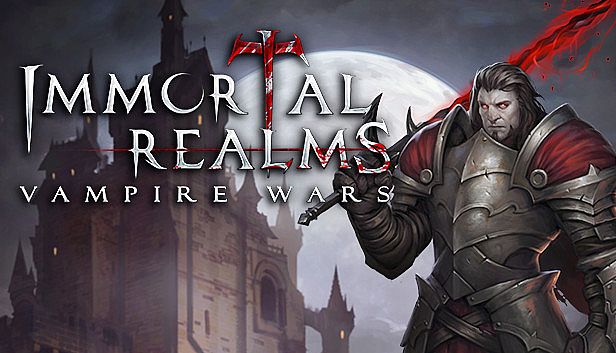
























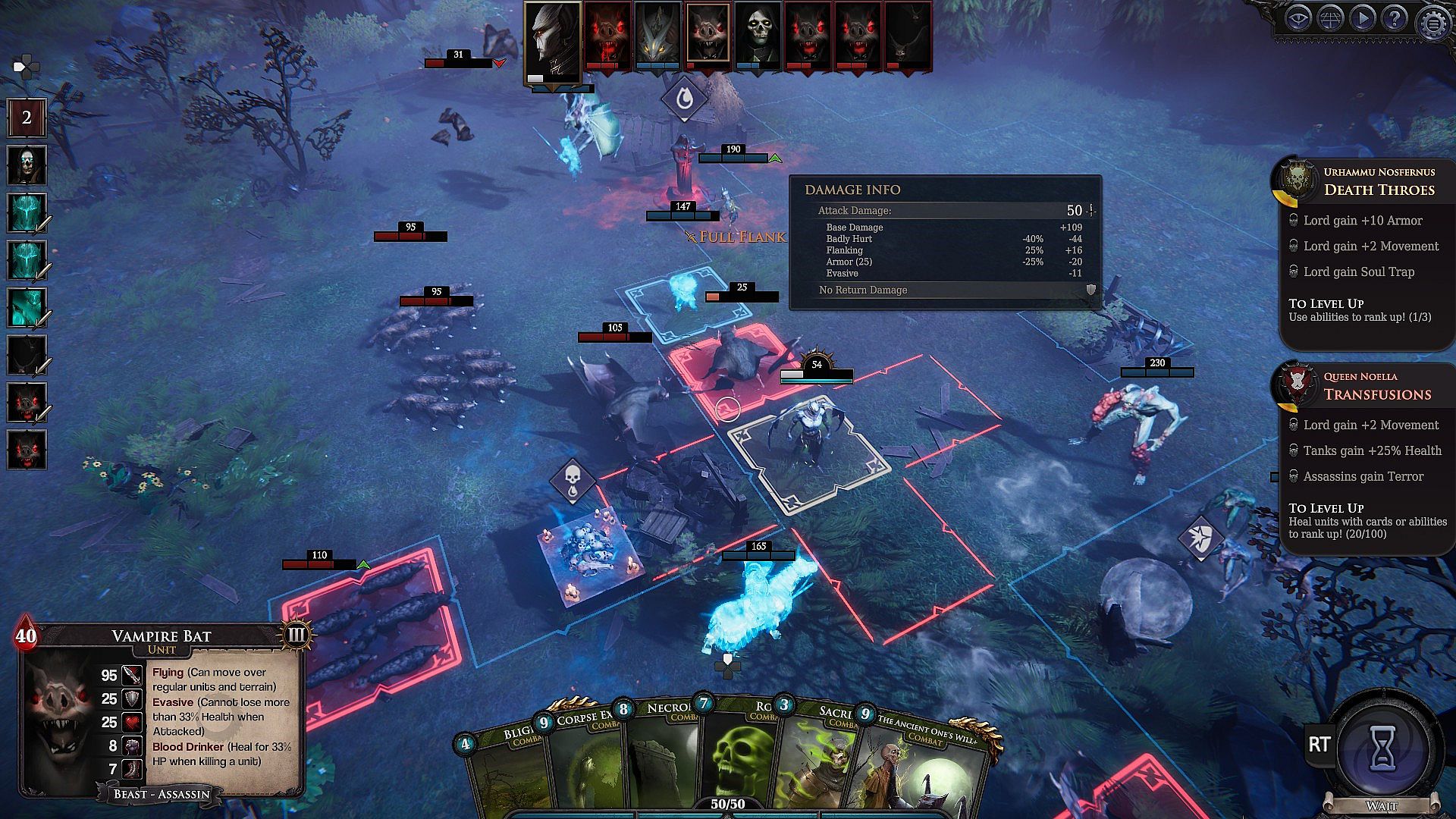
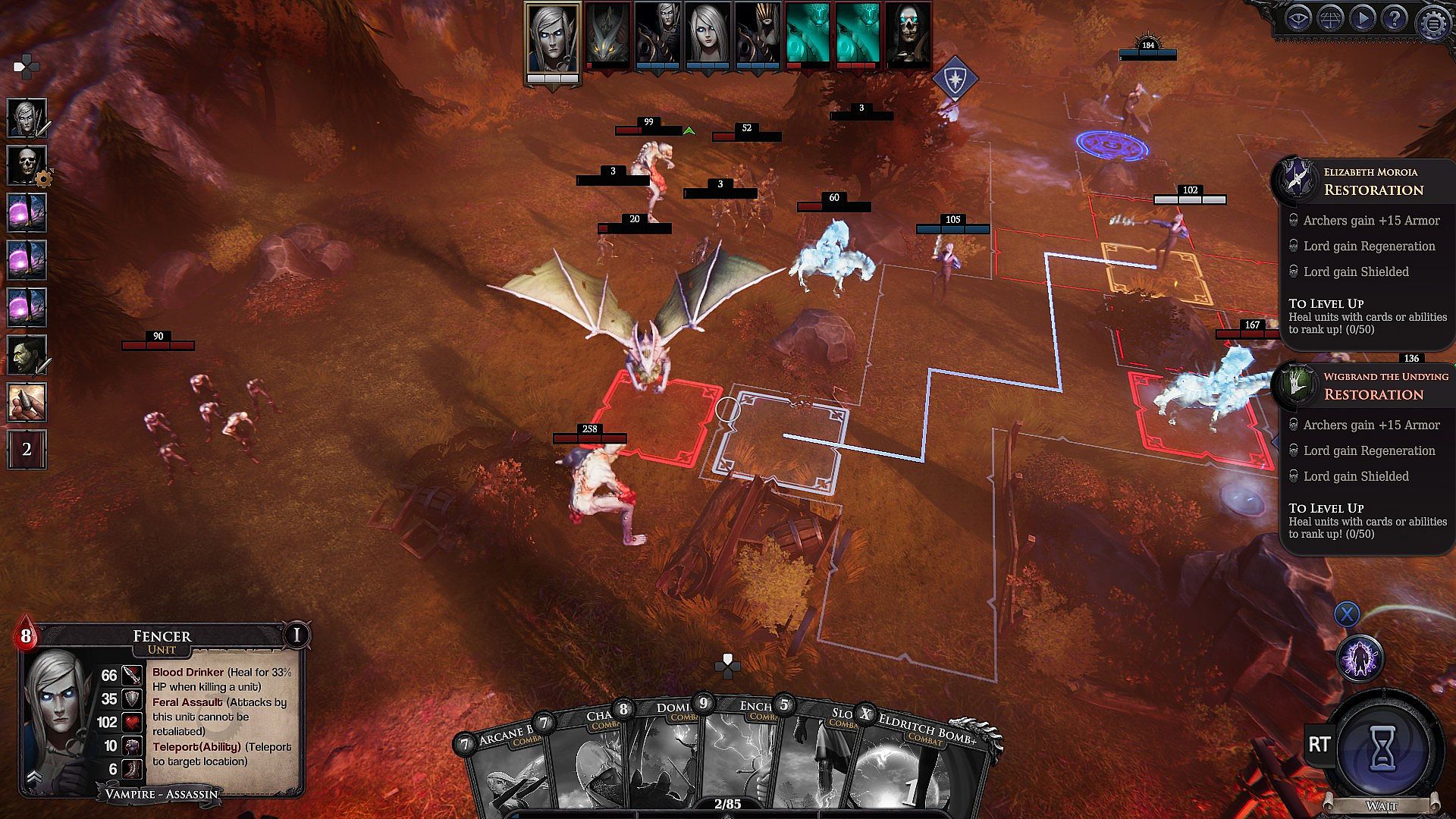
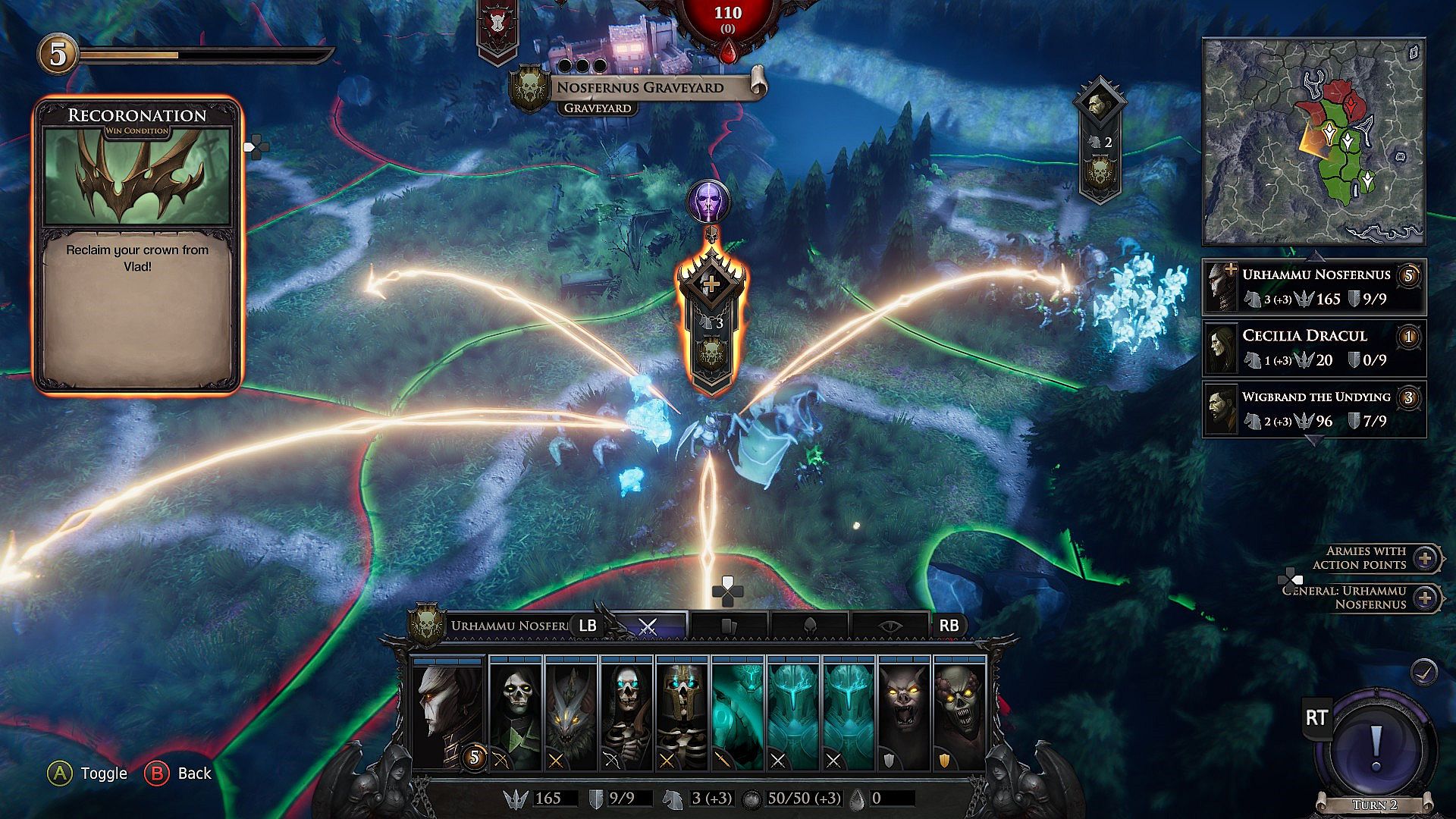
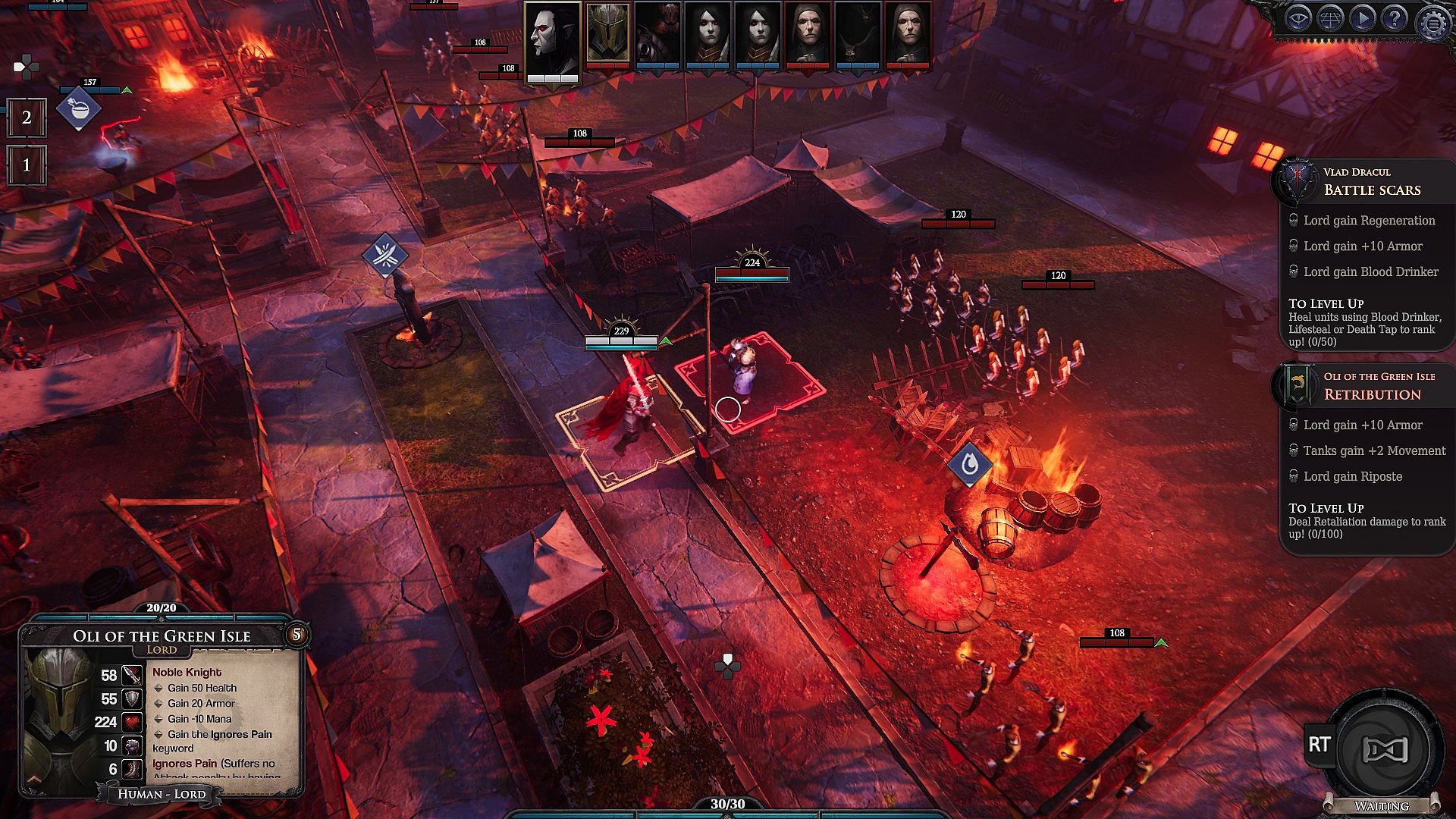

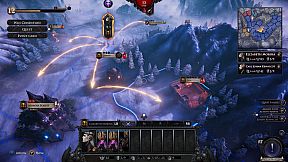
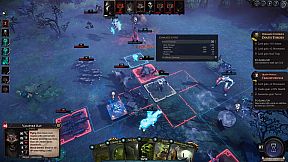
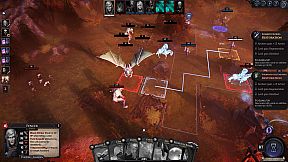
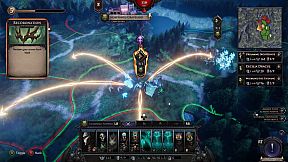
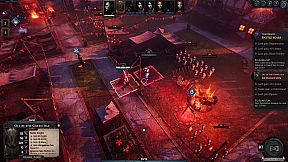
Immortal Realms: Vampire Wars is a turn-based strategy game with RPG elements that places players in command of vampire bloodlines locked in conflict across a gothic world. The title blends empire management on a strategic map with tactical battles that incorporate card-based abilities, creating a focused experience for those who enjoy deliberate planning and resource decisions rather than fast-paced action.
Gameplay
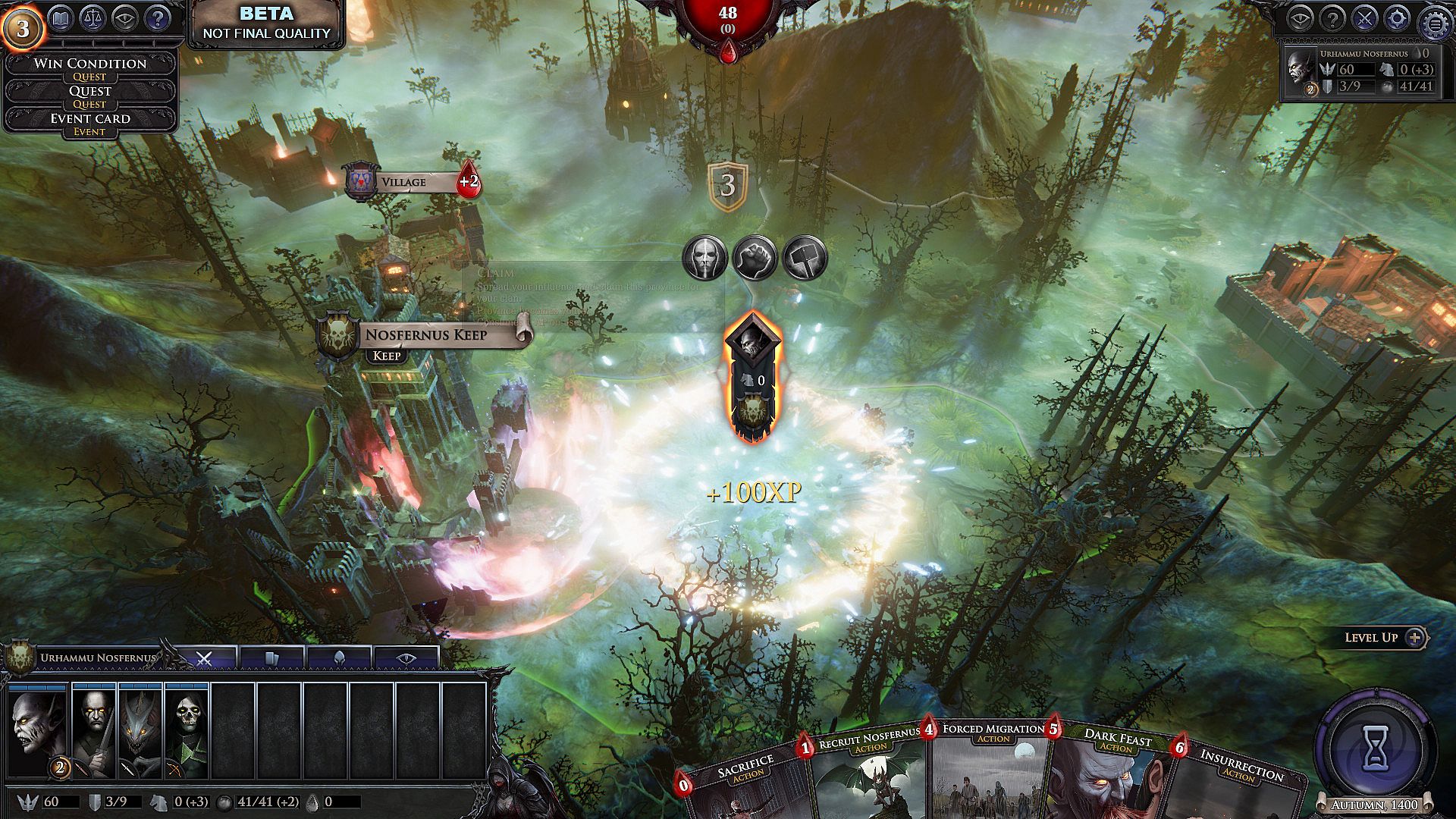
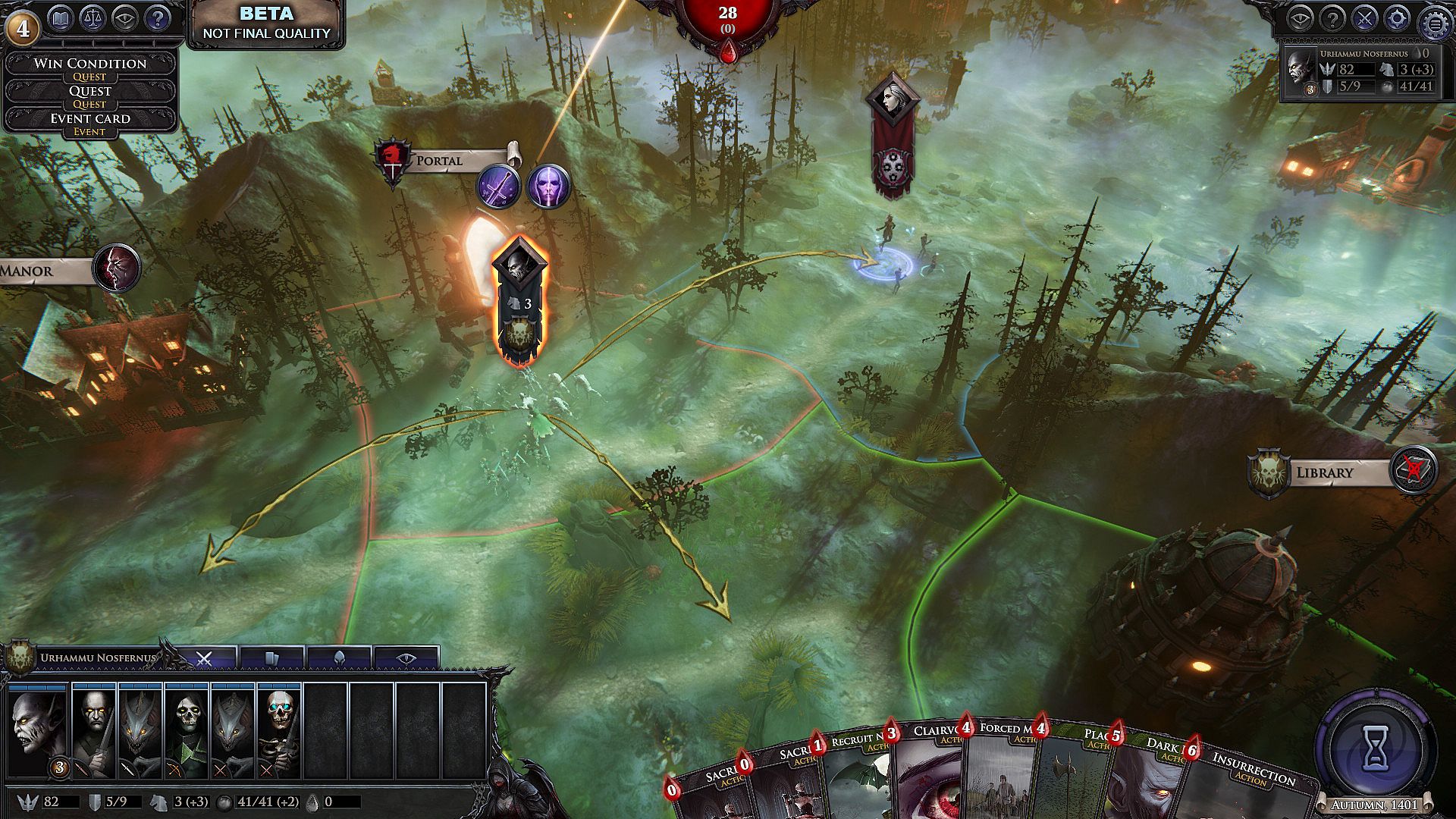
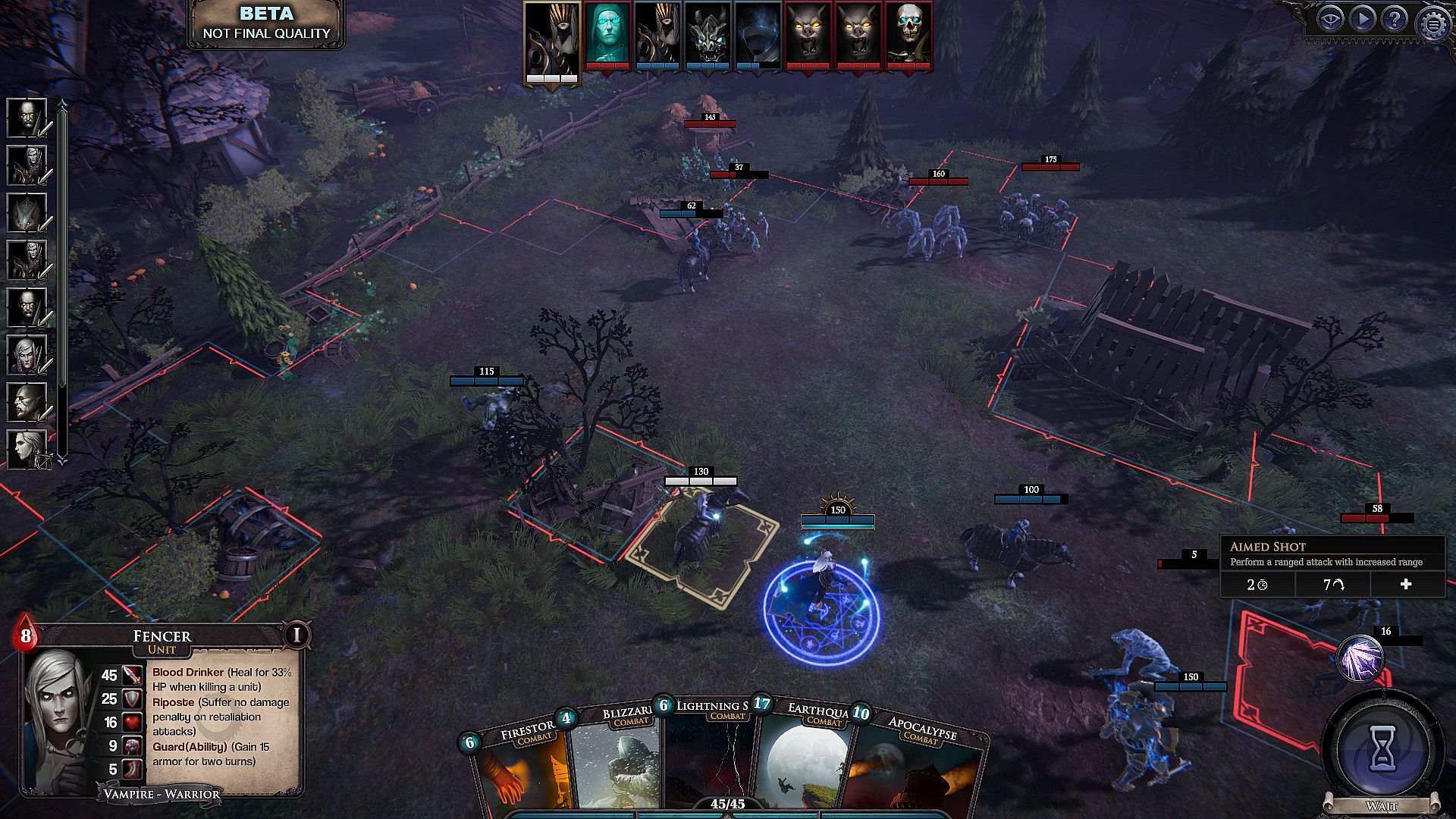
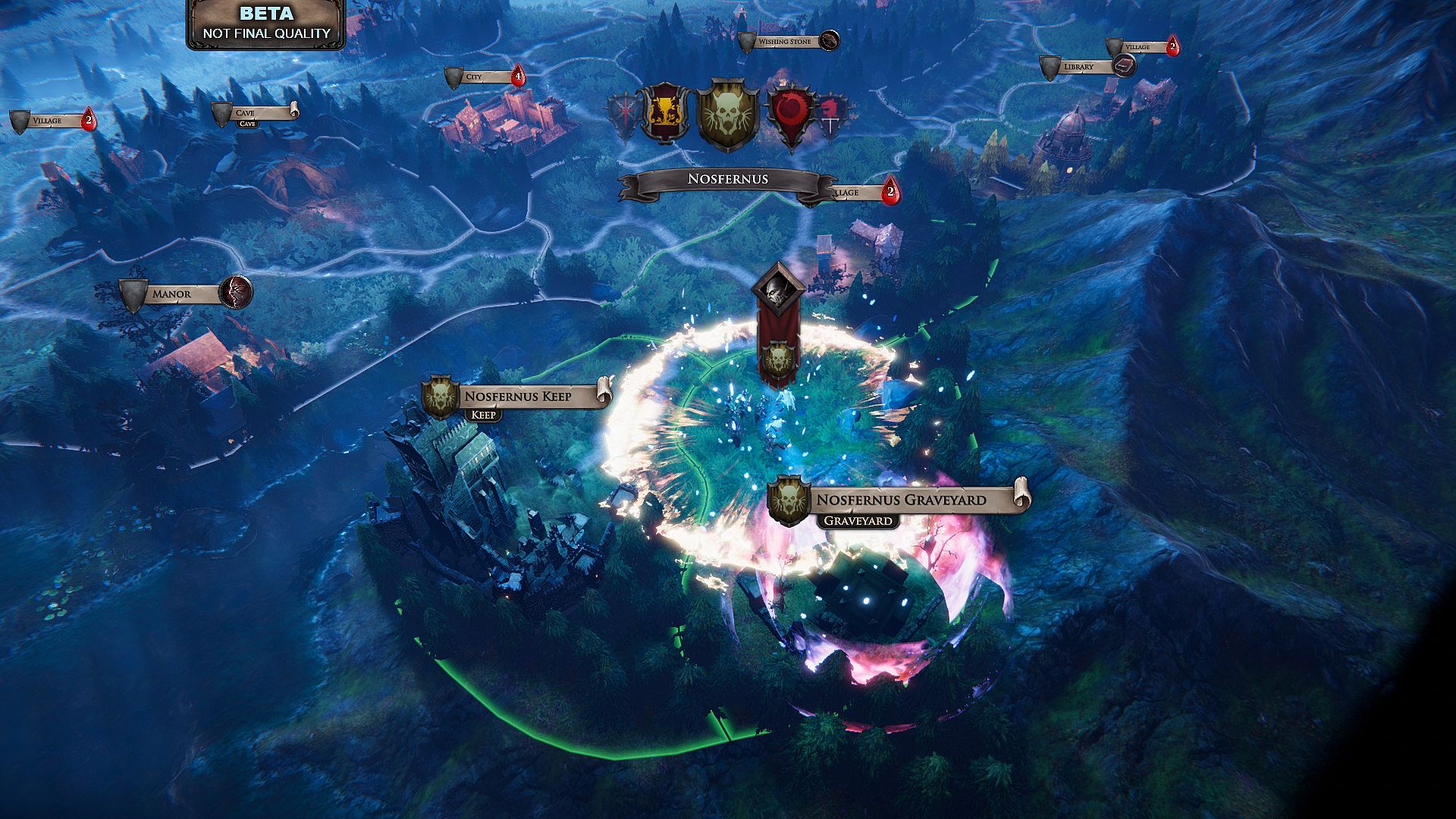
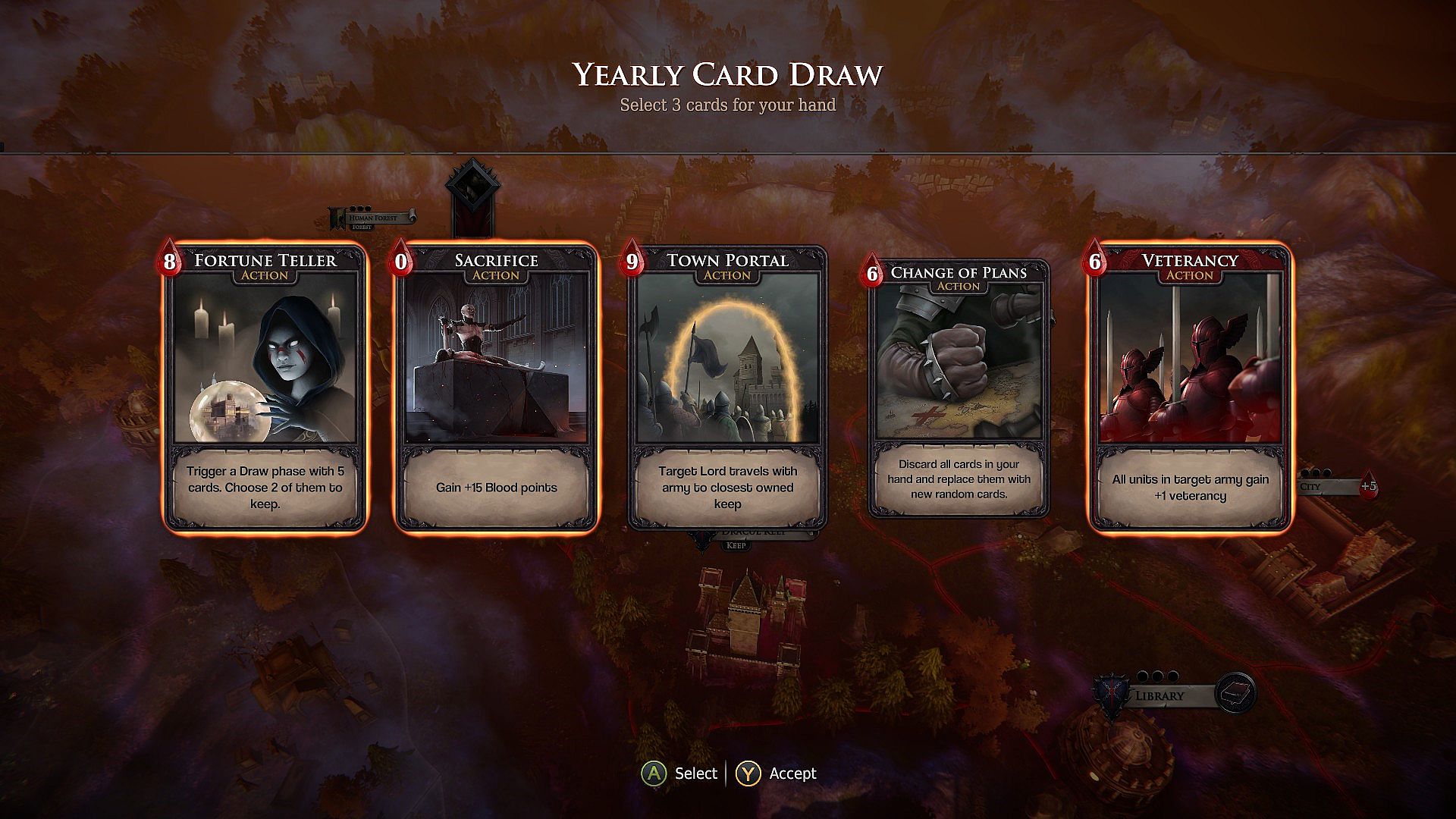
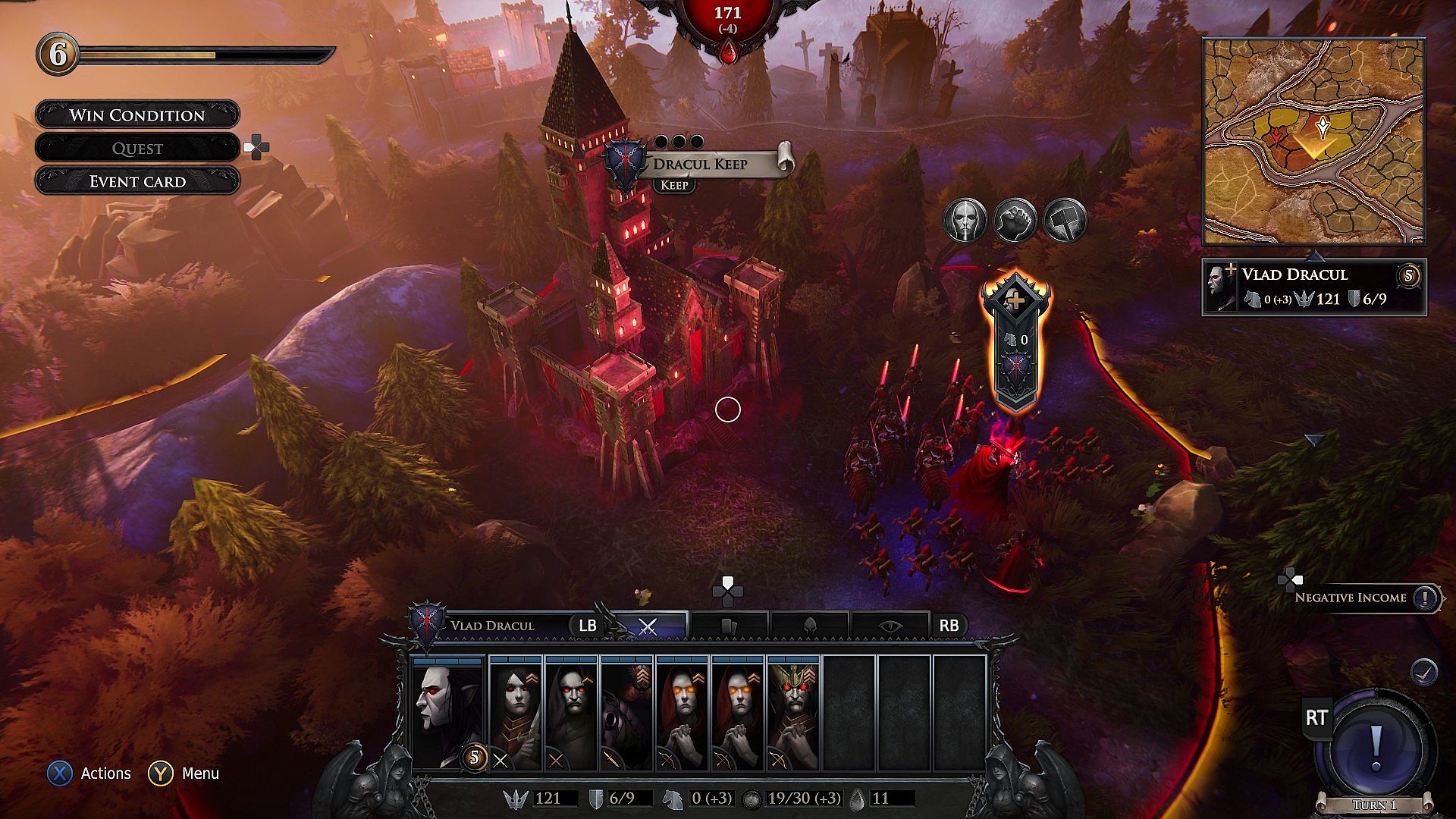
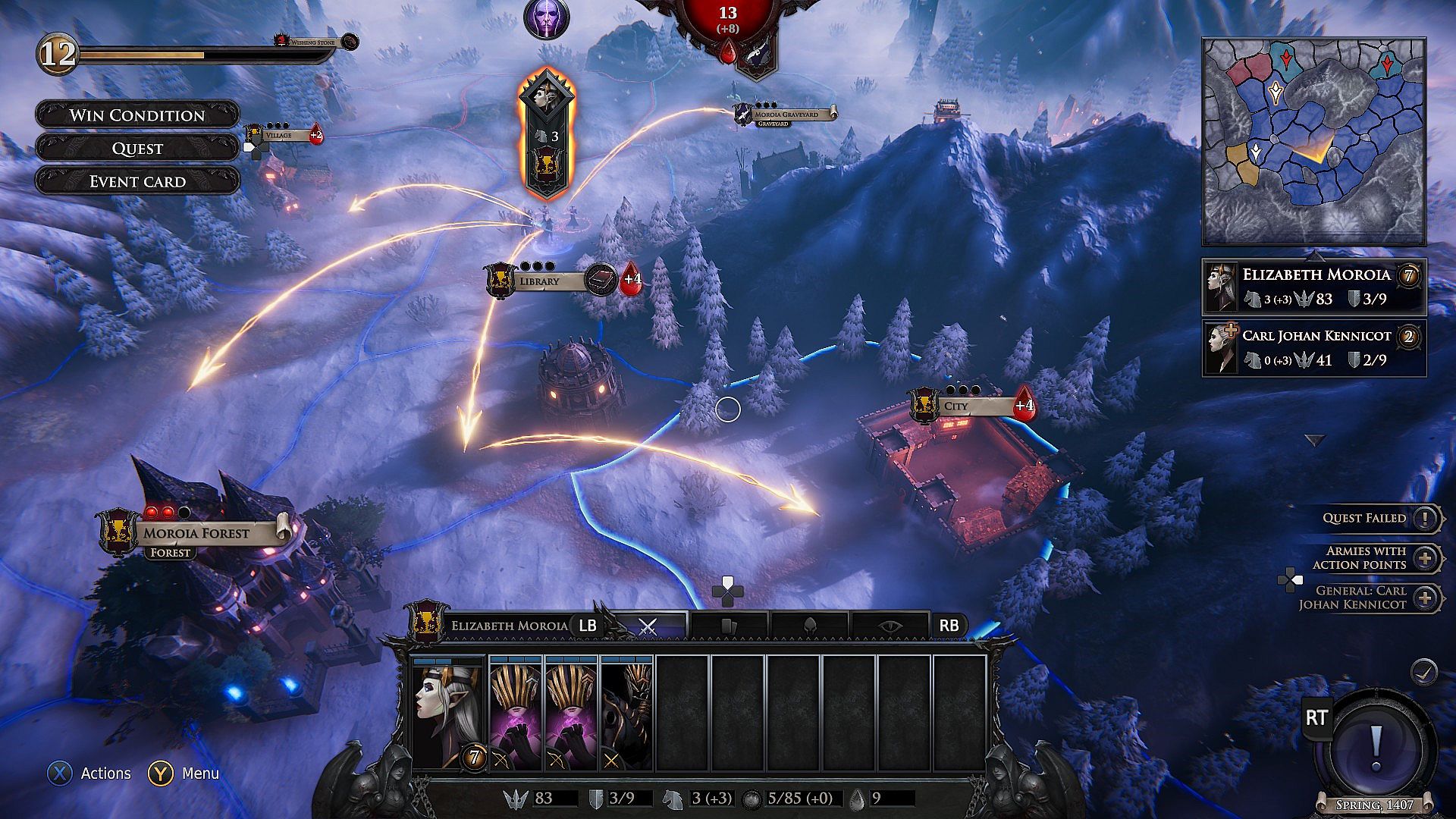
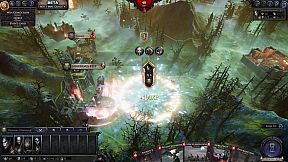
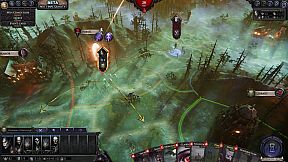
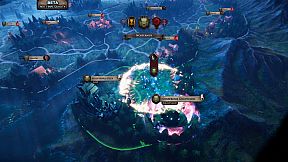
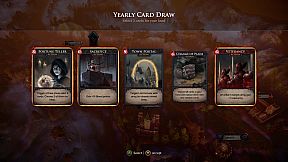
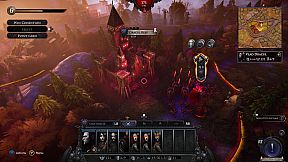
The core loop alternates between Kingdom mode, where players expand territories, recruit units, and research technologies, and Combat mode, where armies clash on detailed battlefields. Card elements add another layer, as each clan and lord draws from unique decks that reward careful synergy and timing. Units possess distinct traits tied to their bloodline, and powers scale with progression through missions or sandbox sessions. The system emphasizes positioning, ability combinations, and long-term planning over direct control of individual soldiers.
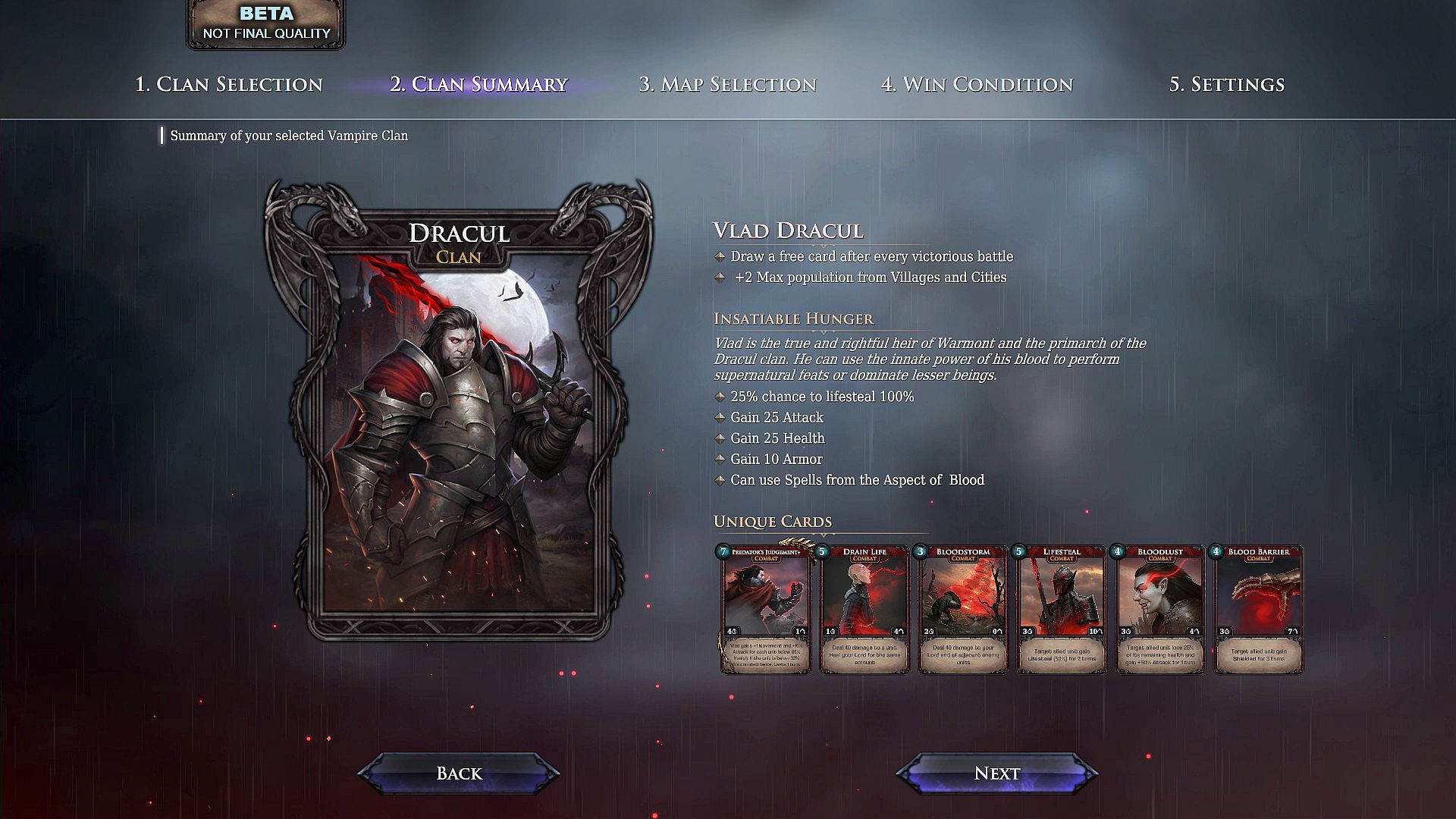
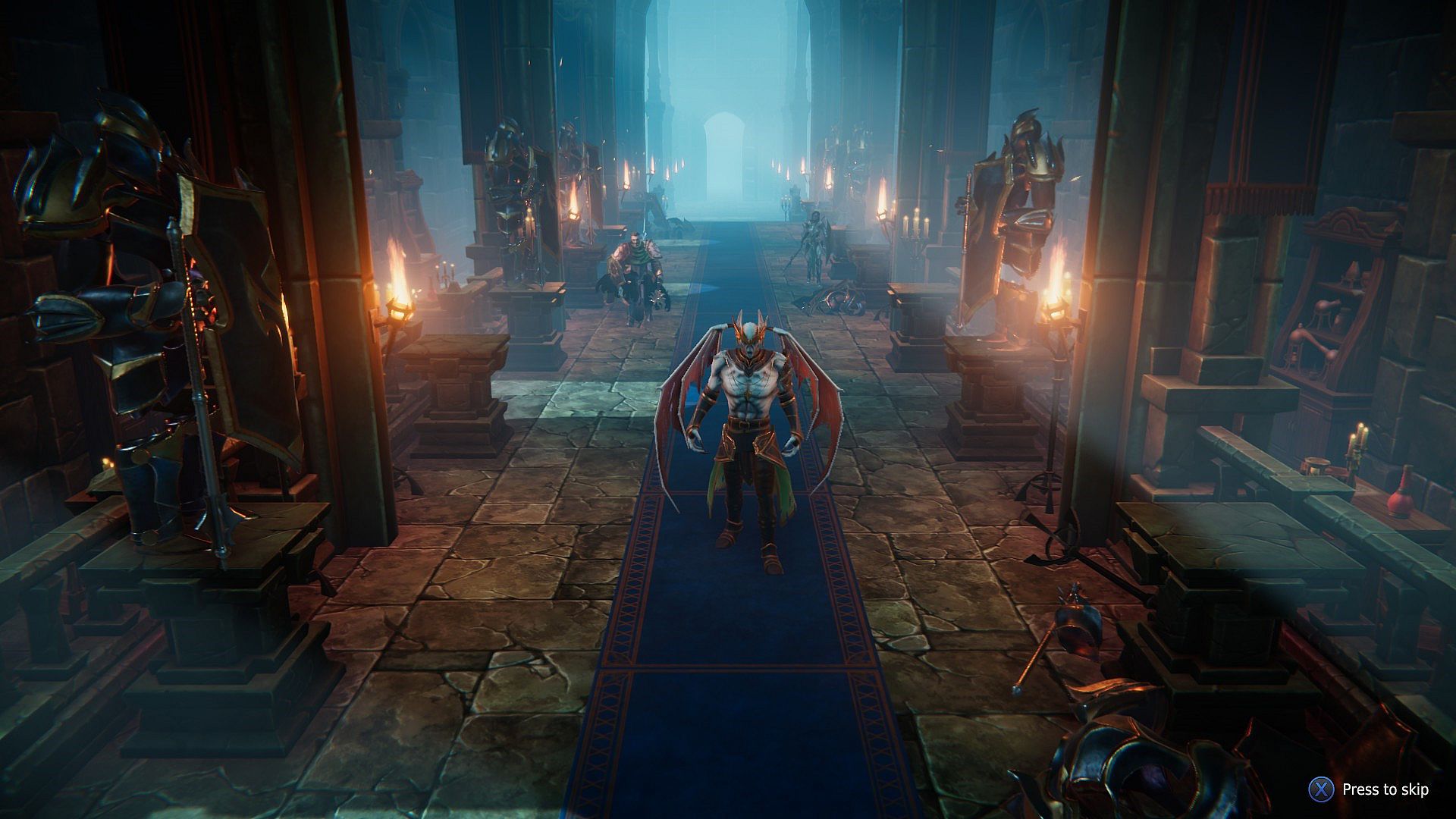
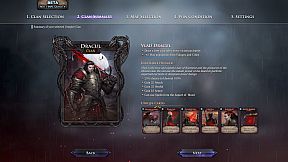
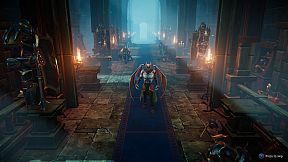
Four vampire lords lead the narrative across twelve missions set in four distinct environments. Each lord pursues personal objectives that shape available choices and unit access. The three playable clans provide mechanical variety: the Dracul focus on aggressive expansion and blood harvesting, the Nosfernus rely on enduring ancient units and attrition tactics, and the Moroia emphasize magical rituals and blood-as-magic conversions that alter battlefield conditions.
Game Modes
Three primary modes structure play. The Campaign follows the main story through its twelve missions, introducing the bloodlines and escalating conflicts in a linear sequence. Sandbox mode removes the scripted objectives and allows free-form empire building across the available maps. Skirmish mode supports direct head-to-head or custom matches that test tactical combinations without the overhead of campaign progression.
These modes share the same underlying systems of unit recruitment, technology unlocks, and card management, so skills developed in one transfer directly to the others. The design keeps the focus on strategic depth rather than constant new content additions.
The Vampire Clans and Lords
Each clan brings its own roster of units and card sets that alter how battles unfold. Dracul players often lean into rapid conquest and feeding mechanics that strengthen their forces mid-fight. Nosfernus emphasize defensive formations and lingering threats that punish overextension. Moroia integrate ritual cards that reshape terrain or impose status effects, rewarding players who plan several turns ahead. The four lords add narrative flavor and slight mechanical tweaks within their respective clans, such as unique starting cards or affinity bonuses.
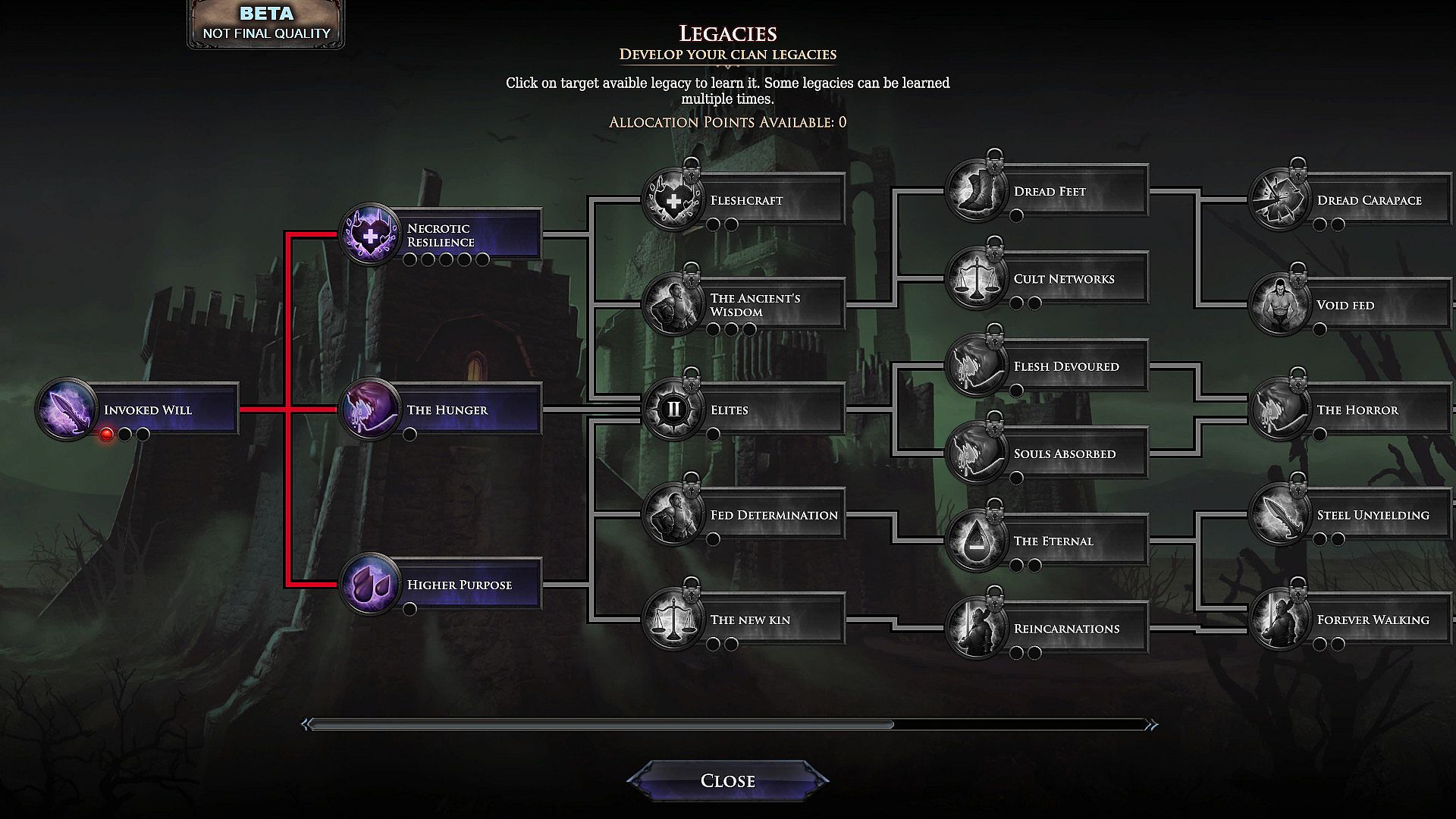
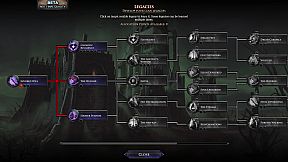
Progression involves unlocking higher-tier cards and units through Kingdom mode investments, which then carry into combat. The result is a loop where strategic map decisions directly influence tactical options on the battlefield.
Is It Worth Playing?
Player reception on major storefronts sits at mixed levels, with roughly sixty-one percent positive reviews from several hundred submissions. The title suits those who appreciate methodical strategy games that incorporate card synergies and multiple layers of management. Its single-player focus and self-contained campaign make it suitable for solo play without reliance on ongoing updates or seasonal content.
Those seeking fast action or frequent new features may find the 2020 release dated in presentation and scope. For strategy enthusiasts drawn to vampire-themed factions and the specific blend of kingdom oversight with card-enhanced combat, the game delivers a coherent experience that rewards repeated attempts at optimizing clan strategies across its modes.