




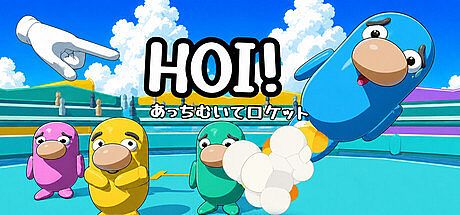


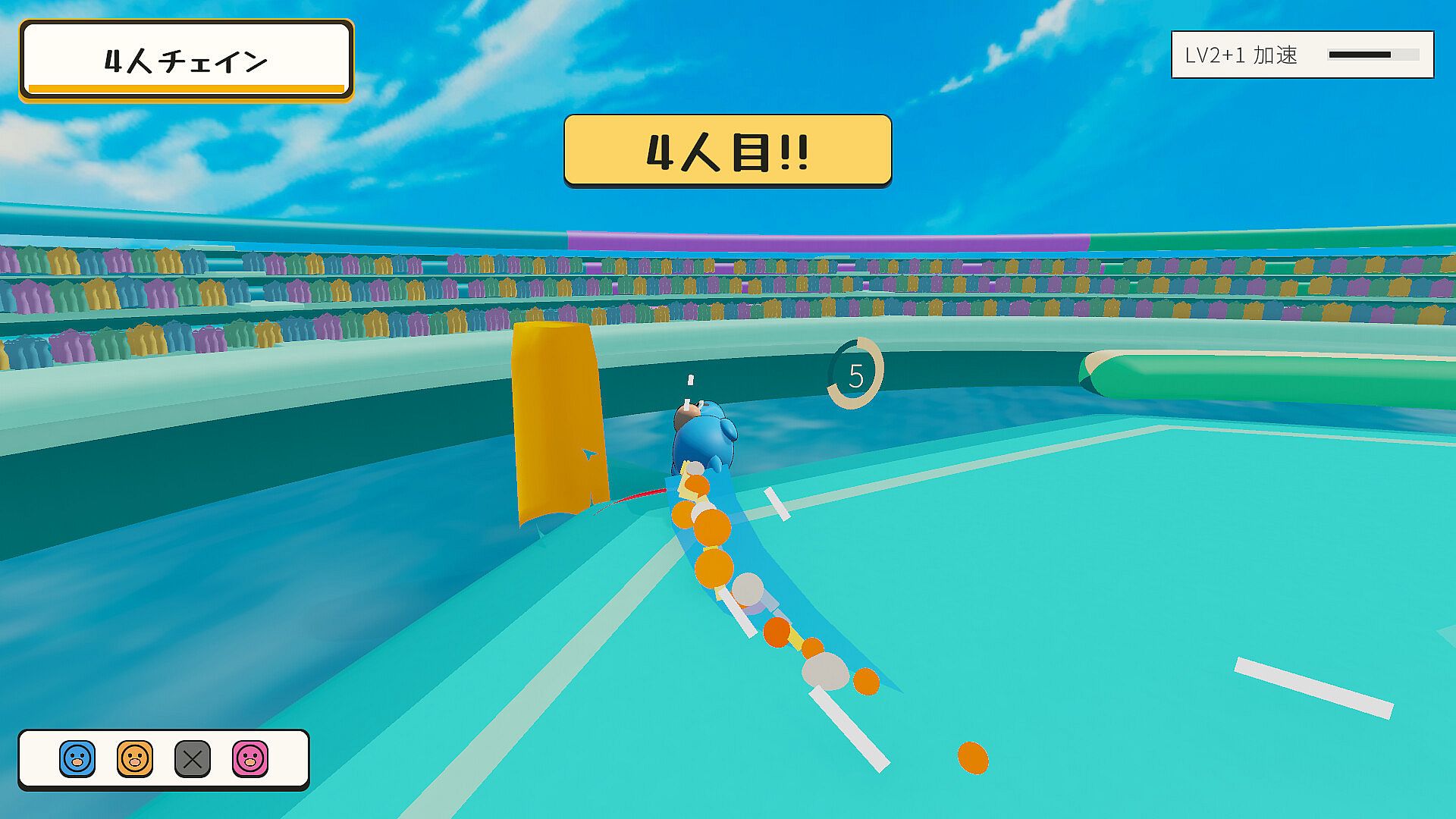
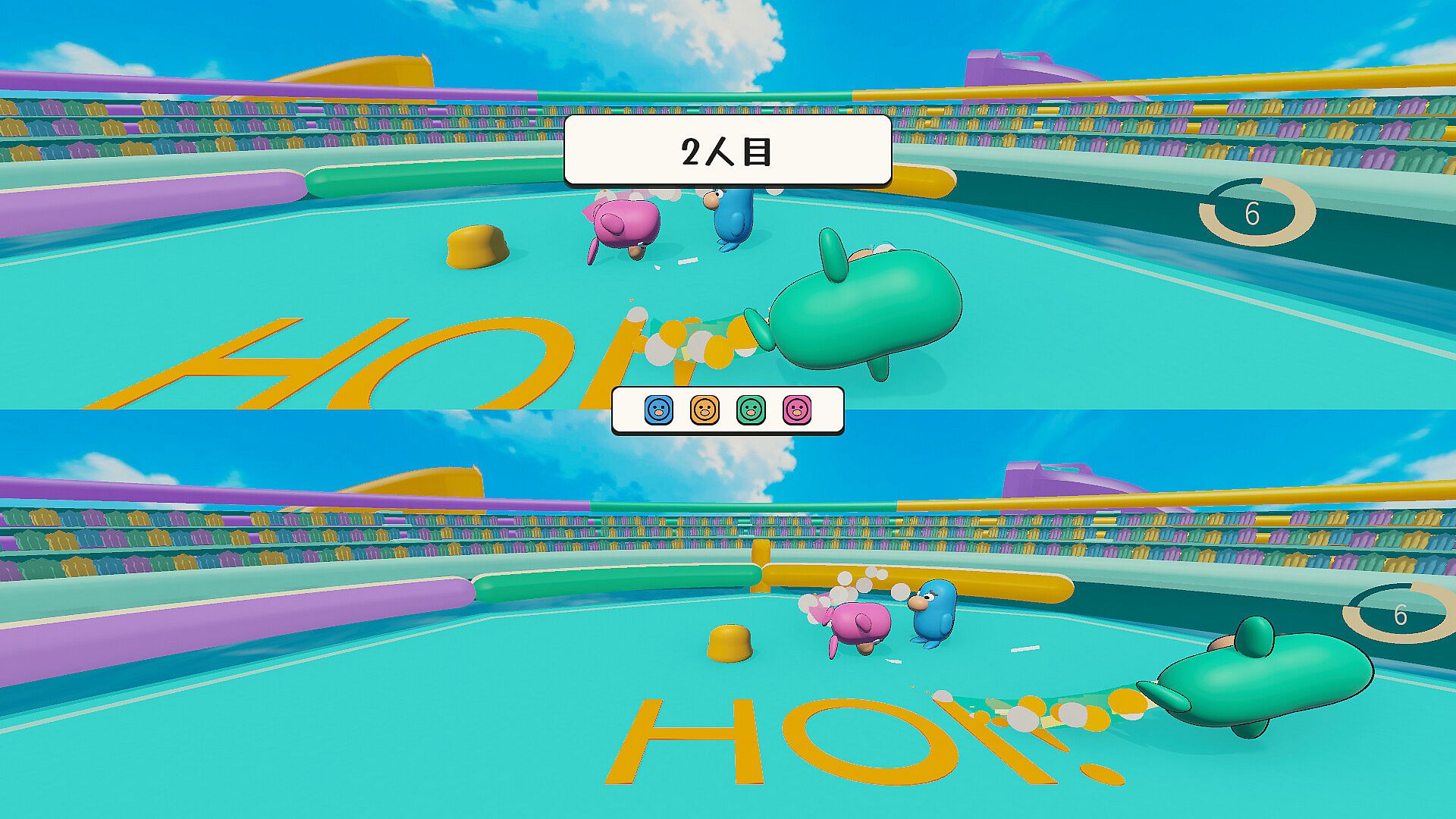
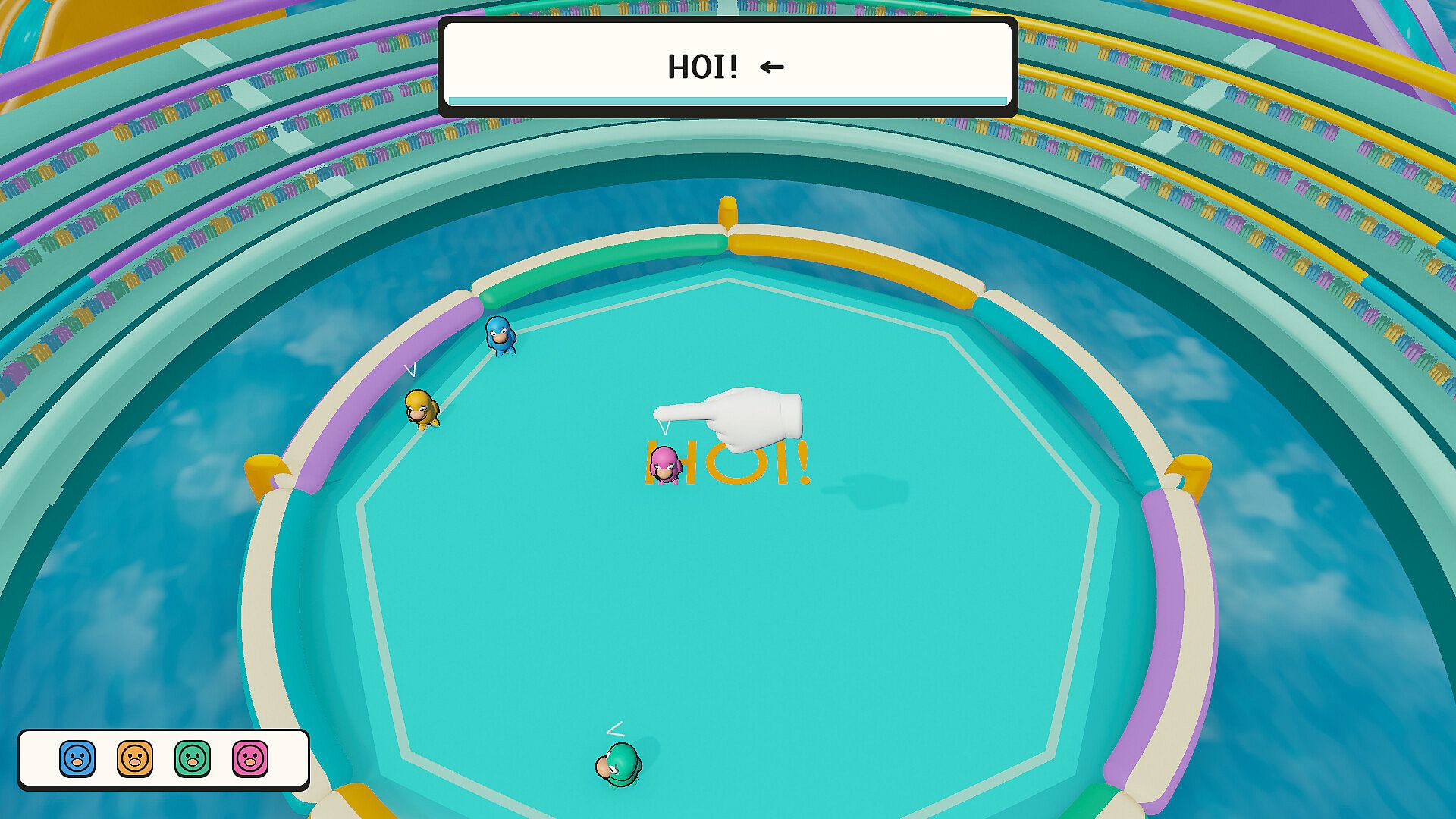
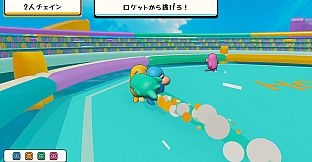
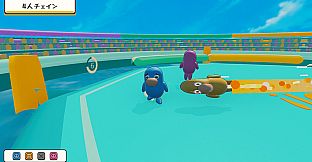
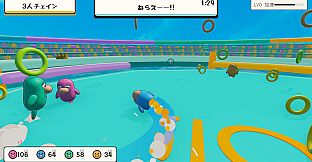
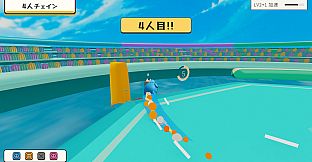
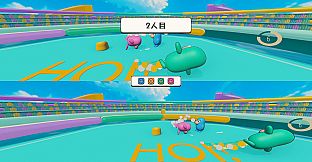
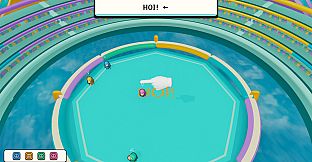
HOI! あっちむいてロケット is an action, indie, and casual party game developed for PC by the solo Japanese studio RidgeField. The core concept draws from the traditional Japanese children's game known as Acchi Muite Hoi, where players point in a direction and the opponent must look away to avoid matching. In this title, failure turns the loser into a rocket that launches toward the indicated direction, and the objective shifts to colliding with other players to pass on the rocket status. The result is a fast-paced, chaotic experience centered on quick reactions and spatial awareness rather than complex controls or long sessions.
Gameplay
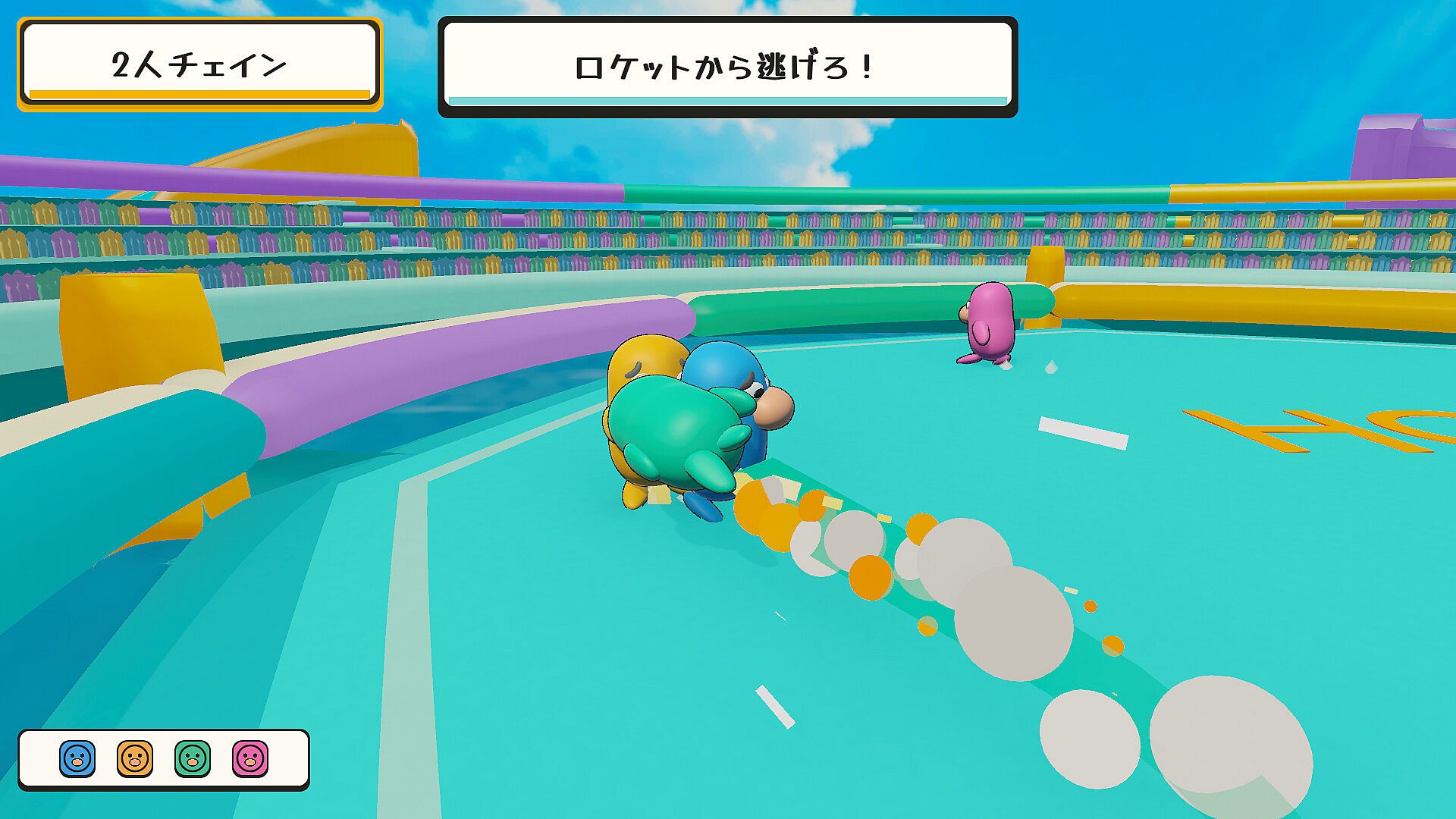
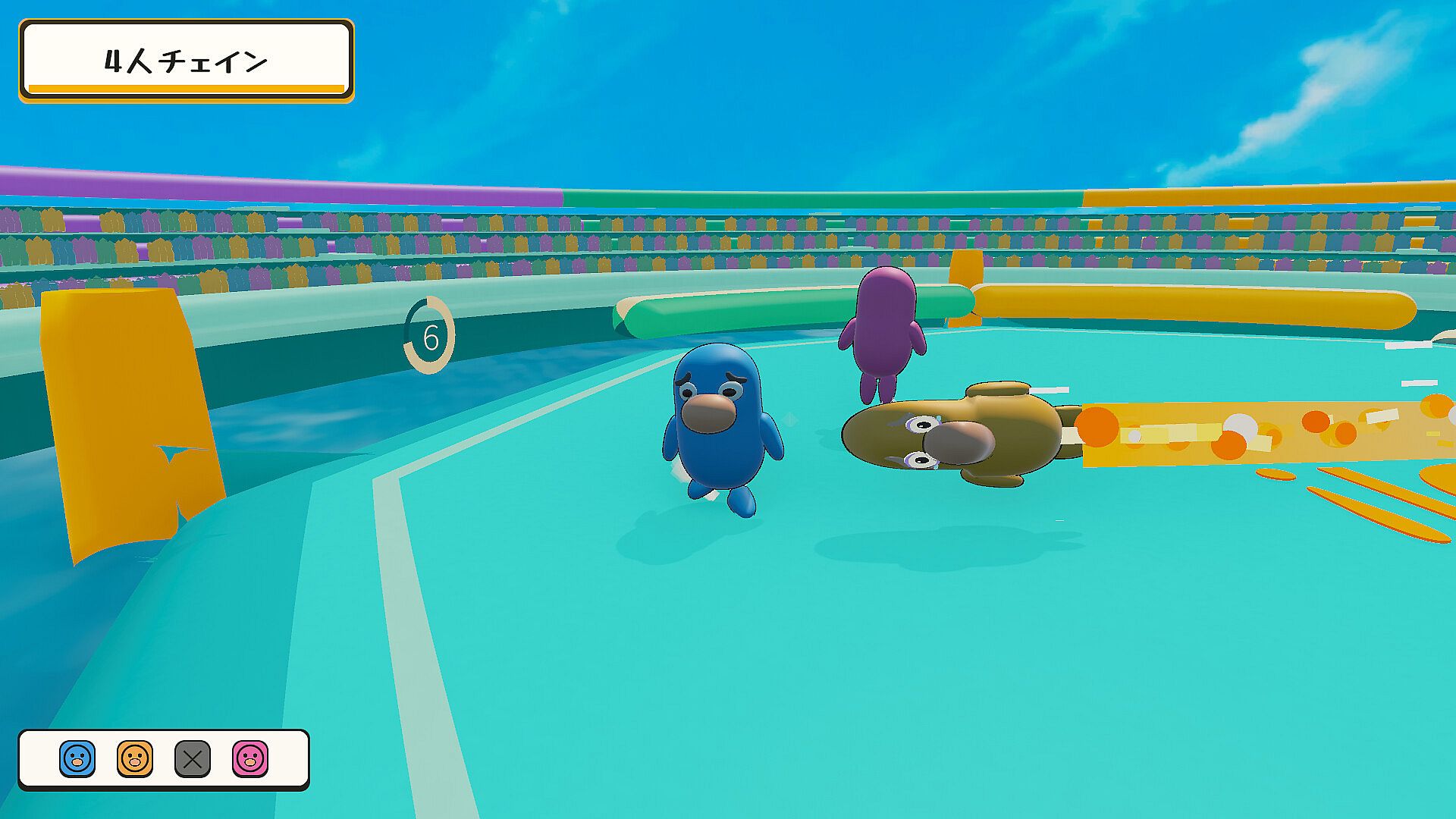
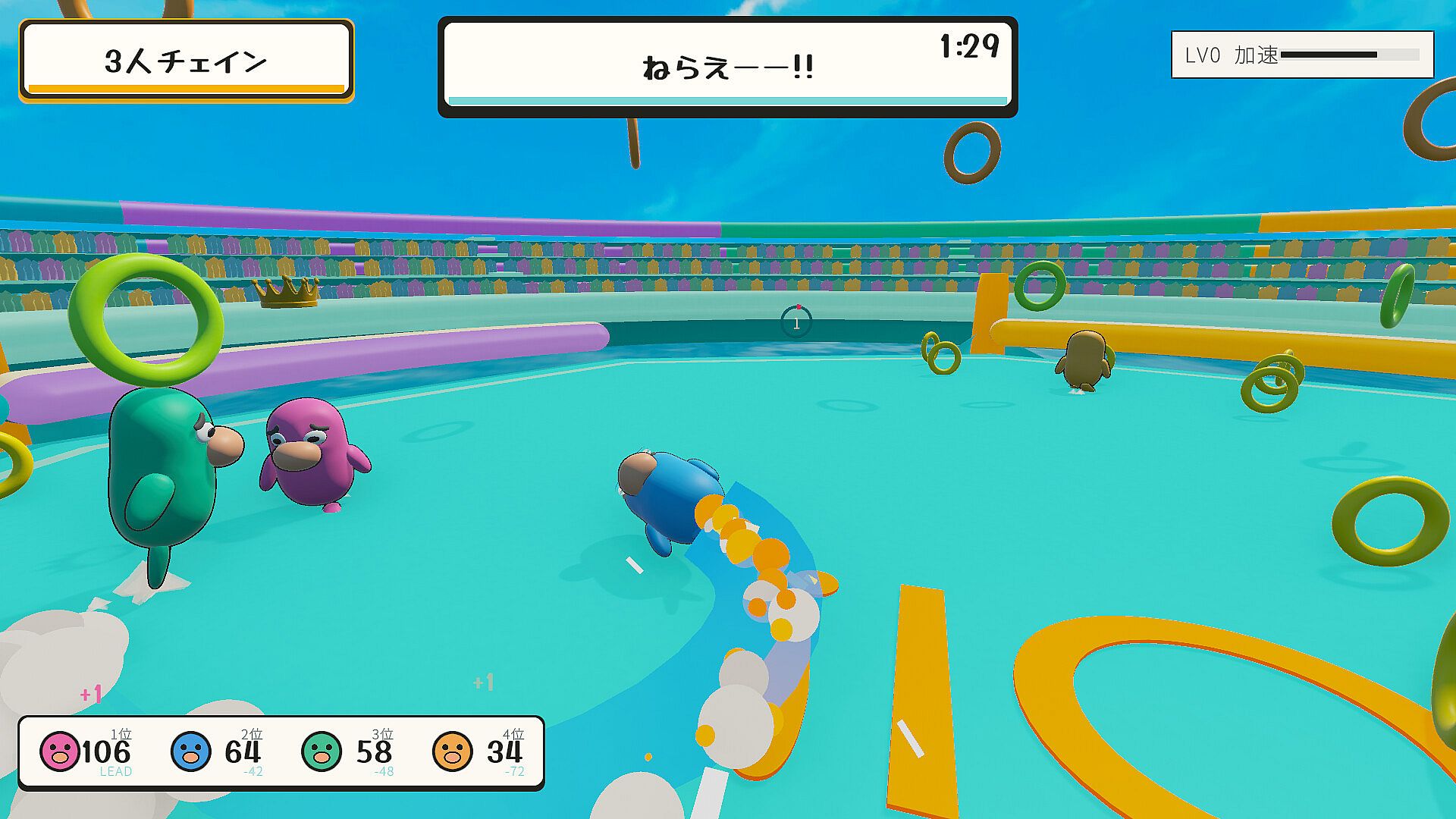
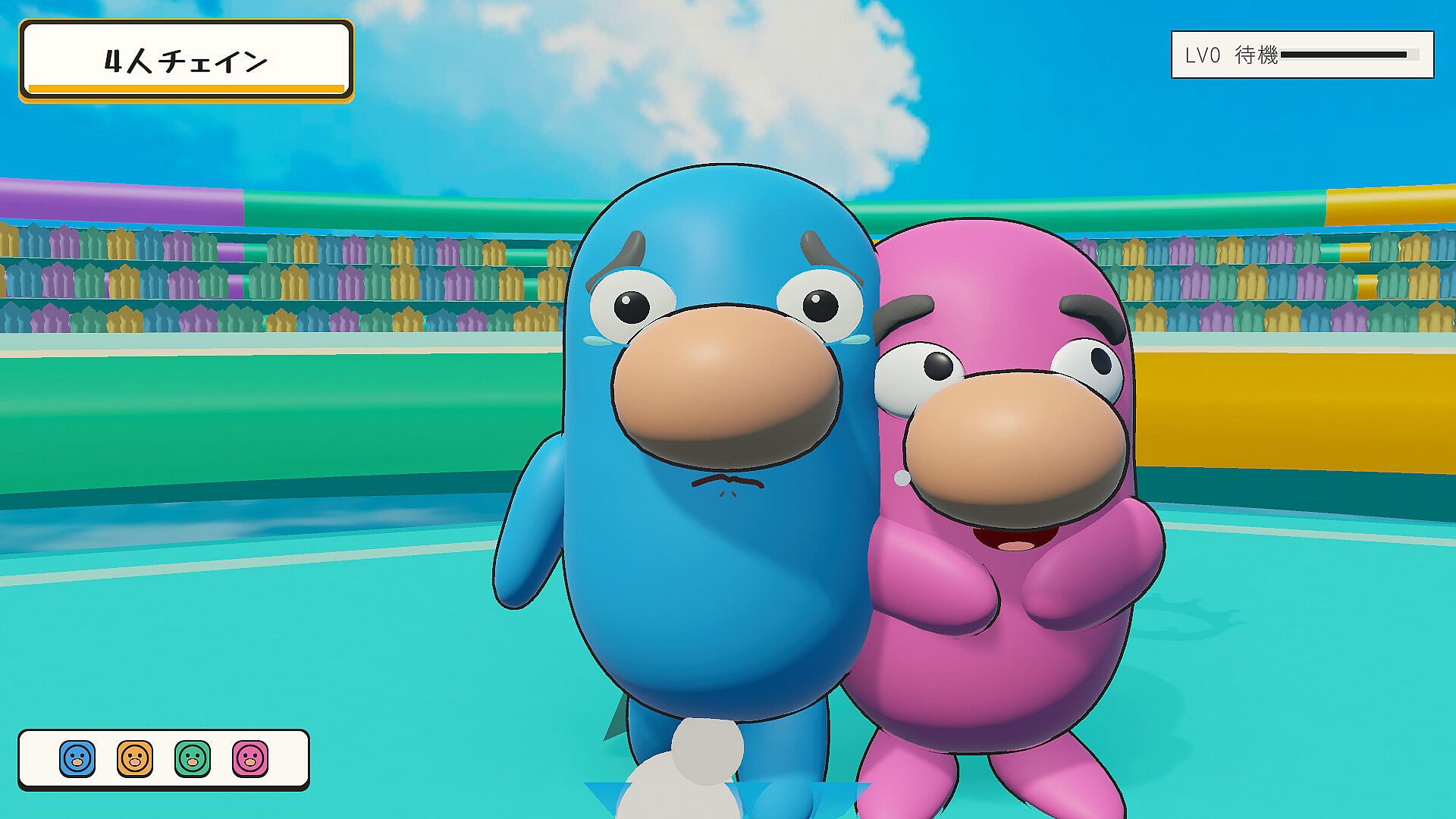
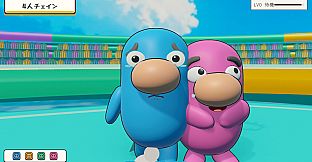
The central loop revolves around a giant pointing finger that directs players during each round. Participants must look in a different direction from the finger to stay safe, but matching the direction transforms the player into the rocket. Once launched, the rocket flies across the play area with the goal of striking another participant. Contact passes the rocket role onward, keeping the action continuous and unpredictable. The simple rules create repeated cycles of tension and release as players dodge, aim, and react in real time. Controls remain minimal to emphasize timing and positioning over mastery of intricate systems. The visual style features bold, cartoonish characters and environments that highlight the finger and rocket elements without unnecessary detail.
Game Modes
Local versus supports two to four players sharing a single PC, with gamepads required for most participants though one player can use the keyboard. This setup encourages couch play in the same room and suits quick matches among friends or family. Online play allows participants to connect with friends remotely for the same versus experience. No additional named modes appear in the available details, keeping the focus on the core rocket-passing mechanic across both local and online sessions. The design prioritizes accessibility for short bursts of play rather than extended campaigns or progression systems.
Multiplayer Focus and Accessibility
Shared-screen local play and remote online options make the game suitable for varied group sizes and locations. The requirement for gamepads in local sessions ensures consistent input for all but one player, while the keyboard fallback maintains flexibility. Streaming and recording receive explicit support from the developer, with permission granted for clips, commentary, and monetization through standard platform tools. This openness aligns with the casual party-game nature, where highlight moments from chaotic rocket launches often stand out. The title runs on modest hardware, with minimum specifications centered around Windows 10 and entry-level graphics cards, broadening potential player access.
Is It Worth Playing?
Players seeking straightforward, reaction-based party games with friends will find the mechanics engaging through repeated short rounds that emphasize luck, timing, and light strategy in dodging and aiming. The local versus format works well for groups gathered around one screen, while online support extends the experience to distant participants. As an unreleased title with a planned 2027 launch and no accumulated player feedback yet, its value depends on interest in simple competitive play rather than deep systems or long-term content. Those who enjoy quick, chaotic sessions without heavy investment in learning curves or progression may appreciate the focused design. The solo developer background suggests a personal, unpolished approach that prioritizes the core idea over expansive features.











