

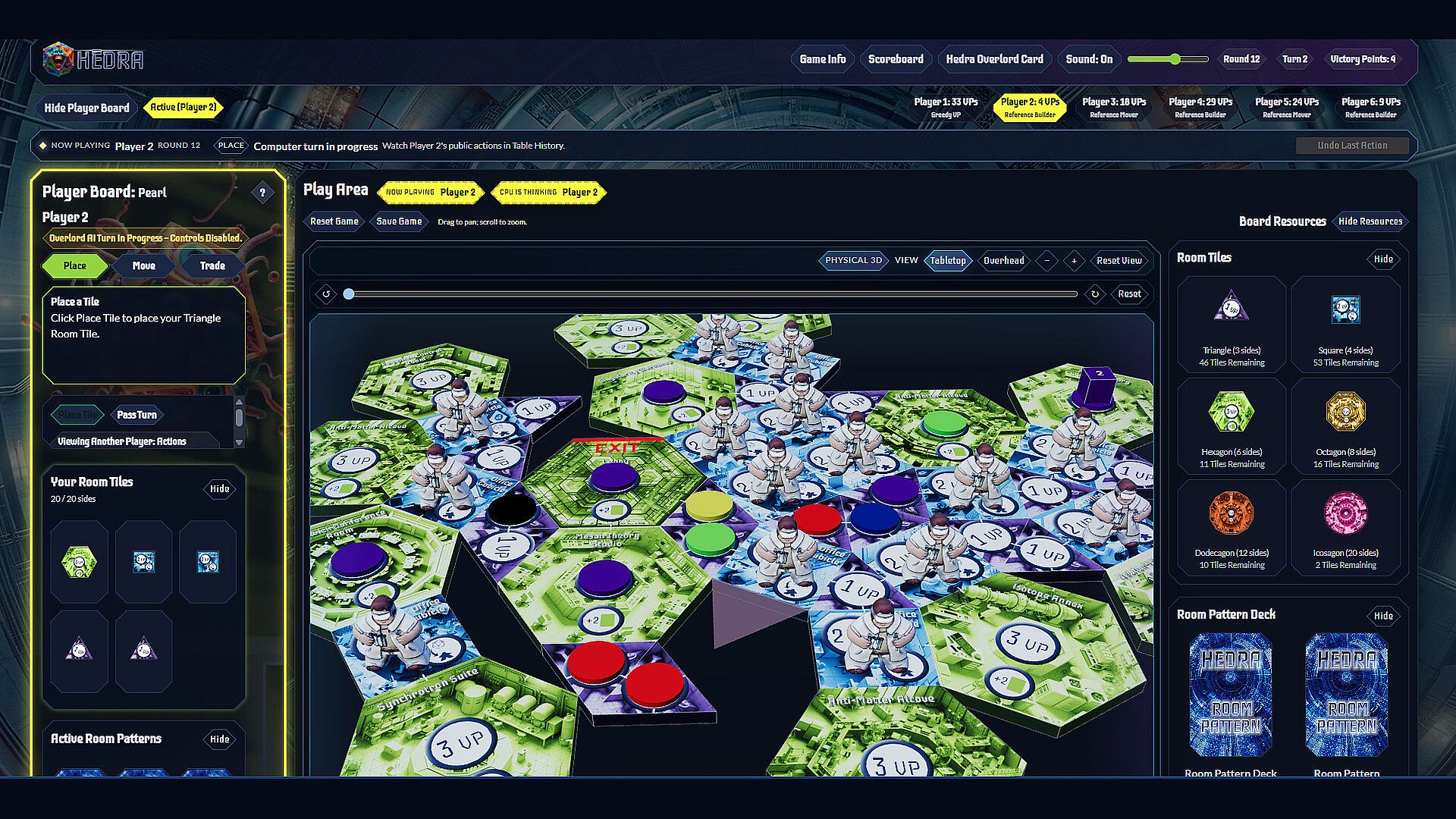
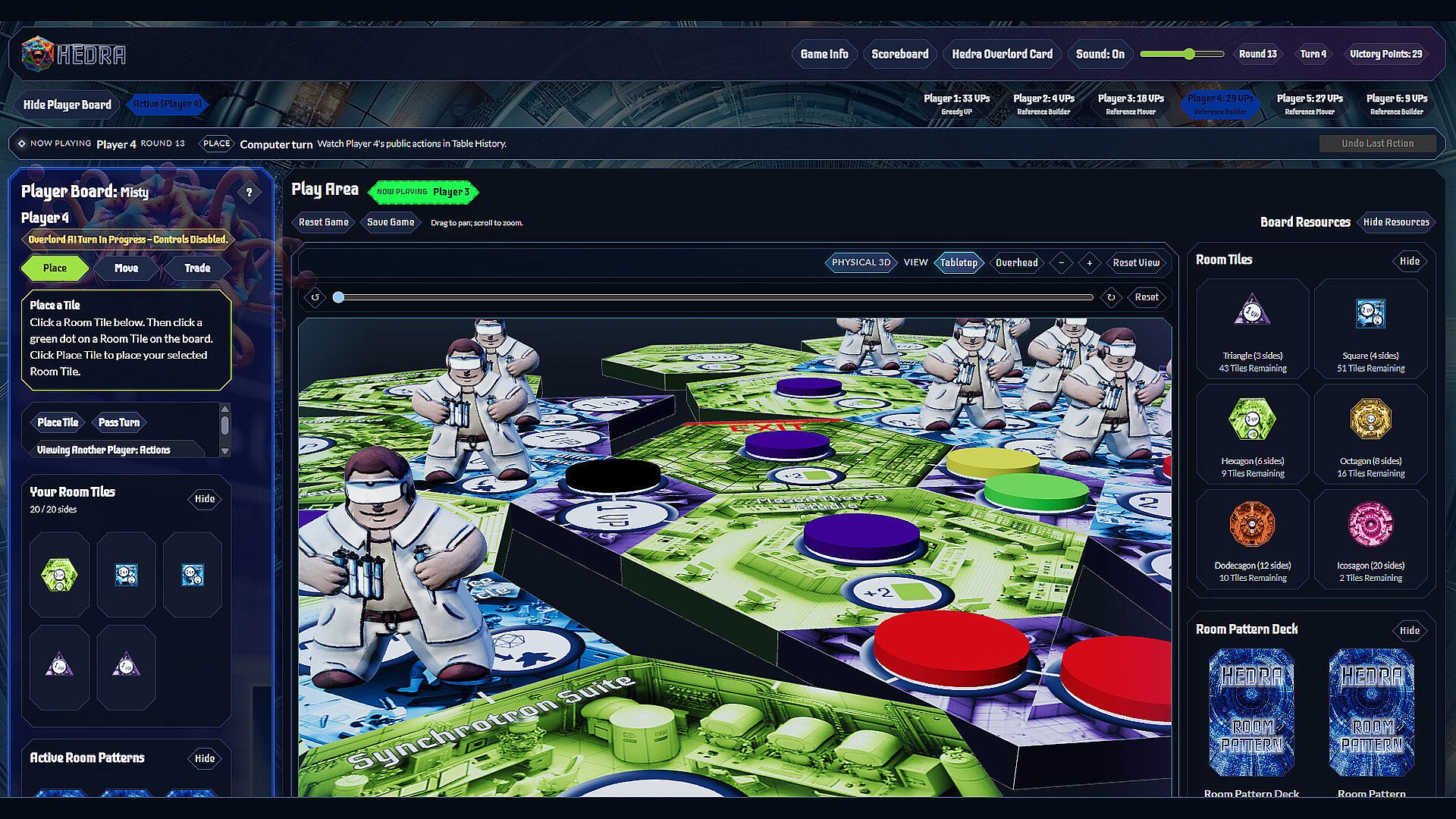


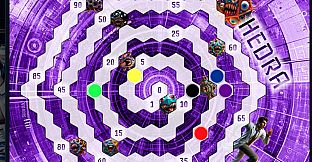

Hedra is a strategy game for PC that adapts a decade-long physical board game design into a digital solo experience. Players take on the role of an Overlord commanding interdimensional polyhedral monsters called Hedra inside a growing facility at the Large Hadron Collider. The core loop centers on expanding a shared board through tile placement, moving dice-based monsters to consume physicists for growth, engaging in combat with rivals, and pursuing pattern-based objectives before a self-destruct sequence ends the match.
Gameplay
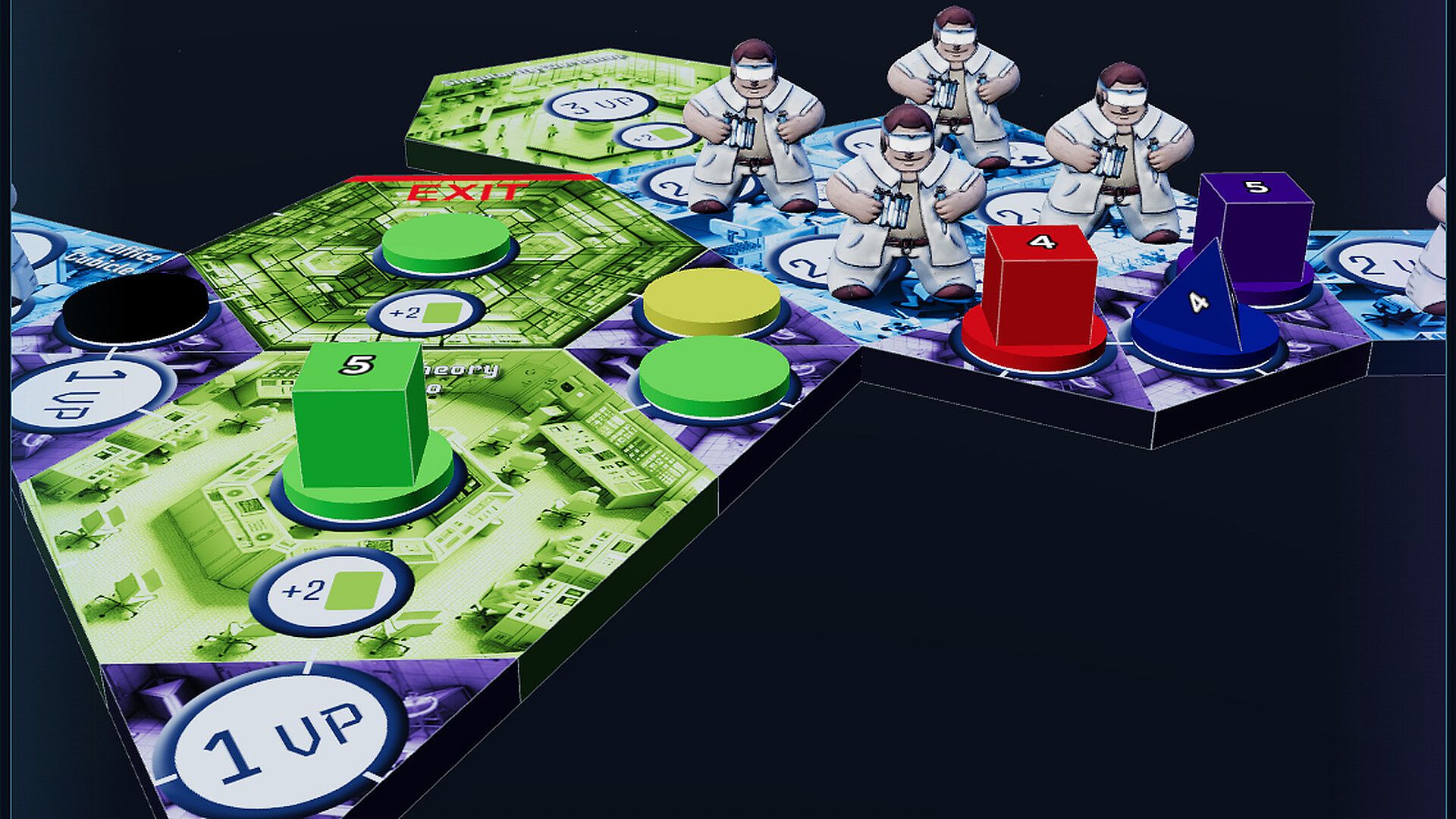
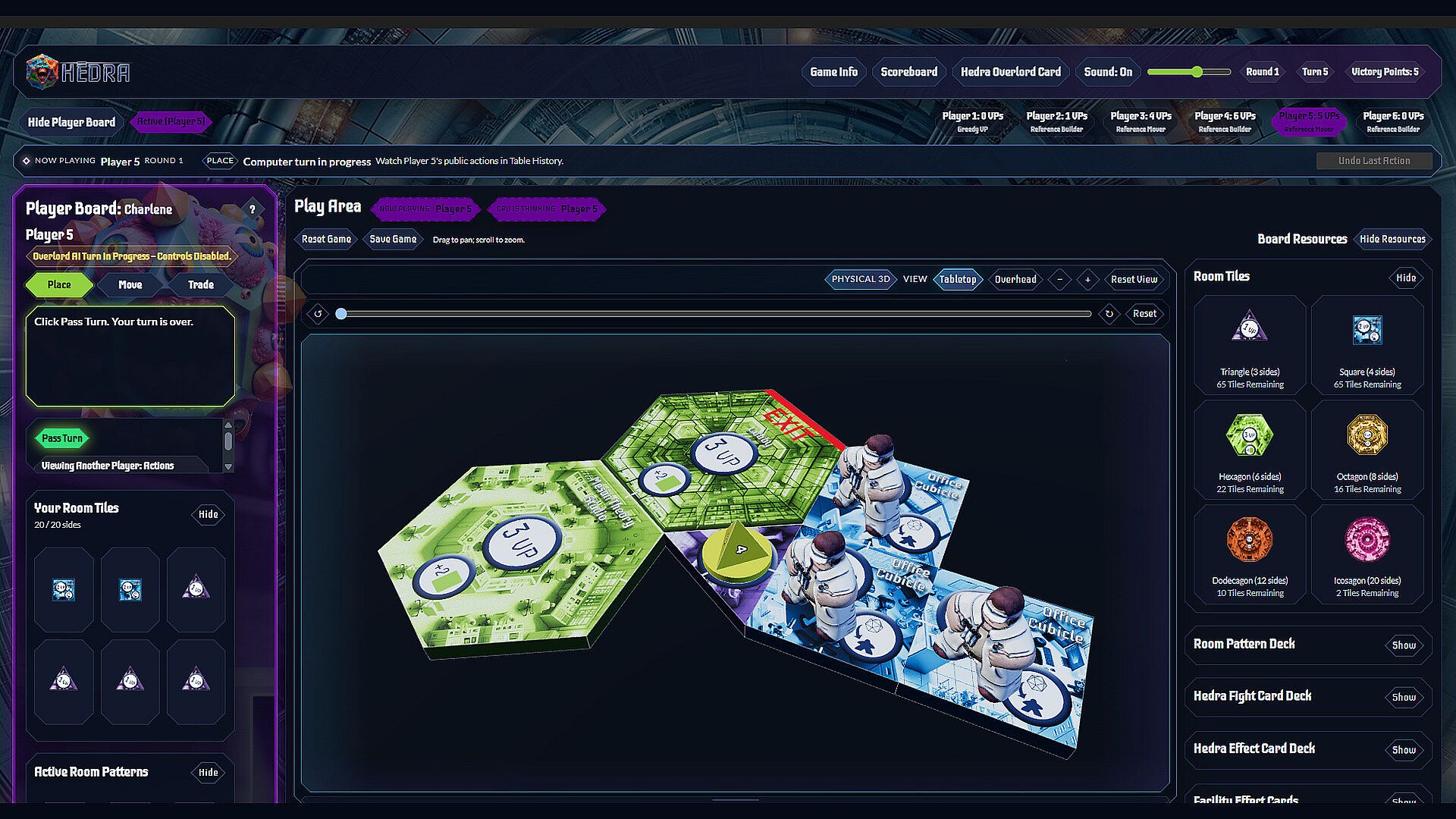
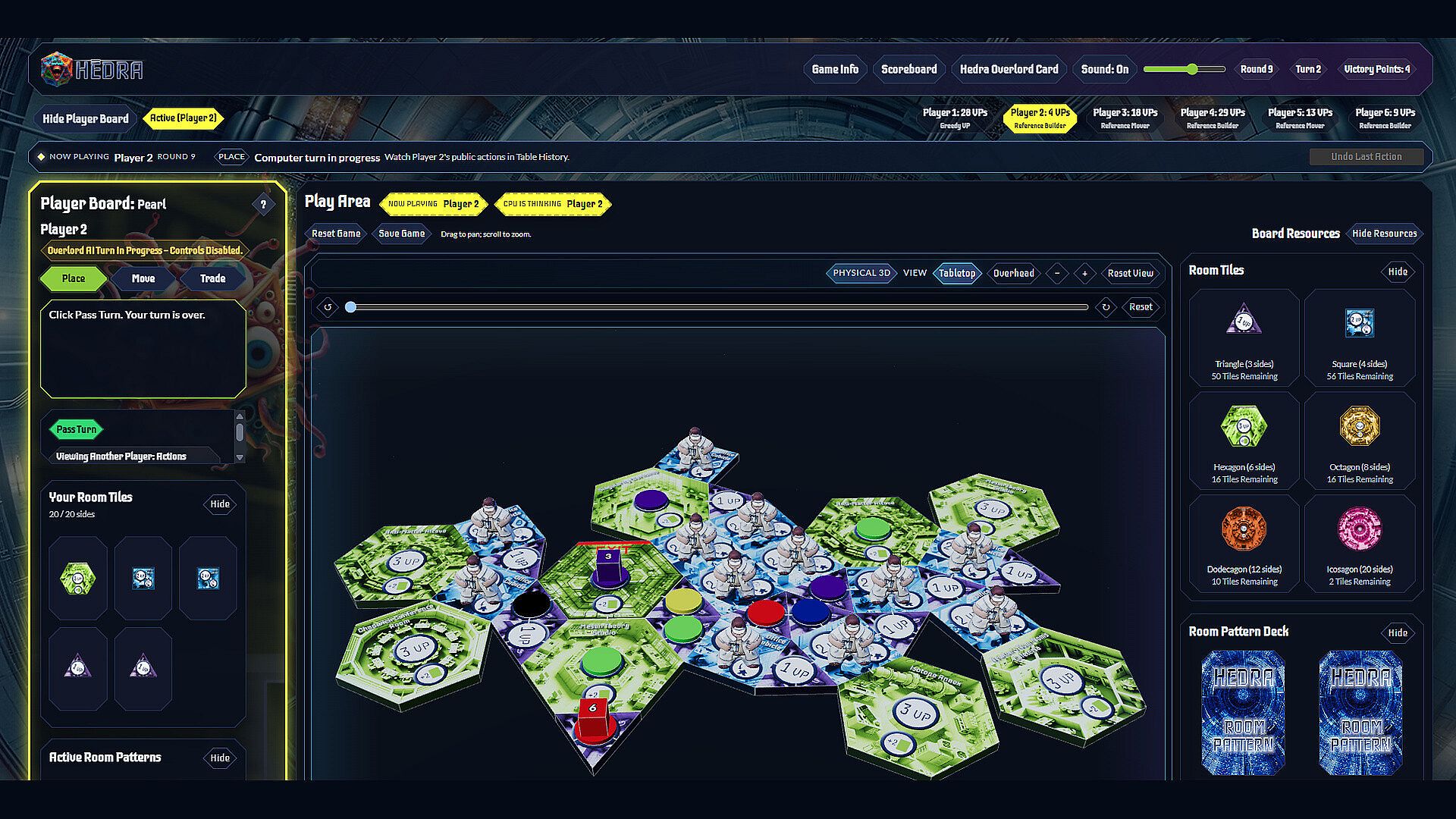
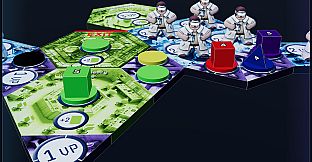
Tile placement forms the foundation of every session. Players draw from a supply of 216 Room Tiles in six shapes that fit together in non-standard ways. Triangles introduce new Hedra dice, squares hold physicists for consumption, hexagons provide Fight cards, octagons trigger Effects, dodecagons interact with facility rules, and rare icosagons offer major upgrades. Each placement alters movement paths and can complete one of 72 Room Pattern cards for victory points or new dice.
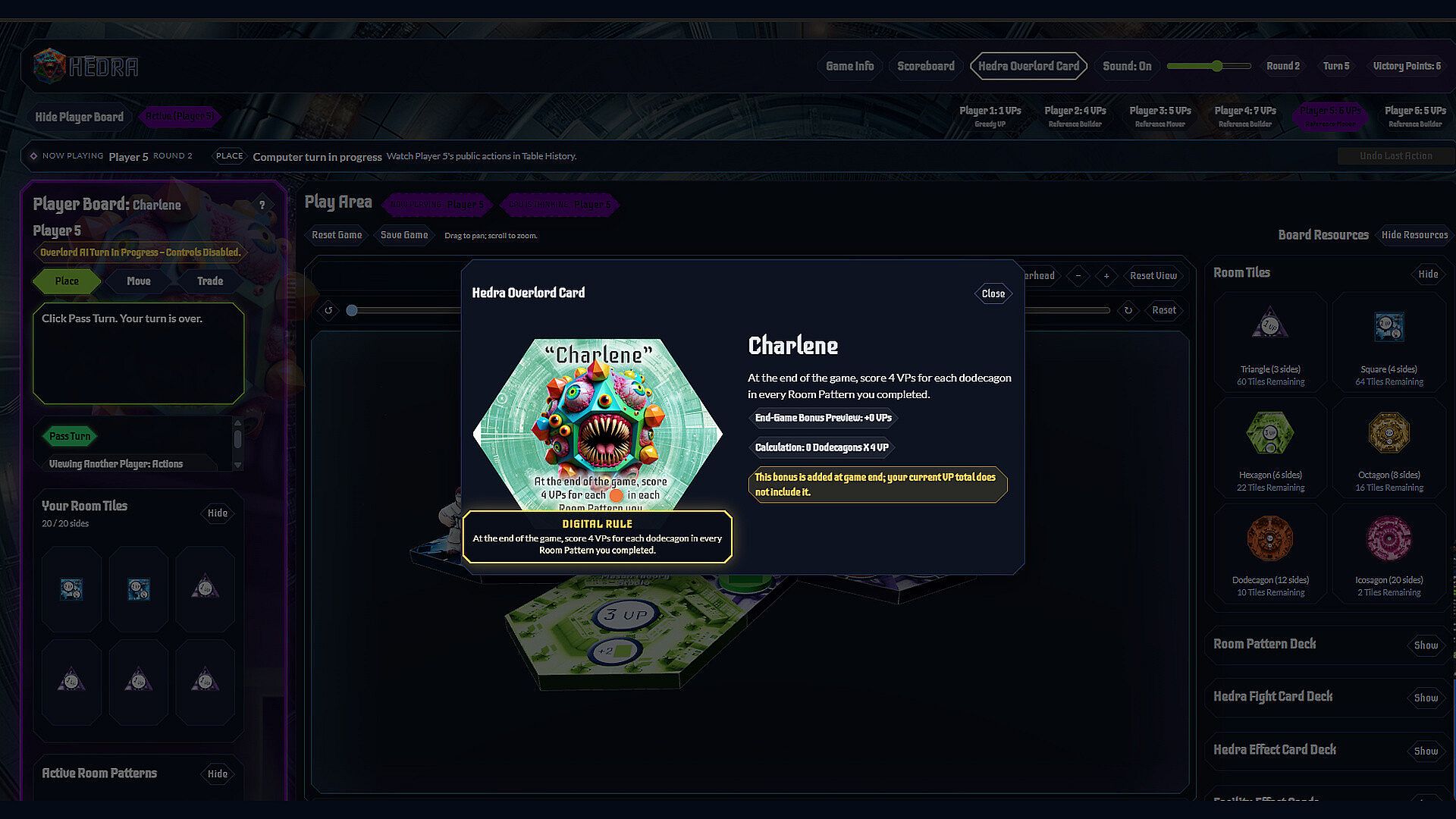
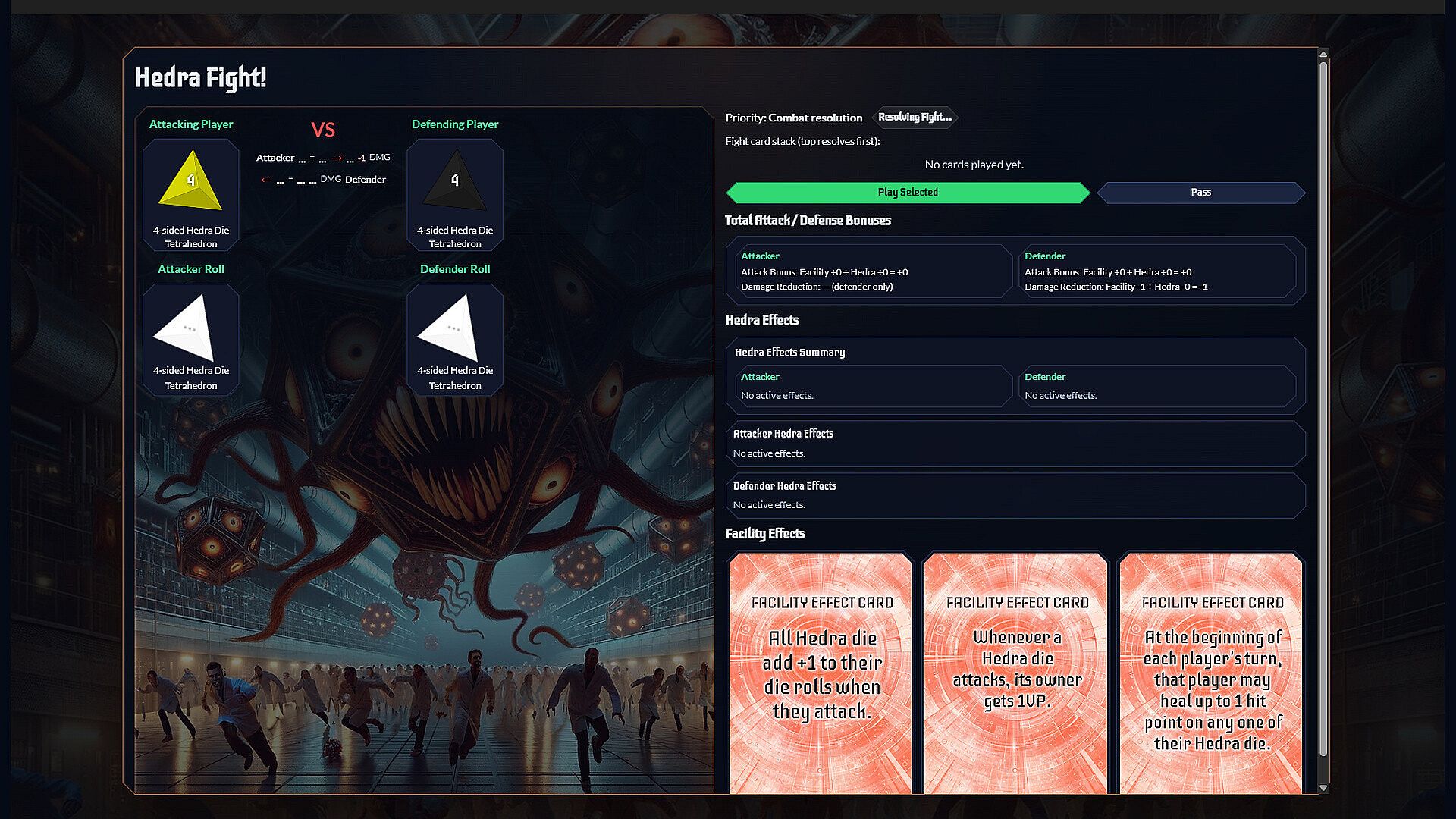
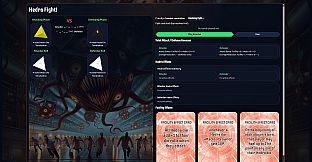
Hedra monsters appear as polyhedral dice ranging from d4 to d20. Movement occurs across the expanding board, with growth happening through physicist consumption. Combat resolves through comparisons of die size, health, room modifiers, and played cards from sets of 32 Fight, 32 Effect, and 32 Facility cards. Ten Overlord cards each define distinct endgame scoring priorities tied to patterns, room control, or collider dominance.
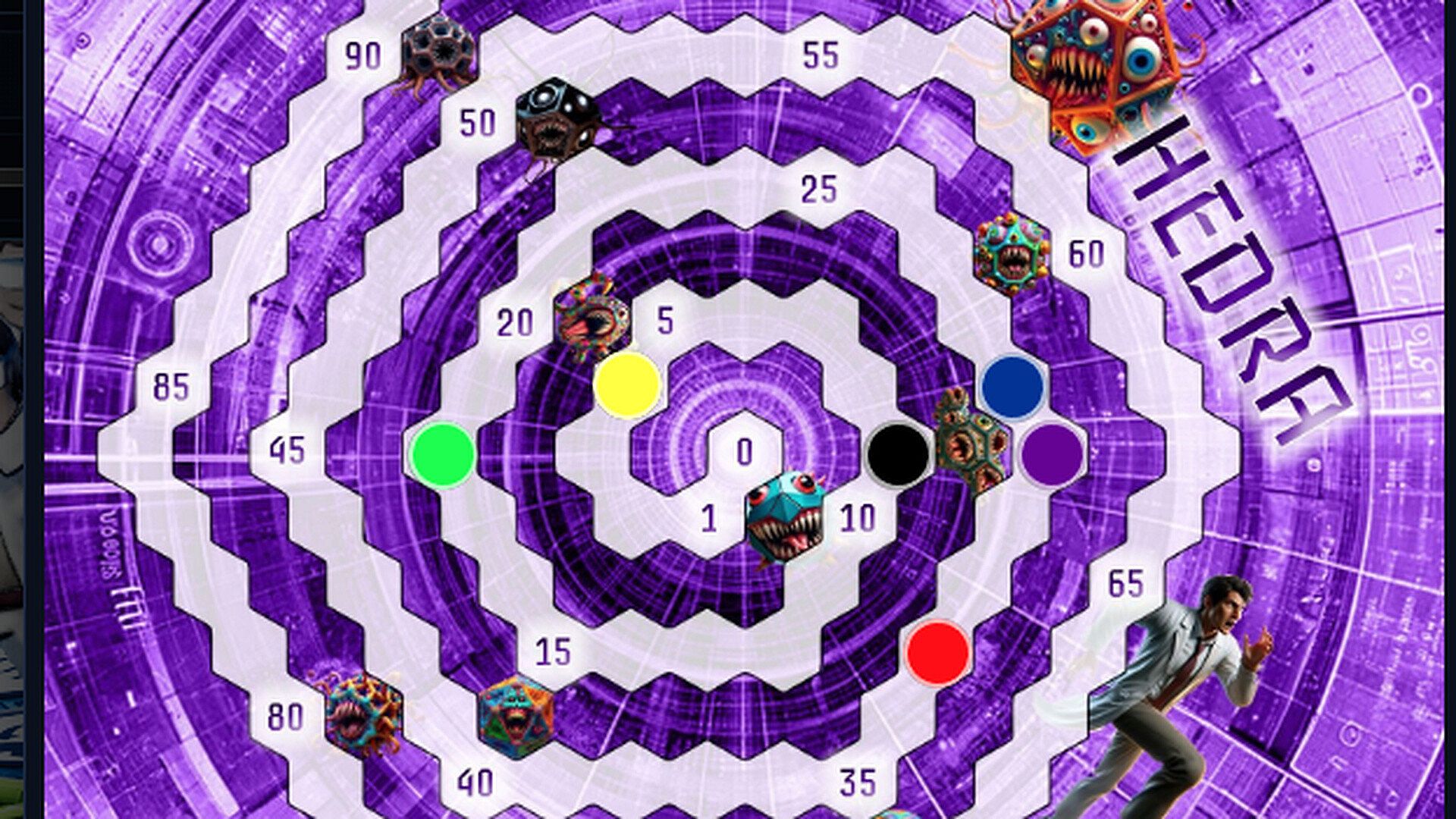
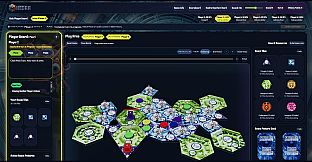
The match concludes when any Overlord hits the victory point threshold, triggering a countdown. Remaining turns allow final pattern completions, fights, and scoring before the board begins to break apart. A 3D tabletop view with overhead options supports clear spatial planning throughout.
Game Modes
Hedra supports only solo play. A single human player competes against one to five computer-controlled Overlords. The AI opponents employ varied approaches such as pattern focus, aggressive positioning, quick scoring, direct combat, objective pursuit, or priority grabs for powerful icosagon rooms. No multiplayer options exist.
Setup, rules enforcement, and opponent turns are fully automated. A guided tutorial and in-game reference assist new players, while save-and-resume functions support longer sessions. The board configuration changes with every game due to the tile supply and placement choices.
Strategic Depth and Components
Success requires balancing immediate gains against long-term projects defined by the chosen Overlord card. Pattern cards reward compact clusters or extended geometric chains, and opponents may place tiles that inadvertently aid or block those goals. Dice combat introduces risk management through card timing and room effects that can shift outcomes suddenly.
The physical origins show in the emphasis on spatial reasoning and variable board growth. With 72 patterns and multiple card types, each match presents fresh tactical puzzles even against the same AI difficulty settings. The digital version removes physical bookkeeping so attention stays on positioning and timing decisions.
Is It Worth Playing?
Hedra suits players who enjoy deliberate, puzzle-oriented strategy without real-time pressure or social elements. Its solo focus against challenging AI makes it accessible for individual sessions, while the growing board and multiple scoring paths reward repeated play. The game remains in development with a planned release in Q3 2026 and currently lists no user reviews. Those drawn to tile-laying mechanics, dice progression, and geometric objectives will find a distinctive experience here, especially if they appreciate games that automate complex rules while preserving tactical choice.